
Voice of America and Radio Free Europe are often mentioned in the same breath. Both stations broadcast in Polish from abroad, both conveyed information that was lacking in the censored media of the PRL, and both were jammed. However, they were not the same radio. Voice of America, in English Voice of America (VOA), was a foreign broadcaster of the United States government. Radio Free Europe was established as a separate station funded by the USA, initially secretly through the CIA.
The Polish section of Voice of America began operating during World War II, earlier than the Polish Broadcasting Station of RWE in Munich. In addition to news and commentary, listeners could learn about American life, study the language, and listen to jazz. The station's history also includes more difficult chapters: wartime information policy towards the USSR, jamming, and contemporary disputes about the independence and future of the radio.
- Voice of America and Radio Free Europe were separate institutions, although both were funded by American resources.
- VOA's broadcasts in Polish began in 1942. Some sources cite May 7 as the start date of the Polish program.
- After December 13, 1981, the Polish program was extended from about 2.5 to 7 hours a day.
- Willis Conover's jazz reached Polish listeners, although his program Music USA was not a broadcast of the Polish section.
- After 1989, activities were gradually limited. The date of the last Polish program prepared in Washington is cited as February 27, 2004.
Was Voice of America the Same as Radio Free Europe?
No. Voice of America was created during the war as a U.S. state broadcaster aimed at foreign audiences. It was meant to present news and the American position, and over time also to depict life, culture, and institutions in the United States. Its Polish journalists initially worked in New York, later in Washington.
Radio Free Europe began operations in 1950. In 1952, the Polish Broadcasting Station was launched in Munich under the leadership of Jan Nowak-Jeziorański. It was meant to replace domestic media for listeners: it devoted much space to what was happening in Poland itself. RWE was not an American agency like VOA. Initially, it was secretly funded by CIA money, and after this connection was revealed, funding was openly taken over by the U.S. Congress. We discuss the history of the second station, transmitters, and jamming in the guide to Radio Free Europe.
However, the difference was not limited to a simple division: “American news” and “Polish news.” Both stations dealt with the situation in Poland and the world, used Polish journalists, and broadcast music and cultural programs. Over the years, their budgets, editorial teams, and topic proportions changed. The difference in their roles was described as early as 1951 in a document from the American diplomatic service, available in the State Department archives.
Beginnings During the War
The First Voice from America
The United States entered World War II in December 1941. At that time, American authorities were developing foreign broadcasts aimed at reaching Europe and countering the propaganda of the Axis powers. The station itself describes its beginnings as a process, not a single event. Its institutional history points to a broadcast on February 1, 1942, transmitted to Europe by BBC transmitters. Another VOA material cites February 24, 1942, as the date of the first Voice of America broadcast. Both dates refer to the beginnings of broadcasting and should not automatically be treated as the date of the first Polish program. VOA, history of the station; VOA, 63rd anniversary.
The Polish program appeared in 1942. The date May 7 is cited by various sources, including a publication in “Łódzkie Studia Teologiczne” and the academic “Encyclopedia of Security.” Other texts mention February 24, so when recalling the exact date, it is important to remember that accounts are not consistent. It is certain that Polish broadcasts are older than the Munich Polish Broadcasting Station of RWE from 1952. Łódzkie Studia Teologiczne; Nowa Panorama Literatury Polskiej, Voice of America.
Information and the Interests of Allies
American wartime radio was part of the state's information policy. This is important when reading later declarations about objectivity: wartime Voice of America operated under completely different conditions than the station after its charter was enacted. The USA and the USSR were allies in the war against Germany, and contentious issues between Poland and the USSR were among the most uncomfortable topics.
The Cold War Radio Museum cites documents and studies regarding the propaganda instruction from the Office of War Information from May 1943, following the revelation of the graves of Polish officers in Katyn. It also discusses the resignation of announcer Konstanty Broel Plater in 1944 and links it to his opposition to the pro-Soviet line of communication. This is an interpretation presented by the museum, which takes a critical stance towards the then-leadership of VOA. We have not found a complete record of all Polish broadcasts from this period, so we do not attribute the same content to every journalist or every broadcast. Museum, 1943 instruction; Museum, Konstanty Broel Plater.
Poles Behind the Microphone in America
Zofia Korbońska: From Conspiracy to Washington Studio
One of the most personal connections between occupied Poland and American radio was Zofia Korbońska. During the war, she worked in clandestine communication, was a cipher clerk, and participated in the Warsaw Uprising. After the war, she emigrated with her husband Stefan Korboński to the West. In the United States, she joined the Polish section of Voice of America.
She used radio names Zofia Orłowska and Zofia Zielińska to protect her loved ones remaining in Poland. She prepared programs about America, women, children, and Polish anniversaries. She collaborated with the station for over 40 years. This was not her first encounter with radio used to transmit information across borders: during the occupation, she helped with the communication of the Polish underground. VOA on Zofia Korbońska; Chancellery of the President of the Republic of Poland.
Voices of the Editorial Team
The Polish section employed émigré journalists and individuals who found themselves in the United States during various waves of post-war emigration. Among the names are Tadeusz Lipień, Marek Walicki, Jarosław Anders, Mirosław Kondracki, and Wojciech Żórniak. After the introduction of martial law, more people joined the team, including those associated with the recent solidarity emigration.
The editorial team utilized dispatches and correspondents, conversations with people arriving from Poland, and materials from other editorial offices. Listeners received not only politics: the program included discussions, culture, religion, and everyday life in the USA. A detailed description of the team and broadcasts from the 1980s was left by Jarosław Jędrzejczak in a text published by the Cold War Radio Museum.
Interview with Cardinal Wojtyła
In August 1976, Cardinal Karol Wojtyła visited the United States. The Polish section of Voice of America recorded an interview with him. According to the catalog of the Cold War Radio Museum, the broadcast was repeated on October 16, 1978, the day Wojtyła was elected pope. The museum's collection retains a tape of the recorded conversation. This is an example of material that gained new significance after two years. Museum catalog.
Jazz that Crossed Borders
Willis Conover and “Music USA”
Not every Polish listener of Voice of America was primarily looking for news. For jazz lovers, an important voice of the station was American Willis Conover. Since 1955, he hosted Music USA, part of which dedicated to jazz also reached behind the Iron Curtain. He spoke in English, so he should not be presented as an announcer of the Polish section. Nevertheless, he had a devoted audience in Poland.
Conover presented music and spoke with performers. The Library of Congress describes his program as an important source of jazz documentation and notes that his broadcast was not the first jazz program of VOA. In 2010, Conover's interviews with musicians from 1956 were added to the American National Recording Registry, a registry of recordings deemed important to the heritage. Library of Congress, study on Conover.
Welcome at Warsaw Airport
In 1959, Conover visited Poland for the first time. Years later, he recounted that upon landing, he saw journalists, children with flowers, and a crowd behind the airport fence. Initially, he thought they were waiting for someone else. When he was the last to disembark from the plane, he heard applause. They knew of his arrival from a radio announcement. This is his own account, preserved in the collections of the Library of Congress, not an independent measurement of the number of people gathered. Library of Congress, interview with Willis Conover.
The meeting was not solely a presenter’s visit. Poland had its own jazz scene, and musicians were keenly listening to recordings from across the ocean. Researcher Maristella Feustle describes how Conover also began to present performances by musicians outside the USA in his broadcasts, including recordings related to his visit to Poland. It was an exchange in both directions. Study on music and public diplomacy.
How They Listened and How They Jammed
The Voice that Came Through the Noise
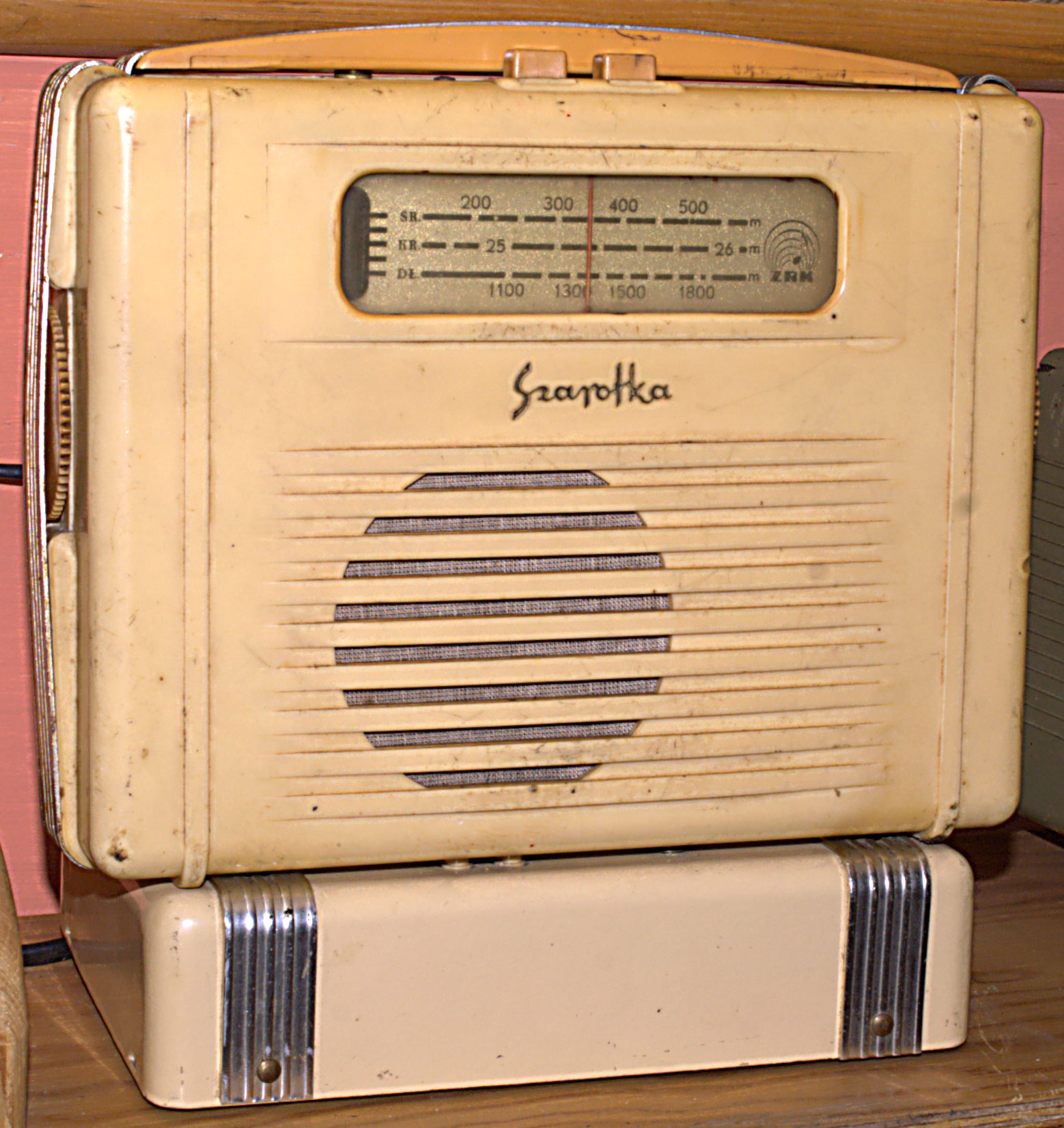
To receive distant broadcasts, shortwave frequencies were used, among others. The signal could return towards the earth after passing through the ionosphere, allowing a station hundreds or thousands of kilometers away to be heard in Poland. However, this did not mean consistent quality. Reception depended on frequency, time of day, antenna, and conditions in the ionosphere. A detailed diagram has been included in the guide to Radio Free Europe.
The authorities of the Eastern Bloc broadcast jamming signals on the same or similar frequencies that hindered reception. A listener might hear buzzing, crackling, or another program instead of the news. Whether the jamming worked depended on the ratio of the strength of the broadcast signal to the interference at the reception location. Listening to a different frequency or using a better antenna could help, but it did not guarantee success.
Not only Radio Free Europe was jammed. The Institute of Literary Research PAN describes Voice of America as a station jammed during the Cold War by the PRL services. The scale and source of interference changed over time, so one should not transfer dates related solely to RWE to every VOA broadcast. Institute of Literary Research PAN; Polish Radio on Western stations.
Was Listening Punishable by Imprisonment?
It is necessary to distinguish listening from other activities and from different historical periods. In Nazi-occupied Poland, there were repressive bans regarding radio receivers and listening to broadcasts. One cannot automatically apply these rules to the entire history of the PRL without checking specific regulations and dates, nor claim that every listener of Voice of America faced imprisonment throughout the post-war period. Jamming, propaganda, and fear of social reaction were real, but they do not prove a uniform punishment for merely listening in all years.
Broadcasting Ship: USCGC “Courier”
Radio from the Deck in the Mediterranean Sea
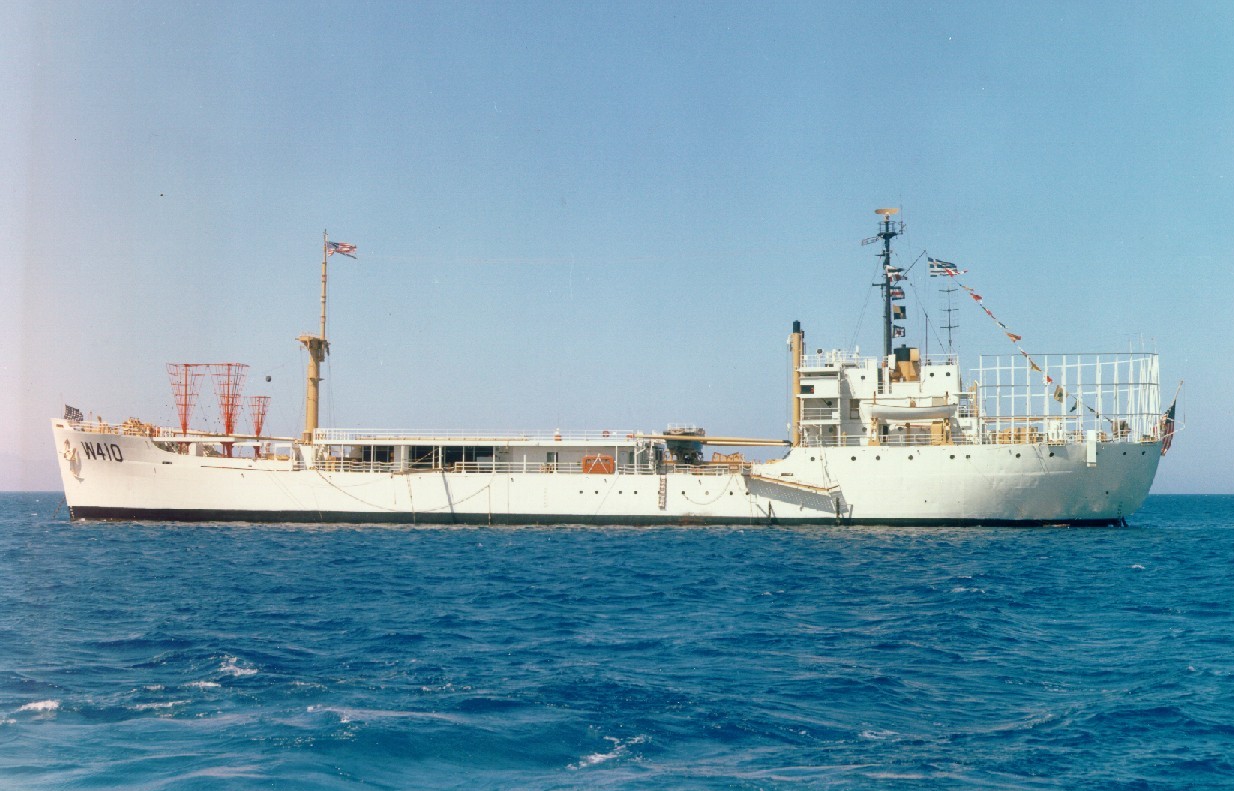
Voice of America once had a broadcasting station on a ship. The “Courier,” operated by the U.S. Coast Guard, entered service in 1952 and worked for nearly 12 years as a relay station near the Greek island of Rhodes. The project aimed, among other things, to improve the reach of American broadcasts and make jamming more difficult.
According to the Coast Guard's history, the vessel transmitted programs in 13 languages and also had a small studio. Both medium-wave and shortwave transmitters were used. This was part of a broader network of Voice of America, not proof that every Polish broadcast was transmitted from this ship. History of USCGC “Courier”.
Transmitter and Balloon Supporting the Antenna
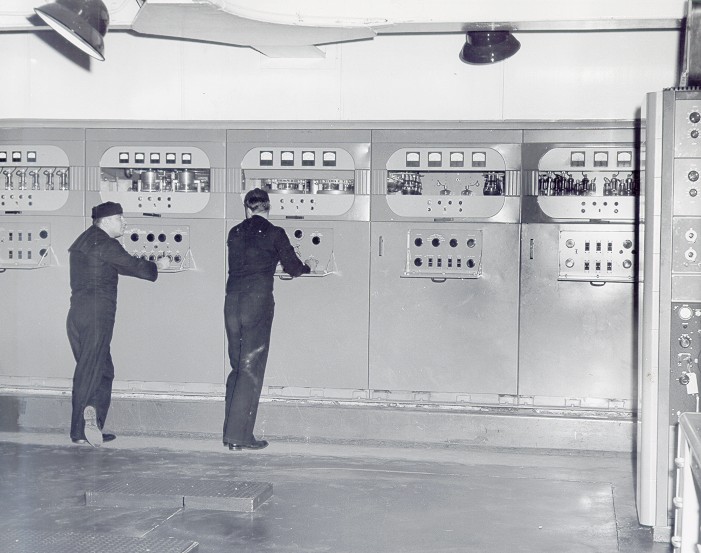
Documents from 1952 listed one medium-wave transmitter with a power of 150 kW and two shortwave transmitters of 35 kW each. One of the most unusual solutions was a tethered balloon that lifted the antenna. However, it required suitable weather conditions and was not the only antenna solution. Coast Guard, “Operation Vagabond,” 1952; Coast Guard, photo of the balloon and antenna.
Solidarity and Martial Law
From August to December 13
The strikes in 1980 and the rise of Solidarity made news from Poland particularly significant for the Washington editorial team as well. The archive of Polish Radio preserves a description of a Voice of America broadcast conducted by Róża Nowotarska, which included reports on the meeting of independent unions in Gdańsk. The recording's side has an automatic date of “1900,” which is not a reliable date for this broadcast, so we do not use it for dating the program. Polish Radio, archival broadcast.
After the introduction of martial law on December 13, 1981, the editorial team increased the number of broadcasts. Jarosław Jędrzejczak states that the Polish program was extended from about two and a half to seven hours a day and additional staff were hired. The then-deputy head of the section, Tadeusz Lipień, also recalls the expansion of the program. These broadcasts do not mean that all seven hours were transmitted without interference or heard throughout Poland. Cold War Radio Museum; Tadeusz Lipień's account.
Sailors of the “Regulus” and the Tape in the IPN Archive
In January 1982, the crew of the Polish ship “Regulus” stopped in Vancouver, Canada. The sailors were worried about their families and the situation in the country, and some decided to stay abroad. A tape was preserved in the records containing a conversation between the sailors and the Polish consul, as well as fragments of Voice of America broadcasts from January 12 and 13, which reported on the protest on the ship and the situation of Polish deep-sea crews. The history and recording are described by the IPN Archive.
This is also a story about the Polish diaspora: a picket took place at the waterfront involving people living in Canada. Foreign radio connected news about the country with the fate of Poles who found themselves outside it.
“Let Poland Be Poland”
In January 1982, the American administration prepared a television program “Let Poland Be Poland,” dedicated to supporting Poles after the introduction of martial law. Voice of America broadcast its audio version. Tadeusz Lipień notes that VOA did not produce the television program itself. It is therefore important to distinguish its preparation by the American news agency from the later radio transmission. Tadeusz Lipień's account.
After 1989: Why Did the Polish Section Fall Silent?
After the political changes in Poland, Western broadcasters no longer needed to replace censored media in the same role as before. Instead, the possibility of collaboration with domestic broadcasters opened up. The Cold War Radio Museum describes the Polish-English news programs of VOA and Polish Radio in 1990, as well as earlier television collaboration. Cold War Radio Museum.
The editorial team was gradually limited. The museum states that direct radio broadcasts ended on July 28, 2000, and later a three-person team prepared a shorter program available online and retransmitted by partner stations in Poland. According to this description, the broadcast of online programs ended on February 27, 2004, and the last message on the section's website appeared on May 4. Other sources refer to February 27, 2004, as the date of the last Polish broadcast from Washington. Thus, the dates of 2000 and 2004 may refer to different stages, not necessarily the same moment. Museum, history of the section; Institute of Literary Research PAN.
Where Can You Listen to Old Broadcasts Today?
The archive of Polish Radio contains descriptions and recordings of Voice of America broadcasts. The Hoover Institution preserves, among other things, recordings of conversations with Jan Karski, conducted mostly in Polish. These also include other programs, such as English lessons. Access to individual materials and the ability to listen to them may vary. Hoover Institution, recordings with Jan Karski; Polish Radio on conversations with Karski.
Voice of America and Independence
What is Written in the VOA Charter?
In 1976, President Gerald Ford signed a law containing the Voice of America charter. It obliges the station to provide accurate and as complete news as possible, to present American society in its diversity, and to explain U.S. policy along with responsible discussion about it. Therefore, it is not the case that VOA was to hide the fact of government funding; at the same time, statutory standards were meant to protect journalistic integrity. VOA, mission and charter.
The law regarding American international broadcasting also provides for the protection of editorial decisions from political interference, known in English as firewall. This is a legal principle whose effectiveness and limits have been the subject of disputes. Neither government funding in itself nor the existence of the charter proves that every broadcast throughout the station's history was free from pressure.
Crises Following the 2025 Decisions
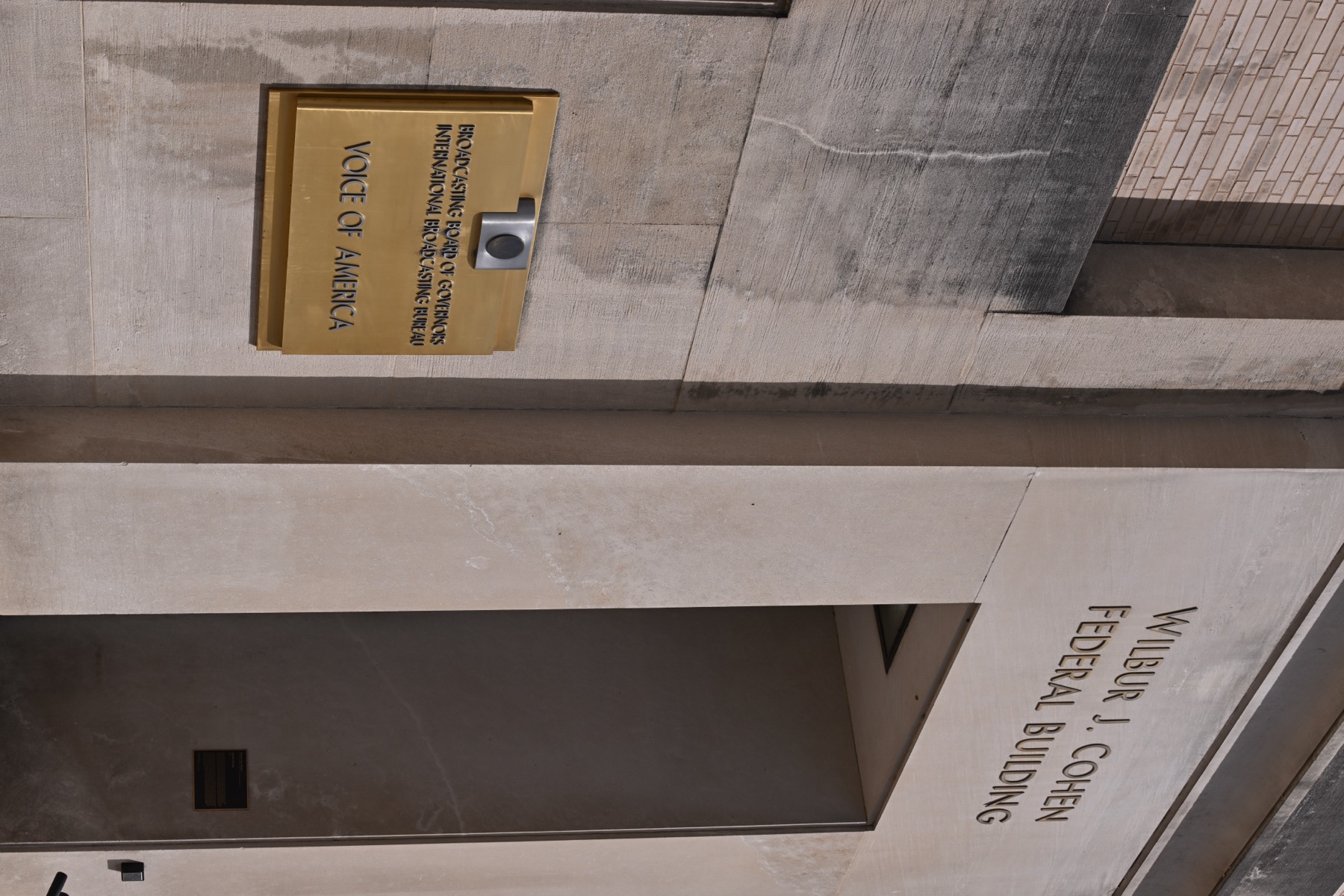
In March 2025, President Donald Trump signed an order mandating the restriction of the activities of the American agency USAGM. The next day, the agency took actions including sending employees on paid administrative leave and canceling many contracts. This led to legal disputes over the legality of the restrictions and the future of the station.
In March 2026, a federal judge ordered the restoration of operations and the return of employees, but the appellate court stayed the execution of this order while considering the appeal. In September 2026, the Inspector General of the State Department stated that USAGM had not demonstrated, among other things, appropriate planning for service continuity and employment when limiting operations. The situation remained contentious, so it should not be presented as a simple definitive end to the entire institution, nor as a return to former operations. Status of information: November 2026. Associated Press, appellate court decision; State Department Inspector General's report.
Frequently Asked Questions
Did Voice of America Broadcast in Polish?
Yes. Polish broadcasts began in 1942. After the Cold War, their reach and duration were gradually reduced, with the last Polish broadcast from Washington dated February 27, 2004.
Did Willis Conover Lead the Polish Section?
No. He hosted the English-language music program of Voice of America. However, he had many listeners in Poland and visited Warsaw in 1959.
Did Voice of America Operate for the Polish Diaspora?
The American international broadcaster was primarily aimed at audiences outside the USA, including Poles in the country. However, Polish diaspora journalists co-created the broadcasts, and topics of emigration and Poles abroad also appeared in them. It should not be equated with every local Polish diaspora station in the United States.
Did Voice of America and Radio Free Europe Have the Same Editorial Team?
No. They had separate editorial teams and different organizational bases, although they were funded by the USA and both broadcast to Poland. The Polish team of RWE is primarily associated with Munich, while the Polish section of Voice of America is associated with Washington.
Comments (0)
No comments yet. Be the first!