The story behind the recipe
The word "pâté" comes from the German Pastete, which is derived from the Old French pasté, related to the Italian pasta, meaning dough. The National Center for Culture cites dictionaries stating that in old Polish, it was also referred to as "ta paszteta," "ten paszt," and "past," indicating that the dish likely came to Poland from Germany in the 16th century. Back then, pâté was a filling baked in dough, made from meat, fish, or vegetables. Lind's dictionary from the 19th century defines it as "Various meats or dishes baked in dough."
Polish Wikipedia states that pâtés were known in ancient Rome, and from the 16th century, French pâté makers worked at royal and noble courts, including in Poland. Today's homemade pâté is derived from that dish. According to the NCK, it is often served at Easter; Smaker lists it among Easter dishes alongside żurek and mazurek, and Ania Gotuje mentions that it is made for Easter and Christmas. The same word gave rise to the saying "niezły pasztet," meaning a troublesome situation.
The ordinary homemade pâté is not on the Ministry of Agriculture's List of Traditional Products, but there is "Goose Pâté" from the West Pomeranian Voivodeship, registered in 2014. It is made from goose, bacon, goose liver, onion, dried mushrooms, eggs, and soaked bread, topped with marjoram. The recipe was brought by former residents of Kashubia and was maintained by a family that settled in Szczecin in 1947. In 2009, the pâté won first place in the "Our Culinary Heritage" competition.
Ingredients
Meat for Cooking
-
300 g pork shoulder (cut into 3 cm (1¼ inch) cubes)
Abroad: USA: pork shoulder or pork butt (Boston butt); UK: pork shoulder; Germany: Schweineschulter or Schweinenacken -
350 g chicken leg quarter (1 piece, weight with bone, about 220 g meat)
Abroad: USA: chicken leg quarters or thighs; UK: chicken legs or thighs; Germany: Hähnchenschenkel -
150 g raw bacon without skin or jowl
Abroad: USA: fresh pork belly (not smoked bacon) or pork jowl; UK: unsmoked pork belly; Germany: frischer Schweinebauch -
150 g chicken liver (cleaned of membranes and veins)
Abroad: chicken livers; Germany: Hähnchenleber or Geflügelleber - 120 g onion (1 piece, cut into thick slices)
-
2 pcs bay leaves
Abroad: bay leaves; Germany: Lorbeerblätter -
3 pcs allspice (whole berries)
Abroad: whole allspice; Germany: Piment - 100 ml water
Filling
-
0.5 pc stale kaiser roll (or 1 small stale bun, about 40 g)
Abroad: USA: kaiser roll or regular white bun; UK: white bap or crusty roll; Germany: Kaiserbrötchen or Semmel - 2 pcs eggs (size M or L, yolks separated from whites)
- 1 tsp salt (flat, about 6 g, to taste)
- ½ tsp (2.5 ml) black pepper (freshly ground)
-
¼ tsp (1.3 ml) nutmeg
Abroad: nutmeg; Germany: Muskatnuss -
1 tsp (5 ml) dried marjoram (not necessarily)
Abroad: dried marjoram; Germany: Majoran - ground ginger (a pinch, not necessarily)
Loaf Pan (about 20×9 cm, or 8×3½ inches, about 1 l)
-
1 tsp (5 ml) lard or butter (for greasing)
Abroad: lard or butter; Germany: Schweineschmalz or Butter -
1 tbsp (about 7 g) breadcrumbs
Abroad: plain dry breadcrumbs (not panko or seasoned); UK: dried breadcrumbs; Germany: Paniermehl -
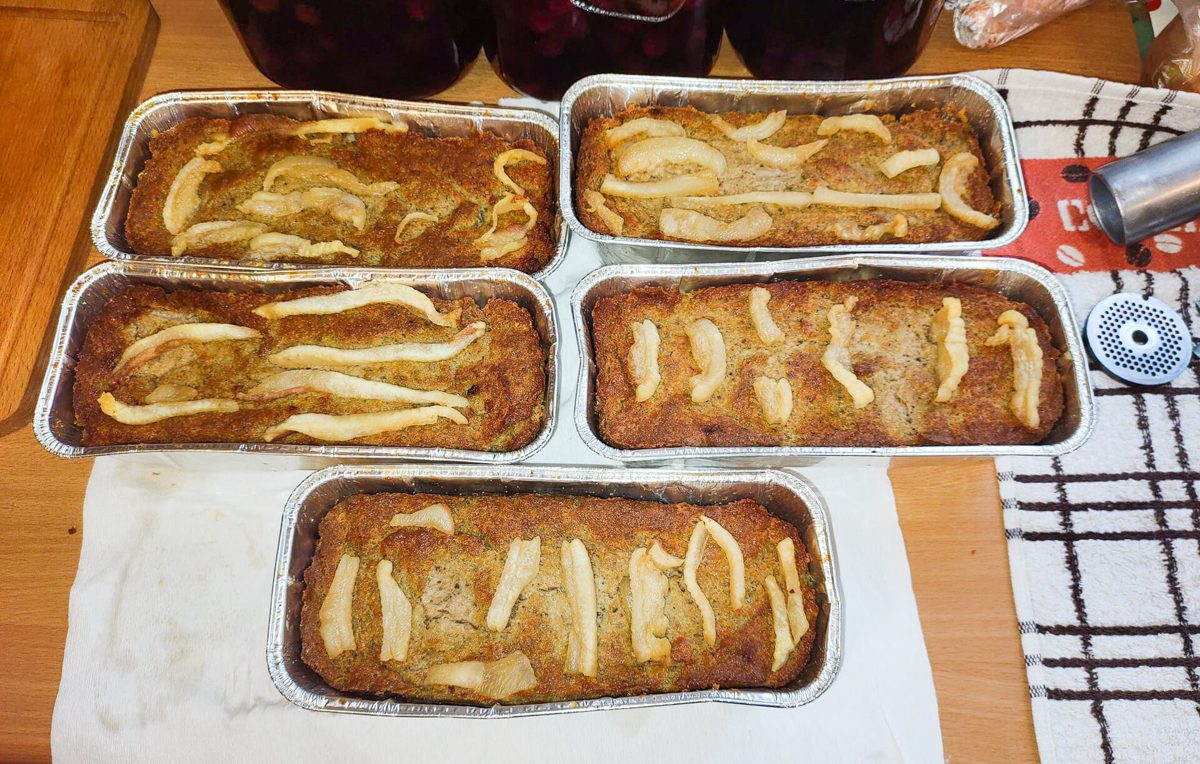
80 g bacon in thin slices (not necessarily, for lining the bottom)
Abroad: USA: thinly sliced pork belly or unsmoked bacon; UK: unsmoked streaky bacon; Germany: Bauchspeck in Scheiben, grüner Speck
Method, step by step
-
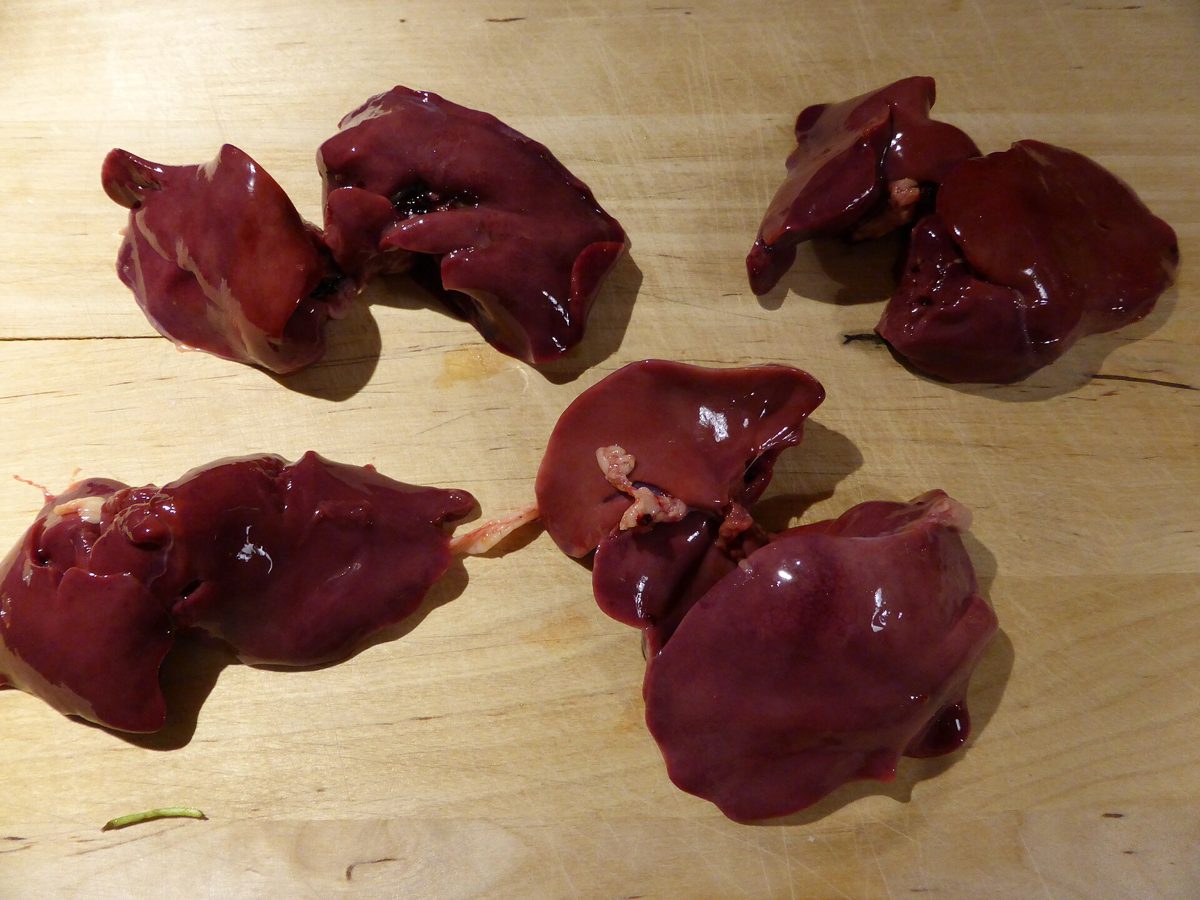
Rinse the liver, dry it, and clean it of membranes and veins, then cut it into pieces. Store it in the fridge until step 4.
-
Place the bacon or jowl at the bottom of the pot, then add the pork shoulder and chicken leg quarter, and top with the onion. Add bay leaves, allspice, and 100 ml of water. There should be little water, as the meat will release its own juices.
-
Cover the pot and simmer on low heat for about 1.5 hours, until the meat is very tender. Check occasionally to ensure nothing evaporates or sticks.
-
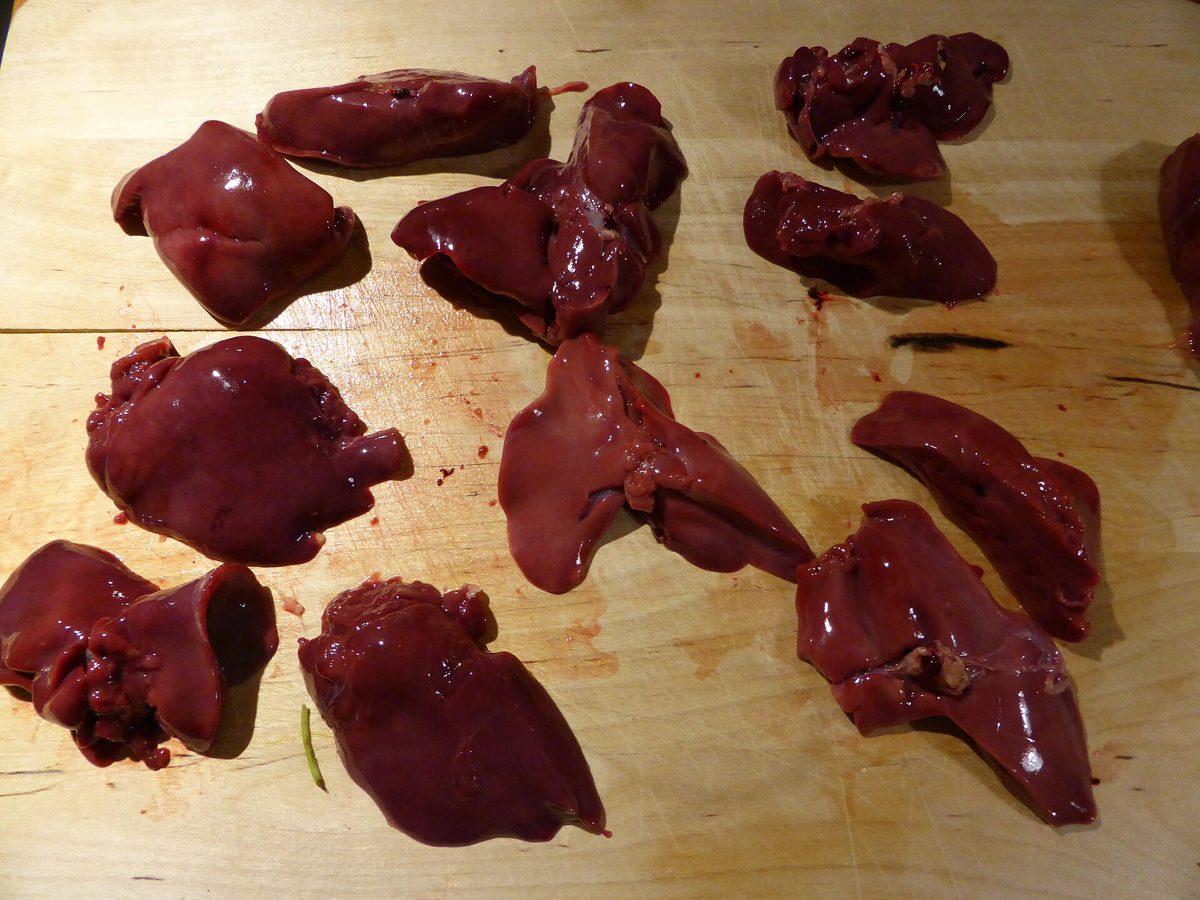
In the last 5–10 minutes, add the liver to the pot. Do not cook it longer.
-
Remove the pot from the heat, take out the bay leaves and allspice, and debone and skin the chicken. Push the bread into the hot broth to soak it. Cool everything completely, preferably overnight in the fridge, in the broth.
-
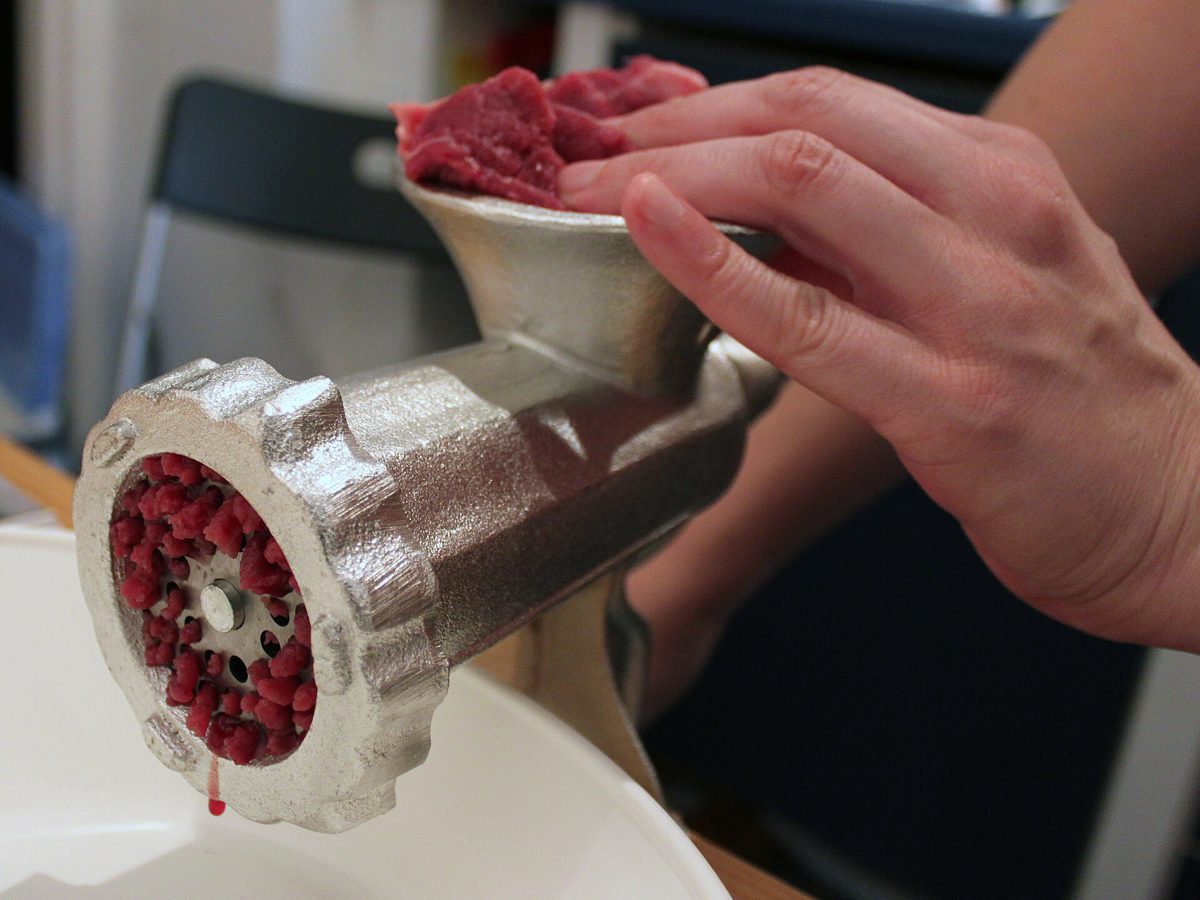
Grind the meat, liver, onion, and bread together with the broth two or three times through a fine sieve of the grinder.
-
Season the mixture with salt, pepper, nutmeg, and, if desired, marjoram and a pinch of ginger, then mix in the yolks. Taste now: the mixture is cooked, and pâté is eaten cold, so season it clearly. Beat the egg whites to soft peaks and gently fold them into the mixture.
-
Preheat the oven to 180°C (350°F), top and bottom heat. Grease the loaf pan with lard or butter, sprinkle with breadcrumbs, and line the bottom with bacon slices. Transfer the mixture, pressing it down firmly to avoid air bubbles, and smooth the top. If desired, place a dish of hot water on the lower shelf.
-
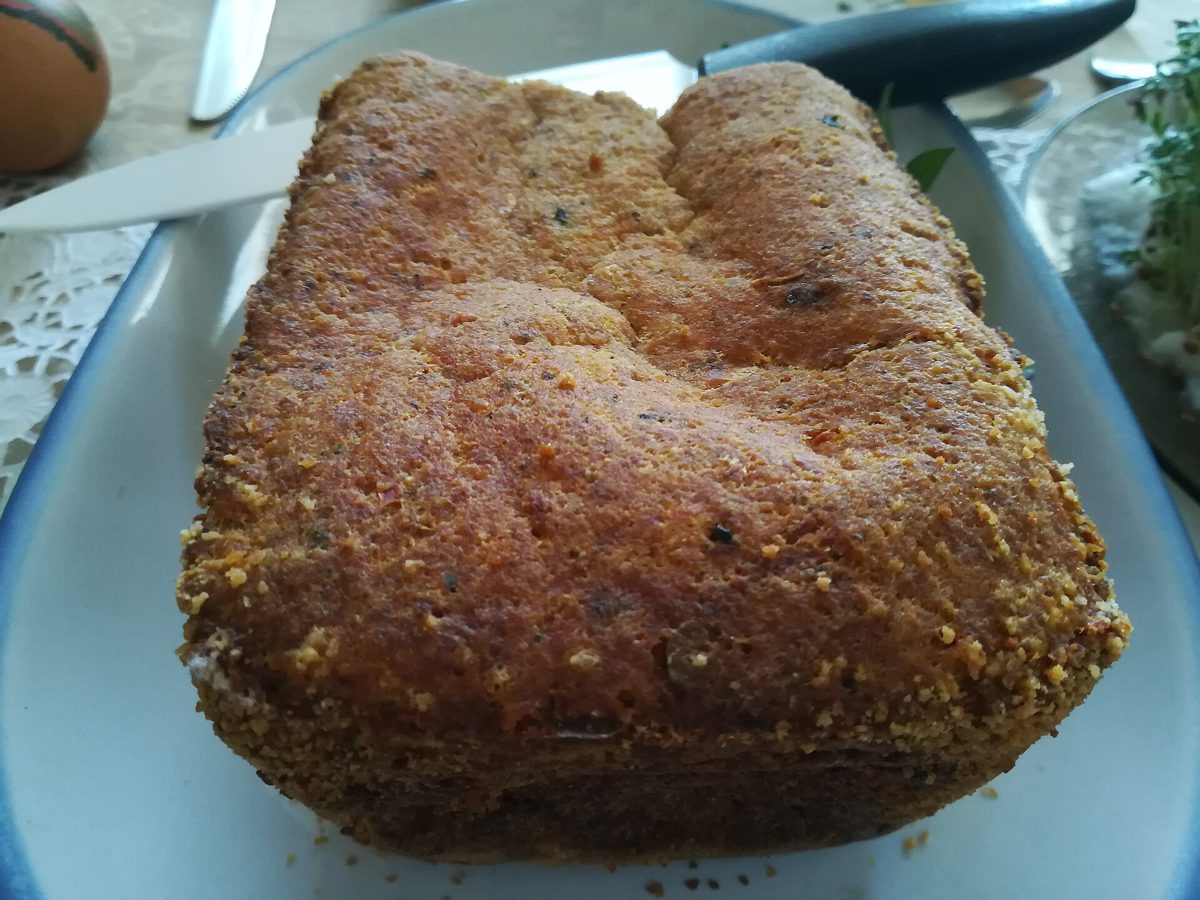
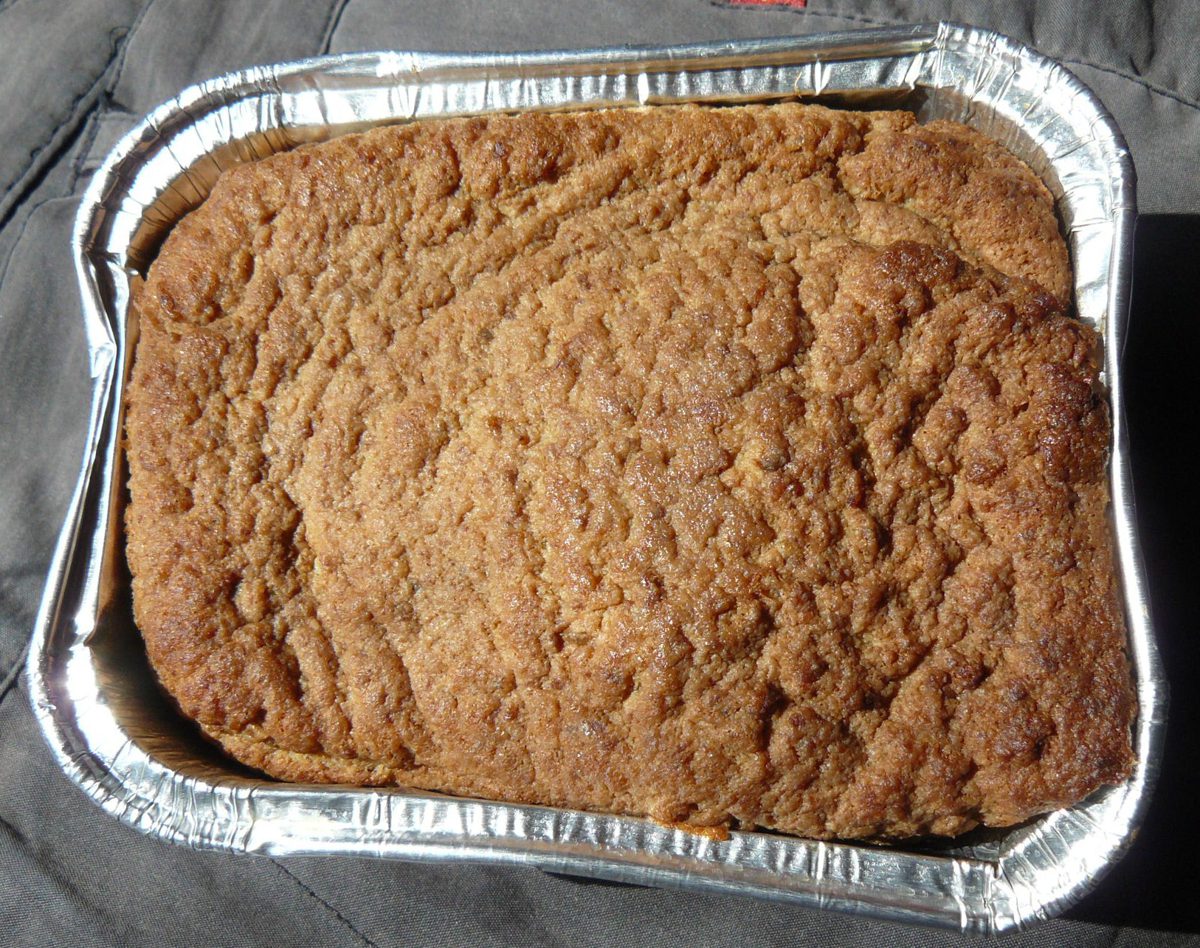
Bake for about 60–70 minutes, until the top is deep golden and the edges pull away from the pan. If the top browns too quickly, cover it with foil after about 40 minutes. Check the thermometer in the center of the pâté: it should reach 74°C (165°F).
-
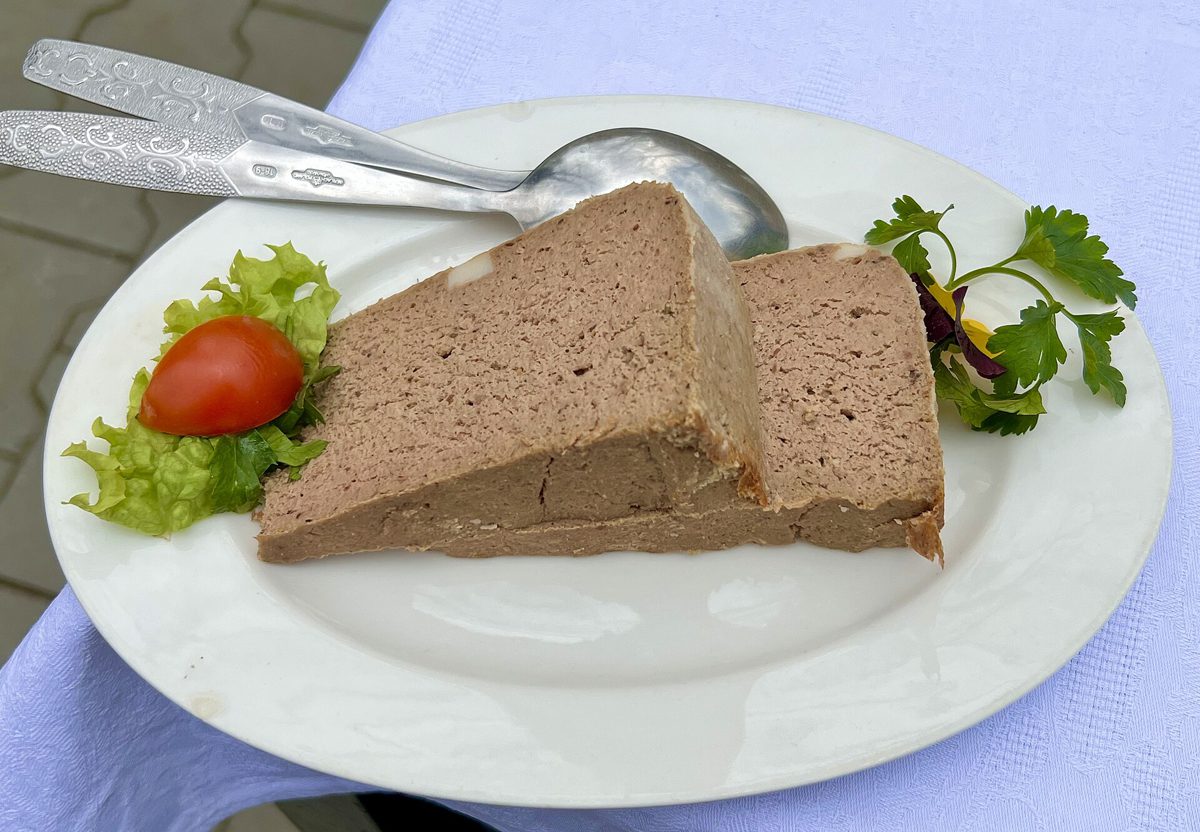
Cool the pâté in the pan, then place it in the fridge overnight. Remove from the pan and slice only when completely cold.
Photos