The story behind the recipe
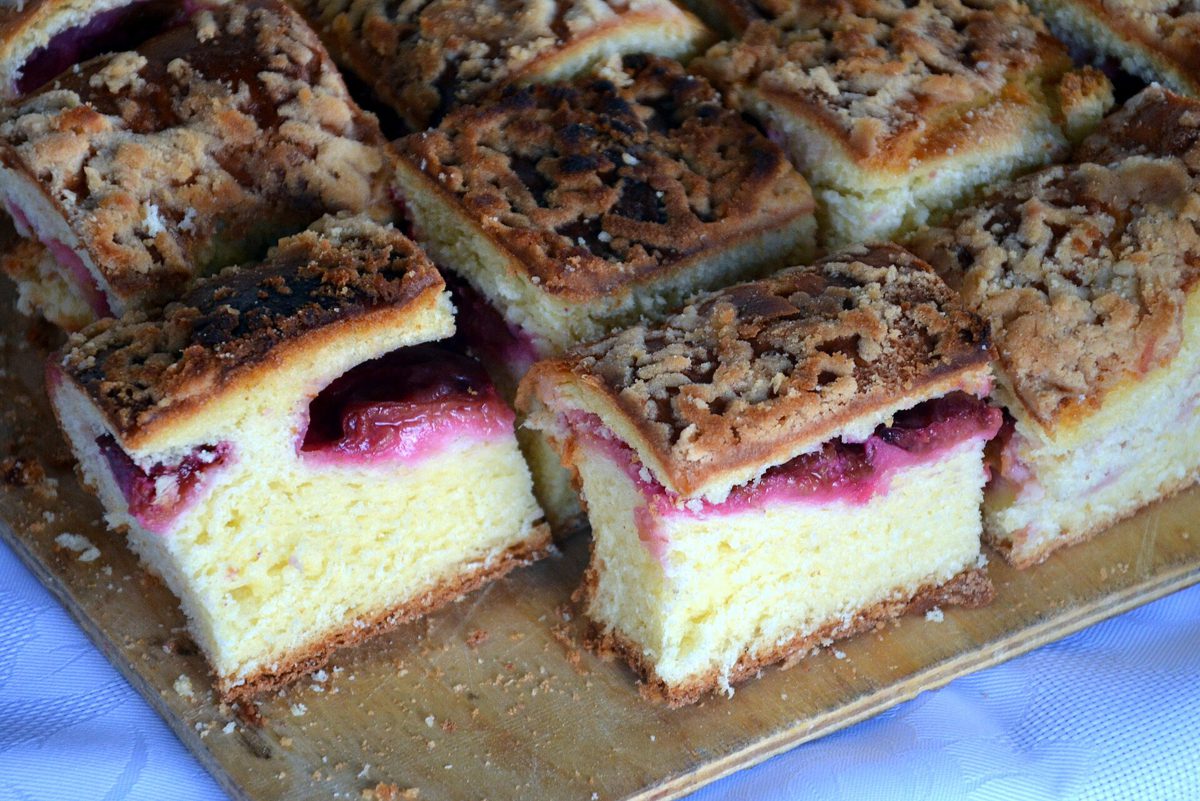
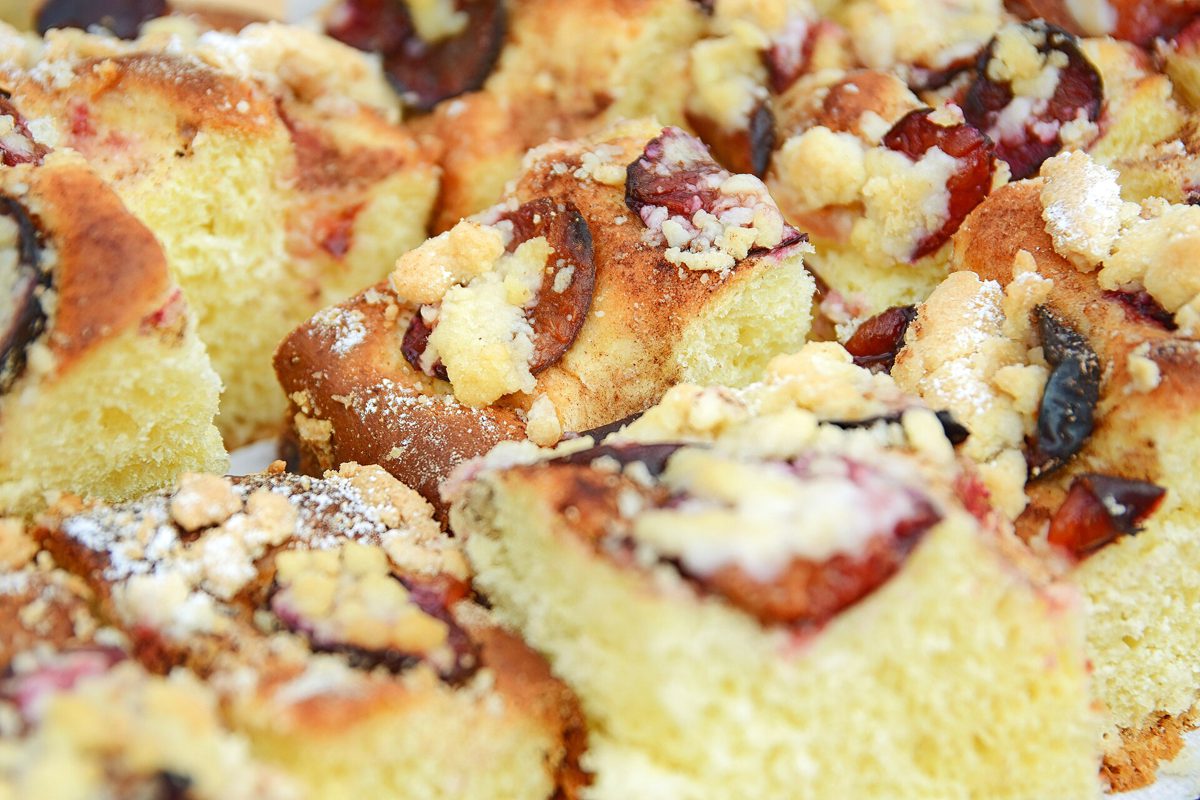
Yeast cake with plums, also known as yeast dough with plums or drożdżówka ze śliwkami, is baked in Poland when plums are in the orchards. The Polonist writes that Polish orchards are abundant with them from mid-summer to late autumn, and for the cake, one uses węgierki: oval-shaped, with thick purple skin and firm yellow flesh. According to Polish Wikipedia, the common węgierka is a very old variety from the late-ripening group, harvested in Poland from mid-September to the end of October, and most likely came to Poland from Hungary, hence its name. The Polonist, citing the memories of Aleksandra Piłsudska, names Józef Piłsudski as the most famous lover of plum cake.
The yeast cake with plums does not have its own entry on the List of Traditional Products nor EU name protection. The closest relative on the List is "Crumble Cake from the Kłodzko Land": fluffy yeast dough with a layer of poppy seeds, cheese, or seasonal fruits under buttery crumble. The card states that the basic crumble cake was enriched with fruits depending on the season, and in winter with poppy seeds or cheese, and that the Silesian writer Ernst Schenke wrote a poem in the Kłodzko dialect called "Pflaumakucha," which is about crumble cake with plums. German Wikipedia describes Zwetschgenkuchen as a traditional yeast cake with halved or quartered plums and often with crumble, known as a summer cake, and lists old regional names: in Augsburg Zwetschgendatschi, noted in a dictionary from 1792, and in Silesia Pflaumakucha.
This cake is a relative of the Silesian kołocz, but constructed differently. Kołocz has two thin layers of dough pricked with a fork so they don't rise too much, a filling in the middle, and a thick topping of crumbs the size of nuts; the EU specification lists four varieties, none of which contain plums. Here, there is one thick layer of dough, which rises again on the tray after the fruit is placed, and the crumble is fine and only lightly sprinkles the plums. There is also a regular "Yeast Cake" from Kujawy and Pomerania on the List of Traditional Products: in the early 20th century, it was baked only for holidays or fairs, but over time it became a daily snack, eaten with homemade jam or butter and warm milk.
Ingredients
Yeast Dough (tray 23×33 cm, or 9×13 inches)
-
400 g all-purpose flour (type 450 or 500, plus a little for dusting)
Abroad: USA and Canada: all-purpose flour; UK: plain flour; Germany: Type 405 or 550 -
20 g fresh yeast (or 7 g instant yeast)
Abroad: USA: fresh cake yeast can be hard to find; instead use 7 g instant yeast or 8 g active dry yeast - 200 ml milk (lukewarm, no more than 37°C, or 99°F)
- 70 g sugar
- 1 pc egg (at room temperature)
- 2 pcs egg yolks
-
70 g butter (melted and cooled, plus a little for greasing the tray)
Abroad: unsalted butter -
1 package vanilla sugar (about 16 g, not necessary)
Abroad: Germany: Vanillezucker; USA and UK: 1 teaspoon vanilla extract - 1 pinch salt
Fruits
-
800 g węgierki plums (ripe but firm; weight includes pits)
Abroad: USA and Canada: Italian prune plums or prune plums; Germany: Zwetschgen; Austria: Zwetschken; elsewhere, firm red or dark plums -
1 tbsp (about 9.5 g) potato flour (only for very juicy plums, not necessary)
Abroad: potato starch / Kartoffelstärke or cornstarch
Crumble
-
120 g all-purpose flour
Abroad: all-purpose flour / plain flour / Type 405 -
80 g butter (cold)
Abroad: unsalted butter - 70 g sugar
- ½ tsp (2.5 ml) cinnamon (not necessary)
To Finish
-
powdered sugar (for dusting, not necessary)
Abroad: powdered sugar / icing sugar
Method, step by step
-
Starter: crumble the yeast in a bowl, add a teaspoon of sugar and a teaspoon of flour from the given amount, pour in lukewarm milk, no more than 37°C (99°F), and mix well. Cover and set aside in a warm place for 10–20 minutes until the starter is frothy and rises. If it doesn't activate, start over.
-
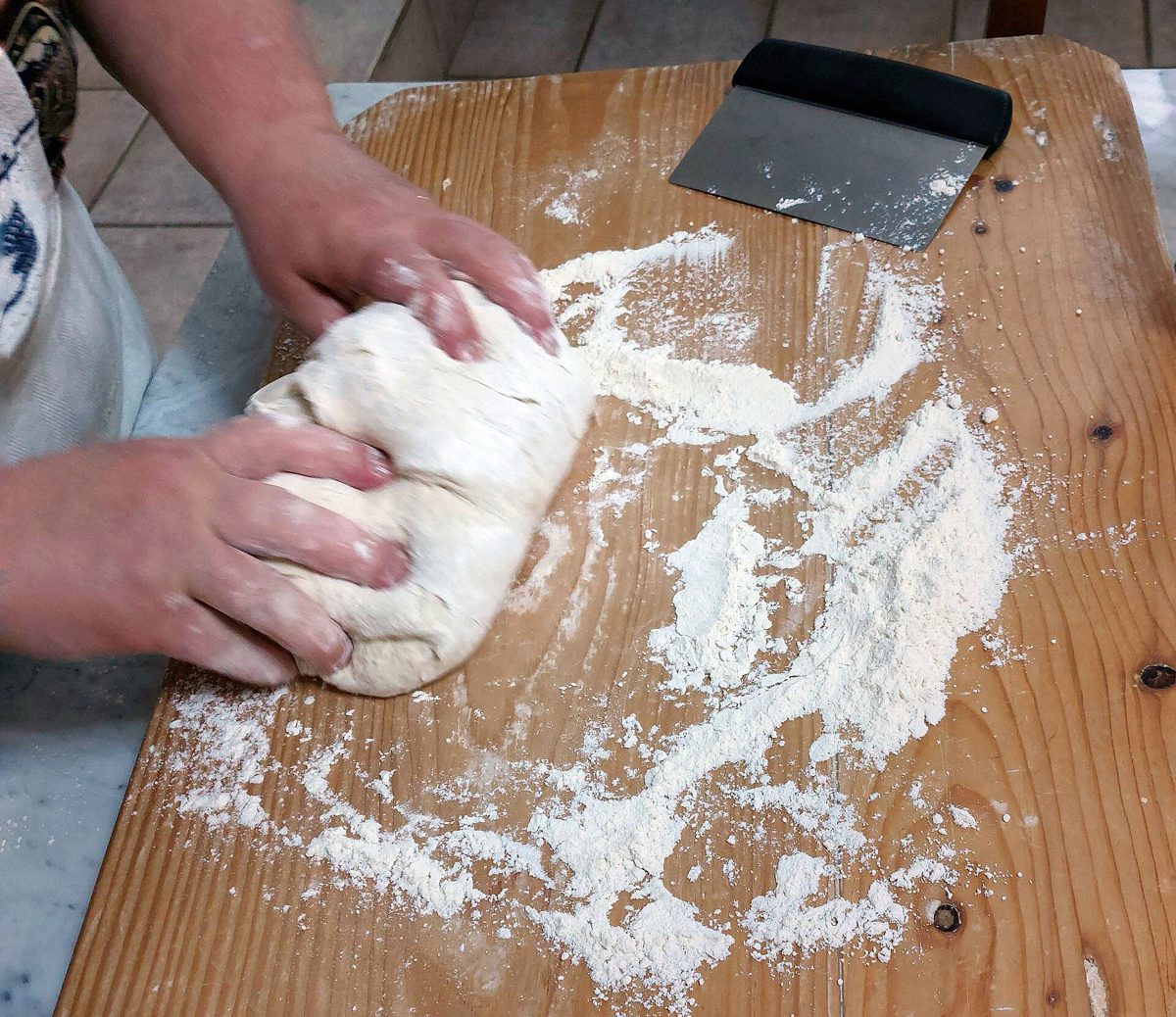
Sift the flour into a large bowl and make a well in the center. Beat the egg and yolks with the remaining sugar, vanilla sugar, and salt. Pour the starter into the well, mix by incorporating the flour, and gradually add the eggs. Knead by hand or with a mixer hook for about 10 minutes, then gradually add the melted, still lukewarm butter and knead for a few more minutes until the dough is smooth, elastic, and no longer sticky to the hands. It may remain quite soft; do not add too much flour.
-
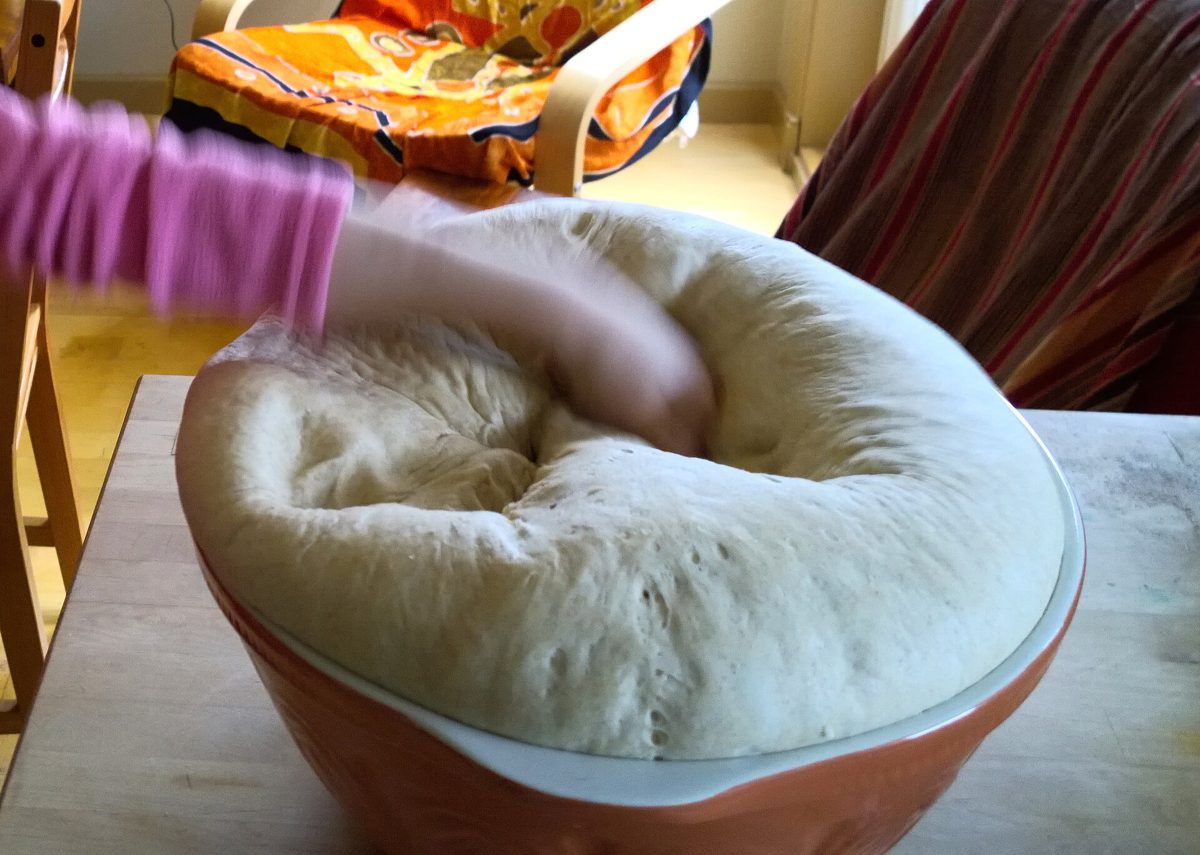
Cover the bowl with a cloth and let the dough rise in a warm place without drafts for 1–1.5 hours, until it has visibly doubled in size.
-
Crumble: cut the cold butter into small cubes, add flour, sugar, and cinnamon if using, and quickly rub with your fingers until small, moist crumbs form. Store the bowl in the fridge until needed.
-
Wash the plums, dry them, cut them in half lengthwise, and remove the pits. Leave the węgierki in halves, and cut larger plums into quarters. If they are very juicy, coat them in a tablespoon of potato flour.
-
Grease the 23×33 cm (9×13 inch) tray with butter and dust with flour or line with baking paper. Transfer the risen dough from the bowl to the tray and gently stretch and flatten it with your fingers across the bottom, all the way to the edges. Do not roll it out or poke it: it should remain fluffy.
-
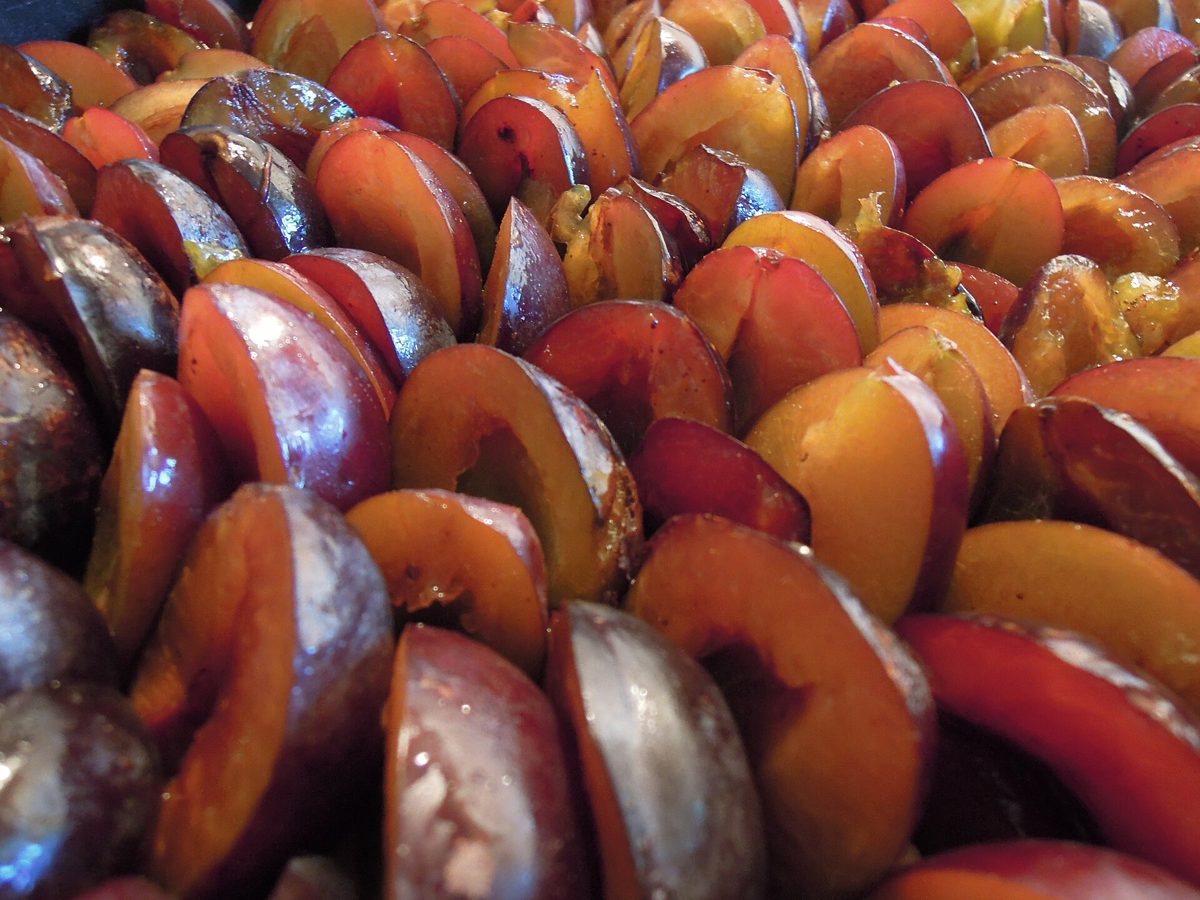
Arrange the plums on the dough cut side up, side by side, in even rows, and gently press them into the dough.
-
Take the crumble out of the fridge, break it up with your fingers, and sprinkle it evenly and finely over the plums. Cover the tray with a cloth and let the cake rise for 20–25 minutes until the dough visibly puffs up around the fruit. Meanwhile, preheat the oven to 180°C (350°F), top and bottom, without convection.
-
Bake at 180°C (350°F) on the middle rack for about 35 minutes, until the crumble is golden and the edges of the cake are browned. Check with a toothpick inserted into the cake between the plums: it should come out dry, without raw dough.
-
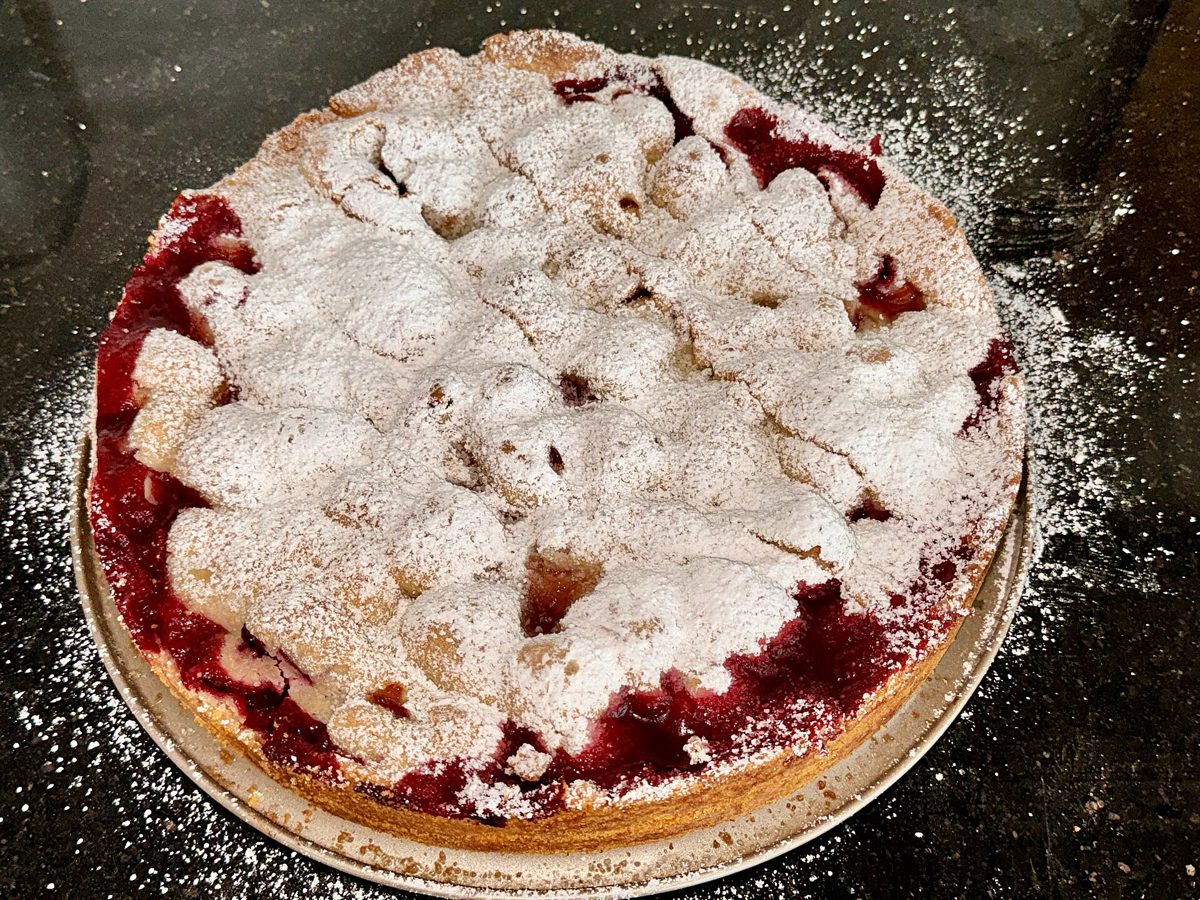
Cool the cake in the tray on a rack. Before serving, you can dust it with powdered sugar through a sieve. Cut into 15 pieces, in 3 rows of 5.
Photos