The story behind the recipe
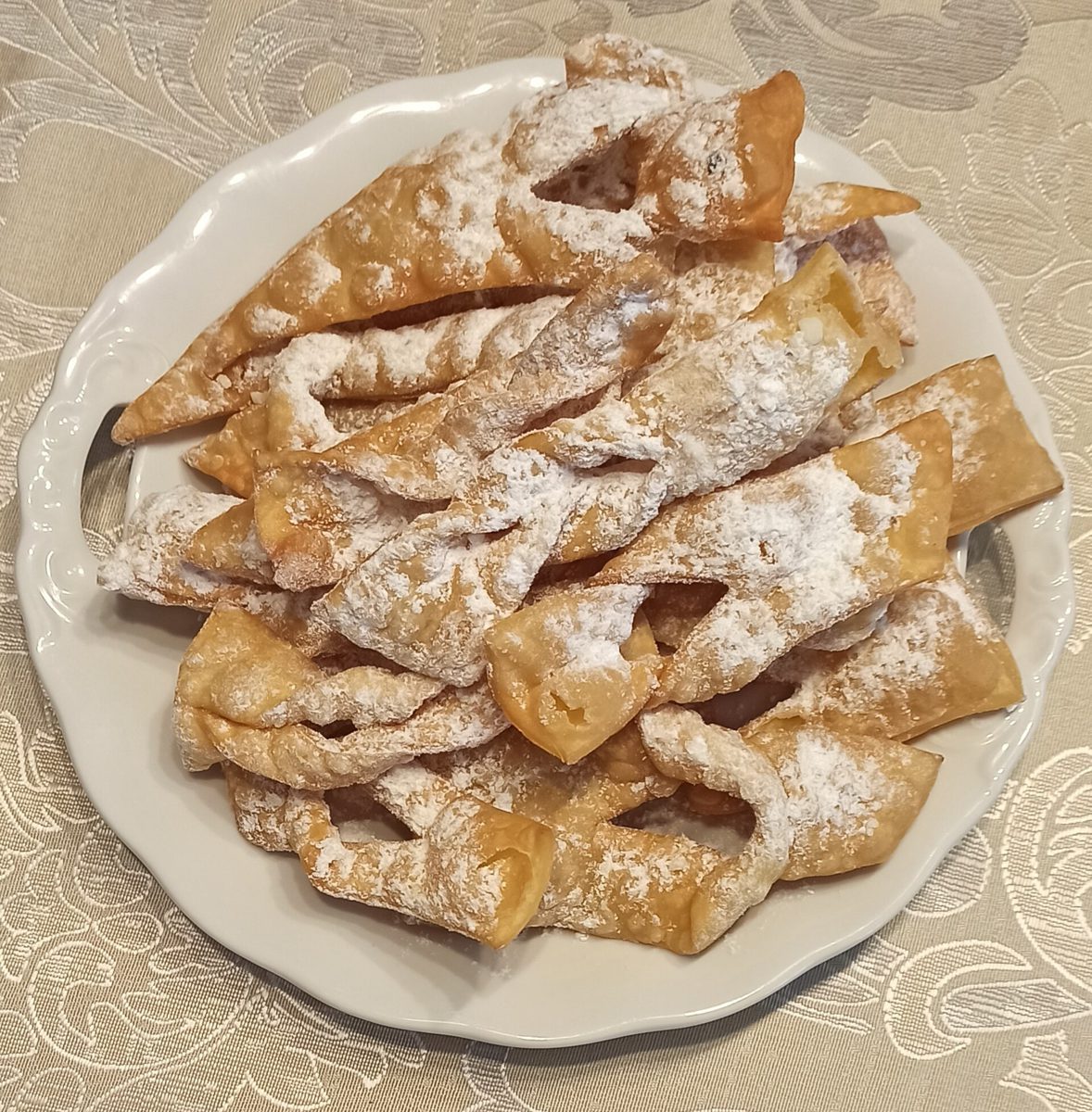
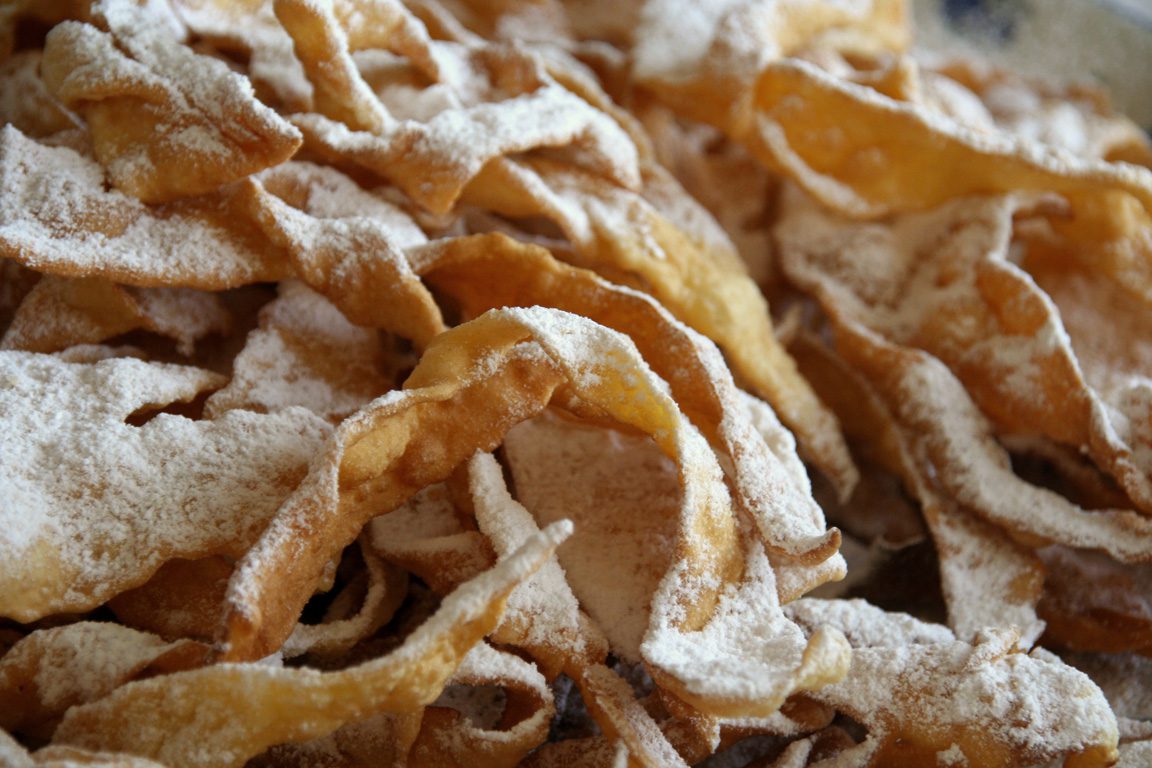
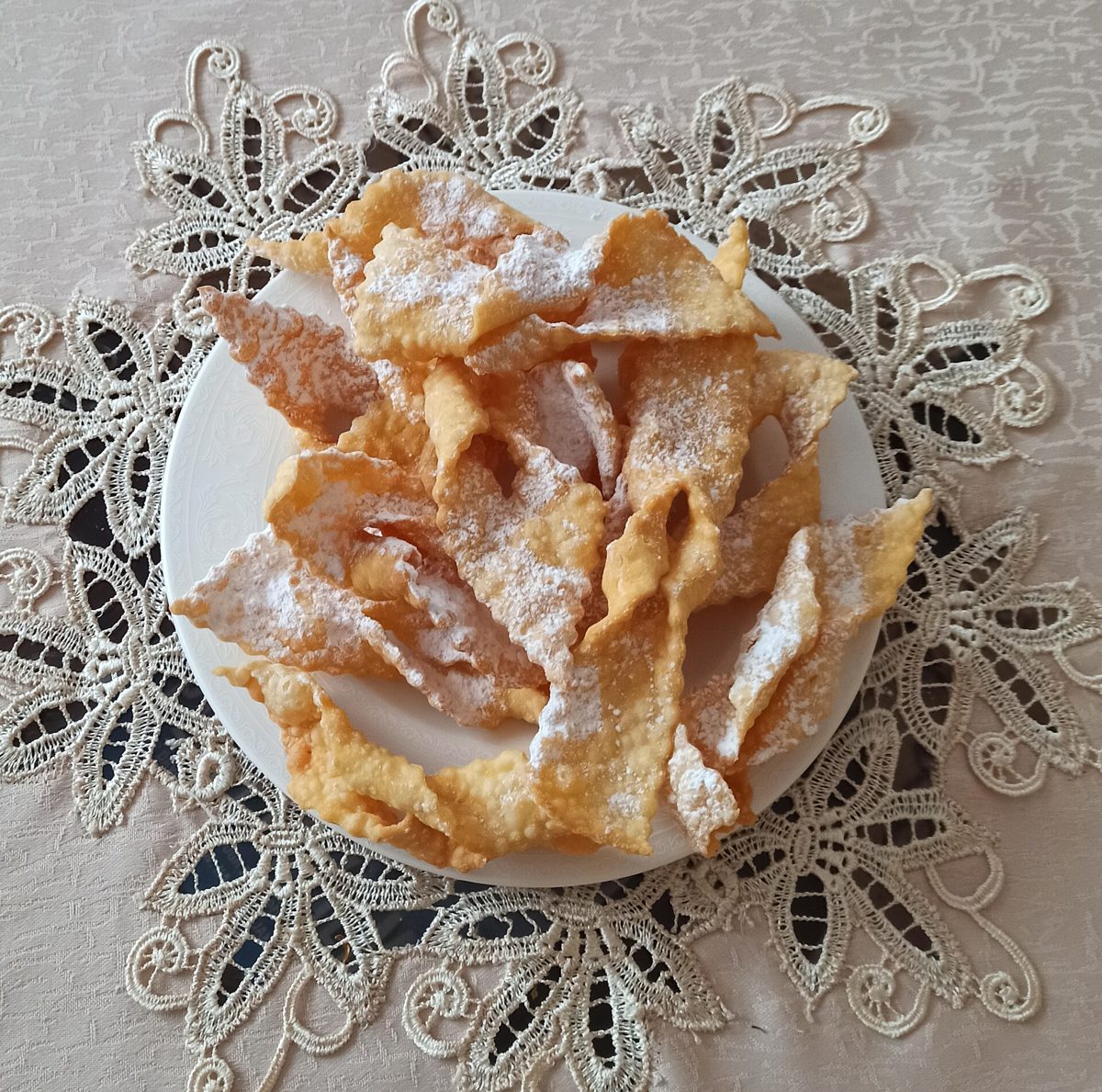
Faworki have many names in Poland: chrust, chrustek, chruściki, and formerly also kreple, although this word now mainly refers to pączki (Polish doughnuts). Polish Wikipedia traces 'faworki' back to the French *faveur*, meaning 'narrow ribbon, silk ribbon', while the English translation refers to it as 'grace' or 'favor'. Chrust means dry branches, and chruścik is its diminutive. In traditional Polish cuisine, faworki or chrust referred to any small pieces of fried dough. Adam Fischer wrote in 1926: 'pączki or kreple in the west, faworki in Mazovia'.
Faworki are most often eaten during Carnival, on Fat Thursday, and on the last day before Ash Wednesday. Since June 30, 2006, 'Grochowinki kociewskie (chruściki, faworki)' from Pomerania has been on the List of Traditional Products of the Ministry of Agriculture. They are made with fresh village eggs, wheat flour from the fields of Kociewie, and homemade cream, and fried 'in lard produced by traditional methods'. They were made on long winter evenings, especially at the end of Carnival, according to a recipe from the 1970s preserved by a local hostess. Since 2011, the Silesian chrustek has also been on this list according to the Ministry of Digitization.
Similar pastries are known to neighbors: Germans have Raderkuchen and Liebesschleifen, Lithuanians have žagarėliai, Ukrainians have wierhuny, and Italians have chiacchiere. Polonist also provides a foreign spelling 'kruschiki'. According to English Wikipedia, many ethnic bakeries in Cleveland, Chicago, Buffalo, and Detroit bake them especially for Easter and Christmas, and Polonist notes that the Polish diaspora also enjoys faworki during these holidays.
Ingredients
Dough (about 40–50 pieces)
-
300 g all-purpose flour (type 405 or 450)
Abroad: Germany: Type 405; USA: pastry flour or all-purpose flour - 4 pcs egg yolks (at room temperature)
-
120 g thick sour cream 18% (about 5 tablespoons, at room temperature)
Abroad: USA: sour cream; Germany: Schmand or saure Sahne -
1 tbsp (about 7 g) powdered sugar
Abroad: USA: powdered sugar; UK: icing sugar; Germany: Puderzucker - 1 pinch salt
-
1 tbsp (15 ml) spirit 95% (not necessary; or 10% spirit vinegar)
Abroad: 1 tablespoon of vodka or 2 tablespoons of rum
For frying and serving
-
1 kg lard (up to 1.5 kg, depending on the pot; or 1.5–2 l of oil)
Abroad: USA and UK: lard; Germany: Schweineschmalz -
30 g powdered sugar for dusting (can be mixed with vanilla sugar)
Abroad: USA: powdered sugar; UK: icing sugar; Germany: Puderzucker
Method, step by step
-
Take all the ingredients out of the fridge in advance so they reach room temperature. Sift the flour onto a board or into a bowl, make a well, and add the yolks, powdered sugar, cream, salt, and spirit. Combine the ingredients and knead for about 5 minutes. The dough will be hard and compact.
-
Aerate the dough: roll it out, fold it in half, and roll it out again, occasionally beating it hard with a rolling pin. Do this for 10–15 minutes or longer, until air bubbles appear in the cross-section. It will go faster if you pass the dough through a meat grinder 2–3 times.
-
If you have time, wrap the dough in plastic wrap and let it rest for 30–60 minutes. Polonist skips this step.
-
Divide the dough into 2–3 parts. Roll each part very thin, to 1–2 mm, until it is almost transparent, keeping the remaining parts covered with plastic wrap. If the dough shrinks, cover it with a cloth for a few minutes.
-
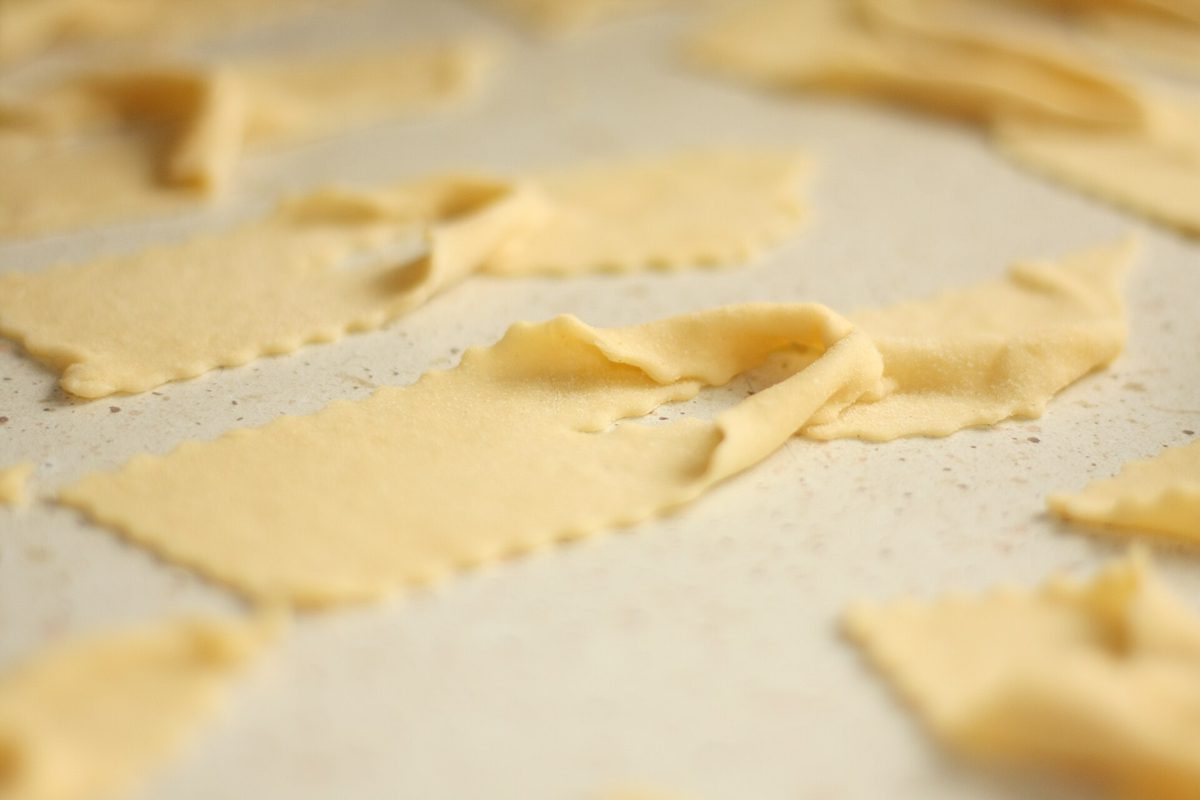
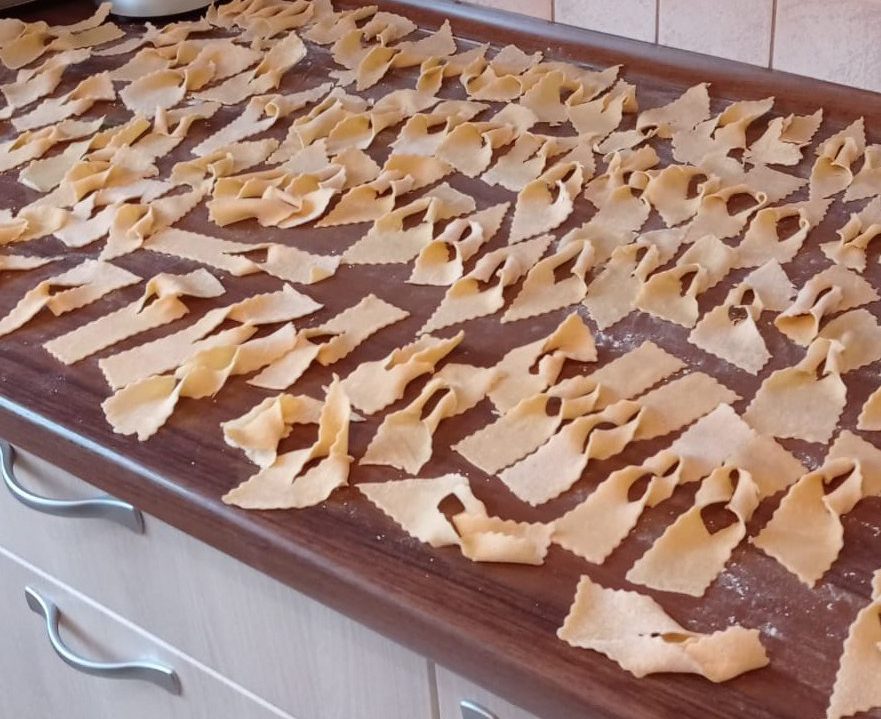
Cut the dough with a pastry wheel or knife into strips measuring about 3 × 10 cm, and cut the ends diagonally. Make a slit down the middle of each strip.
-
Take one end of the strip and pass it through the slit, then gently straighten it.
-
Lay the finished faworki on a countertop and cover them to prevent drying out while you roll out the next parts of the dough. Before frying, shake off the excess flour.
-
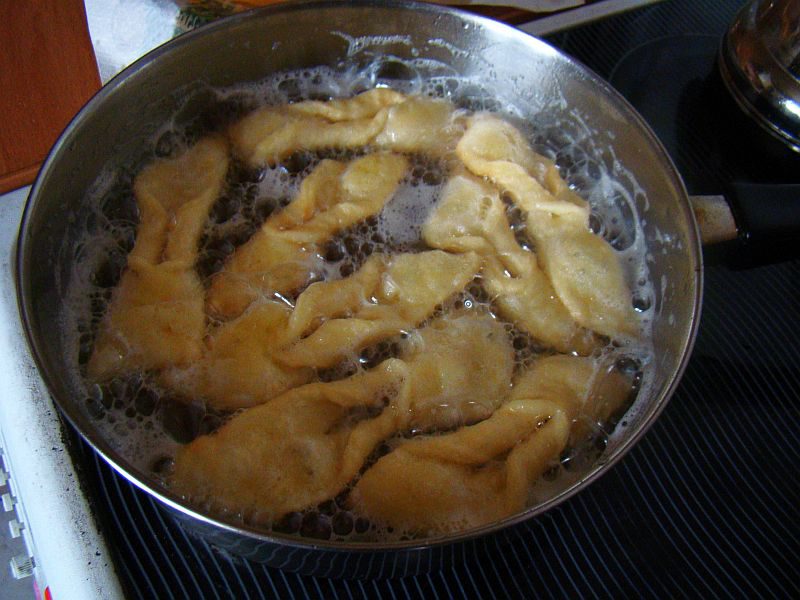
In a wide pot with a thick bottom, heat the lard to 170–180°C. Fry a few faworki at a time, for 30–60 seconds on each side, until golden. Turn them with a fork or chopsticks. If they brown too quickly, lower the heat.
-
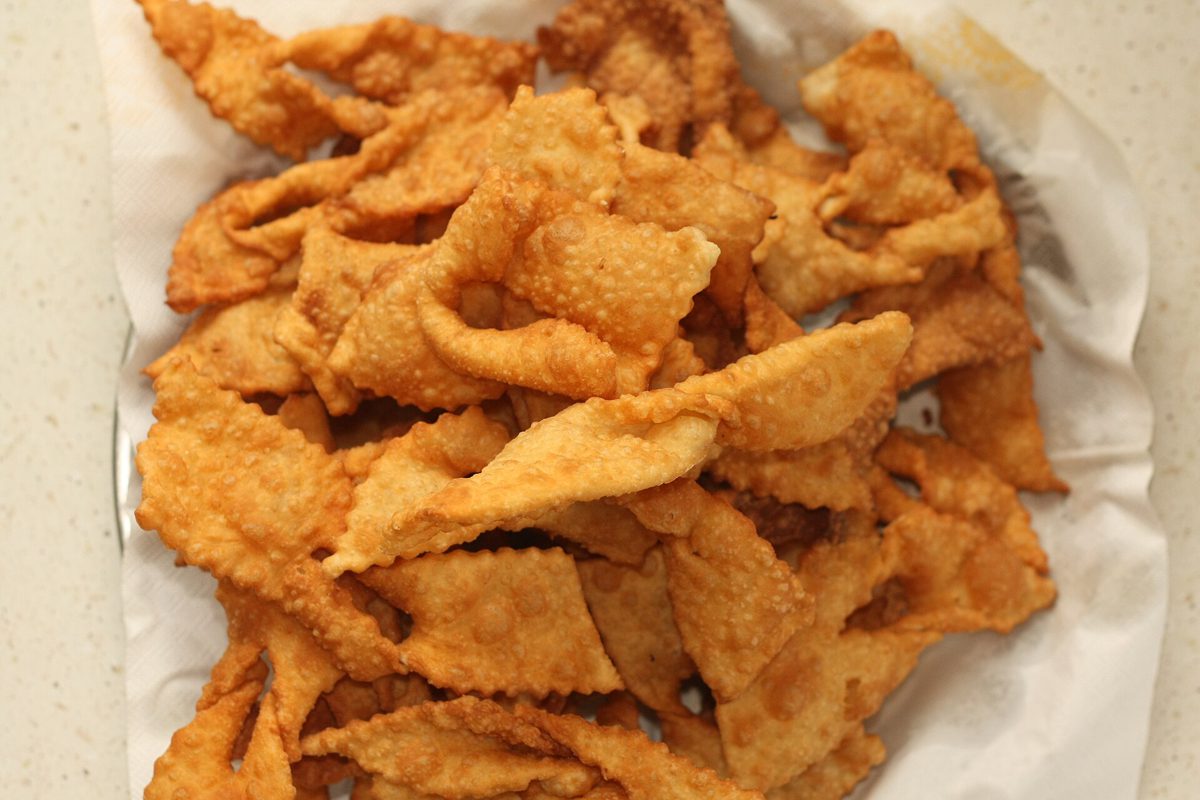
Remove the faworki with a slotted spoon and drain on paper towels.
-
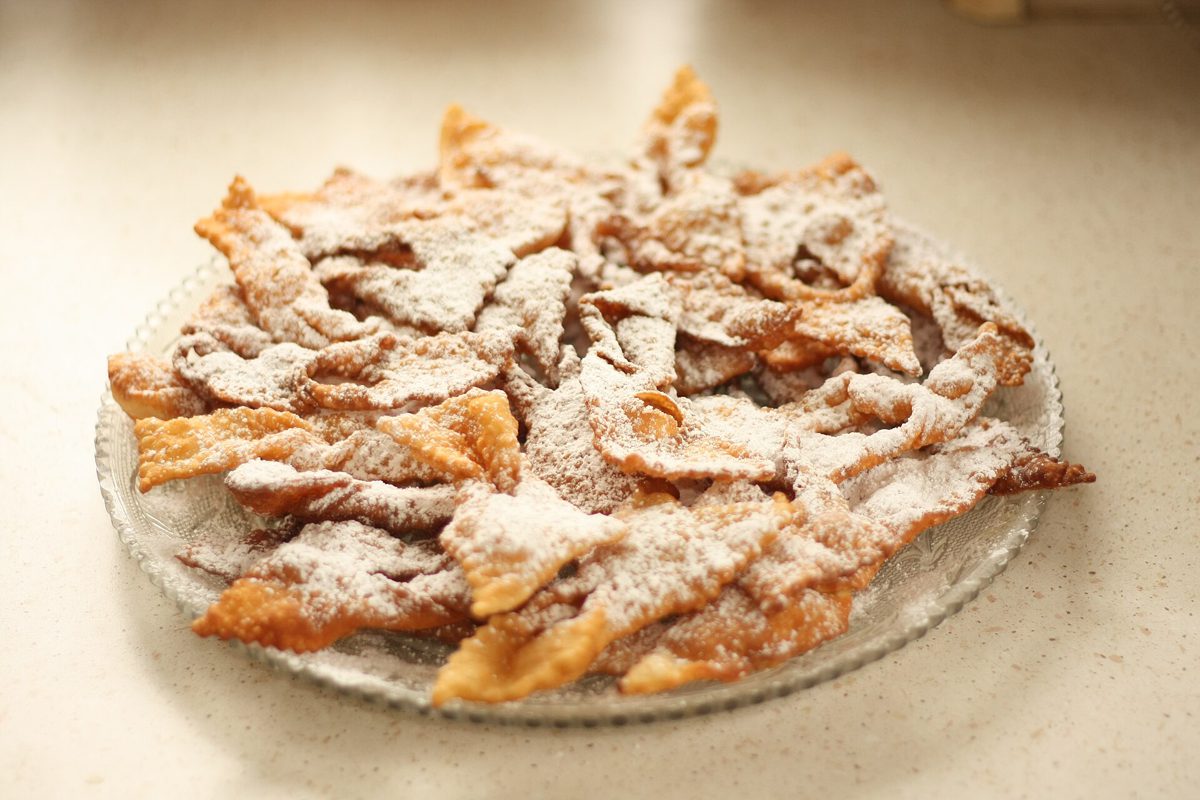
Dust the faworki with powdered sugar, either while still warm or after they have cooled, and serve with tea or coffee.
Photos