The story behind the recipe
The word "knedel" comes from the German "Knödel," meaning "dumpling." According to Polish Wikipedia, its meaning has narrowed in Polish, and today we almost exclusively call stuffed dumplings "knedle": boiled, round dumplings made from potato dough, less often from steamed or cheese dough, filled with fruits, mushrooms, cheese, or meat. According to the same encyclopedia, in Poland, potato dumplings with plums are the most common, served with butter and browned breadcrumbs, sprinkled with sugar.
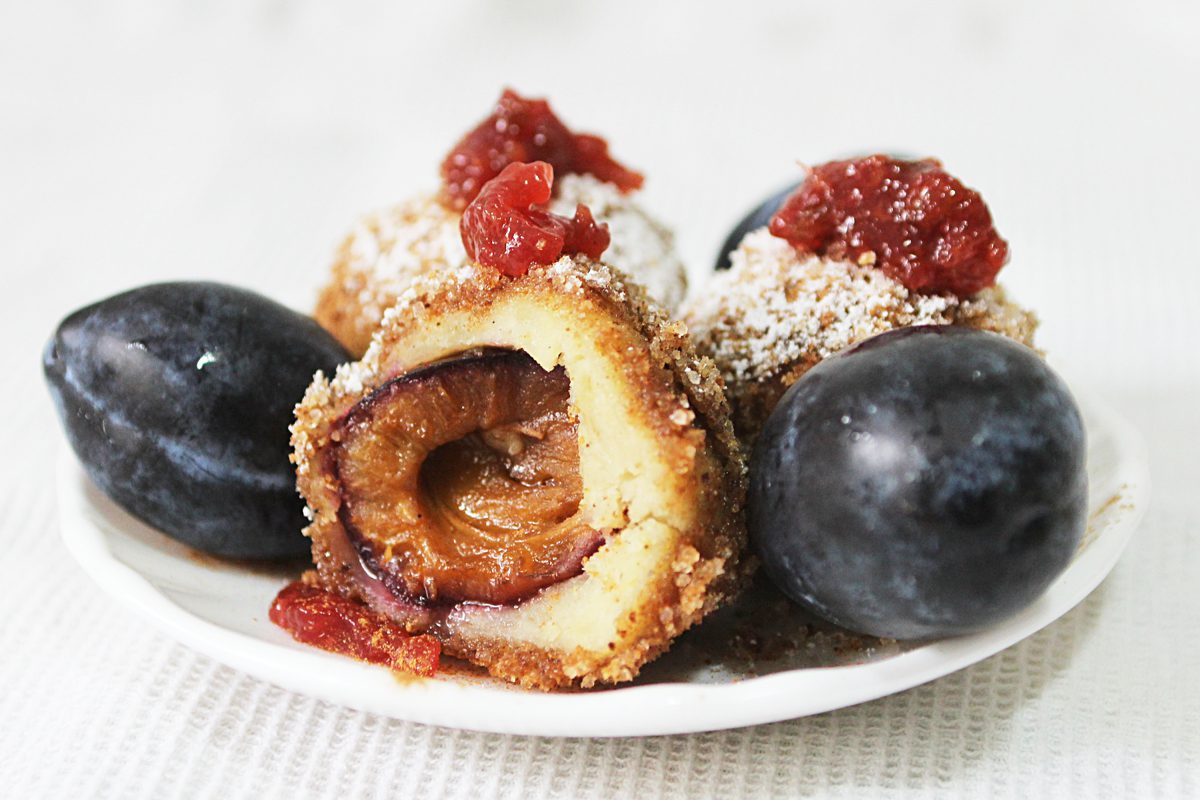
This dish is part of Central European cuisine. German Wikipedia lists plum dumplings (Zwetschkenknödel) as part of Austrian, Hungarian, Czech, Slovak, and Romanian cuisine, stating they originate from Austro-Hungary. The same encyclopedia notes that in the Czech Republic, instead of breadcrumbs, poppy seeds with sugar are used, and dumplings are often sprinkled with powdered sugar or sugar with cinnamon. When dumplings made their way into Polish kitchens is uncertain. It is known that in Maria Disslowa's book "How to Cook" from 1931, there are already recipes for fruit-filled dumplings made from potato, cheese, and bread dough.
Plum dumplings are a seasonal dish: Ania Gotuje makes them from early August when the first plums appear, and Kwestia Smaku recommends them every autumn. Plums ripen in Poland from mid-September to the end of October. As Kwestia Smaku writes, thanks to frozen plums, dumplings have become a year-round dish. They are eaten as a sweet main course or dessert. Kwestia Smaku classifies them as traditional dishes and items from milk bars. We did not find them on the List of Traditional Products.
Ingredients
Dough
-
650 g starchy potatoes (weight after peeling, about 500 g after cooking and pressing)
Abroad: USA: Russet, Idaho or Yukon Gold; UK: King Edward, Marabel, Russet or Vivaldi; Australia: Coliban, King Edward or Pontiac; Germany and Austria: mehligkochend -
150 g wheat flour (type 450 or 500, plus up to 50 g, only if the dough is sticky, and a little for dusting)
Abroad: USA and Canada: all-purpose flour; UK: plain flour; Germany: Type 405 or 550 -
1 tbsp (about 9.5 g) potato flour (not necessarily)
Abroad: potato starch (not potato flour); Germany: Kartoffelstärke - 1 pc egg (medium)
- 1 pinch salt (plus salt for the water)
Filling
-
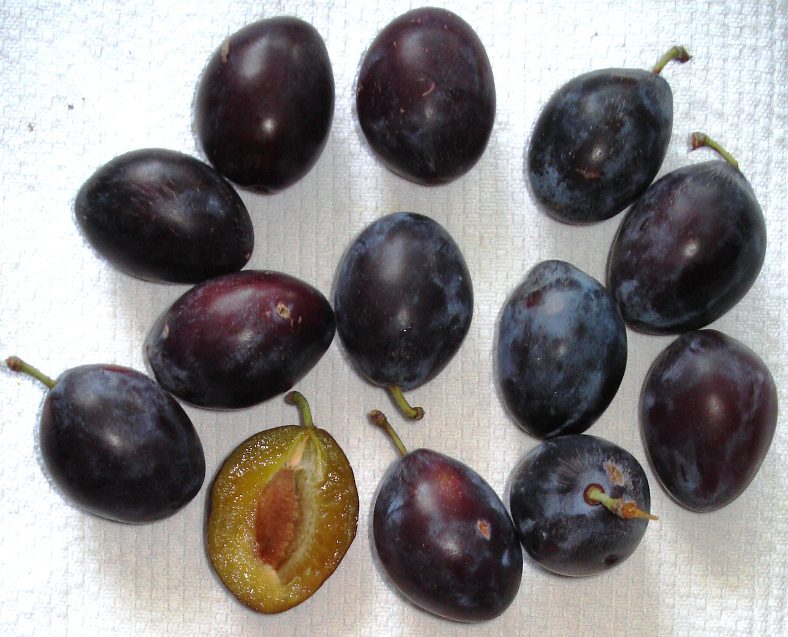
16 pcs plums (about 300 g; can be frozen, do not thaw them)
Abroad: USA: Italian prune plums or other prune plums, e.g., Stanley; Germany: Zwetschgen; Austria: Zwetschken; out of season, frozen plums or apricots - 4 tsp (about 9.5 g) powdered sugar (1/4 teaspoon for each plum)
- cinnamon (a pinch for each plum and for sprinkling)
To serve
-
60 g breadcrumbs
Abroad: USA: plain bread crumbs; UK: dried breadcrumbs; Germany: Semmelbrösel or Paniermehl - 60 g butter
- 1 tbsp (about 13 g) sugar (for the breadcrumbs)
- 400 g sour cream (thick, 12% or 18%, mixed with 2 tablespoons of sugar and a tablespoon of vanilla sugar; or 18% sour cream)
Method, step by step
-
Peel the potatoes, cook them in salted water until soft, and drain well. Press them through a ricer, spread them out, and cool completely. You can cook them the day before; using cold potatoes makes the dough less sticky.
-
Wash and dry the plums. Make a small cut on one side of each and remove the pit, so the halves remain connected. Sprinkle a pinch of cinnamon and 1/4 teaspoon of powdered sugar inside, then fold the plum back together. Do not thaw frozen plums.
-
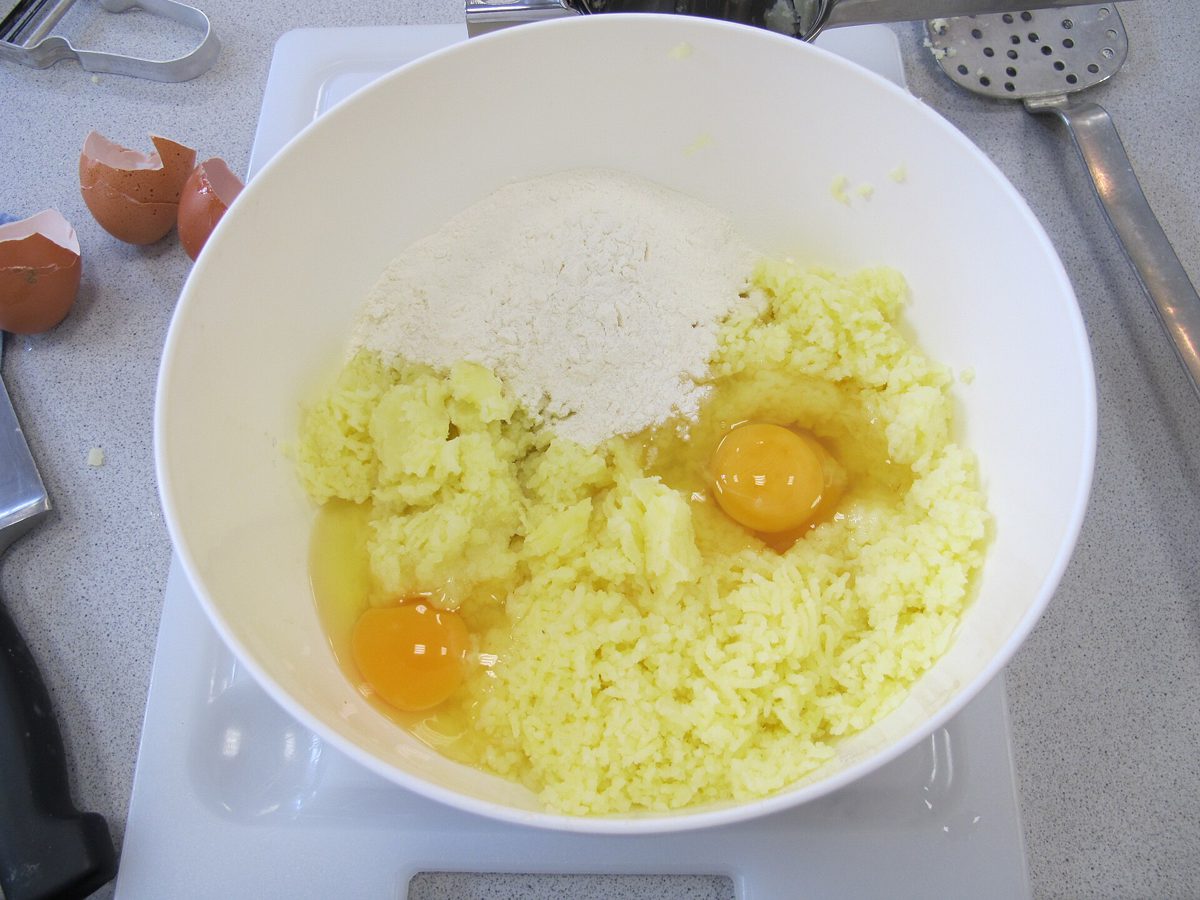
On a work surface or in a bowl, combine the wheat flour and potato flour, if using. Add the cold potatoes, egg, and a pinch of salt.
-
Quickly combine the ingredients into a smooth, uniform dough without lumps. If the dough sticks to your hands, dust your hands with flour, and only add as much flour to the dough as necessary: the less flour, the more delicate the dumplings. Use the dough immediately.
-
On a floured work surface, shape the dough into a roll about 4 cm (1½ inches) thick and cut it into 16 pieces about 2 cm (¾ inch) wide, the size of a walnut. Flatten each piece in your hand into a thin disc.
-
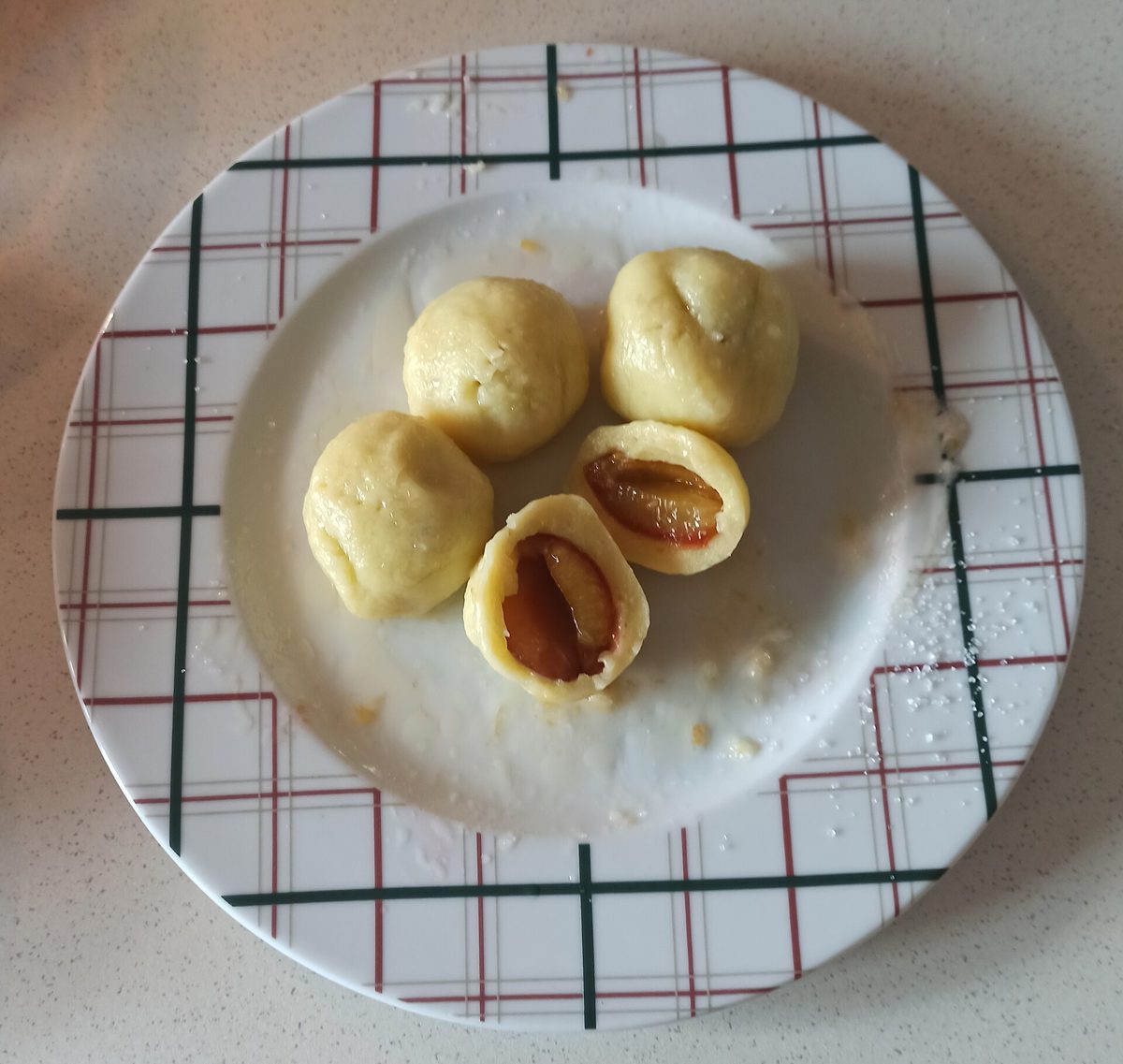
Place a plum in the center of the disc, wrap it in the dough, and seal the edges well to avoid any gaps. Form a smooth ball in your hands. The dough around the plum should be as thin as possible. Place the finished dumplings on a floured work surface or plate.
-
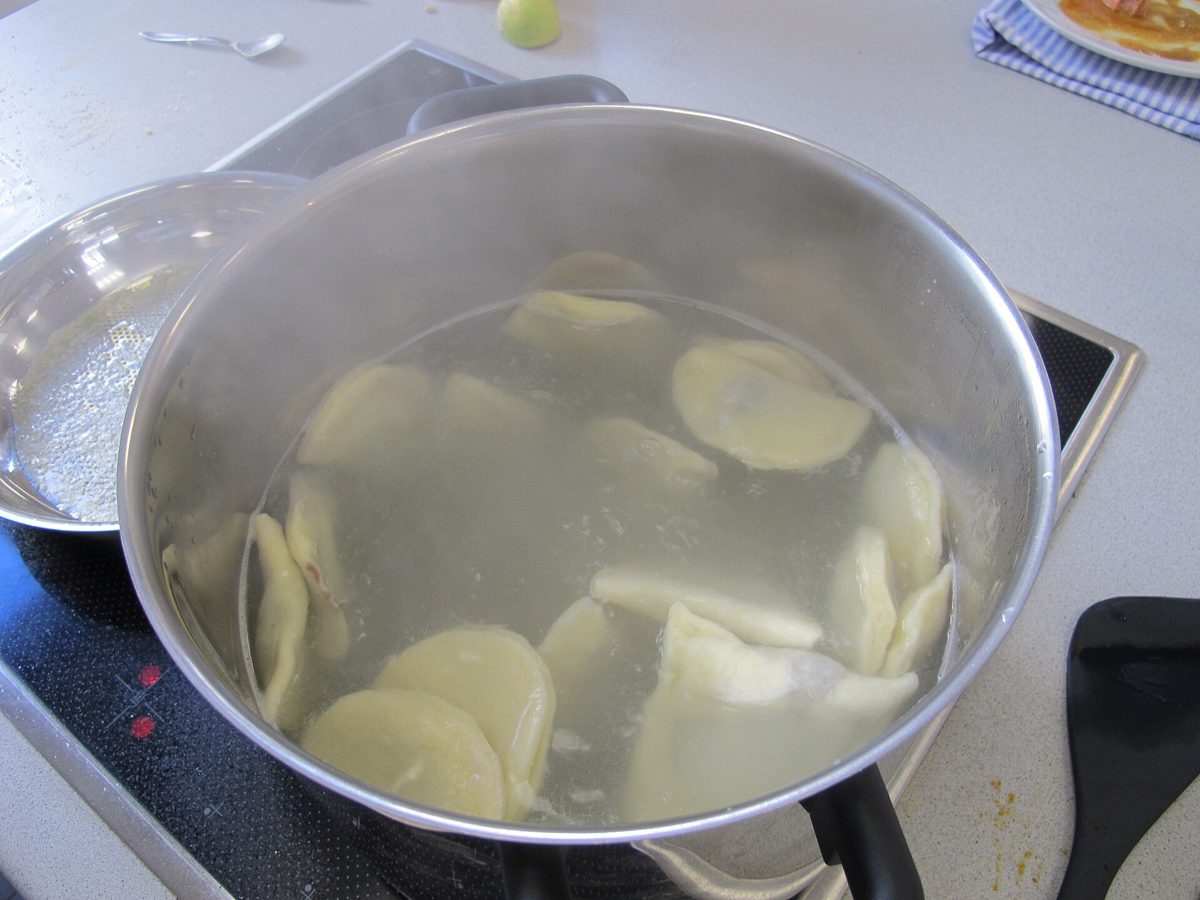
Bring a large, wide pot of salted water to a boil. Drop the dumplings in batches and gently stir immediately to prevent them from sticking to the bottom. Once the water comes back to a boil, reduce the heat so that it only lightly bubbles. If the water boils too vigorously, the dumplings will fall apart.
-
Once the dumplings float to the surface, cook them for another 4–5 minutes. Remove the first dumpling and cut it in half as a test. Use a slotted spoon to remove the cooked dumplings, drain them, and place them on plates. Do not leave them in the water, as they will become mushy.
-
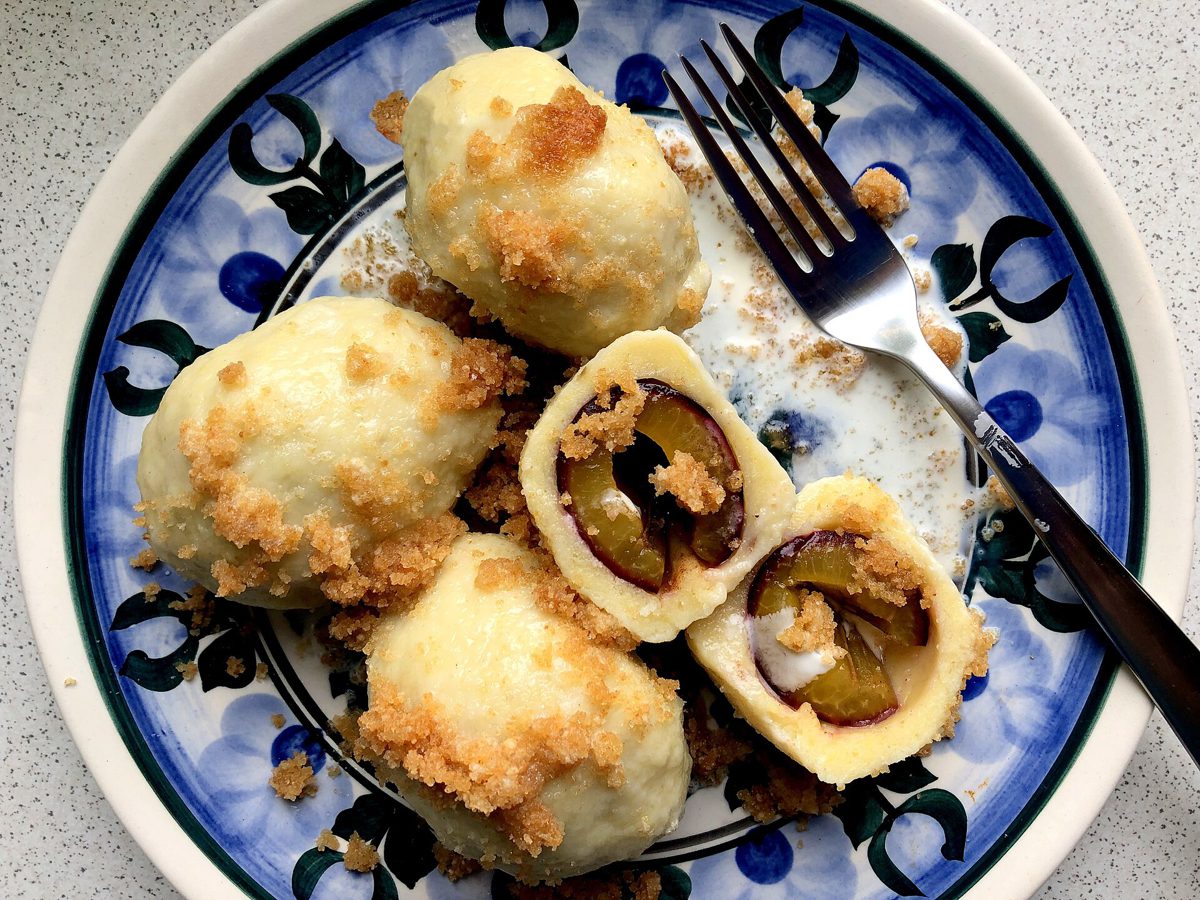
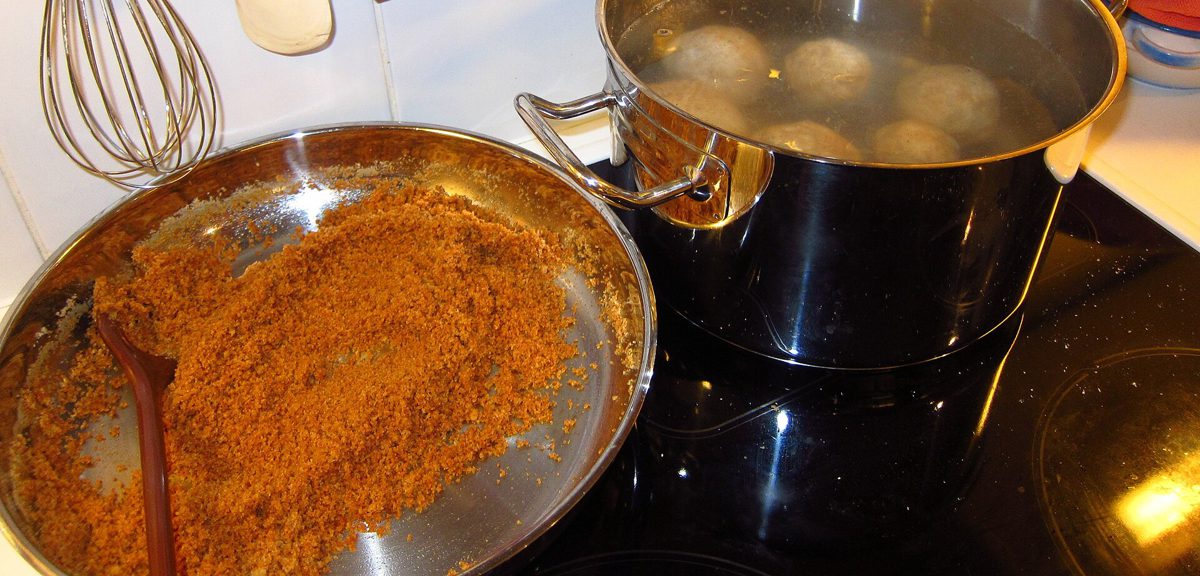
In a dry skillet with a thick bottom, over medium-low heat, toast the breadcrumbs for a few minutes, stirring constantly until they darken slightly. Add the butter and a tablespoon of sugar, and stir until the butter melts and combines with the breadcrumbs.
-
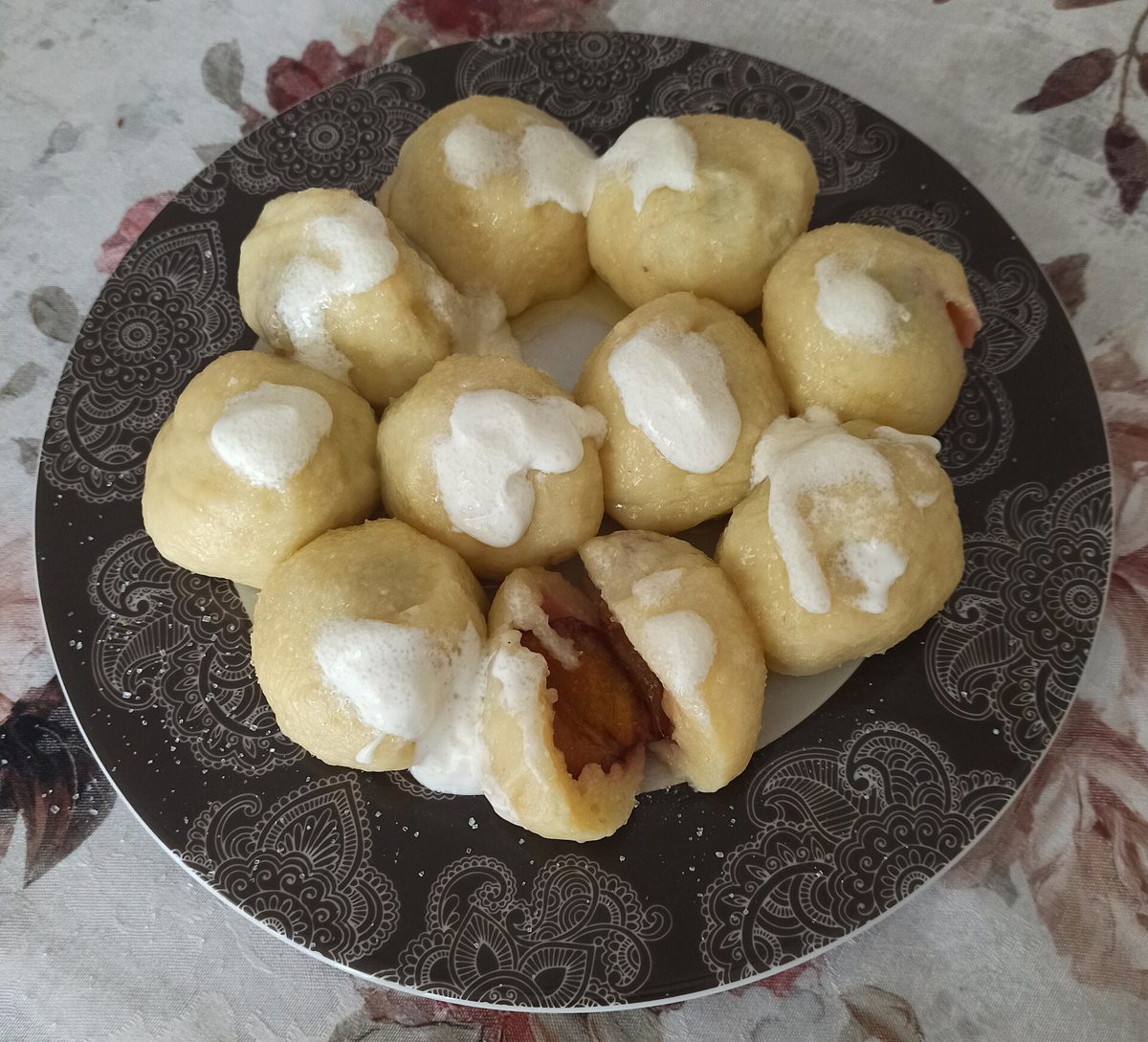
Drizzle the hot breadcrumbs over the dumplings. Serve immediately with sour cream mixed with sugar and vanilla sugar or with 18% sour cream, sprinkled with cinnamon.
Photos