The story behind the recipe
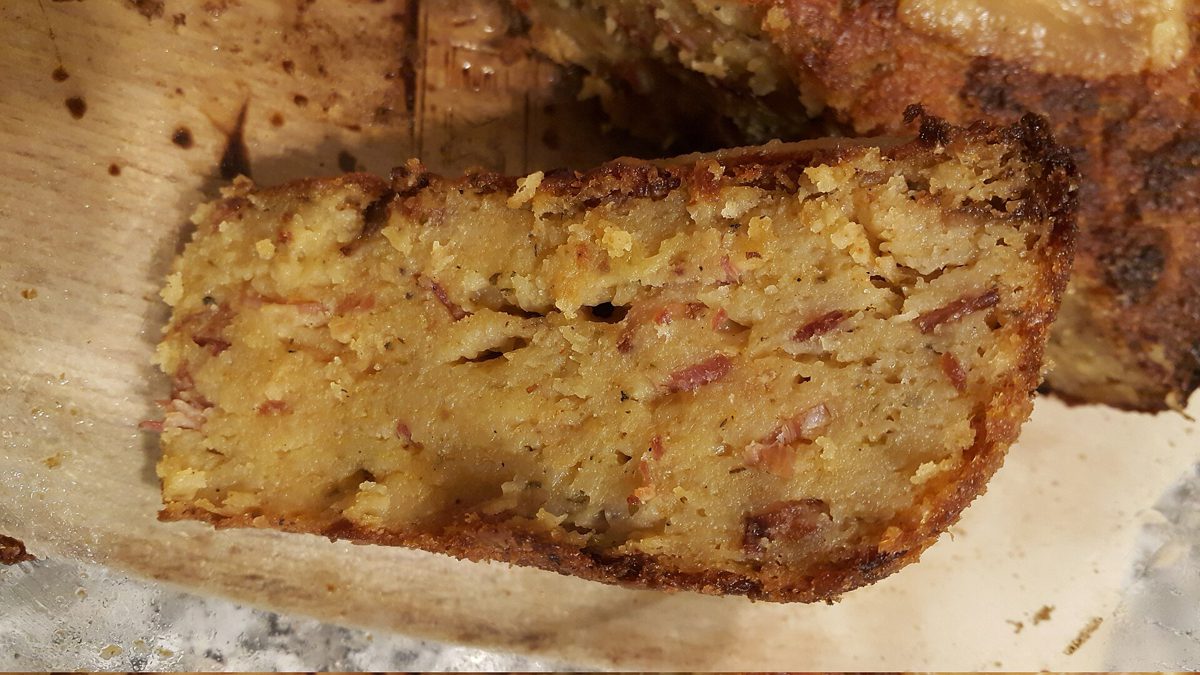
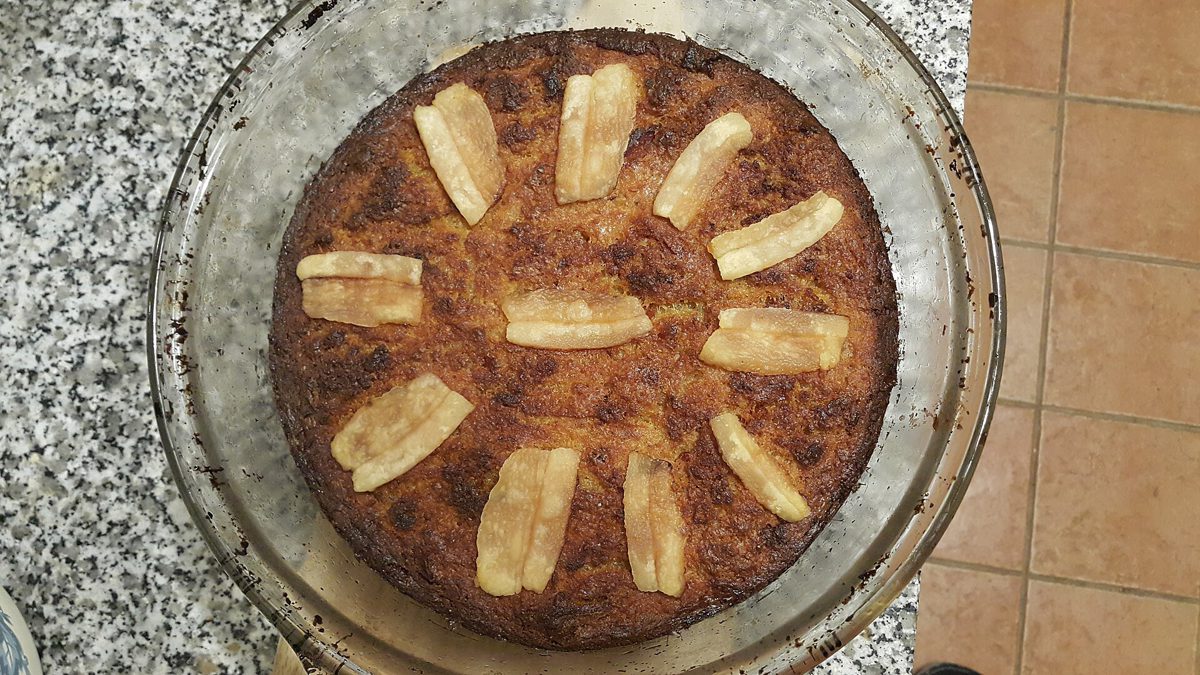
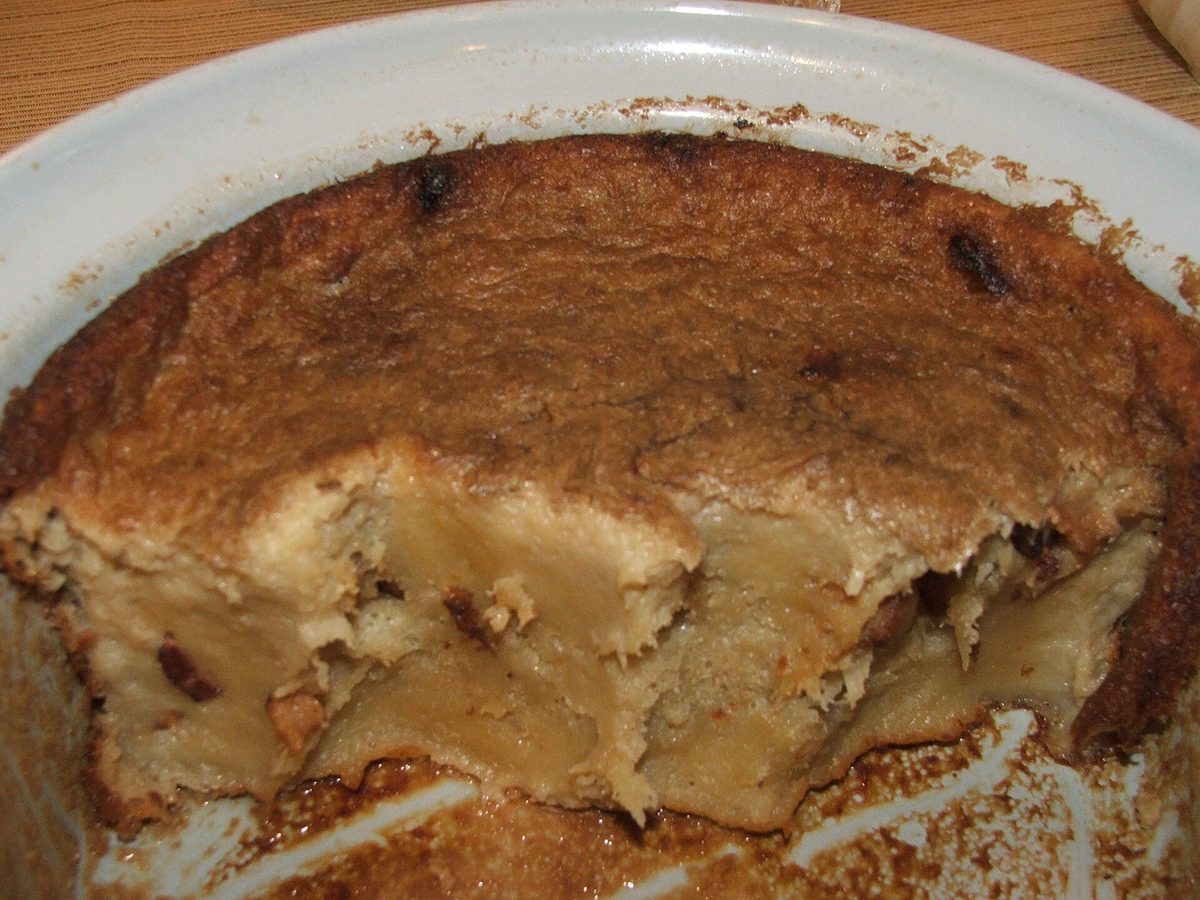
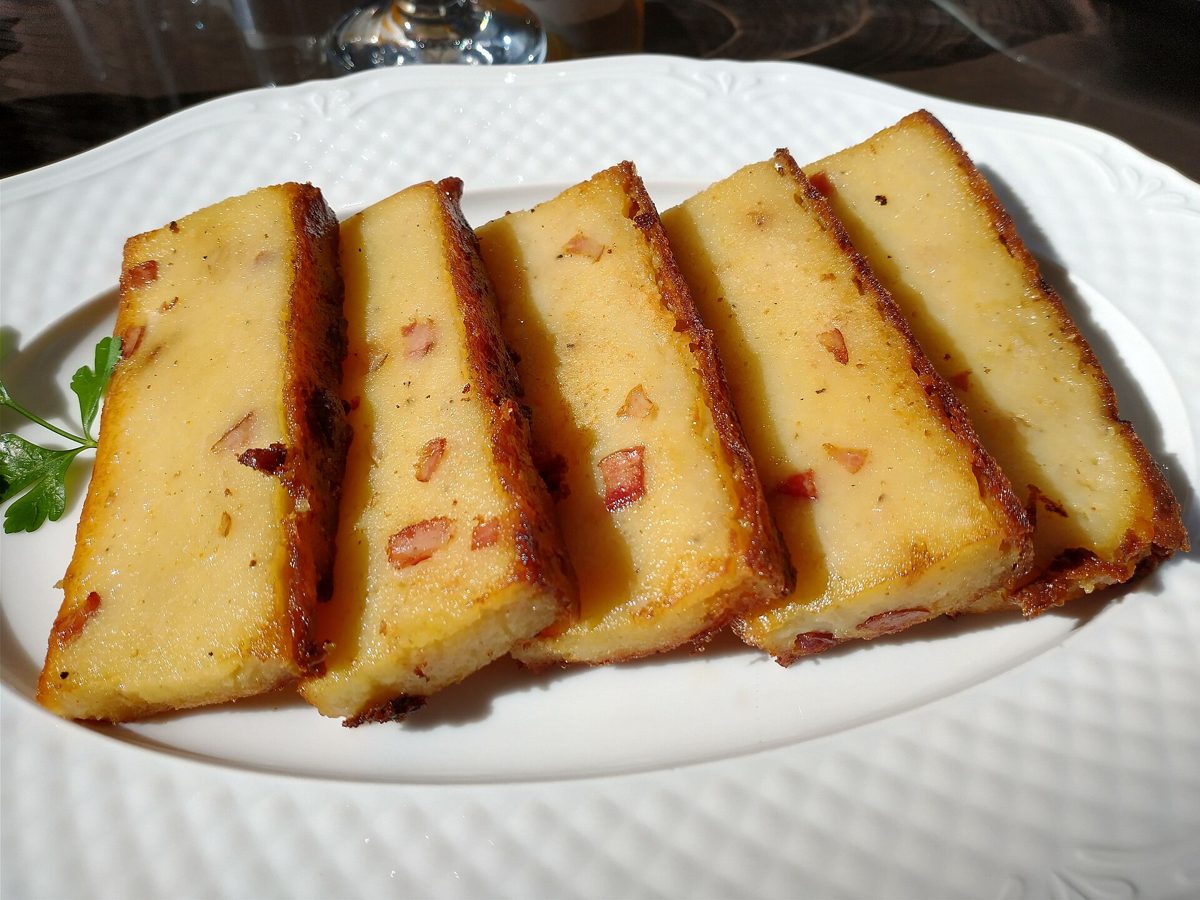
Babka ziemniaczana comes from northeastern Poland: according to Polish Wikipedia, it originates from northern Mazovia, Podlasie, and Suwałki. English Wikipedia calls it the most famous dish of Podlasie, and Culture.pl states that "nothing says Podlasie like babka ziemniaczana." In different regions, it is also referred to as kartoflak (in Masuria and Silesia), blaszak, bugaj, rejbak, or kugiel. On September 28, 2005, babka ziemniaczana from the Podlaskie Voivodeship was entered into the List of Traditional Products by the Ministry of Agriculture. According to the entry, it consists of grated potatoes, fried bacon, flour, eggs, and onion; some housewives add mushrooms "due to the numerous forests," and it is baked for "about 1-1.5 hours on a tray" and served hot, cut into rectangular, golden portions.
Its exact origins are uncertain. Culture.pl suggests that it likely came from the east and is one of the most important dishes in Belarusian cuisine, where potatoes have been a staple since the early 19th century. The name refers to a sweet yeast babka, known in the Commonwealth since the 17th century, and the dish itself is related to kugel from Ashkenazi Jewish cuisine. In Belarusian, it is called бульбяная бабка. Polish Wikipedia, citing Fiedoruk's book "Kresowy tygiel kulinarny," describes that in Soviet Belarus, it was baked for hours in a cast-iron pot called a czyhuna and served with sour cream or mushroom sauce. A close relative is the Lithuanian kugelis, a casserole made of potatoes, bacon, milk, onion, and eggs.
It was a common peasant dish. According to Culture.pl, the simplest babka consists of just potatoes, onion, a bit of flour, and eggs, while bacon or lard was added when there was meat, usually during festive periods after pig slaughtering. Maria Łukaszewicz from the Łukaszówka restaurant in Supraśl (her surname is also recorded as Łukasiewicz in the article) recounted that according to her mother, babka and kiszka were often baked out of poverty: the meatless babka was usually made on Fridays and reheated throughout the week. Kiszka ziemniaczana is the same mixture baked in a pig's intestine. Both dishes have their World Championships in Baking Babka and Kiszka Ziemniaczana in Supraśl, organized by the Białystok County. In 2026, they are scheduled for August 8 at the Supraśl amphitheater, and the babkas are baked by local women's circles and Podlasie restaurants.
Ingredients
Babka
-
1.5 kg starchy potatoes (weight before peeling, about 1.2 kg after peeling)
Abroad: USA: Russet, Idaho or Yukon Gold; UK: floury potatoes; Germany: mehligkochende Kartoffeln -
200 g smoked bacon (cut into 5–7 mm cubes, about ¼ inch; or 150 g bacon and 50 g lard)
Abroad: USA: smoked slab bacon; UK: smoked streaky bacon in a piece; Germany: Räucherspeck - 220 g onion (2 pieces: one for frying with bacon, the other for grating with potatoes)
- 2 pcs eggs
-
2 tbsp (about 15 g) all-purpose flour (add 1 tablespoon more if the mixture is runny)
Abroad: USA: all-purpose flour; UK: plain flour; Germany: Type 405 - 1 tsp (about 6 g) salt
- ½ tsp (2.5 ml) ground black pepper
-
1 tsp (5 ml) dried marjoram
Abroad: marjoram; Germany: Majoran
For the form
- 15 g butter or lard
-
2 tbsp (about 14 g) breadcrumbs (1–2 tablespoons)
Abroad: breadcrumbs; Germany: Paniermehl
For serving
-
200 g 18% sour cream
Abroad: USA: sour cream; UK: soured cream; Germany: saure Sahne or Schmand -
100 g lard or bacon (for cracklings, cut into small cubes)
Abroad: USA: fatback or slab bacon
Method, step by step
-
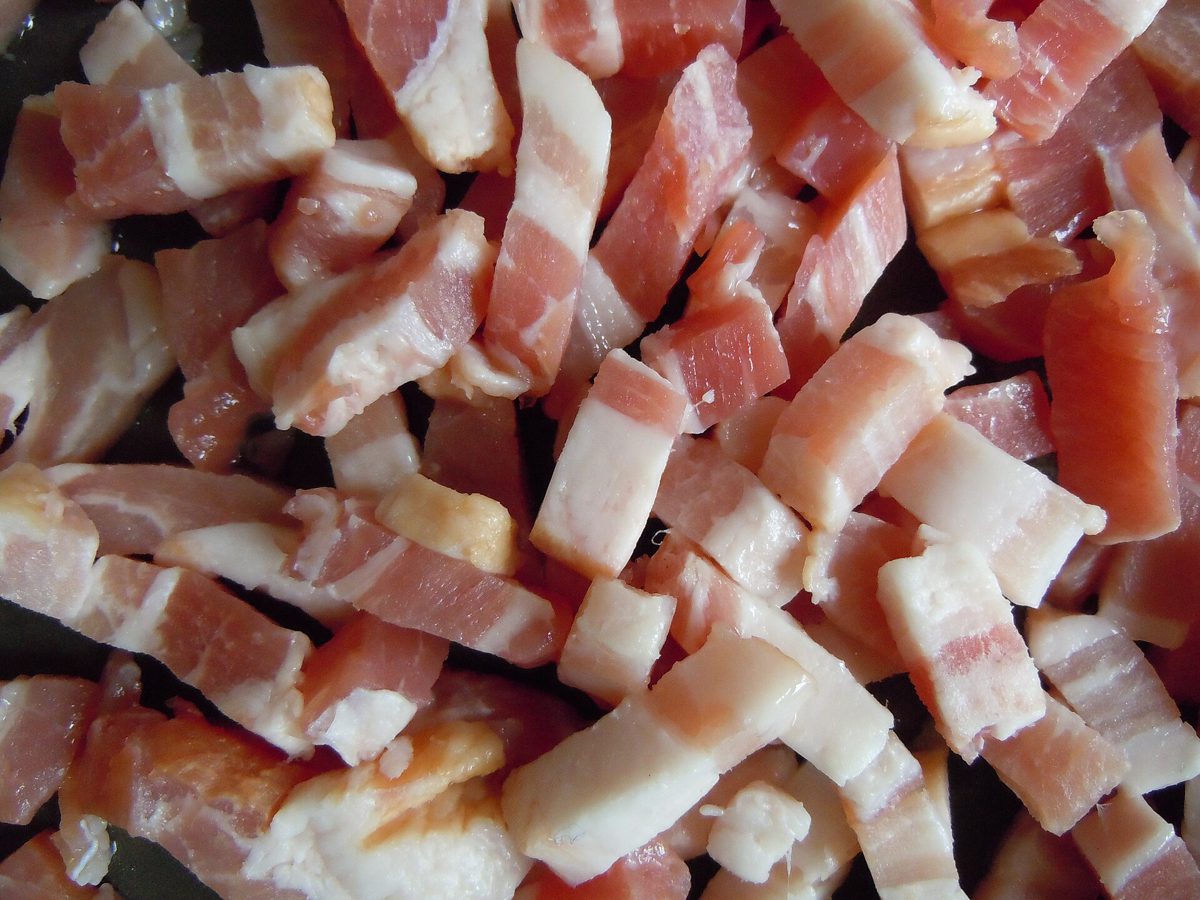
Cut the bacon into 5–7 mm cubes (about ¼ inch). It is easier to cut if it has been in the freezer for 15–20 minutes beforehand.
-
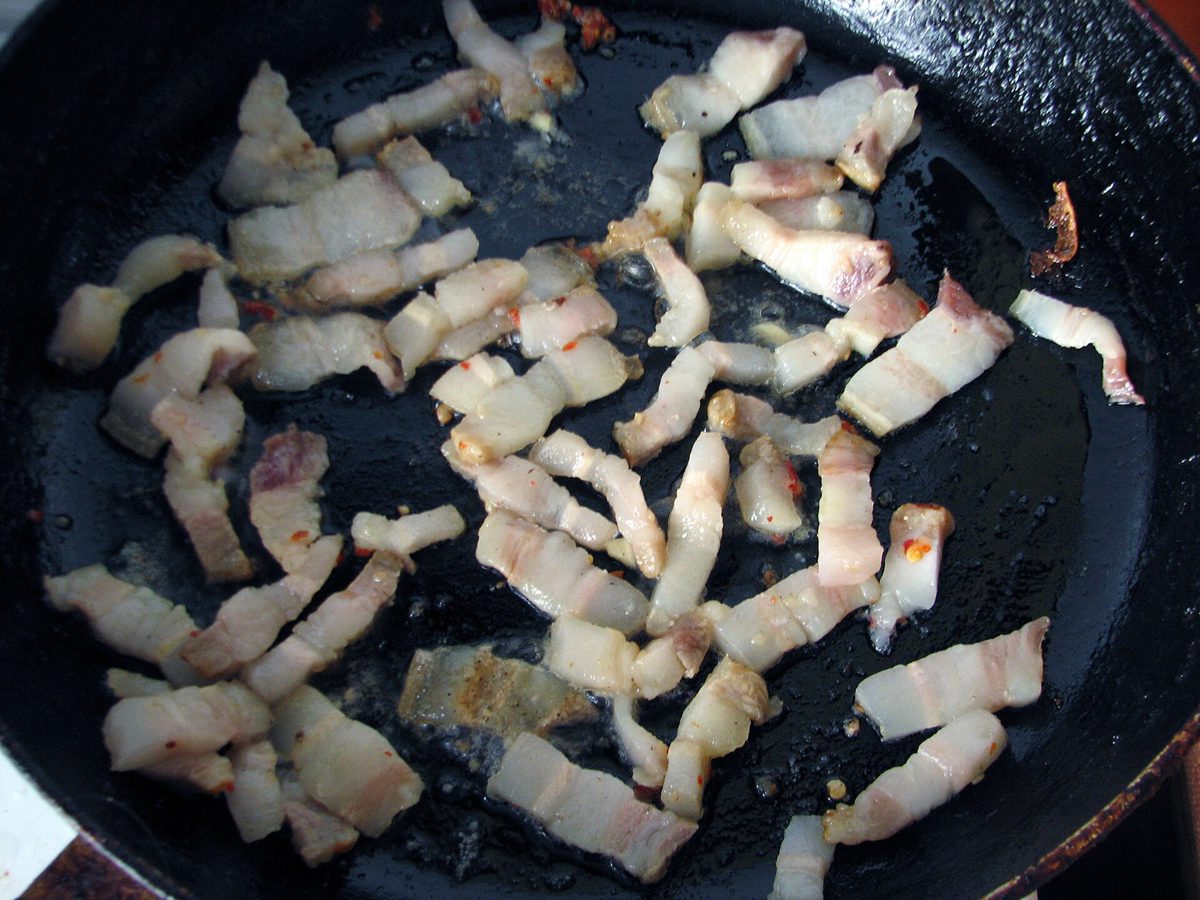
Place the bacon in a dry pan and fry over low or medium heat until the fat renders and the cubes turn slightly golden. Do not overcook it, as the babka will be difficult to slice. Add one finely chopped onion and sauté it in the bacon fat. Set aside with the fat.
-
Preheat the oven to 200°C (400°F), top and bottom heat. Grease a form about 20×20 cm (8×8 inches) or a loaf pan about 30×12 cm (12×4¾ inches) with butter or lard and sprinkle with breadcrumbs.
-
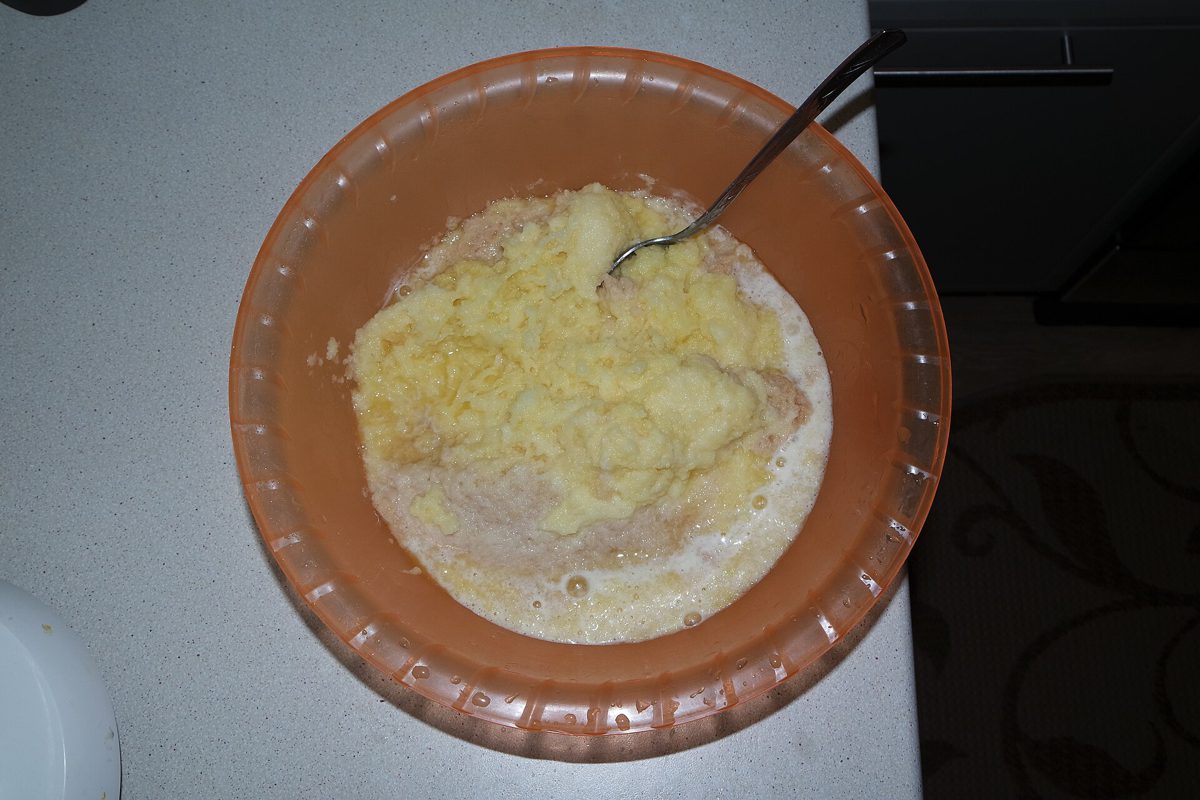
Peel the potatoes. Grate the second onion first, then the potatoes on the finest grater into a bowl, which helps prevent the mixture from darkening. A food processor with a grating disc can also be used.
-
Let the grated mixture sit for 15 minutes and drain the water that collects. Repeat this one or two more times. It is quicker to press the mixture through a sieve or with your hands. Always drain young potatoes.
-
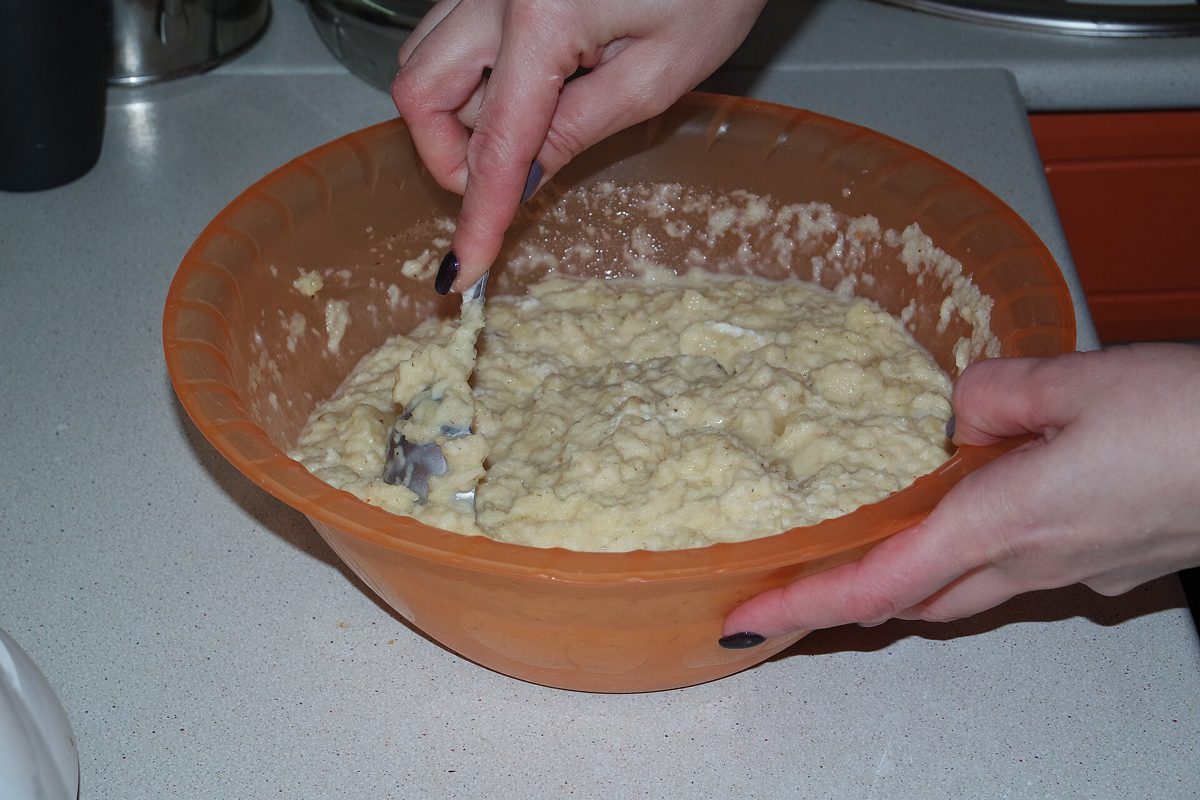
Add eggs, flour, salt, pepper, marjoram crushed in your hands, and the bacon with onion along with all the rendered fat to the potatoes. Mix thoroughly. If the mixture is runny, add another tablespoon of flour, and for young potatoes, add a tablespoon of potato starch.
-
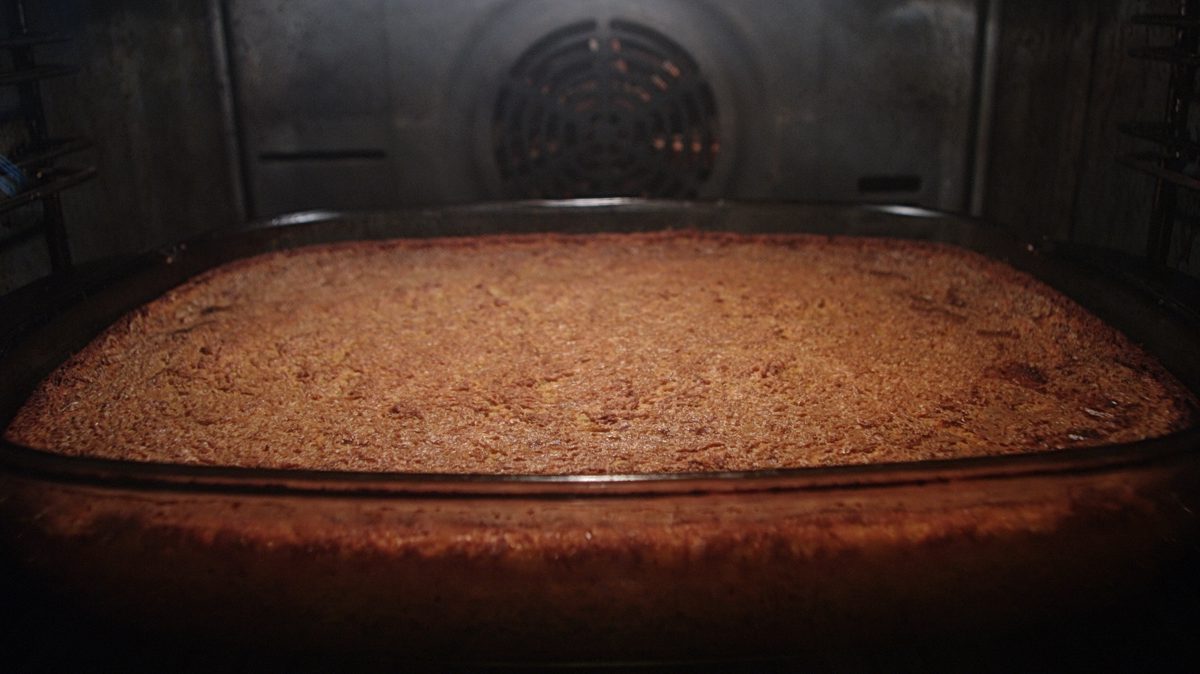
Transfer the mixture to the form and smooth the top with a wet hand. Bake on the middle or lower shelf for about 1 hour 15 minutes to 1.5 hours, until the top is dark brown. If it browns too quickly, move the form lower, cover it with foil, and bake the last 20 minutes at 150°C (300°F).
-
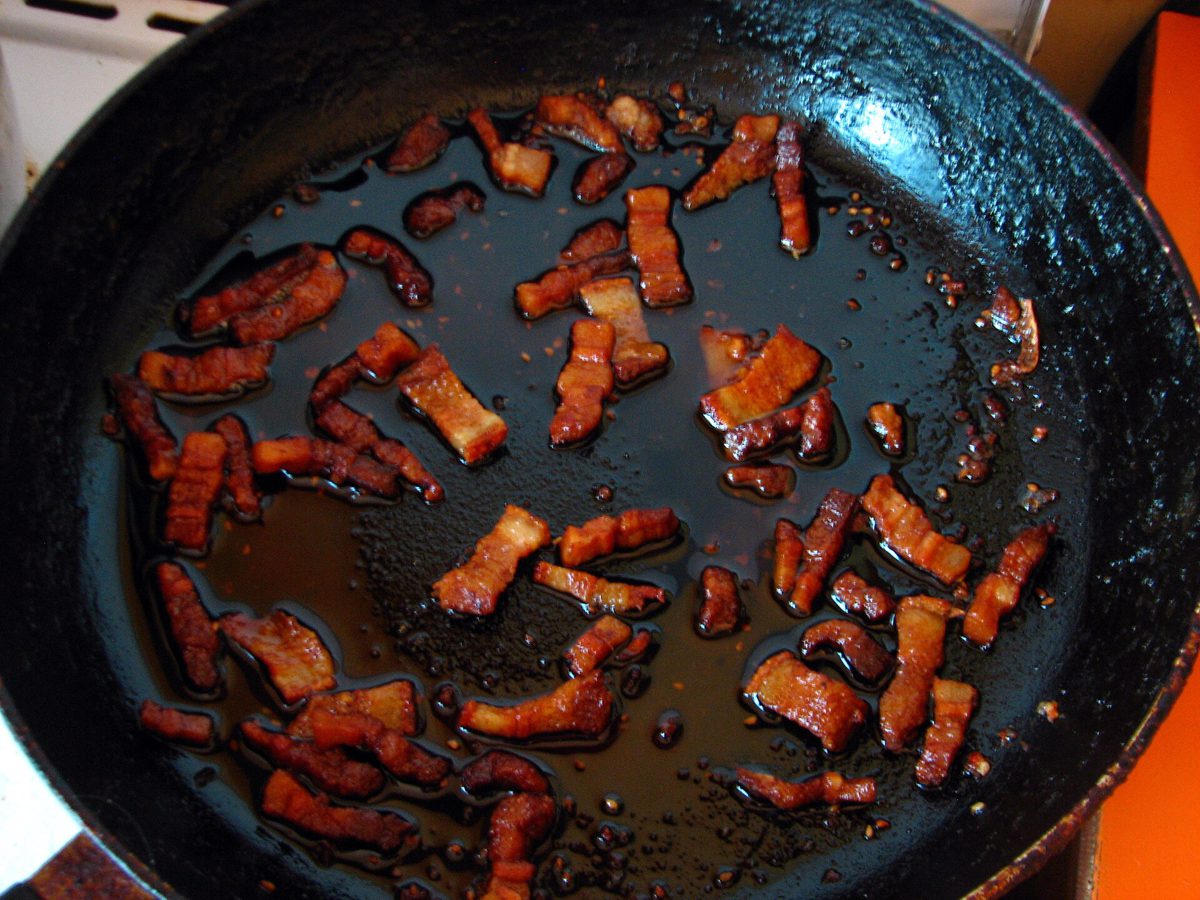
While baking, prepare the cracklings for serving: cut the lard or bacon into small cubes and render them in a pan until golden.
-
Let the baked babka rest in the form for 10–15 minutes before removing and slicing. The center may still be soft, but it will firm up as it cools. Cut it into rectangular portions.
-
Serve hot, with sour cream and cracklings.
Photos