The story behind the recipe
The word "barszcz" originally referred to a fasting soup made from fermented leaves of common borscht. According to Polish Wikipedia, żur, often thickened with milk or cream, over time began to be called white borscht. In pre-war cookbooks, borscht was already referred to only as soup made with beetroot or rye sourdough, sometimes oat sourdough.
It is not definitively known how white borscht differs from żurek, and this is an old dispute. The PWN dictionary treats żur, żurek, and white borscht as the same, while the Great Dictionary of the Polish Language PAN mentions rye flour with white borscht and notes that the names differ regionally. The most common division is based on the flour: żurek made with rye sourdough, white borscht with wheat, which is milder and thinner. This is how it is described by Wieści Rolnicze and the Warsaw restaurant U Fukiera. However, sources disagree even about the regions: according to some, wheat sourdough reigns in central and eastern Poland, while others say it is in the south, in Silesia and Podhale. In Ponidzie, the Women's Agricultural Circle from Skotniki Duże says the opposite: their white borscht is made with rye sourdough, while żur made with wheat is eaten in Silesia. This recipe adheres to the most common version, with wheat sourdough.
On the List of Traditional Products by the Ministry of Agriculture, there is "Easter white borscht" from the Sieniawa commune in Podkarpacie, registered in 2013, and it is made with rye flour sourdough and bread crust. Residents of Ubieszyn recounted that the broth made from vegetables and smoked meats is cooked for at least an hour, and the finished borscht is poured over diced blessed food and sprinkled with freshly grated horseradish. The plate had to be eaten completely, as everything floating in it was blessed on Holy Saturday. W. Gaj-Piotrowski wrote about the areas around Rozwadów that for Easter borscht, housewives cut "everything blessed": horseradish, salt, sausage, eggs, and in the past also dried cheese.
Ingredients
Broth
- 1.5 l cold water
- 300 g pork ribs (raw or smoked)
-
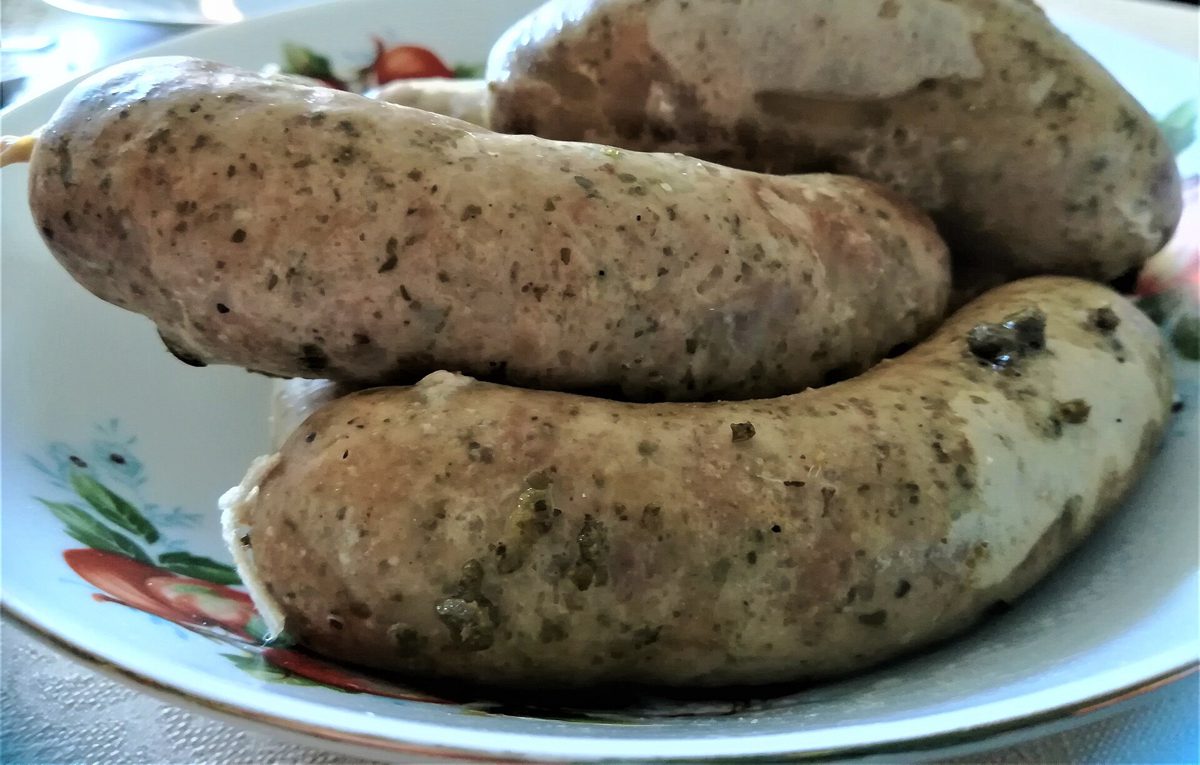
400 g raw white sausage
Abroad: Polish stores; instead, German Weißwurst or good raw pork sausage from the butcher, not cooked "Polish kielbasa" from vacuum packaging - 100 g smoked bacon (in a piece)
- 1 tsp (5 ml) oil (for frying bacon)
- 1 tsp (about 5 g) butter (for frying bacon)
- 1 pc carrot (about 80 g)
- 1 pc parsley (root) (about 80 g)
- 80 g celery (a piece)
- 100 g leek (only the white part)
- 2 pcs bay leaf
- 3 pcs allspice (berries)
- 5 pcs black pepper (berries)
- 1 clove garlic
Soup
-
400 ml wheat sourdough for white borscht (store-bought or homemade; add gradually, 300–500 ml to taste)
Abroad: Polish stores and delis, but not always available; easy to make yourself - 2 tsp (10 ml) dried marjoram
- 150 g 18% cream (thick)
- 1 tbsp (15 ml) grated horseradish (up to 2 tablespoons)
- 2 cloves garlic (pressed, at the end)
- salt and pepper (to taste)
To serve
- 4 pcs eggs (hard-boiled)
- bread (preferably sourdough)
- cottage cheese (cut into cubes, not necessary)
Homemade wheat sourdough (instead of store-bought, prepare 3–5 days in advance, about 500 ml)
- 500 ml water (boiled and cooled)
-
100 g whole wheat flour
Abroad: USA, Canada: whole wheat flour; Germany: Weizenvollkornmehl - 4 cloves garlic (peeled)
- 2 pcs bay leaf (not necessary)
- 4 pcs allspice (berries, not necessary)
- bread crust for sourdough (not necessary, speeds up fermentation)
Method, step by step
-
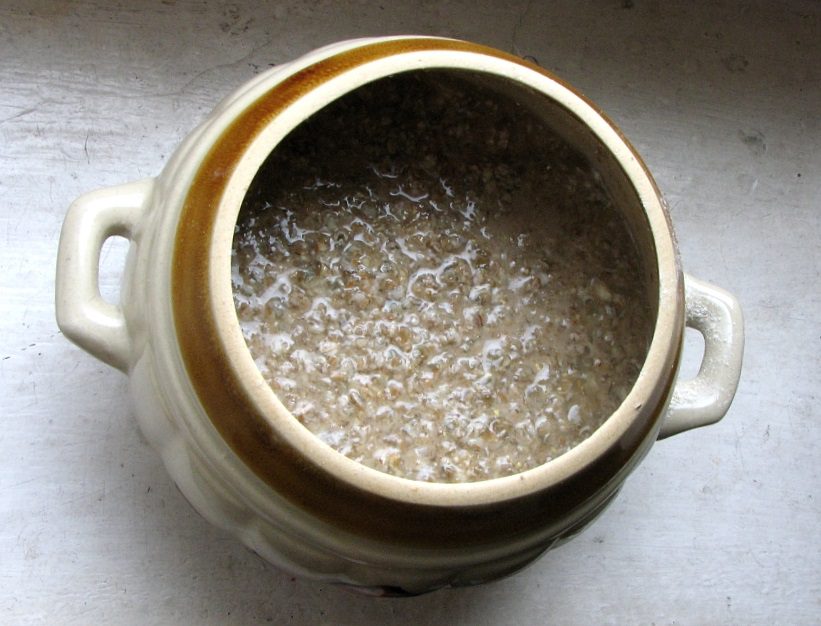
If you are making the sourdough yourself, prepare it 3–5 days in advance. In a sterilized jar, pour in whole wheat flour, add 3–4 tablespoons of boiling water, and mix into a thick paste. Add garlic, bay leaves, allspice, and bread crust, then pour in boiled, cooled water and mix well. Cover with cheesecloth, do not seal, and place in a warm, shaded spot, ideally around 25°C (77°F). Stir daily with a clean spoon. When the sourdough smells pleasantly sour, strain it, discard the spices and crust, and put the sourdough in the fridge.
-
Broth: place the ribs in a pot, cover with cold water, and bring to a boil. Skim off the foam, cover, and simmer on low heat for 30 minutes.
-
Peel the carrot, parsley, and celery, cut them into large pieces, and rinse the leek thoroughly. Add the vegetables to the broth along with bay leaves, allspice, pepper, and a clove of garlic. Bring to a boil again and simmer covered on low heat for about an hour.
-
Prick the white sausage in several places with a toothpick, add it to the broth, and simmer on low heat for 20 minutes. The water should only gently ripple, as boiling too hard will cause the sausage to burst. In the meantime, boil the eggs until hard.
-
Remove the sausage, ribs, and vegetables, and strain the broth into a clean pot. Slice the sausage, separate the meat from the ribs, and dice the carrot if you want to serve it in the soup.
-
Trim the tough skin from the bacon and cut it into 5–6 mm (¼ inch) cubes. Fry in a pan with a teaspoon of oil and a teaspoon of butter for 5–7 minutes until lightly browned, then transfer to the broth.
-
Mix the sourdough in the bottle so that the sediment from the flour combines with the liquid. You can also pour in just the liquid first, and then add the thick sediment spoon by spoon until the soup is as thick as you like. Pour in 300 ml while stirring continuously, taste, and add the rest gradually. Add the marjoram, crushing it between your fingers, bring to a boil, and simmer for a few minutes, stirring.
-
Place the cream in a cup and add hot soup by the spoonful, stirring until you have about 8 spoonfuls. Remove the pot from the heat and pour in the cream, stirring. From this point on, do not bring the borscht to a boil.
-
Add the horseradish and pressed garlic, season with salt and pepper. Return the sausage slices, meat from the ribs, and carrot to the pot and heat on low, without boiling.
-
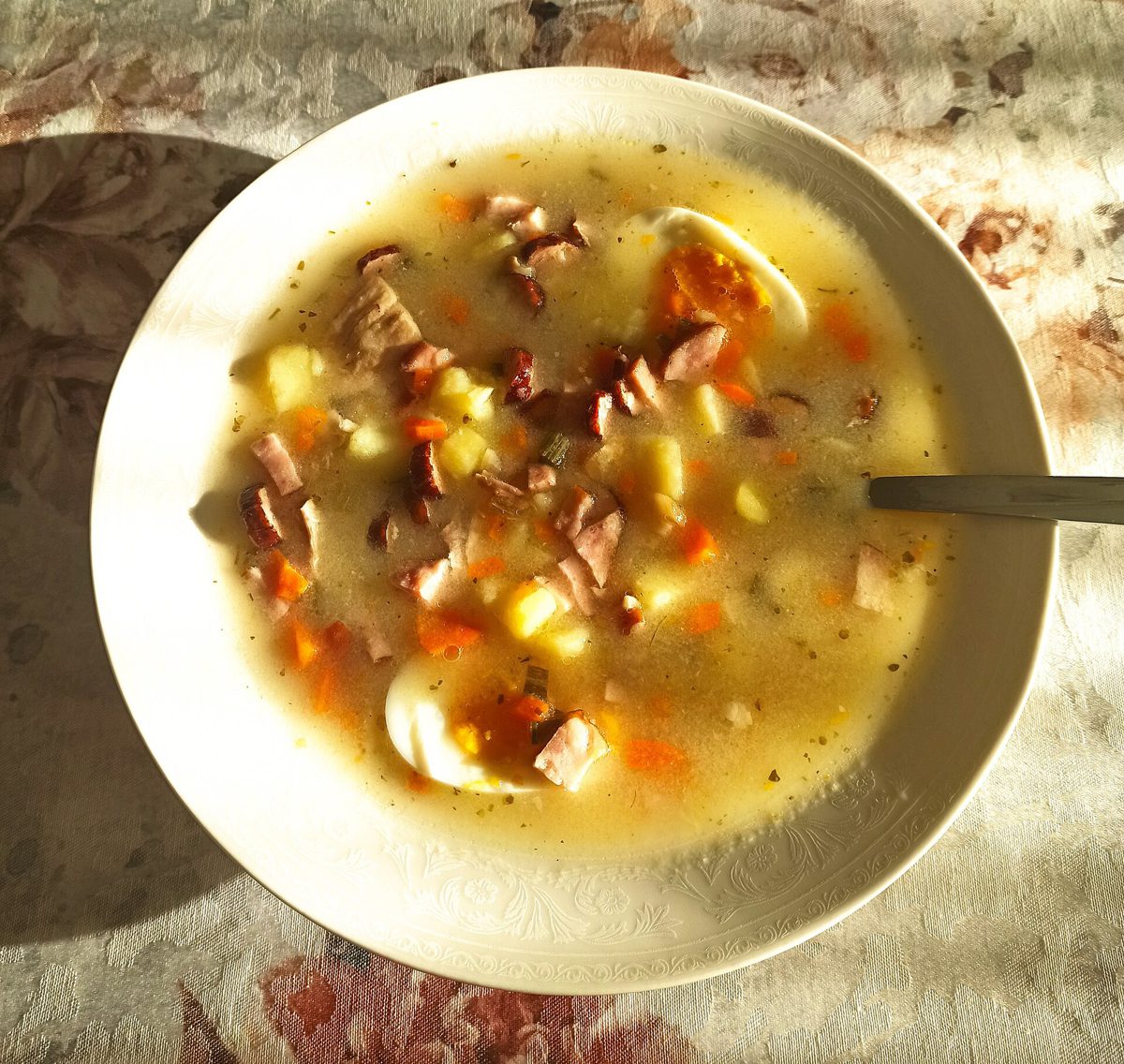
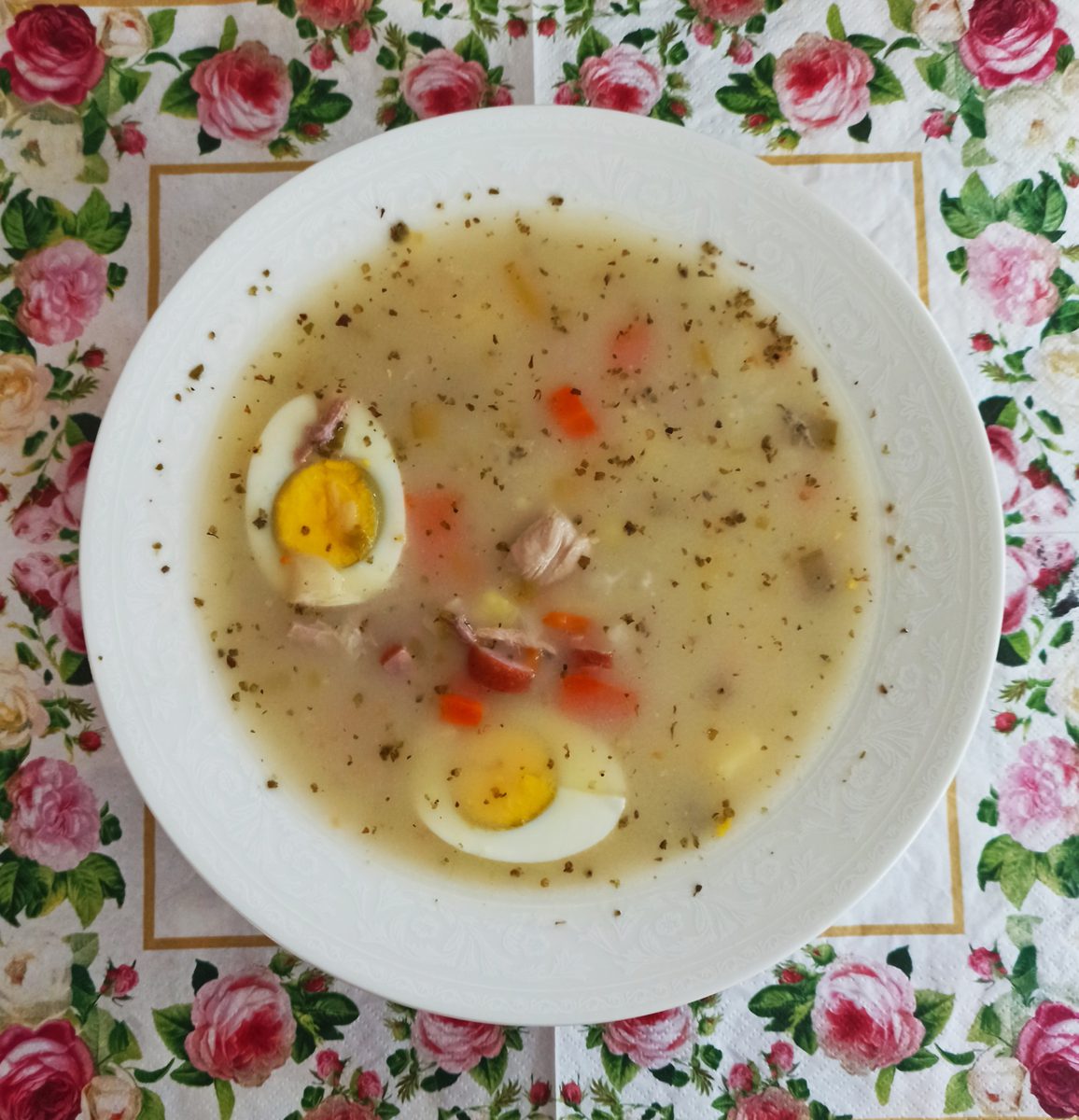
Ladle the borscht into bowls, add halves of eggs, and if you like, cubes of cottage cheese. Serve with bread and extra horseradish.
Photos