The story behind the recipe
A naleśnik is, as the Great Dictionary of the Polish Language states, "a very thin pancake fried from a runny batter," and twaróg is one of the most common fillings. According to Polish Wikipedia, the first written Polish recipe for naleśniki is found in Stanisław Czerniecki's "Compendium Ferculorum" from 1682, the oldest Polish cookbook. The origin of the name is uncertain. The National Center for Culture cites three hypotheses: from the Proto-Slavic "na lěsě," meaning "on a grate of rods," from "na listě," meaning "on a leaf" (cf. Czech "nálesník," bread baked on a leaf, and Russian dialect "nalistnik," a pancake baked on cabbage leaves), or from both words combined over time.
In the 19th century, Lucyna Ćwierczakiewiczowa described "Naleśniki z konfiturami, jabłkami lub sérem" in "365 obiadach za 5 złotych." The batter was to be "runny and liquid," the pan was greased with clarified butter using a "feather," and the filling was made from "fresh cheese, mixed with butter, eggs, and raisins." The pancakes were folded "into a triangle or elongated," browned on both sides in clarified butter, and served sprinkled with sugar and cinnamon. Thus, triangles, raisins in cheese, and frying in butter were already present in Polish homes back then.
Today, naleśniki z serem are served in milk bars and cafeterias, but they are most often made at home, as noted by the Polonist service. They are close relatives of Jewish blintzes, French crêpes, and Russian and Ukrainian bliny. Kwestia Smaku admits that its recipe "comes from grandma's notebook" and calls naleśniki a favorite lunch for children. They are not a festive dish: they are eaten daily, as a sweet lunch or for afternoon tea.
Ingredients
Batter (12 pancakes, 22–24 cm pan)
-
200 g all-purpose flour (type 450 or type 500)
Abroad: USA and Canada: all-purpose flour; UK: plain flour; Germany: Type 405 or 550 - 2 pcs large eggs
- 300 ml milk 3.2%
- 200 ml water (can be sparkling mineral water)
- 1 tbsp (about 13 g) sugar
- 1 pinch salt
-
30 g melted butter (or 2 tablespoons of oil)
Abroad: unsalted butter
Filling
-
500 g fat or semi-fat twaróg in block
Abroad: USA and Canada: farmer's cheese, dry curd cottage cheese or drained cottage cheese; Germany: Quark 20% or 40% or Schichtkäse; Austria: Topfen - 2 pcs egg yolks (instead of yolks, a bit of sour cream if not frying)
-
50 g powdered sugar (about 4 tablespoons, to taste)
Abroad: powdered sugar / icing sugar -
1 package vanilla sugar (about 16 g, or 1 teaspoon of vanilla extract)
Abroad: Germany: Vanillezucker; USA and UK: vanilla extract -
2 tbsp (about 29 g) thick sour cream 18% (up to 4 tablespoons, only if the cheese is dry)
Abroad: sour cream; Germany: saure Sahne or Schmand - 50 g raisins (not necessarily; soaked and drained)
- ½ tsp (2.5 ml) cinnamon (not necessarily)
For frying
- 10 g butter or oil (for greasing the pan)
-
30 g butter, preferably clarified (for frying the stuffed pancakes)
Abroad: ghee; Germany: Butterschmalz
For serving
-
200 g sour cream 18% (natural or sweetened)
Abroad: sour cream; Germany: saure Sahne - powdered sugar and seasonal fruits (or fruit sauce)
Method, step by step
-
Batter: in a bowl, combine flour, salt, and sugar. Gradually pour in the milk and water while constantly whisking to avoid lumps. Add the eggs and mix until smooth, then stir in the melted butter or oil. If there are lumps, strain the batter through a sieve.
-
Let the batter rest for 20–30 minutes. Then check the consistency: it should be runny and liquid. If too thick, thin it with a bit of milk or water, and if too runny, thicken it with a spoonful of flour.
-
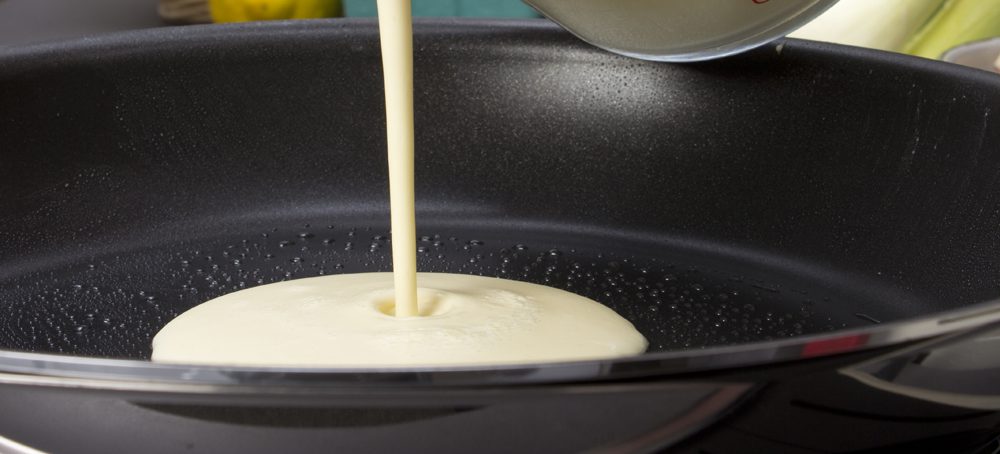
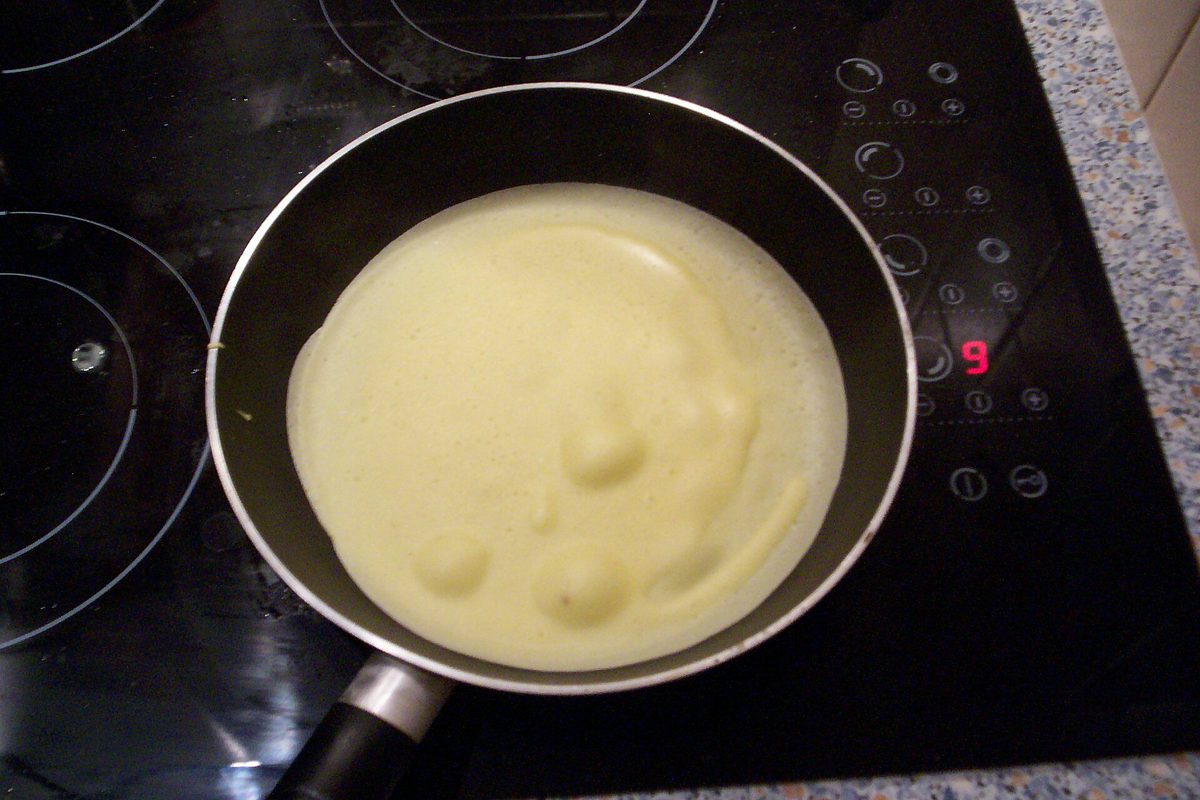
Heat a crepe pan or a non-stick skillet over medium heat. Before each pancake, lightly grease it by wiping with a paper towel soaked in oil. Pour one ladle of batter into the center of the pan.
-
Immediately tilt and rotate the pan so that the batter spreads into a thin layer across the bottom.
-
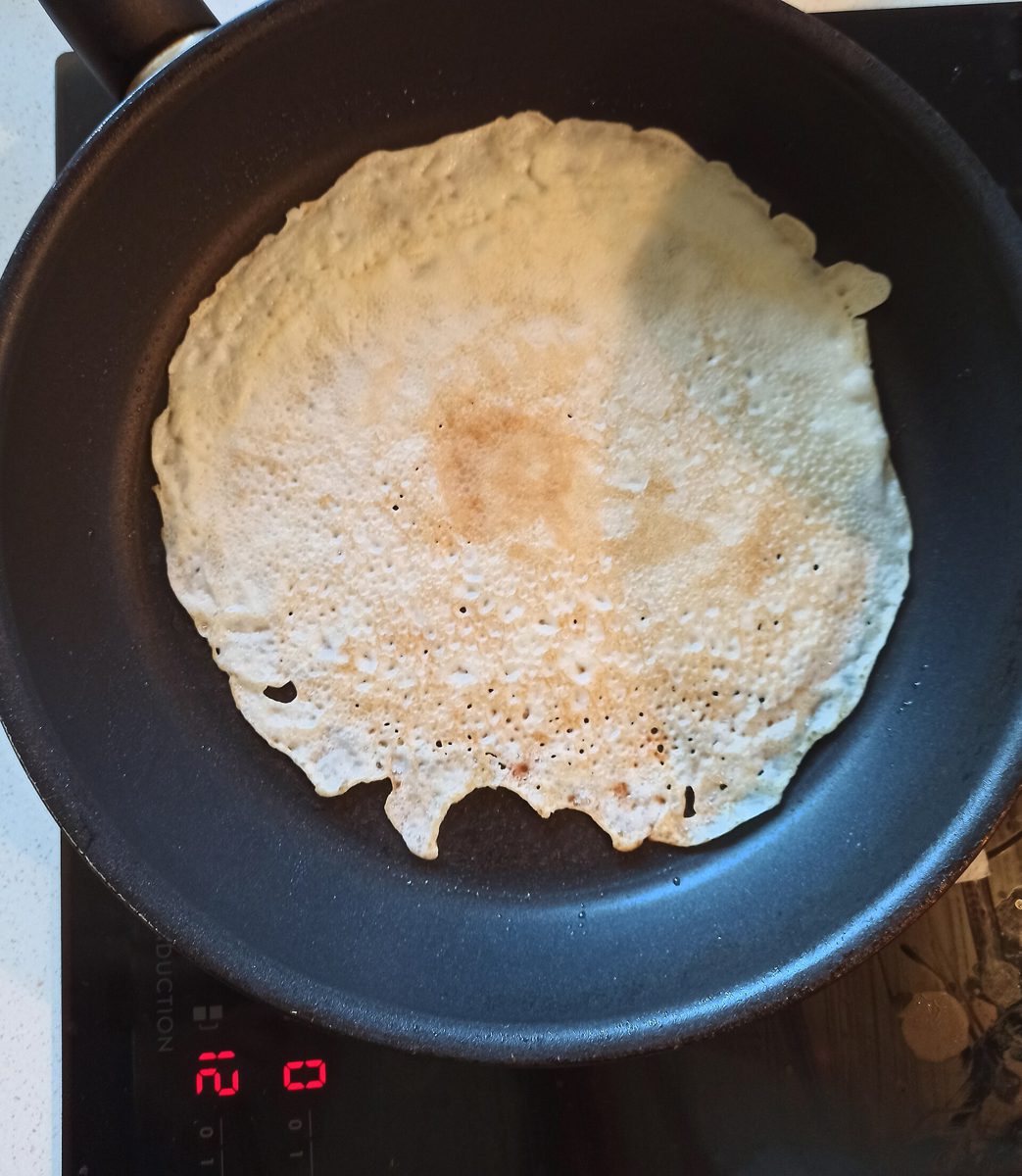
Cook for about 40–60 seconds, until the top is no longer liquid and the edges start to lift from the pan by themselves. Then flip the pancake and cook the other side for 20–40 seconds. The pancakes should be light golden, as they will be fried again.
-
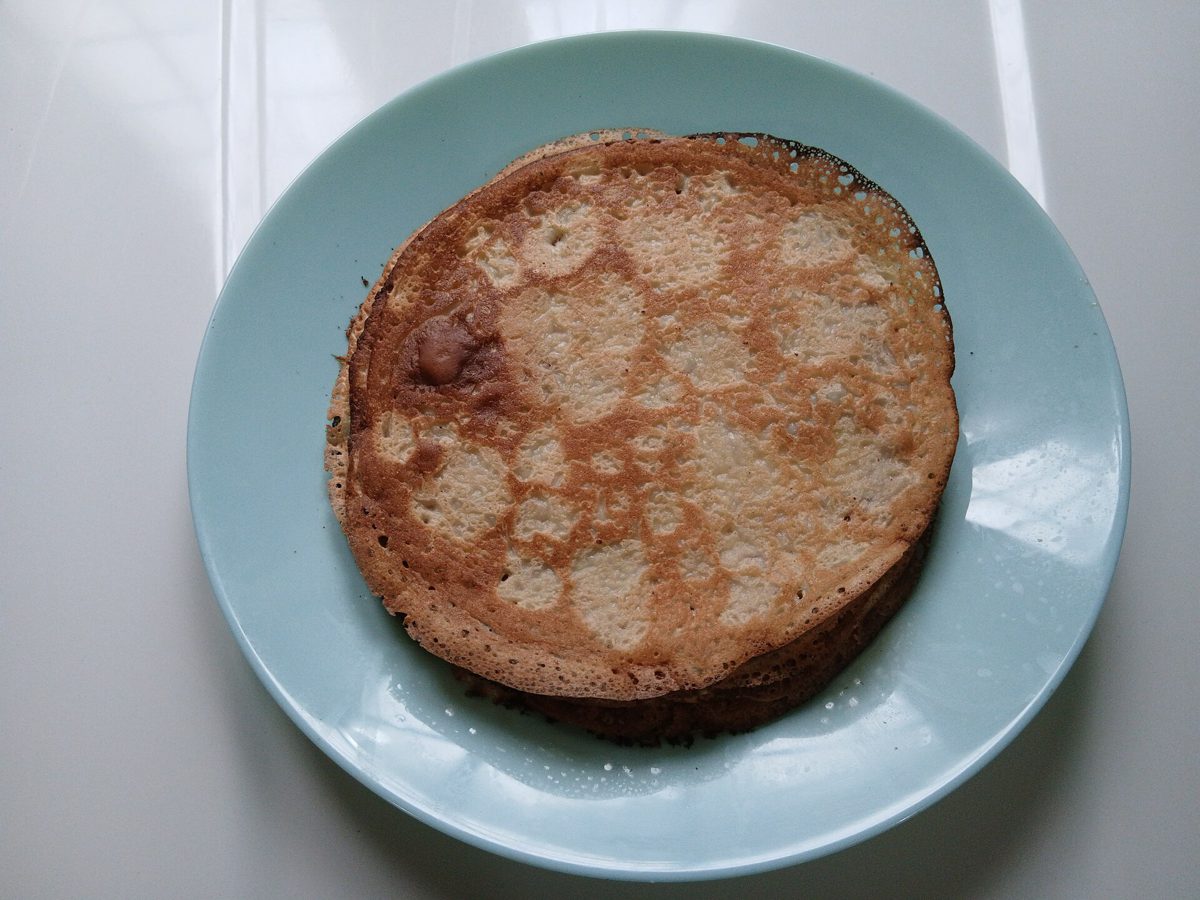
Remove the cooked pancakes to a plate, stacking them on top of each other. This batch will yield about 12 pancakes.
-
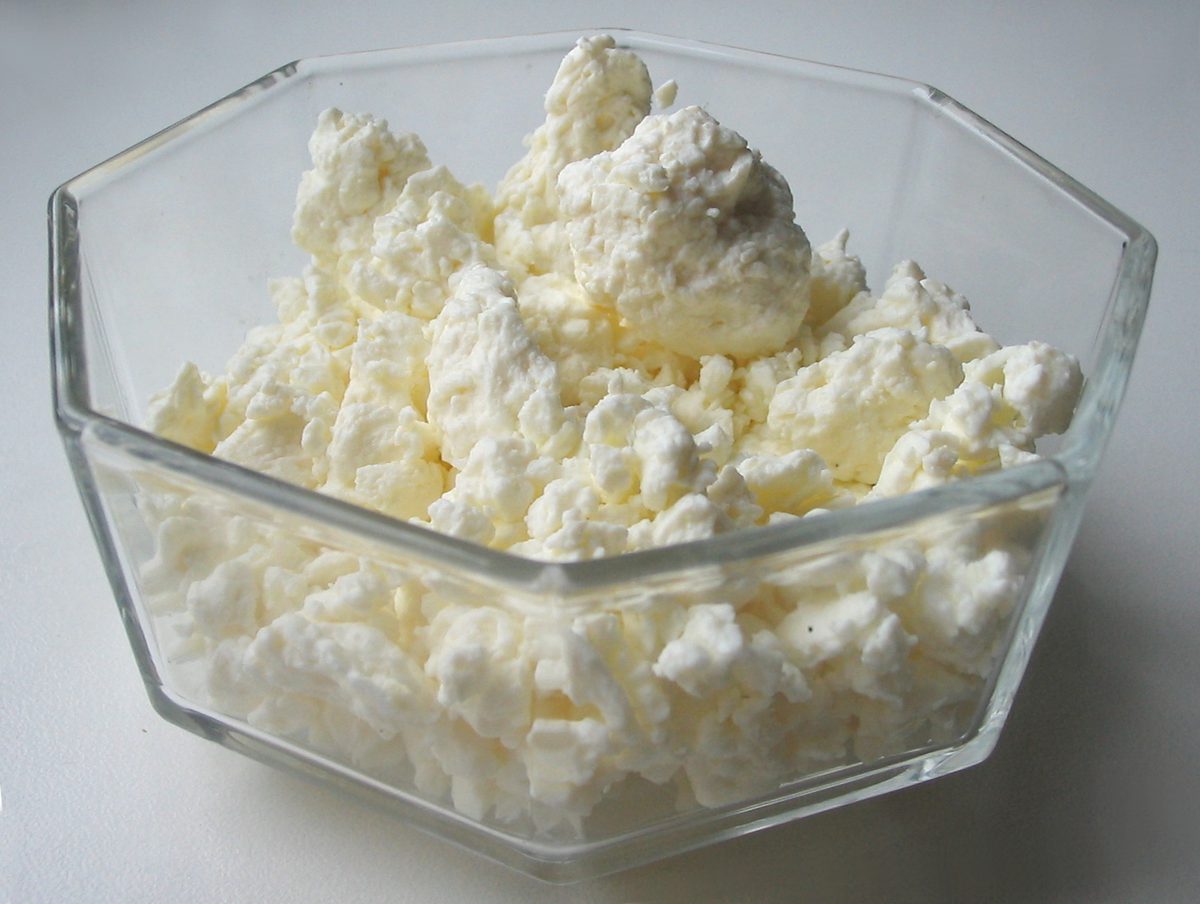
Filling: crumble the twaróg and mash it with a fork or potato masher, and if you want a smoother mixture, pass it through a ricer once. Mix with powdered sugar, vanilla sugar, and egg yolks. If the cheese is dry, add a tablespoon of sour cream at a time. You can add soaked raisins and cinnamon.
-
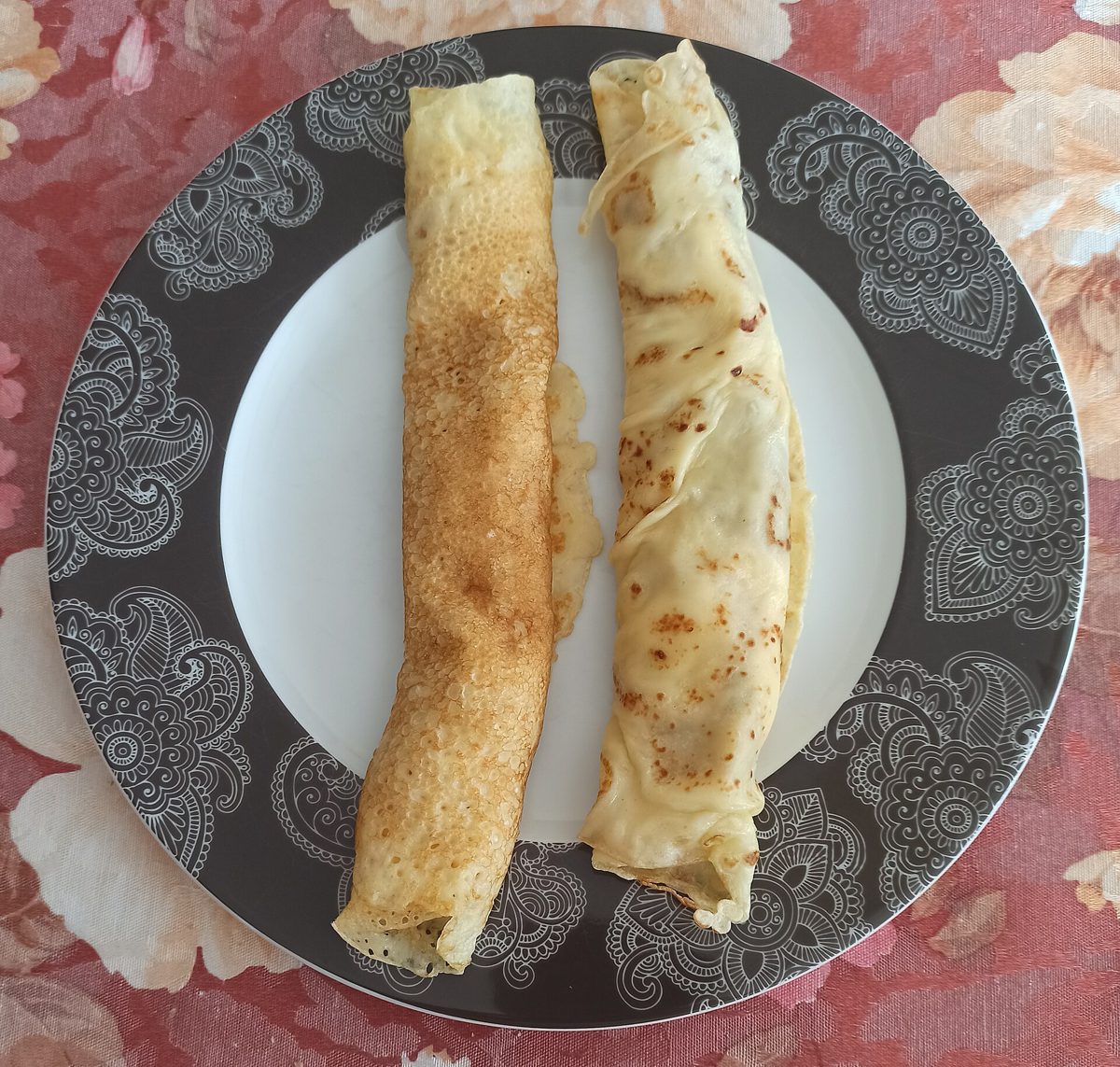
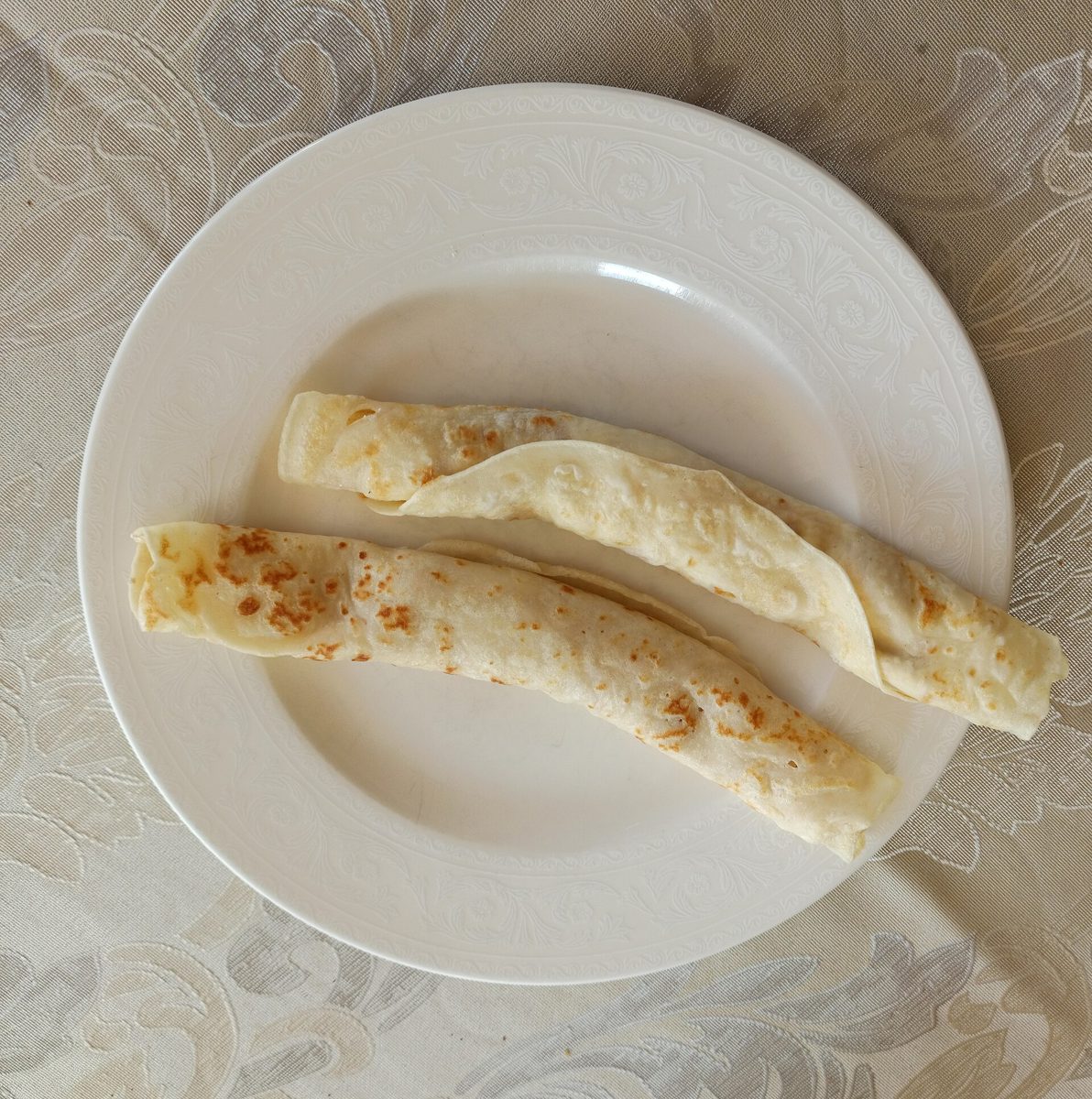
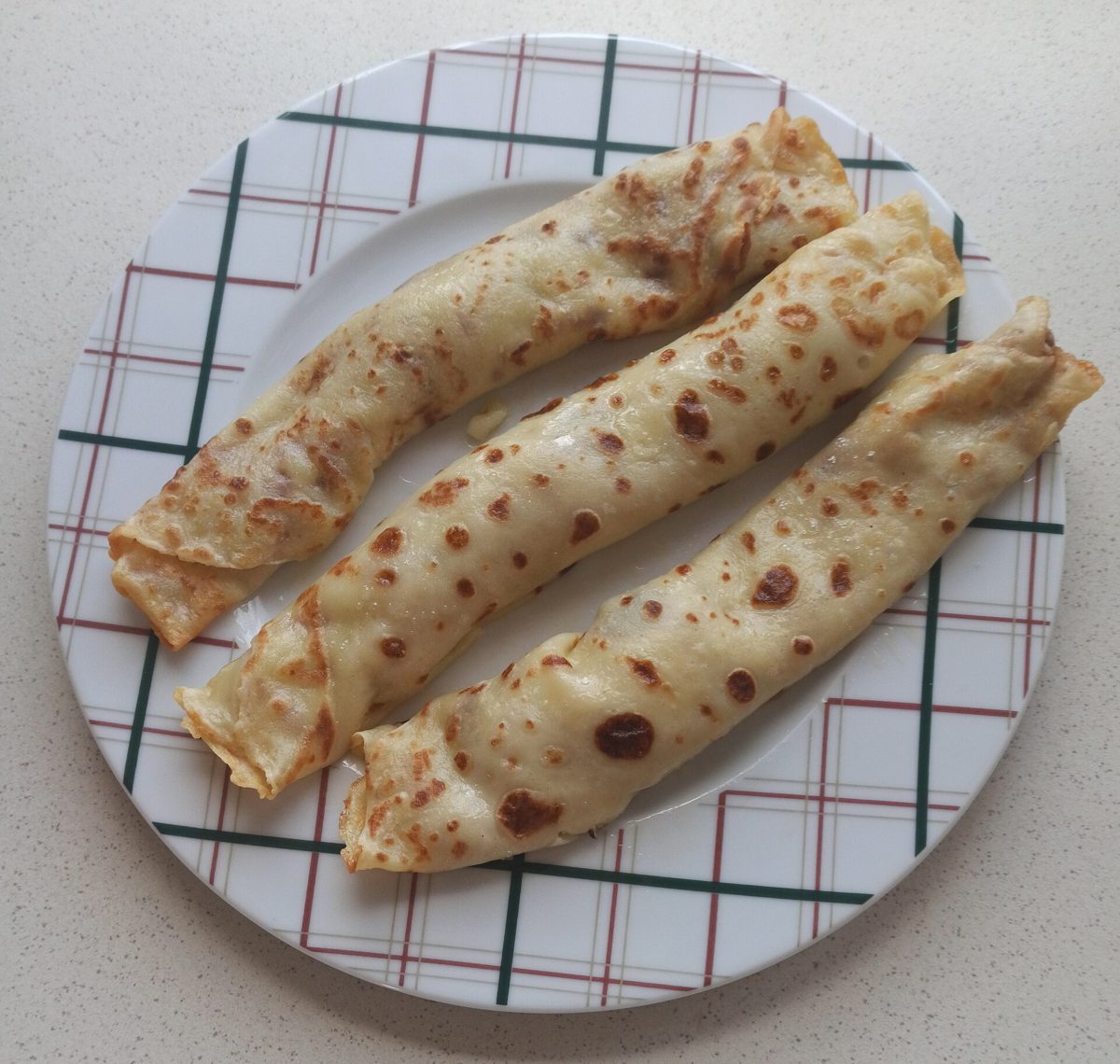
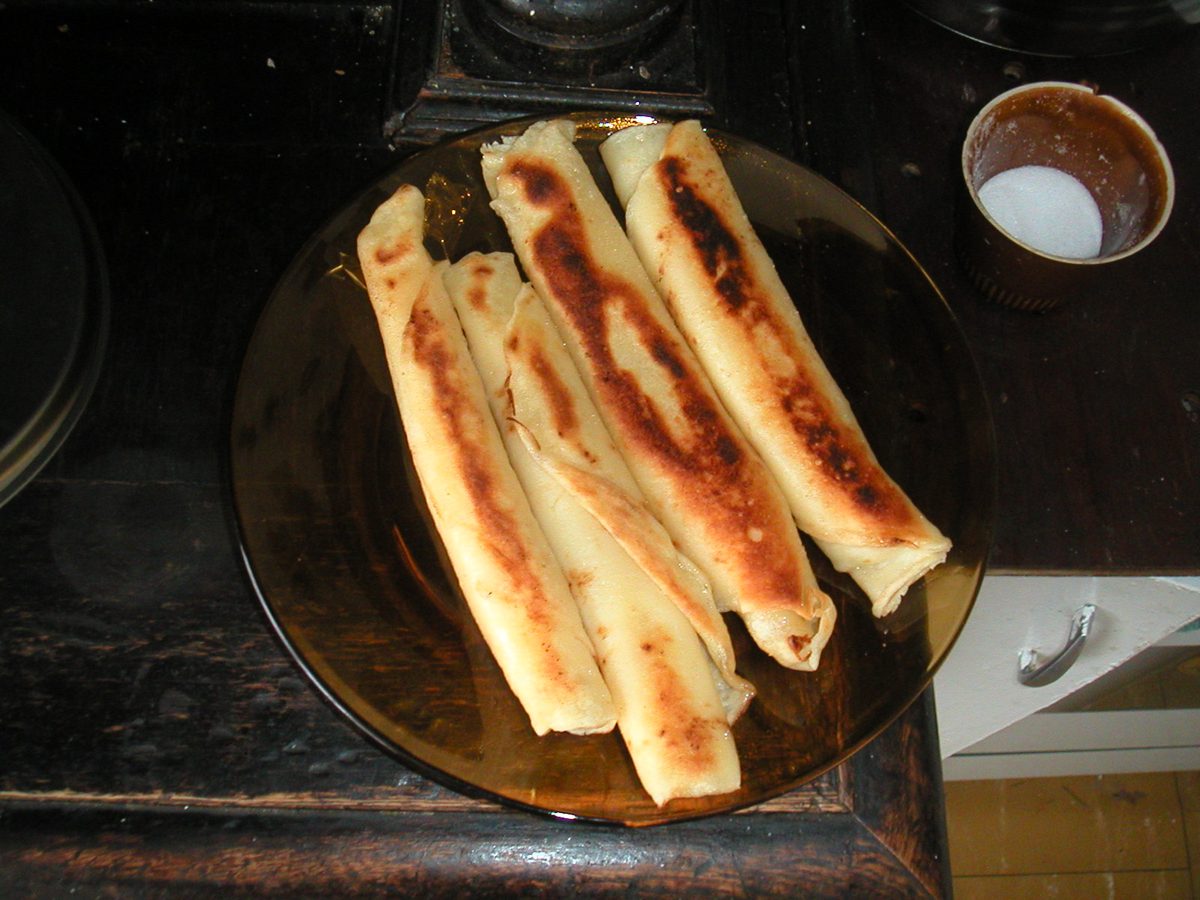
Spread a thin, even layer of cheese on each pancake, leaving an edge free. Fold the pancake in half and then in half again, into a triangle, or roll it up.
-
In a pan, heat more butter than for frying the pancakes. Place 3–4 pancakes and brown them on both sides, reducing the heat after placing them so that the cheese warms up before the batter burns. You can cover the pan with a lid.
-
Serve immediately, sprinkled with powdered sugar, with sour cream and fruits or with sugar and cinnamon.
Photos