The story behind the recipe
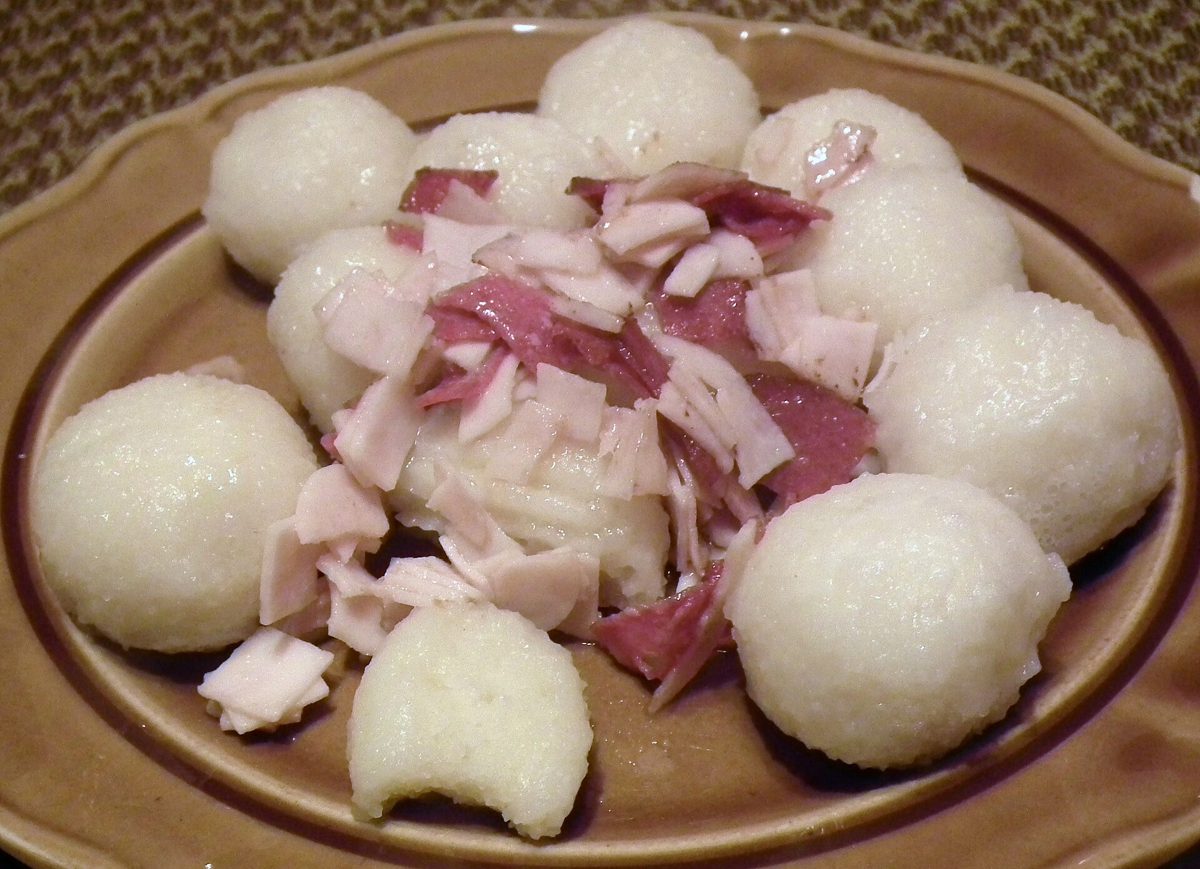
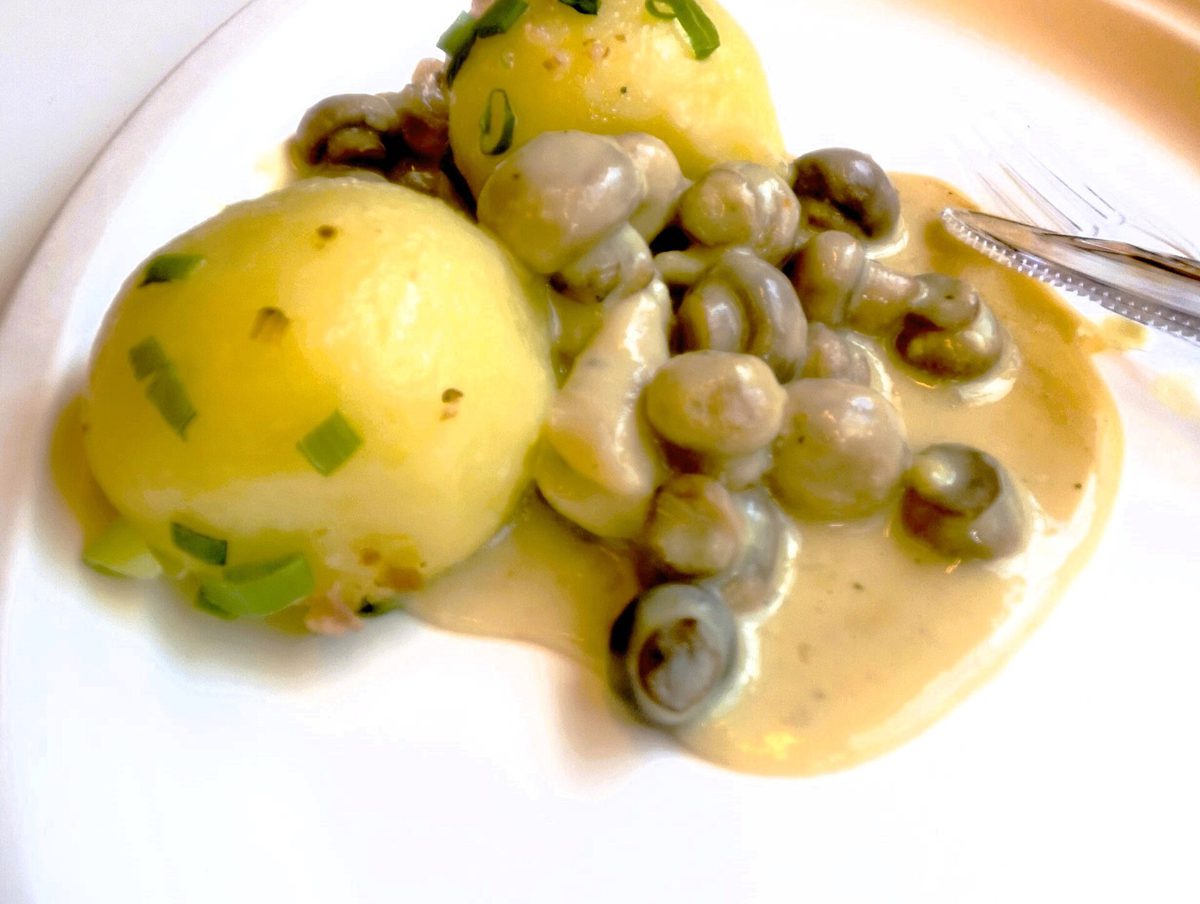
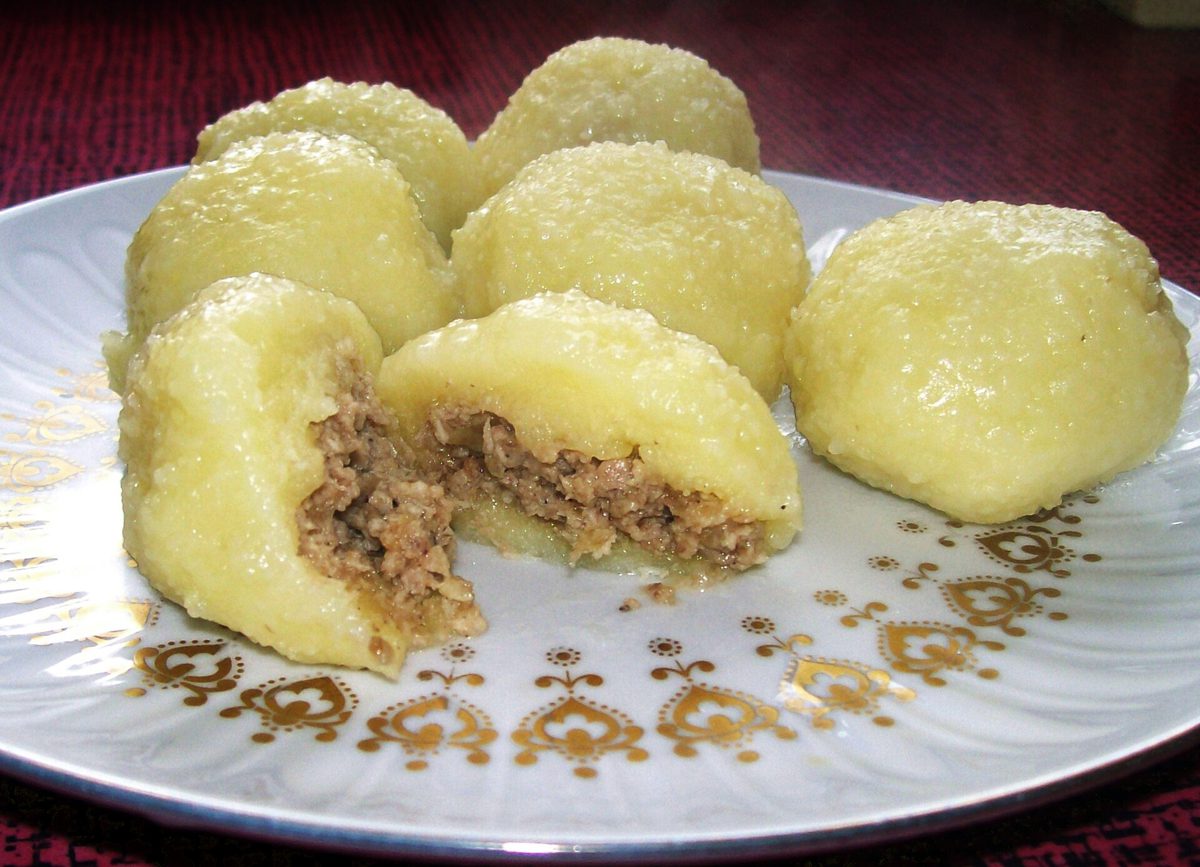
According to Polish Wikipedia, pyzy are large potato or yeast dumplings, usually served for lunch. Potato dumplings are made from grated raw potatoes or a mix of raw and cooked potatoes, sometimes with added flour, eggs, and salt, and boiled in water. They are round or oval, filled with meat, cheese, or mushrooms, or served without filling, topped with melted lard. Their exact origin is uncertain. Romana Chojnacka from the University of Life Sciences in Poznań wrote in 2019 in 'Trzodzie Chlewnej' that meat-filled pyzy come from Silesian cuisine, while a blog from the Warsaw tour office Urban Adventures states they likely originate from Podlasie.
In Warsaw, pyzy are associated with the Różycki Bazaar in Praga, the oldest market in the city. During the PRL era, pyzy and tripe were sold in glass jars there. Smaker calls jarred pyzy, topped with onion and bacon, a cult dish of the PRL era and notes that long lines form at the market for a portion. According to Urban Adventures, Warsaw pyzy are round, soft, filled with cooked beef, and sprinkled with cracklings.
On the List of Traditional Products by the Ministry of Agriculture, 'Pyzy polskowolskie z mięsem' from Lublin Voivodeship were registered in 2009. In the village of Polskowola, known for sausage production, meat scraps were used for the filling. Meat-filled pyzy were made there on Sundays and during fieldwork: at harvest, threshing, and potato digging. The dough combines cooked and grated potatoes with potato starch, eggs, and salt, while the filling consists of cooked, minced meat with sautéed onion. Potato starch was only added after training for housewives in the 1970s and 1980s. The list also includes 'Pyzy borowiackie' from Pomerania, filled with cheese. We did not find an entry for pyzy from Mazovia or Podlasie.
Ingredients
Dough (about 16 dumplings)
-
700 g starchy raw potatoes (weight after peeling)
Abroad: USA and Canada: Russet (Idaho); UK: Maris Piper; Germany: mehligkochende Kartoffeln -
700 g starchy cooked potatoes (weight after peeling, passed through a ricer and cooled)
Abroad: as above -
2 tbsp (about 19 g) potato starch (plus all the starch recovered from the juice; more if the dough falls apart)
Abroad: potato starch (not potato flour); Germany: Kartoffelstärke - 1 pc egg
- 1 tsp (about 6 g) salt (flat)
Filling
-
400 g cooked meat: pork shoulder, beef, or both (weight after cooking, without bones; reserve some broth)
Abroad: USA: pork shoulder, stew beef; UK: pork shoulder; Germany: Schweineschulter or Schweinenacken - 100 g onion (1 medium, finely chopped)
-
1 tbsp (about 14 g) lard (or oil)
Abroad: lard; Germany: Schweineschmalz -
1 tsp (5 ml) dried marjoram
Abroad: dried marjoram; Germany: Majoran - ½ tsp (about 3 g) salt (to taste)
- ¼ tsp (1.3 ml) ground black pepper
- 3 tbsp (45 ml) meat cooking broth (3–4 tablespoons, to keep the filling moist)
For boiling
- salt (to salt the water)
Sauce
-
150 g smoked bacon (cut into small cubes)
Abroad: USA: smoked slab bacon; UK: smoked streaky bacon or lardons; Germany: Räucherspeck or Speckwürfel - 120 g onion (1 piece, diced or sliced)
Method, step by step
-
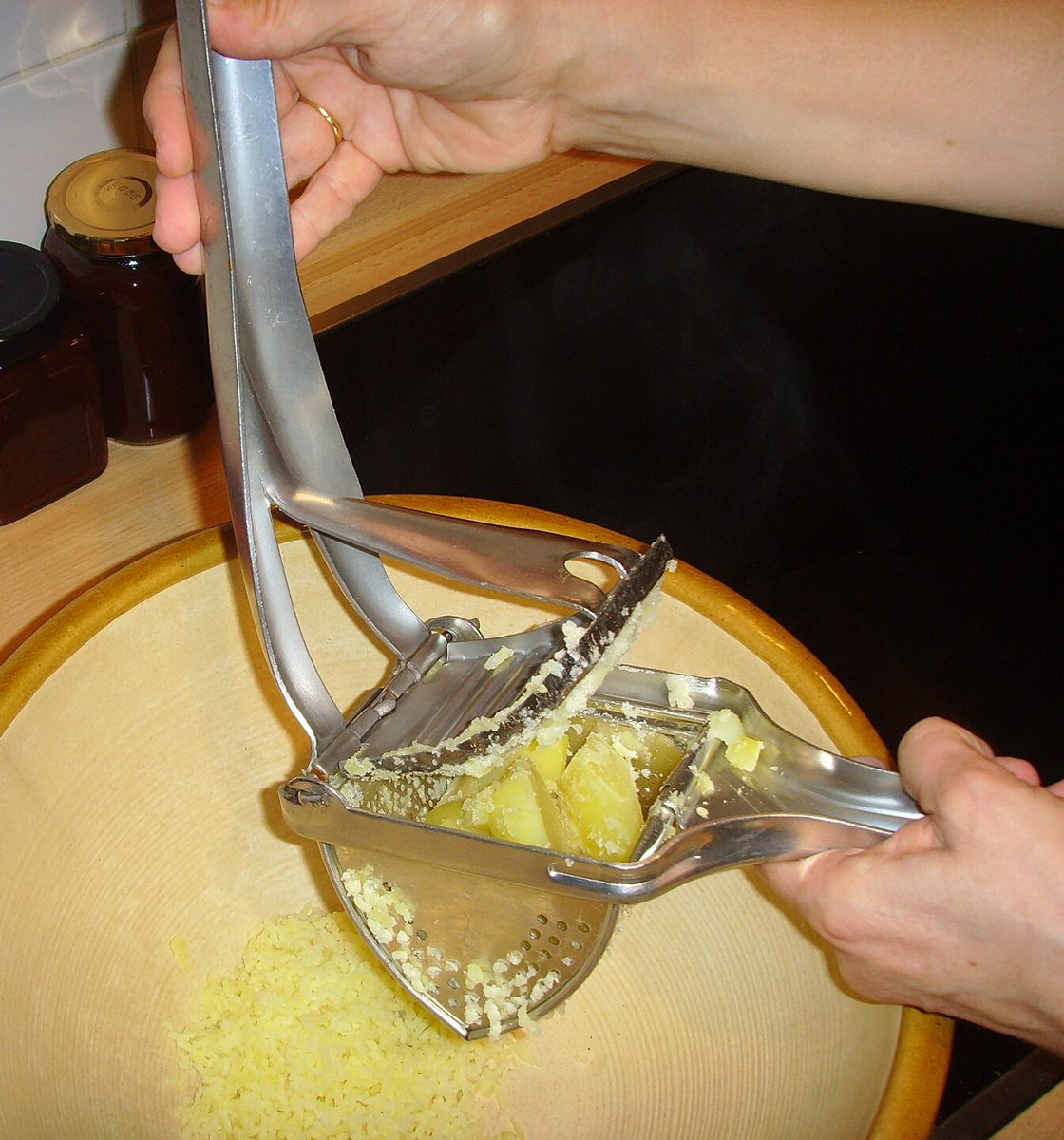
Cook the potatoes for the dough in salted water until soft, drain, steam dry, pass through a ricer, and cool well. You can do this the day before. Weigh 700 g.
-
Cook the meat for the filling in salted water until soft, cool, and grind in a meat grinder. Reserve a few tablespoons of the broth.
-
Sauté the onion in lard. Mix it with the meat, marjoram crushed in your hands, salt, and pepper, adding 3–4 tablespoons of broth. The filling should be compact but not dry. Divide it into 16 balls, about 25 g each.
-
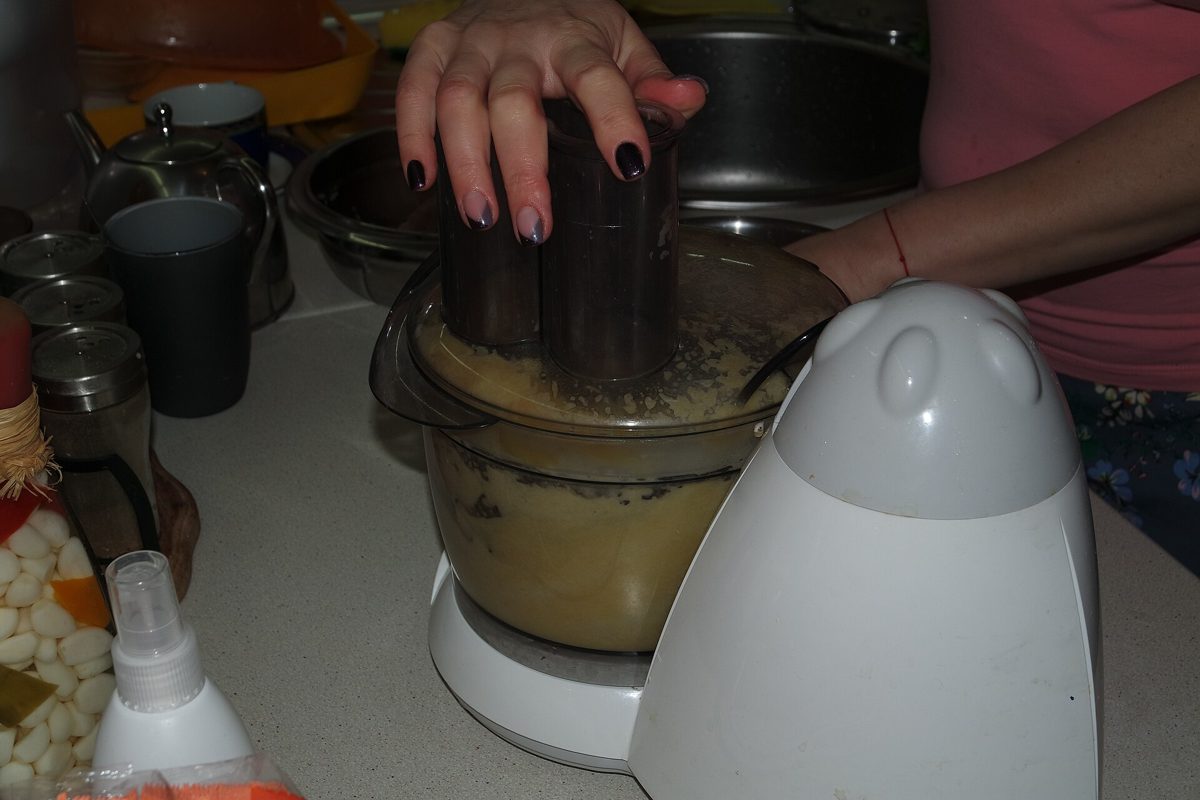
Peel the raw potatoes and grate them on the finest grater or in a food processor with a fine grating disc. Work quickly, as the mixture darkens; you can first grate a piece of onion into the bowl.
-
Squeeze the grated potatoes in batches using a linen cloth or cheesecloth over a bowl until they are almost dry. Let the juice sit for a few minutes, carefully pour off the water, and add the white starch from the bottom back to the potatoes.
-
Combine the raw and cooked potatoes, 2 tablespoons of potato starch, egg, and salt. Mix briefly into a uniform, compact dough; overmixing will make it wet. Set a large pot of salted water to boil and cook one pyza as a test: if it falls apart, add starch to the dough by the tablespoon.
-
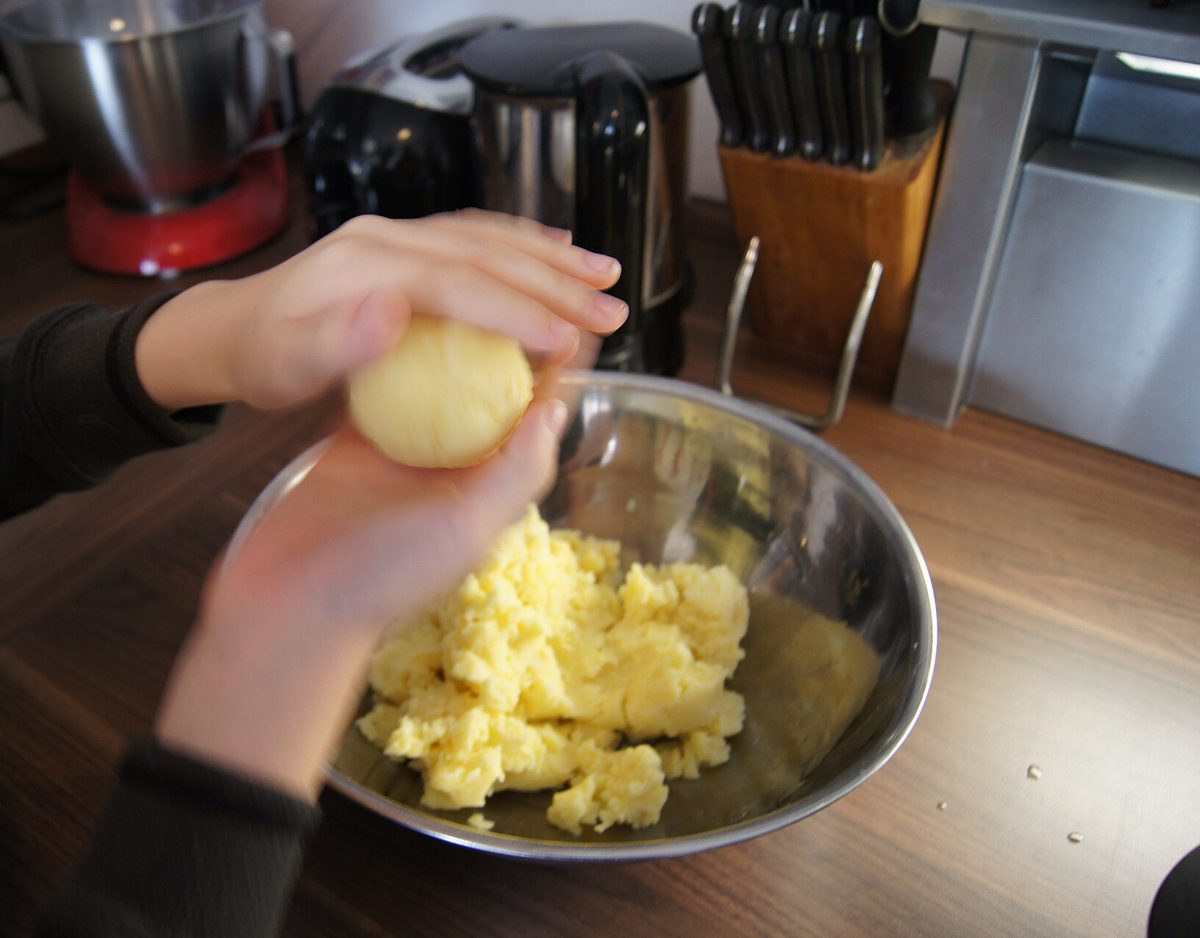
Take about 80 g of dough and flatten it in your hand dusted with starch. Place a ball of filling in the center, close it with dough, and roll it in your hands into a smooth ball without cracks.
-
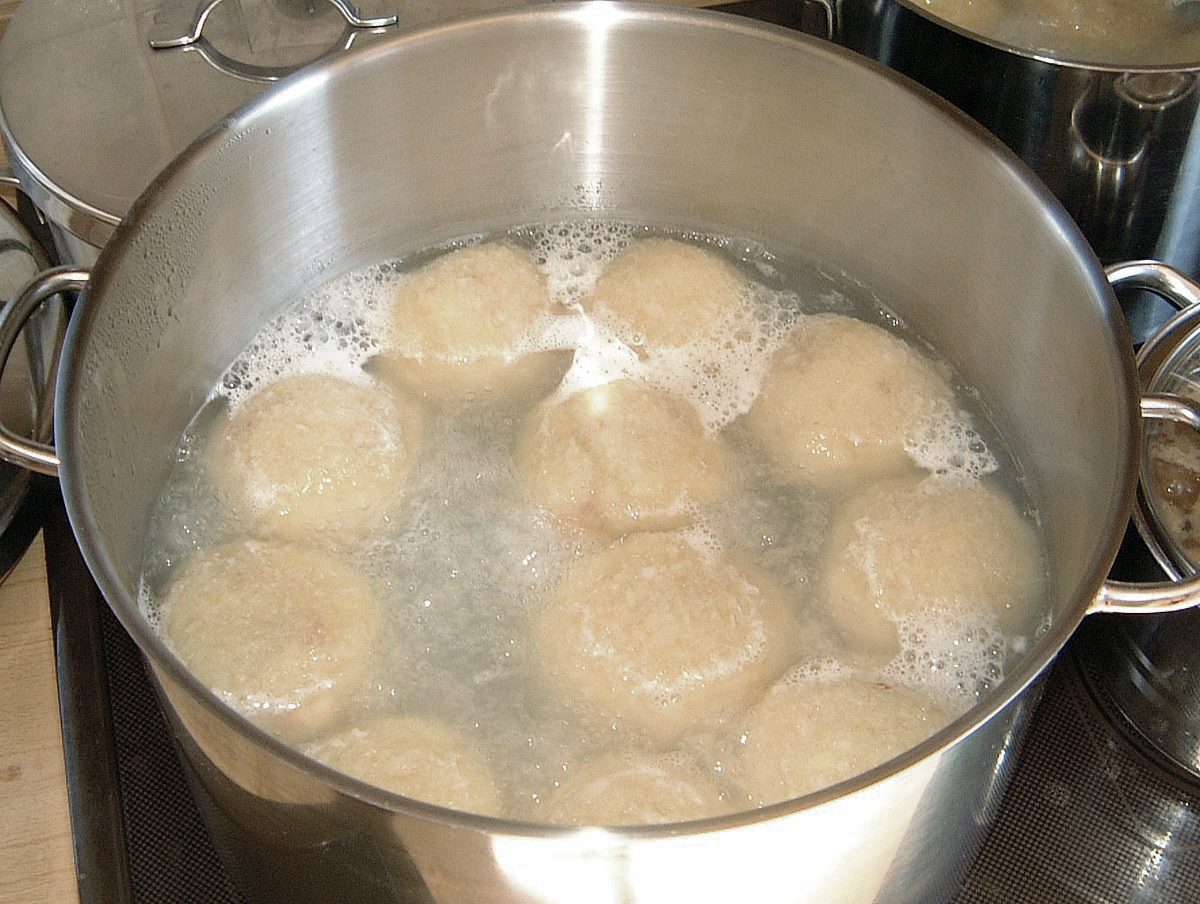
Place the pyzy into boiling water in batches, with space between them, and gently shake the pot to prevent sticking to the bottom. When the water comes to a boil again, reduce the heat so it doesn't boil vigorously. When the pyzy float, cook them for another 3–5 minutes. The filling is already cooked, so you are only cooking the dough.
-
While cooking, prepare the sauce: fry the bacon until the fat renders, then add the onion and brown it.
-
Remove the pyzy with a slotted spoon and serve immediately, hot, drizzled with the sauce.
Photos