The story behind the recipe
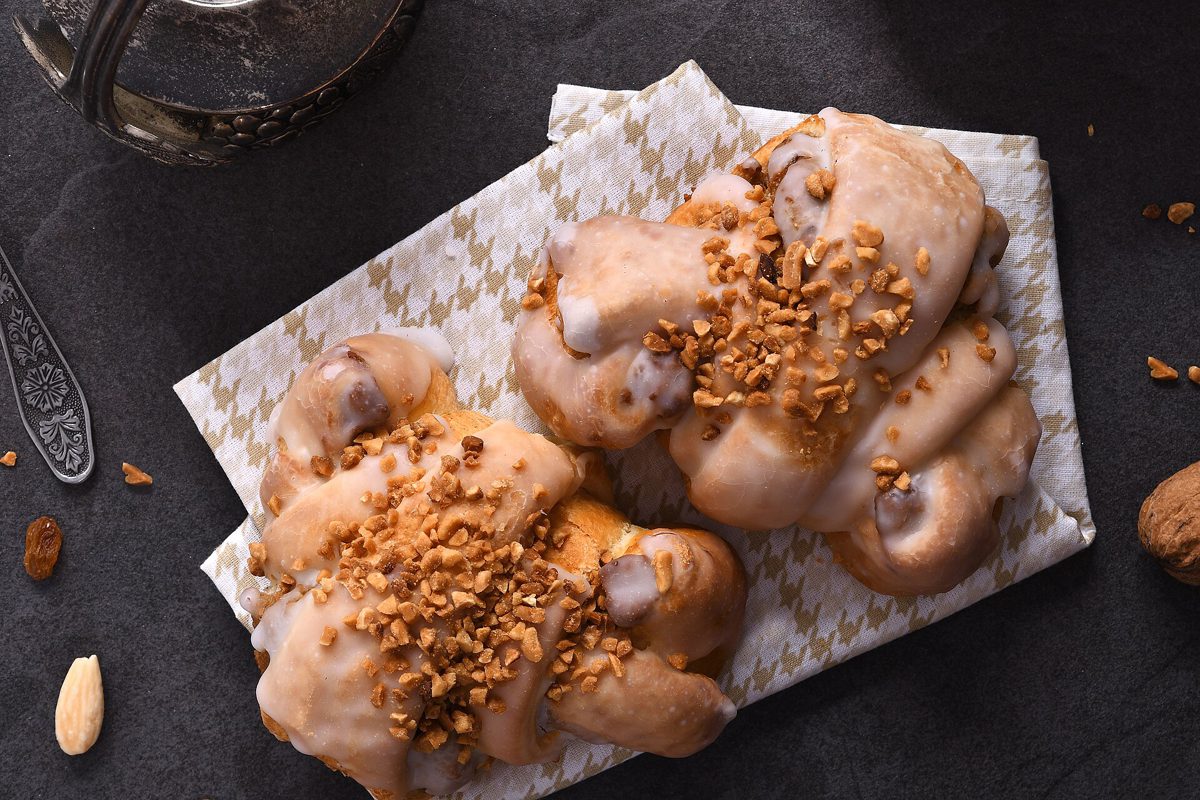
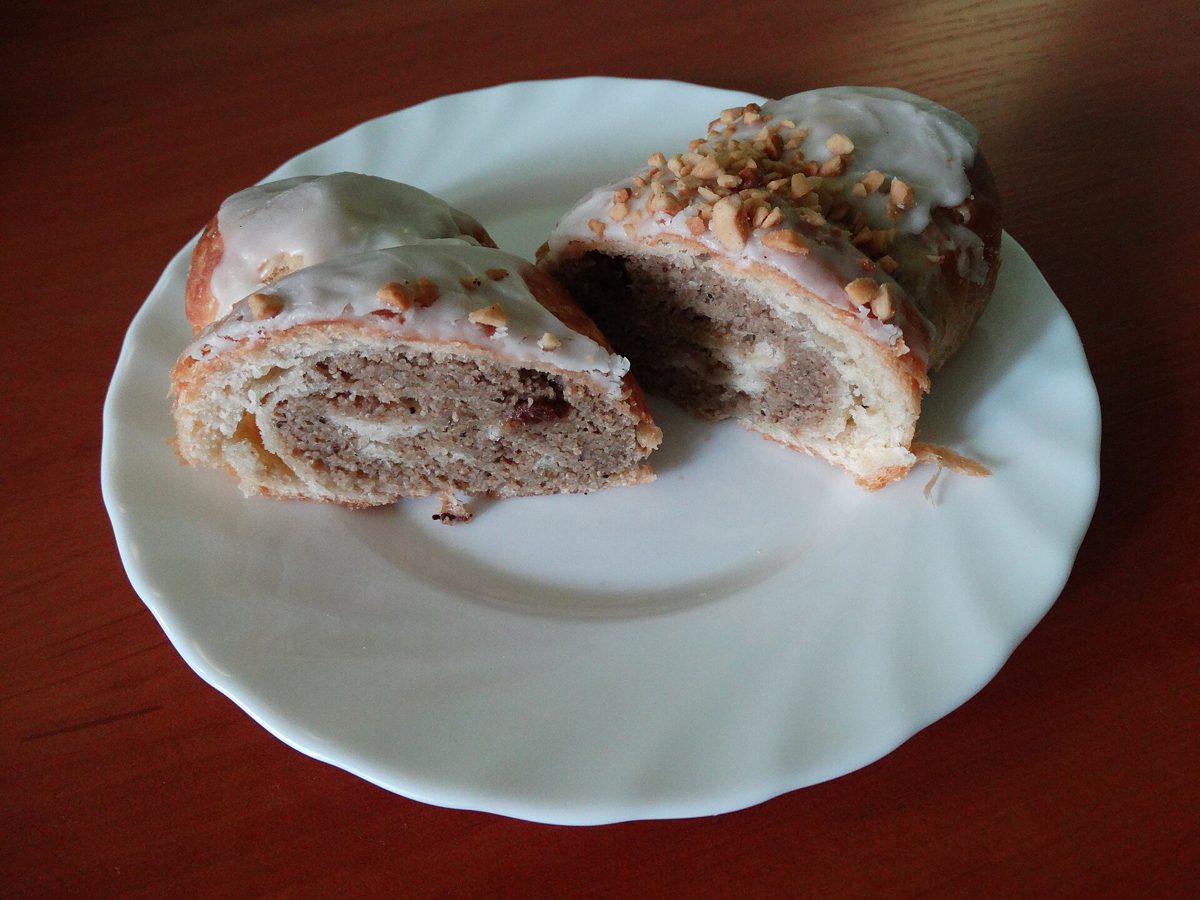
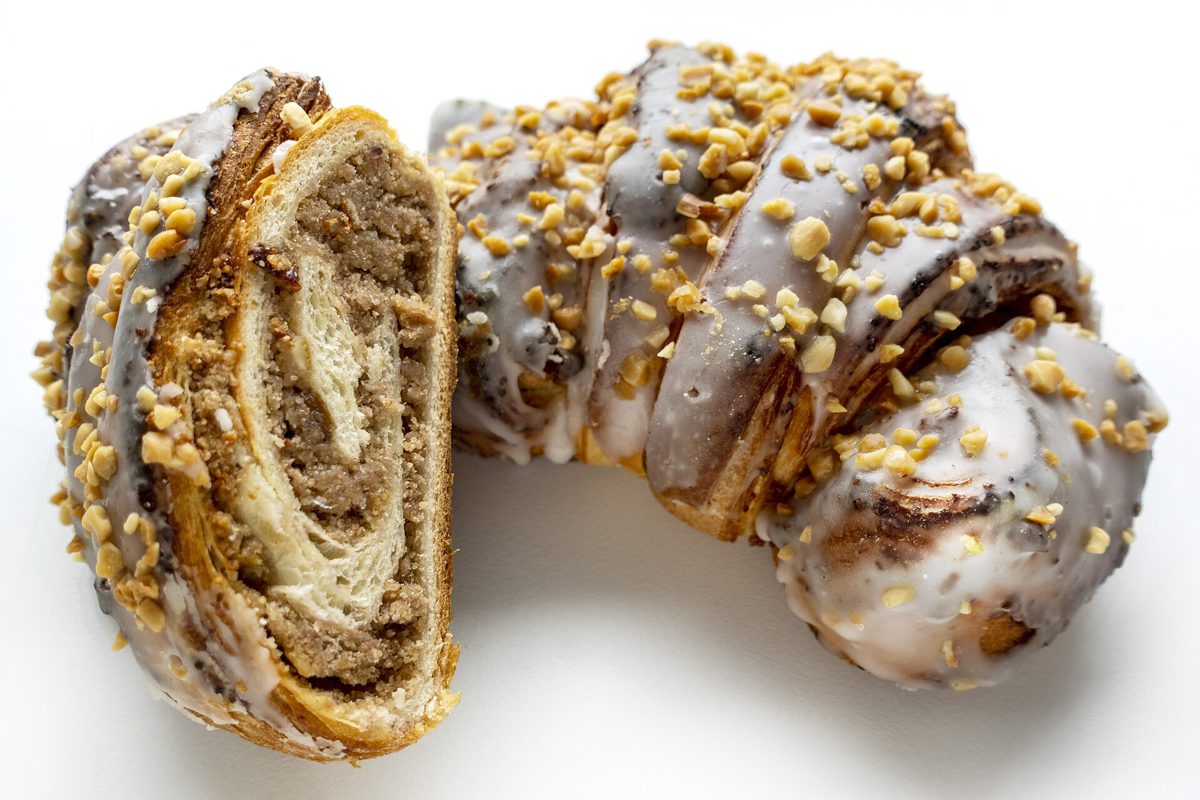
Rogal świętomarciński is a Poznań pastry made from half-puff pastry filled with white poppy seeds, topped with icing and sprinkled with nuts, baked on November 11, St. Martin's Day. Its name is protected in the European Union as a protected geographical indication (PGI) under Regulation (EC) No. 1070/2008 of October 30, 2008. The specification was amended by Implementing Regulation (EU) No. 597/2013: the rogale is crescent-shaped and weighs between 150 and 250 g, the dough is yeast-based, layered with margarine using the 'three times three' method, and the filling is made from white poppy seeds with sugar, biscuit crumbs, eggs, margarine, raisins, nuts, candied fruits or fruits in syrup, and almond flavoring. Only producers from Poznań and designated counties in Greater Poland can sell it under this name, provided they bake according to the specification and have passed the inspection of the Agricultural and Food Quality Inspection. This recipe is a homemade version inspired by the protected rogale, meant to be baked for yourself and loved ones, and not a rogale świętomarciński in the legal sense.
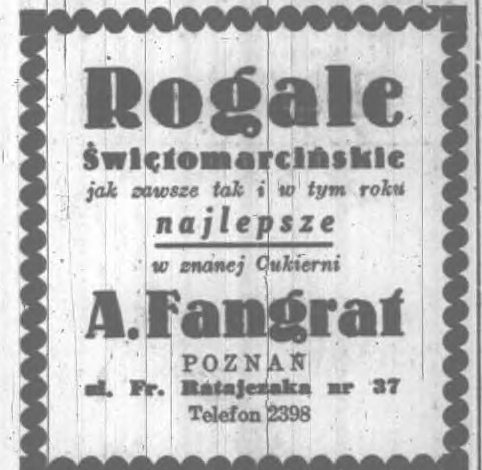
Registration documents indicate that the oldest known mention of rogale for St. Martin's Day is an announcement from the bakery of Antoni Pfitzner dated November 10, 1852, and the name "rogal świętomarciński" first appeared in the press on November 11, 1860. According to a Poznań legend, in November 1891, pastry chef Józef Melzer, moved by a sermon from the parish priest of St. Martin, Father Jan Lewicki, persuaded his employer to bake rogale and distribute them to the poor. The shape is explained in various ways: as a horseshoe lost by St. Martin's horse or a crescent from Turkish banners captured at Vienna. The Quality Inspection states that it is impossible to determine which legend is true today.
In the 19th century, bakeries advertised rogale filled with poppy seeds and almonds. According to the specification after World War II, almond paste became practically unavailable, and bakers replaced it with a filling made from white poppy seeds, which today distinguishes the rogale from other pastries. On St. Martin's Day, Poznań producers sell an average of 250 tons of rogale, and about 500 tons throughout the year. The specification mentions margarine, but some certified bakeries use butter, and both fats were used before the specification. Homemade recipes, including this one, usually rely on butter.
Ingredients
White Poppy Seed Filling (prepare the day before)
-
500 g white poppy seeds (whole, unground)
Abroad: USA, Canada, UK: white poppy seeds in Indian grocery stores (khus khus, posto), e.g., Rani White Poppy Seeds; Germany: Weißmohn, e.g., Waldviertler Weißmohn - 400 g sugar (Ania Gotuje suggests 500 g, but she used 400 g)
- 85 g butter
- 85 g raisins (finely chopped)
- 100 g blanched almonds (finely chopped)
-
40 g candied orange peel (just enough, finely chopped)
Abroad: USA, UK: candied orange peel; Germany: Orangeat -
200 g biscuit crumbs (preferably from homemade biscuit, store-bought biscuit is also fine)
Abroad: ladyfingers or Savoiardi; Germany: Löffelbiskuits - 4 pcs eggs (small, added one at a time; the original recipe states 250 g of eggs, which is about 5 medium)
-
½ tsp (2.5 ml) almond extract (natural)
Abroad: USA: pure almond extract; Germany: Bittermandelaroma
Yeast Half-Puff Pastry
-
1 kg wheat flour (Type 550, plus a little for dusting)
Abroad: USA, Canada: all-purpose flour; UK: plain flour; Germany: Type 550 - 400 ml milk (whole, slightly warm, up to 30°C, or 86°F)
- 120 g sugar (preferably fine; 2 tablespoons from this amount go to the starter)
- 120 g butter (melted and cooled)
- 2 pcs eggs (medium, at room temperature)
- 1 pc egg yolk
-
20 g fresh yeast
Abroad: USA: fresh yeast can be hard to find; instead of 20 g fresh, use 7 g instant yeast - ⅓ tsp (about 2 g) salt (flat)
-
300 g butter for layering (very frozen, then grated)
Abroad: regular unsalted butter, e.g., unsalted butter
Icing and Topping
-
200 g powdered sugar
Abroad: USA: powdered sugar or confectioners' sugar; UK: icing sugar; Germany: Puderzucker - 4½ tbsp (67.5 ml) hot water (or warm milk)
- 100 g almonds (chopped, or other nuts)
For Brushing
- 1 pc egg (beaten)
- milk (a little, for the egg)
Method, step by step
-
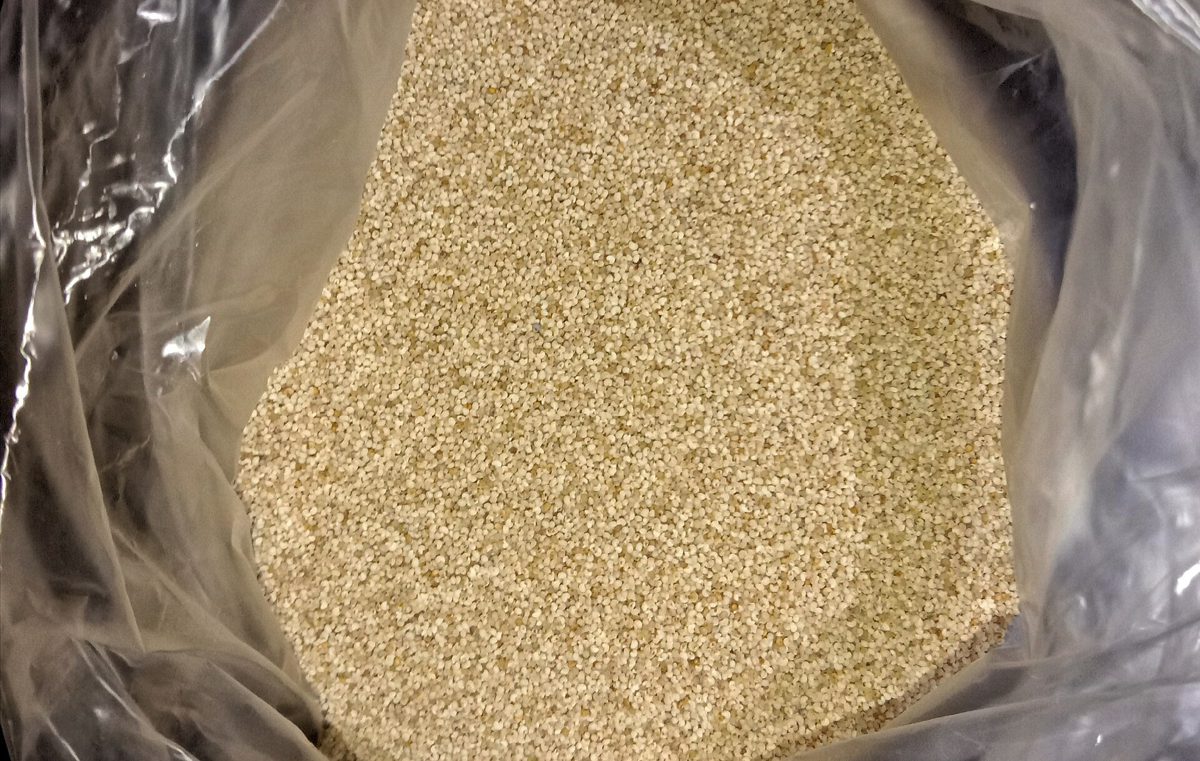
The day before, prepare the filling. Rinse the white poppy seeds in a sieve, transfer to a pot, and cover with a liter of boiling water. Cook covered over very low heat for 30 minutes. Drain through a large, fine sieve or a sieve lined with cheesecloth and lightly press out the cloudy water.
-
Grind the cooled poppy seeds three times in a meat grinder with the finest holes. In a separate pot, melt the butter with the sugar, add the chopped raisins, almonds, and orange peel, and sauté over low heat for 2-3 minutes. Add all the ground poppy seeds and sauté for another 10 minutes, stirring occasionally. Set aside to cool.
-
To the cooled, at most slightly warm filling, add a handful of crushed biscuit and one egg at a time, mixing thoroughly each time. Watch the consistency: the filling should not be too runny or too thick, so you may not need to add the last egg. Finally, mix in the almond extract. Store the filling in the fridge covered and take it out at least 2 hours before shaping the rogale.
-
Place the butter for layering (300 g) in a bag in the freezer. Make the starter: mash the yeast with 2 tablespoons of sugar, 3 tablespoons of flour, and 100 ml of slightly warm milk, all taken from the amount for the dough. Cover with a cloth and leave for 20 minutes until it rises noticeably.
-
Melt 120 g of butter and let it cool. Beat the eggs and yolk with the remaining sugar until light and fluffy. In a large bowl, combine the remaining flour and salt, pour in the remaining 300 ml of warm milk, add the starter, melted butter, and beaten eggs. Mix, then knead with a mixer hook or by hand for at least 5 minutes until the dough is smooth and elastic. Do not add flour while kneading. Leave to rise for 30 minutes.
-
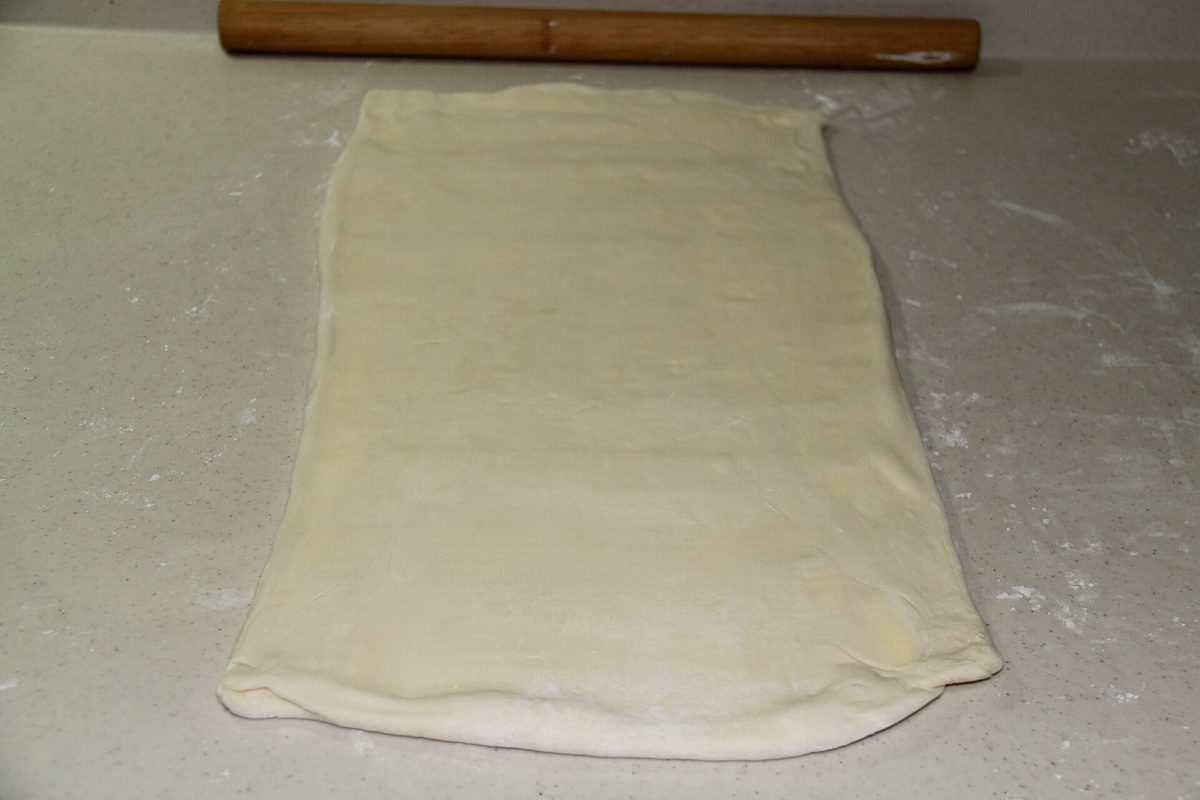
Grate the frozen butter on a large grater. Degas the dough on a lightly floured work surface and roll it out into a large rectangle. Evenly spread all the grated butter over 2/3 of the rectangle, leaving about 2 cm (¾ inch) of free edge, and lightly press it down.
-
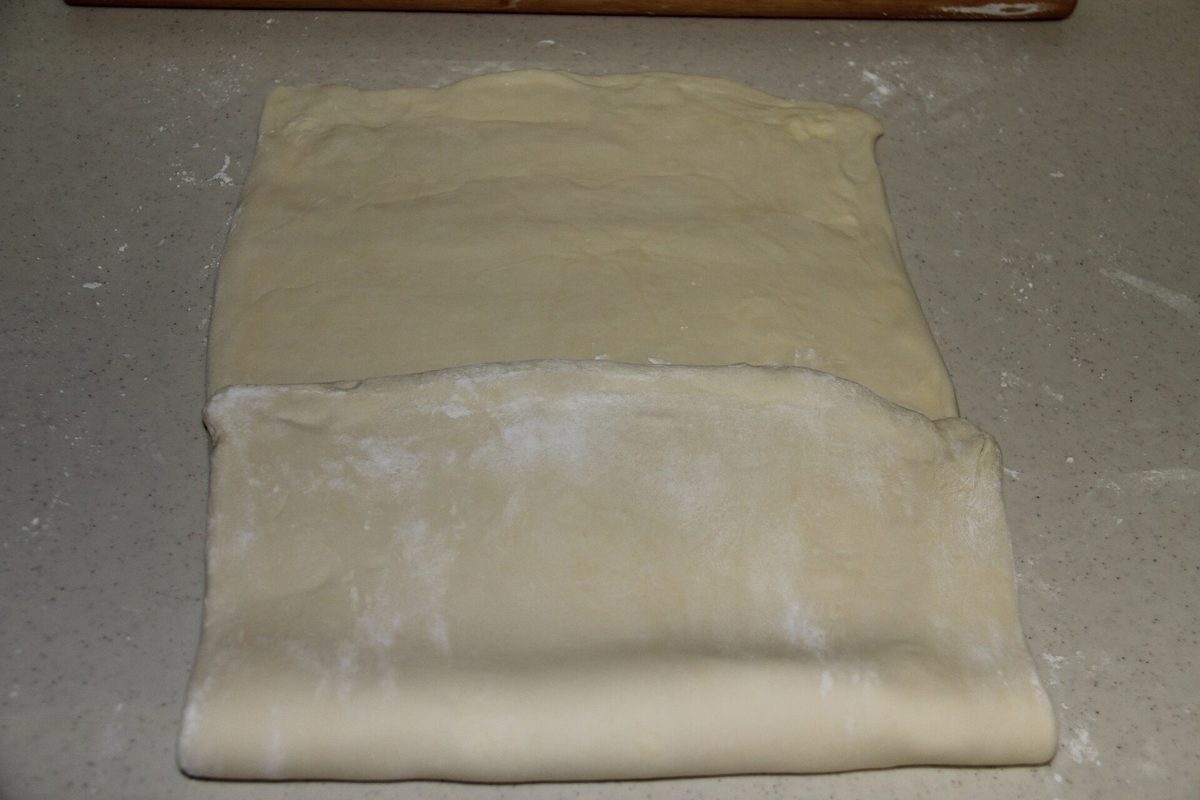
Fold the dough into thirds: first the part without butter to the center, then the second part with butter on top. Press down with your hands, roll out into a smaller rectangle, and fold again the same way. Do not roll out further, just cover and place in the fridge for 30 minutes. Repeat the rolling, two folds, and chilling two more times. The dough can also rest overnight in the fridge, tightly covered.
-
Divide the dough into two parts; one waits in the fridge. Roll out the other into a rectangle about 0.5 cm (¼ inch) thick and cut into long triangles, for example, with a base of 11 cm (4¼ inches) and a length of 29-30 cm (11½-11¾ inches). On each triangle, pipe two strips of filling from a piping bag with a hole about 1.5 cm (½ inch) wide, thicker at the base and meeting at the tip.
-
Fold the base of the triangle over about 3 cm (1¼ inches) and make a cut in the middle, between the strips of filling. Spread the cut parts to the sides, roll the rogal to the end, and curl the ends to form a crescent. Place the rogale on a baking sheet lined with parchment paper with plenty of space between them, cover with a cloth, and leave to rise for 30 minutes. Meanwhile, preheat the oven to 180°C (350°F), top and bottom heat.
-
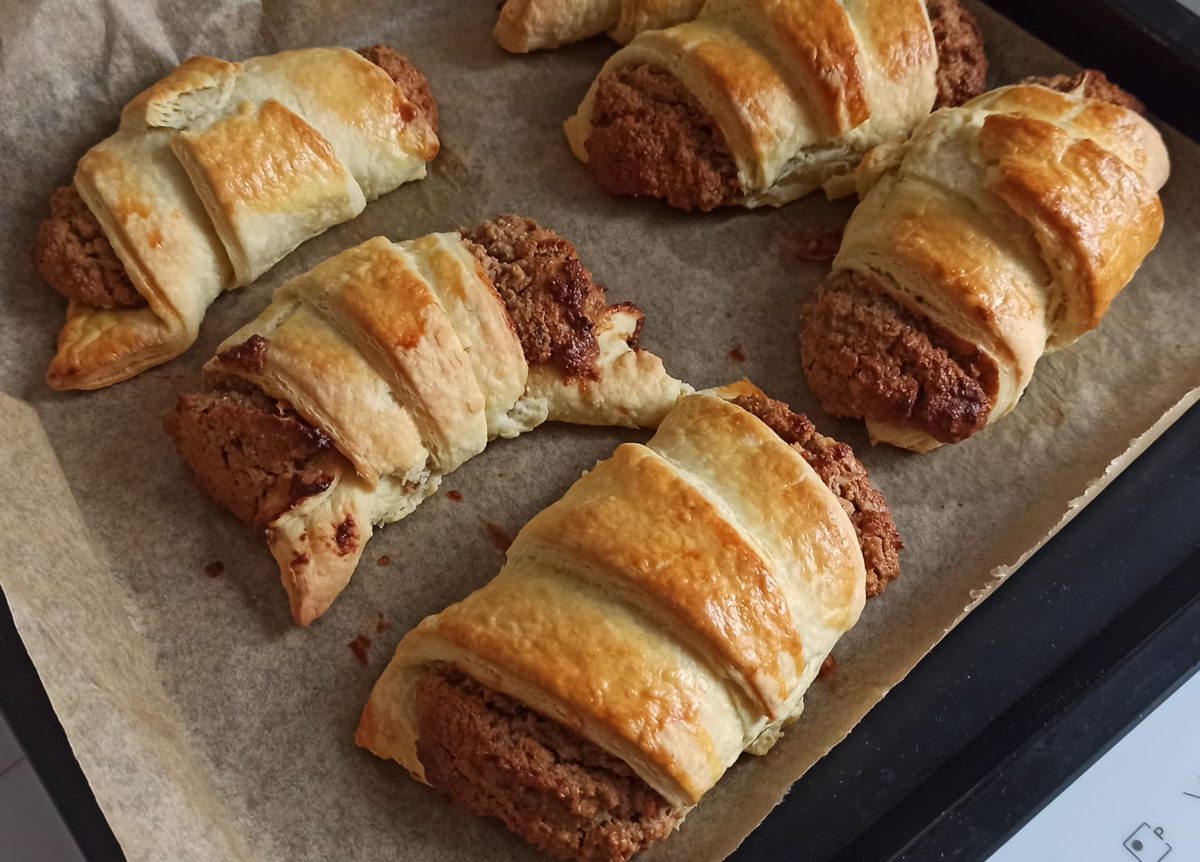
Brush the rogale with the egg beaten with a little milk and bake on the middle rack for about 20 minutes until they rise and turn golden brown. In the meantime, shape the rogale from the second part of the dough. Mix the powdered sugar with hot water to make the icing. Transfer the baked rogale to a rack, drizzle with thick icing while still warm, and immediately sprinkle with chopped almonds before the icing sets.
Photos