The story behind the recipe
Pork loin with prunes has been known since the 19th century. Klemens Junosza, in "Trzy prowincjałki," published in the weekly "Kolce" in 1874, mocked the province where "instead of manna, they eat dumplings, and instead of quails, pork loin with prunes!" Polish Wikipedia lists pork loin with dried prunes among the dishes of Greater Poland cuisine.
In old cookbooks, prunes were served with pork rather in a sauce than inside the meat. Ćwierczakiewiczowa in "365 Obiadów za 5 złotych" from 1871 roasted pork loin on a spit and served it "with cabbage or beets," stuffing it with cabbage and sour apples, not prunes. She also warned that "too small a piece tastes bad because it dries out." "Kucharka litewska" by Wincenty Zawadzki from 1913 provides pork with a sauce made from dried prunes and roasted pork loin with a jam sauce. It is unclear when prunes started being placed inside the pork loin; we have not found a source that dates this. "Kanon kuchni polskiej" from 2019 states that prunes are "eagerly added" to bigos and "stuffed into pork loin," reminding that smoked Suska Sechlońska is a Protected Geographical Indication, and that already Czerniecki in "Compendium ferculorum" from 1682 counted fresh and dried prunes among the essential products in the kitchen.
This roast is for Sunday and holidays. Kwestia Smaku calls it festive pork loin, Moje Gotowanie a "traditional recipe for festive roast," and Ania Gotuje writes: "I always bake pork loin for the holidays and Easter... I prefer to slice such homemade meat than reach for store-bought ham." Pork loin with prunes is not listed on the Traditional Products List and does not have EU name protection.
Ingredients
Pork Loin
-
800 g boneless pork loin (from the center or from the neck side, with a thin layer of fat)
Abroad: USA and Canada: boneless pork loin roast (not pork tenderloin); UK: pork loin joint without skin; Germany and Austria: Schweinelachs -
120 g pitted dried prunes
Abroad: USA: prunes or dried plums; UK: pitted prunes; Germany: Trockenpflaumen or Backpflaumen; Austria: Dörrzwetschken - 2 cloves garlic (pressed through a garlic press)
- 1 tbsp (15 ml) dried marjoram
- 1 tsp (about 6 g) salt (flat)
- ½ tsp (2.5 ml) ground black pepper
- 3 tbsp (45 ml) rapeseed oil (1 tablespoon for rubbing, 2 for searing)
For Baking
- 120 ml water or broth
- 60 g pitted dried prunes (not necessarily, for baking around the meat and blending with the sauce)
- 1 tbsp (about 22 g) plum jam (not necessarily)
Sauce (optional)
- 1 tsp (about 2.5 g) all-purpose flour
- 1 tsp (about 3 g) potato starch
- 1 tsp (5 ml) mustard or grated horseradish
Method, step by step
-
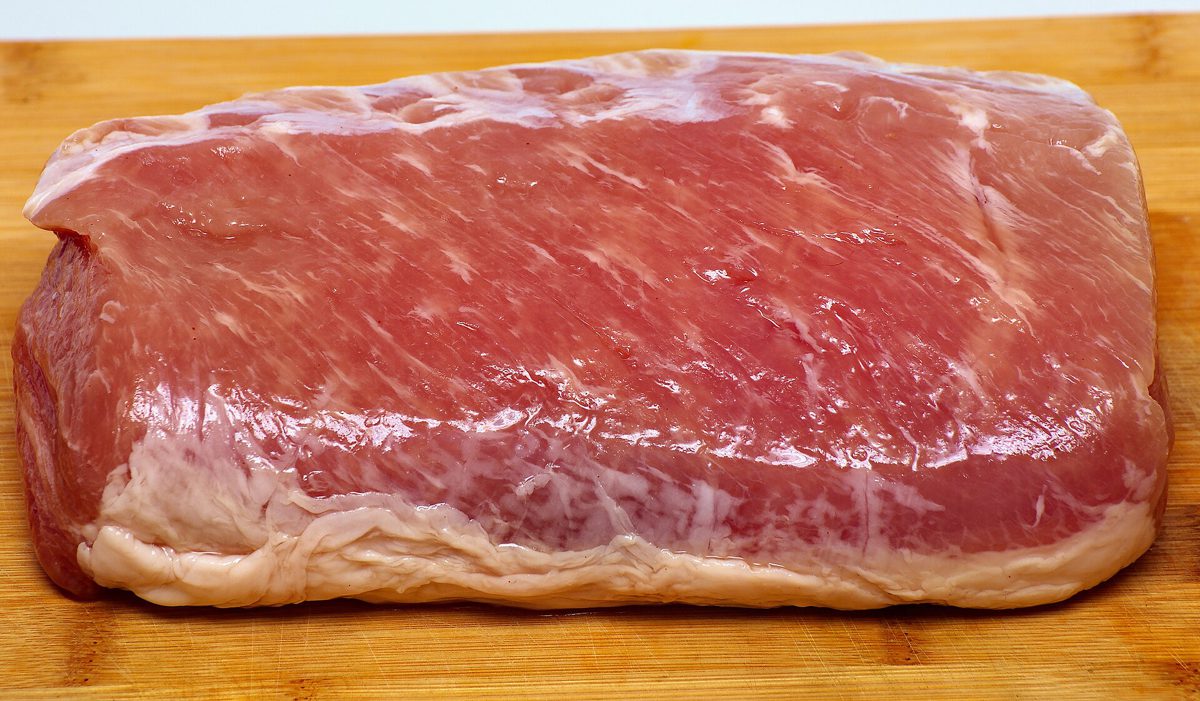
Choose a uniform piece of pork loin from the center or from the neck side, which is juicier. Do not trim the fat layer, as it protects the meat from drying out. Pat the pork loin dry with paper towels.
-
Create a tunnel: insert a long, thin knife along the pork loin, through the very center, and if necessary, widen the opening from both ends. If the tunnel doesn’t work, cut the meat from the side to half its thickness.
-
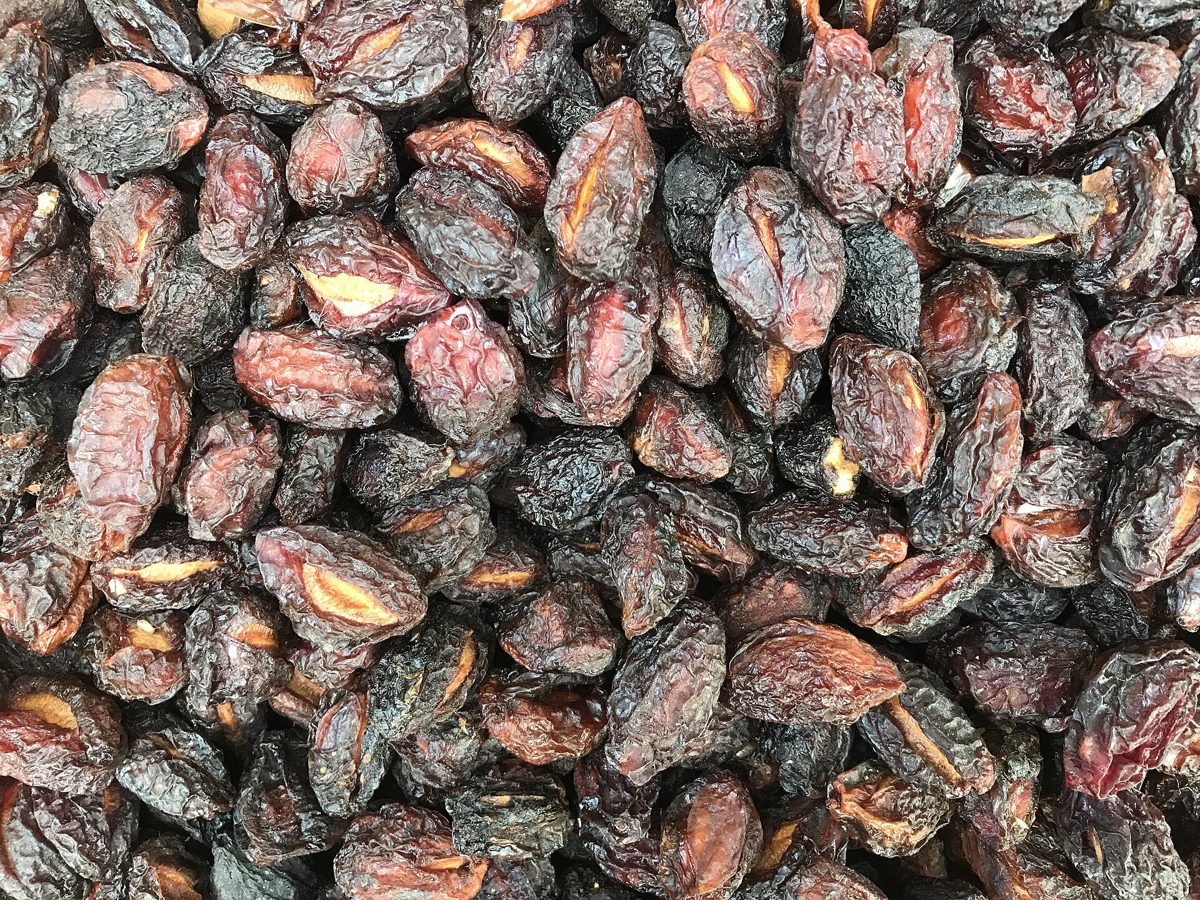
Season the tunnel from the inside with a pinch of salt, pepper, and marjoram. Push in the prunes, pressing them in so that as many as possible fit. If the meat was cut from the side, secure it with toothpicks.
-
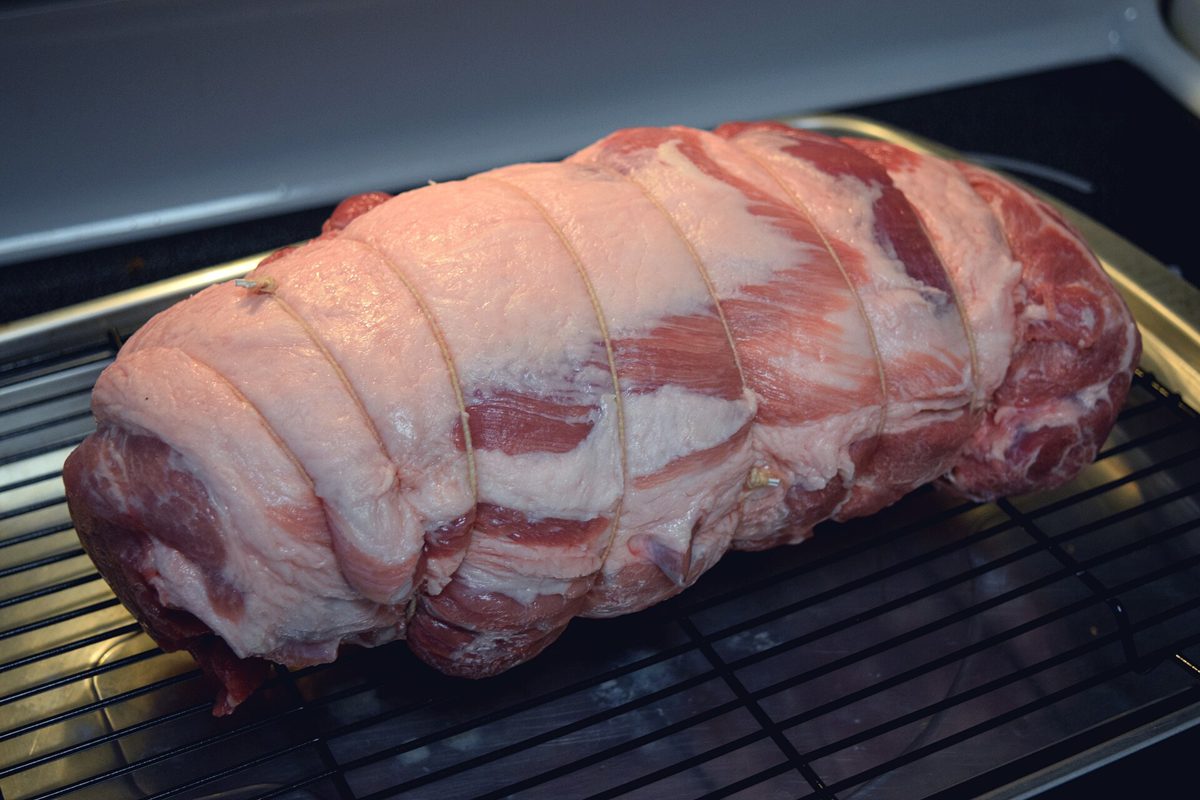
Tie the pork loin with kitchen twine in several places to keep its round shape.
-
Mix the garlic with the remaining marjoram, salt, and pepper, and 1 tablespoon of oil. Rub this mixture all over the pork loin, tightly wrap it in foil, and place it in the fridge for at least 3 hours, or if you have time, overnight or even up to 2 days. Before roasting, take the meat out of the fridge to bring it to room temperature.
-
Preheat the oven to 180°C (350°F). In a large skillet, heat 2 tablespoons of oil and briefly sear the pork loin on all sides over high heat, for 30 seconds to a minute per side, turning it in sequence.
-
Transfer the pork loin to a baking dish fat side up. Pour in water or broth, add the jam, and distribute additional prunes in the liquid around the meat. Cover and bake for about 35–40 minutes, then remove the lid, turn the meat, and bake for another 15–20 minutes, basting it with the sauce. Sources roast a 1 kg piece for about 60 minutes, and a smaller piece will be ready a bit faster.
-
Check the temperature with a thermometer in the thickest part, in the meat, not in the prune: according to the USDA, the pork is ready at a minimum of 63°C (145°F). Do not extend the roasting time unnecessarily, as the meat will dry out.
-
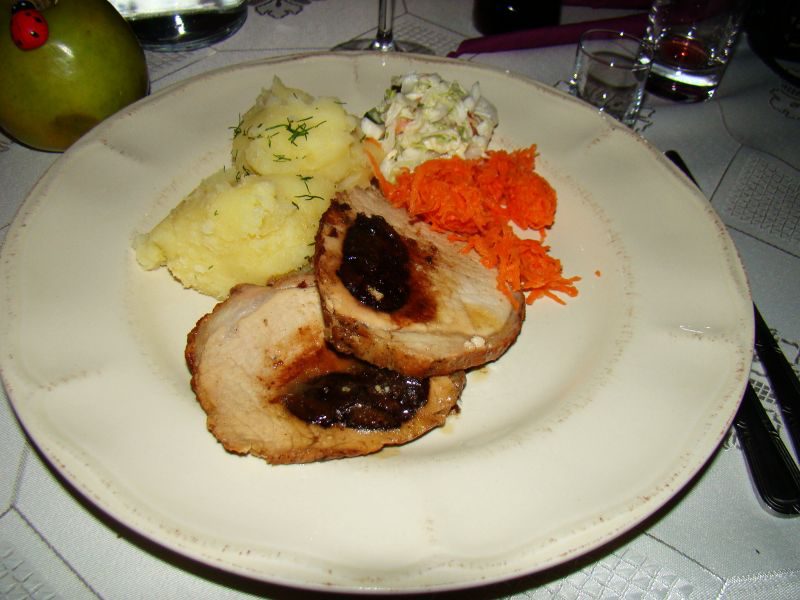
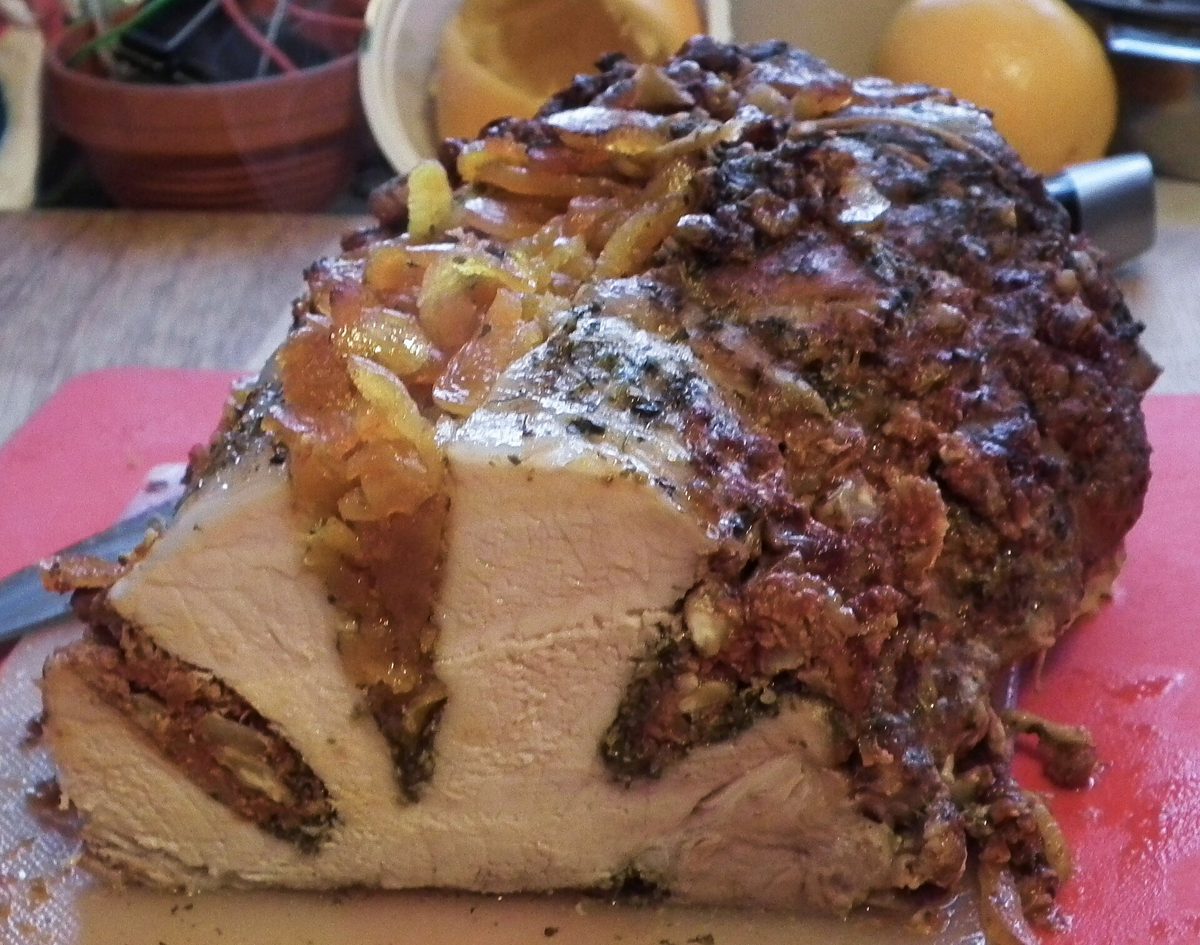
Remove the pork loin, loosely cover it with foil, and let it rest for about 10 minutes. Remove the twine and slice the meat across the tunnel so that each slice has a prune.
-
Sauce: blend the roasting juices with the prunes that baked around the meat. You can also pour about 200 ml of the juice into a saucepan, add a teaspoon of mustard or horseradish, sift in the flour and starch, and bring to a boil, stirring constantly. Arrange the slices of pork loin in part of the sauce, and serve the rest separately.
Photos