
The story behind the recipe
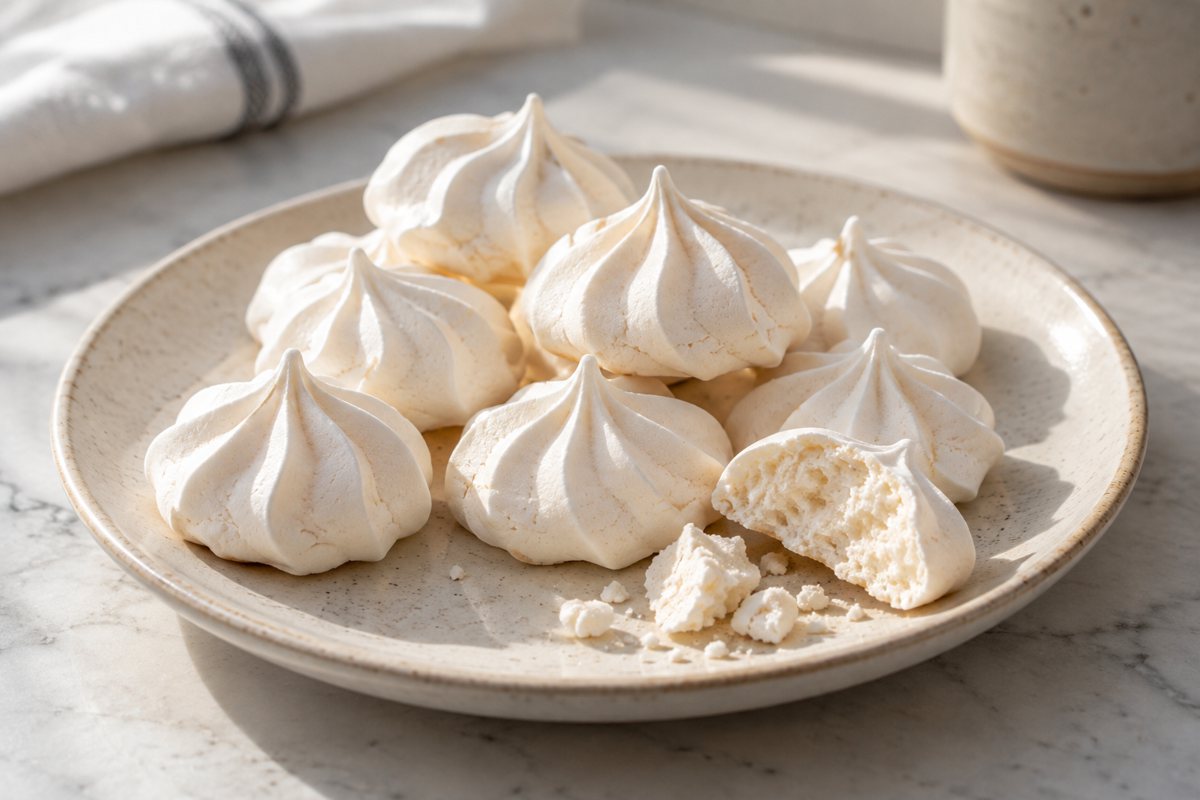
A small meringue should have a slight crunch and melt in your mouth. For such a cookie, only egg whites and sugar are needed, but the way they are combined is more important than the number of ingredients. A clean bowl, slowly adding sugar, and drying in a not-too-hot oven help achieve dry meringues.
This variant yields about 30 small pieces, approximately 3 cm wide. These are not large meringue cakes with a soft center. We make small, dried cookies that can be stored in a dry box after cooling. The number of pieces and time depend on their size and the oven.
It's worth weighing the egg whites. Instead of assuming that every egg is the same size, measure 100 g of egg whites and 200 g of caster sugar. This is my own variant of the 1:2 ratio. The remaining yolks can be used for another cooked or baked dish. Kogel-mogel (a Polish egg dessert) has a separate instruction based on pasteurized yolks.
Ingredients
Ingredients
- 100 g egg whites (weighed, without any yolk; about 3 whites depending on the eggs)
-
200 g caster sugar (not granulated sugar)
Abroad: caster sugar; USA: superfine sugar - 2.5 ml lemon juice (optional, about half a teaspoon)
Method, step by step
-
Wash and dry the bowl and mixer attachments. Weigh 100 g of egg whites. Preheat the oven to 100°C, with top and bottom heating. Line a baking sheet with parchment paper.
-
Start whipping the egg whites on low speed, then increase to medium. When a thick, light foam forms that holds a soft peak, begin adding the sugar. Do not whip the egg whites until they become dry and grainy.
-
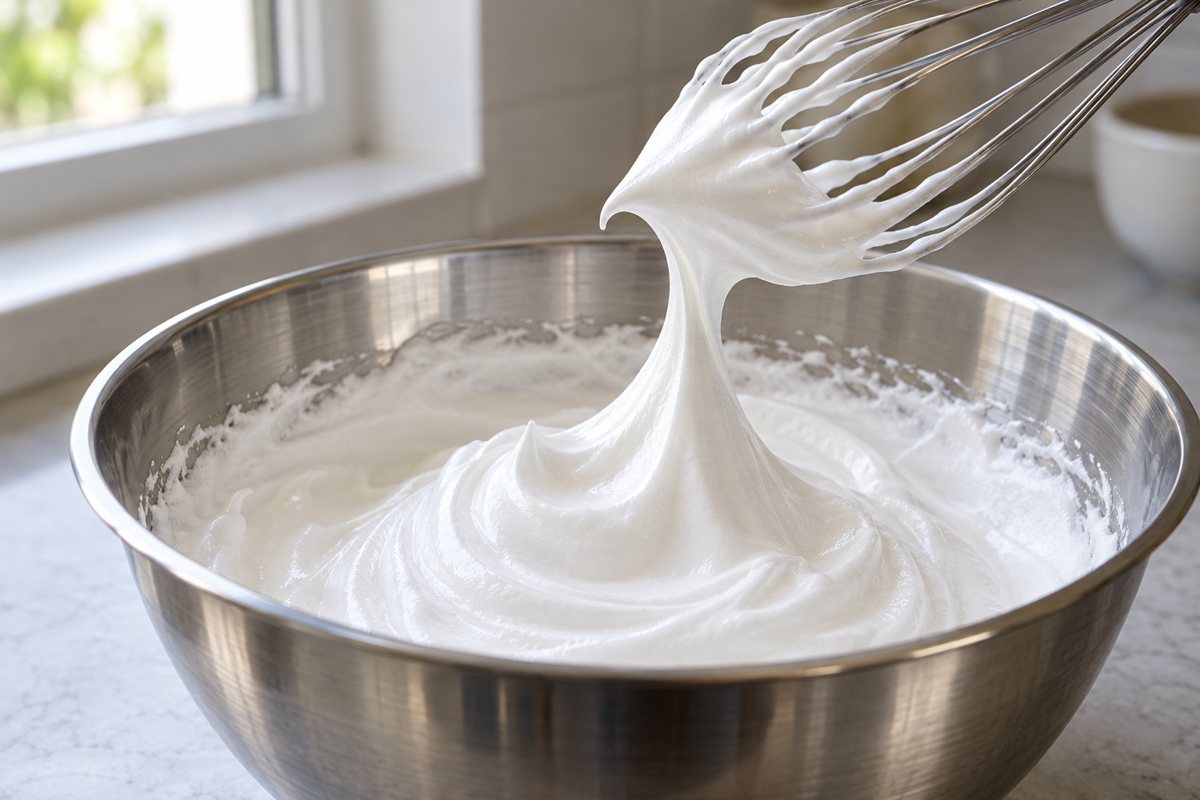
Add the caster sugar by the small spoonful, continuously whipping and allowing the previous portion time to combine. At the end, add the optional lemon juice. The mixture should be thick, glossy, and hold a distinct peak. Ensure there are no noticeable large sugar crystals remaining.
-
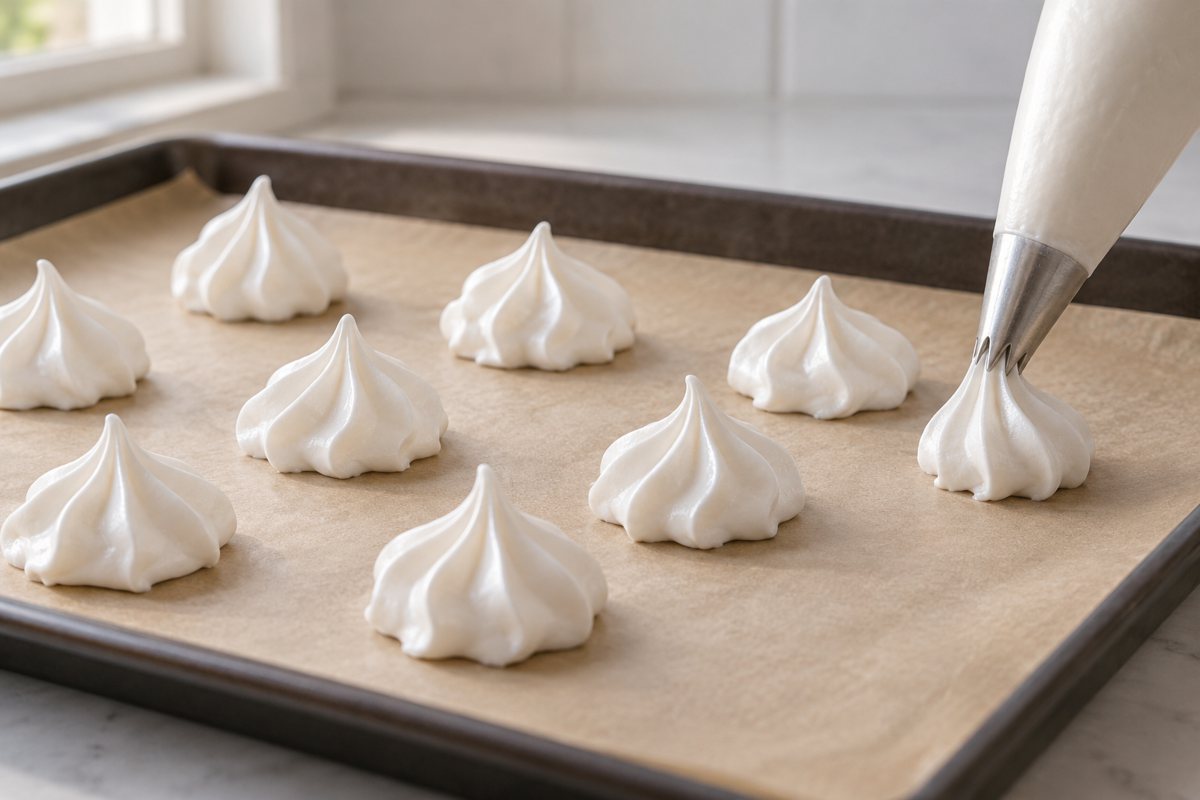
Transfer the meringue to a piping bag with a nozzle or use two teaspoons. Form about 30 similar meringues, about 3 cm wide, leaving spaces between them. Do not make several significantly larger pieces on the same tray.
-
Place on the middle rack and dry for approximately 90–120 minutes. Do not open the door frequently. If they quickly change color to brown, lower the temperature and extend the time. If the oven only has convection, start more cautiously, around 90°C, and monitor the effect.
-
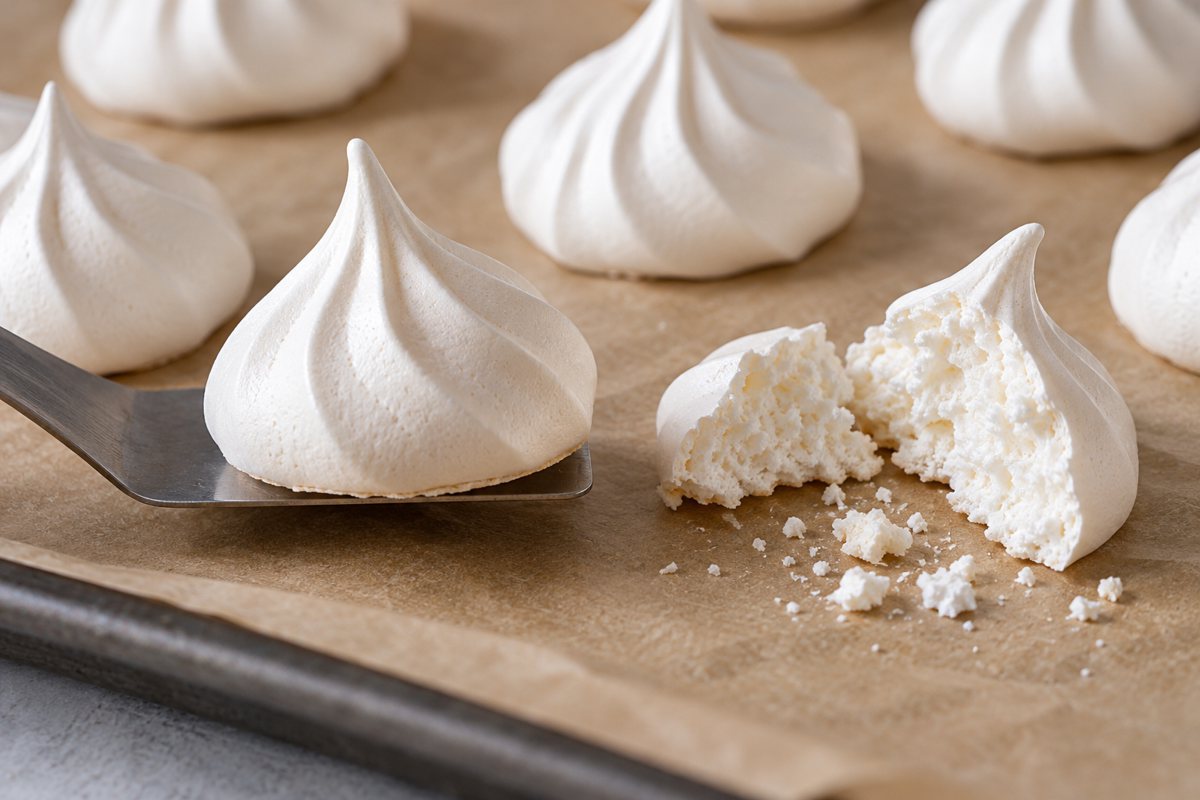
After about 90 minutes, check one piece: the bottom should be dry and easily come off the paper. Remove it and briefly cool before checking the center. Do not remove the rest just because the minimum time has passed.
-
Break the test meringue. For dry, crispy meringues, the center should also be dry. If it is wet or clearly sticky, dry the rest further and try again. Small cracks are acceptable.
-
Turn off the oven and leave the meringues to cool with the door ajar. Once completely cold, transfer to a dry, airtight container.