The story behind the recipe
The name comes from the word "zraz," which means a slice cut from a piece of meat or roast. According to Polish Wikipedia, zrazy is a traditional dish of old Polish cuisine, especially noble and hunting cuisine. Kitowicz wrote about "several roasts cut into zrazy," and Linde described zraz as a rolled piece of meat stuffed with lard and simmered in sauce. The traditional form likely originates from Lithuanian cuisine, and both Poles and Lithuanians claim authorship of zrazy. They were eaten throughout the former Commonwealth, and today they are part of Polish, Lithuanian, Belarusian, and Ukrainian cuisine.
Old zrazy, also called suropieki, were often not rolled at all: slices of meat were stewed in their own sauce with onion or in mushroom sauce. Paul Tremo, the chef of King Stanisław August, mentions two types: zrazy made from leftover roast and zrazy made from raw meat, including game. In "Pan Tadeusz" (Book IX), zrazy are served for breakfast: "A bowl, sugar, bottles, and zrazy were brought in," and Płut and Ryków "ate twenty-three zrazy in half an hour."
In old cookbooks, the filling was completely different from today. Lucyna Ćwierczakiewiczowa in "365 Dinners for 5 Złoty" (1871 edition) stuffed "Polish rolled zrazy" with butter, roasted onion, breadcrumbs, pepper, and egg yolks, and stewed them for "three quarters of an hour." Marta Norkowska in 1903 added soaked bread and egg to the filling and served zrazy with spelt groats and potatoes, while Wincenta Zawadzka in "Lithuanian Cookbook" from 1913 instructed to tie them with thread "so they don't unravel." When the filling of bacon and pickled cucumber became standard is not known for sure. A close relative of zrazy is the Silesian rolada: "Opolska rolada wołowa" has been on the List of Traditional Products since 2007, and its entry states that in Opole Silesia, rolady were usually served for Sunday dinners and important family celebrations.
Ingredients
Zrazy (8 sztuk)
-
700 g wołowina zrazowa górna albo dolna (in one piece; can also be ligawa or krzyżowa)
Abroad: Germany and Austria: Rinderrouladen (Rouladenfleisch); USA and Canada: top round, bottom round or eye of round; UK: topside or silverside
Nadzienie
-
4 tsp musztarda (sarepska or Dijon, about 20 g)
Abroad: Dijon or brown mustard; Germany: Senf mittelscharf -
160 g boczek wędzony (thinly sliced, 8 slices)
Abroad: USA and Canada: thick-cut smoked bacon; UK: smoked streaky bacon; Germany: durchwachsener Räucherspeck -
2 pcs ogórki kiszone (about 140 g, each cut lengthwise into 4 sticks)
Abroad: USA and Canada: full-sour kosher dill pickles; Germany: Salzgurken or Gewürzgurken; UK: Polish store - 80 g cebula (1 small, cut into thin feathers)
- ½ tsp (2.5 ml) pieprz czarny mielony (without salt)
Duszenie i sos
-
25 g smalec albo masło klarowane (2 tablespoons)
Abroad: lard or ghee; Germany: Schweineschmalz or Butterschmalz - 150 g cebula (1 medium, diced)
- 2 cloves czosnek (not necessary)
- 500 ml woda albo bulion wołowy
- 2 pcs liście laurowe
- 4 pcs ziele angielskie (3–4 grains)
-
5 g suszone grzyby (4–5 pieces, not necessary)
Abroad: dried porcini; Germany: getrocknete Steinpilze - 1 tbsp mąka pszenna (flat, about 10 g, mixed with 50 ml of cold water)
-
2 tbsp kwaśna śmietana 18% (about 40 g, not necessary)
Abroad: sour cream; Germany: saure Sahne - sól (to taste, only at the end)
- wykałaczki albo nitka kuchenna
Method, step by step
-
Cut the beef against the grain into 8 slices about 1 cm thick. If you prefer large zrazy, cut it into 4 slices of about 170 g each.
-
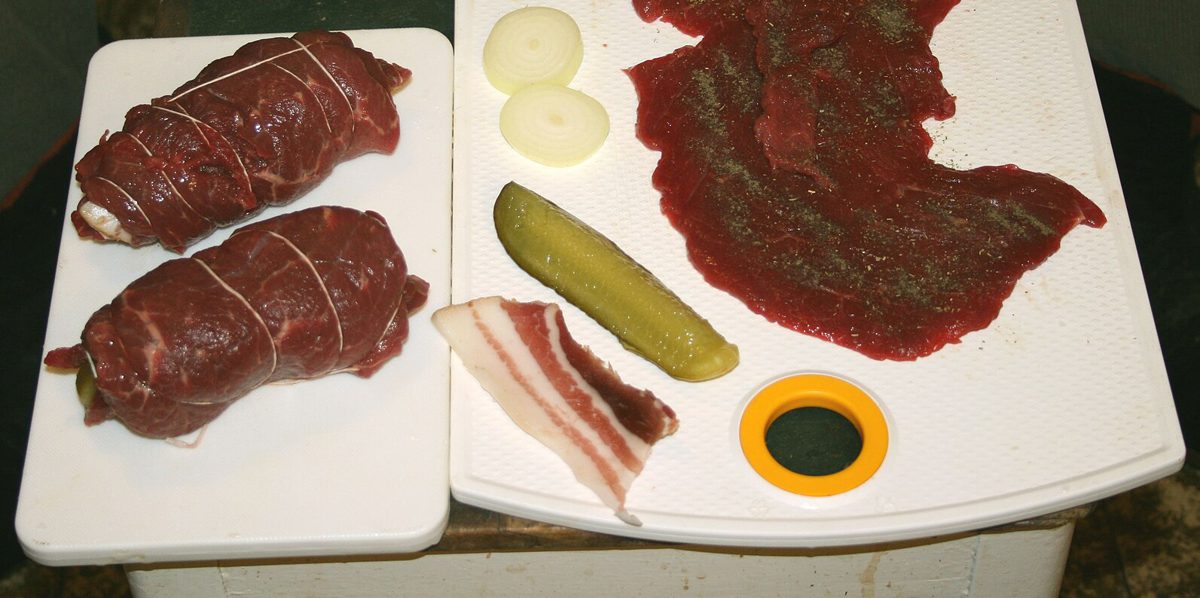
Pound each slice with a meat mallet to a thickness of 3–4 mm, preferably through plastic wrap or a bag, so the meat doesn't tear. Sprinkle one side with pepper and spread about half a teaspoon of mustard. Do not salt.
-
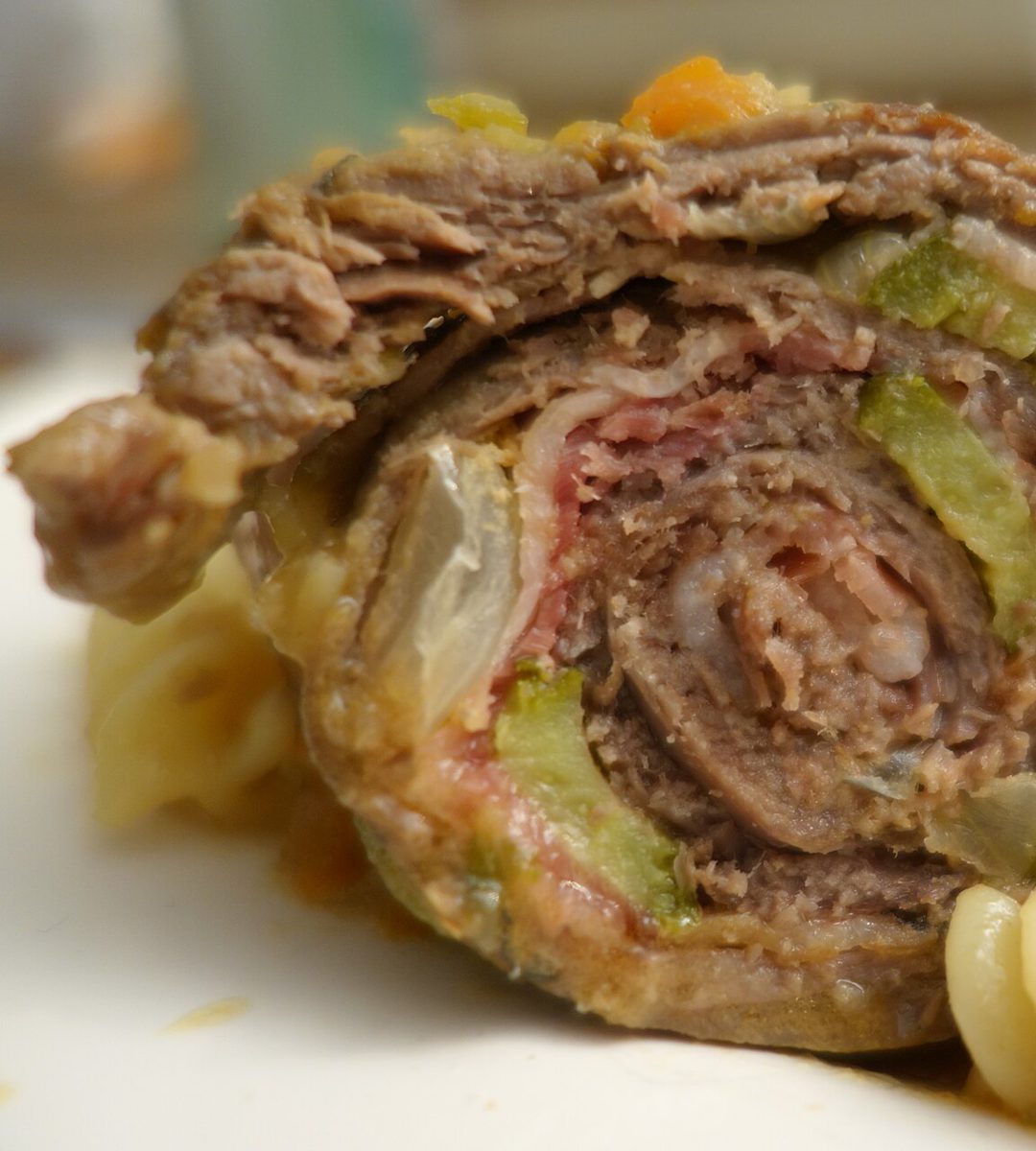
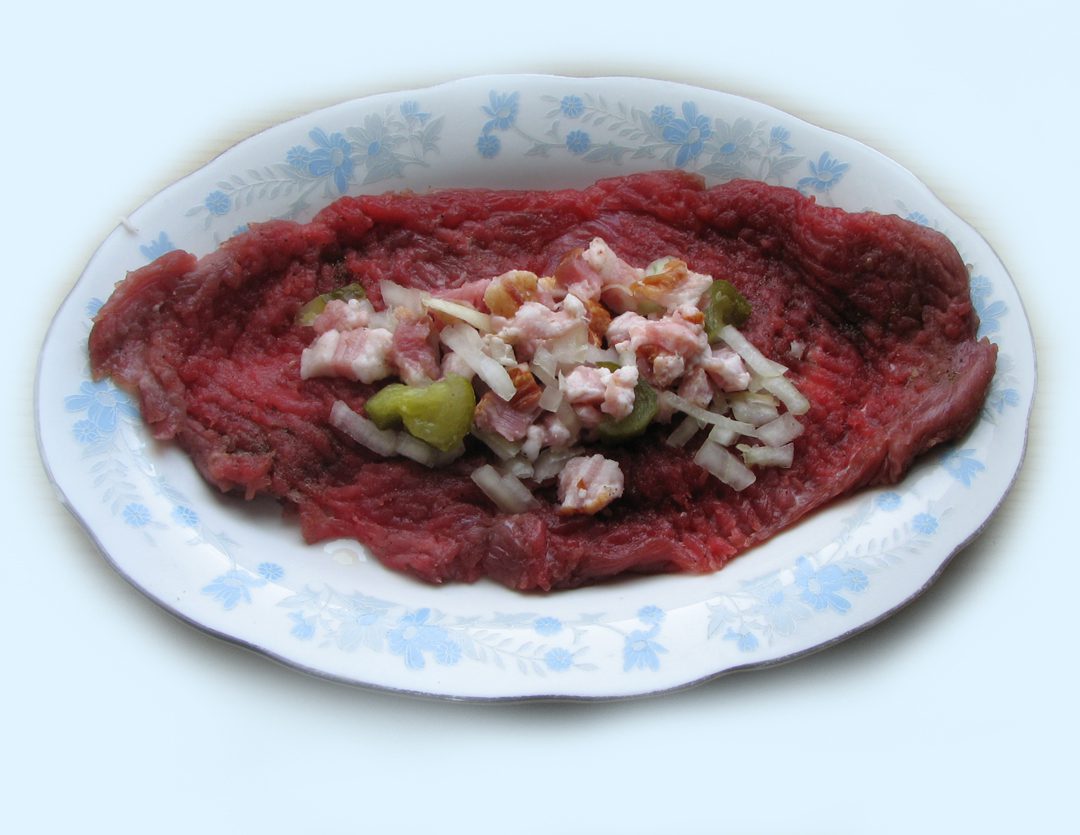
On each slice, lay a slice of bacon, and at the shorter edge, place a stick of cucumber and a few feathers of onion.
-
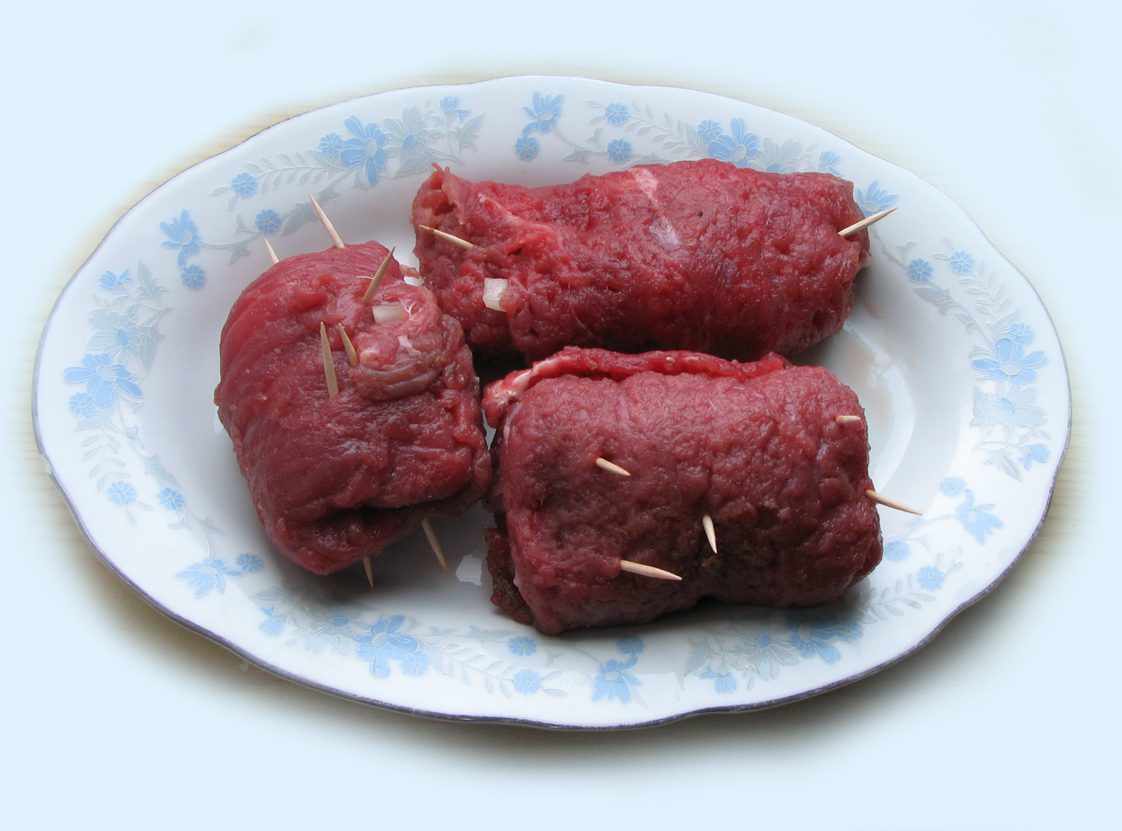
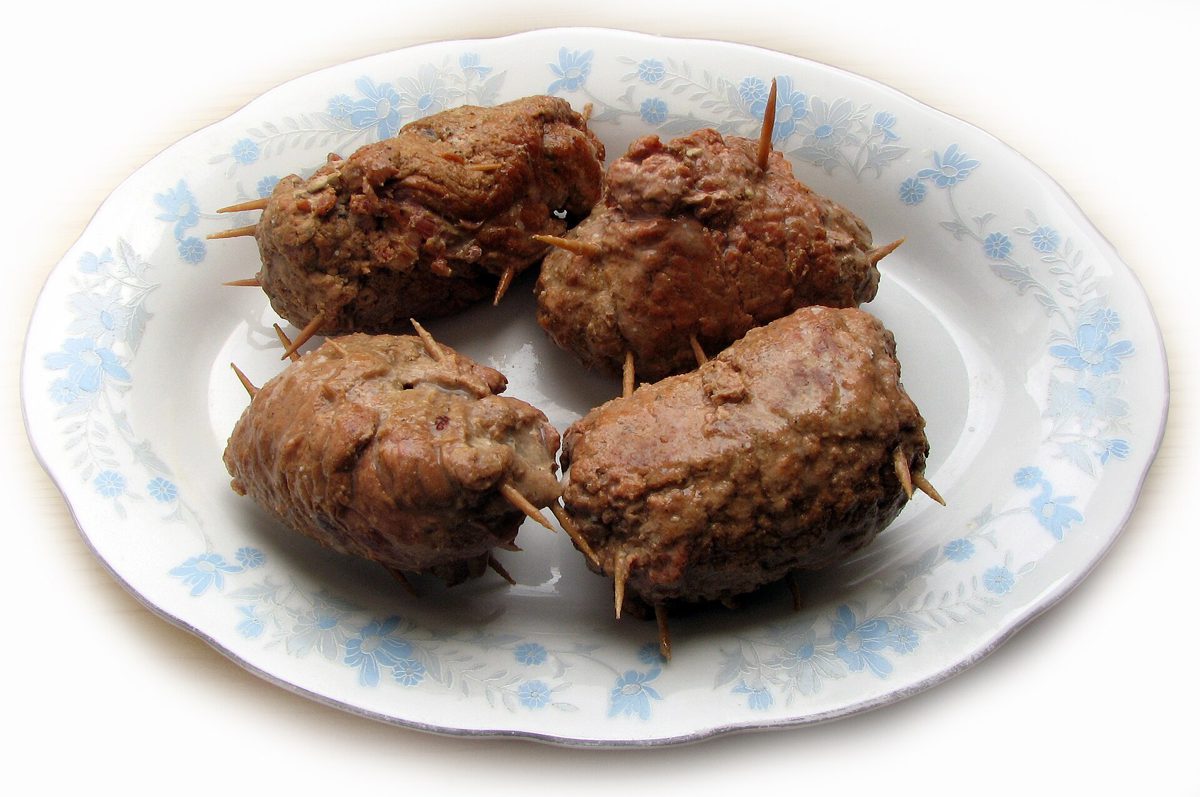
Roll the slices tightly, starting from the edge with the cucumber. If the slice is wide, tuck the sides inwards. Secure each roll with toothpicks or tie with kitchen string.
-
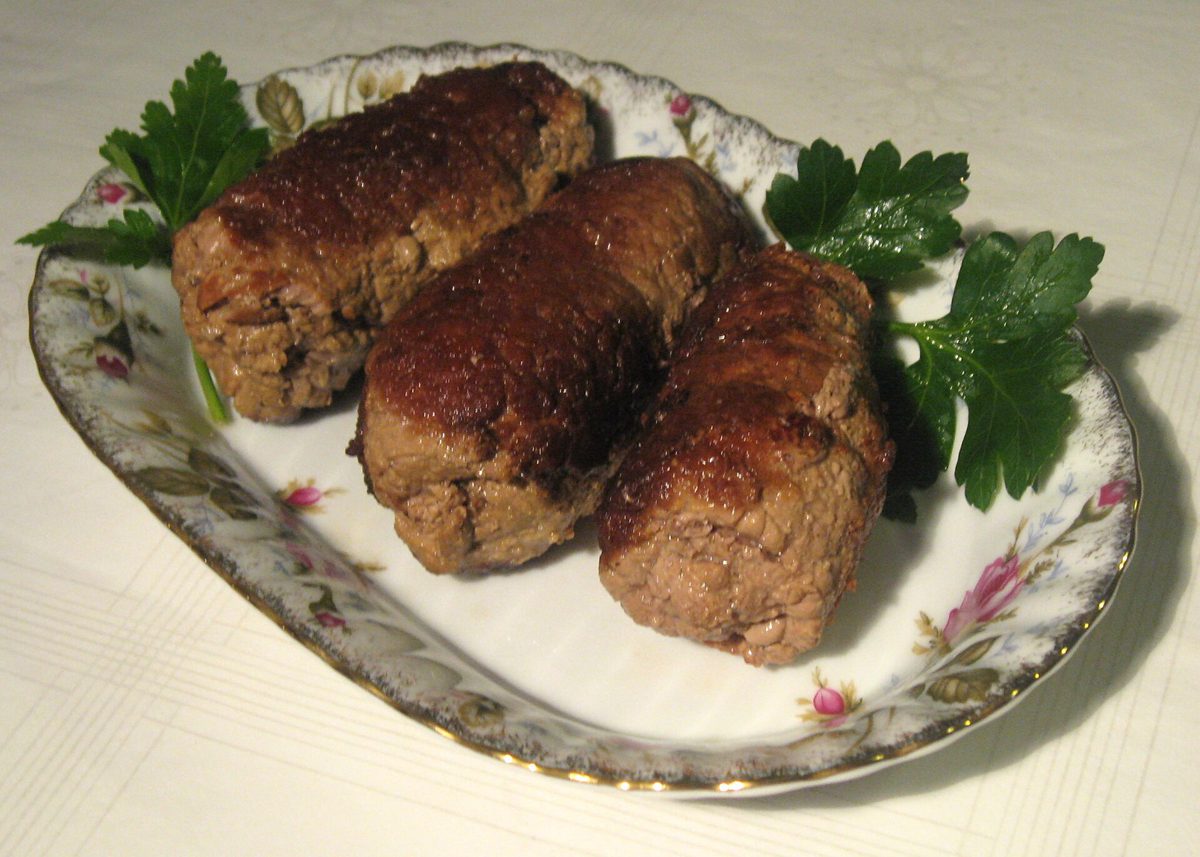
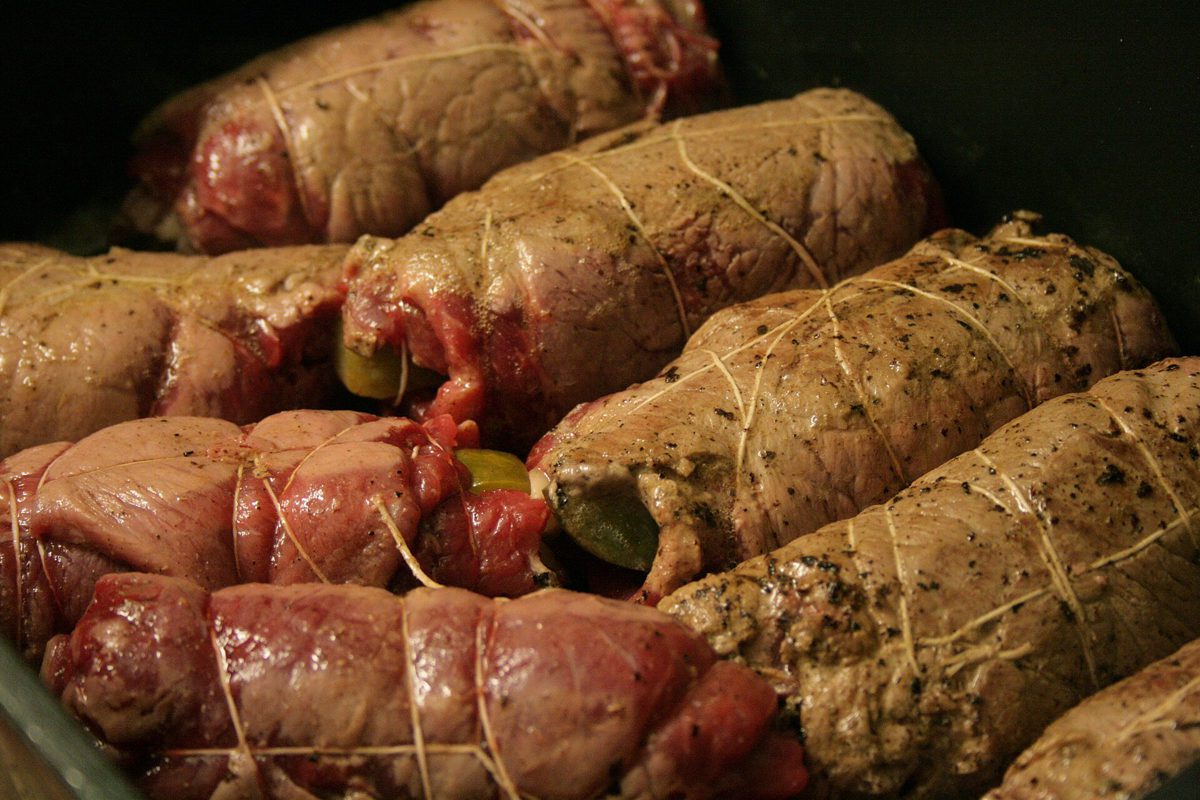
In a wide, heavy pan (at least 24 cm), heat the lard and sear the zrazy in batches, about 3 minutes on each side, until browned. Do not place them all at once, as they will start to boil instead of fry. Transfer them tightly to a pot.
-
In the same fat, without washing the pan, sauté the diced onion (and garlic) for about 10 minutes. Pour a little water or broth into the pan, scrape the browned bits, and transfer everything to the pot with the zrazy.
-
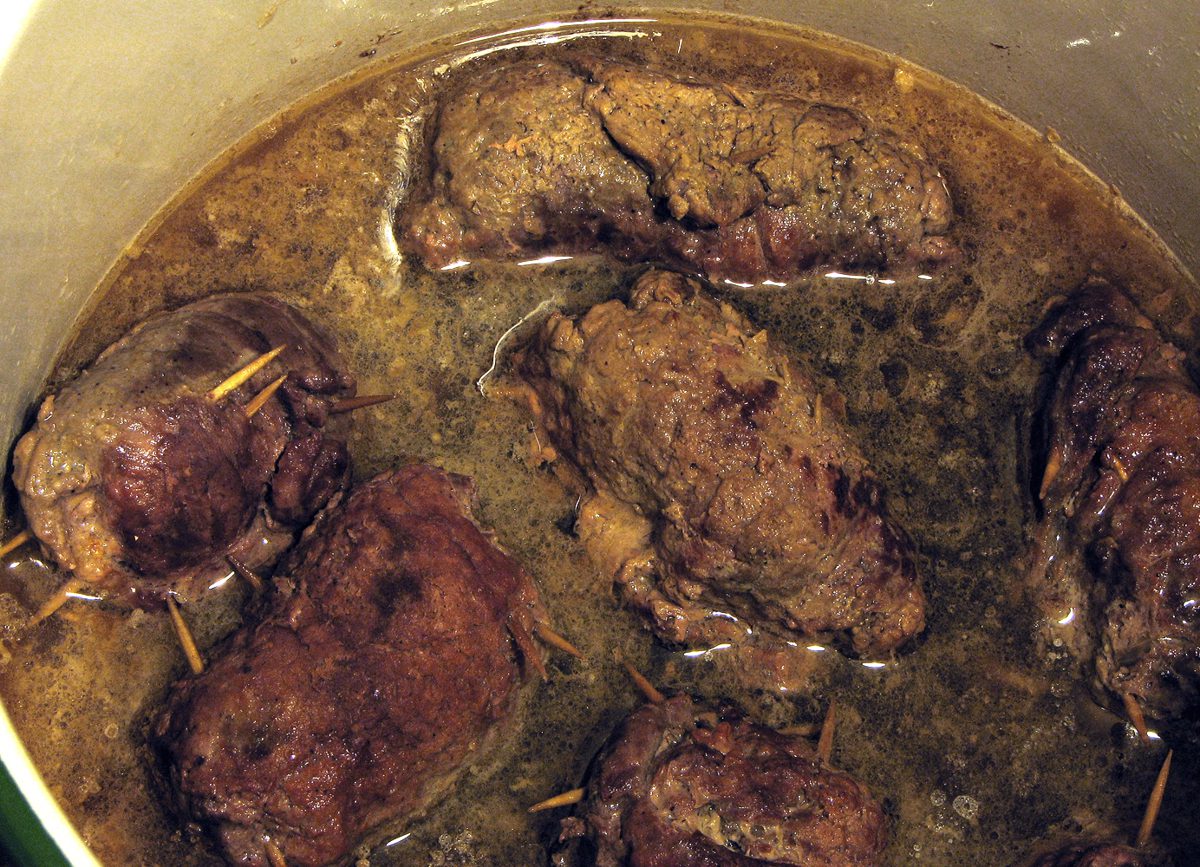
Add the remaining water or broth, add bay leaves, allspice, and mushrooms. Simmer covered on low heat, so the liquid barely bubbles, for 1.5–2 hours, until the meat is tender. After an hour, check if the liquid has reduced, and add water if necessary. You can also simmer the zrazy in the oven at 180 °C for about 2 hours, turning them 2–3 times.
-
Remove the tender zrazy from the pot, remove the toothpicks, and take off the string.
-
Mix the flour thoroughly with cold water, pour it into the sauce while stirring, and cook for 2 minutes until thickened. If you want, blend the sauce until smooth or add sour cream, previously mixed with a few tablespoons of hot sauce. Only now taste and salt.
-
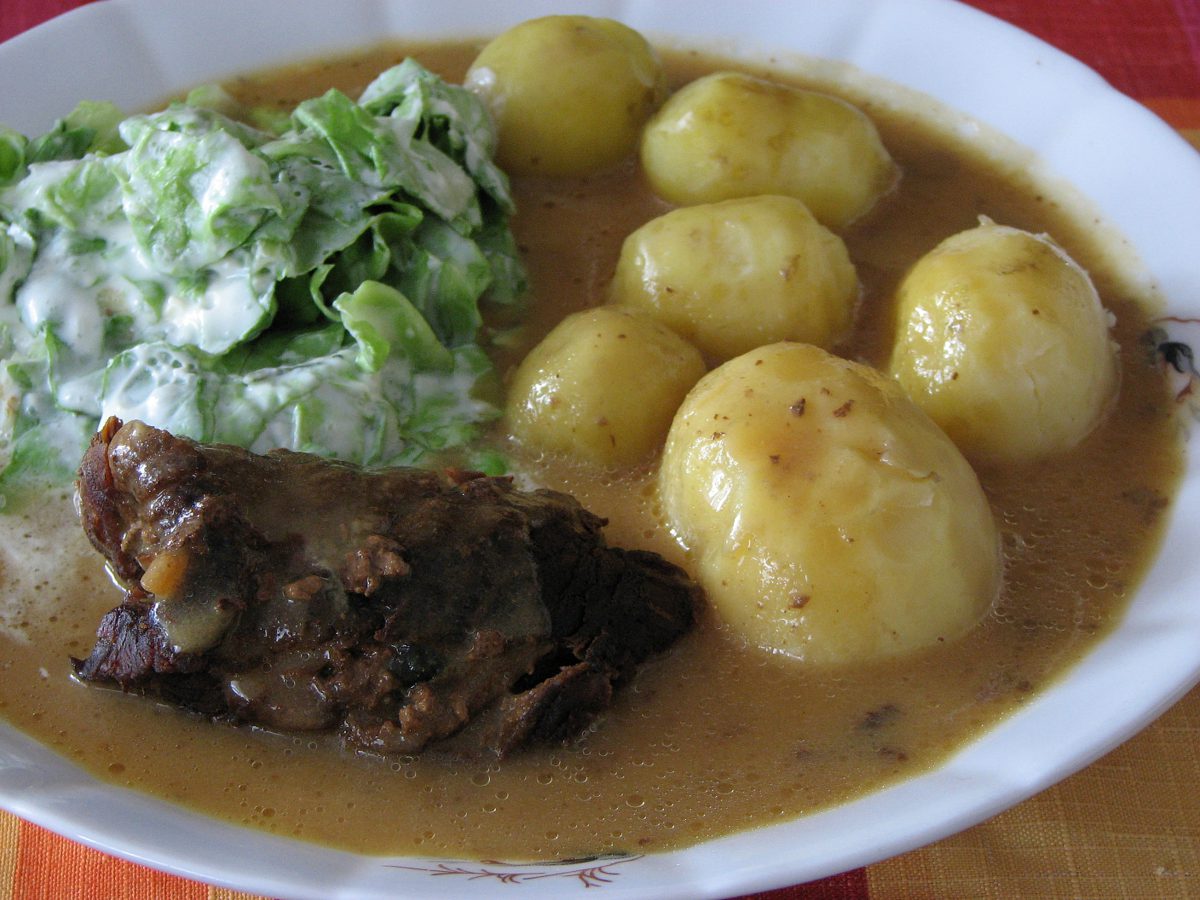
Return the zrazy to the sauce and heat through. Serve with buckwheat groats, potatoes, or Silesian dumplings, with beets or pickled cucumber.
Photos