The story behind the recipe
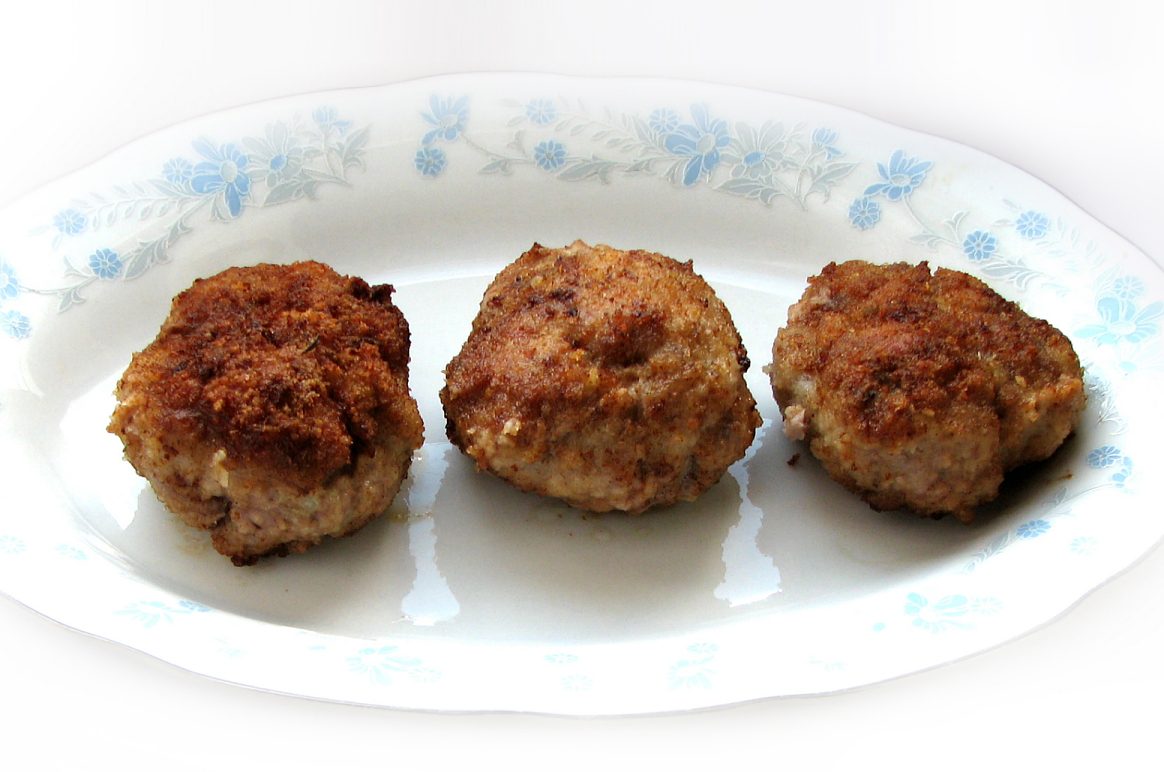
Polish Wikipedia describes kotlet mielony as "a dish most often made from minced raw pork neck with the addition of a raw egg and breadcrumbs," seasoned with salt and pepper, sometimes with sautéed onion or garlic. Instead of breadcrumbs, you can use stale bread soaked in water or milk. The cutlets have an oval shape, are sometimes breaded, and are fried in oil or lard. This is a typical everyday or Sunday dinner, served with potatoes and a salad. However, the entry has only one source, Ewa Aszkiewicz's book "Polish Cuisine. 1001 Recipes" from 2004.
Names vary. In southern Małopolska, minced cutlet is called sznycel, and a rectangular version with croutons in the mixture is called sznycel ministerialny. In Silesia, they are called karminadle: small, round, flattened cutlets made from pork or a mix of pork and beef, often from rabbit in the past. According to English Wikipedia, karminadle were once eaten only on special occasions, but today they are a daily dish.
When and how kotlet mielony made its way into Polish cuisine is not definitively known: we have not found a reliable, dated source. The Polonist service states that similar minced meat cutlets have appeared in Polish cookbooks since the 19th century as sznycle, karminadle, and frykadele. In the PRL, kotlet mielony was a way to use up meat scraps and earned the nickname "weekly review," and it was served alongside pork chops in milk bars. It has close relatives throughout Central Europe: Austrian Faschierte Laibchen, German Frikadellen and Buletten, Hungarian fasírt, and Slovak fašírka.
Ingredients
Masa (8 kotletów)
-
500 g mielona łopatka wieprzowa (albo karkówka, zmielona na średnich oczkach)
Abroad: USA i Kanada: ground pork shoulder (pork butt); Wielka Brytania: pork mince; Niemcy: Schweinehackfleisch -
40 g czerstwa kajzerka (pół bułki)
Abroad: USA: Kaiser roll albo biały chleb bez skórki; Wielka Brytania: white bread roll; Niemcy: Brötchen albo Semmel - 100 ml mleko (do namoczenia bułki)
- 1 pc jajko (rozmiar M)
- 150 g cebula (1 średnia, drobno posiekana)
- 10 g masło (do zeszklenia cebuli)
- 1 clove czosnek (mały, niekoniecznie)
- 1 tsp sól (około 6 g)
- ½ tsp (2.5 ml) pieprz czarny mielony
-
1 tbsp majeranek suszony (płaska, około 2 g)
Abroad: dried marjoram; Niemcy: Majoran - 2 tbsp (30 ml) zimna woda (do 3 łyżek, tylko jeśli masa jest zbyt zwarta)
Panierka i smażenie
-
30 g bułka tarta
Abroad: plain dried breadcrumbs; Niemcy: Paniermehl albo Semmelbrösel -
40 g smalec (albo 3 łyżki oleju rzepakowego)
Abroad: lard; Niemcy: Schweineschmalz; olej: canola oil, rapeseed oil, Rapsöl
Do podania
- 1 kg ziemniaki (ugotowane, z koperkiem i masłem)
- buraczki zasmażane albo mizeria
Method, step by step
-
Soak the bread in milk until it is completely soft, including the inside: there should be no dry lumps left. Then squeeze it out well in your hands.
-
Finely chop the onion and sauté it slowly in butter over medium heat for 10–15 minutes until golden. Set aside to cool completely.
-
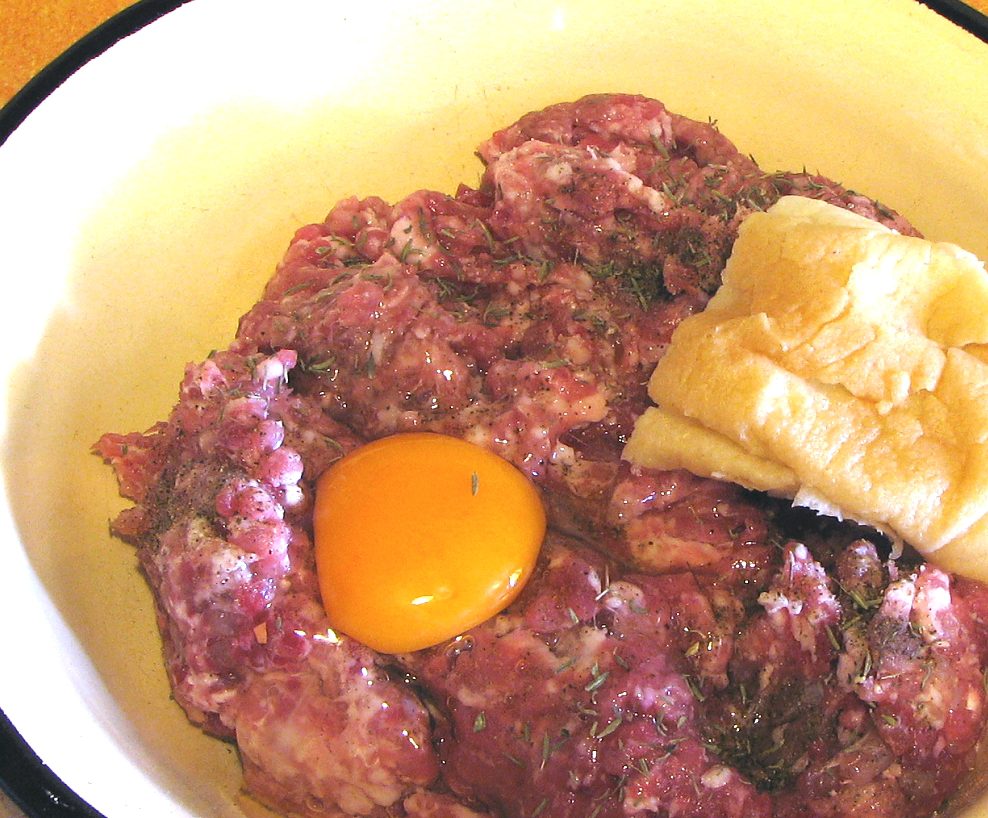
In a large bowl, combine the meat, squeezed bread, egg, cooled onion, pressed garlic, salt, pepper, and marjoram crushed between your fingers.
-
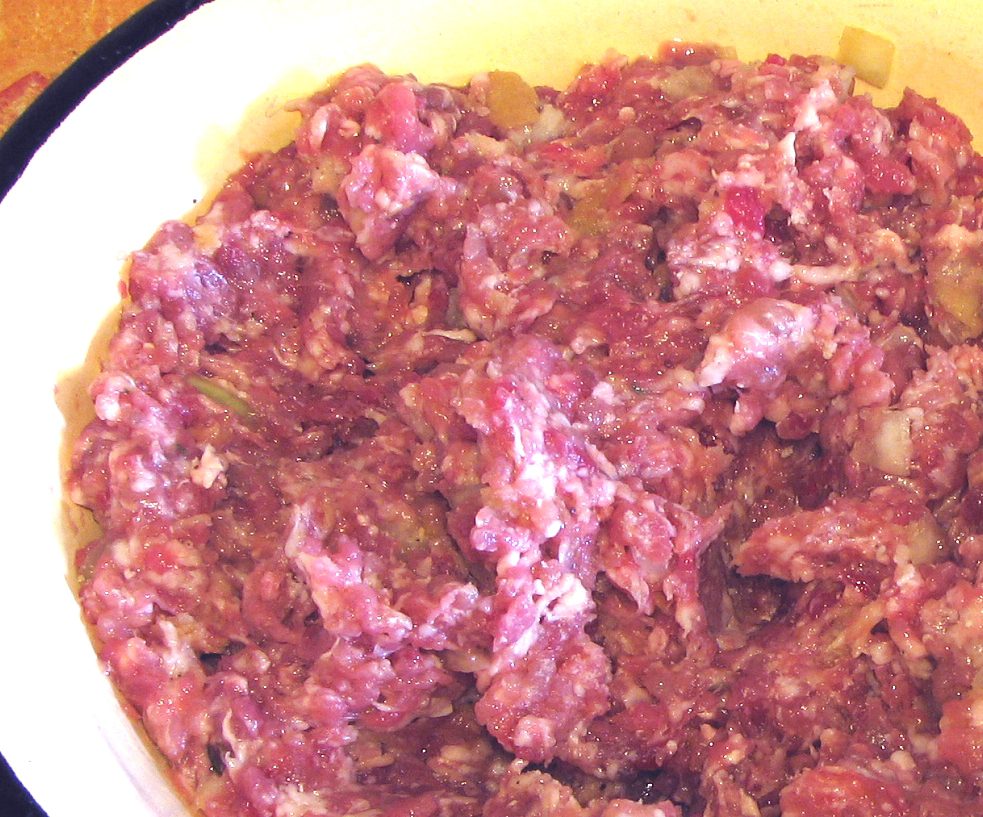
Knead the mixture by hand for at least 5 minutes until smooth and uniform. The longer you knead, the better the cutlets. If the mixture is too stiff, add a tablespoon of cold water at a time until it stops sticking to your hands.
-
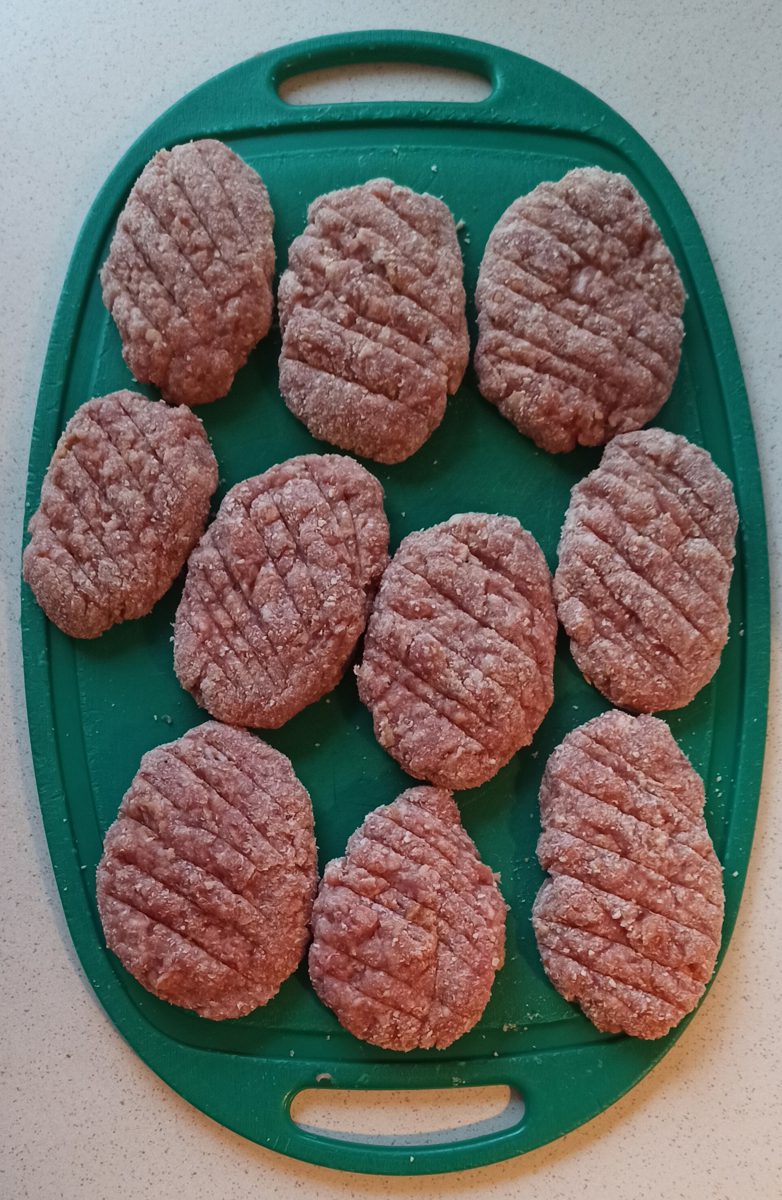
With damp hands, divide the mixture into 8 balls of 85–95 g each and flatten them into oval cutlets. Make them a bit thinner than you want, as they will shrink while frying. Press any pieces of onion that stick out back into the center.
-
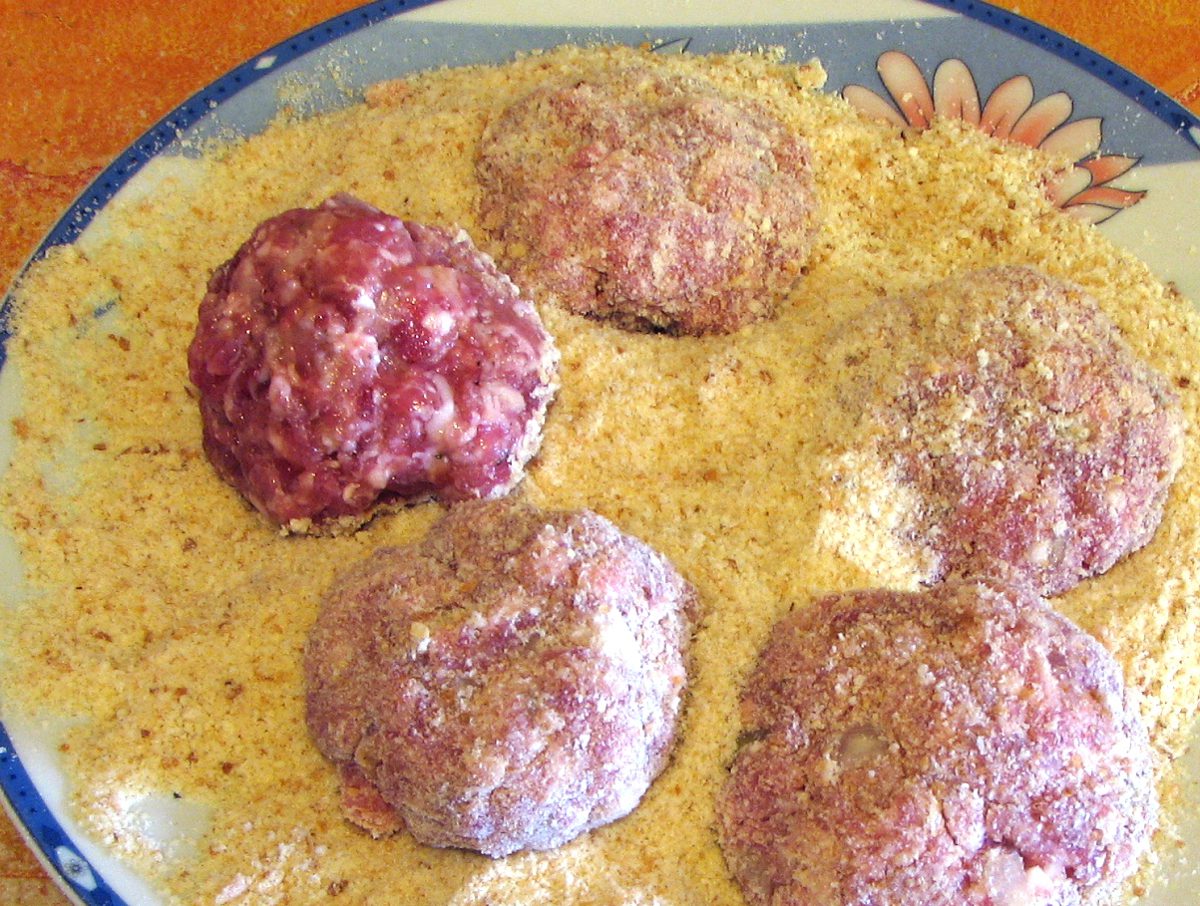
Coat the cutlets in a thin layer of breadcrumbs and press it lightly with your hand. Shake off the excess.
-
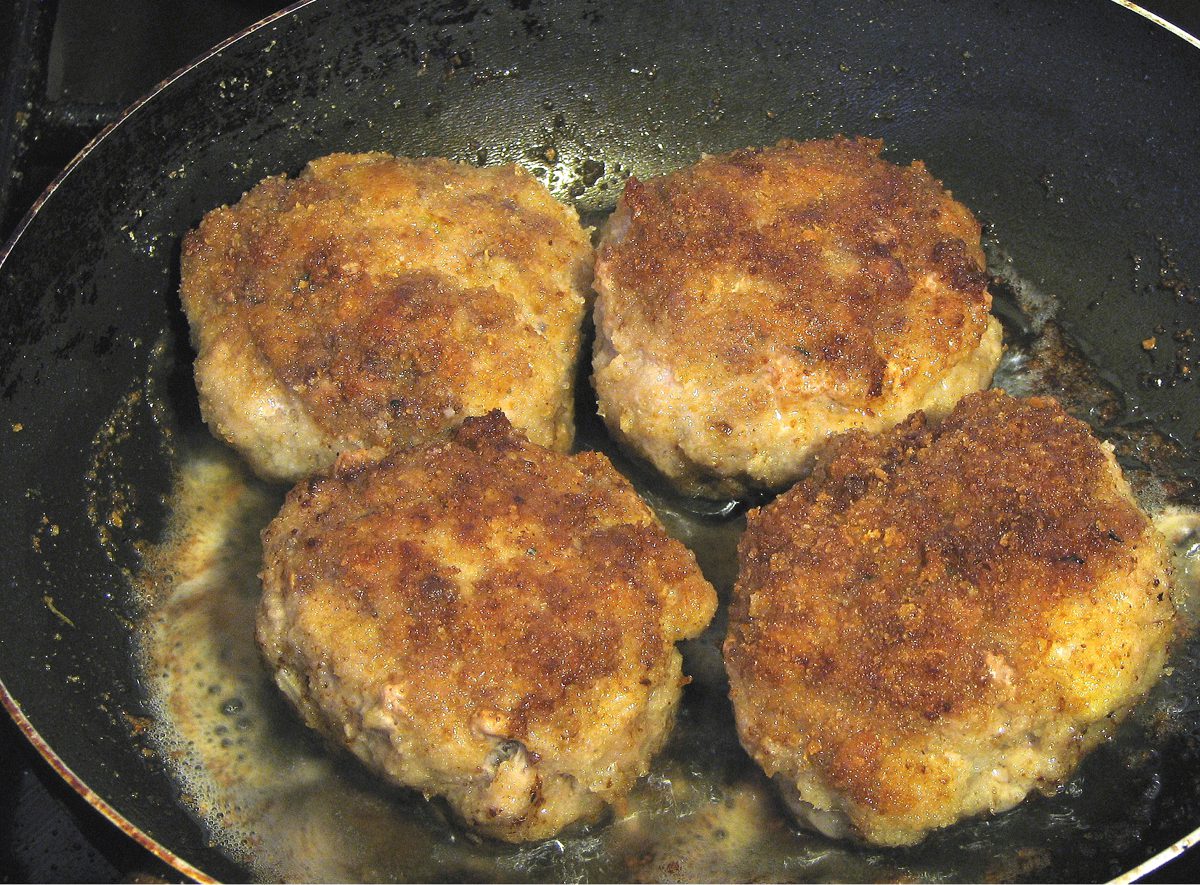
In a heavy pan, heat the lard well so that it covers the bottom. Place the cutlets in the pan, not too tightly, and fry over high heat until the bottom is golden.
-
Flip the cutlets, reduce the heat to medium, and fry for a few more minutes until both sides are browned. If they are browning too quickly, lower the heat or cover the pan for 3–4 minutes. You can also transfer them to an oven preheated to 150 °C for 15 minutes.
-
Cut the thickest cutlet in half: it should be evenly gray inside, with no pink center. Drain the finished cutlets on paper towels.
-
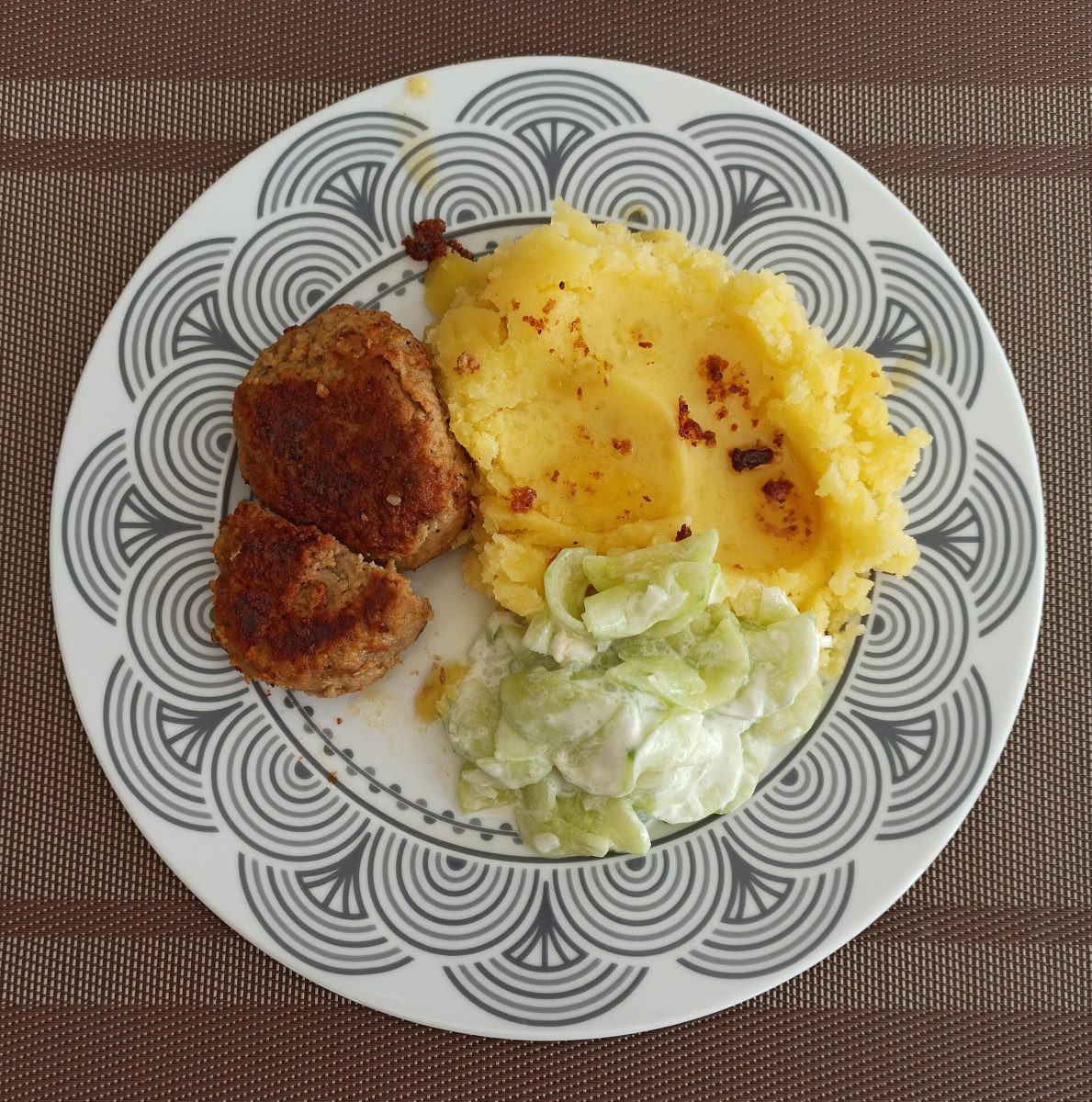
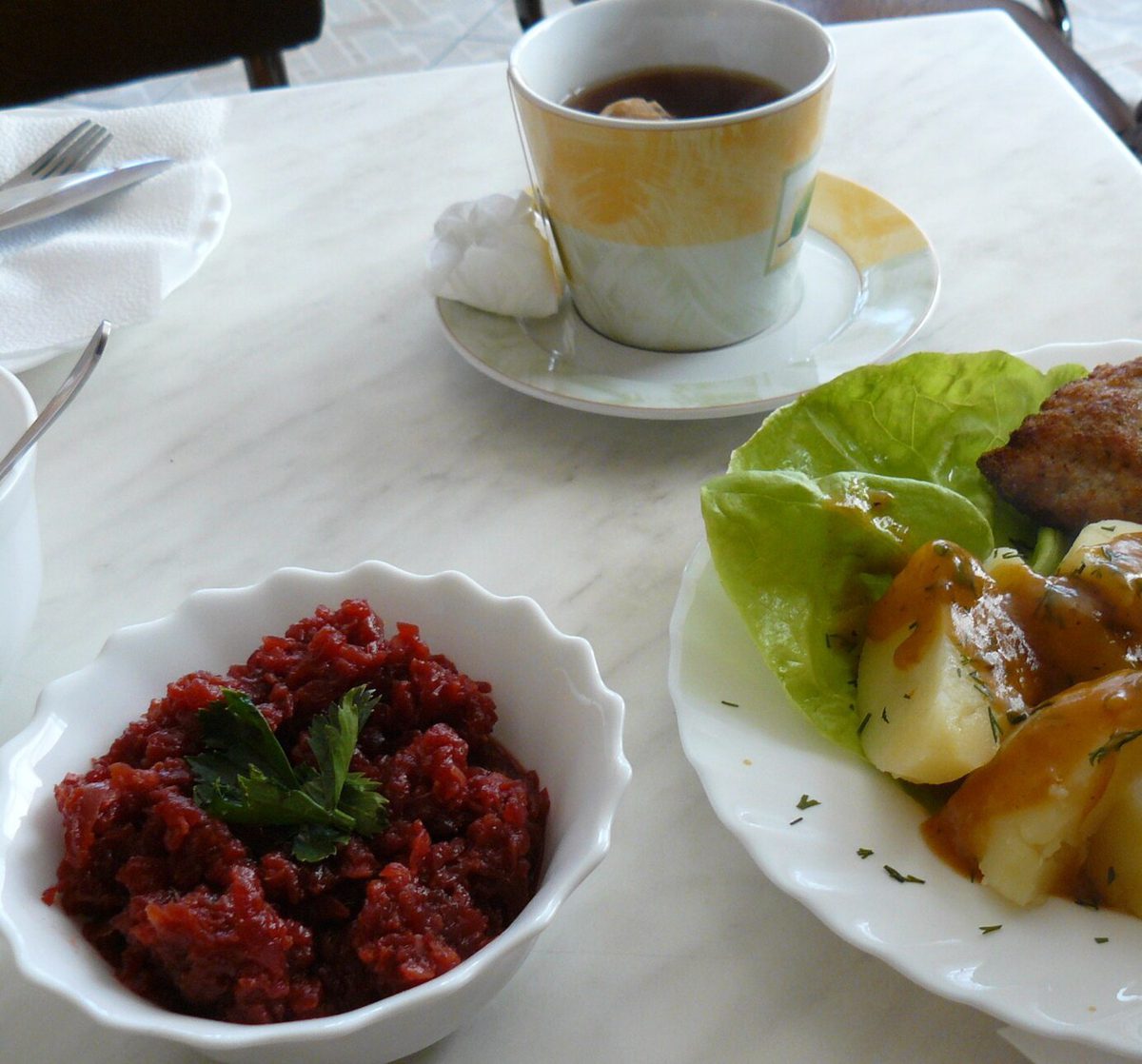
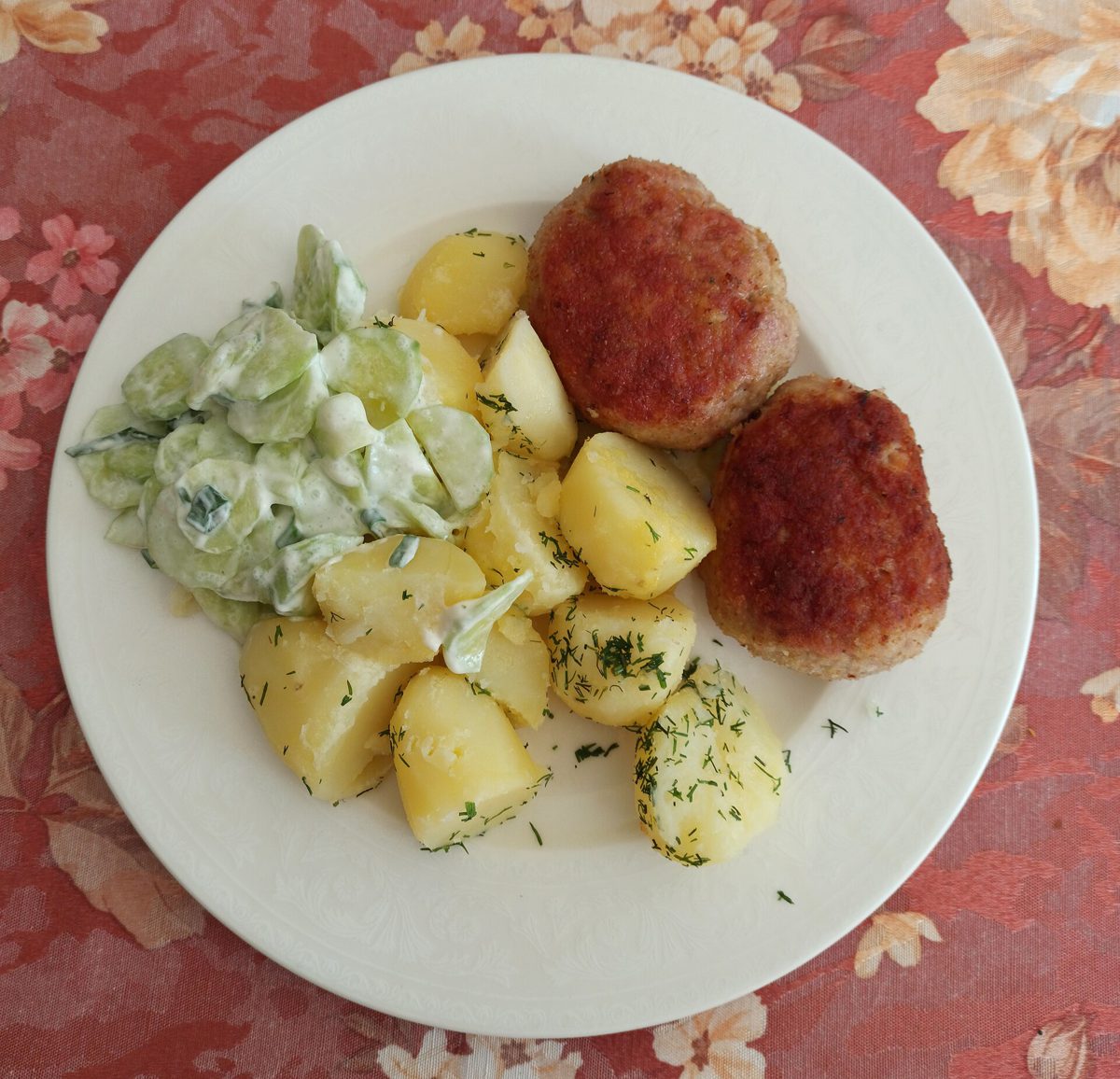
Serve immediately with potatoes with dill and butter, along with cucumber salad or sautéed beets.
Photos