The story behind the recipe
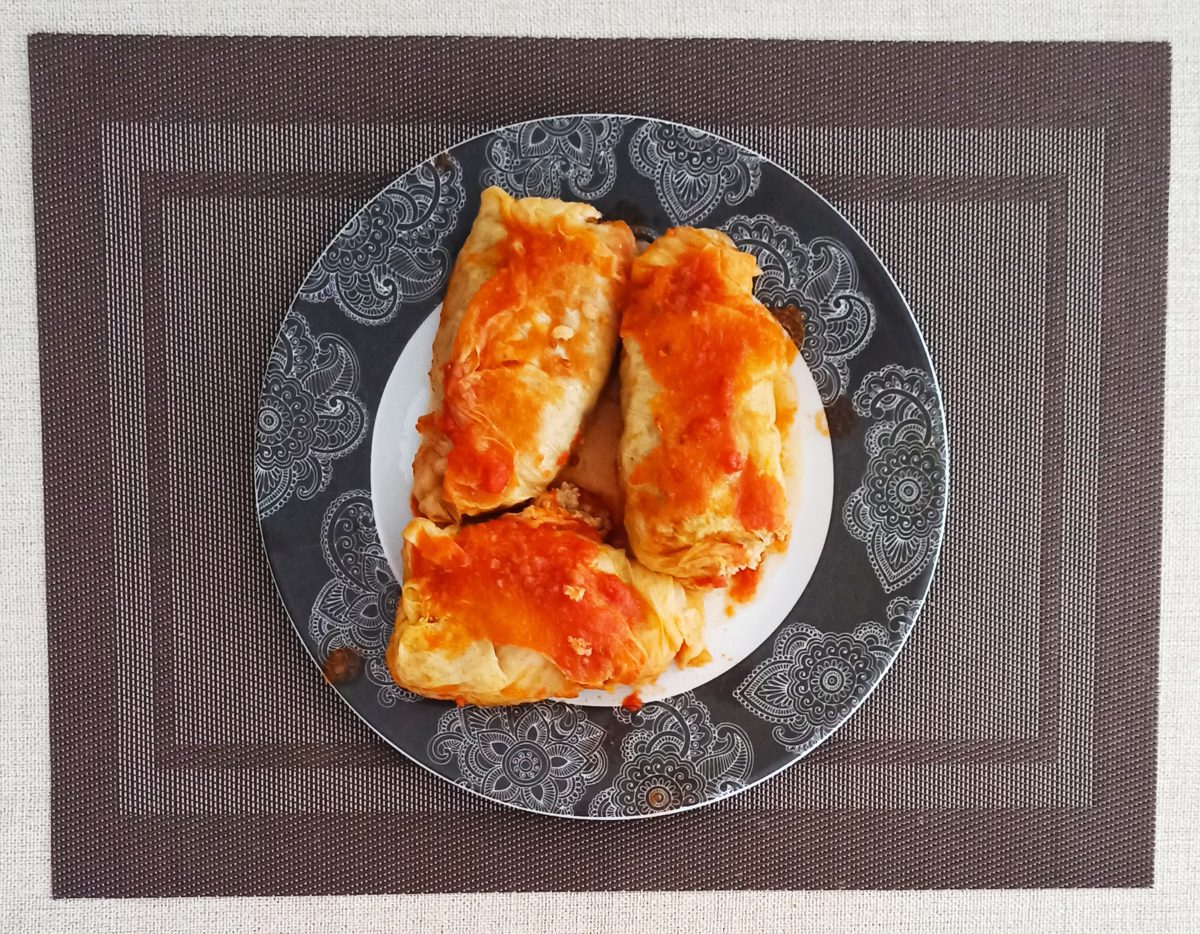
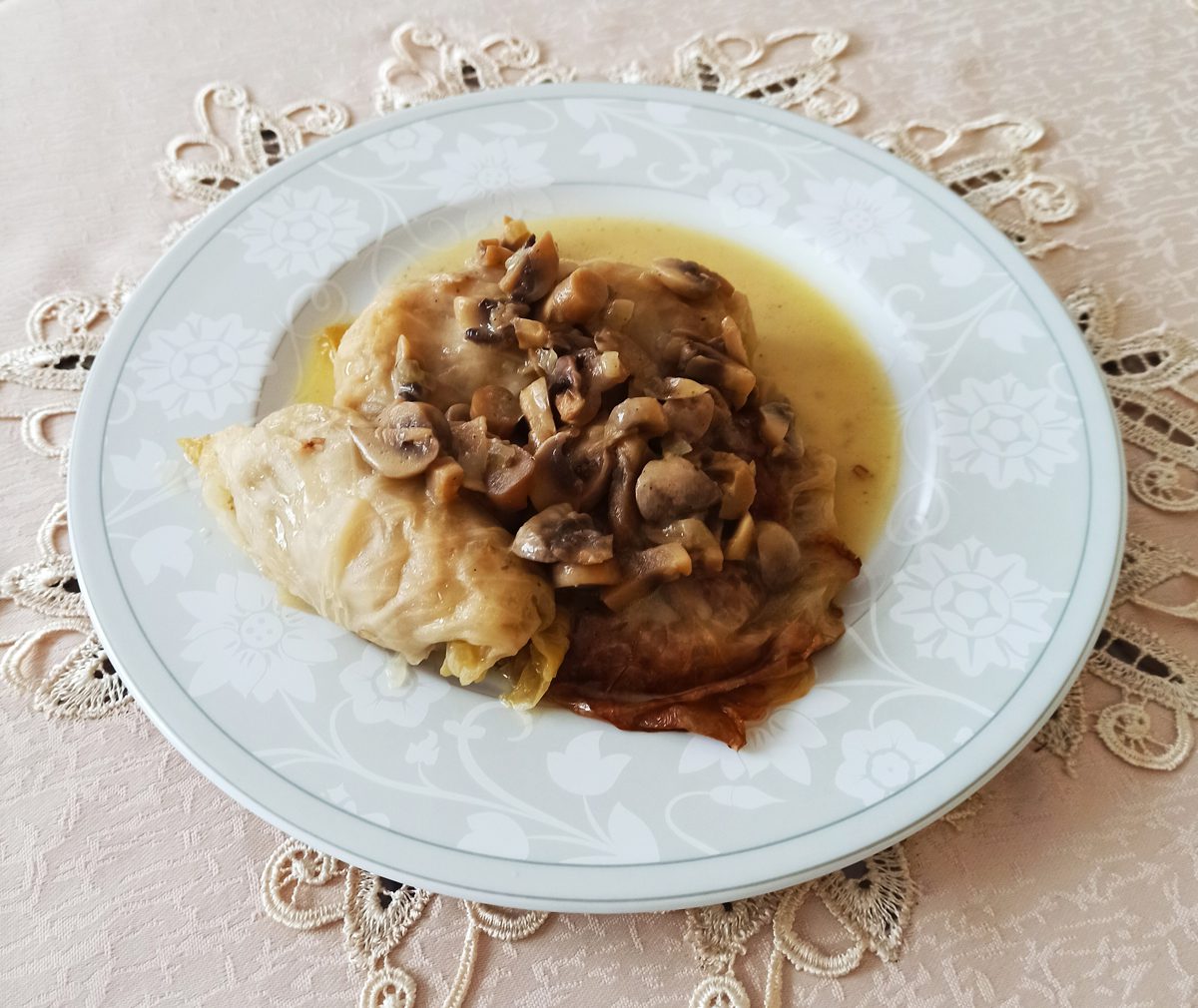
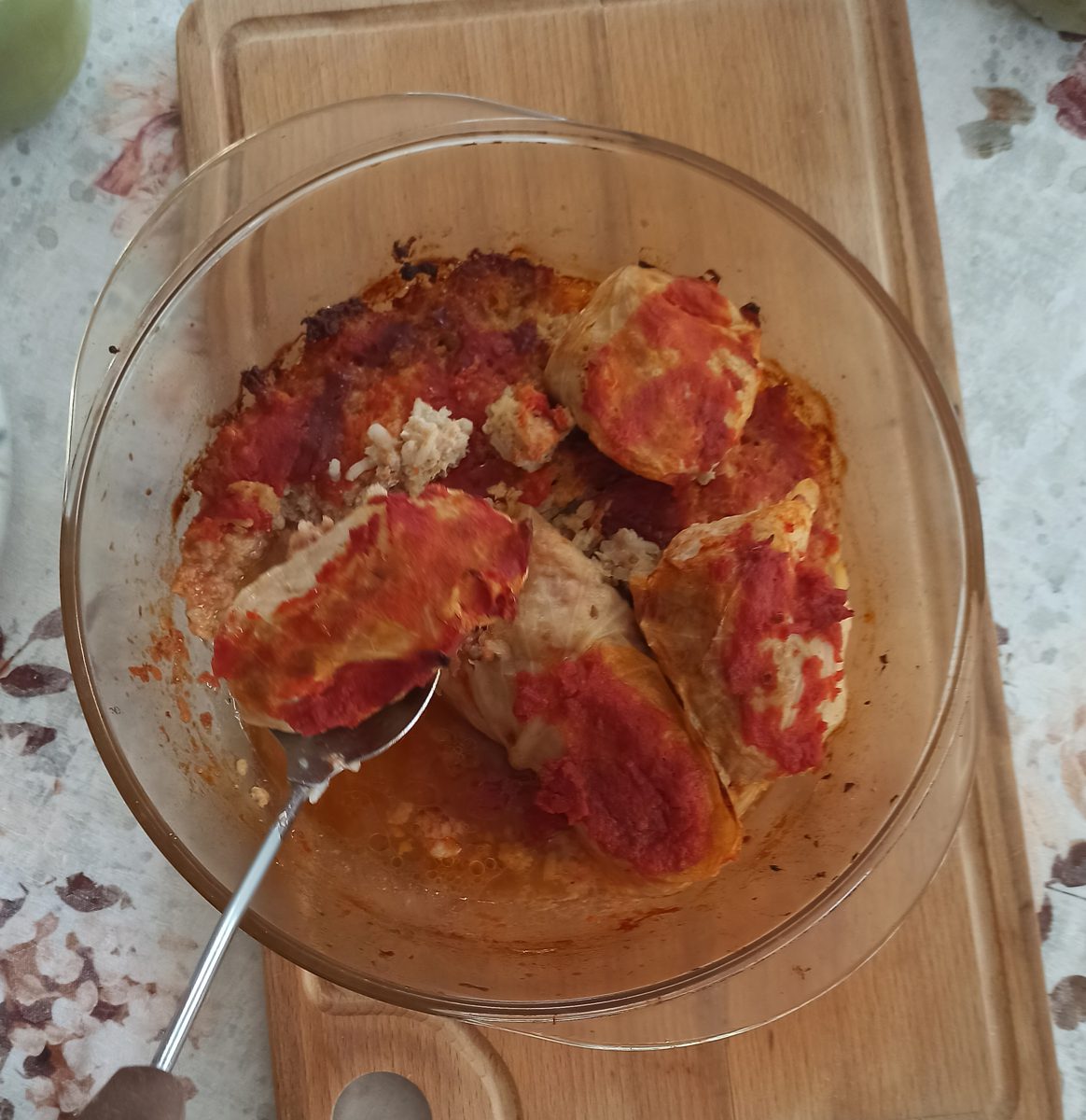
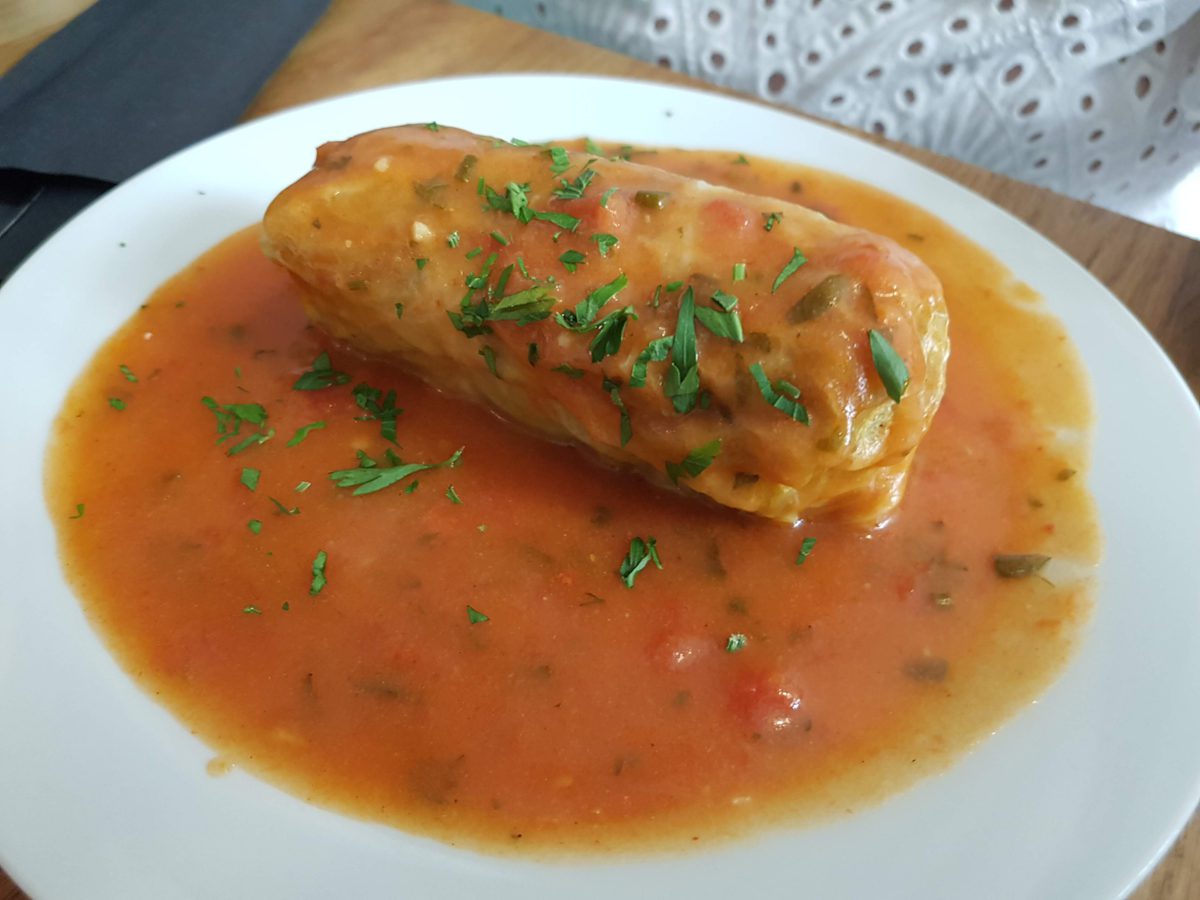
Gołąbki are a filling wrapped in leaves of white cabbage, traditionally made with minced pork and rice or groats, onions, sometimes with mushrooms, and either stewed or fried. According to Polish Wikipedia, it used to be a dish for poorer classes, as cabbage was widely cultivated. The origin of the name is uncertain: Max Vasmer derived it from the word for pigeon, due to its shape, while Marek Stachowski considered it a borrowing from the East (Persian "kalam", Armenian "kałamb", meaning cabbage), transformed by a folk association with the bird.
In the Kresy region, gołąbki were baked in leaves of pickled cabbage, served on Christmas Eve with buckwheat, and throughout the year with meat and groats or rice. In the Kozienice region, they were called "zawijoki" or "kapuścioki". In 2021, the Mazovian "jaglaki" were entered into the List of Traditional Products by the Ministry of Agriculture: gołąbki with millet groats and chopped pickled cabbage, wrapped in blanched fresh leaves in summer, and in pickled leaves in winter, tied with string and eaten daily and on Christmas Eve.
Similar dishes are known throughout the area: holubky in the Czech Republic and Slovakia, голубці in Ukraine, balandėliai in Lithuania, Krautwickel or Kohlrouladen in Germany, kåldolmar in Sweden, sarma in the Balkans and Romania, and Ashkenazi Jews eat holiszki during Sukkot and Simchat Torah. In the USA, in cities with a large Polish diaspora, such as Chicago or Detroit, they are called "golumpki" or "golabki", and in Illinois, they are sometimes referred to as "pigs in a blanket."
Ingredients
Filling (about 8 gołąbki)
-
500 g ground pork shoulder (or half and half with beef)
Abroad: USA: ground pork; UK: pork mince; Germany: Schweinehackfleisch or Hackfleisch gemischt - 60 g white rice (weight before cooking; cooked and cooled)
- 1 pc onion (about 150 g, finely chopped)
- 1 tbsp (15 ml) oil (for sautéing the onion)
-
1 tbsp (about 7 g) bread crumbs (not necessarily)
Abroad: breadcrumbs; Germany: Paniermehl - ½ tsp (about 3 g) salt
- ¼ tsp (1.3 ml) ground black pepper
- ½ tsp (2.5 ml) marjoram
Cabbage and Stewing
-
1 pc head of white or Savoy cabbage (about 1.5 kg; need 8 large leaves and a few small ones for the bottom of the pot)
Abroad: white: green cabbage, Germany: Weißkohl; Savoy: savoy cabbage, Germany: Wirsing - 500 ml broth or stock (hot)
Tomato Sauce
- 400 g tomato passata (from a bottle or carton)
- 1 tbsp (about 7.5 g) all-purpose flour (mixed with a little cold water)
- ½ tsp (2.5 ml) ground sweet paprika
- salt and pepper (to taste)
-
2 tbsp (about 29 g) 18% sour cream (not necessarily, 2–3 tablespoons)
Abroad: sour cream; Germany: saure Sahne
Method, step by step
-
Cook the rice and let it cool. Sauté the onion in oil until translucent and let it cool as well.
-
In a bowl, combine the meat, rice, onion, bread crumbs, salt, pepper, and marjoram, and mix well by hand. Do not taste the raw filling: fry a small patty in a pan and only then adjust the seasoning. Keep the filling in the refrigerator while you prepare the cabbage.
-
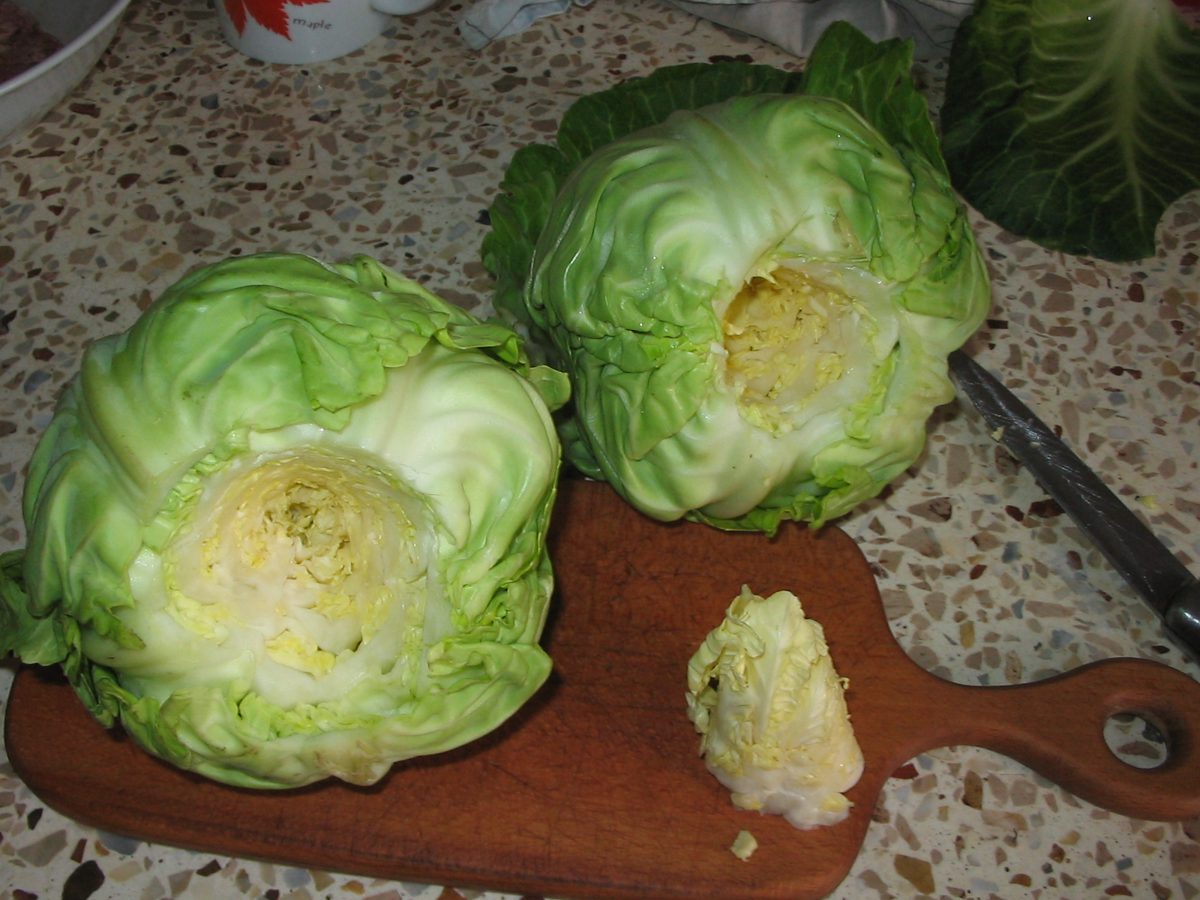
Cut out the core of the cabbage in a cone shape. Bring a large pot of water to a boil and place the cabbage in with the cut side down. Cook on low heat for about 10 minutes, then turn it over and cook for another 5 minutes. During this time, remove the leaves that come off easily and set them aside on a plate.
-
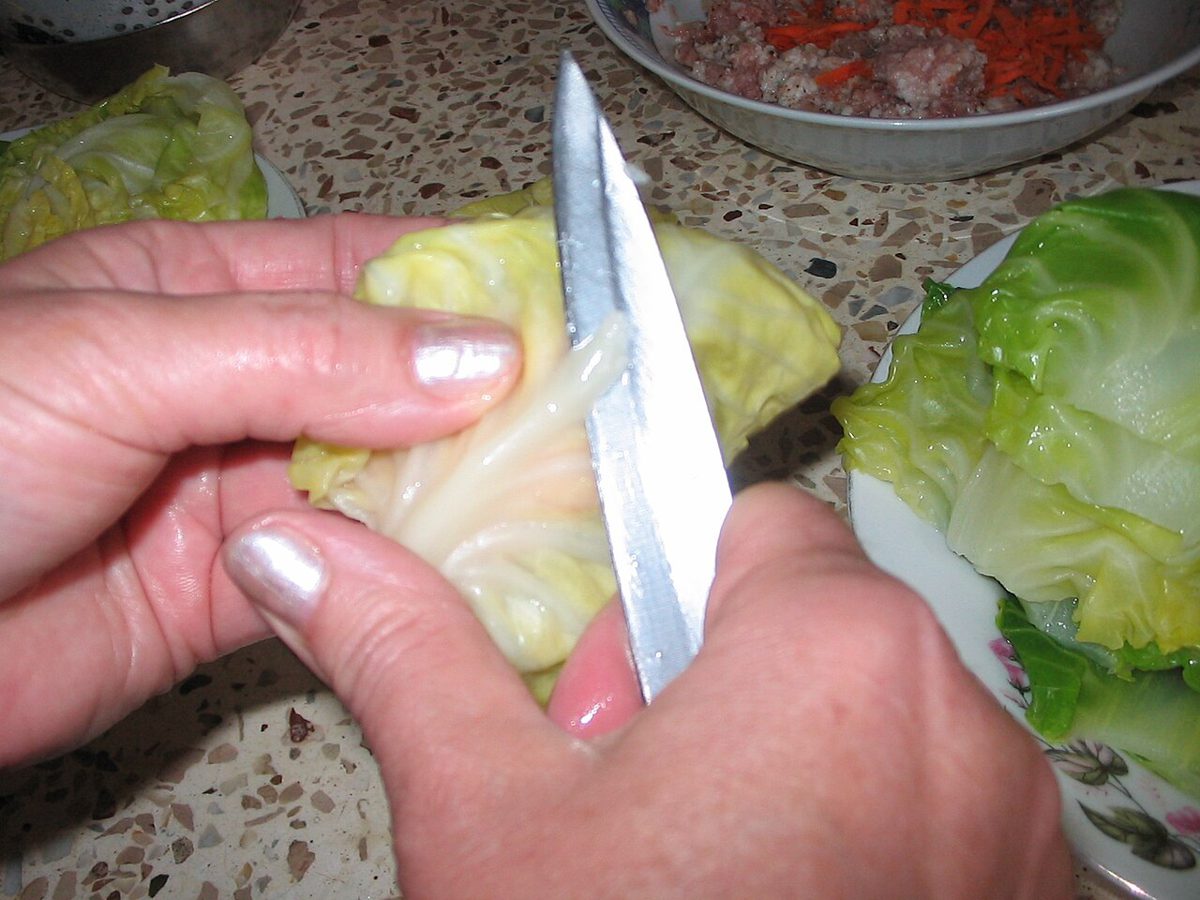
From each leaf, trim the thick vein with a knife, being careful not to cut through the leaf. If the leaf is still stiff, dip it briefly in boiling water.
-
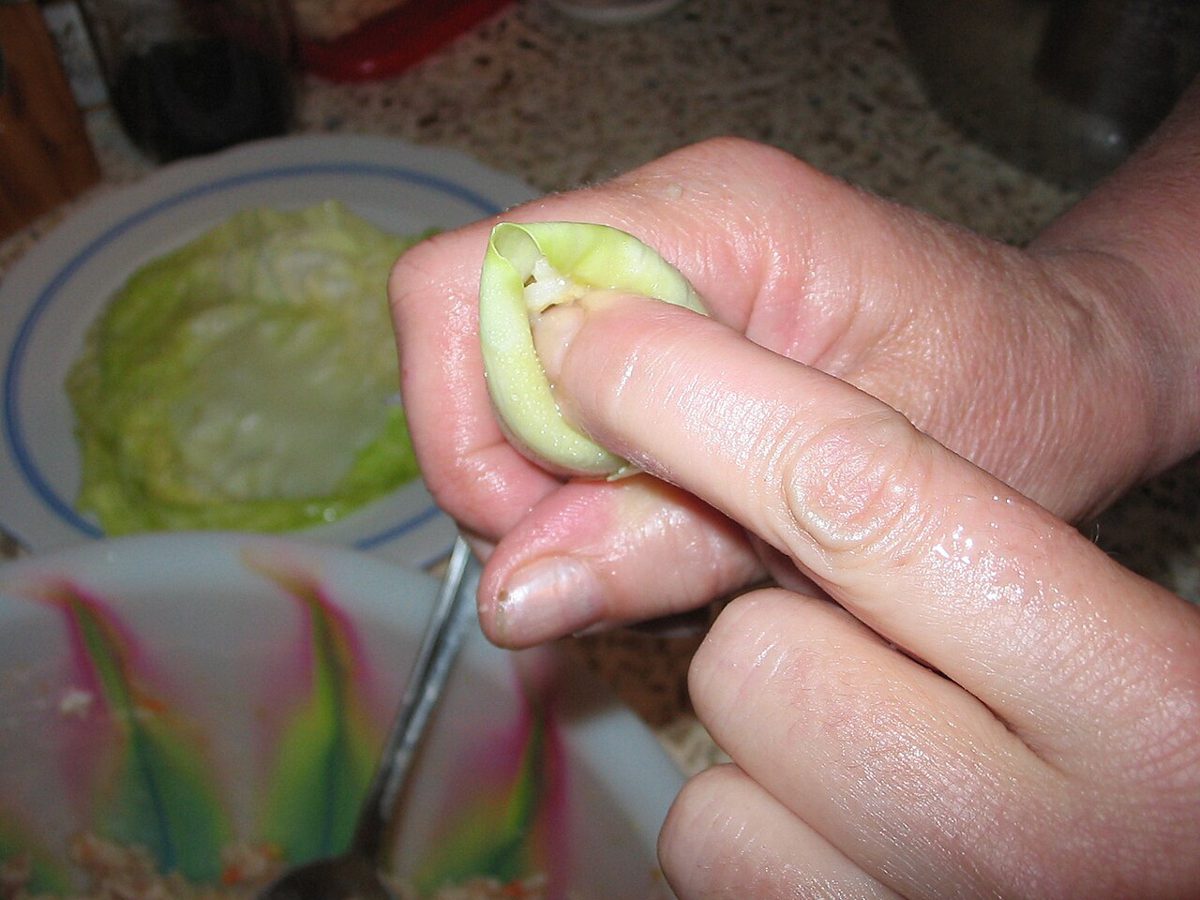
On each large leaf, at the base, place an elongated portion of filling. Fold the lower part of the leaf over the filling, fold the sides inward, and roll tightly, like a croquette. If the gołąbki unravel, tie them with string.
-
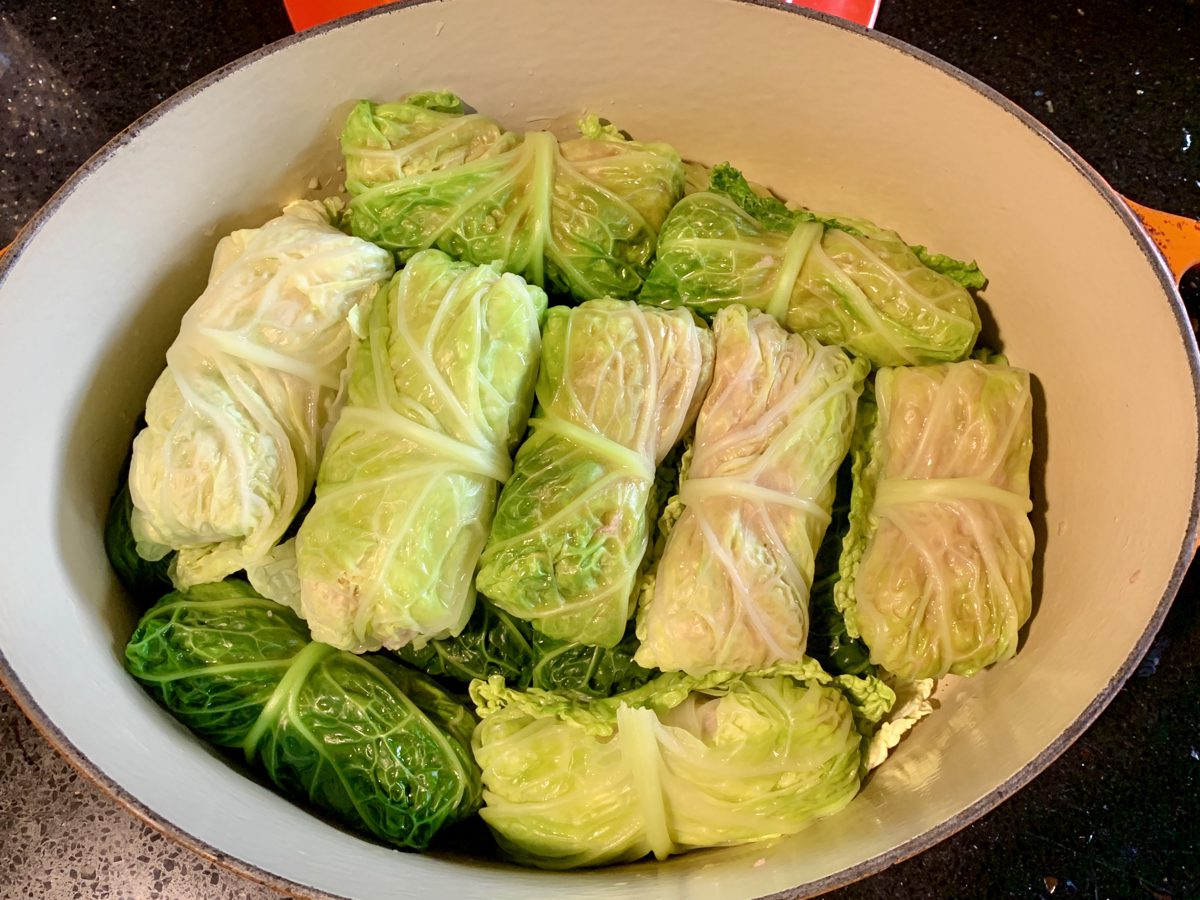
Line the bottom of a wide pot with small and torn leaves. Arrange the gołąbki tightly on top, seam side down, in two or three layers.
-
Pour hot broth over the gołąbki; it does not need to cover them completely, as the upper layers will cook by steaming. Cover the pot and stew on low heat for 60–90 minutes. Do not stir with a spoon; just shake the pot occasionally and ensure there is always liquid at the bottom. The gołąbki are ready when the thickest vein of the leaf is soft and the filling's center reaches at least 71°C.
-
For the sauce: pour the broth from the gołąbki into a saucepan, add the passata and the flour mixed with water, and bring to a boil. Season with salt, pepper, and paprika, and cook for about 10 minutes uncovered. If adding sour cream, first mix it with a few tablespoons of hot sauce, then pour it into the saucepan.
-
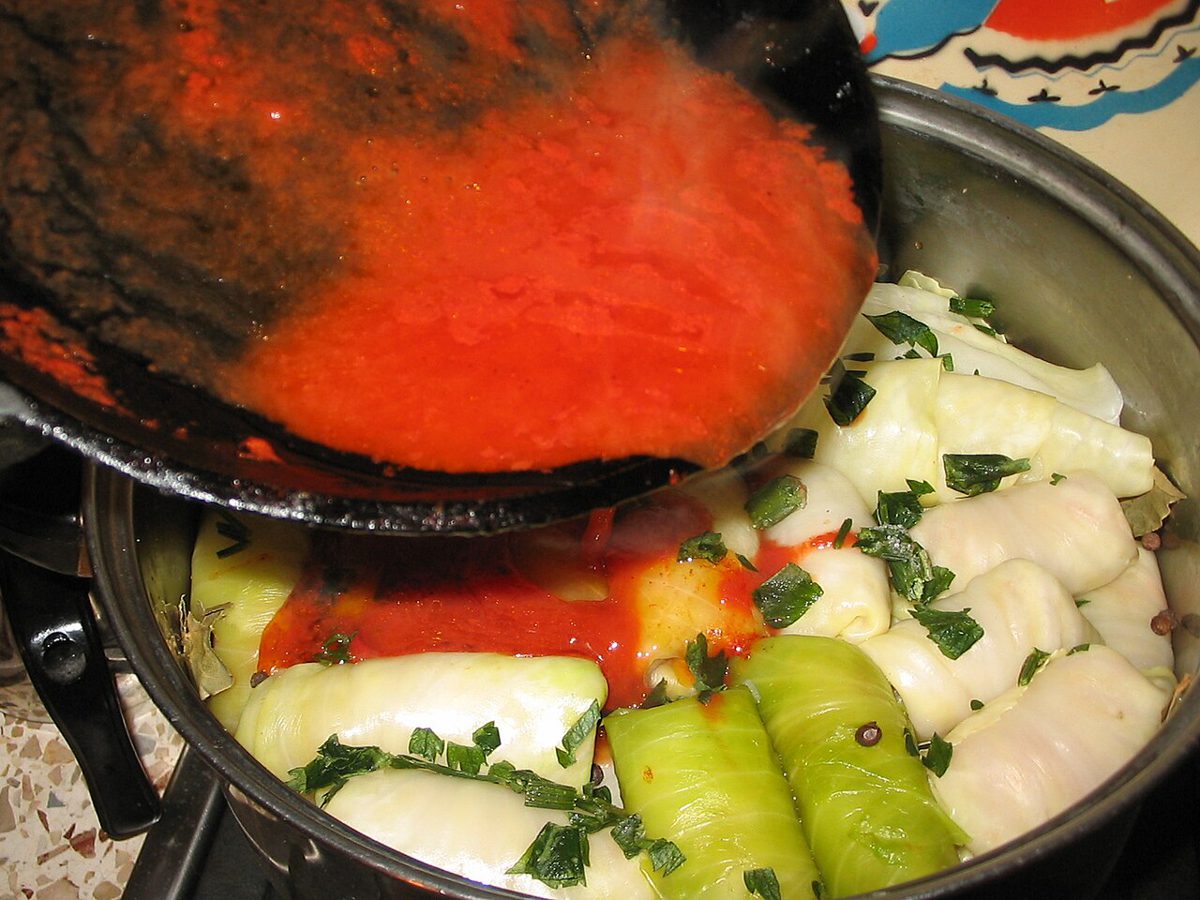
Pour the sauce into the pot with the gołąbki and heat for a few minutes on low heat.
-
Serve with boiled potatoes sprinkled with dill or parsley, with mashed potatoes, or with bread.
Photos