The story behind the recipe
Carp has been farmed in Poland since the Middle Ages. According to TVN24, farming began in the 13th century near Milicz in Lower Silesia, and the Cistercians improved it, especially since at least 180 days a year were fasting days. Other sources mention the 12th century and Cistercians from the Czech Republic, so it’s not certain how it really was. In "Compendium Ferculorum" by Stanisław Czerniecki from 1682, the oldest printed Polish cookbook, there are eight recipes for carp. The kitchen ledger of Jan III Sobieski from 1695-1696 indicates that the main Christmas fish at that time were carp and pike. Lucyna Ćwierczakiewiczowa in "365 Dinners" mentions only one carp dish for Christmas Eve, gray carp with raisins, and during the interwar period, pike and zander were eaten more often.
Carp became a "traditional" Christmas dish only in the 1950s, as noted by SGGW. "It was the only freshwater fish that could be bought at that time," said Robert Makłowicz on TVN24. There’s a repeated anecdote that the phrase "carp on every Christmas table" was coined by Minister Hilary Minc, but that’s just a tale: as National Geographic Polska writes, no source has been found where this phrase appears, and culinary historian Prof. Jarosław Dumanowski has pointed this out multiple times. Carp was sold live because there were no refrigeration methods for transport, not out of concern for freshness. It was also sometimes rationed.
Today, we eat about half a kilogram of carp per person per year in Poland. According to data from KOWR, cited by National Geographic Polska, over 90% of the annual production of about 18 thousand tons is sold in the last two weeks of December. Zatorski carp has had a Protected Designation of Origin since 2011, but fried carp has no such protection. By 2024, supermarkets in Poland, the Czech Republic, and Slovakia will stop selling live carp.
Ingredients
Fish
-
1 kg cleaned carp (without head, from 800 g to 1 kg; or 650 g of fillets with skin, 4 pieces)
Abroad: Germany: Karpfen küchenfertig or Karpfenfilet; UK: mirror carp; USA: common carp or mirror carp; Australia and USA, when carp is unavailable: striped bass, mahi-mahi, zander (pike-perch, Zander) - 1 pc lemon (juice)
- 1 pc onion (sliced, for marinating the fish overnight; not necessary)
- 2 tsp salt (flat, about 1 teaspoon for 500 g of fish)
- 1 pinch white pepper, ground
Breading
-
50 g wheat flour (preferably fine, salted with a pinch of salt)
Abroad: USA and Canada: all-purpose flour; UK: plain flour; Germany: Type 405 - 2 pcs eggs
- 2 tbsp (30 ml) milk
-
80 g breadcrumbs
Abroad: gluten-free: use corn flour or ground almonds or walnuts
For frying
- 4 tbsp (60 ml) rapeseed or sunflower oil (there should be at least about 1 cm of fat for thick rings; add more if necessary)
-
2 tbsp (about 29 g) butter (or instead of oil and butter, 4-5 tablespoons of clarified butter)
Abroad: clarified butter: ghee; Germany: Butterschmalz
For serving
- 1 pc lemon (in wedges)
- horseradish (to taste)
Method, step by step
-
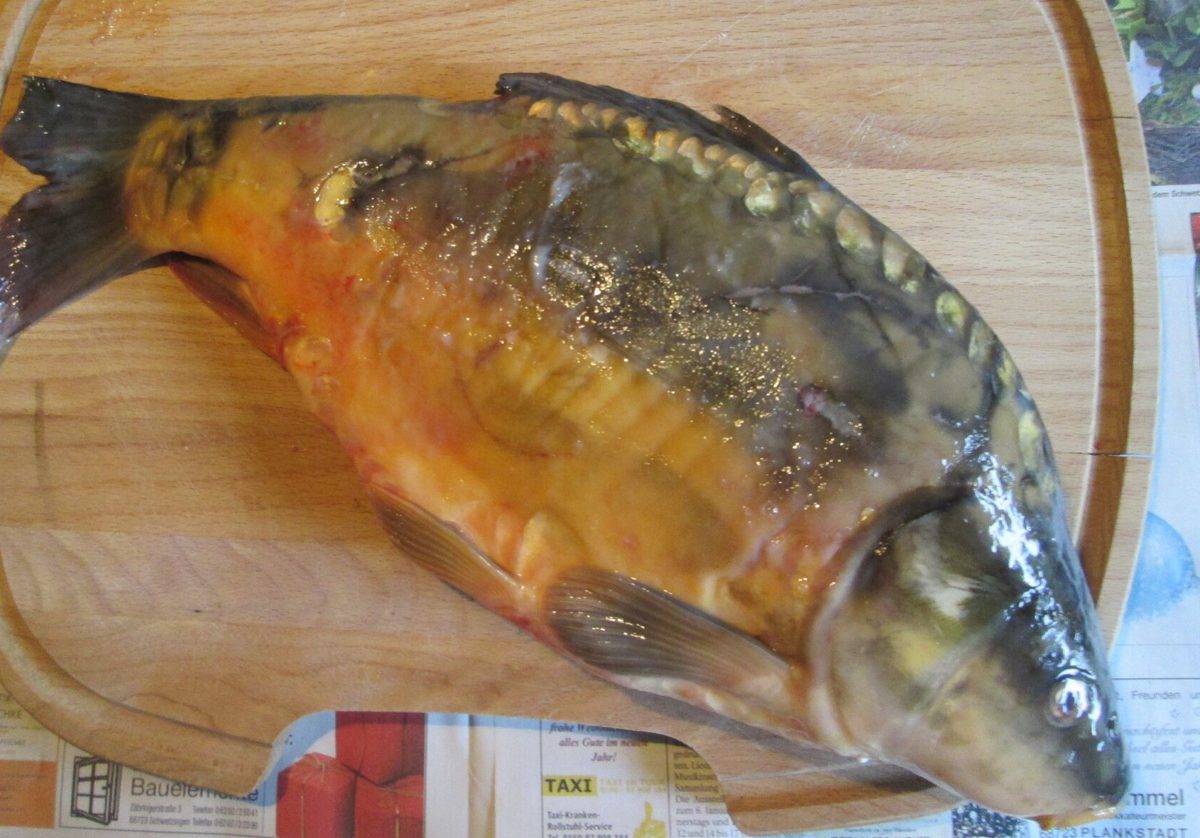
If you have a whole carp, place it on a board and scrape the scales off with a knife, from tail to head. Mirror carp has few scales, so it will go quickly.
-
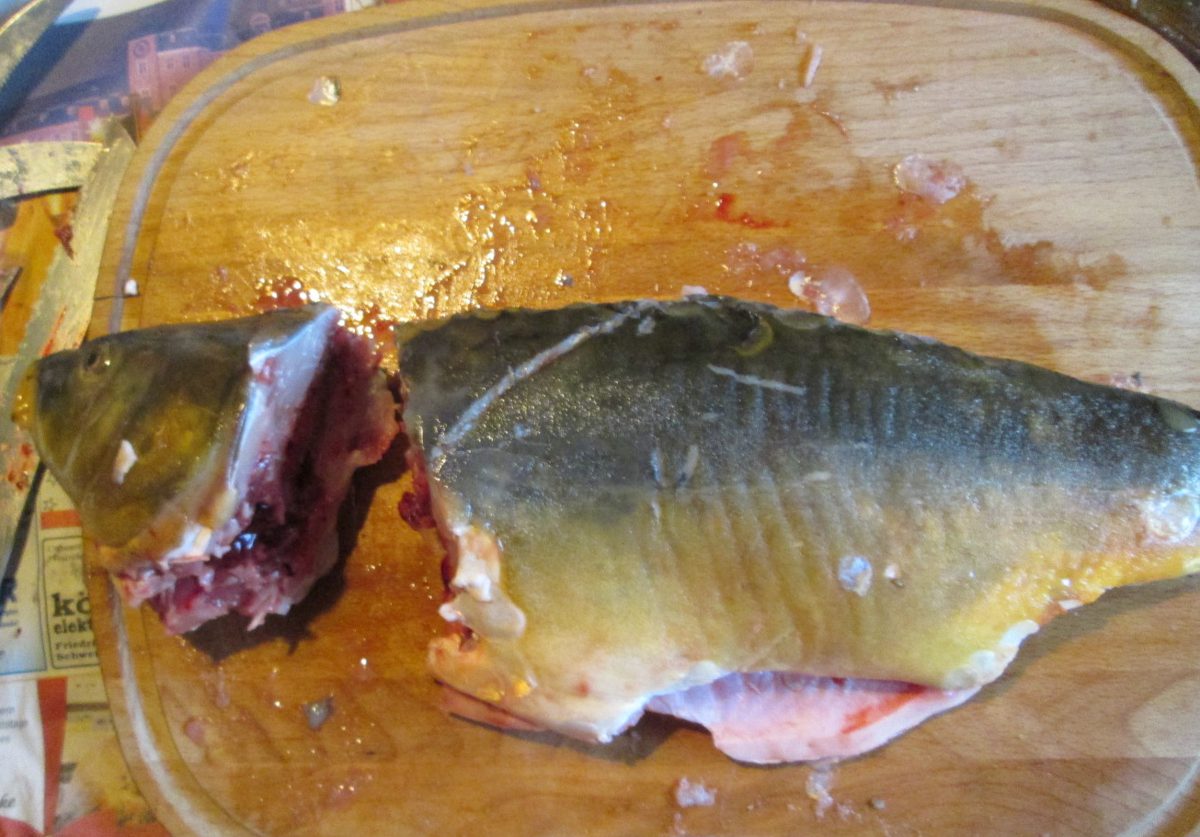
Cut off the head, and with kitchen scissors, cut off the fins and tail. If the fish is not gutted, make an incision in the belly, remove the entrails, and rinse the carp thoroughly inside and out until all the slime is gone. Keep the head and fins for fish soup or jelly.
-
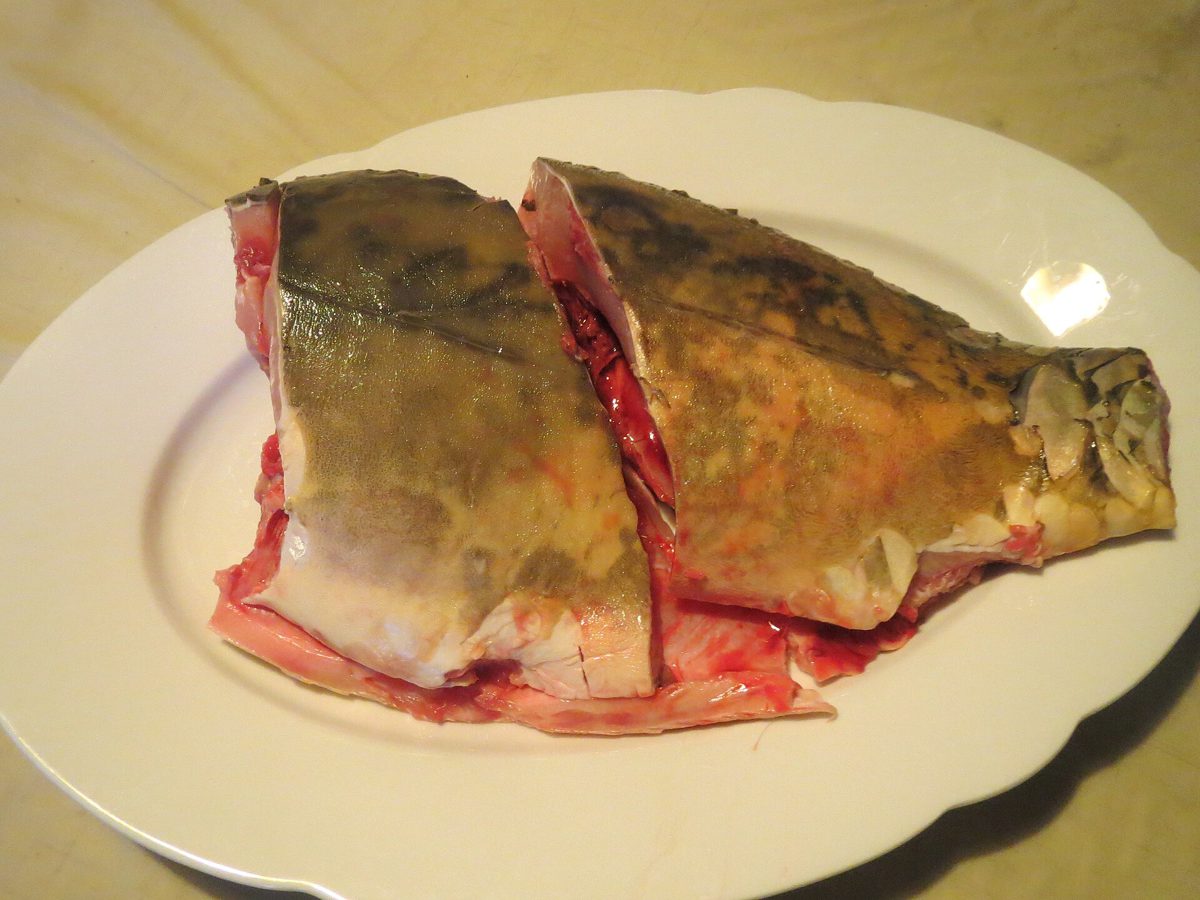
Using a large, sharp knife, cut the carp crosswise, through the backbone, into even rings about 2.5 cm thick. Cut the fillets with skin into 4 pieces and, if you wish, score them densely across every 3-6 mm, to about 2/3 of the thickness.
-
The day before (not necessarily), layer the fish with slices of onion, you can add garlic, cover, and place in the refrigerator overnight. This helps to reduce the muddy taste.
-
About an hour before frying, remove the onion, salt the fish, drizzle with lemon juice, pepper, and keep in the refrigerator. Do not salt earlier, as the meat will be dry. Just before breading, dry the pieces very thoroughly with paper towels.
-
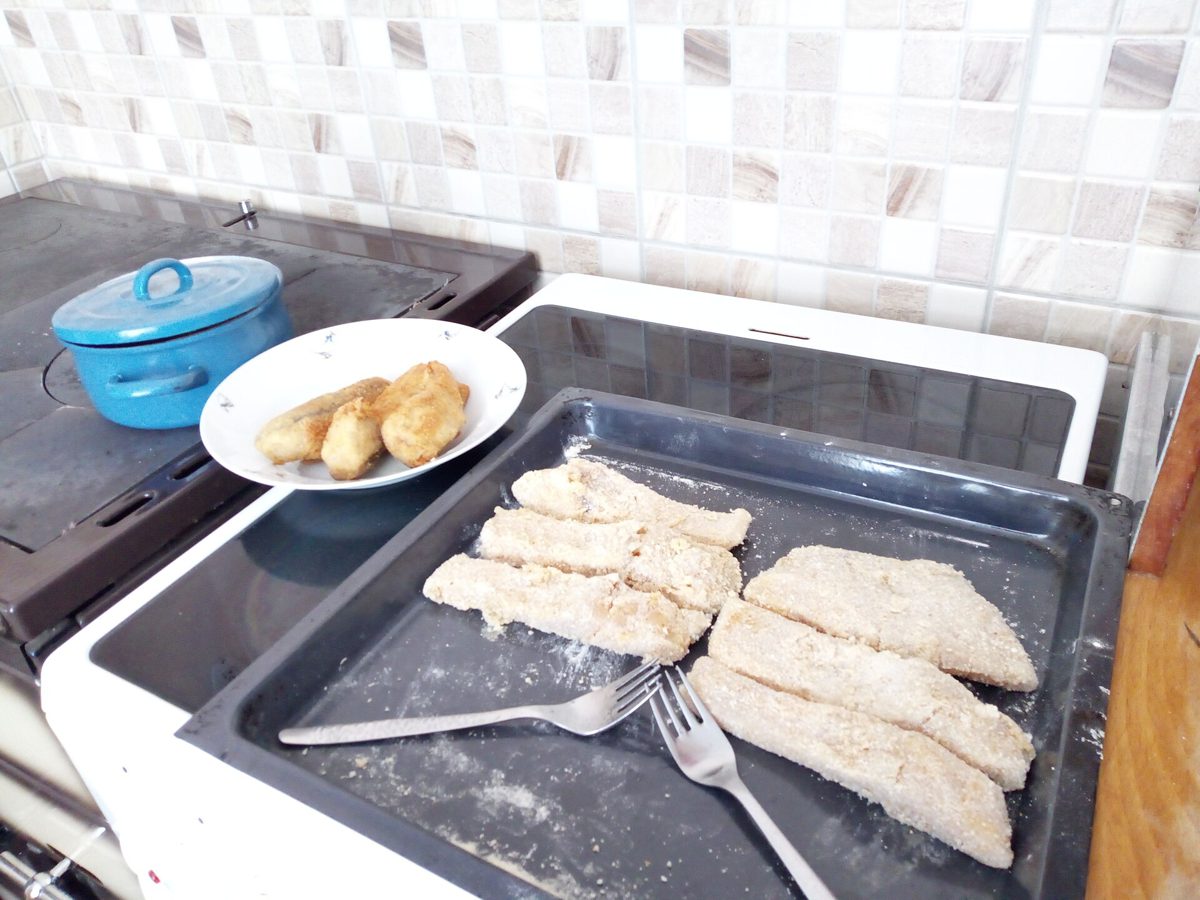
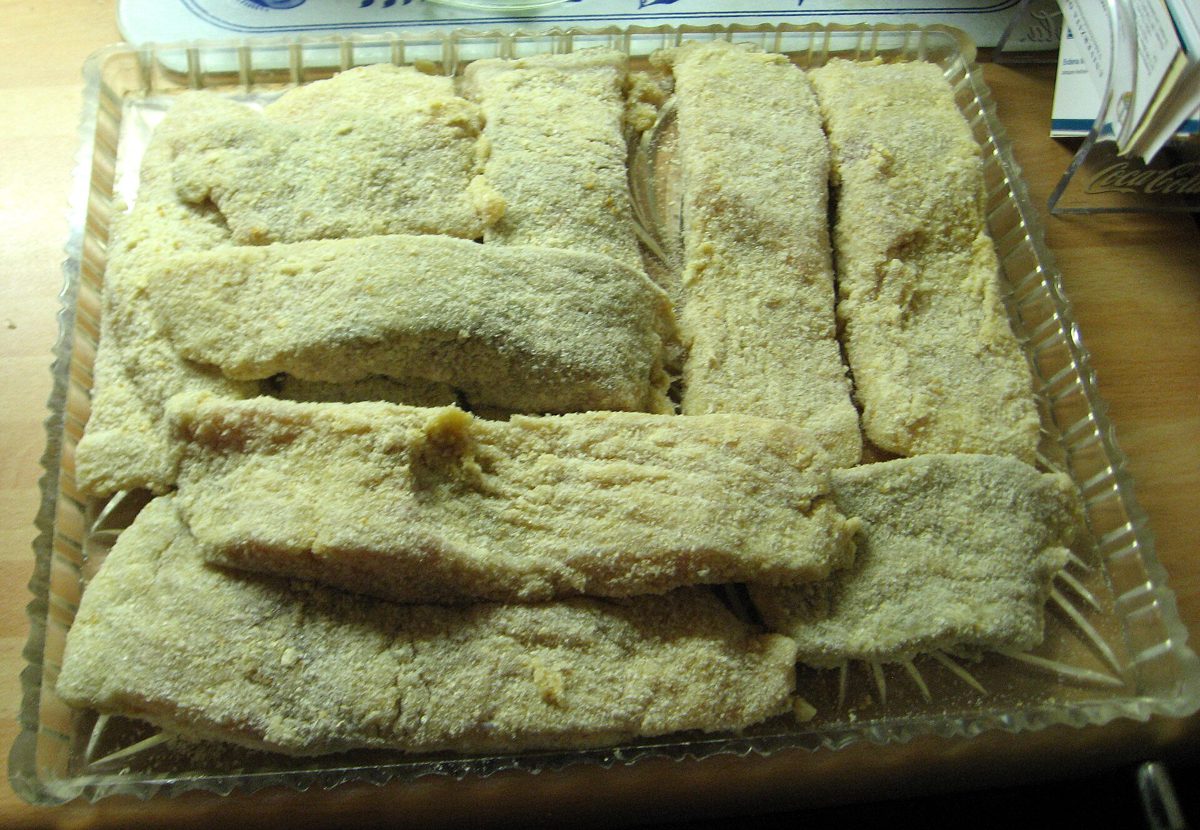
Prepare three plates: flour mixed with a pinch of salt, eggs beaten with milk, and breadcrumbs. Coat each piece in flour, then egg, and then breadcrumbs, lightly pressing the coating.
-
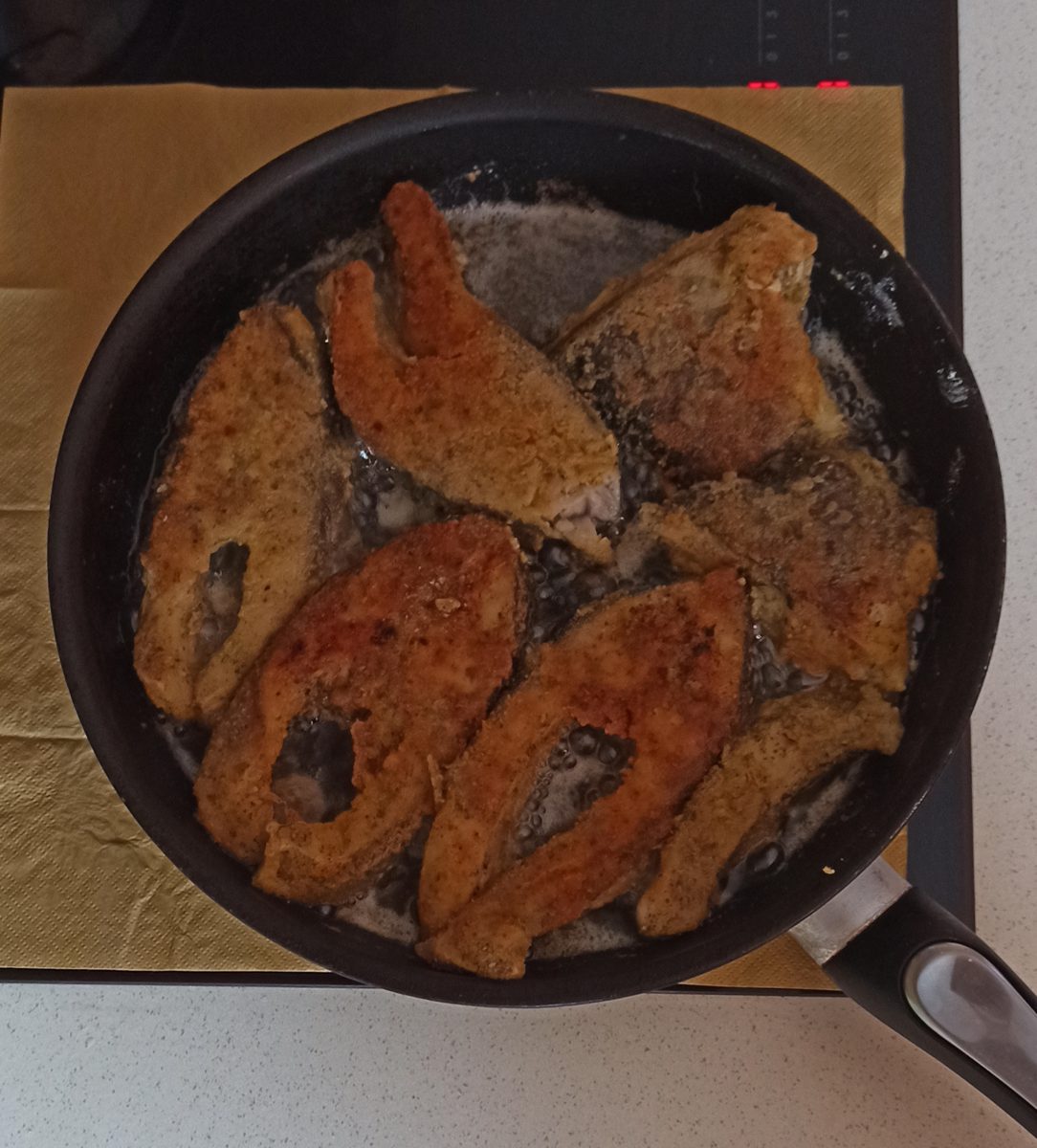
Heat a heavy pan with oil, then reduce the heat to medium. The fish should sizzle immediately upon being placed in the pan. Fry in batches, without crowding the pieces. Add butter halfway through frying or start frying in clarified butter.
-
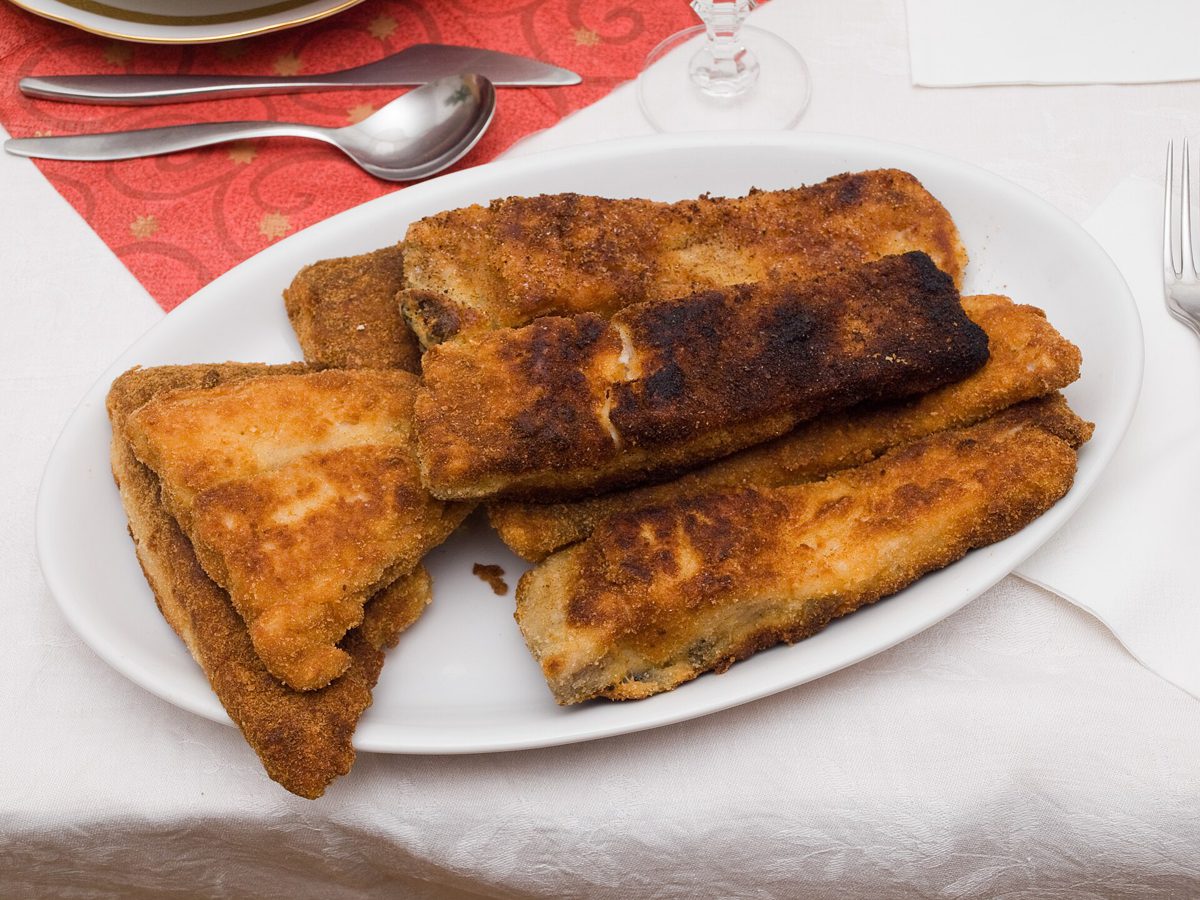
Fry the rings for 5-7 minutes on the first side and about 5 minutes on the second, then an additional 2-3 minutes on each edge. Thinner pieces of fillet fry for about 5-6 minutes on each side until golden.
-
Place the fried pieces on paper towels, then into an oven preheated to 100°C, so they don’t cool down. Before each subsequent batch, wipe the pan and pour in fresh fat.
-
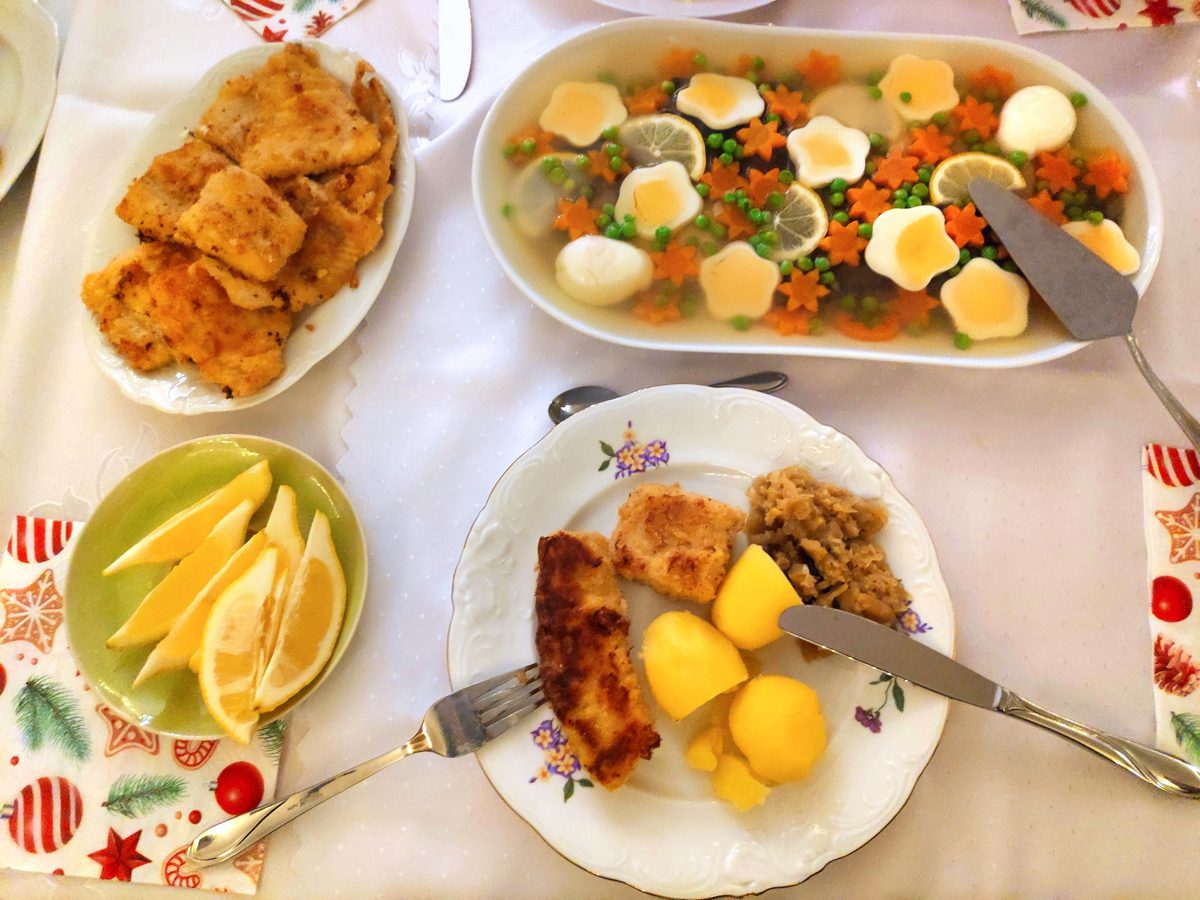
Serve the hot carp with lemon wedges and horseradish, along with potatoes, cabbage with mushrooms, or vegetable salad.
Photos