The story behind the recipe
Hanna Szymanderska, author of the books "Wigilia" and "Polish Cuisine," mentioned in a 2007 interview with "Rzeczpospolita" that in the Middle Ages, herring "was cheap and common." On March 25, 1389, the accounts of the court of Jagiełło recorded "6 barrels of herring." They were imported to Poland in large quantities and over time became a valued delicacy. Fish were often eaten because fasting lasted almost half the year: besides the 40 days before Easter, meat was not allowed on Mondays, Wednesdays, and Fridays. Szymanderska also cites Franciszek Fiszer, who stated that "herring belongs to the family of appetizers."
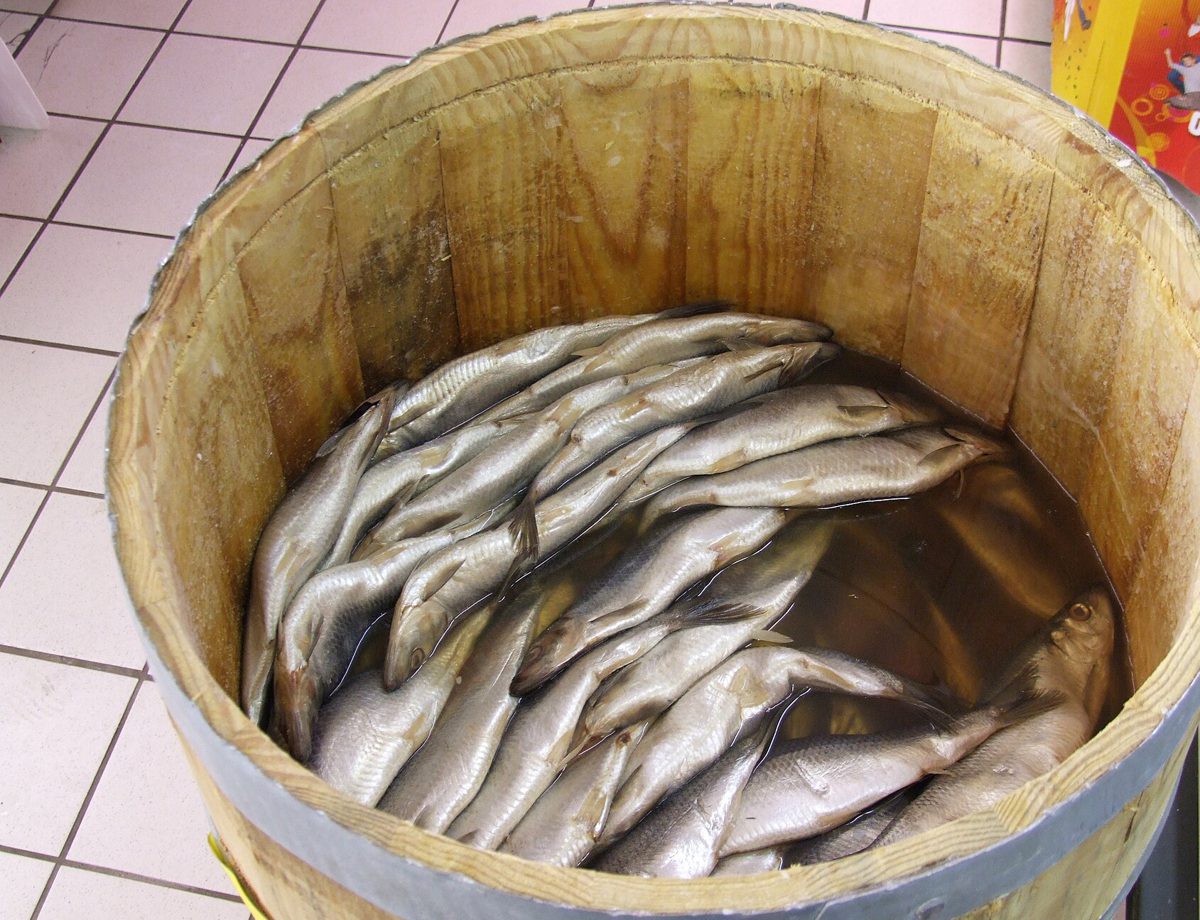
At Wigilia (Christmas Eve), as Aleksandra Imosa from the Kielce Village Museum in Tokarnia said in 2020, "the only animal protein [...] came from fish": "We ate herring for Wigilia, and in the Kielce region, salted herring." English Wikipedia lists herring among the twelve traditional Christmas dishes in Poland and notes that it is also eaten at midnight on New Year's Eve. Ania Gotuje writes that she makes herring in oil according to her grandmothers' recipe "not only for the holidays but also for New Year's Eve." In the past, salted herring was bought from barrels; today, as Szymanderska notes, "we mainly buy ready-to-use fillets that do not require soaking."
In stores, you often encounter the term "a'la matias." According to Wikipedia, true matjas is a young herring caught before spawning, fatty, lightly salted, and maturing thanks to its own enzymes; this method was invented by the Dutch in the Middle Ages. As a Polish dish, herring in oil is not registered in the EU, but on the Traditional Products List of the Ministry of Agriculture, there is "Herring in Oil from Radziwiłłów" from Mazovia, entered in 2014: pieces of fillet in rapeseed oil with tomato and spices. In the past, herring was bought whole from barrels, layered in a stone pot, and instead of soaking, it was cold-smoked for several days in a manor smokehouse by the mill on the Rawka River. How much onion, what oil, and whether to add lemon or vinegar: here the recipes differ, and there is no single version of "the right one."
Ingredients
Herring
-
400 g salted herring fillets (matias from brine, from a barrel) (4–5 fillets, from the depths of the barrel, without yellowing at the ends)
Abroad: USA and Canada: schmaltz herring; Germany: Salzheringsfilets or Matjesfilets (often already mild); Netherlands and the UK: Dutch matjes, Hollandse Nieuwe - 250 ml milk (not necessarily, for the final soaking)
For the Jar
-
2 pcs onion (about 250–300 g total, finely chopped or in thin half-rings)
Abroad: USA: sweet onion, for example, Vidalia (does not need scalding) -
200 ml cold-pressed rapeseed oil (refined is also suitable; oil must cover everything)
Abroad: UK: cold-pressed rapeseed oil; USA and Canada: canola oil -
50 ml flaxseed oil (50–100 ml, to taste; can use only rapeseed oil)
Abroad: USA, Canada, Australia, UK: flaxseed oil; Germany: Leinöl - 2 tsp (10 ml) lemon juice (not necessarily, can be replaced with vinegar)
-
2 pcs bay leaf
Abroad: bay leaves; Germany: Lorbeerblätter -
3 pcs allspice (3–4 berries)
Abroad: allspice; Germany: Piment - ½ tsp (2.5 ml) black peppercorns
Method, step by step
-
Choose herring: salted fillets from brine or from a barrel, firm and without yellowing at the ends. If you only have fillets in oil, skip soaking, drain them, and go straight to drying.
-
Rinse the fillets and place them in a bowl with cold water for about 20 minutes. Change the water and soak for another 20 minutes, if necessary, once more. With each change, cut off a small piece and taste: the herring should be slightly salty, not as salty as from brine. If you want it to be milder, do the final soaking in milk.
-
Remove the fillets and dry them very thoroughly with paper towels on both sides. Any water left on the fish will dilute the oil.
-
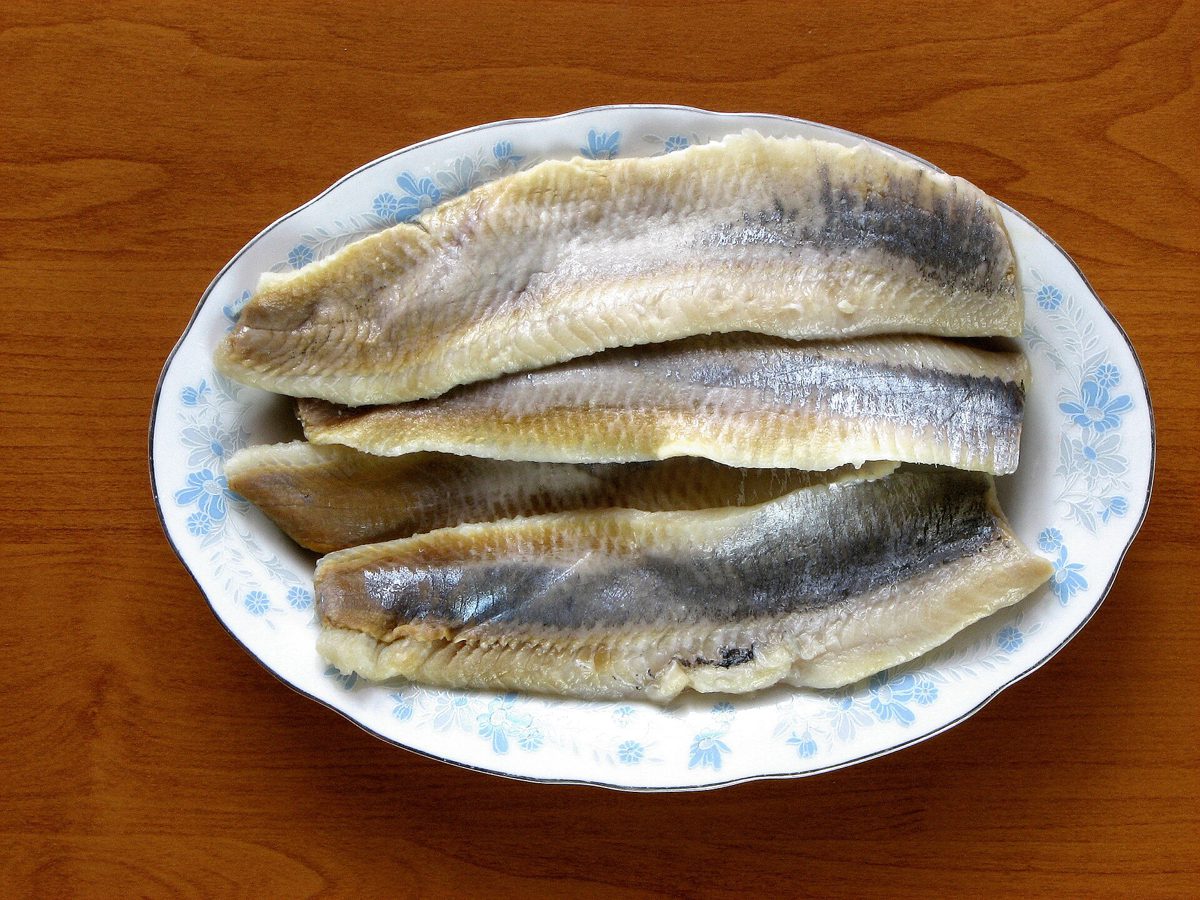
Cut the fillets into pieces no wider than 2 cm or into cubes about 1 cm.
-
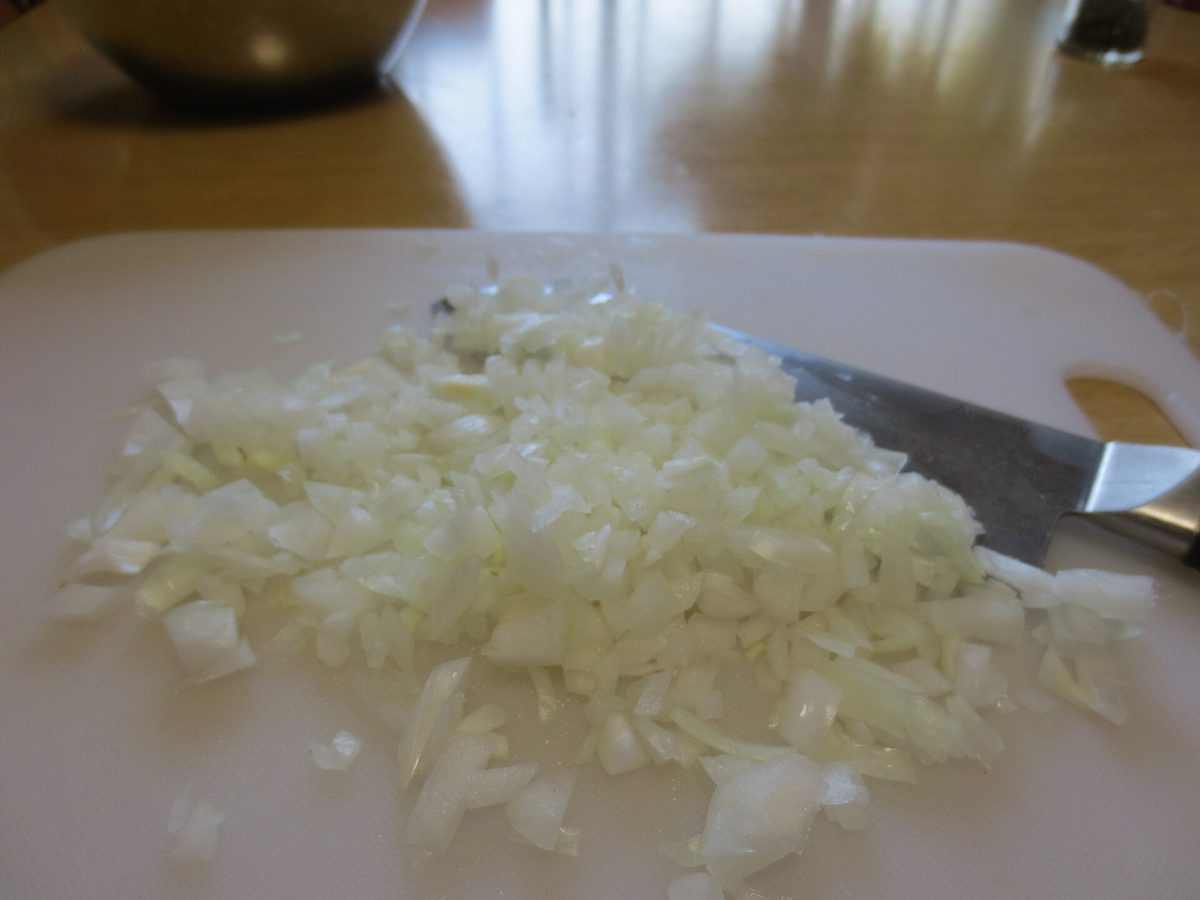
Peel the onion and cut it into small cubes or thin half-rings. Transfer it to a sieve and pour boiling water over it: the sharper the onion, the more boiling water. Drain and cool completely. Sweet onion does not need to be scalded.
-
Scald a jar with a capacity of about 800 ml (or two 400 ml jars) with boiling water and dry. Layer: onion, herring, onion, and again herring, placing bay leaves, allspice, and black pepper between the layers. Drizzle lemon juice on top, if using.
-
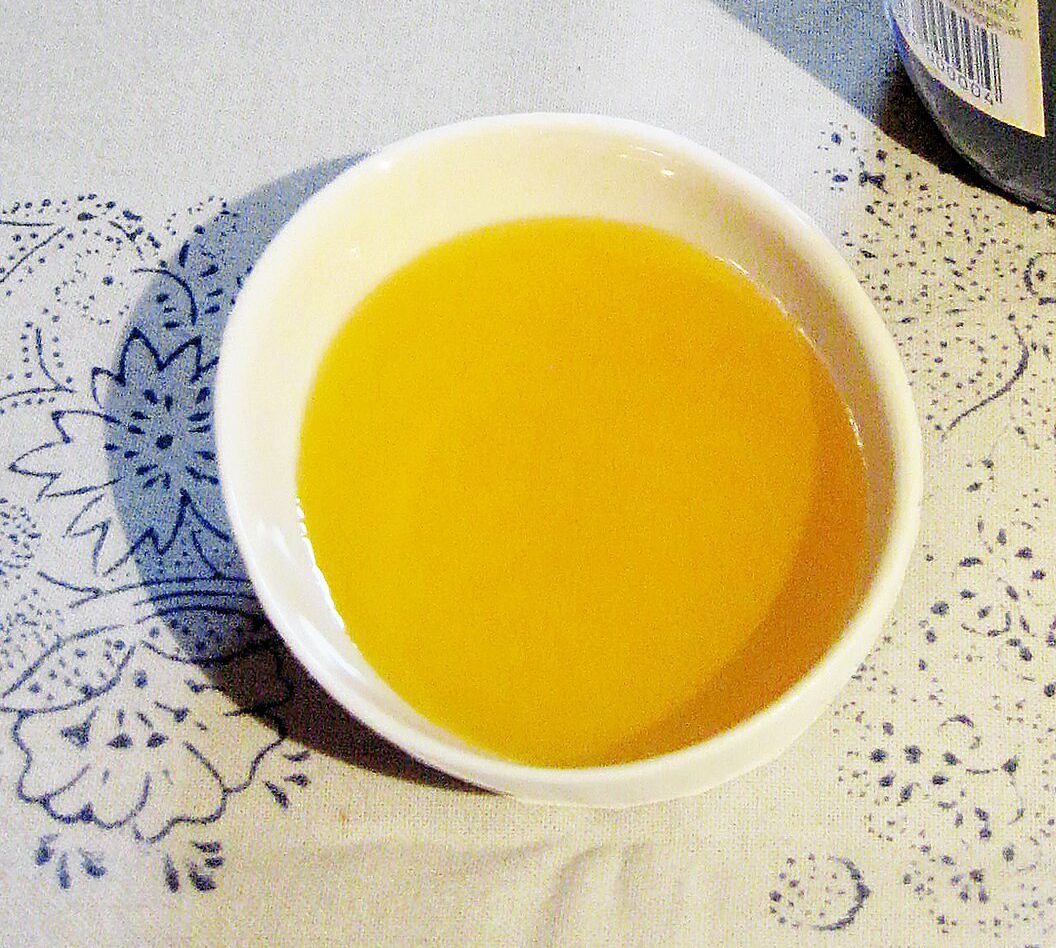
Mix the rapeseed oil with the flaxseed oil and taste it. Slowly pour into the jar until everything is covered. Gently move the jar or wait a moment for the oil to settle at the bottom, and if necessary, add more, as no piece should be sticking out.
-
Screw the jar tight and place it in the fridge for at least a day, but preferably for 2 days, so the herring absorbs the flavors of the onion and spices.
-
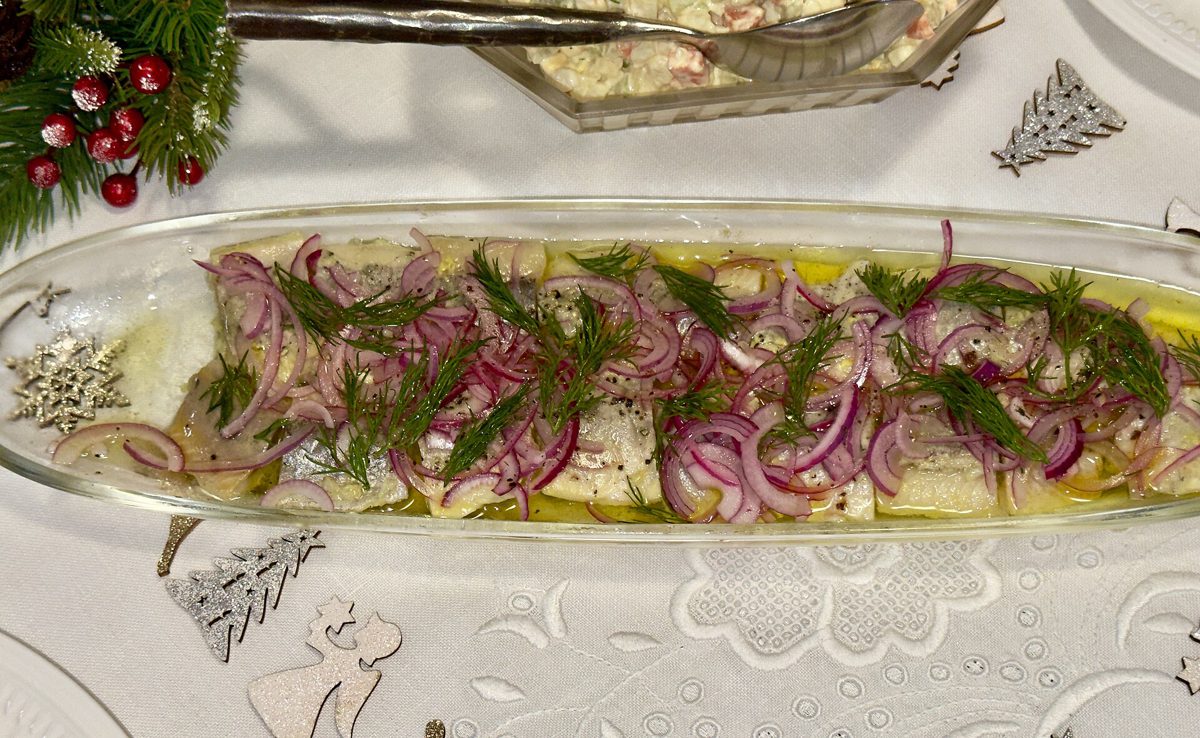
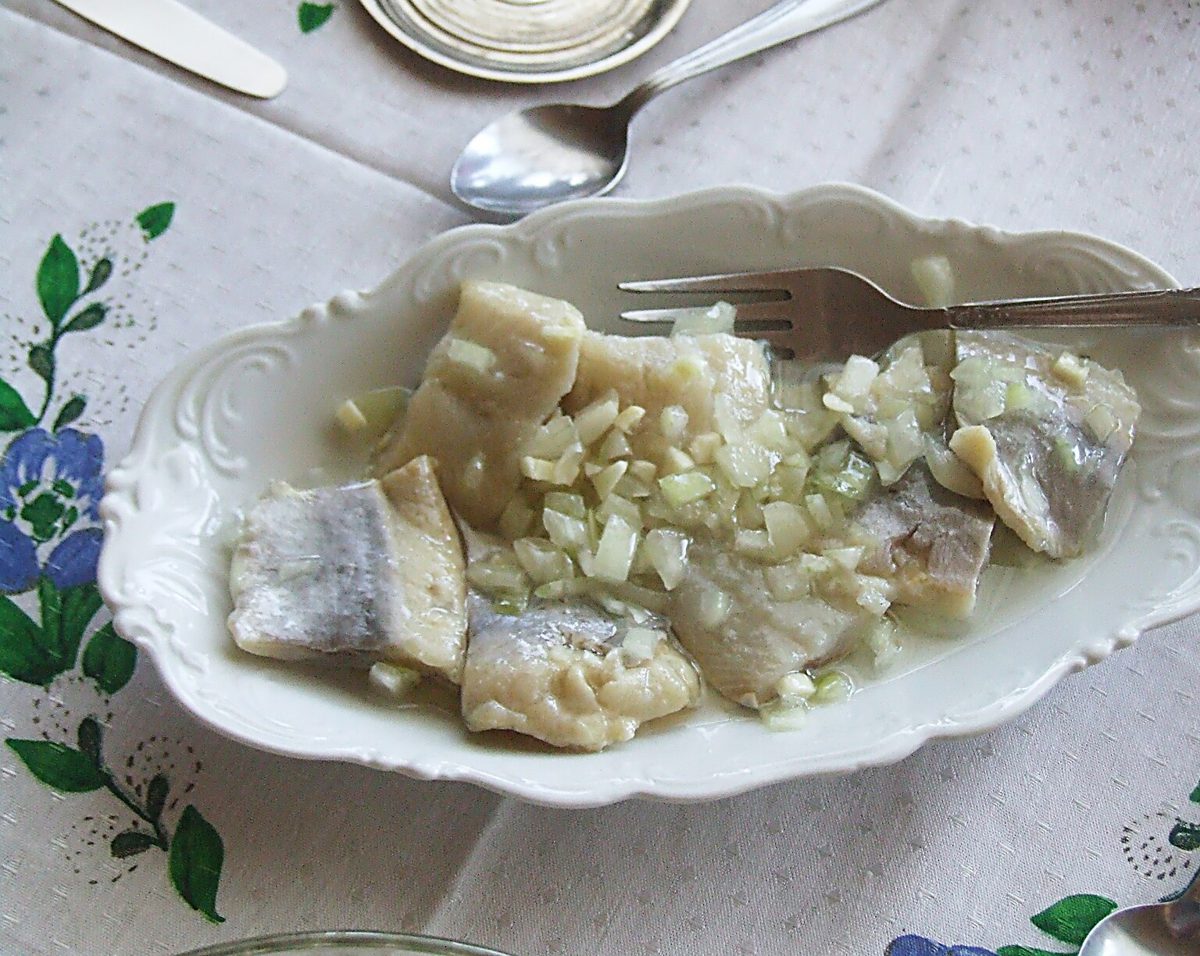
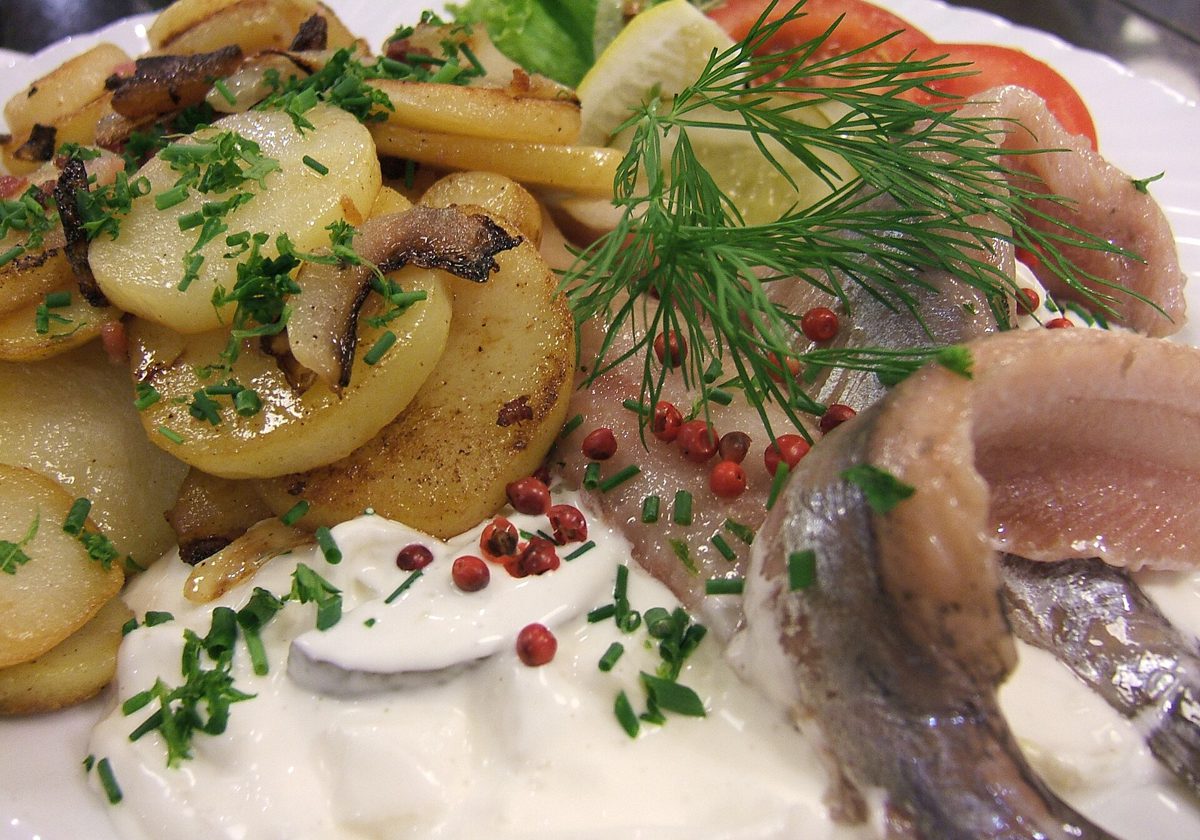
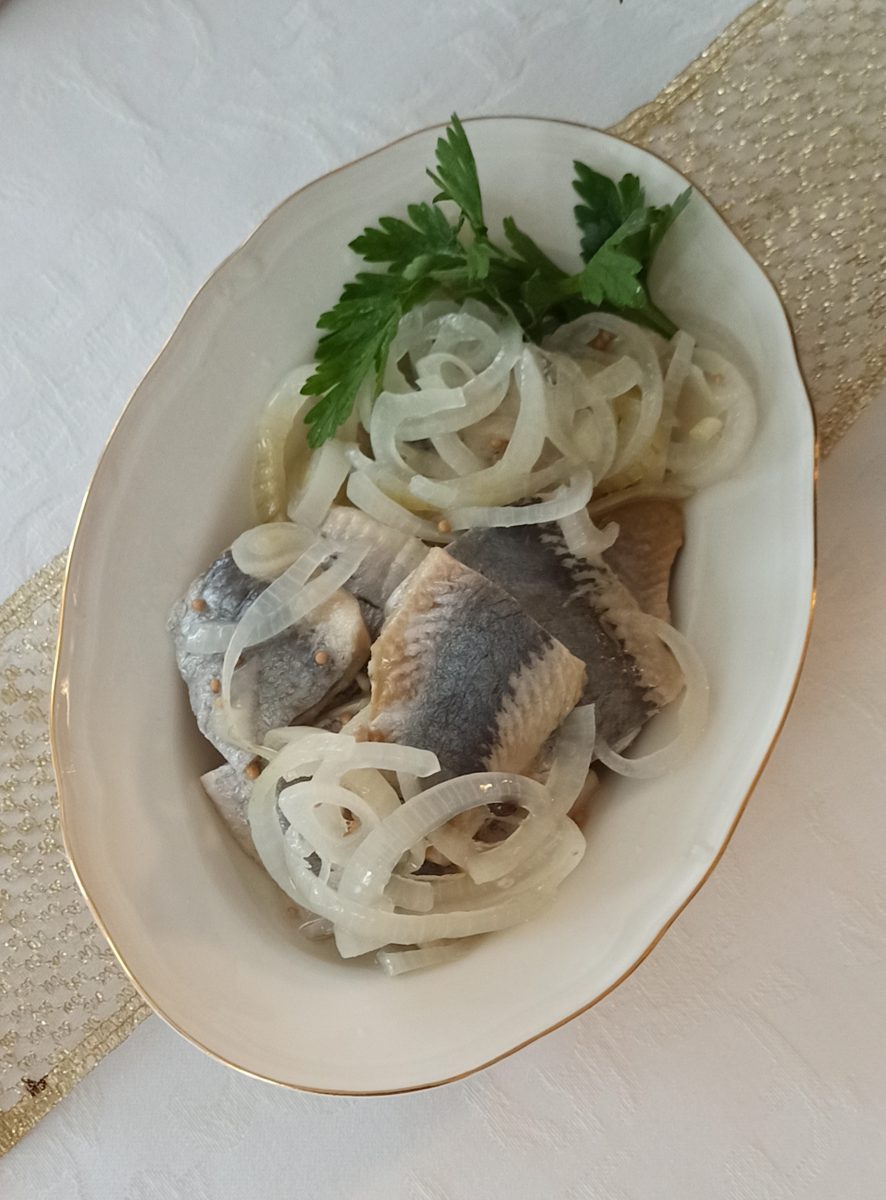
Serve chilled, with the onions from the marinade, with whole grain bread or with boiled potatoes. Remove pieces with a clean fork so the rest in the jar remains covered with oil.
Photos