The story behind the recipe
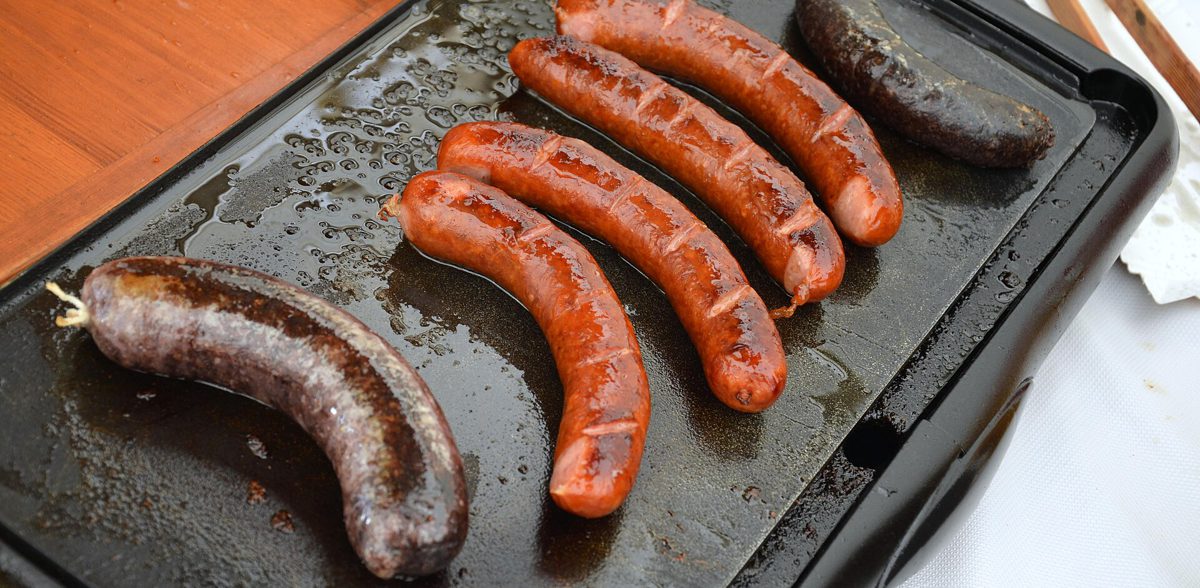
Kaszanka, also known as kiszka, kiszka kaszana, colloquially krupniak, and in Silesia krupniok or kaszok, is a sausage made from buckwheat or barley groats, pork blood, and offal: liver, lungs, skin, and fat. It is seasoned with salt, onions, pepper, and marjoram, and after being stuffed, it is scalded. It was made at home during pig slaughtering when fresh blood was available. The entry "Kaszanka po kaszubsku" on the List of Traditional Products cites a publication from the Gdańsk museum, which states that pigs were usually slaughtered once or twice a year, at Christmas and Easter. On a daily basis, kaszanka was a cheap and ordinary food.
Its exact origins are uncertain. Jan Chryzostom Pasek describes in his "Memoirs" a trip to Denmark in 1658, where blood mixed with barley or buckwheat was stuffed into intestines, boiled, and served as a "great delicacy," indicating that he encountered it abroad. Polish Wikipedia states that kaszanka was not known in Poland until at least the 17th century and likely came from Germany through Silesia. English Wikipedia points to Germany or Denmark but notes that this claim requires better sourcing.
On the List of Traditional Products of the Ministry of Agriculture, there are three types of kaszanka: "Kaszanka" from Biała Góra in Łódź (entry from 2013), "Kaszanka rychtalska" from Greater Poland (2009), whose history traces back to the Rychtal butchers from 1628, who shared raw filling with neighbors for frying, and "Kaszanka po kaszubsku" with barley groats (2009). Since 2016, "Krupnioki śląskie" have been protected by the European Union as a protected geographical indication, while the name "kaszanka" itself is not protected. The first Krupniok Festival took place on May 28, 2011, in Nikiszowiec, Katowice.
Ingredients
Kaszanka z cebulą
-
600 g buckwheat or barley kaszanka (about 150 g per person; for large appetites 800 g)
Abroad: USA: Polish kishka or buckwheat kishka (not Jewish kishke / stuffed derma); UK and Ireland: as a last resort, black pudding; Germany and Austria: Schlesische Grützwurst or Grützblutwurst - 400 g onion (3 medium, sliced or diced)
-
30 g lard (about 2 tablespoons; or clarified butter or canola oil)
Abroad: lard; Germany: Schweineschmalz -
1 tbsp (15 ml) dried marjoram (heaping)
Abroad: dried marjoram; Germany: Majoran - black pepper (freshly ground)
- salt (only after tasting, if needed)
- 1 clove garlic (not necessary, can add 2)
Do podania
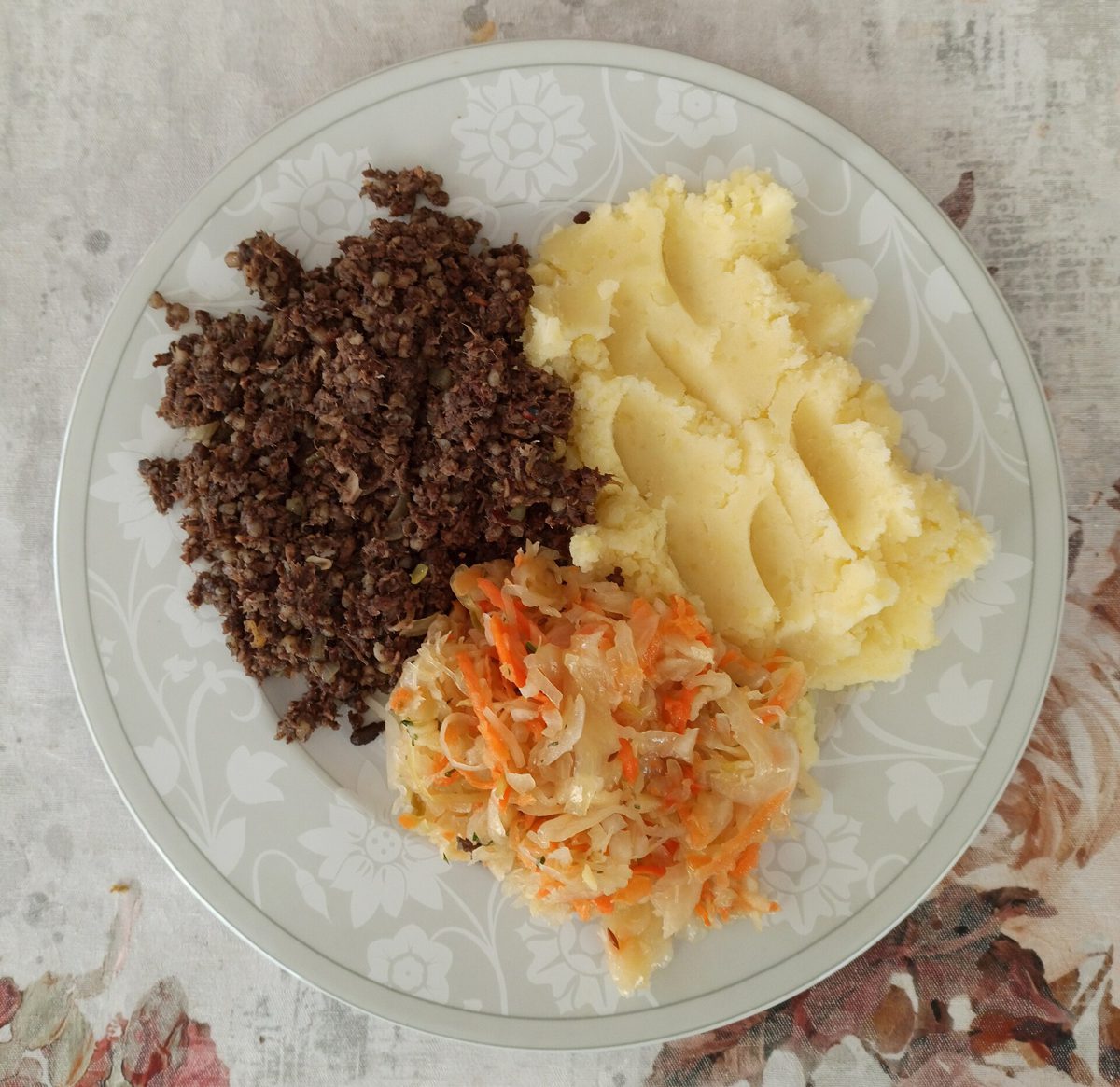
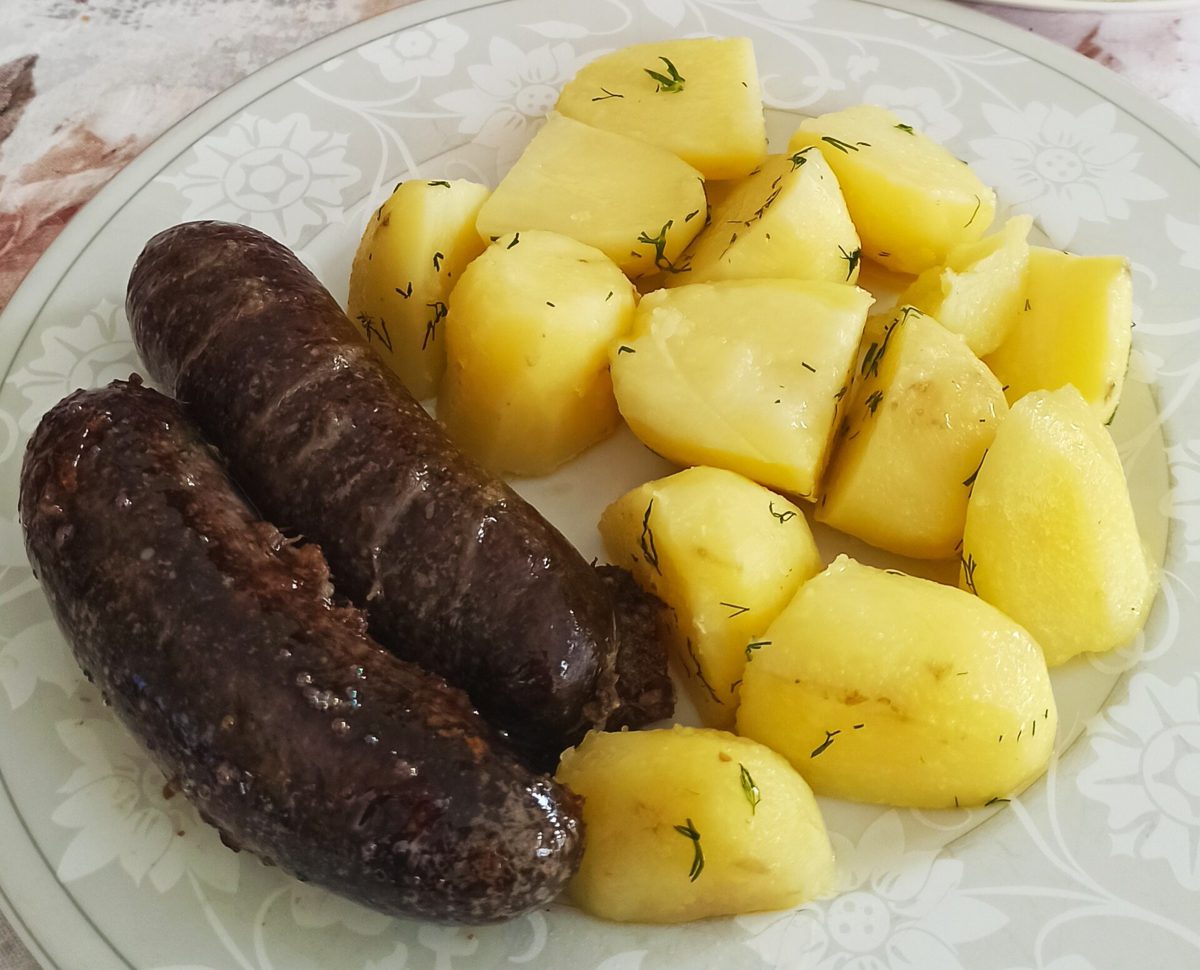
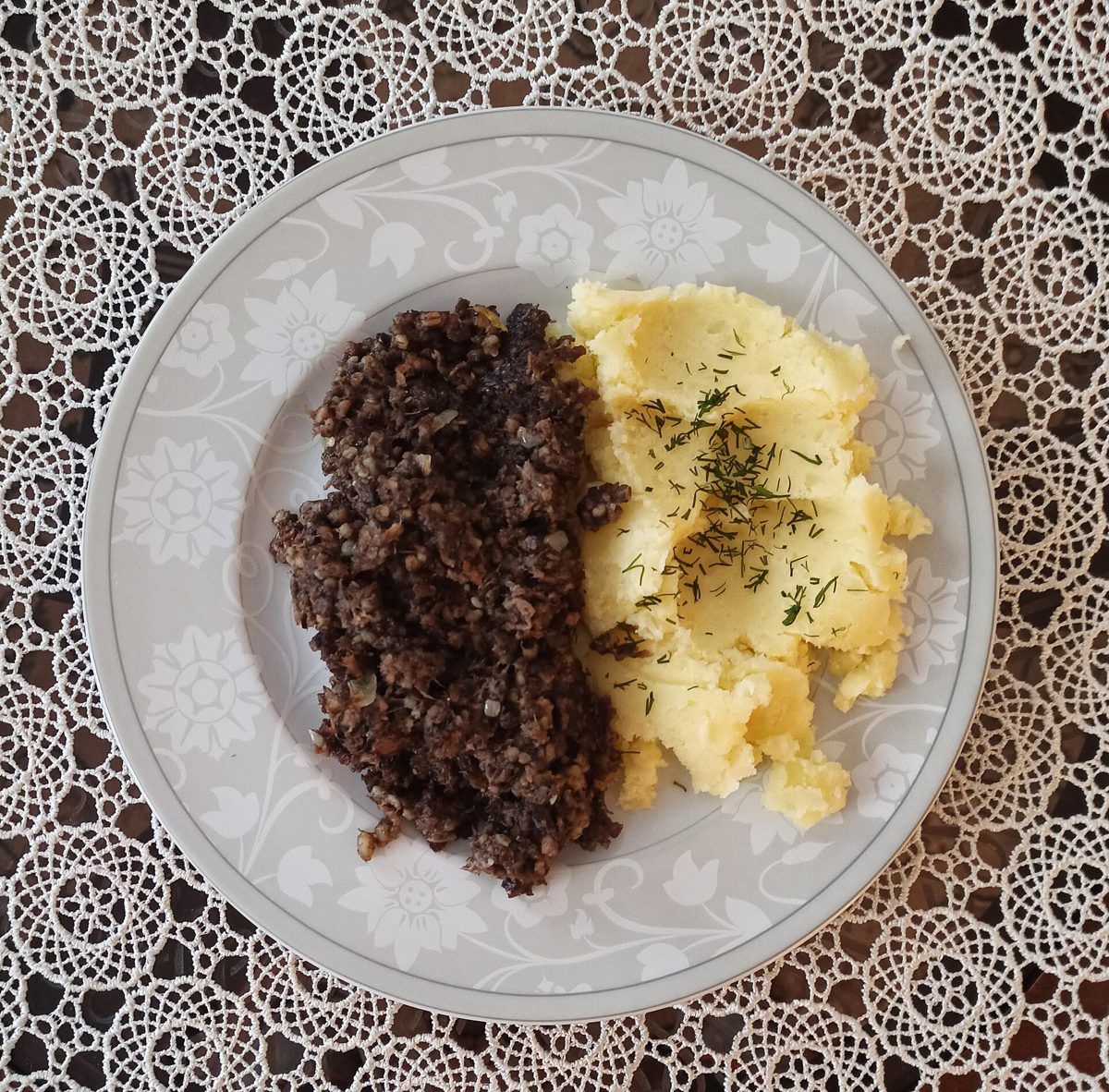
- boiled potatoes with dill or purée
-
sauerkraut or salad made from sauerkraut
Abroad: sauerkraut; Germany: Sauerkraut - pickles
Method, step by step
-
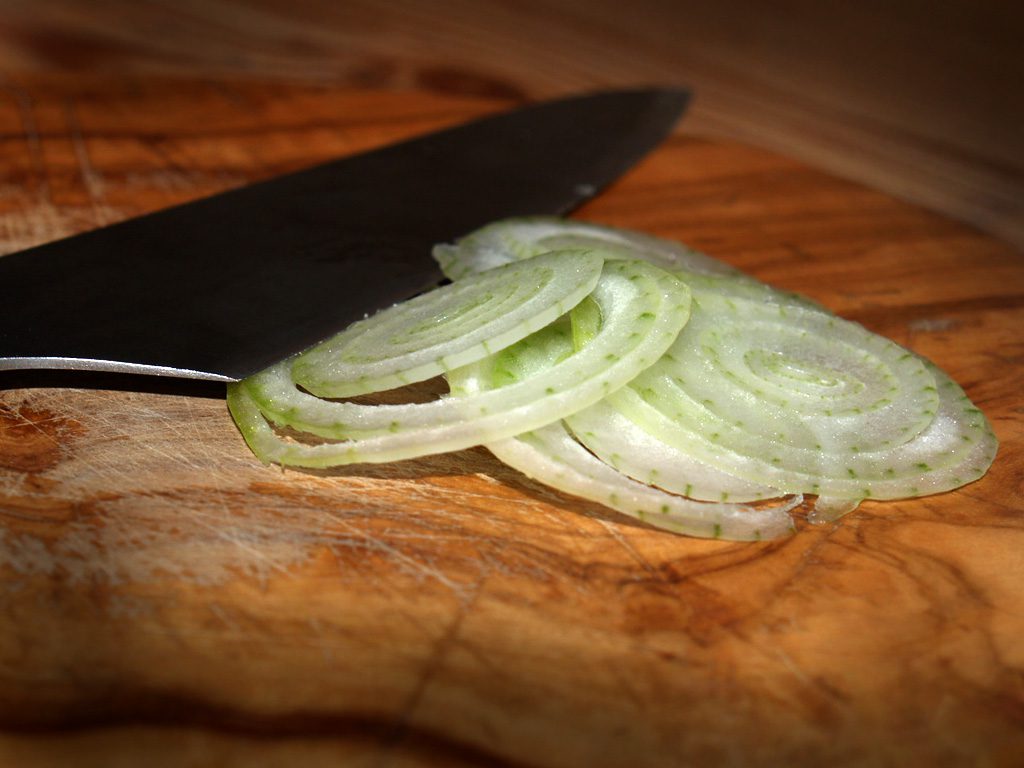
Peel the onion, cut it in half, and slice it thinly or dice it.
-
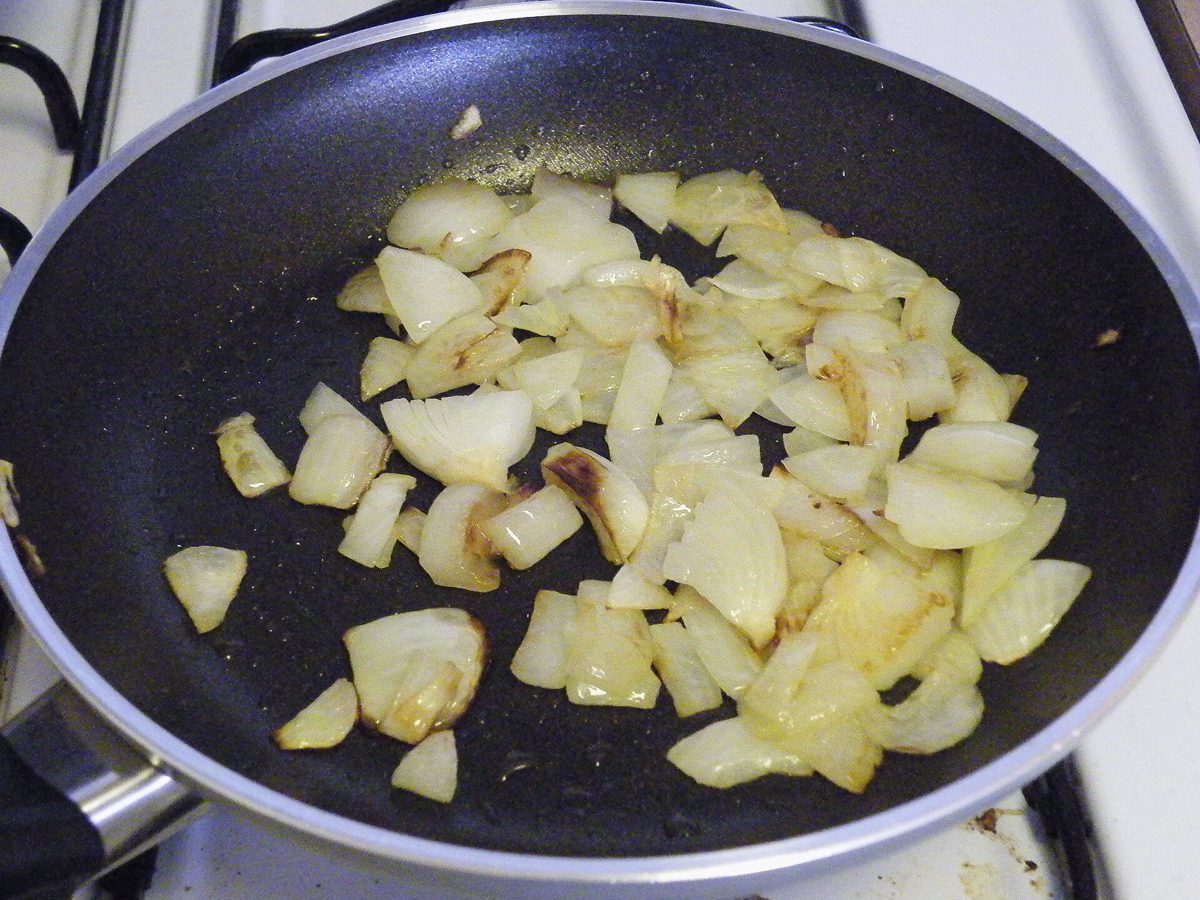
In a large skillet, preferably cast iron, melt the lard over medium-low heat. Add the onion and sauté it slowly, stirring often, for several minutes until it is soft, golden, and sweet. Do not rush this with high heat.
-
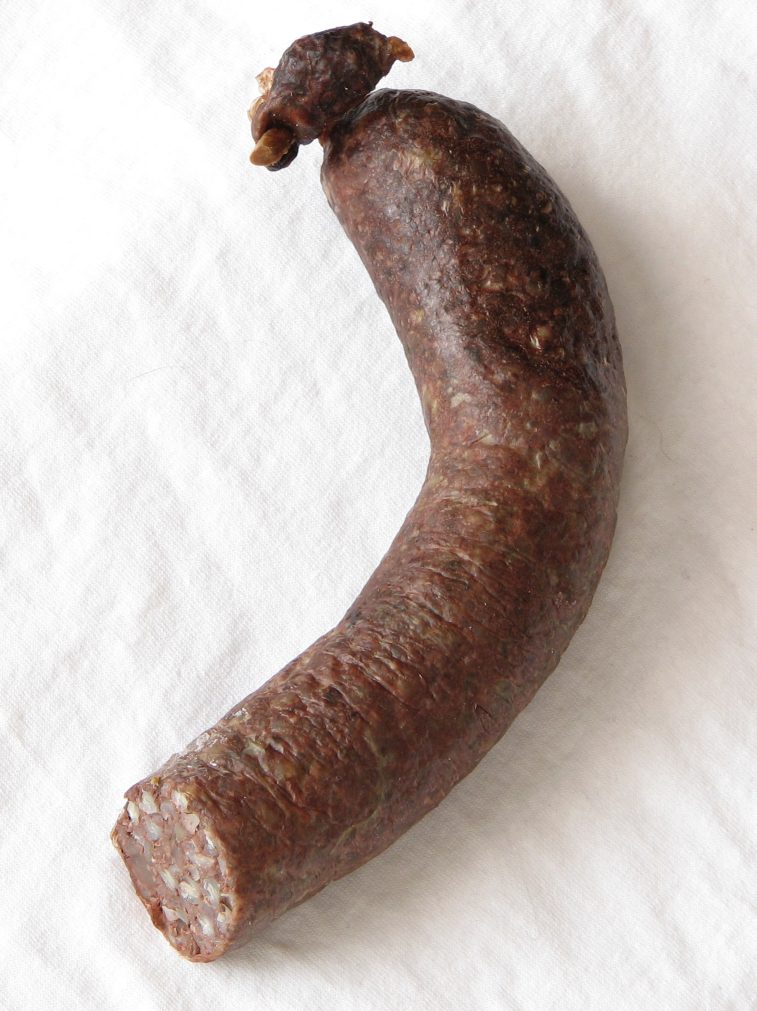
In the meantime, cut the casing of the kaszanka lengthwise and remove it.
-
Break the kaszanka into pieces with a fork.
-
Add the kaszanka to the onions, and if using garlic, add it chopped. Fry for about 10 minutes over medium heat, stirring and breaking up the kaszanka with a wooden spoon until it combines with the onions into one mass.
-
Sprinkle with marjoram rubbed between your fingers and freshly ground pepper. Taste and only then, if needed, add salt.
-
Spread the mixture evenly in the skillet and fry for another 3 minutes with almost no stirring to let the bottom brown slightly.
-
Serve immediately, hot, with boiled potatoes with dill or purée, with sauerkraut or salad, and pickles.
-
For the version in casing, instead of steps 3–7: dry the kaszanka and prick it with a toothpick in several places. Sauté the onion until translucent over low heat, without browning, place the kaszanka on the onions or beside them, and fry for about 5 minutes on one side. Season, gently turn it with tongs or a wooden spatula, and fry for another 3–5 minutes. Serve with the onions on top.
Photos