The story behind the recipe
The name comes from 'krup', which means groats, primarily barley. As Sylwia Stokowska from the University of Białystok shows, in the 16th century, a 'krupnik' referred to a person who made or sold groats. The 1854 Lindy dictionary provides both meanings: that of 'someone who makes or sells groats' and 'soup made with groats'. 20th-century dictionaries describe krupnik as a soup made with vegetable or meat broth, thickened with groats, most often barley. According to Polish Wikipedia, dried mushrooms are usually added to it.
Zygmunt Gloger in the 'Encyclopedia of Old Poland' writes that krupnik is 'a Polish soup cooked with lamb or beef and pearl groats'. The same word was also used for a hot vodka with honey and spices, which townspeople and poorer nobility drank instead of punch. Lucyna Ćwierczakiewiczowa in '365 Dinners for 5 Zloty' (1871) advised cooking krupnik on the day when roast or roulades are served, using a light broth made from scraps and bones. She cooked the groats separately with a lot of butter, as cooking them directly in the broth results in a less creamy and less white soup. Krupnik was also known in the cuisine of Polish Jews: according to 'Rzeczpospolita', barley was one of the basic ingredients, and krupnik was called 'szlajmzupe'.
Since 2014, 'Niwiski krupnik' from Podkarpacie has been on the ministerial List of Traditional Products. The Niwiska commune used to lie in the Sandomierz Forest, where barley was abundant, and older residents recall how barley was dried on the stove and hulled in hand mills. There, krupnik is cooked on a pork bone with dried mushrooms and their broth, slowly over low heat, and when bones were lacking, a teaspoon or two of butter was added. The soup should be 'neither too thick nor too thin' and tastes best on the day it is made.
Ingredients
Broth
-
500 g chicken thighs (2 pieces, or 400 g of pork ribs)
Abroad: chicken thighs or chicken legs - 2 l cold water
- 80 g onion (1 small, halved; can be charred on a dry pan)
- 1 pc bay leaf
- 3 pcs allspice
-
3 pcs dried mushrooms (caps of porcini or boletus) (not necessary; about 5–8 g, soaked in 150 ml of boiling water)
Abroad: dried porcini; Germany: getrocknete Steinpilze
Soup
-
80 g pearl barley (or medium or country barley)
Abroad: USA, Canada, UK, Australia: pearl barley (pearled barley), instead of country barley hulled barley or pot barley; Germany and Austria: Perlgraupen or mittlere Graupen -
400 g potatoes (3–4 medium)
Abroad: USA: e.g., russet - 120 g carrot (1 piece)
-
80 g parsley root (1 piece)
Abroad: parsnip (pasternak); Germany: Petersilienwurzel, in a bunch of Suppengrün -
50 g celeriac
Abroad: celeriac (USA: celery root) or 2 stalks of celery - 50 g leek (not necessary)
To taste
- 1 tsp (about 6 g) salt (a flat teaspoon, added at the end)
- ¼ tsp (1.3 ml) ground black pepper
- 2 tbsp (30 ml) chopped dill or parsley
- 10 g butter (not necessary)
Method, step by step
-
If you are adding mushrooms, soak them the day before or pour 150 ml of boiling water over them before you start cooking the broth.
-
Place the meat in a large pot (at least 3.8 l), cover with 2 l of cold water, add the bay leaf, allspice, and onion. You can char the onion first, cut side down on a dry pan, which will make the broth darker and more aromatic. Bring to a boil, skim off the foam, and reduce the heat so that the broth barely simmers. Cook the chicken for about an hour, the ribs for up to an hour and a half.
-
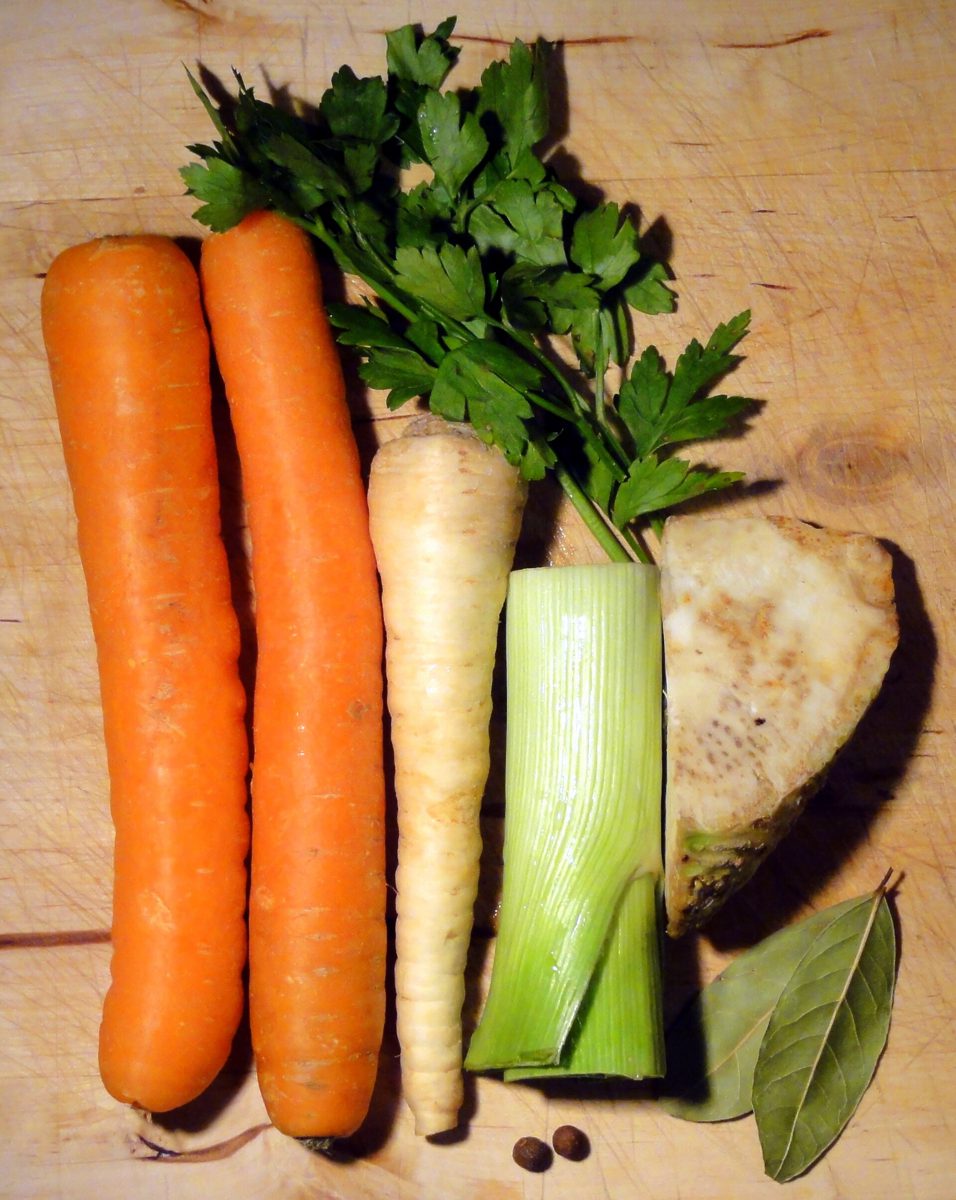
In the meantime, peel the potatoes, carrot, parsley, celeriac, and leek if using.
-
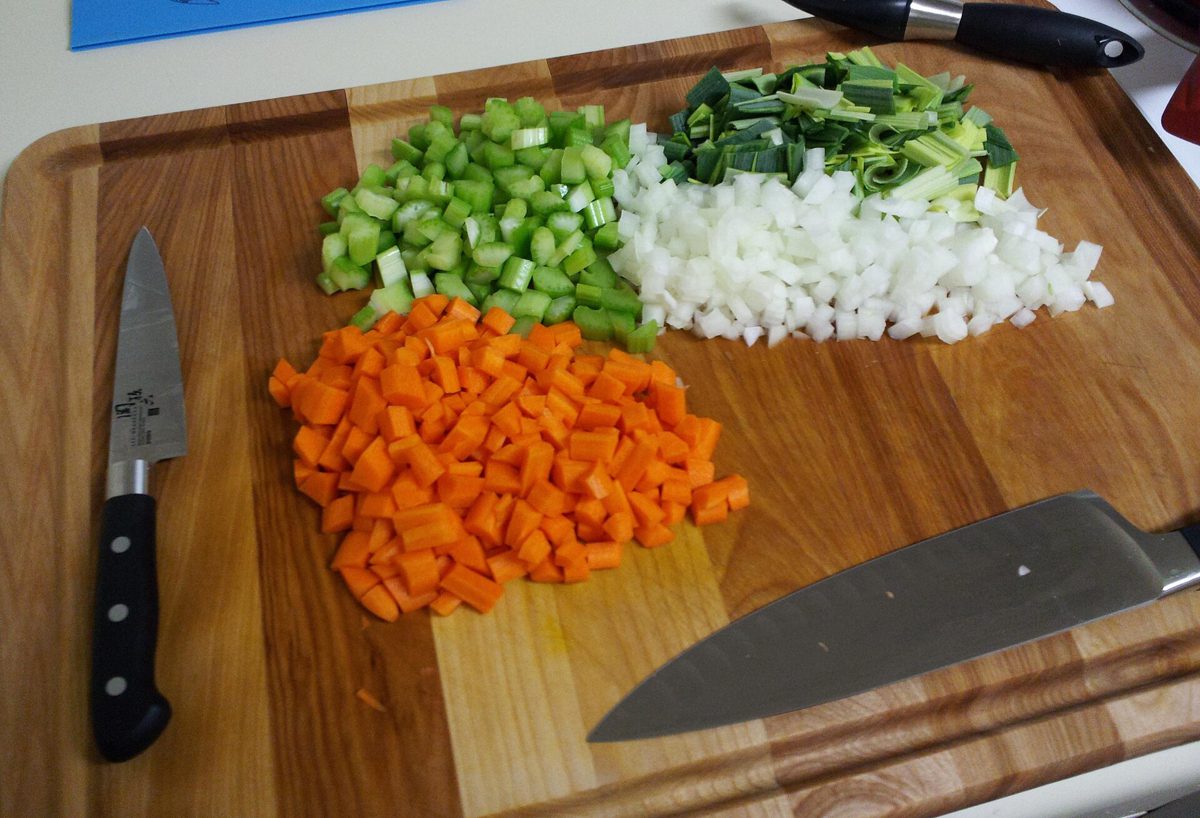
Cut the potatoes into larger cubes, the carrot and parsley into smaller pieces, the celeriac finely, and the leek into half-rings. If the potatoes need to wait, keep them in cold water to prevent discoloration.
-
Remove the meat from the broth, and discard the onion. Shred the meat from the bones, discard the skin and cartilage, cut it into pieces, and set aside.
-
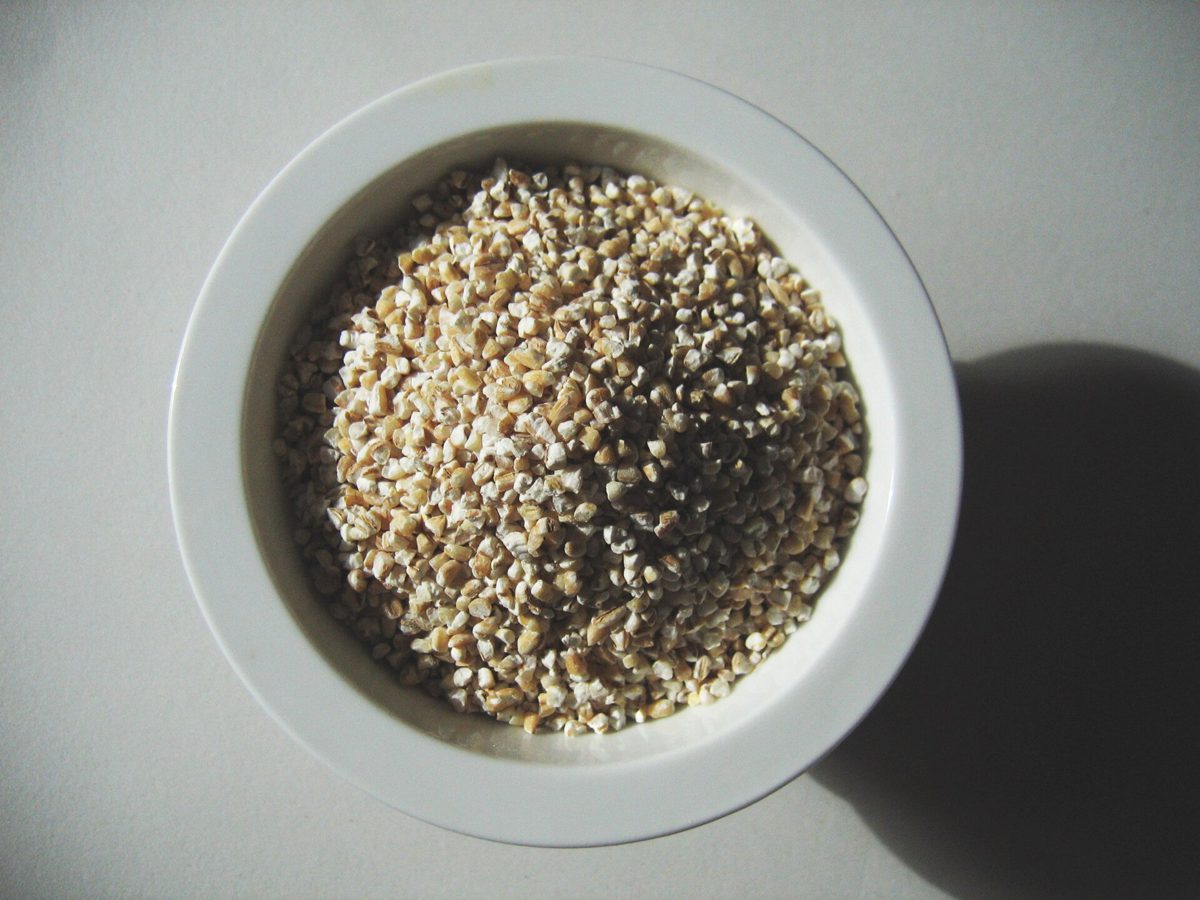
Add the barley to the broth (you don’t need to rinse it, the starch will thicken the soup), add the potatoes, remaining vegetables, and mushrooms along with the soaking water, leaving the sand at the bottom. Cook covered over low heat for about 30 minutes, until the barley and potatoes are tender.
-
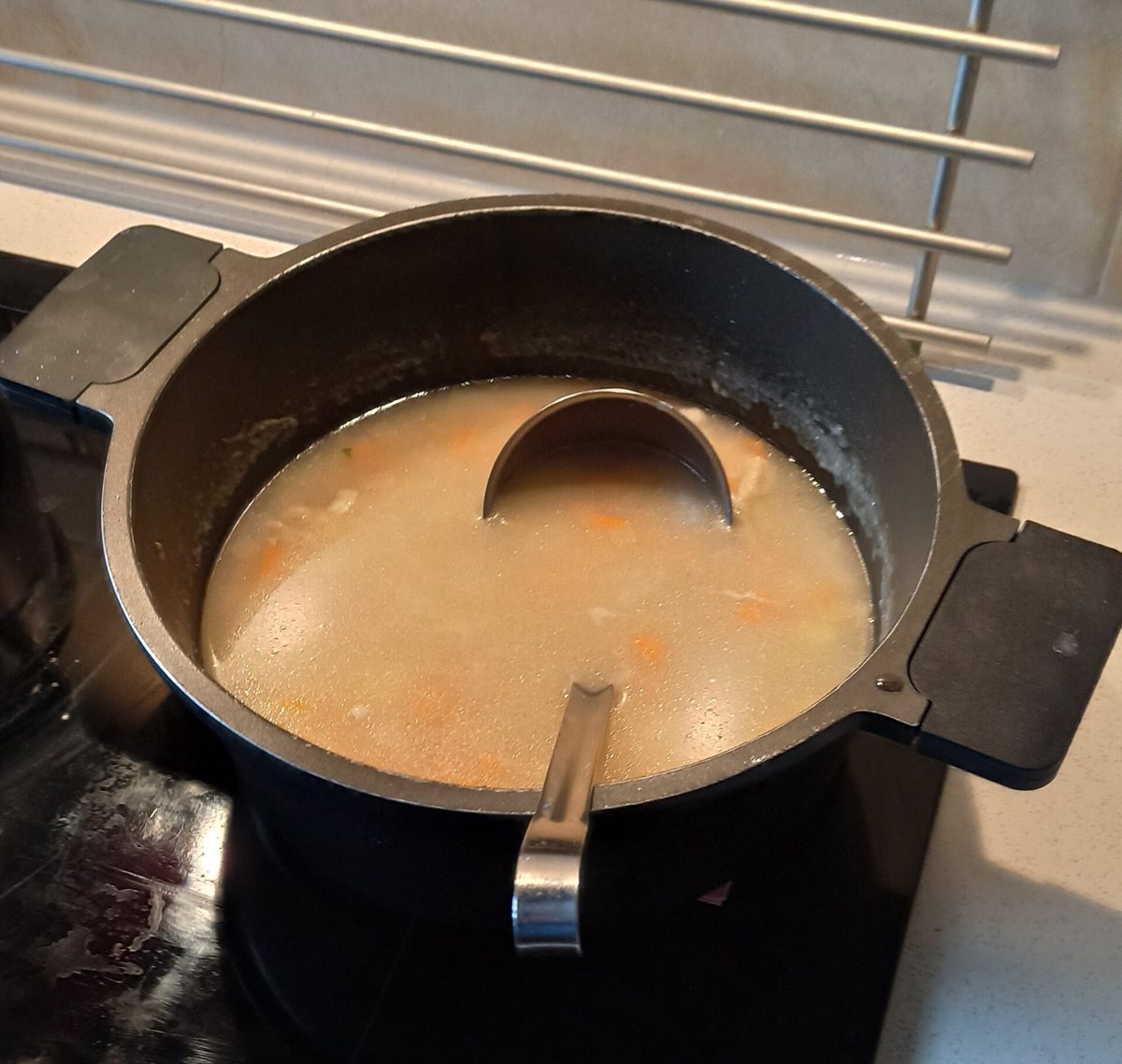
Return the meat to the pot, add the dill and, if desired, the butter. Cook for another 5 minutes. Only now season with salt and pepper.
-
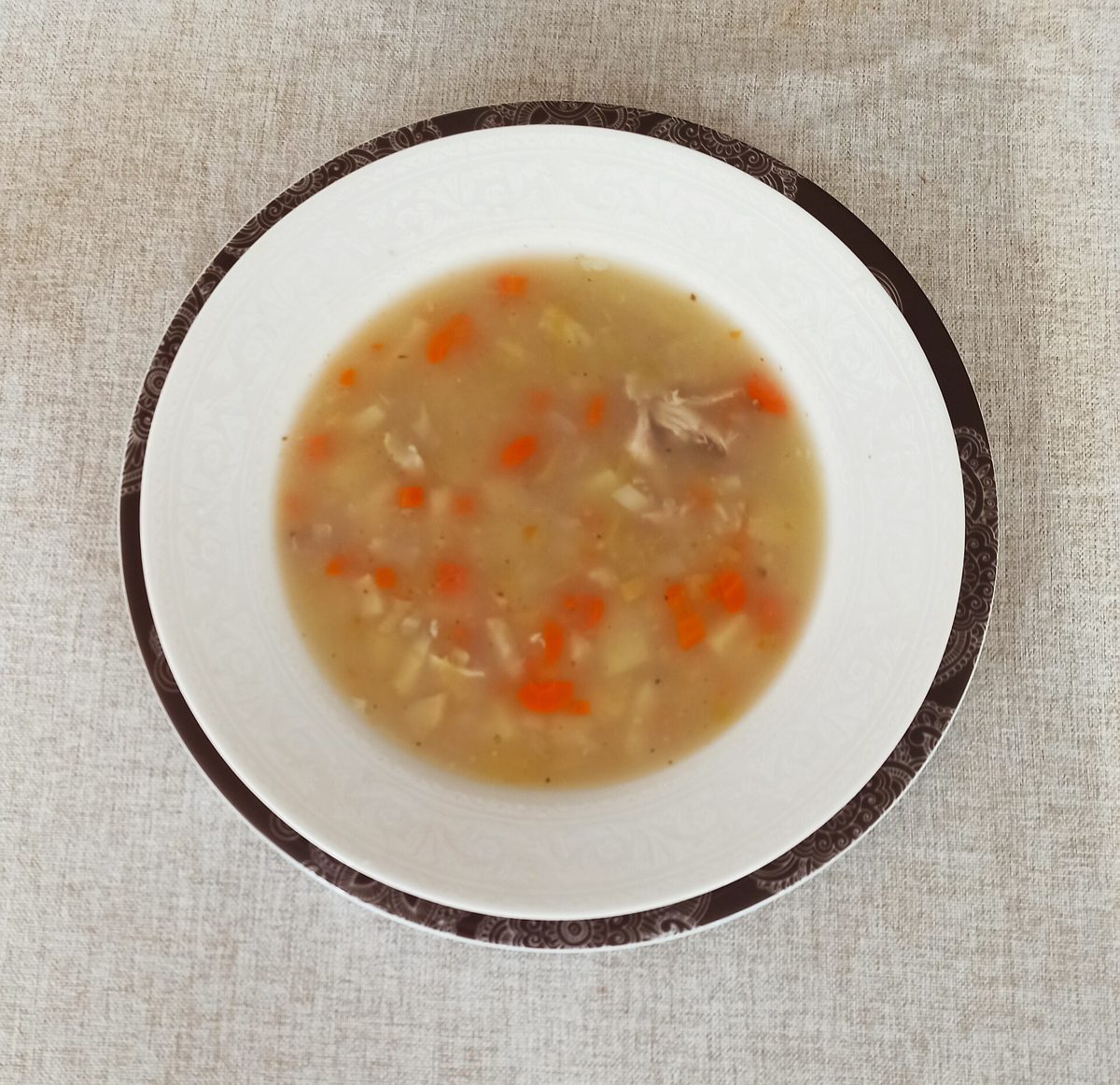
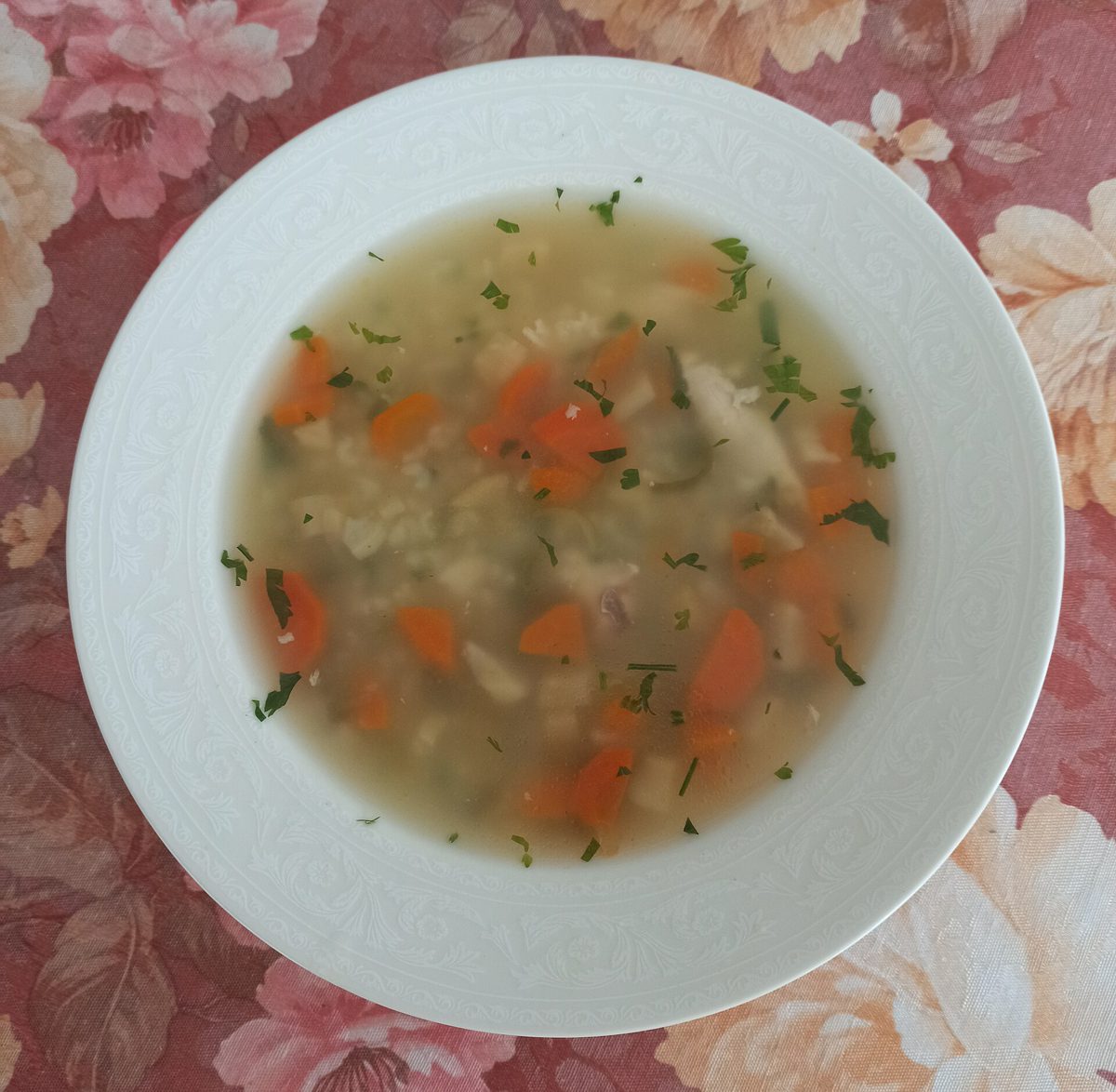
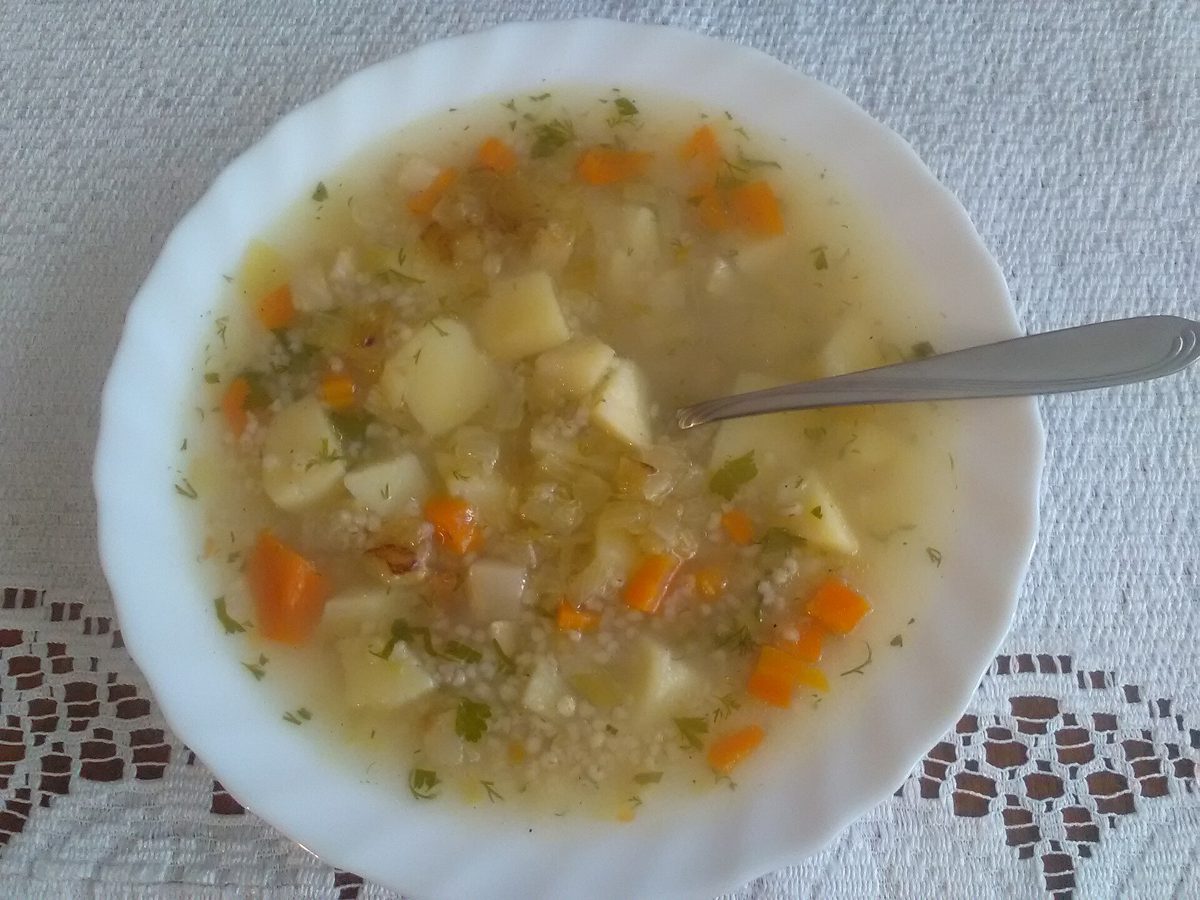
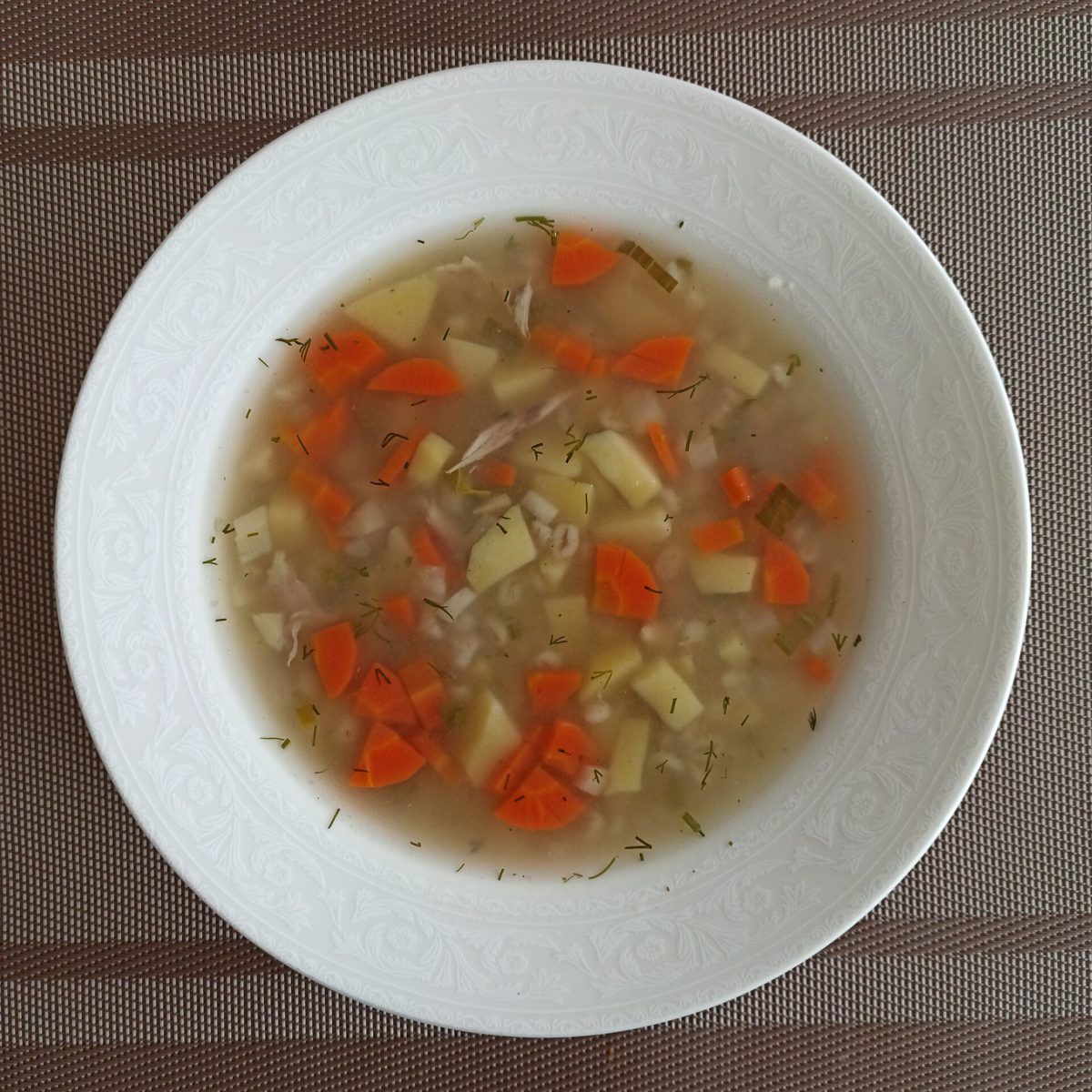
Serve hot, garnished with parsley on the plate and with bread.
Photos