The story behind the recipe
According to Polish Wikipedia, the idea of pierogi likely came from China and reached Poland through Ruthenia. It is said that they were known in Poland as early as the 13th century, and the word itself became established in Polish in the 17th century. English Wikipedia traces it back to the Proto-Slavic *pirъ*, meaning 'feast'. Legend has it that pierogi were brought from Kyiv by Saint Jack Odrowąż, and there is a saying associated with pierogi: 'Saint Jack with pierogi, pray to God for us.' In 'Compendium ferculorum' by Czerniecki from 1682, there are already many recipes for pierogi, though mostly sweet ones.
Pierogi z mięsem has long been a way to give a second life to meat from broth. Lucyna Ćwierczakiewiczowa wrote in '365 obiadach za 5 złotych' (1871): 'The leftover meat from broth is best used for pierogi.' She added sautéed onions in butter, dried mushrooms, breadcrumbs, and eggs to the minced meat, and cut the dough with 'a cutter or a glass,' as a cup gives 'too large' shapes. She also advised frying the cooked ones in clarified butter or lard, 'and they are excellent.' In the same book, 'pierogi ruskie z mięsem' refers to something different: a large baked pie made from yeast or buttery dough. Elżbieta Kiewnarska in 1931 minced 40 dekagrams of meat with 10 dekagrams of lard, adding a tablespoon of flour and half a cup of broth to the filling 'so that it does not fall apart when filling.' She instructed to 'pour melted lard with onions over the finished pierogi.' Wincenta Zawadzka in 'Kucharka litewska' (1913 edition) seasoned similar dumplings with marjoram.
Pierogi z mięsem also traveled with Poles across the ocean. The book 'Kuchnia Polek w Ameryce', published in 1920 in Milwaukee by Helena Staś along with readers of 'Kuryera Polskiego', collects recipes adapted 'to local incomes and products.' In the recipe 'Pierogi z mięsa', we read: 'For four people, you need about half a pound of any cooked meat,' and the dough is cut into squares and folded 'diagonally.' According to English Wikipedia, the first documented sale of pierogi in America was recorded in 1928 at the Marton House Tavern in Cleveland. After World War II, they were made for church fairs, and in the 1960s, they made their way into supermarket freezers in the USA and Canada.
Ingredients
Dough (about 40 pierogi)
-
400 g all-purpose flour (type 450 or 500)
Abroad: USA and Canada: all-purpose flour; UK: plain flour; Germany: Type 405 or 550 - 200 ml hot water
- 40 ml oil (or 30 g melted butter)
- ½ tsp (about 3 g) salt
Filling
-
450 g cooked meat from broth (preferably beef: pręga, szponder, or karczek; can be half chicken or pork)
Abroad: USA and Canada: beef shank, short ribs, or chuck; UK: shin of beef; Germany: Suppenfleisch, Beinscheibe, or Querrippe - 200 g onion (finely chopped)
- 2 tbsp (30 ml) oil or lard (for sautéing the onion)
- 5 tbsp (75 ml) broth (from 4 to 6, enough to make the filling sticky)
- 1 pc carrot from broth (not necessary)
- ¾ tsp (about 4.5 g) salt
- ½ tsp (2.5 ml) ground black pepper
-
½ tsp (2.5 ml) dried marjoram (not necessary)
Abroad: Germany: Majoran - 1 tbsp (about 14 g) butter (only if the meat is very lean)
Topping
-
100 g bacon or lard (cut into small cubes)
Abroad: USA: salt pork or slab bacon; UK: unsmoked lardons; Germany: Speckwürfel - 1 pc onion (chopped)
- chives (not necessary)
Method, step by step
-
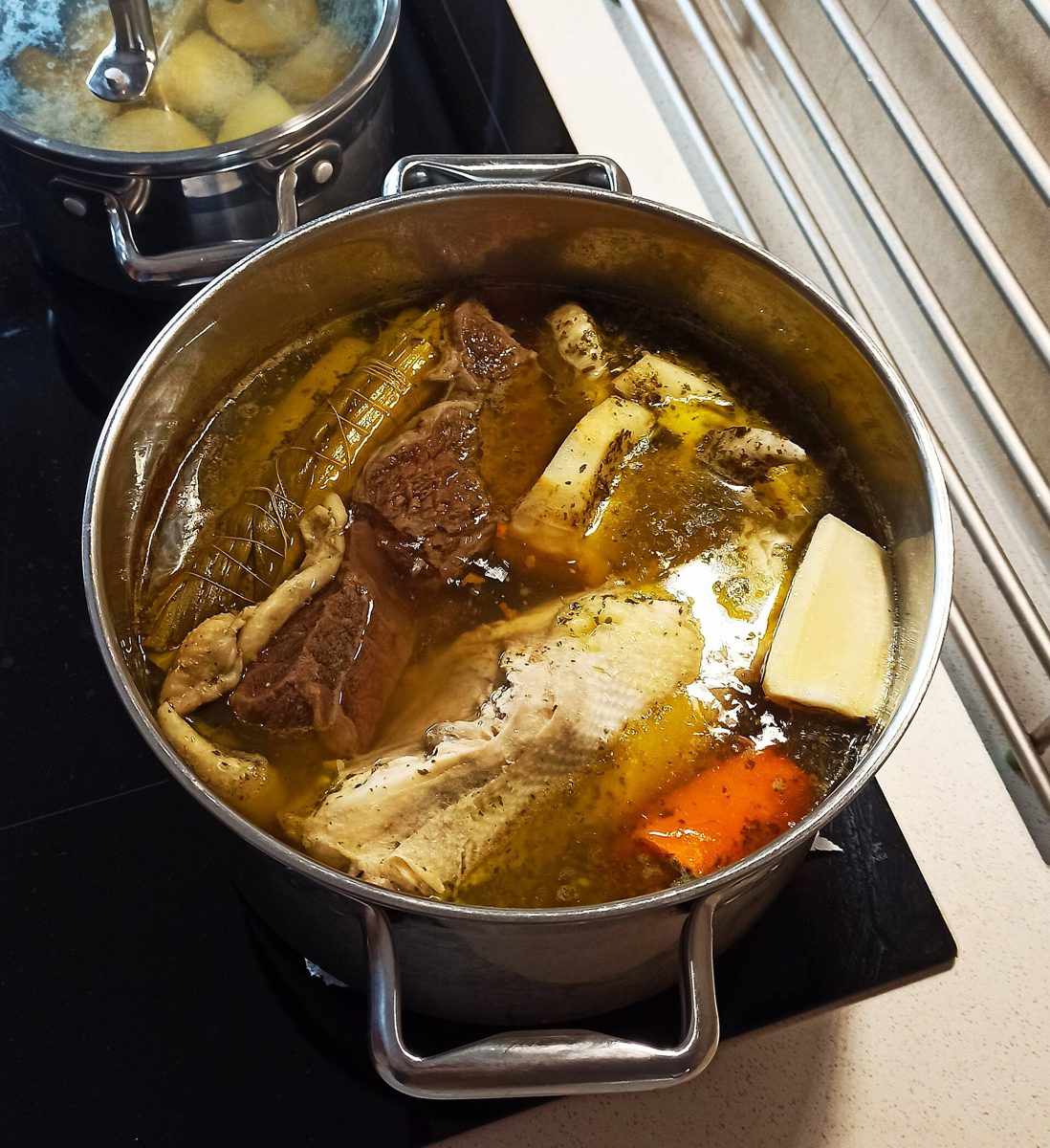
Cook the meat in the broth until very tender (beef takes about 2.5–3 hours). Remove it, discard the bones, but leave the soft tendons and skin.
-
Chop the onion for the filling and sauté it in oil or lard over medium heat for about 10 minutes until soft and translucent. Do not brown it, as the filling will become bitter.
-
Grind the meat in a meat grinder with medium or coarse holes together with the onion and the fat it was sautéed in, and the carrot from the broth if using. Add salt, pepper, and marjoram, then broth, one tablespoon at a time, until the filling starts to stick. Knead it by hand and taste: it should be distinctly salty and peppery. If it is dry, add butter.
-
Dough: in a bowl, mix the flour and salt, add the oil, and pour in the hot water. Stir with a spoon, and when the dough cools, knead it by hand until smooth and elastic. Wrap in plastic wrap and let it rest for 30 minutes.
-
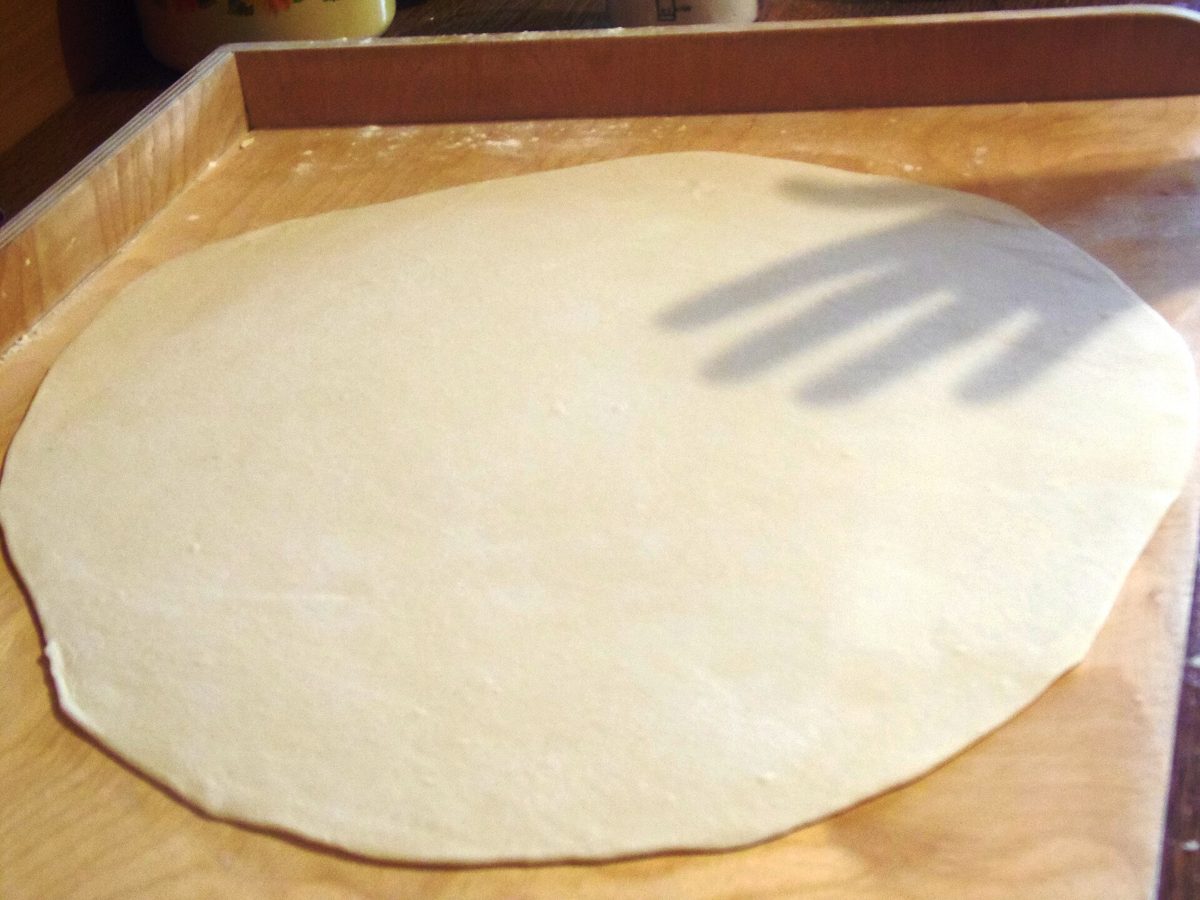
Roll the dough in batches to a thickness of about 2 mm, keeping the rest covered so it doesn't dry out. Cut out circles with a diameter of 6.5–7.5 cm.
-
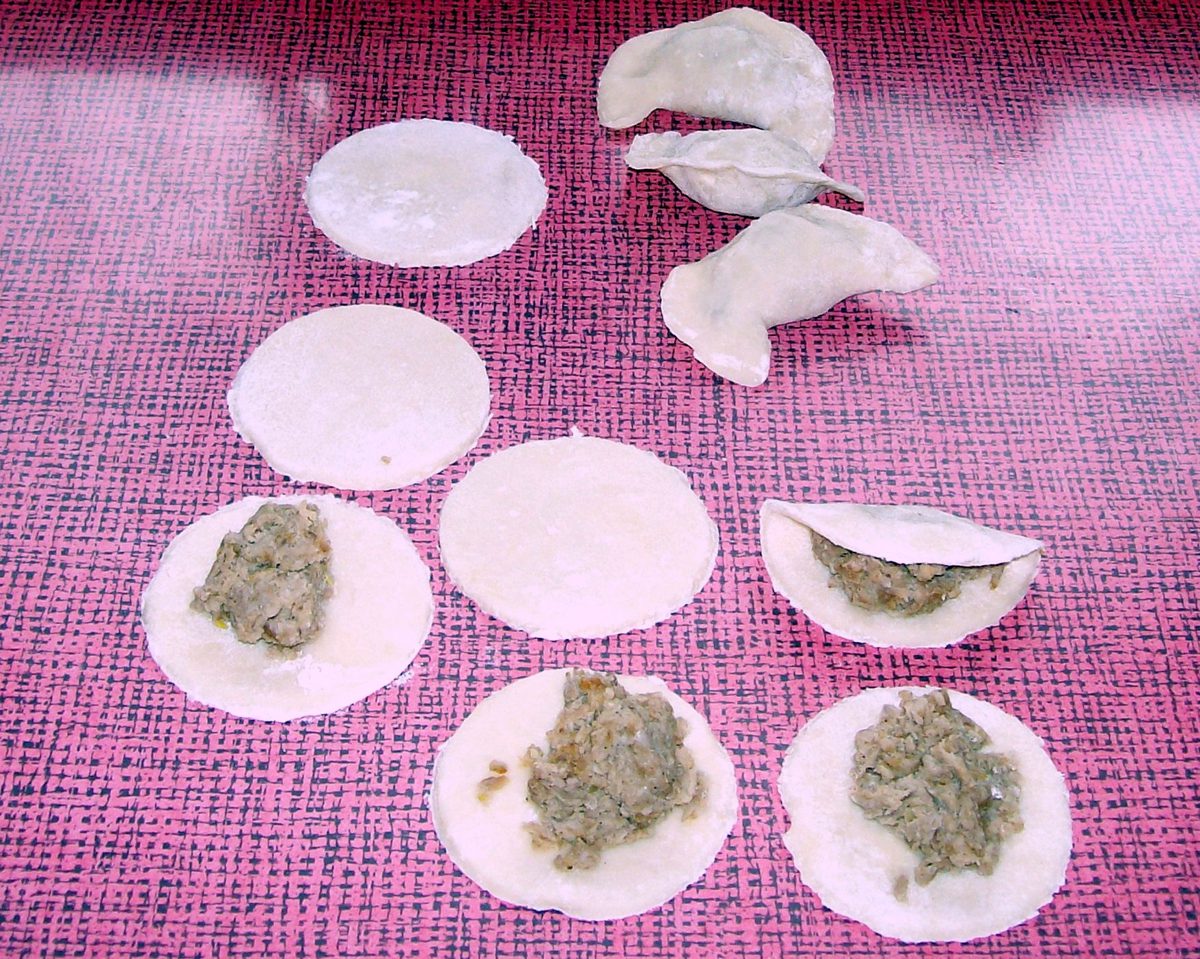
Place a heaping teaspoon of filling in the center of each circle, being careful not to dirty the edges. Fold the circle in half and pinch the edges tightly with your fingers.
-
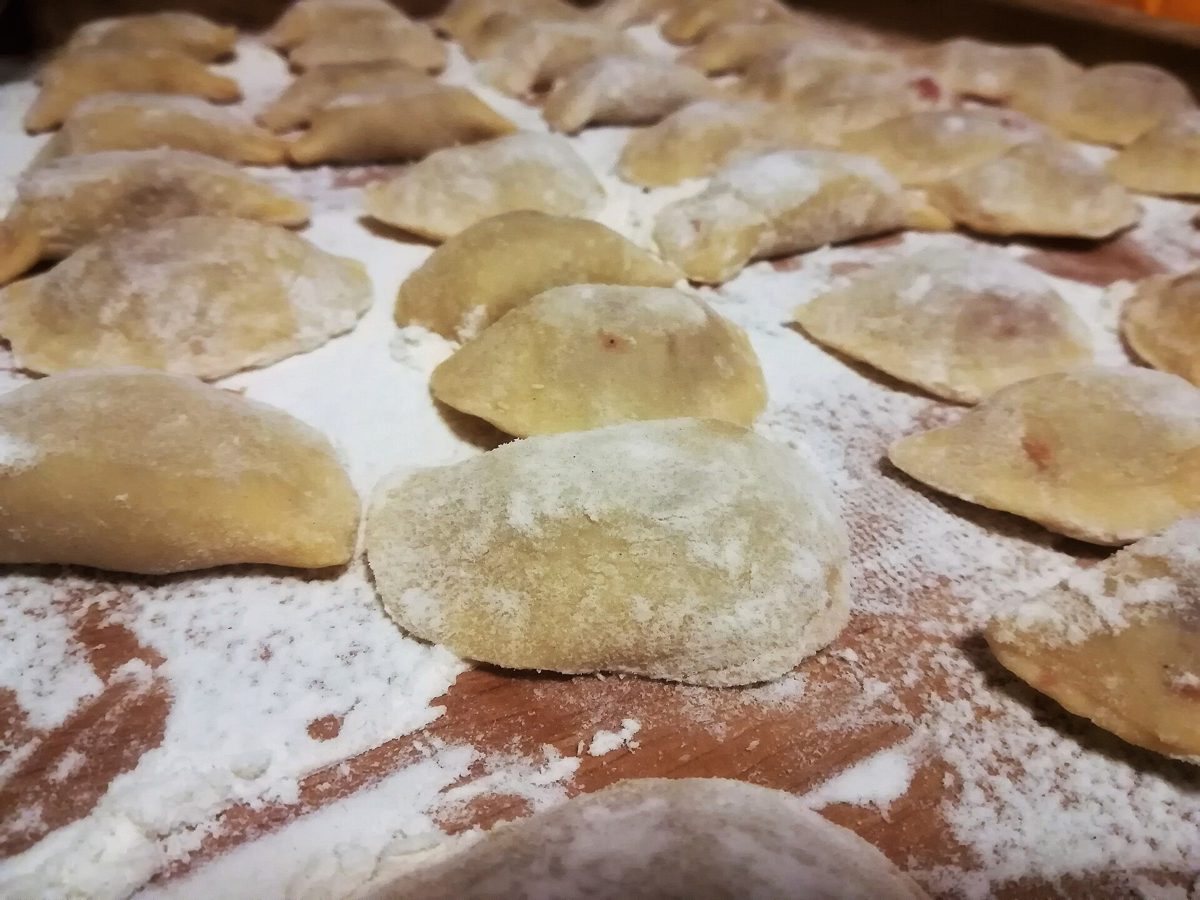
Place the formed pierogi on a floured board and cover with a cloth so they don't dry out. At this stage, they can be frozen.
-
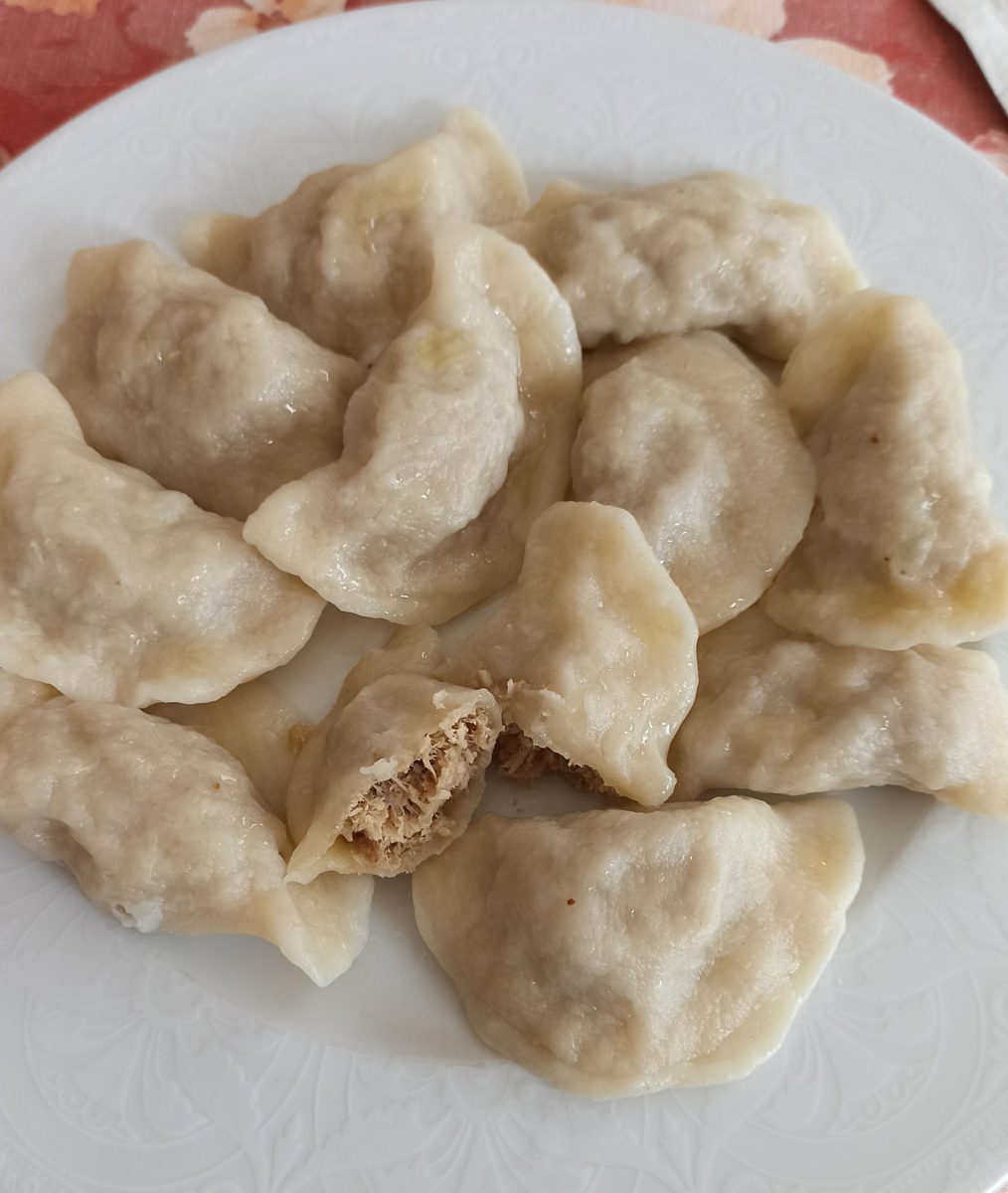
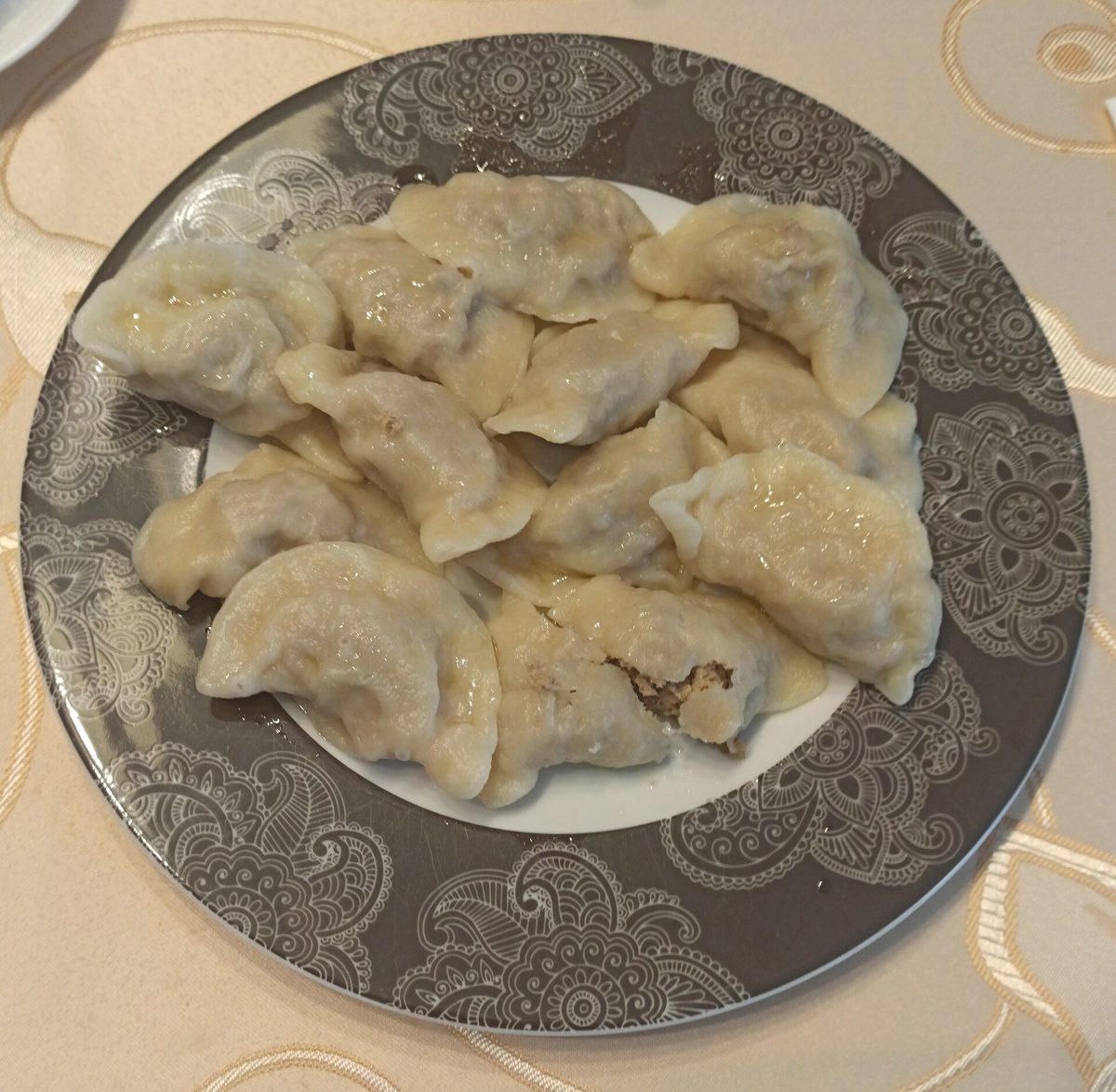
Bring a large pot of salted water to a boil and reduce the heat so the water is just gently bubbling. Drop the pierogi in batches of 15–20 and immediately stir gently so they don't stick to the bottom. After they float, cook for another 1–4 minutes until the dough is soft, and remove with a slotted spoon.
-
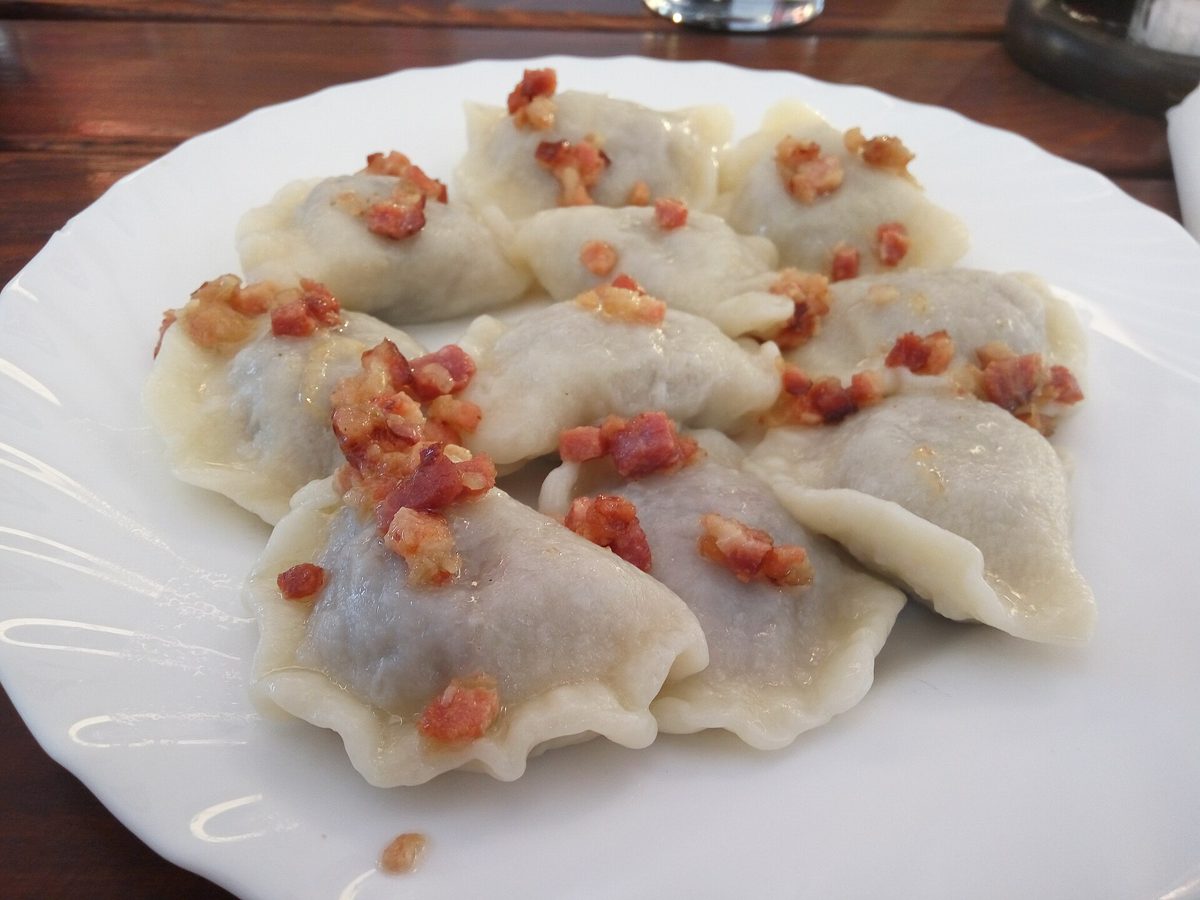
Topping: render the bacon or lard in a pan until crispy, add the chopped onion and brown it. Pour over the hot pierogi and, if desired, sprinkle with chives.
-
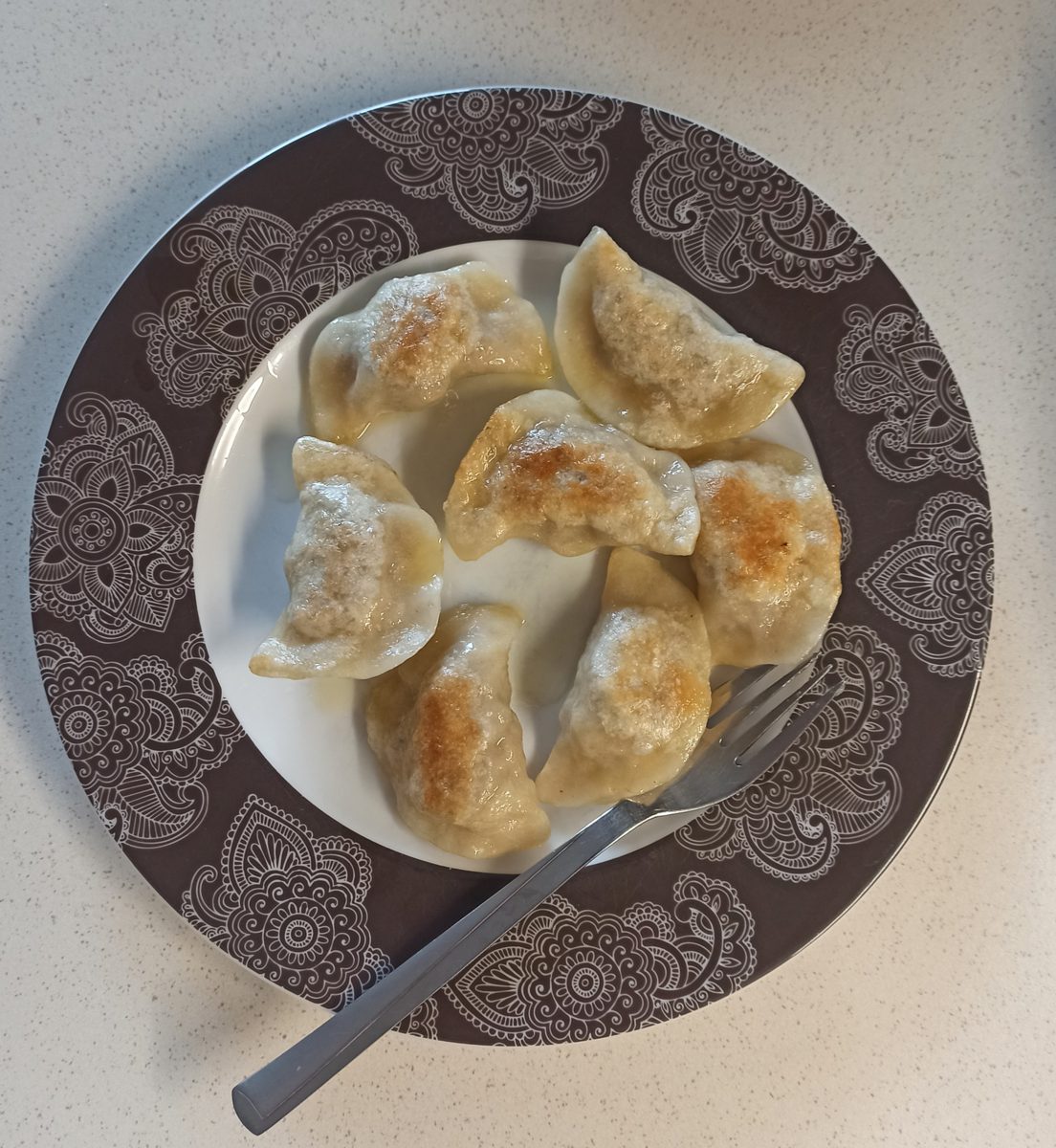
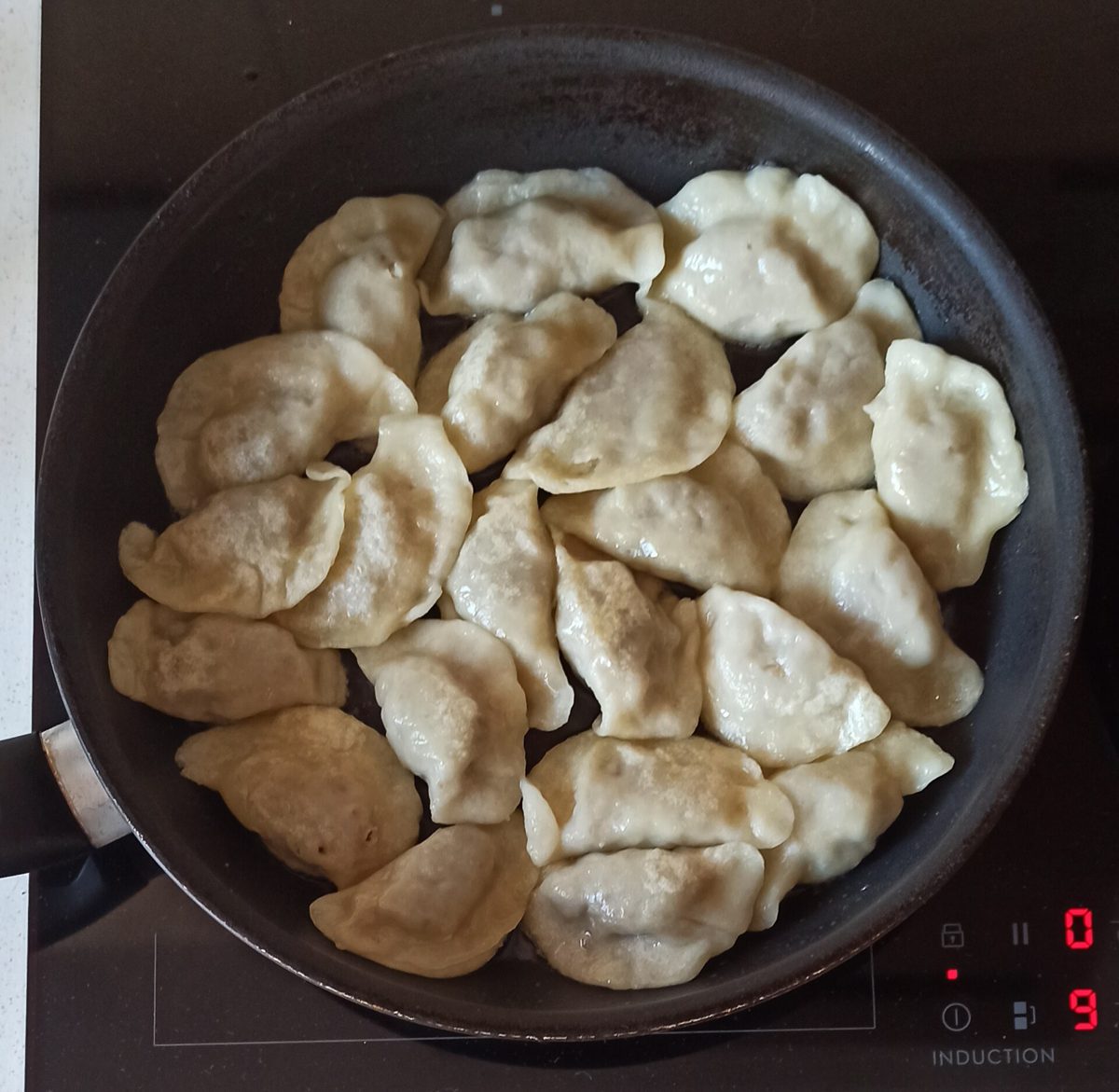
You can also sauté the cooked pierogi, including any leftovers, in clarified butter or lard until golden on both sides.
Photos