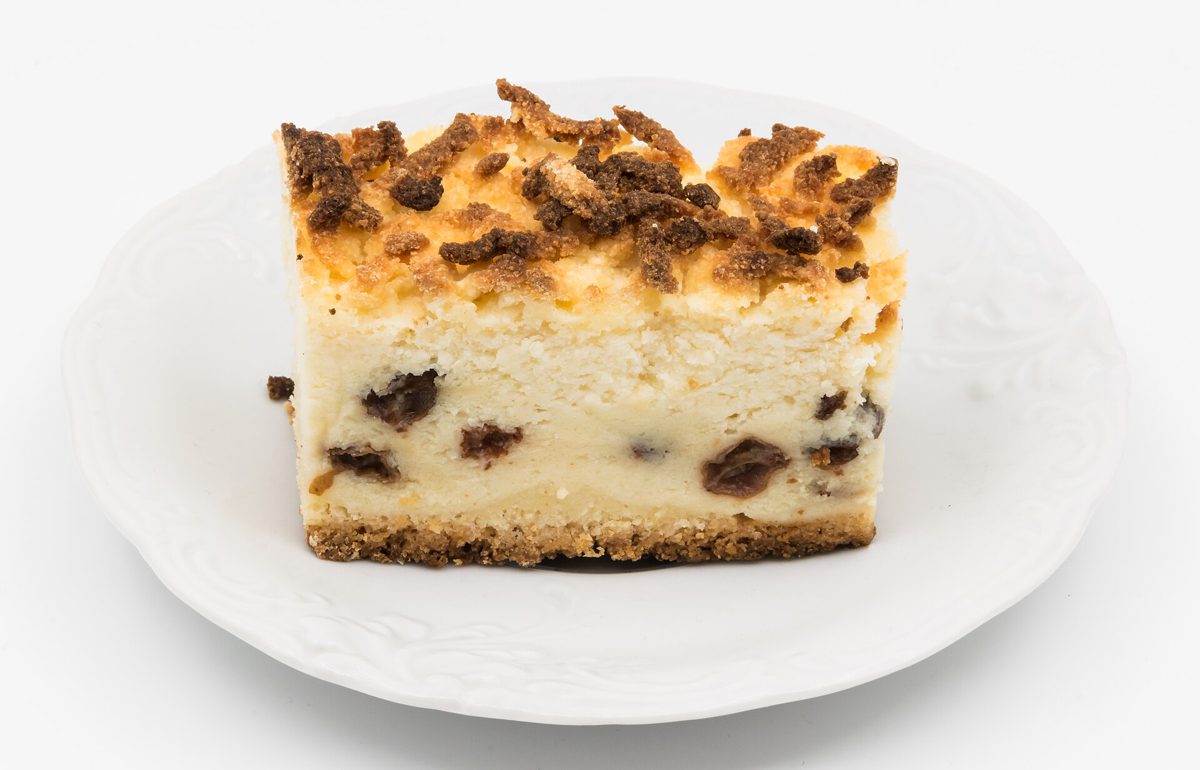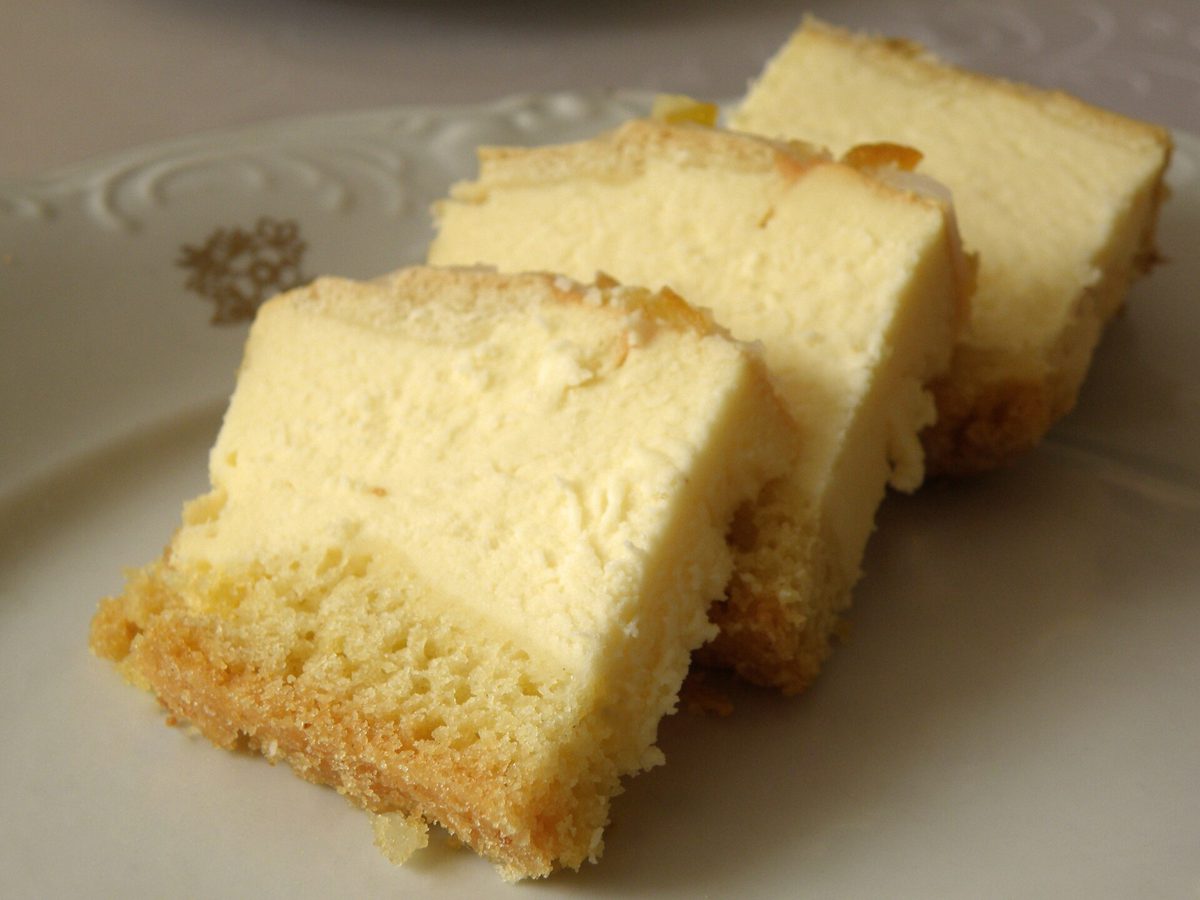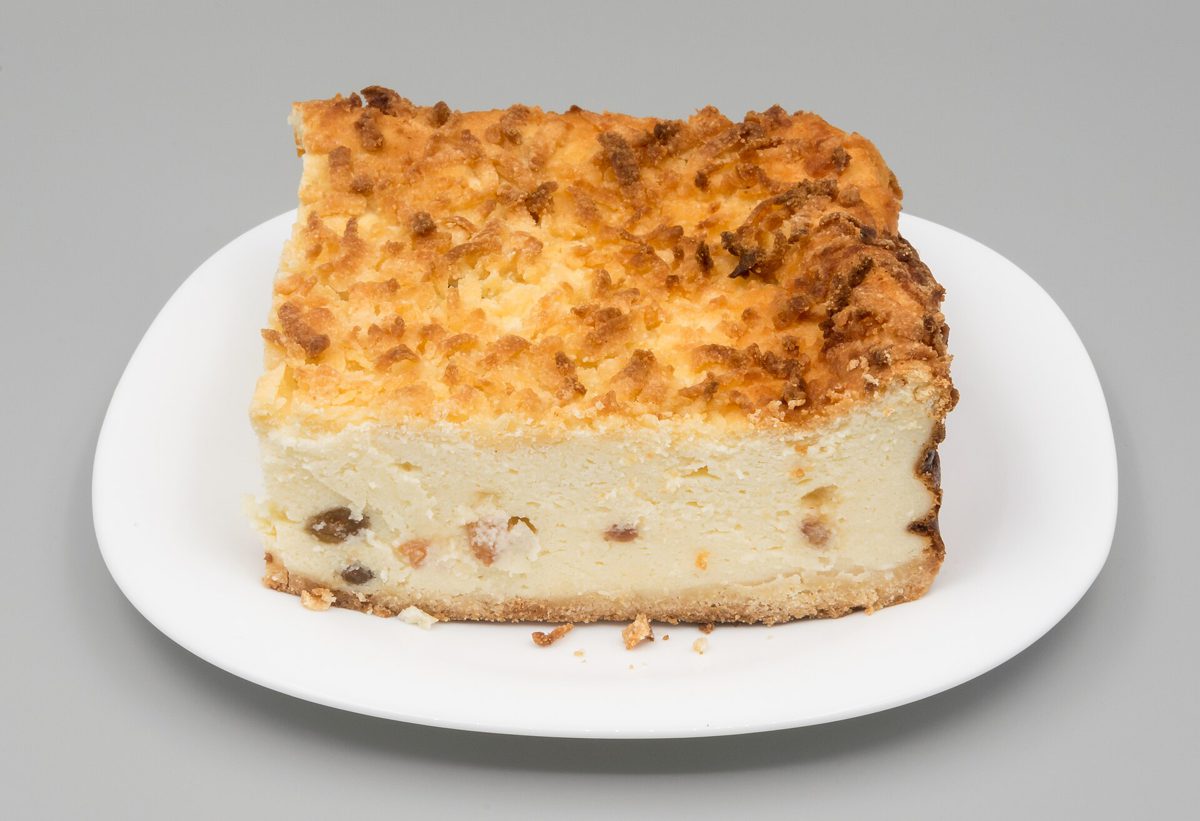
The story behind the recipe
Sernik, as the Polish Wikipedia states, is regionally referred to as serownik, and in the past, it was called serowiec. It is made with fatty or semi-fat twaróg cheese, often with raisins or candied orange peel, on a crumbly or semi-crumbly base. Old cookbooks simply call it a cheese cake. Sernik krakowski is the version with a lattice of dough on top, baked in a rectangular pan; Kwestia Smaku calls it 'traditional Polish cheesecake baked in a rectangular form,' while Ania Gotuje refers to it as 'the cheesecake our grandmothers and mothers used to bake.'
The oldest found recipe with 'krakowski' in the name is 'Placki krakowskie z serem' by Lucyna Ćwierczakiewiczowa from the book 'Baby, placki i mazurki' from 1908. However, it had a thin base made of yeast dough, a filling with chopped almonds and candied peel, and did not have a lattice. The origins of the name are not explained by sources. The cheesecake in its current form was described by Elżbieta Kiewnarska in 'Ciasta wielkanocne' (published by 'Bluszcz', 1927–1939) as 'Crumbly cake with cheese': crumbly dough, filling made from a kilogram of pressed and ground cheese with egg yolks, butter, sugar, vanilla, lemon zest, raisins, and whipped egg whites. From the reserved part of the dough, she wrote, 'make a lattice on top of the cake,' and pour the whole thing with icing.
Sernik is a festive cake. Maria Lemnis and Henryk Vitry wrote in 1976 that 'in Polish cuisine, cheesecakes (serowce) are among the traditional Easter specialties, alongside mazurki...' and Ania Gotuje adds that the krakowski version is usually baked for Christmas and Easter. Since 2010, 'Serownik (sernik) handzlowski' from Podkarpacie has been on the List of Traditional Products by the Ministry of Agriculture, built the same way, but on a yeast base, with strips of dough arranged 'crosswise.' In Handzlówka, it is served at weddings, christenings, name days, and other family celebrations.
Ingredients
Kruche ciasto (blacha 20×30 do 23×33 cm)
-
300 g all-purpose flour (type 450)
Abroad: USA and Canada: all-purpose flour; UK: plain flour; Germany: Type 405 -
150 g cold butter (cut into cubes)
Abroad: unsalted butter -
80 g powdered sugar
Abroad: powdered sugar / icing sugar - 1 pc egg
- 1 pc egg yolk
- 1 pinch salt
-
½ tsp (about 2 g) baking powder (not necessarily)
Abroad: baking powder; Germany: Backpulver
Masa serowa
-
1 kg fatty or semi-fat twaróg (dry, ground 2–3 times, or thick cheesecake twaróg)
Abroad: USA and Canada: farmer's cheese or drained dry curd cottage cheese; Germany: drained Quark or Schichtkäse; Austria: Topfen; UK: twaróg from a Polish shop -
150 g soft butter
Abroad: unsalted butter -
220 g granulated or powdered sugar (170 g for the filling, 50 g for the egg whites)
Abroad: caster sugar or powdered sugar - 7 pcs eggs (separated into yolks and whites, at room temperature)
-
35 g potato starch (about 3 tablespoons, or a packet of sugar-free pudding)
Abroad: potato starch; substitute: cornstarch or tapioca -
1 package vanilla sugar (about 16 g, or 1 teaspoon of vanilla extract)
Abroad: Germany: Vanillezucker; USA and UK: vanilla extract - 1 pc orange or lemon (only grated zest)
- 100 g raisins (soaked for 20 minutes in hot water and drained)
-
40 g candied orange peel (not necessarily)
Abroad: candied orange peel; Germany: Orangeat
Do posmarowania kratki
- 1 pc egg yolk (beaten with 1 tablespoon of milk)
Lukier
-
150 g powdered sugar
Abroad: powdered sugar / icing sugar - 2 tbsp (30 ml) lemon juice (up to 3 tablespoons)
Method, step by step
-
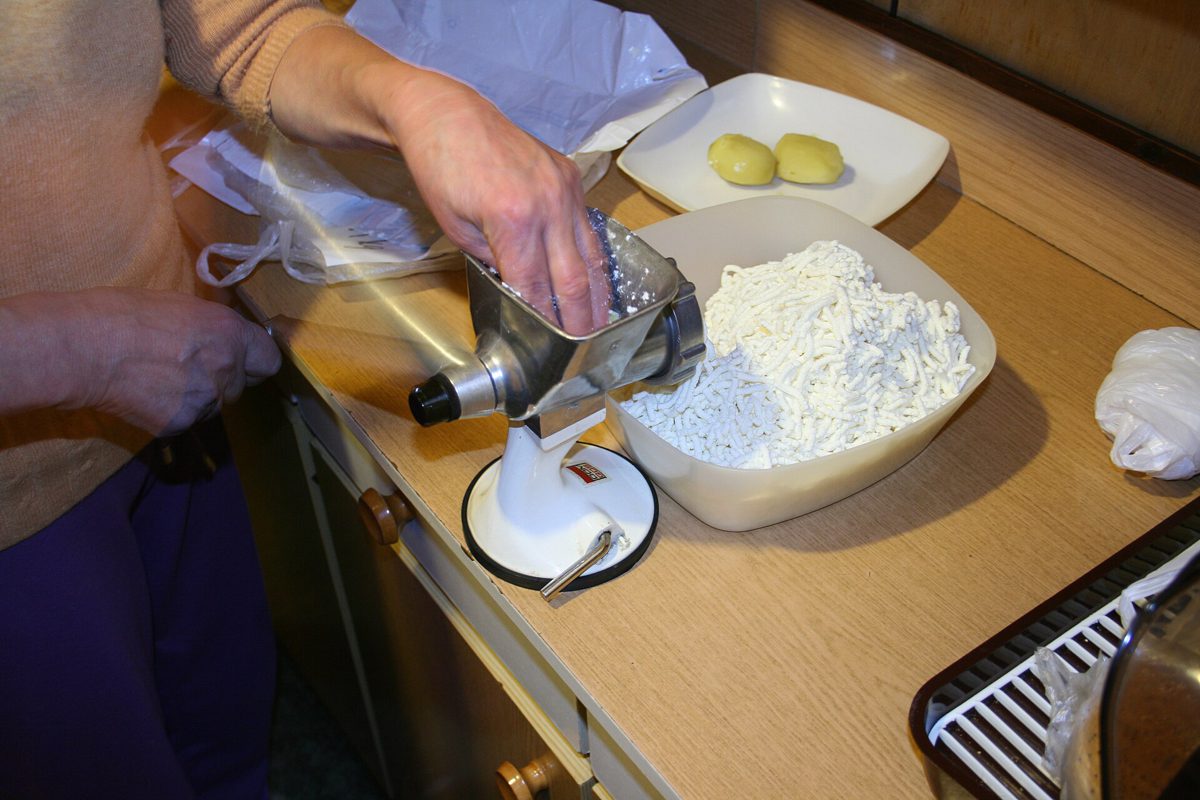
If the twaróg is moist, wrap it in clean paper for 2–3 hours or press it overnight in a cloth under weight. Then grind it 2–3 times in a meat grinder. Take the twaróg, butter for the filling, and eggs out of the fridge so they reach room temperature.
-
For the crumbly dough: rub the flour, powdered sugar, salt, and optionally baking powder with cold butter until you get a fine crumble. Add the egg and yolk and quickly knead, just until combined. Set aside one third of the dough for the lattice. Flatten both parts, wrap in foil, and chill in the fridge for 30–60 minutes.
-
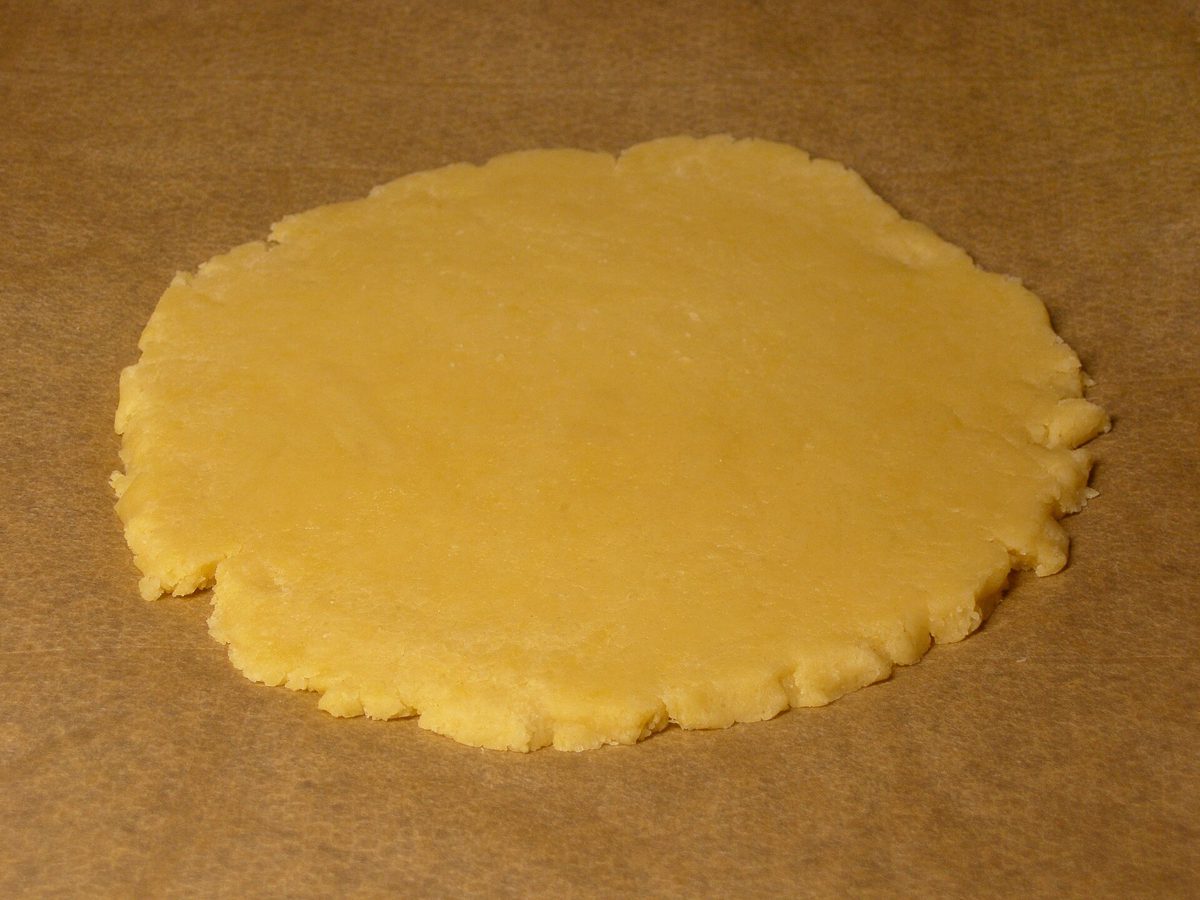
Preheat the oven to 180°C (top and bottom heat). Roll out the larger part of the dough thinly, preferably between two sheets of baking paper.
-
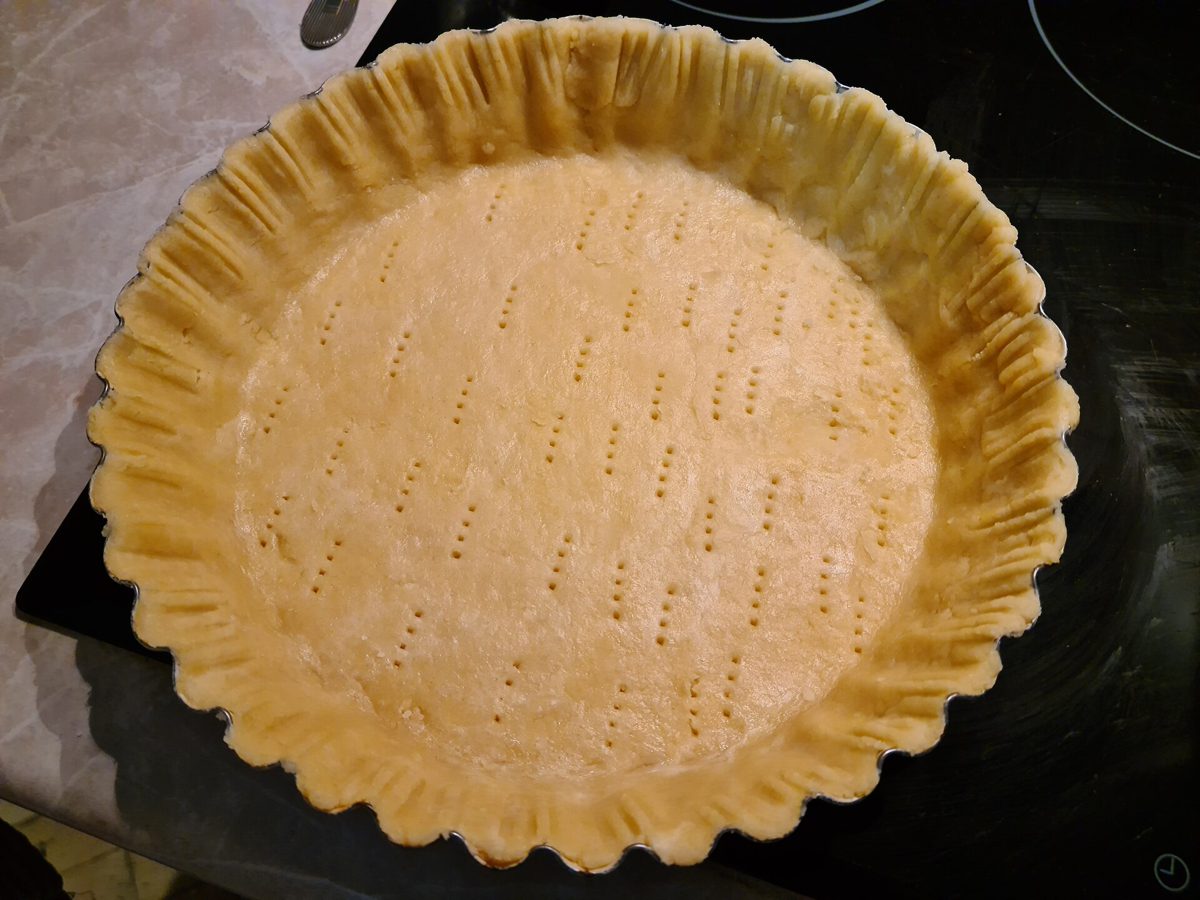
Grease the baking pan with butter and line it with paper, transfer the dough to it, and press it down. Prick the bottom densely with a fork and pre-bake for 12–15 minutes until lightly golden. Reduce the oven temperature to 170°C.
-
For the filling: cream the soft butter with 170 g of sugar and vanilla sugar until fluffy. Add the egg yolks one at a time, alternating with portions of the ground cheese, while continuing to beat. Finally, mix in the potato starch and grated zest.
-
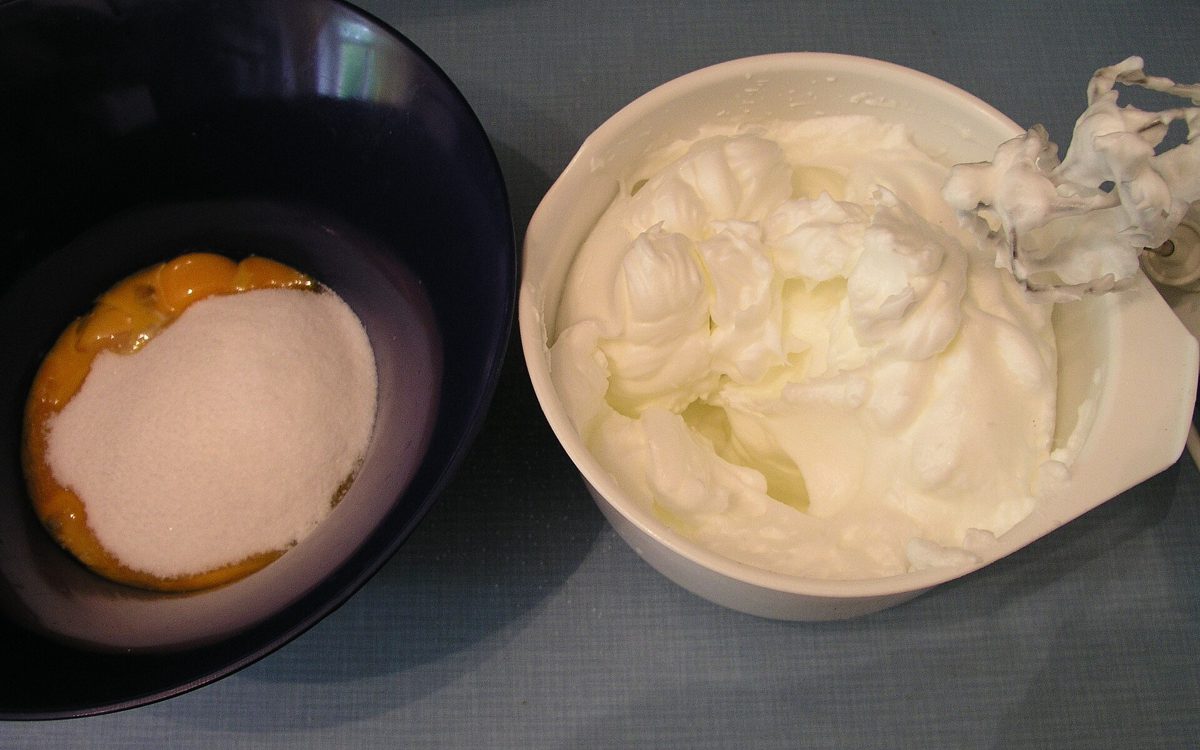
Beat the egg whites until stiff peaks form. Towards the end of beating, add the remaining 50 g of sugar, one tablespoon at a time.
-
Gently fold the egg whites and the drained raisins (and candied peel if using) into the filling with a spoon or spatula, so the egg whites do not deflate. Spread the filling onto the pre-baked base, which can still be warm, and smooth the top.
-
For the lattice: roll out the remaining dough to a thickness of 2.5–3 mm and cut it into strips 1 cm wide with a pastry cutter or knife. Arrange them diagonally over the filling to create a lattice. Brush the strips with the egg yolk beaten with milk.
-
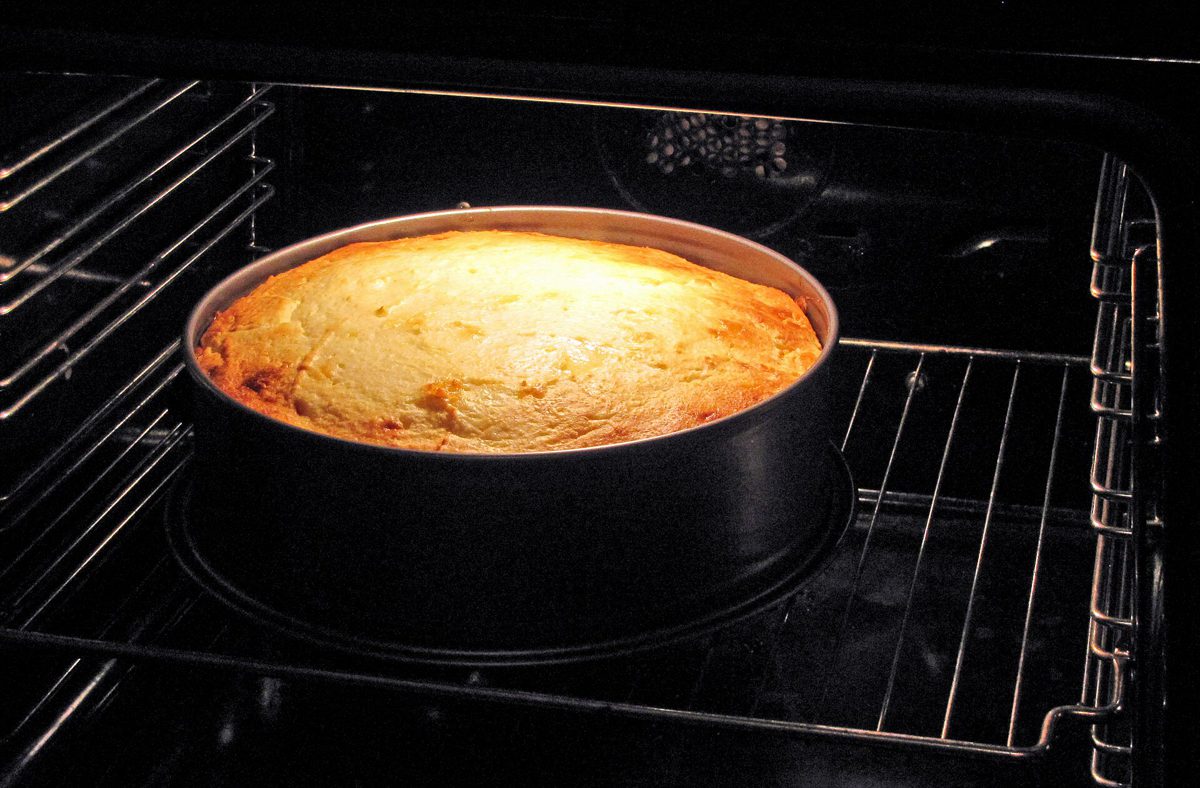
Bake at 170°C (top and bottom heat, no fan) for 55–65 minutes until the top is golden. Do not open the oven during baking and do not change the temperature.
-
Turn off the oven and leave the cheesecake inside with the door ajar, then cool it for a few hours on the countertop. Only when the cheesecake is completely cool, spread the icing: mix powdered sugar with lemon juice to a thick, smooth consistency and spread it over the lattice or the entire top. Cut into squares.
Photos