The story behind the recipe
Mazurek is a traditional, low, and sweet cake baked for Easter, according to Wikipedia, no more than about 4 cm (1½ inches) high. It usually has a base made of shortcrust pastry, topped with a filling: nut, almond, orange, jam, or kajmak, and decorated with dried fruits, nuts, and candied fruits. Mazurek kajmakowy is a thin, pre-baked shortcrust base covered with kajmak and decorated with nuts and dried fruits. Maria Kiewnarska wrote in her booklet "Easter Cakes" (published by "Bluszcz" between 1927–1939): "A delicacy unknown anywhere outside of Poland is mazurek. Almost every home, every housewife has her favorite mazurek, made best by her." The origin of the name is uncertain: it is said to come from the Mazurs or Mazovians, or from the dance mazurka.
The word kajmak comes from the Turkish "kaymak," although in Turkey it refers to a completely different product, a type of thick cream. Kajmak was entered in 2007 on the List of Traditional Products from the Kuyavian-Pomeranian Voivodeship. According to this entry, under Stanisław Augustus, Polish cuisine adopted from the East "sweet cream with sugar," and kajmak belongs to the borderland cuisine and spread across Poland with post-war resettlements. It became "a thick, hardening mass that became a decoration for Easter mazurki," and its golden-brown color is due to caramelized sugar, probably from the second half of the 19th century when beet sugar became cheaper. "On the extremely sweet topping, which decorated mazurki, almonds, nuts, and raisins were placed."
Old cookbooks describe this mazurek under different names. Lucyna Ćwierczakiewiczowa in "Babki, Placki i Mazurki" from 1908 mentions "Mazurek with chocolate or cream icing": on the shortcrust base, a mixture of "half a quart of sweet cream, half a pound of young butter" and a whole pound of sugar is poured, cooked "for at least two hours, until it becomes stretchy," which, when hot, "will immediately set on the cake." Kiewnarska calls it "cream mazurek": half a liter of sweet cream or unskimmed milk is slowly cooked with vanilla and sugar, and the thickness is checked by "pouring a drop onto a cold plate."
Ingredients
Shortcrust pastry (for a pan about 24 cm, or 9½ inches in diameter, or 20×25 cm, or 8×10 inches)
- 150 g all-purpose flour (sifted)
-
100 g cold butter (cut into cubes)
Abroad: unsalted butter -
50 g powdered sugar
Abroad: USA: powdered sugar; UK: icing sugar - 2 pcs egg yolks (from small eggs; or 1 yolk and 1 tablespoon of thick sour cream 18%)
- 1 pc egg white (to attach the rim)
- salt (a pinch)
-
vanilla (a little: seeds from a pod or a few drops of extract)
Abroad: vanilla extract
Kajmak
-
160 ml cream 30–36% (heavy cream; or instead of cream and sugar, 200–230 g of ready-made kajmak from a can)
Abroad: USA: heavy cream; UK: double cream; Germany: Schlagsahne; ready-made mass: dulce de leche - 140 g light brown sugar
- vanilla (a little)
- 60 g blackcurrant jam (to spread on the base under the kajmak, can be omitted)
For decoration
-
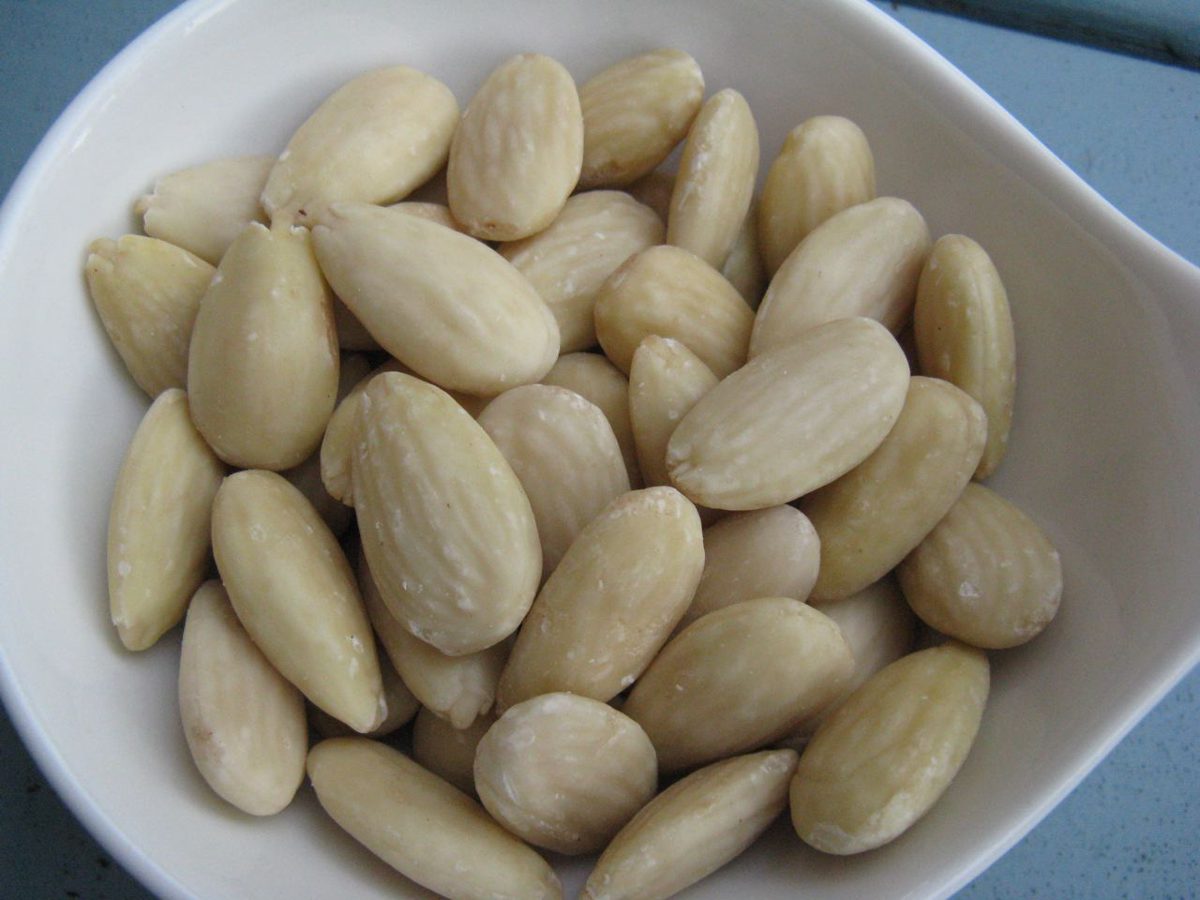
30 g almond flakes (20–40 g; or about 20 whole blanched almonds)
Abroad: sliced / flaked almonds -
30 g walnuts (halves)
Abroad: walnut halves -
30 g raisins (30–40 g; or dried cranberries)
Abroad: raisins; dried cranberries
Method, step by step
-
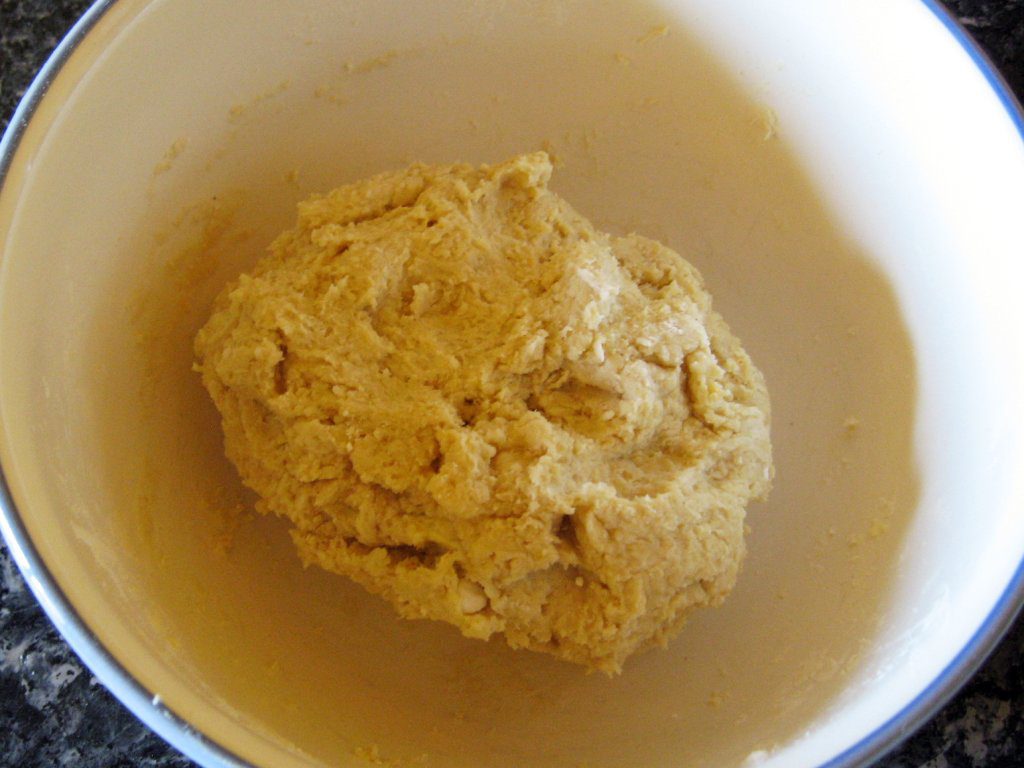
Dough: sift the flour into a bowl, add cold butter in cubes and chop it with a knife or rub it with your fingertips into the flour until it forms a fine crumb. Add powdered sugar, a pinch of salt, vanilla, and egg yolks (or a yolk and a tablespoon of sour cream). Knead briefly, just until a smooth ball forms: dough that is kneaded too long or is warm will shrink in the oven.
-
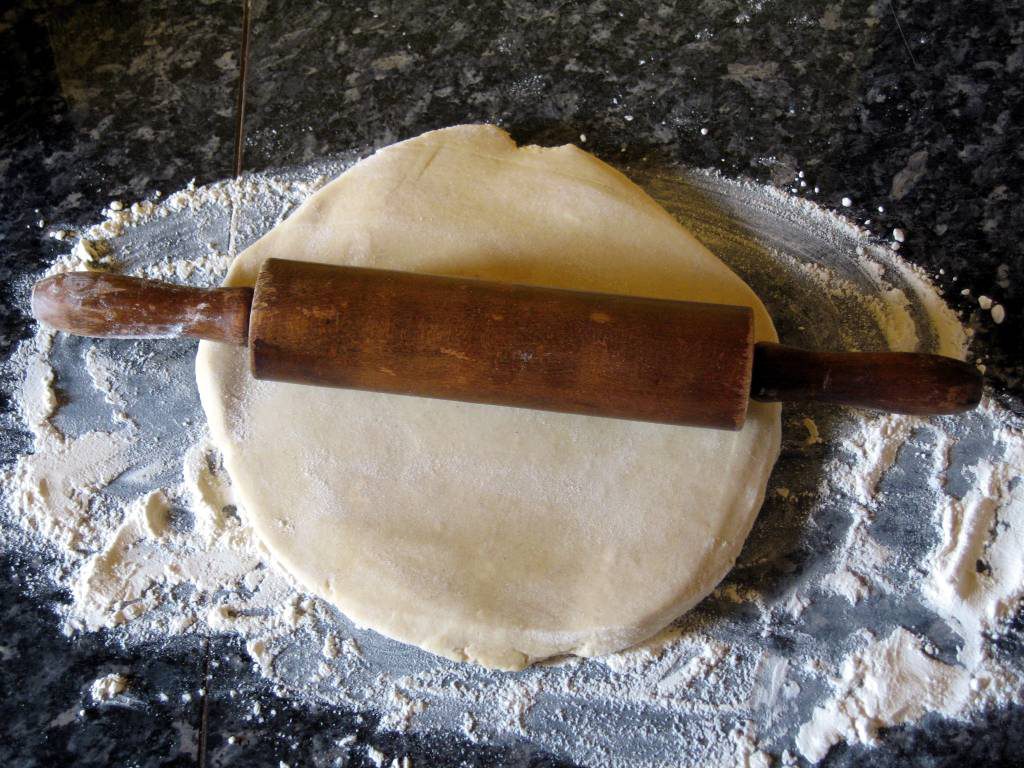
Wrap the dough in foil and chill in the fridge for 1–2 hours. Set aside a piece for the rim, and roll out the rest between two sheets of baking paper to a thickness of 3–4 mm (⅛ inch). The paper protects the dough from sticking and cracking.
-
Cut the base into a rectangle, oval, or egg shape according to a paper template and transfer it along with the paper to the baking tray. From the reserved dough and scraps, form a roll or braid and attach it around the edge with egg white. This rim will hold the kajmak on the cake; without it, the filling will flow off.
-
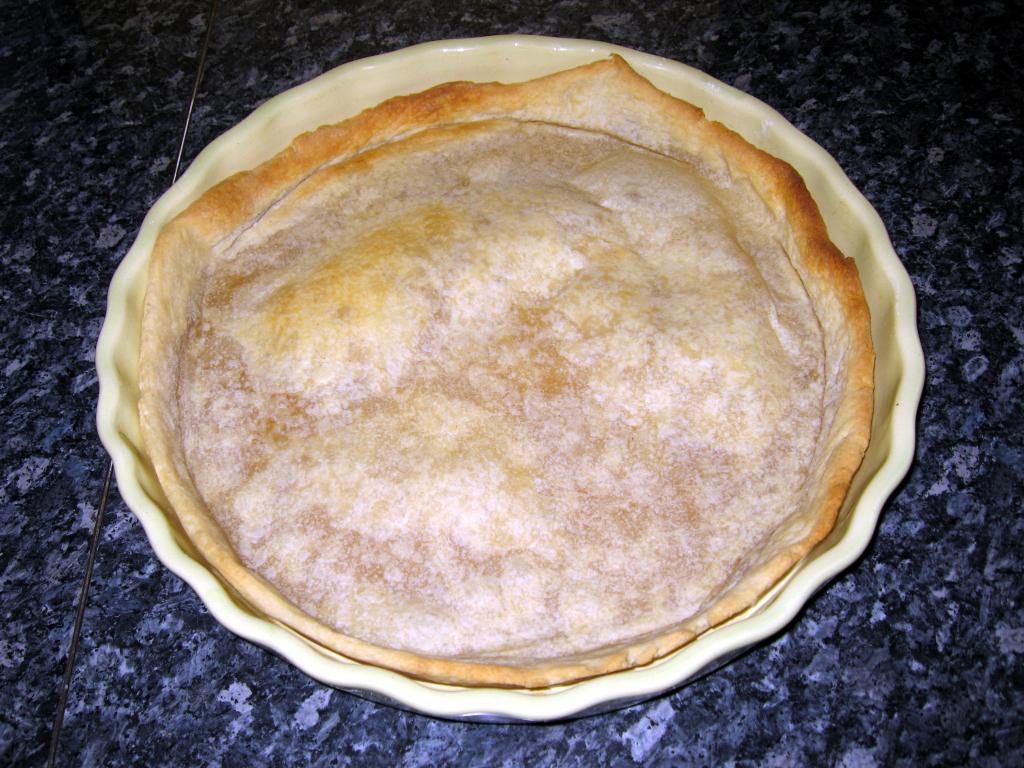
Prick the base densely with a fork so it doesn't puff up, and chill for another 15–60 minutes. In the meantime, preheat the oven to 180°C (350°F). Bake for about 20 minutes until the base is light golden. Cool it completely on the tray, as warm shortcrust pastry breaks easily.
-
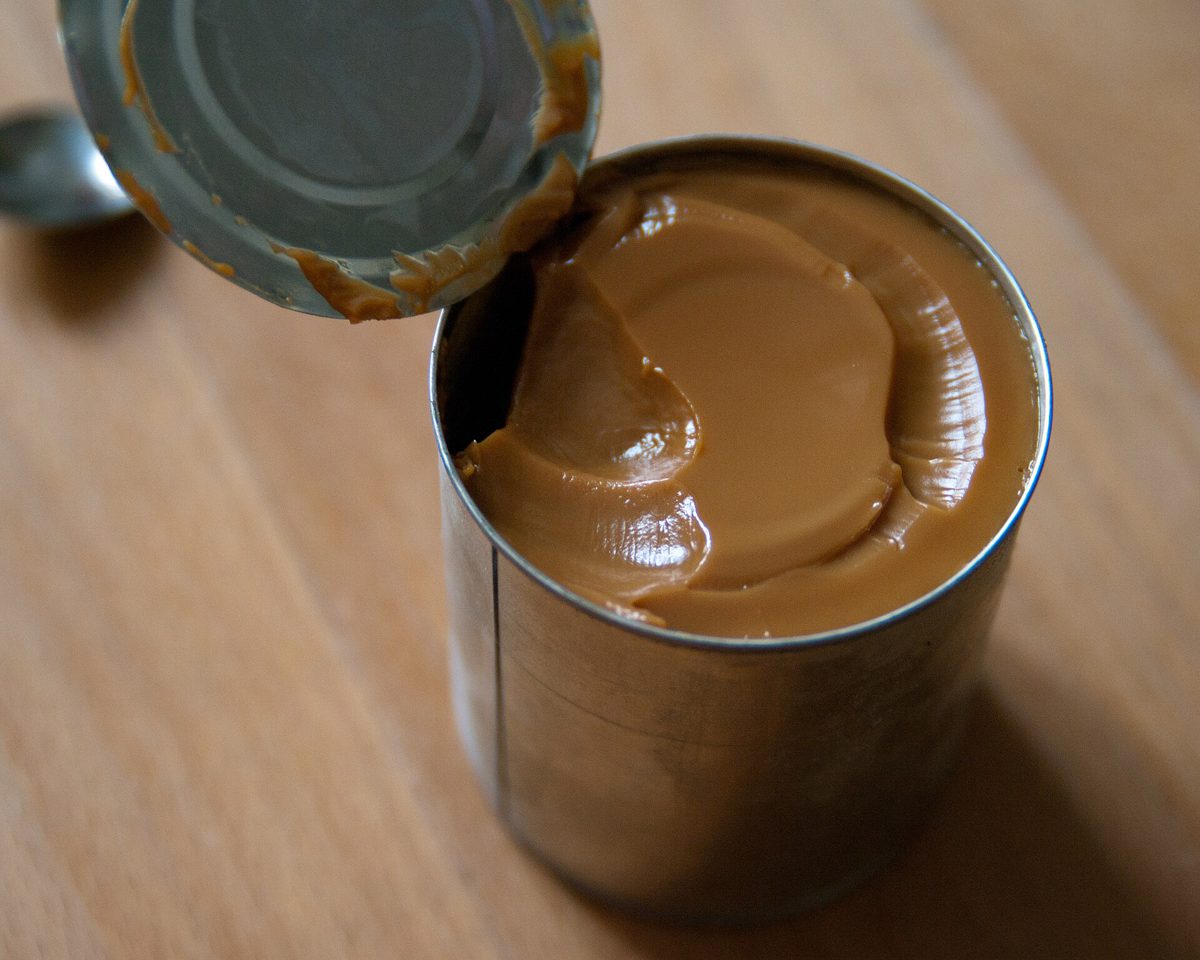
Kajmak: pour the cream into a heavy-bottomed saucepan, add the brown sugar and vanilla. Bring to a boil, stirring until the sugar dissolves, then cook on the lowest heat for about 30 minutes, stirring occasionally with a whisk, until the mixture thickens and takes on a straw-colored, light brown hue. Check a drop on a cold plate: it should set into a soft, stretchy mass. Gently mix the ready-made kajmak from the can until smooth, without whipping.
-
If you like a tart note, spread a thin layer of blackcurrant jam on the cooled base. Remove the kajmak from the heat, wait about 3 minutes, and pour it, still warm and liquid, onto the base within the rim. Smooth it out with a knife.
-
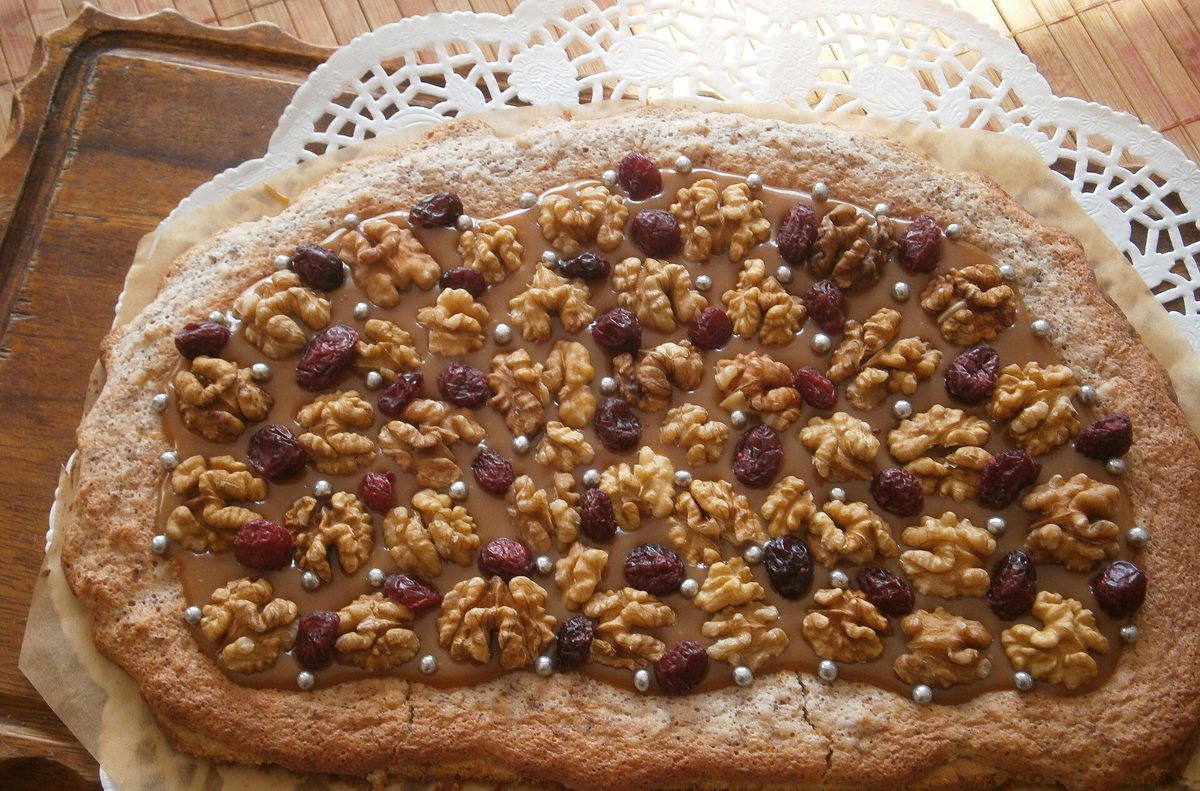
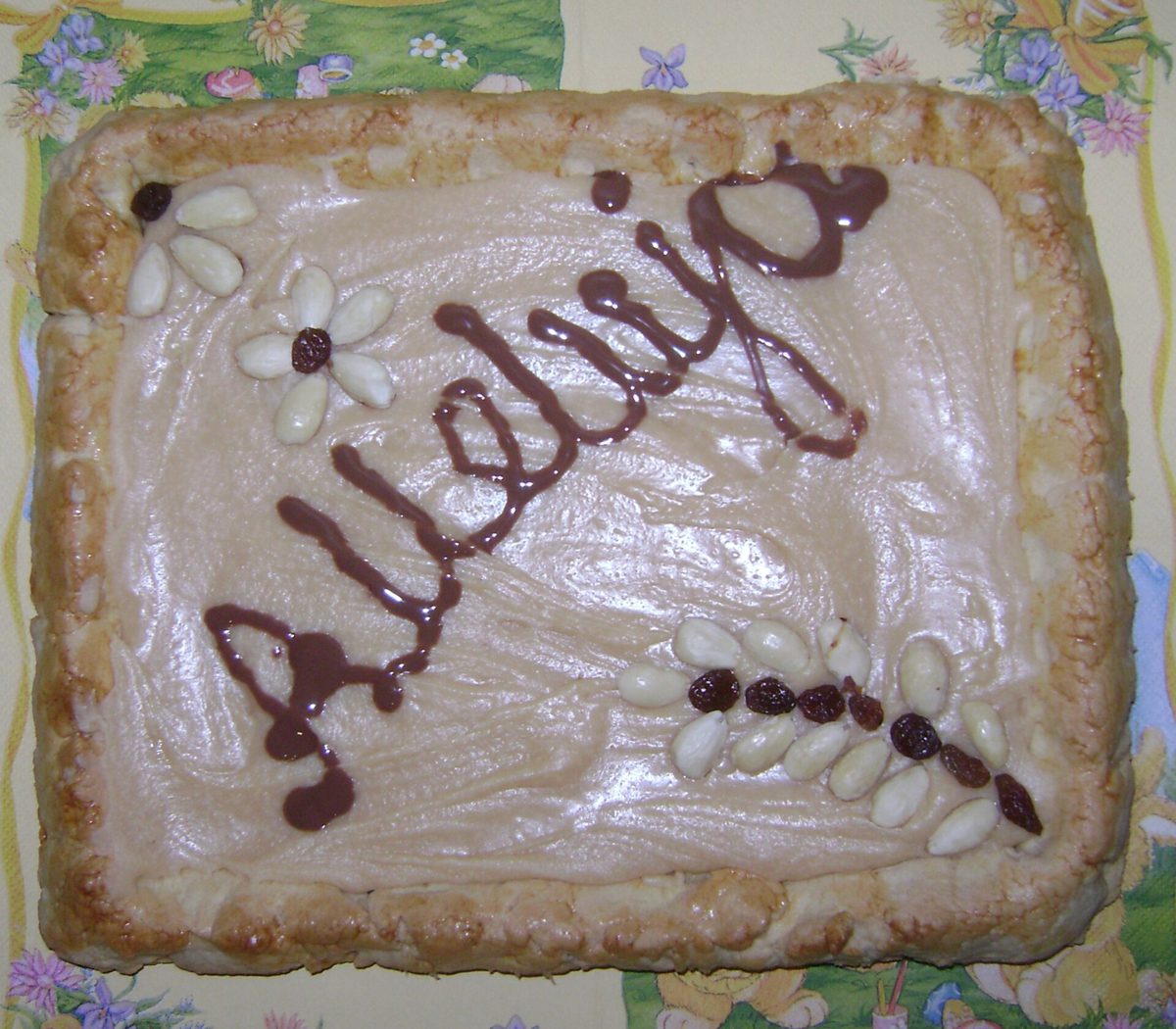
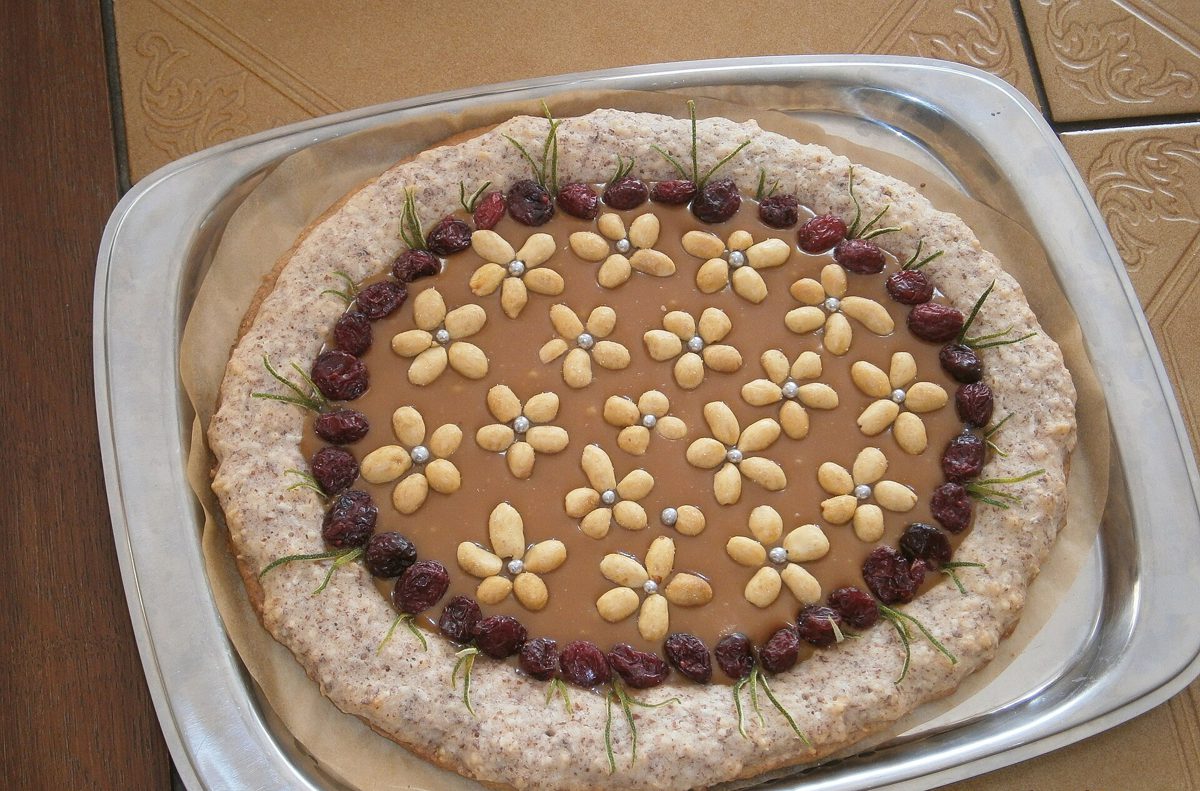
Immediately, before the kajmak sets, arrange the decoration: make flowers from whole almonds, add almond flakes, walnut halves, and raisins or cranberries. Traditional patterns include the inscription "Alleluja," catkins, and eggs. The decoration will not stick to the set mass.
-
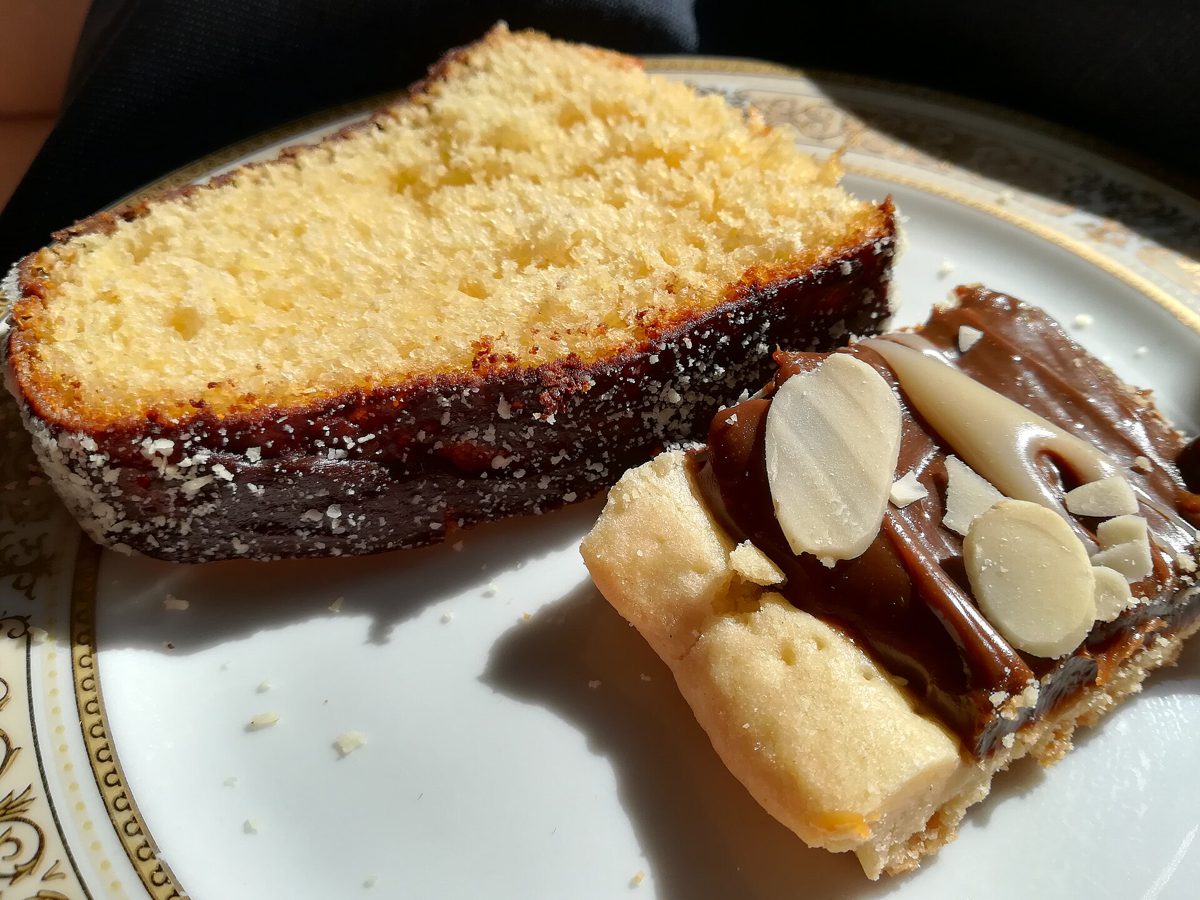
Set the mazurek aside to set; it will set fastest in the fridge. Cut it into 8 pieces with a knife warmed in hot water and dried.
Photos