The story behind the recipe
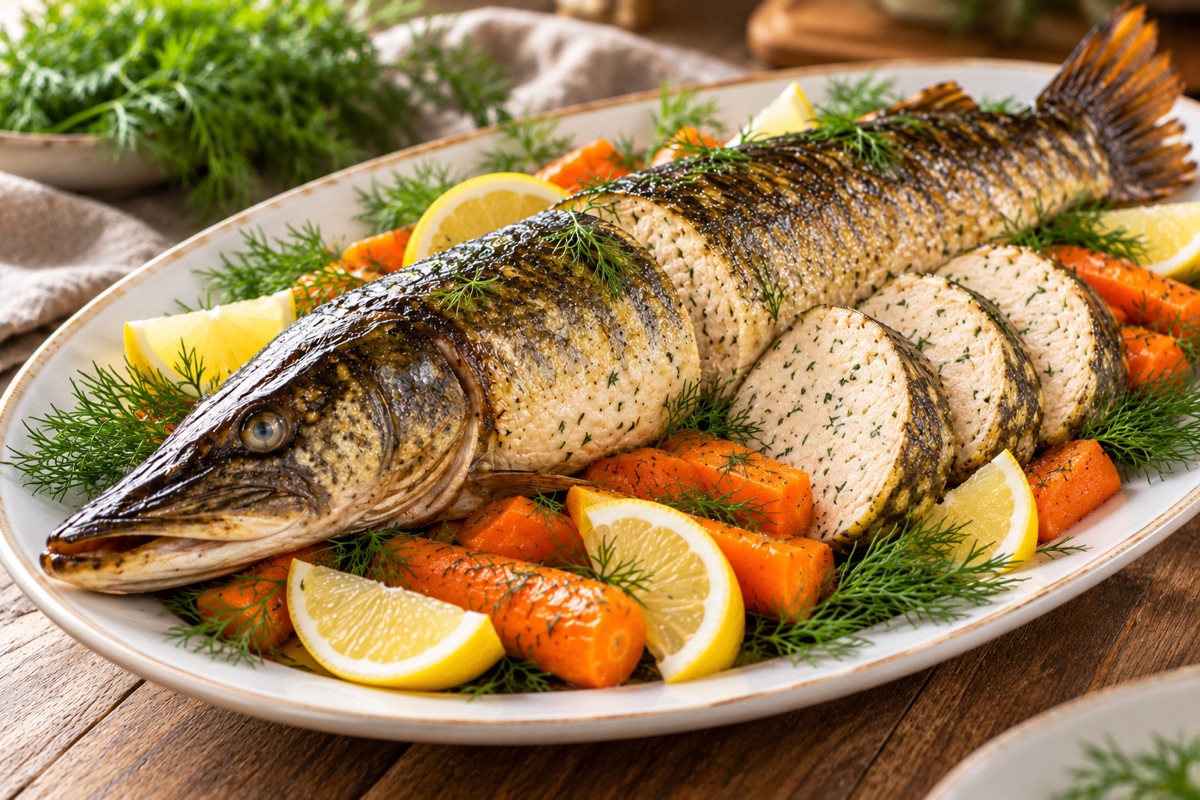
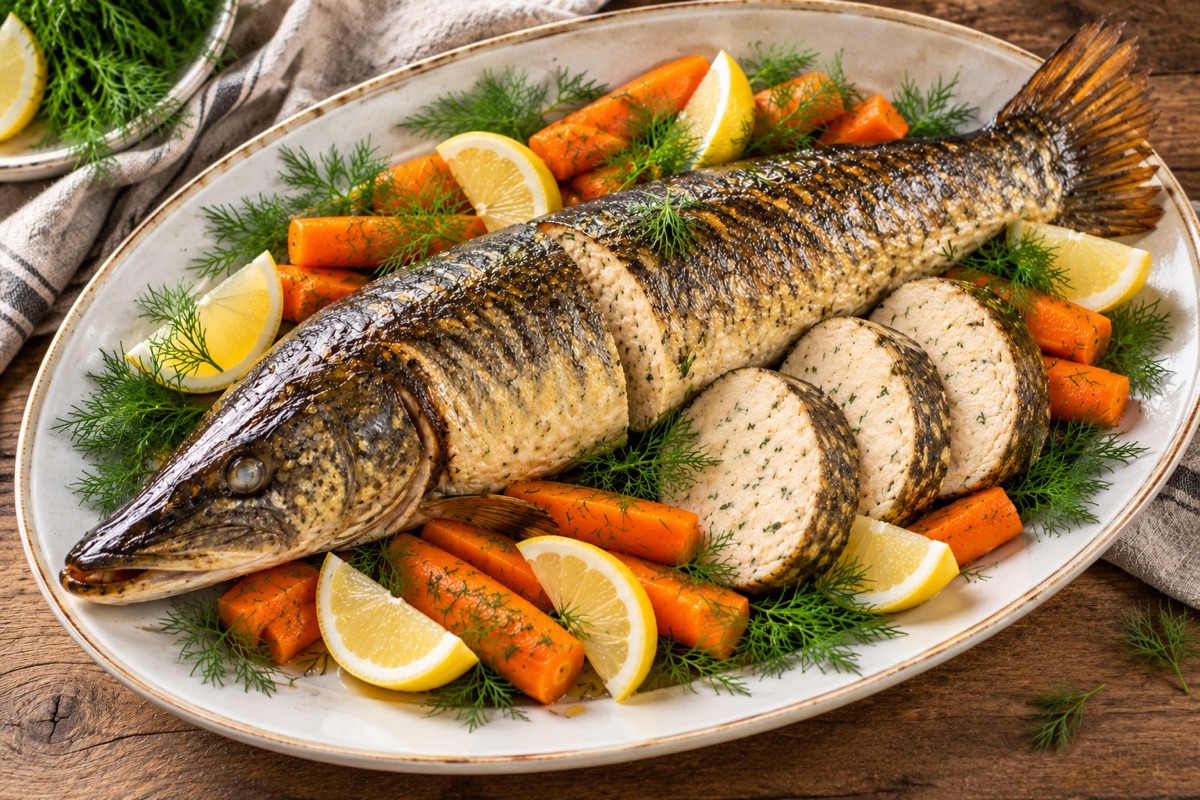
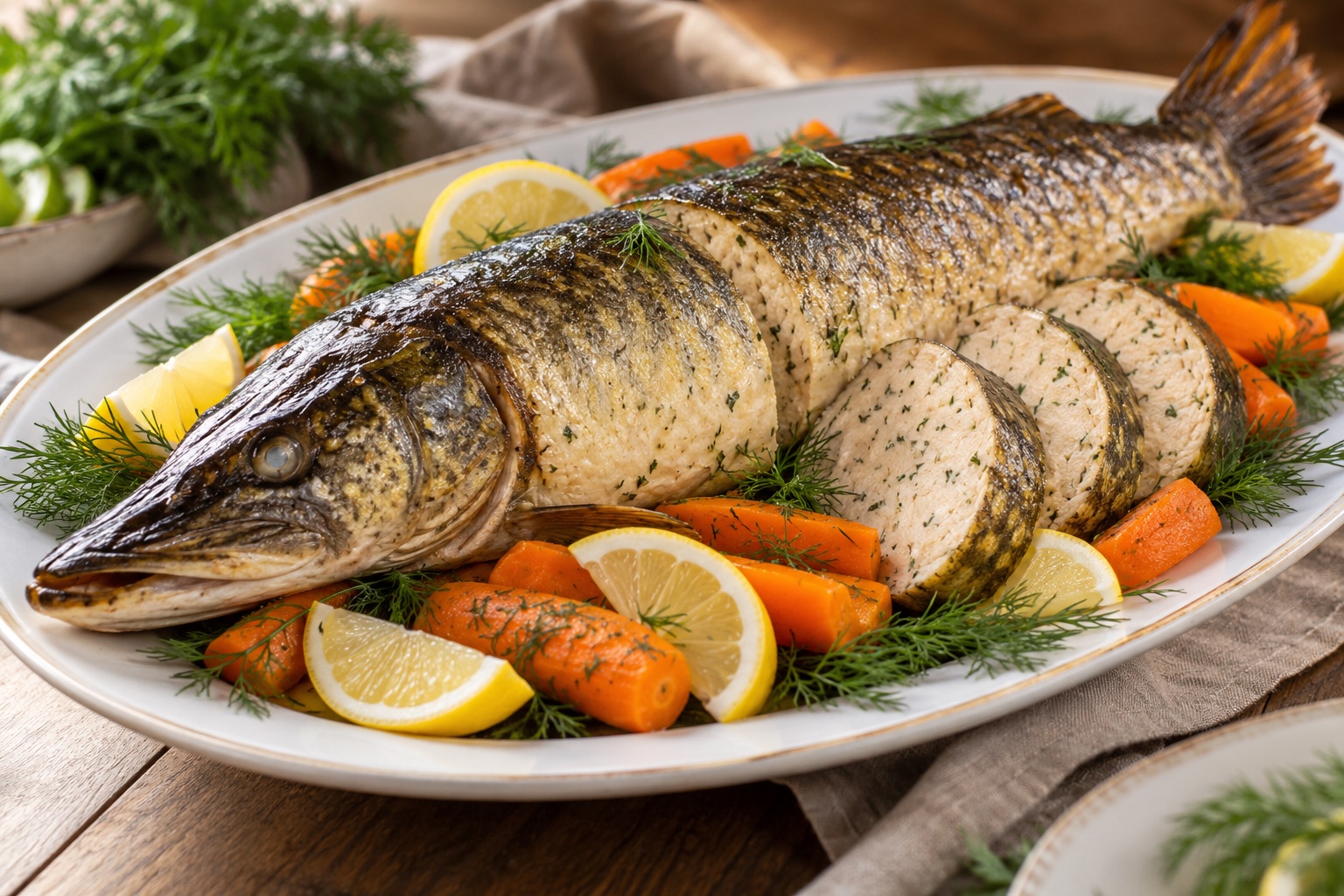
Stuffed pike is a festive dish from the Sejny region and the Polish-Lithuanian border. The ministerial description of this traditional product emphasizes maintaining the shape of the whole fish and the stuffing made from boneless meat. This is not the same way of serving as fish meatballs.
Below is a home preparation: we fill the skin with stuffing made of bread, onion, and dill, and we cook the fish in cheesecloth. A long pot that can hold the pike without bending is needed, along with a meat grinder and thermometer. The difficulty lies in working with the skin, carefully removing the bones, and gently heating the stuffing.
Ingredients
Fish
- 2 kg whole pike (about 1.8–2 kg, skin without damage; weigh 700 g of meat for stuffing)
Stuffing
- 60 g stale wheat bread
- 120 ml milk
- 100 g onion
- 50 g butter
- 1 pc egg
- 15 g dill
- 10 g salt (for stuffing, ultimately according to the cooked portion test)
- ¼ tsp (1.3 ml) white pepper
Broth
- 2.5 l water (enough to cover the fish; amount depends on the pot)
- 200 g carrot
- 100 g parsley root
- 100 g celery root
- 100 g onion
- 2 pcs bay leaf
- 4 pcs allspice
- 8 g salt
Serving
- 1 pc lemon (for serving)
Method, step by step
-
Scrape the fish scales and dry it. Cut off the head just behind the gill covers, saving it for the broth after removing the gills. If the fish is not gutted, remove the entrails through the opening at the head. Work on a separate board; wash utensils and hands before continuing.
-
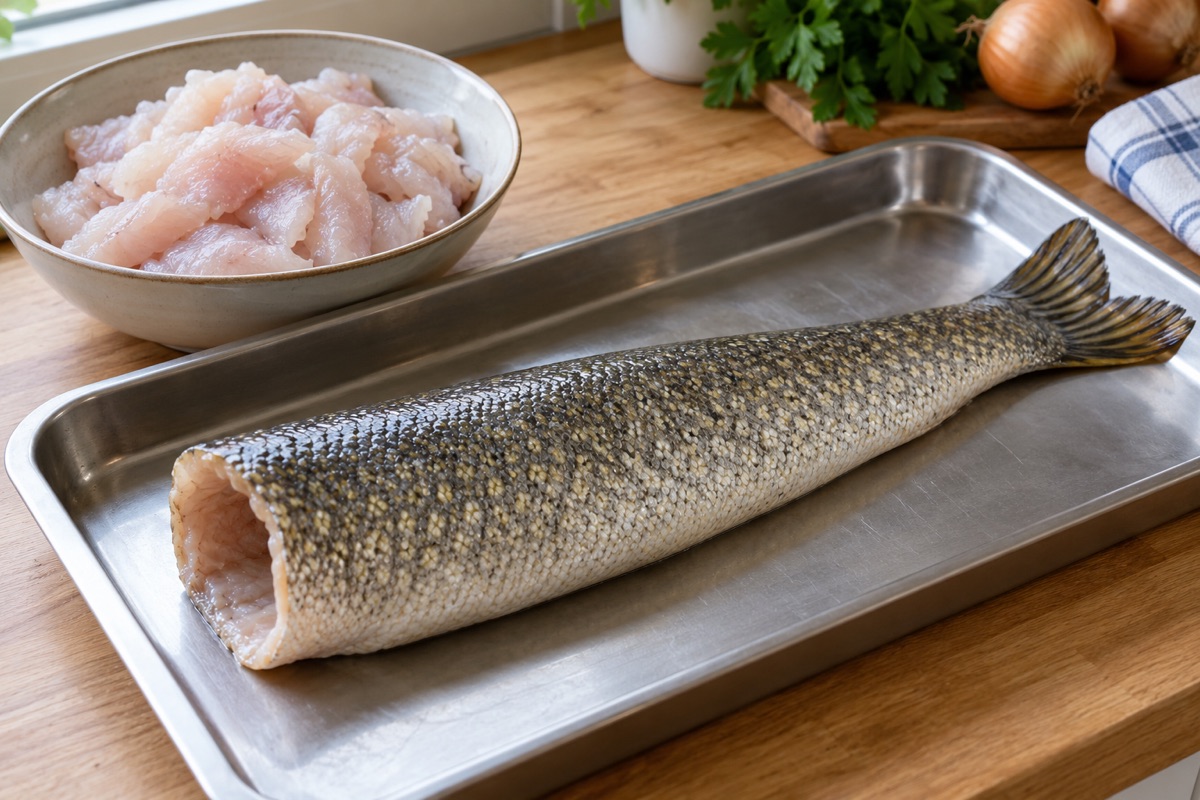
Separate the skin from the meat at the cut head. Slide it down towards the tail like a stocking, using your fingers and short knife movements. Cut the connecting tissues at the fins from the inside. Cut the spine at the tail so that the tail remains attached to the skin. Remove the remaining entrails and carefully clean the skin.
-
Remove the meat from the carcass. Take out the spine, ribs, and all visible and palpable bones. Check each piece with your fingers. Weigh 700 g of meat for the stuffing; set aside any remaining for another dish. You can add the cleaned skeleton to the broth.
-
Soak the bread in milk for 10 minutes, then squeeze it out well. Chop the onion and sauté it in 20 g of butter until translucent without browning. Let it cool. Soften the remaining butter, finely chop the dill. Keep the skin and fish in the fridge while preparing the other ingredients.
-
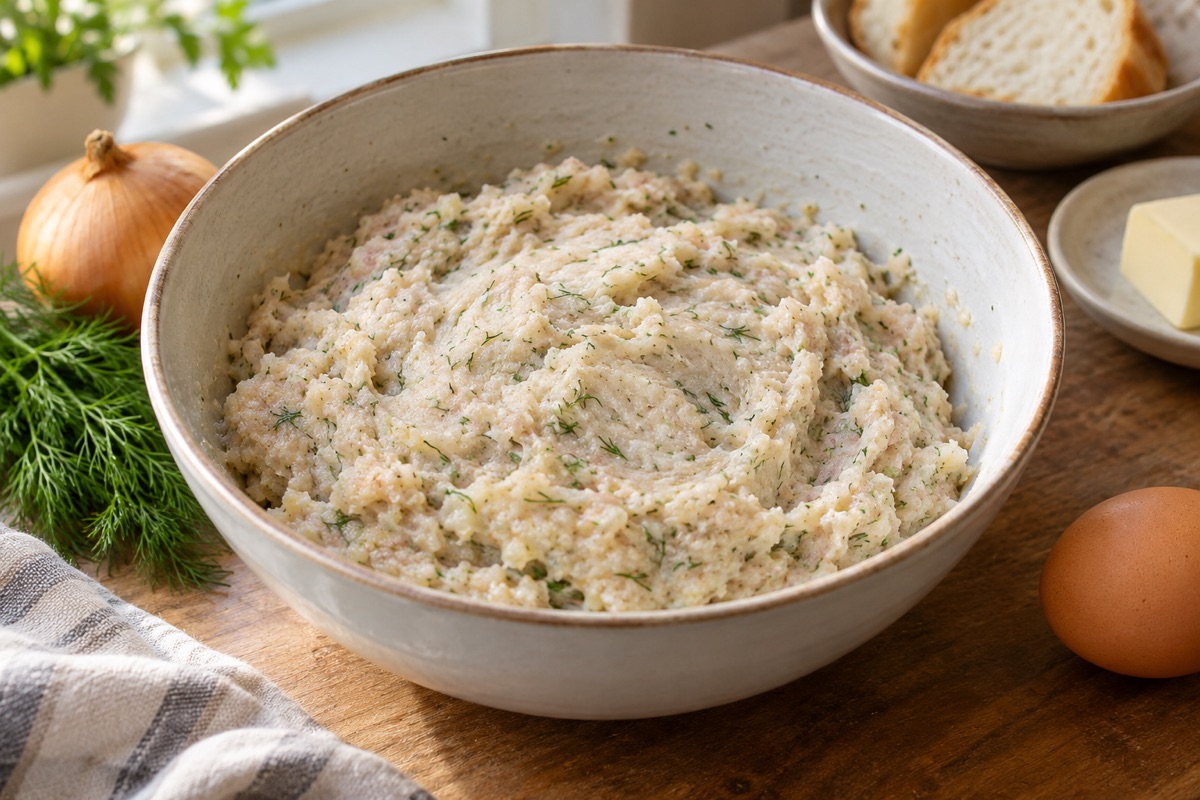
Pass the meat, squeezed bread, and onion twice through a meat grinder with fine holes. Add the egg, remaining butter, dill, salt, and pepper. Mix into a uniform, cohesive mass. If it is very stiff, add a tablespoon of cold milk; do not pour in all the remaining soaking liquid at once.
-
In a small pot, cook a teaspoon of the stuffing. After cooling, assess the taste and consistency; season the remaining mixture. This test dumpling allows you to adjust the salt without tasting raw fish and egg.
-
Cut the vegetables for the broth into large pieces. Place them with spices and salt in a long pot, cover with water, and cook for 25–30 minutes. If using the head without gills and the cleaned skeleton, add them in the last 15 minutes. Strain the broth, keeping the carrot for serving.
-
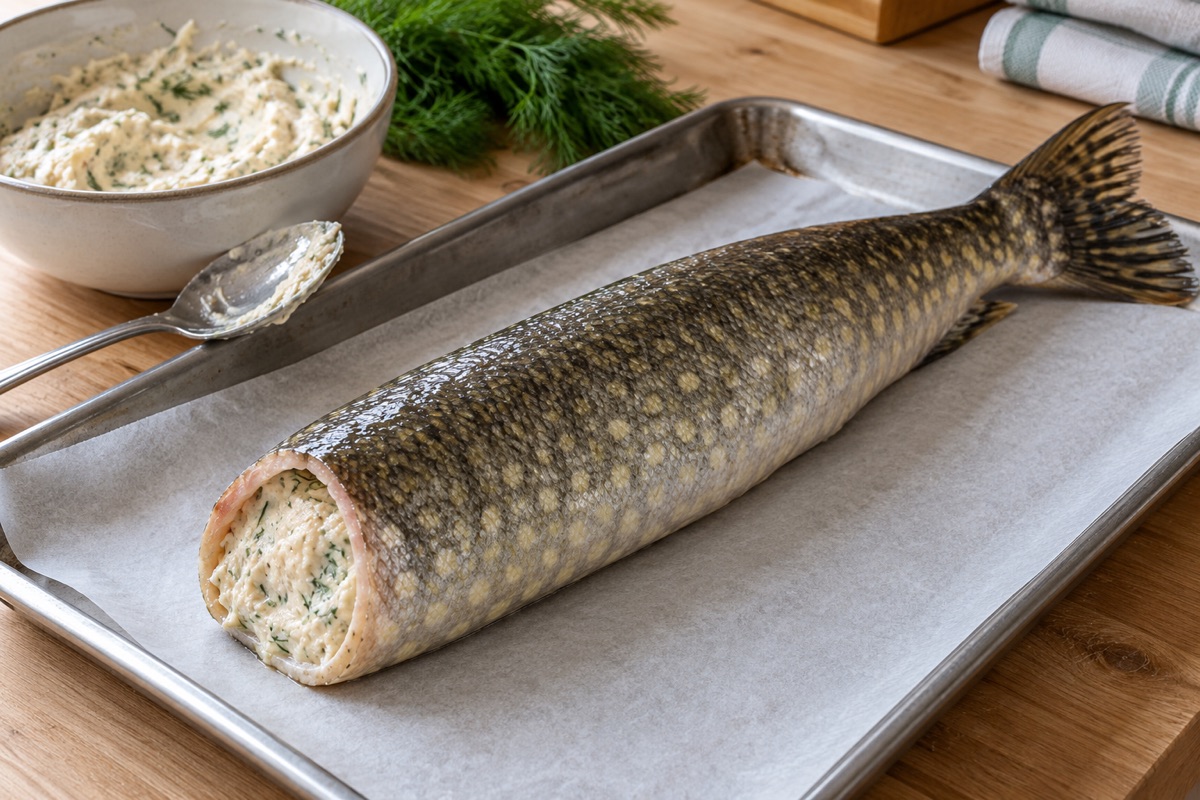
Fill the skin with stuffing in small portions, loosely, maintaining the shape of the fish. Do not stretch it like a balloon: during heating, the skin shrinks, and the stuffing increases in volume. Cook any excess mixture separately as dumplings.
-
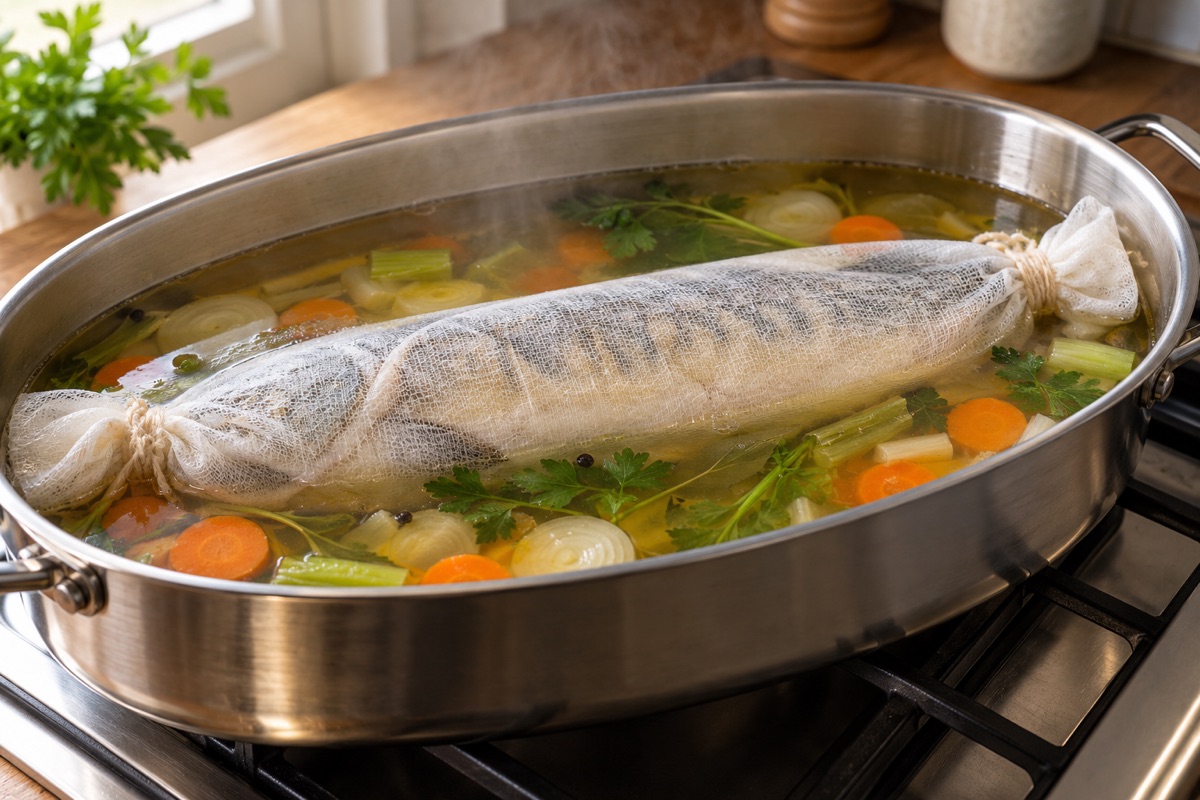
Close the opening with a needle and cotton kitchen thread. Wrap the fish in sterilized cheesecloth suitable for cooking, leaving some slack, and tie the ends. The cheesecloth should support, not squeeze.
-
Heat the strained broth to about 80–85°C. Place a rack or folded cheesecloth at the bottom so the skin does not stick. Insert the fish horizontally and add broth or hot water to ensure it is submerged.
-
Maintain the temperature at 80–85°C: the liquid should gently quiver, without vigorous boiling. Do not turn the fish or lift it multiple times. If necessary, partially cover the pot.
-
Cook for approximately 45–65 minutes, then check the thermometer in the thickest part of the stuffing. It must reach 74°C. If the temperature is lower, continue gentle heating and recheck; just floating or the color of the skin is not sufficient.
-
Turn off the heat and leave the fish in the broth for 15 minutes. Remove it, supporting the cheesecloth in two places, preferably with the help of another person. Transfer to a long platter and gently unwrap.
-
Remove all threads. Cut into thick slices with a sharp knife to avoid tearing the skin. Serve with carrot from the broth, lemon, and dill. If using the head decoratively, place it beside; do not cover areas that require thread removal.
-
If serving the fish cold, portion it and quickly cool it in shallow containers. Cover after steaming, store in the fridge at 4°C, and only take it out before serving.
Photos