The story behind the recipe
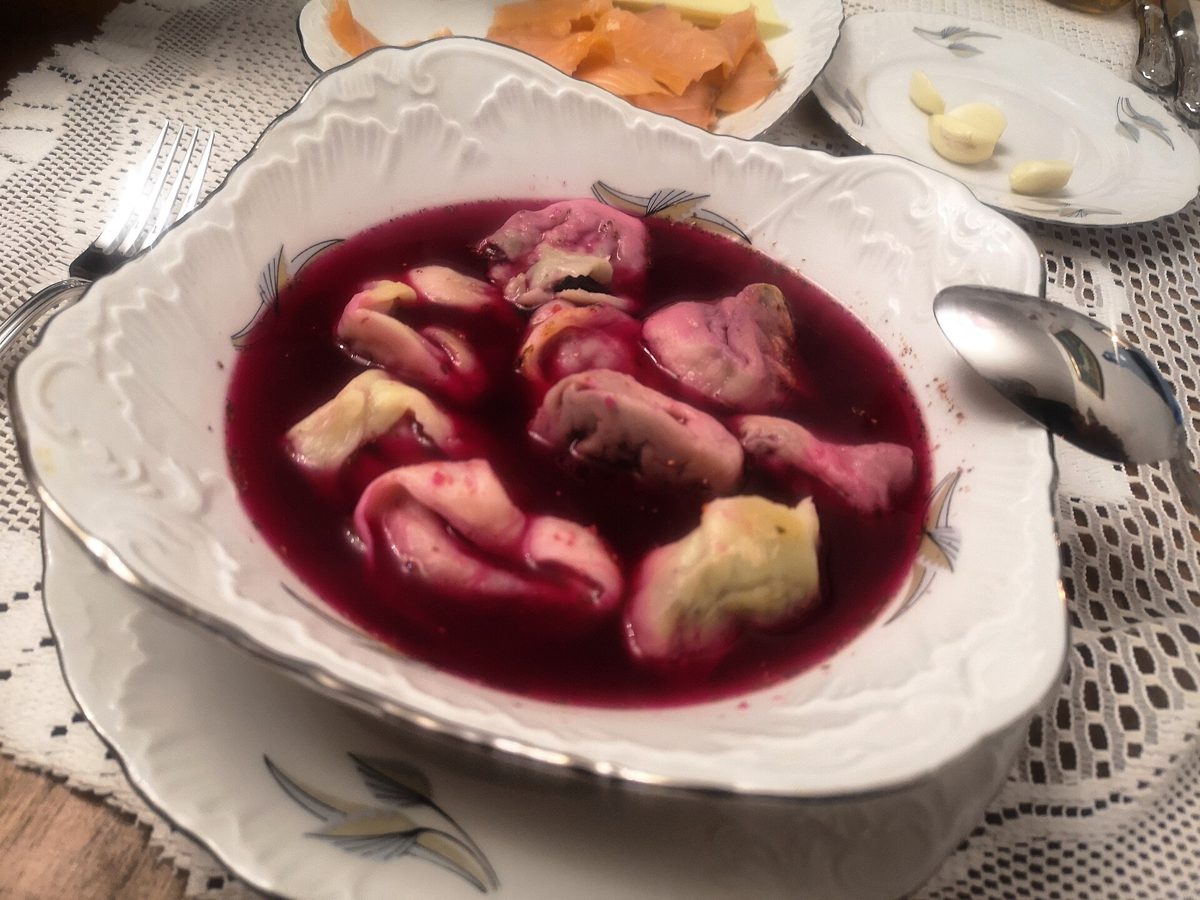
Uszka are very small dumplings, described as a smaller, wrapped version of pierogi. Ukrainians call them вушка, and Belarusians вушкі. According to English Wikipedia, they are usually filled with mushrooms or meat and served with borscht, and the meatless version with mushrooms is part of the Christmas Eve dinner in Poland, Belarus, and western Ukraine.
In 19th-century cookbooks, the base was meat-filled uszka, while mushroom ones were made for fasting. Lucyna Ćwierczakiewiczowa in "365 Dinners for 5 Złotych" (1871) wrote: "Such uszka for fasting are made with dried mushrooms instead of meat, otherwise the same, and are fried in clarified butter." She added that uszka "are only served with clear borscht," and in her menu for December 24th, there is "Clear borscht with mushroom uszka." The Inowrocław "Polish Cuisine" from 1912 advised that the dough should be "very soft, as then the uszka stick well together," and that waiting uszka should be covered with a damp cloth, "so they do not dry out."
Uszka did not disappear from the Christmas table even in difficult times. In the 1941 cookbook "109 Dishes" published in Warsaw, Mrs. Elżbieta lists clear borscht with uszka made from groats and onion as a Christmas dish. The older roots are less certain. According to accounts cited by RMF24, the court chef of King Stanisław August, Paul Tremo, served borscht at Thursday dinners with mushroom uszka. There are no sources from that era, so it is not known for sure if that was the case.
Ingredients
Dough (about 55–60 uszka)
-
200 g all-purpose flour (type 450 or type 500)
Abroad: USA and Canada: all-purpose flour; UK: plain flour; Germany: Type 405 - 110 ml hot water (very hot, a few minutes after boiling)
- 1 tbsp (15 ml) rapeseed oil
- 1 pinch salt
- 1 pc egg (not necessarily; if using egg, add about 80 ml of water)
Filling
-
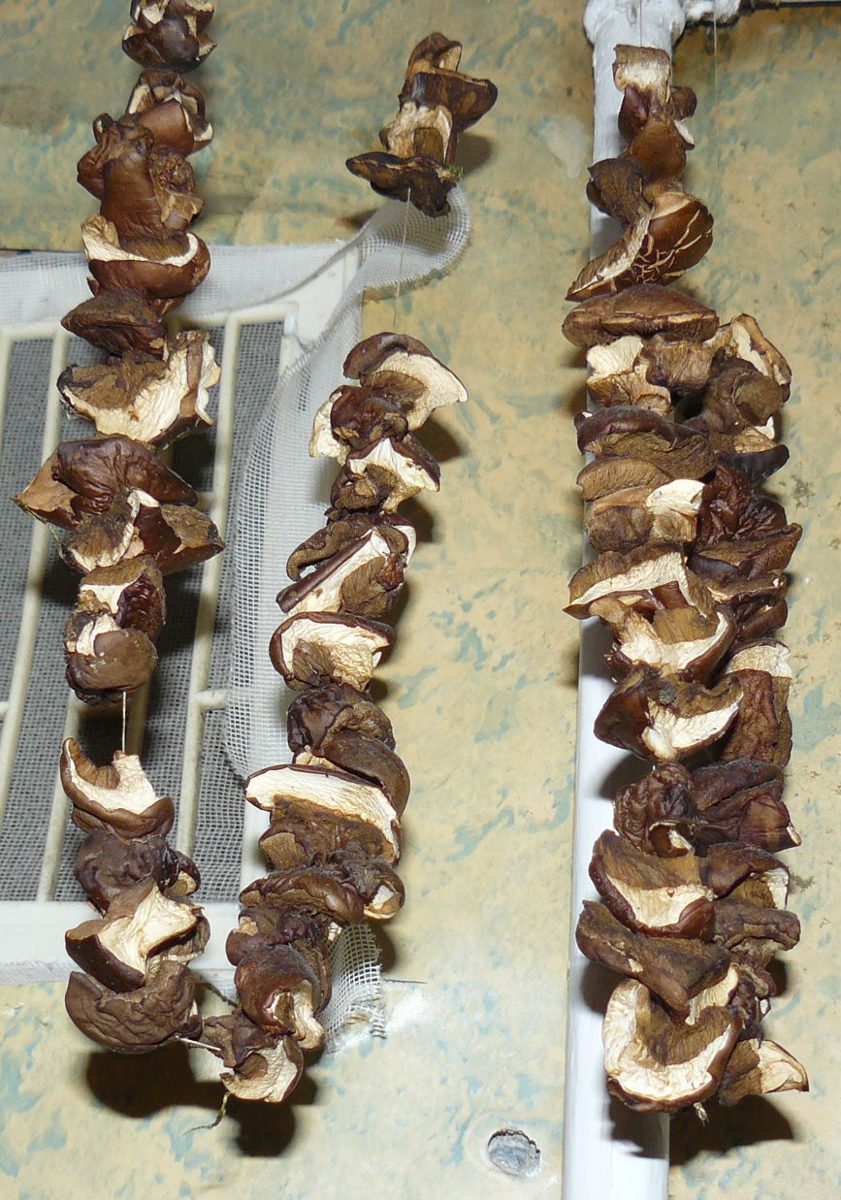
40 g dried porcini mushrooms (or a mix of porcini and bay boletes)
Abroad: USA, UK, Canada: dried porcini (bay boletes: bay boletes); Germany: getrocknete Steinpilze - 180 g onion (1 large, finely chopped)
- 30 g butter (or 2 tablespoons of oil)
- 1 tbsp (about 7 g) breadcrumbs (flat)
- 1 pc egg yolk (not necessarily, binds the filling; without it, uszka are vegan)
- salt and pepper (to taste)
- 1 pinch dried marjoram (not necessarily)
For cooking
- 1 tbsp (15 ml) oil (for drizzling cooked uszka)
Method, step by step
-
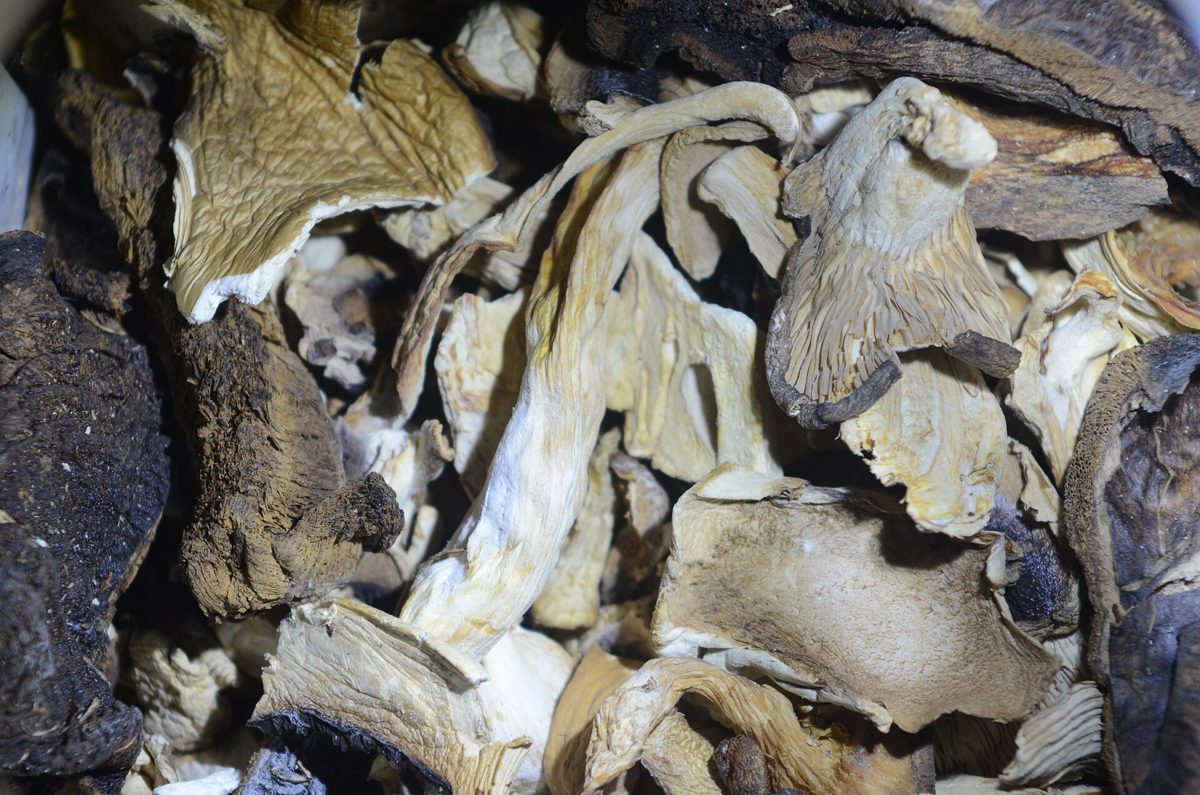
Soak the dried mushrooms in about 2 cups of cold water for at least an hour, preferably overnight in a cool place.
-
Cook the mushrooms in the soaking water, covered, over low heat: 20 minutes, or if soaked overnight, only 2 minutes. Drain, and strain the broth through cheesecloth and set aside for borscht. Rinse the mushrooms to remove sand and chop very finely or grind in a meat grinder with coarse holes.
-
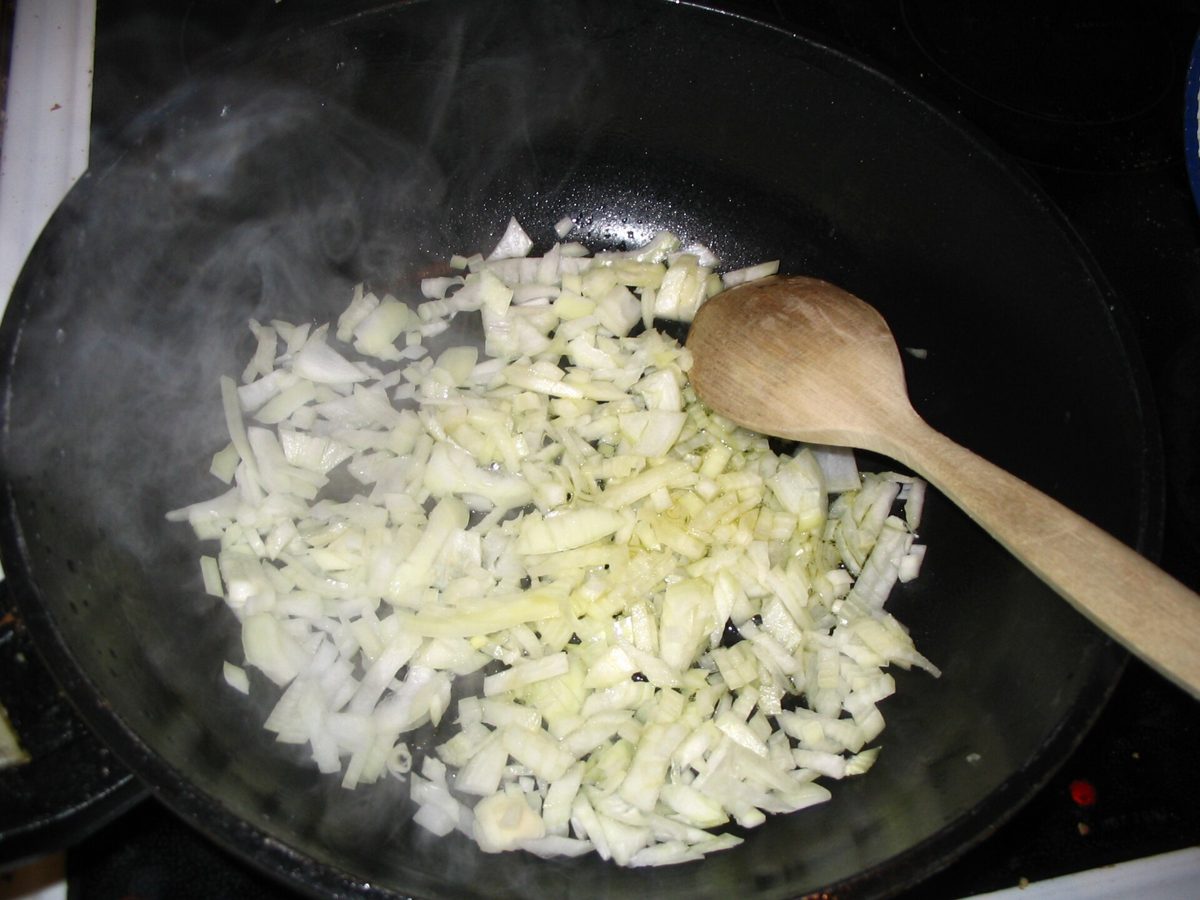
Finely chop the onion and sauté in butter over medium heat for about 10 minutes. Add the mushrooms, salt, pepper, and marjoram, and sauté for another 5 minutes, stirring, until the filling is completely dry. A wet filling causes the uszka to open during cooking.
-
Transfer the filling to a bowl and cool completely. Only when cold, mix with the egg yolk and breadcrumbs, taste, and season.
-
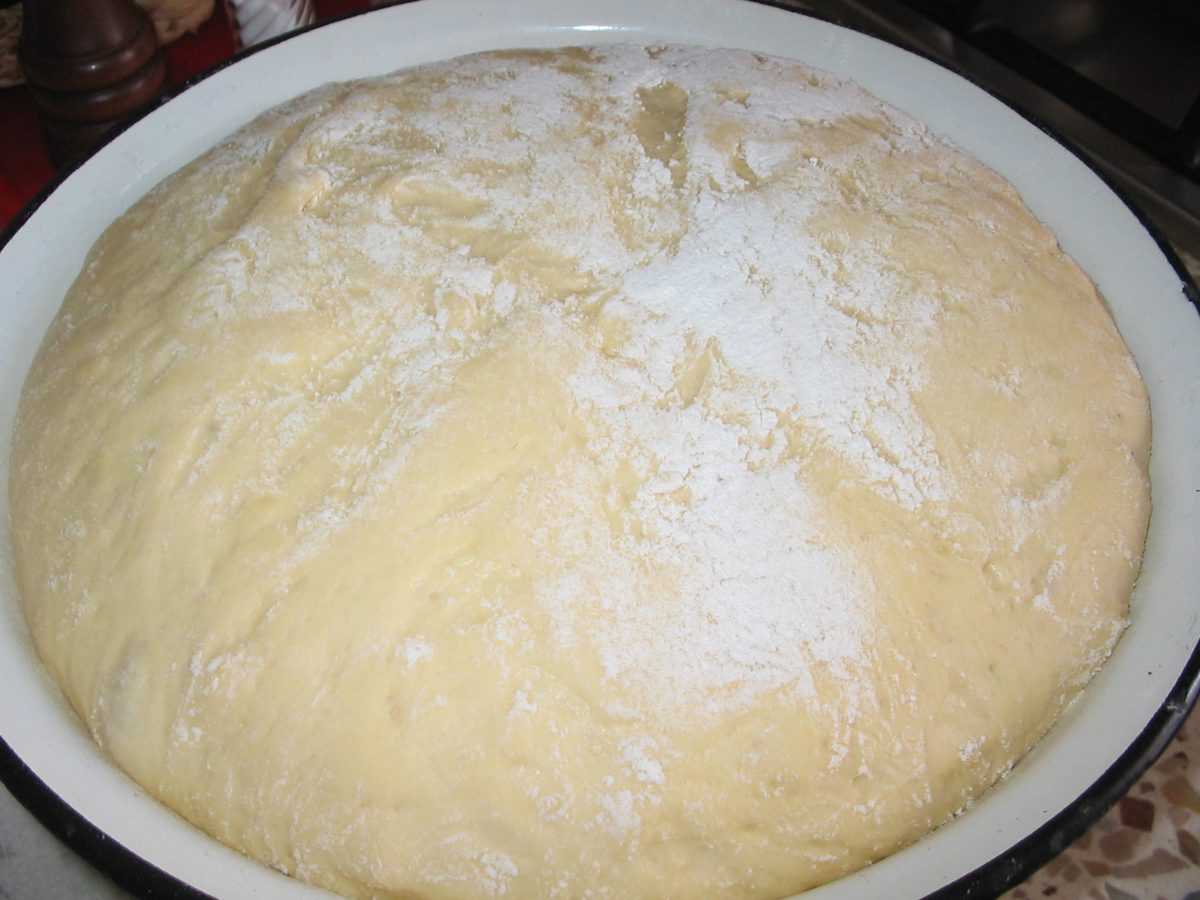
Dough: mix the flour with salt and oil, pour in very hot water, and mix with a spoon. When the dough cools, knead until soft and elastic. Wrap in plastic wrap and let rest for 30–60 minutes, so it does not shrink when rolling out.
-
Roll out the dough in batches very thinly, to 1–2 mm, much thinner than for pierogi. Keep the rest under a damp cloth. Cut into small squares or cut out circles with a diameter of no more than 5 cm.
-
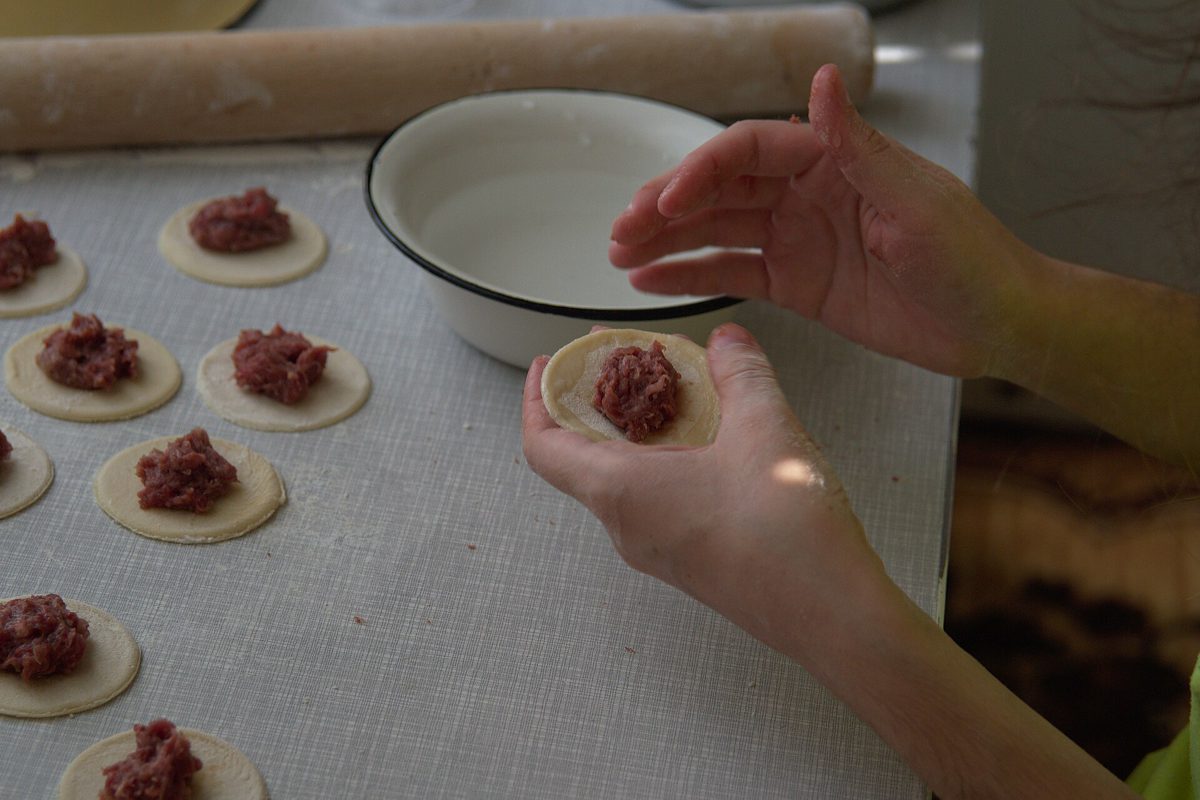
Place a small amount of filling, about half a teaspoon, in the center of each piece of dough. The edges of the dough must remain clean.
-
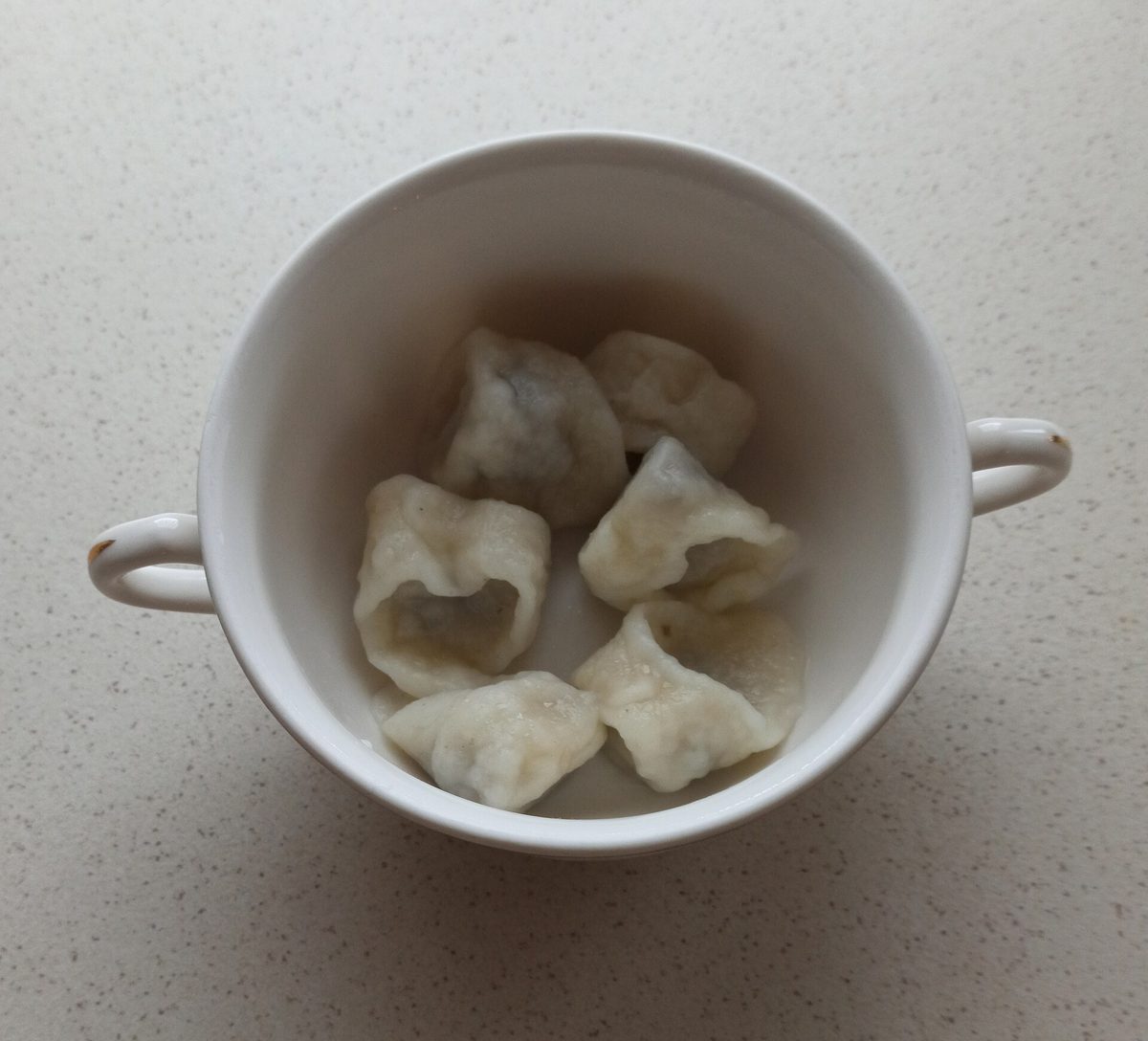
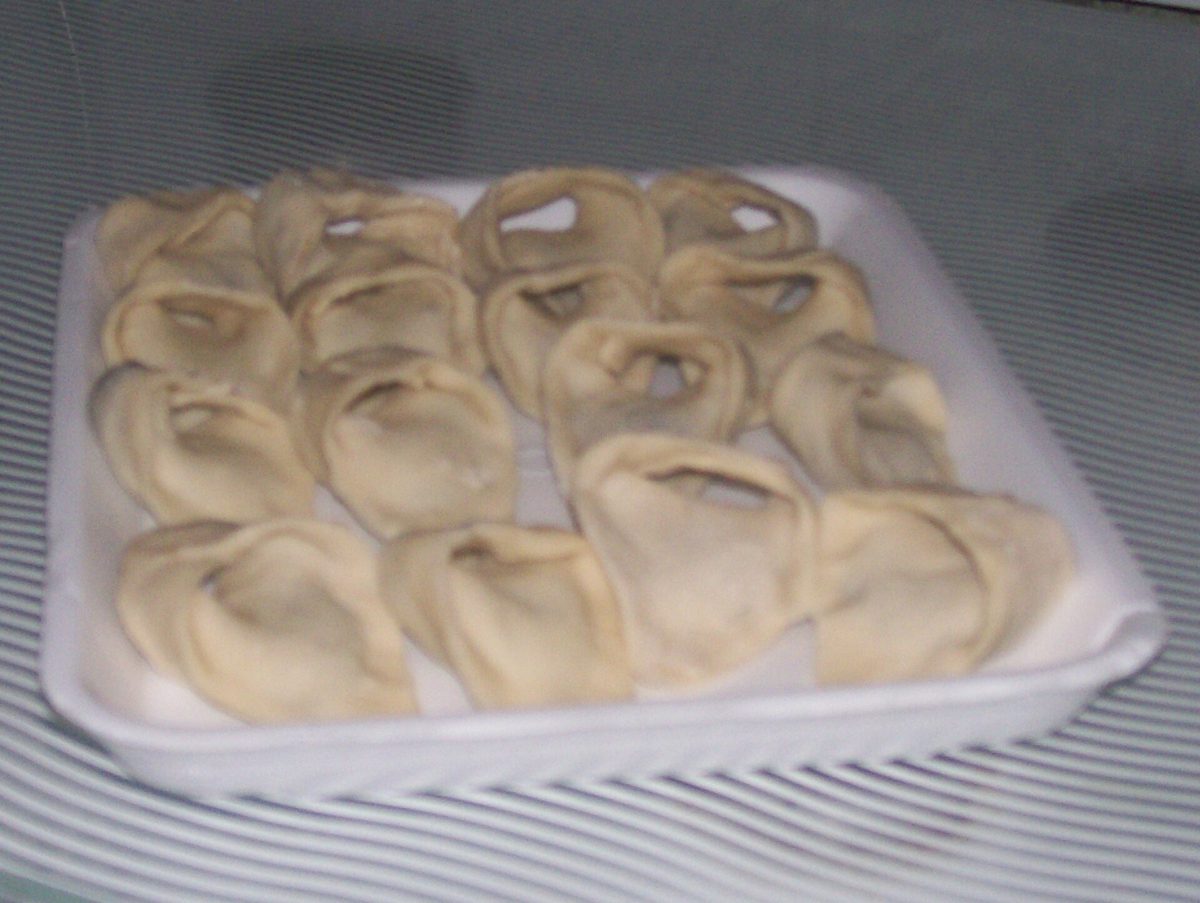
Fold the square into a triangle and press the edges firmly with your fingers, moistening with water if necessary. Join the two opposite corners of the triangle together and pinch to form an uszko. Cover the finished uszka with a damp cloth.
-
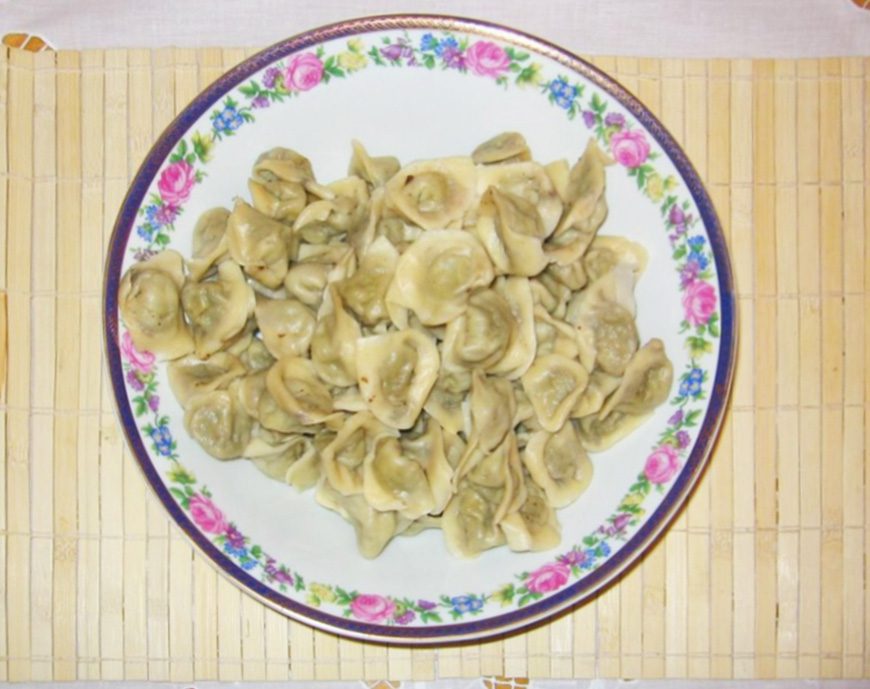
In a wide pot, bring salted water to a boil and reduce the heat to a gentle simmer. Drop the uszka in batches of about 30 and gently stir at the beginning to prevent sticking to the bottom. Remove them with a slotted spoon no later than 2 minutes after they float.
-
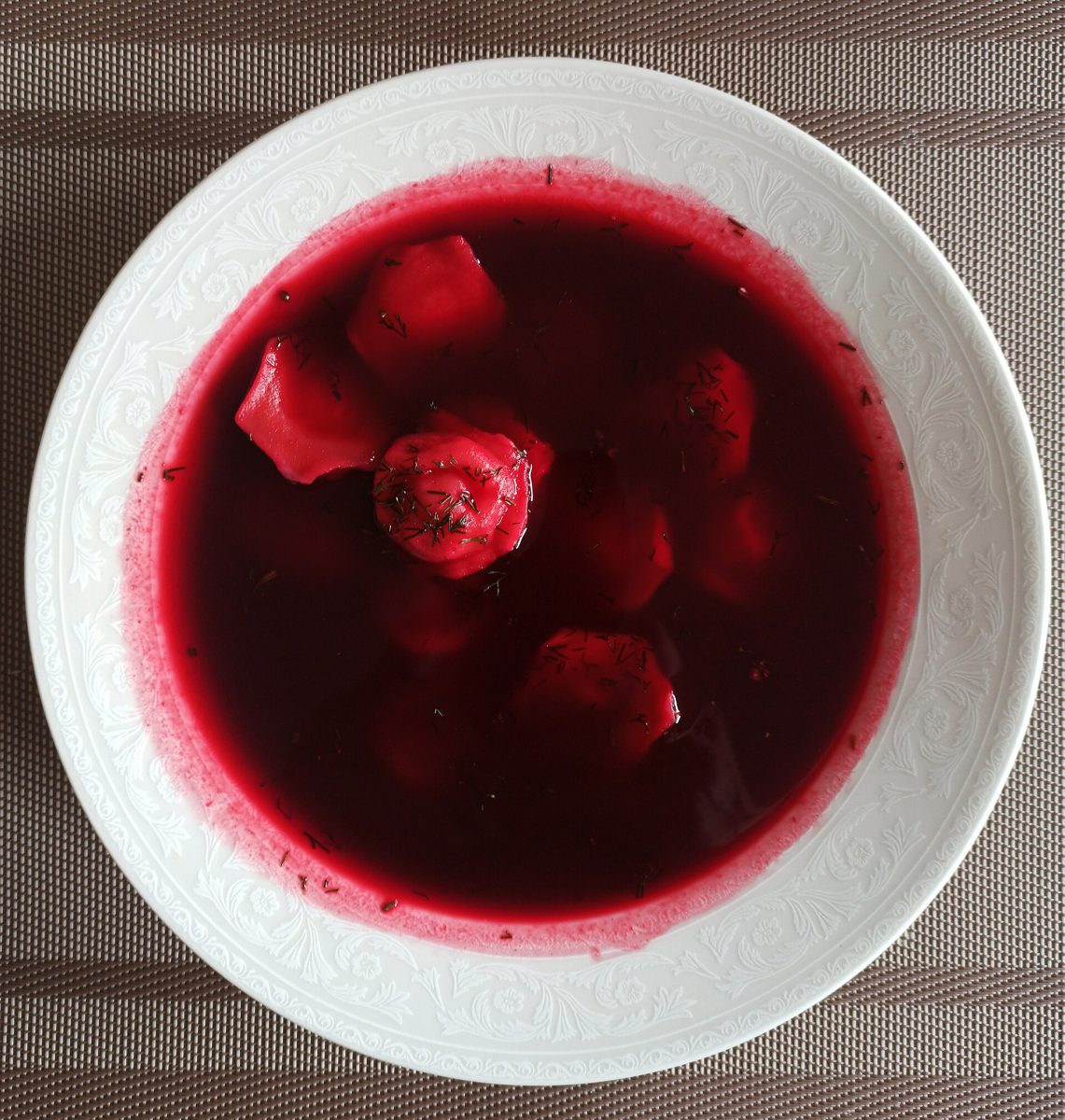
Toss the drained uszka with a bit of oil to prevent sticking, and serve in hot, clear red borscht.
Photos