
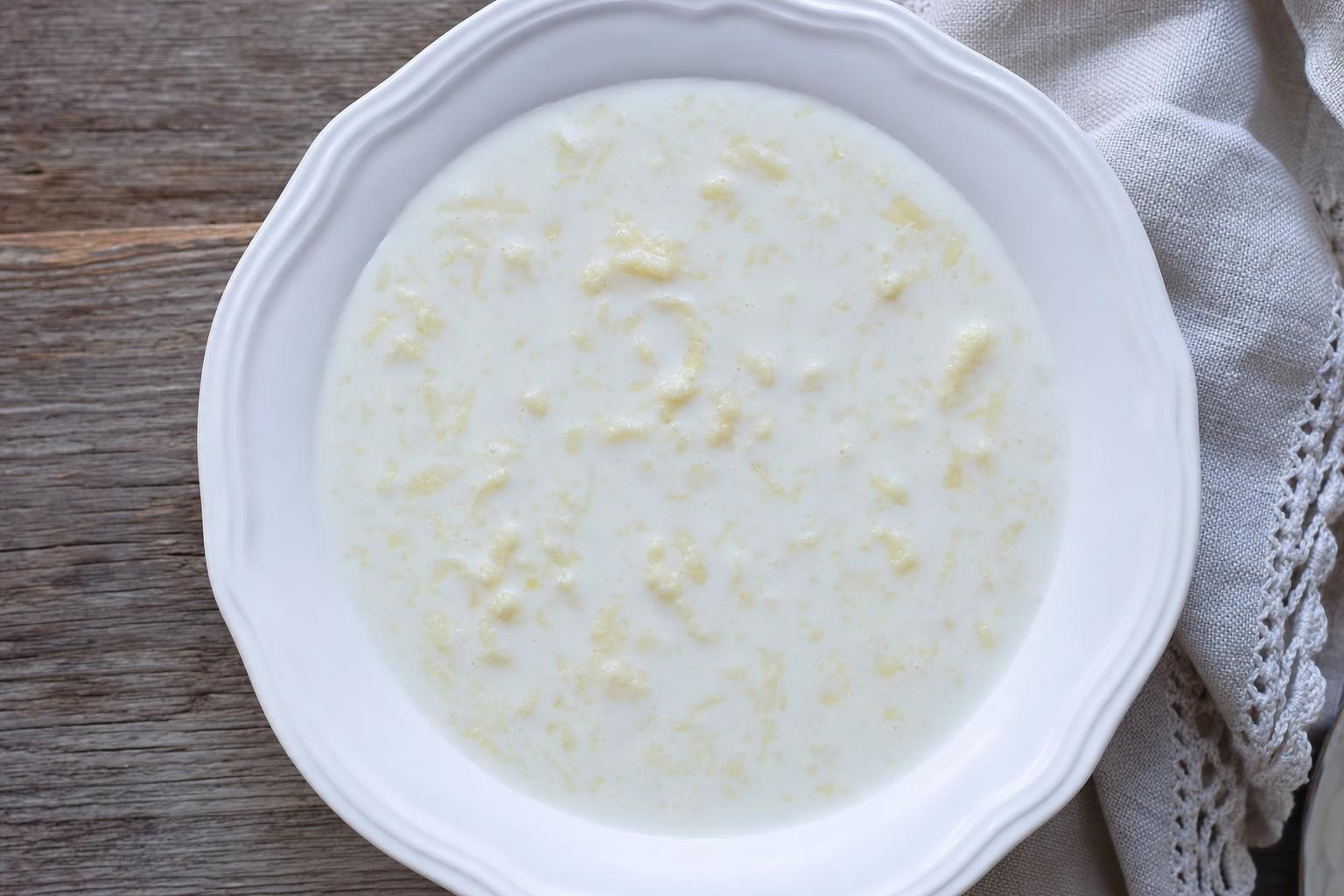
The story behind the recipe
Milk soup is, according to available sources, a savory or sweet soup made with milk and starchy products: rice, groats, flakes, pasta, dumplings, or dropped dough. For decades, it has been one of the staple dishes of inexpensive milk bars and is mainly eaten for breakfast, served warm to children, the elderly, and the sick. A Polish language expert calls it one of the flagship dishes of preschool cafeterias and milk bars from the PRL era and refers to it by the regional name 'milk soup'. The Małopolska Agricultural Chamber wrote in 2015 that for many people it is a 'childhood nightmare', while for others it is a 'pleasant memory of bygone times'.
When milk soup appeared on Polish tables is not definitively known: the sources we found do not specify. The Polish language expert writes that milk soups have been part of Polish cuisine for centuries, but does not provide evidence. It is certain that old cookbooks know many versions of it. Lucyna Ćwierczakiewiczowa in '365 Dinners for 5 Złoty' from 1871 describes ordinary noodles: a hard dough made from eggs and water is torn into small pieces or chopped with a cleaver and thrown into water or milk. Marta Norkowska in 'The Latest Cuisine' from 1903 places 'dropped dumplings in milk' among Lenten soups: two eggs and two tablespoons of flour are mixed with water to make a thin batter and poured through a paper funnel into boiling milk.
'Polish Cuisine' published in Inowrocław in 1912 suggested passing the dough through a sieve into boiling milk and warned that pouring 'by free hand' requires skill 'to prevent the formation of too large dumplings'. Elżbieta Kiewnarska in her book 'Soups and Sauces' from 1929 advised that the batter should be 'a bit thicker than for pancakes', and she added a spoonful of creamy butter to the bowl because 'it significantly enhances the flavor of any milk soup'. This recipe adheres to the dropped dumplings, just like Kiewnarska, AniaGotuje, and the Polish language expert. Versions with pasta, noodles, rice, and semolina are described in the tips.
Ingredients
Soup
-
1 l whole milk (pasteurized, preferably not UHT)
Abroad: USA: whole milk; UK: whole milk; Germany: Vollmilch 3.5% -
1 tbsp (about 14 g) butter (for the bowl or plates, plus a bit to grease the edge of the pot)
Abroad: unsalted butter - 1 tbsp (about 13 g) sugar (for the sweet version; add more or less to taste)
- cinnamon (not necessary, for sprinkling the sweet version)
Dropped Dumplings
- 2 pcs eggs (medium)
-
50 g wheat flour (type 450 or 500, about 5 level tablespoons)
Abroad: USA: all-purpose flour; UK: plain flour; Germany: Weizenmehl Type 405 - 1 pinch salt
Method, step by step
-
Prepare a pot. A stainless steel saucepan is best. Rinse it with cold water so the milk doesn't burn, and grease the inner edge with a bit of butter to prevent it from boiling over. Pour in the milk, and if you're making the sweet version, add the sugar right away.
-
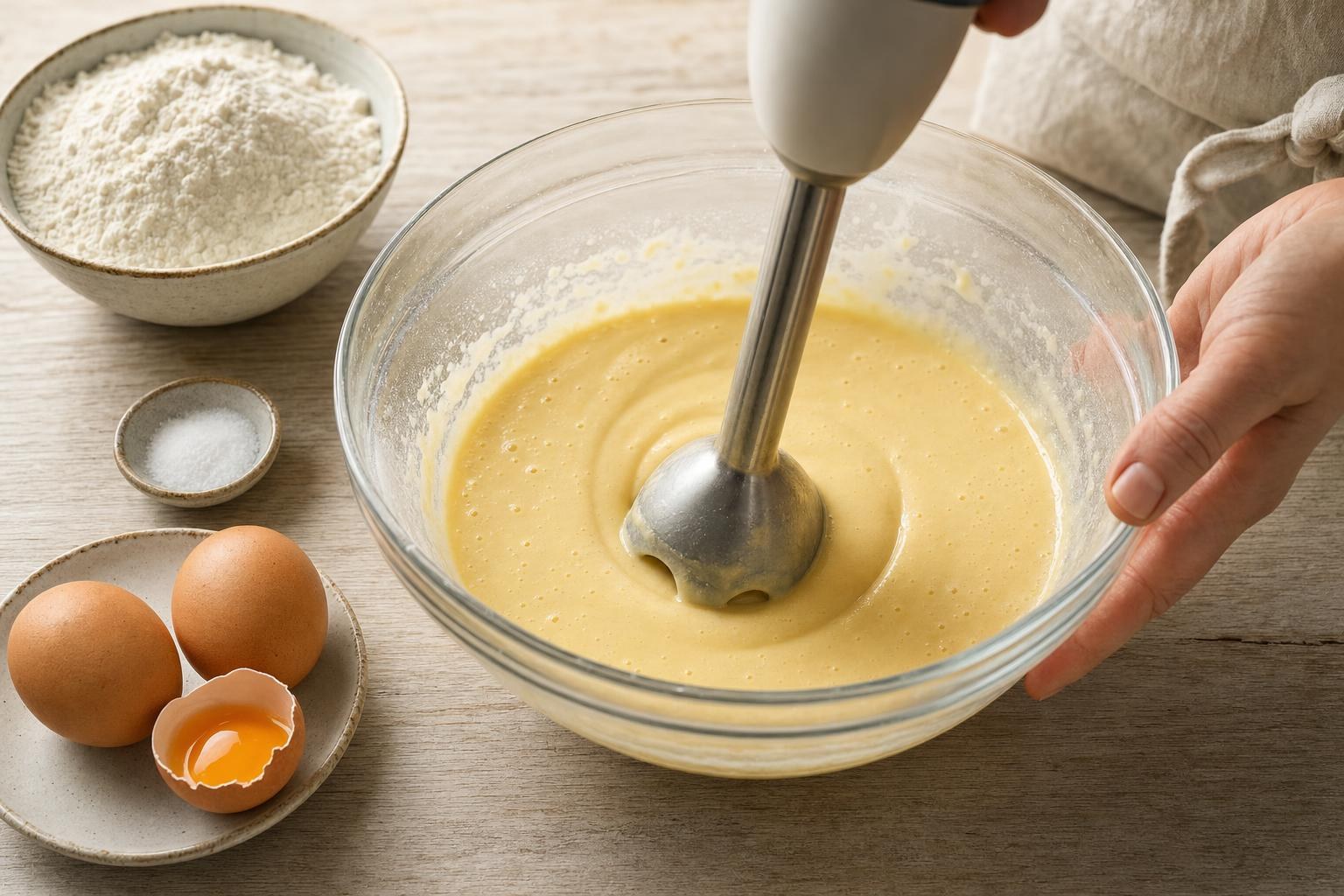
Make the batter for the dumplings. In a bowl, add the flour, crack in the eggs, and add a pinch of salt. Mix with a fork, whisk, or blender until the batter is completely smooth, without lumps. Using a blender takes just a few seconds.
-
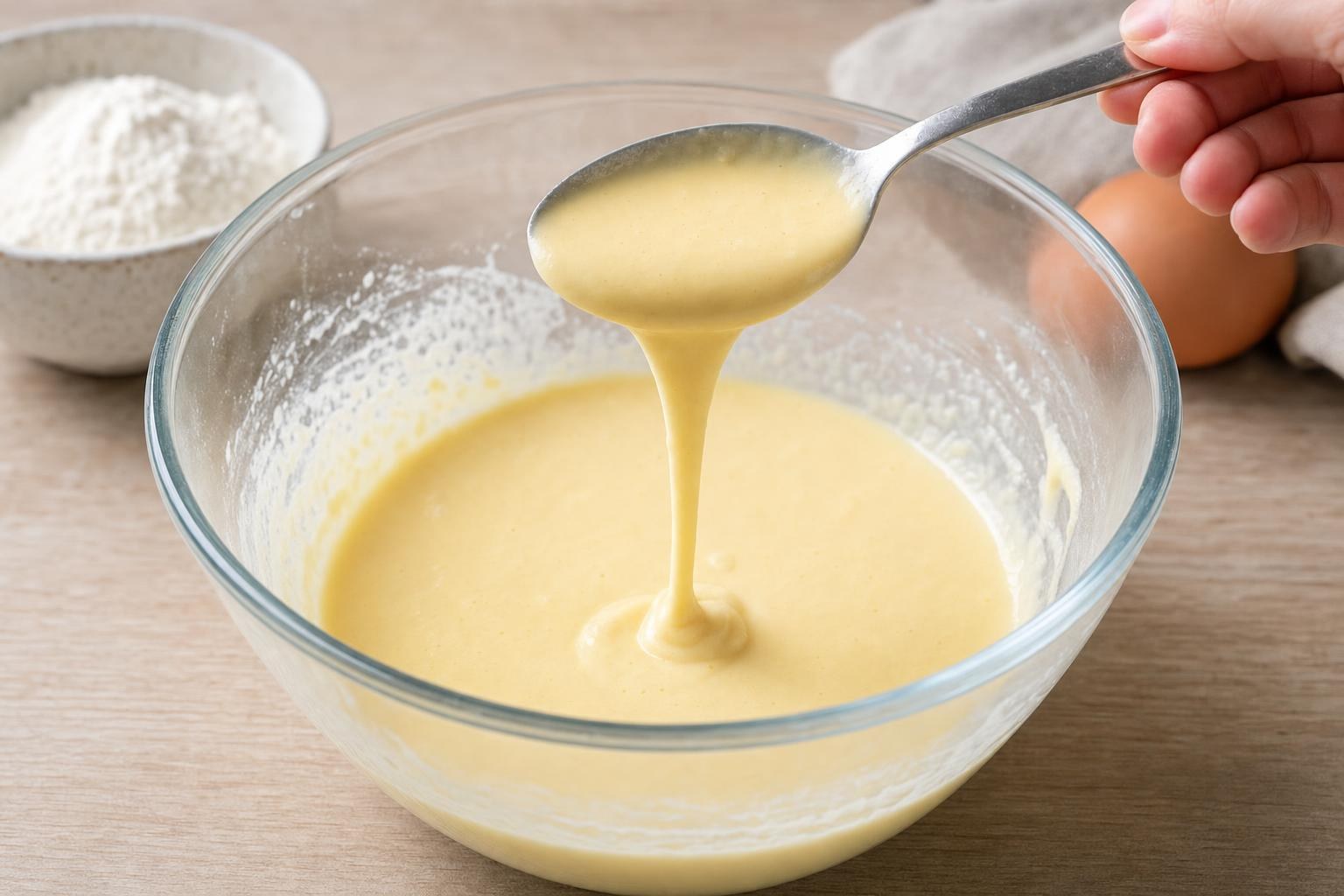
Check the consistency. The batter should be a bit thicker than for pancakes and flow from the spoon in a continuous stream. If it's too thick, add a tablespoon of milk or water. If it's too thin, add a tablespoon of flour and mix again until smooth.
-
Bring the milk to a boil over medium heat and do not leave the pot, as the milk boils over very quickly. When it starts to boil, reduce the heat so it simmers gently, not too vigorously.
-
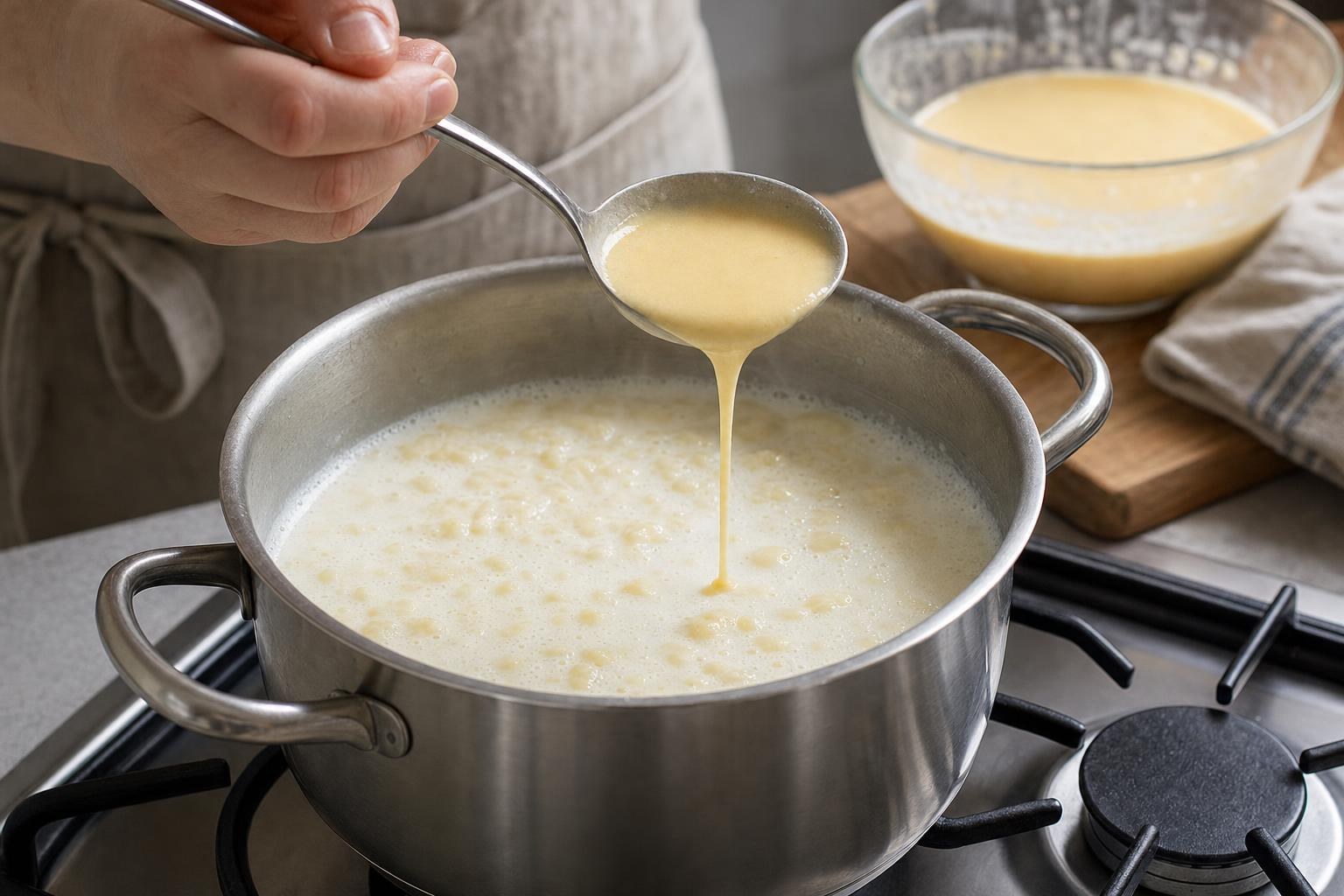
Slowly pour the batter into the boiling milk in a thin stream: from a spoon, from a jug with a spout, or through a funnel. Move the stream over the entire surface of the pot. The thinner the stream, the smaller the dumplings.
-
Do not stir immediately. Wait a moment until the dumplings set, puff up, and become fluffy. Only then gently stir and cook for about a minute, at most a minute and a half. It’s enough for the soup to boil once.
-
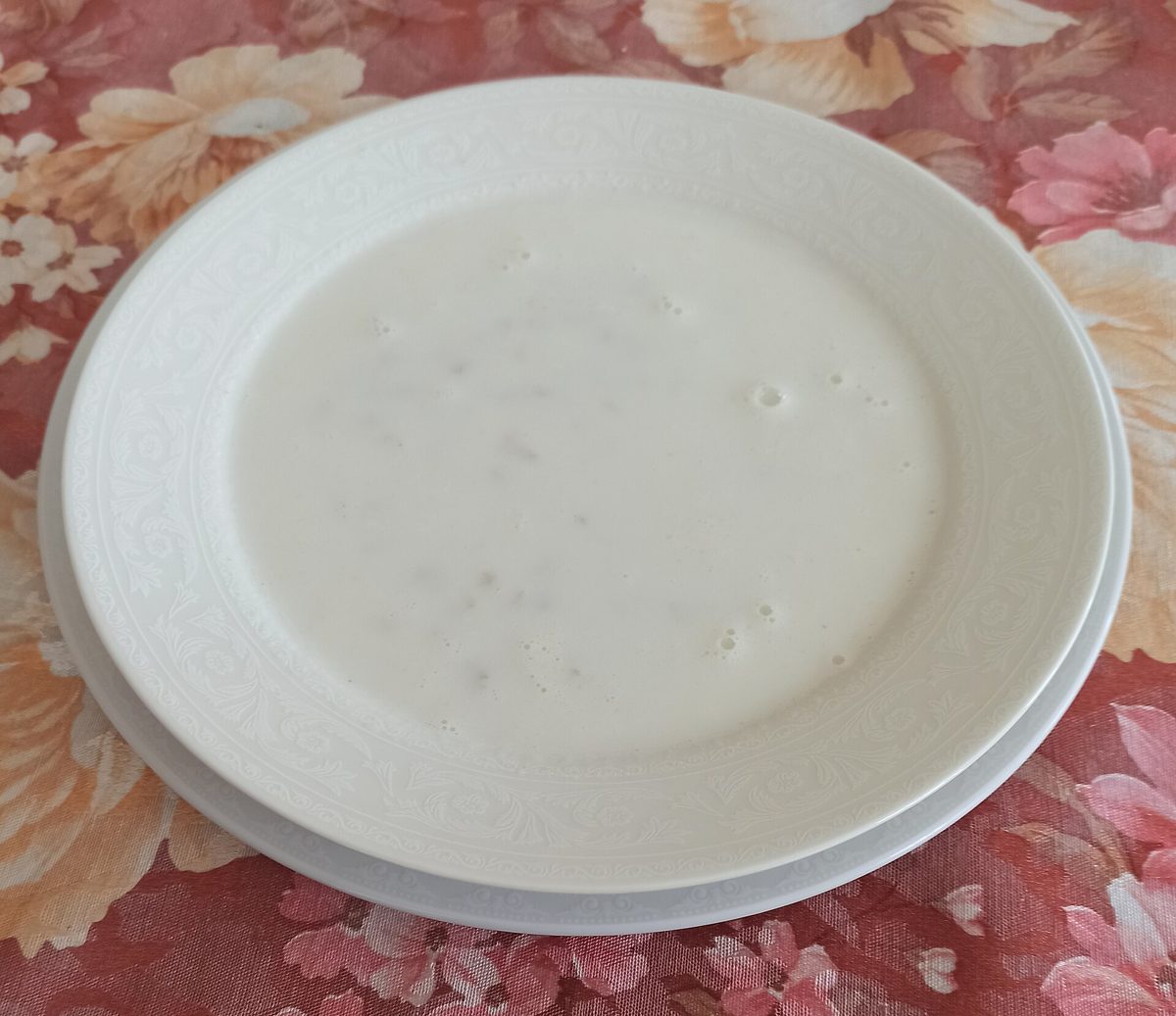
Place butter in a bowl or on plates and pour in the hot soup. You can sprinkle the sweet version with cinnamon mixed with a bit of sugar, and the savory version can be lightly salted. Serve immediately while the dumplings are fluffy.
Photos
Comments (0)
No comments yet. Be the first!