The story behind the recipe
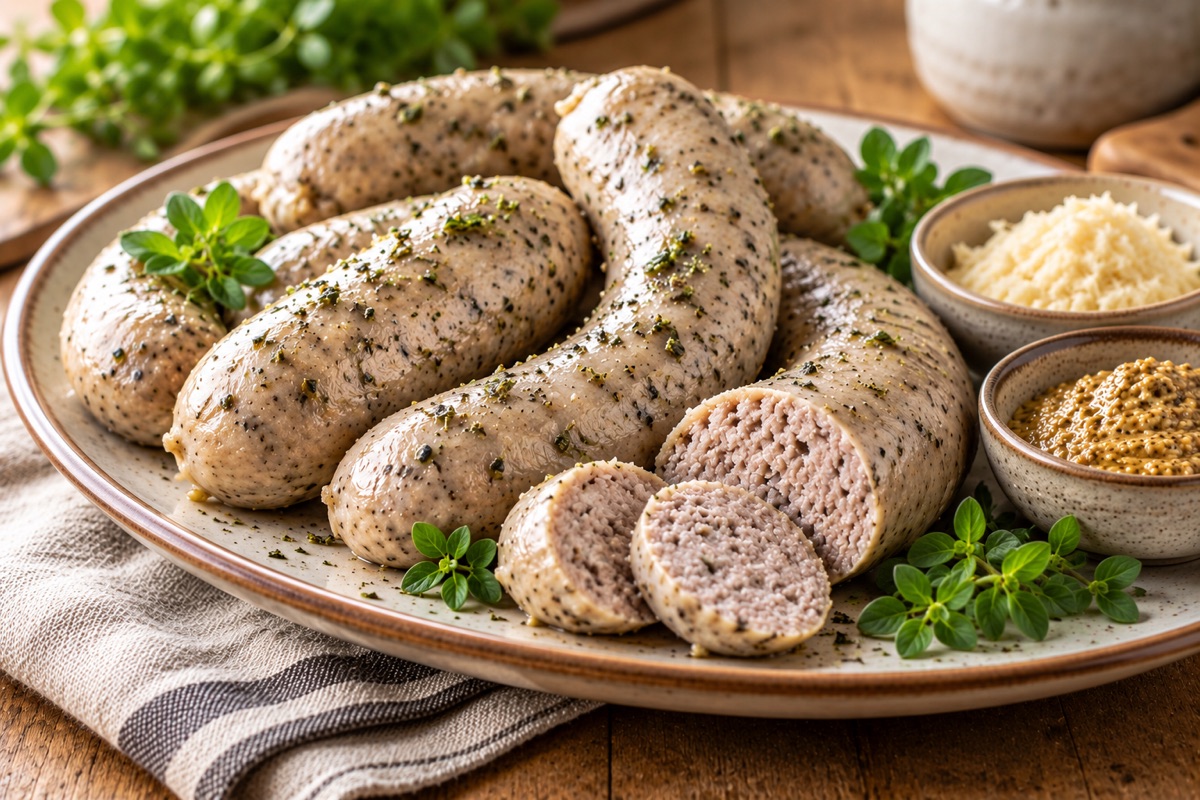
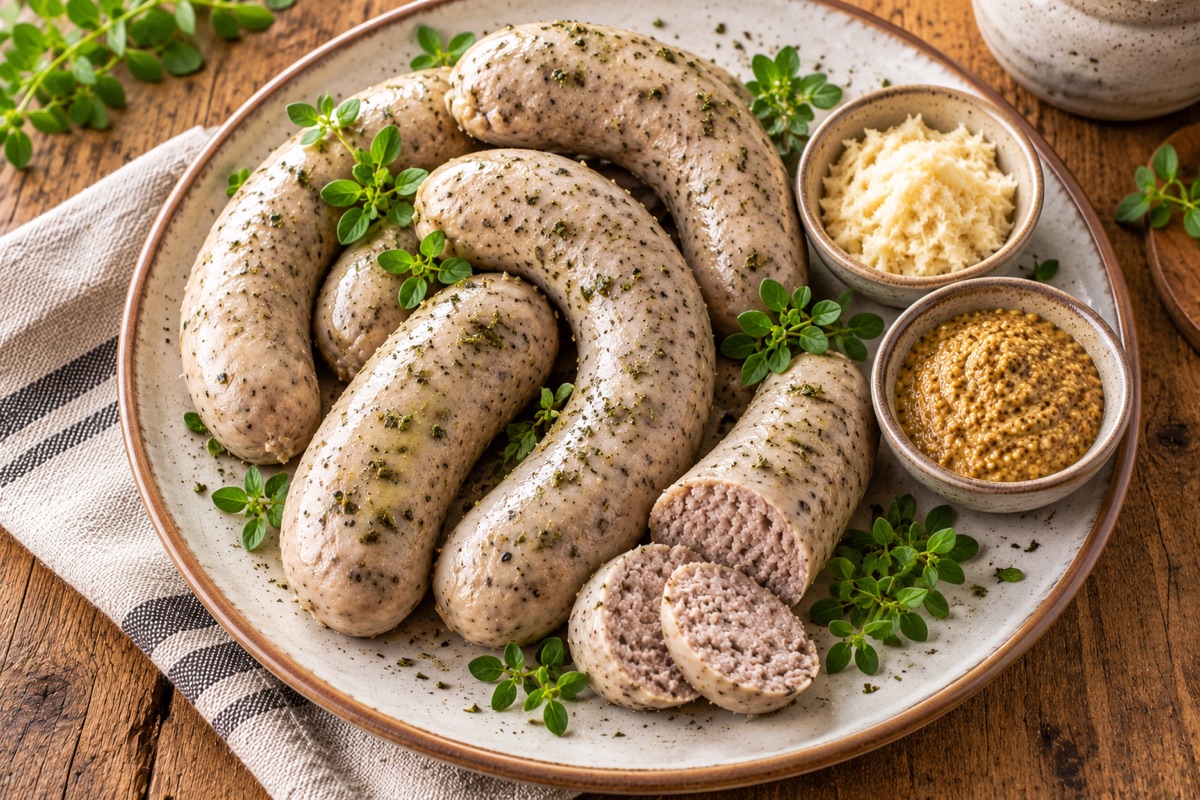
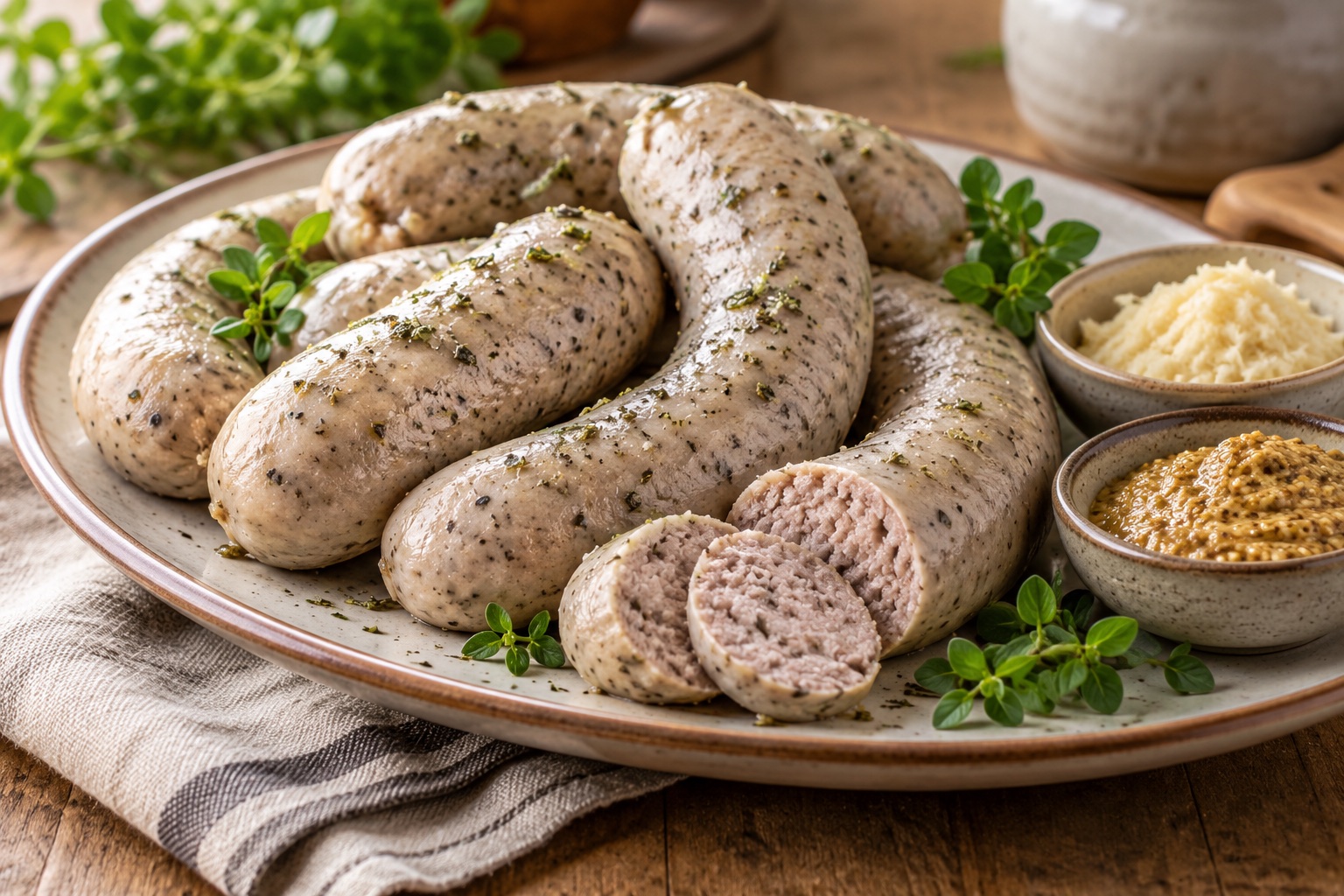
White sausage is closely associated with the Polish Easter table, although its varieties differ in the proportions of meat, fat, and spices. The ministerial description of Greater Poland white poached sausage documents the regional tradition of making it from pork, garlic, and marjoram.
The following recipe is a homemade interpretation of this family of flavors, without any claims of compliance with the protected specification of a regional product. We use regular salt, not curing salt; the finished sausage will be light, not deli pink. The challenge lies in maintaining coolness, properly binding the filling, and evenly stuffing without overfilling the casing. You will need a meat grinder, a sausage stuffer, a scale, and two thermometers or one probe used sequentially.
Ingredients
Meat
- 600 g pork shoulder (boneless, chilled)
- 200 g pork neck (boneless, chilled)
- 200 g raw bacon (without skin and bones, not cured)
Filling
- 150 ml water (very cold)
Spices
- 18 g salt (regular, not curing salt)
- 10 g garlic
- 4 g dried marjoram
- 2 g black pepper
Casing
- 1 package natural pork casings (about 3 m needed, caliber 28–32 mm)
Method, step by step
-
Prepare the casings according to the manufacturer's instructions: usually, you need to rinse off the salt and soak them in water. Check for blockages by passing water through the center.
-
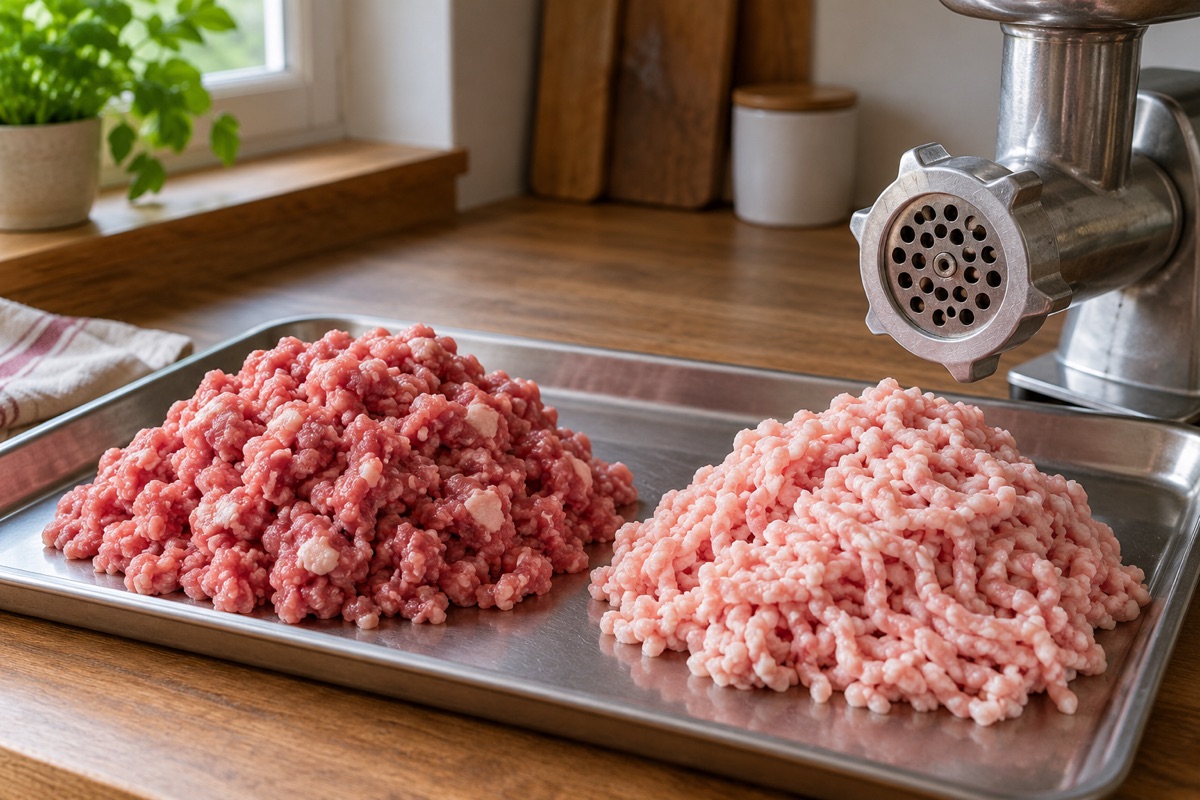
Clean the meat of tough membranes and cartilage, and cut it into cubes. Chill to about 0–4°C, but not to hard ice. Grind the shoulder and neck through an 8 mm plate, and the fattier bacon through a 4–5 mm plate. Set aside portions in a cool bowl.
-
Crush the garlic with the measured salt. Crumble the marjoram in your hands. Measure the pepper and cold water. Do not measure the salt with a random spoon: a scale is needed for consistent flavor.
-
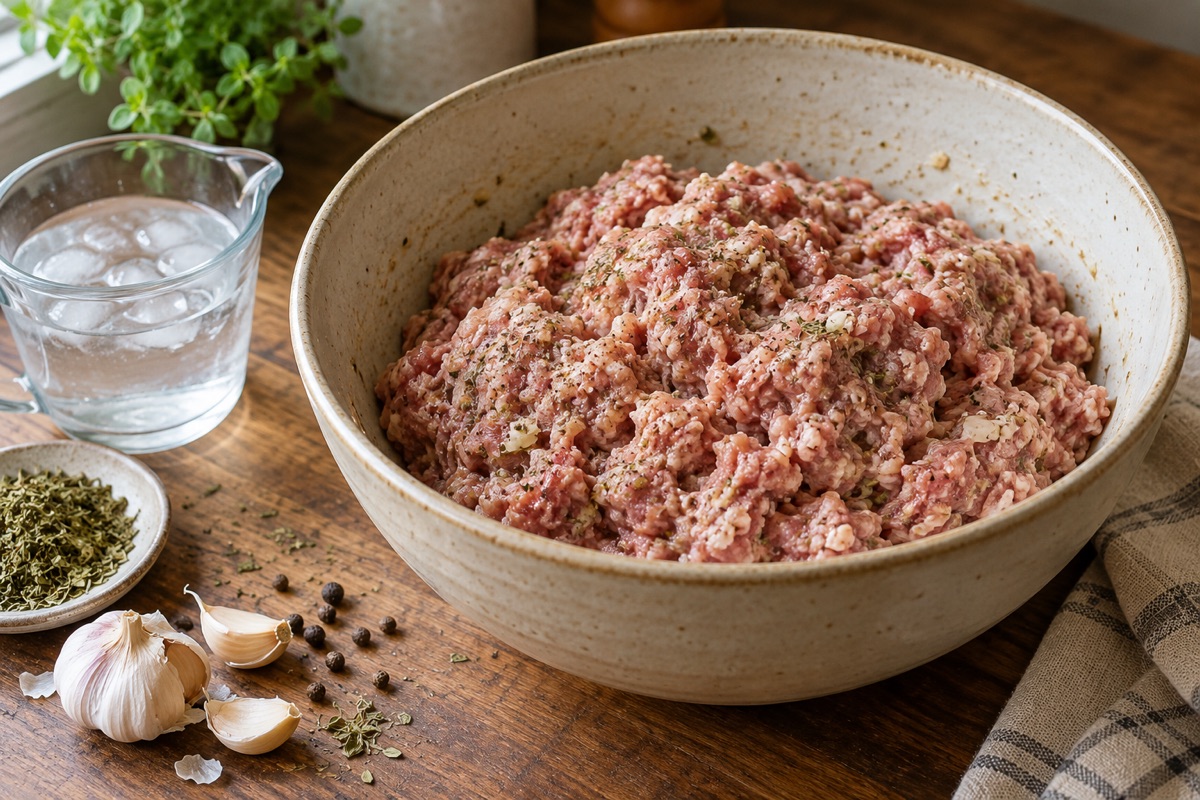
Combine the meats with the spices. Gradually add very cold water in several portions, kneading after each addition until absorbed. Do not pour in all at once. The bowl should remain cool.
-
Knead for several minutes until the filling noticeably thickens and becomes sticky. If it starts to warm up, place the bowl in the fridge. Fry a small test patty to at least 72°C and only after cooking check the salt and spices. Do not taste the raw mixture.
-
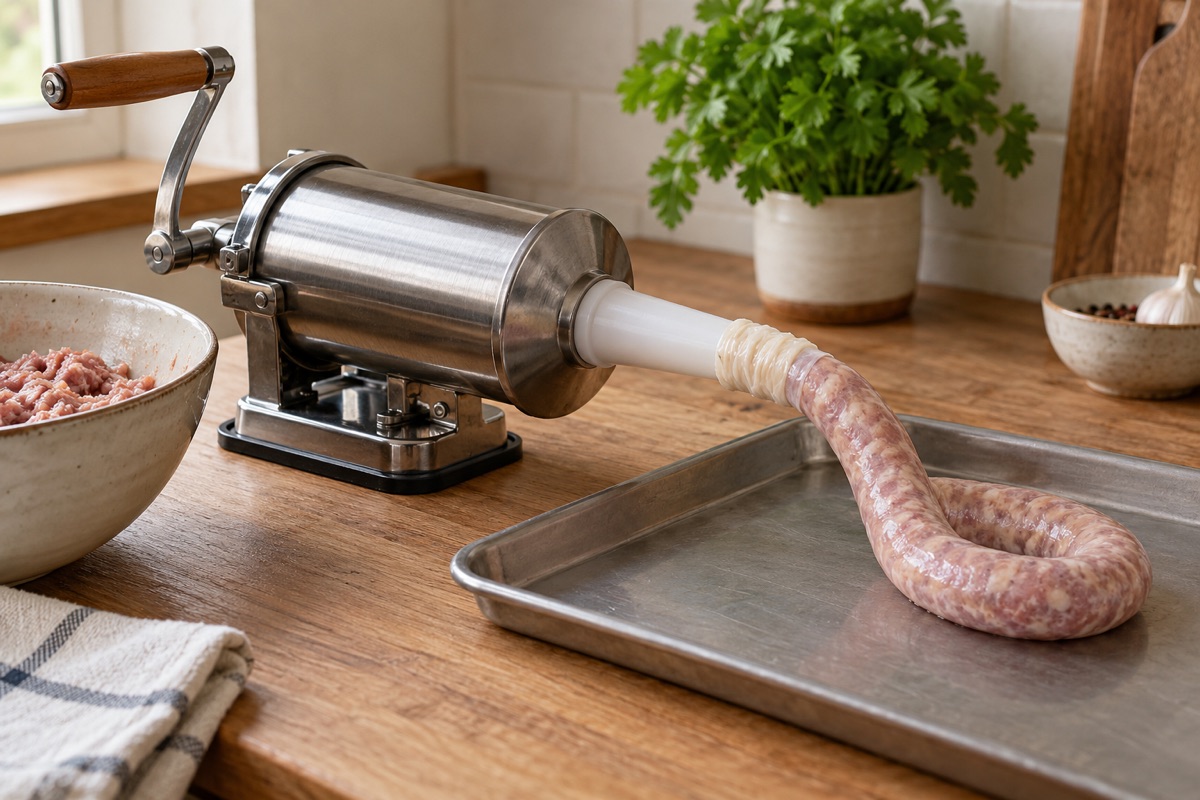
Fill the stuffer with the filling, pressing small portions to limit air pockets. Slide the prepared casing onto the moistened funnel. Leave a few centimeters of free end; first, release the air from the funnel.
-
Squeeze the filling evenly while supporting the casing. Fill it tightly, but with a little slack, as you will still need to form links. Do not pull hard on the casing and do not work with the bowl of meat standing in warmth for long.
-
Lay the filled section in a loose coil on a clean tray. If you see a noticeable air bubble, prick it with a thin clean needle, sparingly. Do not puncture the entire surface.
-
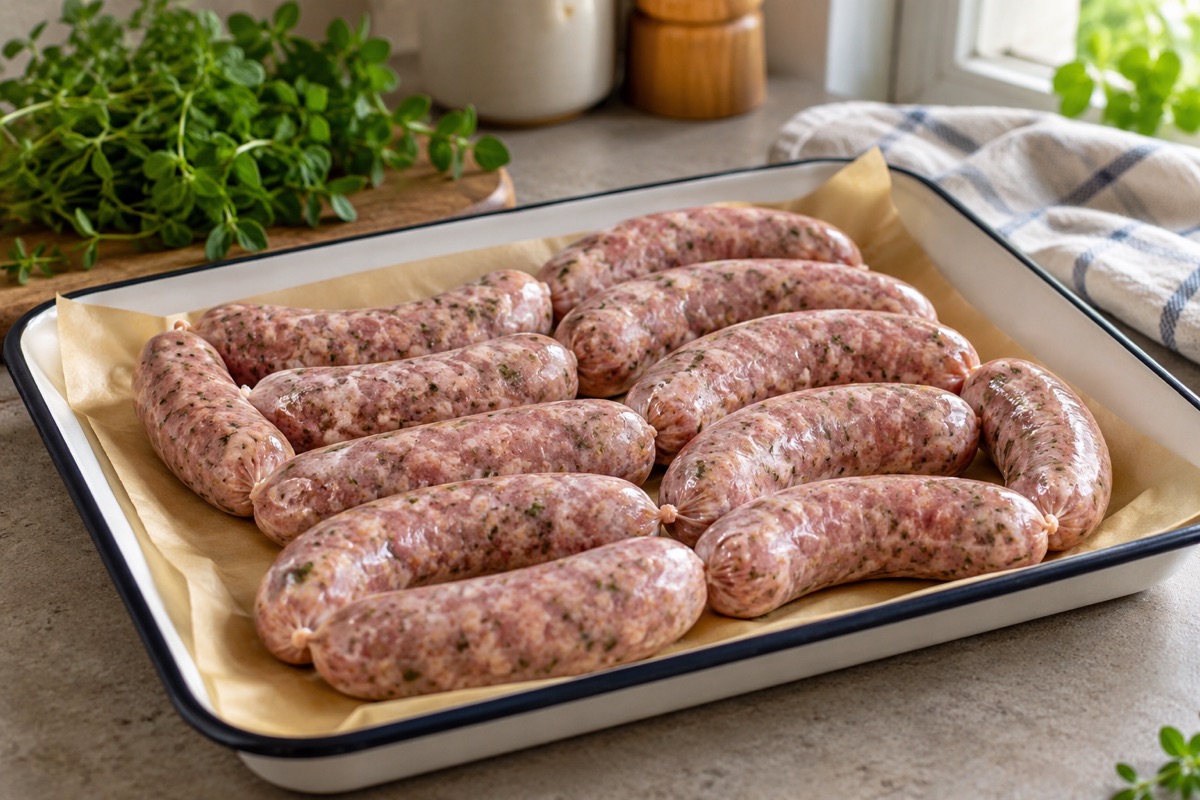
Measure links about 12–14 cm long. Pinch the filling at the division point and twist the next sections alternately in opposite directions. Tie the ends. You will get about 10–12 sausages, depending on the caliber and length.
-
Lay the sausages in a single layer, cover, and chill for about 30 minutes. Meanwhile, in a wide pot, heat water to 77–80°C. Do not bring it to a vigorous boil.
-
Place the sausage in such a way that the water covers it and the links are not cramped. Maintain 77–80°C, monitoring the water with a thermometer. Poach for approximately 20–40 minutes; after immersing the cold sausage, the heating will require adjustment.
-
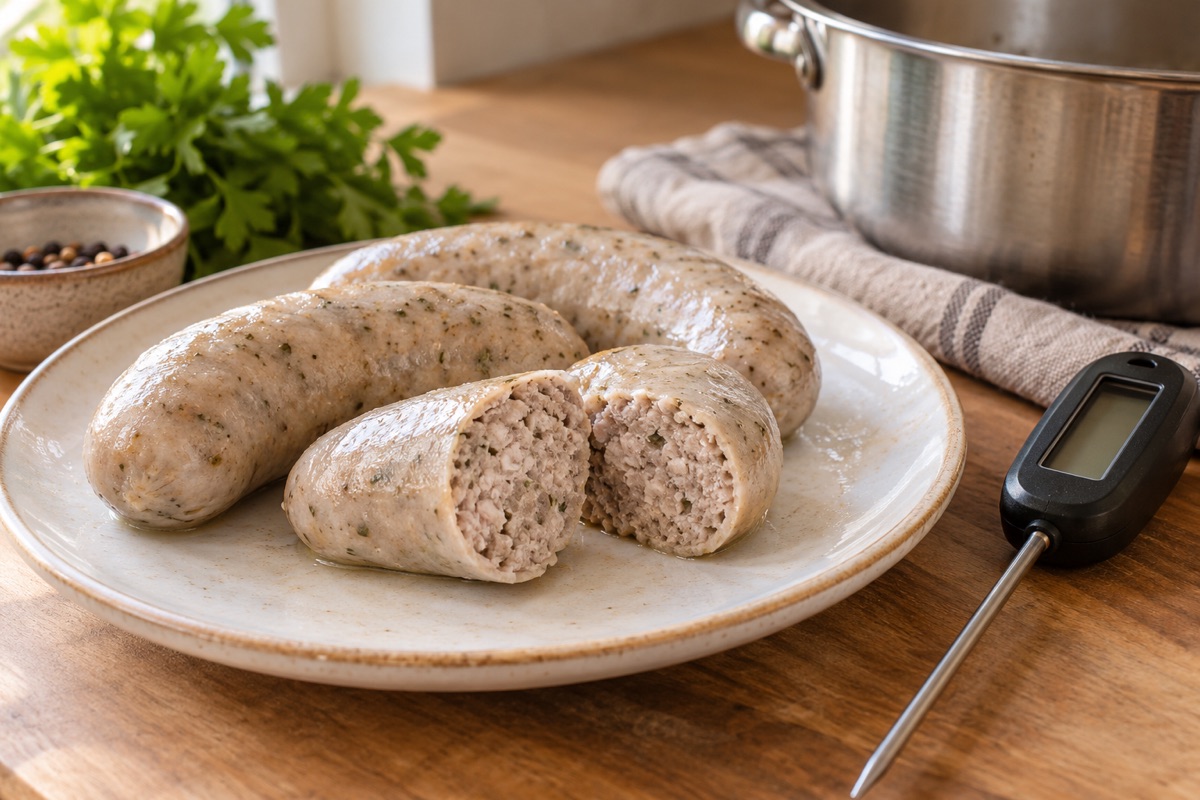
Insert a thin probe from the end into the center of the thickest sausage. It must reach at least 72°C. If it has not yet reached that temperature, continue poaching. Cut one test piece to assess the binding, but color does not replace measurement.
-
Remove the finished sausages with tongs, without piercing them with a fork. Serve hot with horseradish, mustard, and bread, or use as an addition to żurek (sour rye soup). Do not leave the entire batch in warm water for hours.
-
Quickly chill the sausages for later, for example, in a clean container with cold water and ice, then dry and place in a covered container in the fridge. Start the entire cooling stage immediately after poaching; store portions before two hours have passed.
Photos