The story behind the recipe
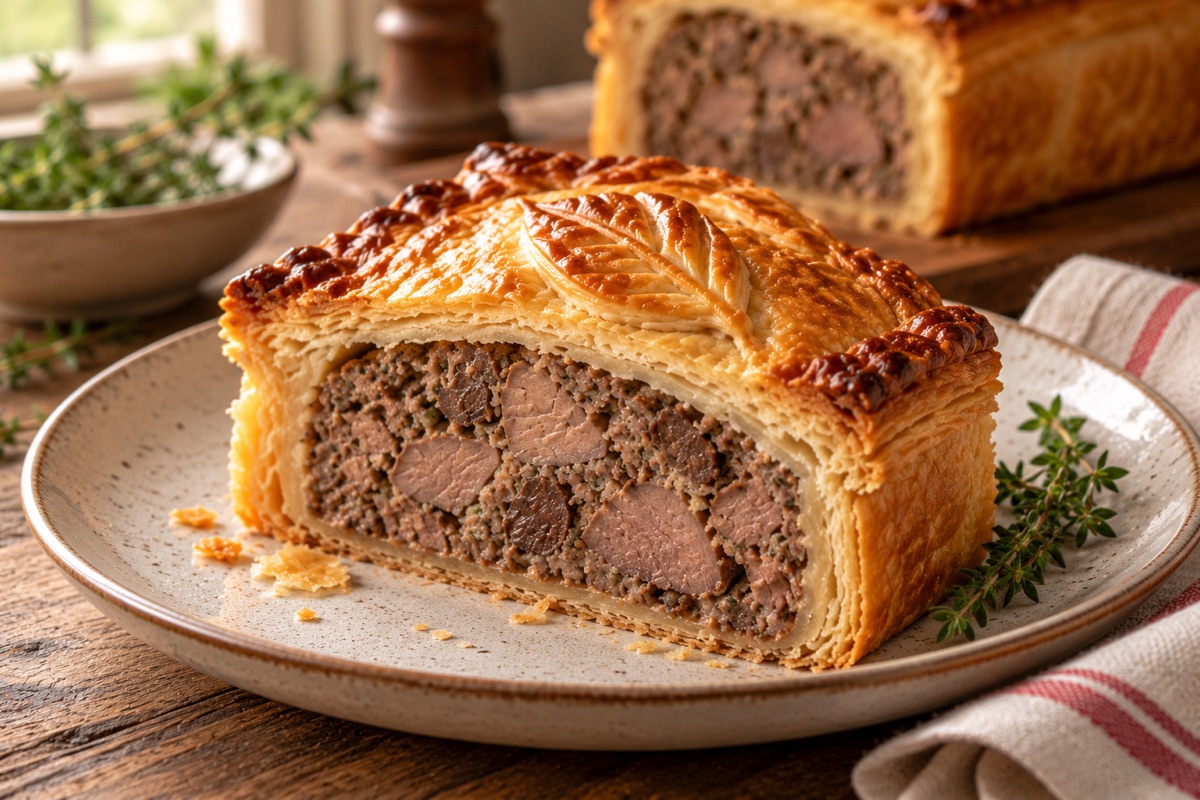
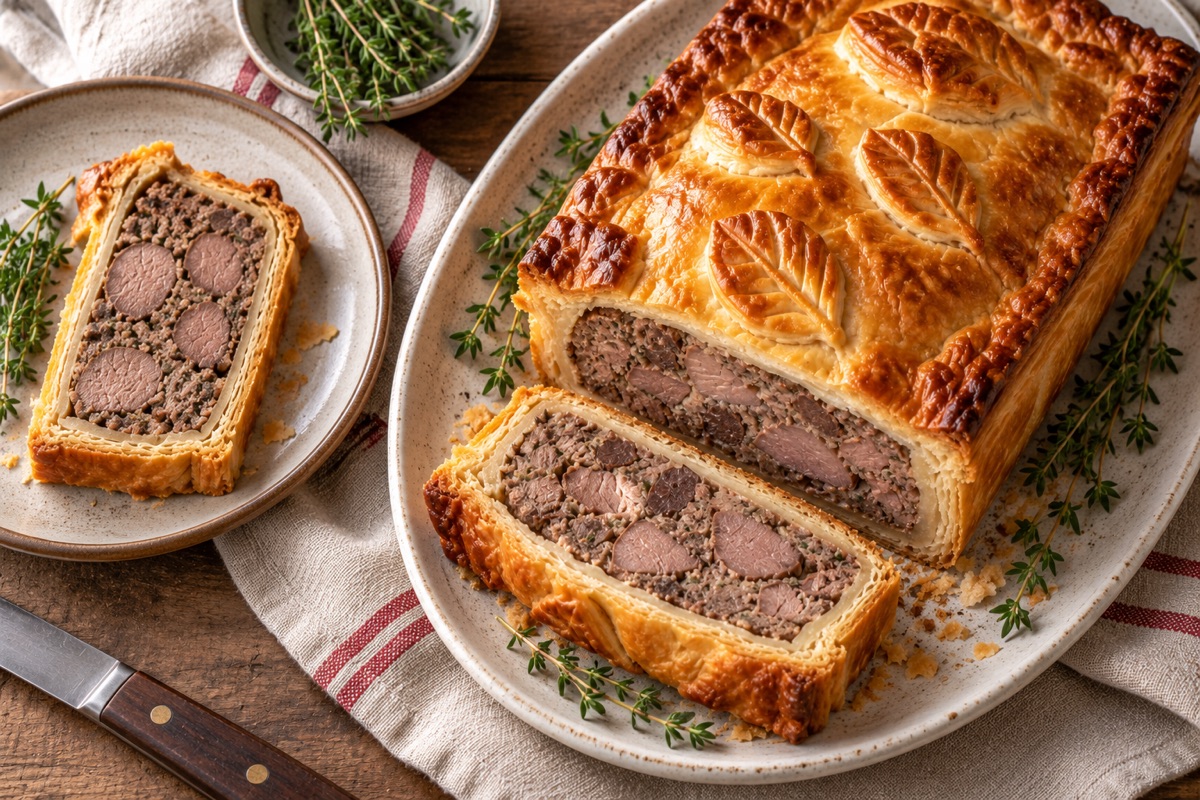
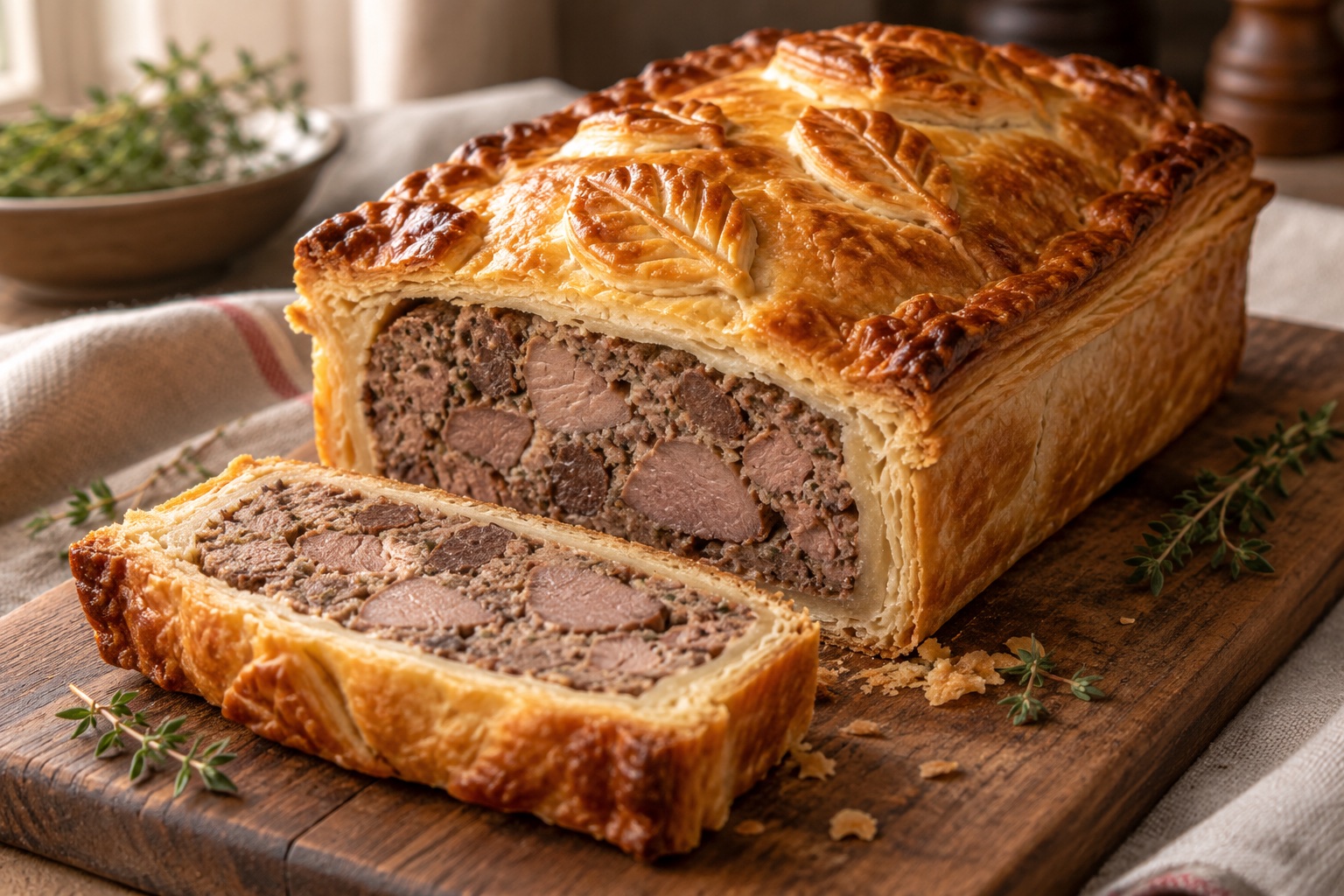
In the past, pâté was often a filling enclosed in dough, not just a mass baked without a cover. "The Lithuanian Cook" from 1913 describes game pâtés in puff pastry, with layers of filling and meat. This is part of the court and borderland tradition, common to several cuisines of the former Commonwealth.
In this homemade version, part of the braised meat remains in chunks, while part is combined with a finer filling. We make the dough ourselves, with six single folds. A cool kitchen, time for resting between turns, and a thermometer are necessary. The proportions are modern; we do not claim to recreate the old recipe literally.
Ingredients
Dough
- 400 g all-purpose flour (type 500 or 550, plus a small amount for dusting)
- 300 g butter (cold: 20 g for the dough, 280 g for layering)
- 200 ml water (very cold)
- 8 g salt
Filling
- 800 g hare meat (boneless and sinew-free)
- 300 g raw pork belly (skinless, unsalted)
- 150 g calf liver (cleaned)
- 150 g onion
- 100 g carrot
- 80 g parsley root
- 30 g butter
- 400 ml broth (unsalted; add water if needed)
- 40 g bread crumbs
- 1 pc egg
- 12 g salt (for the filling, ultimately after testing)
- 1 tsp (5 ml) marjoram
- ½ tsp (2.5 ml) pepper
- ¼ tsp (1.3 ml) nutmeg
- 2 pcs bay leaf
- 3 pcs allspice
Finishing
- 1 pc egg (for brushing the top)
Method, step by step
-
Clean the hare meat and bacon of sinews, dry, and cut into cubes about 3 cm. Chop the onion, and cut the carrot and parsley root into large pieces. Clean the liver separately and set aside in the fridge.
-
Knead a smooth dough from 400 g of flour, 200 ml of cold water, 8 g of salt, and 20 g of butter. Knead briefly, just until combined. Flatten into a square, cover, and chill for 30 minutes.
-
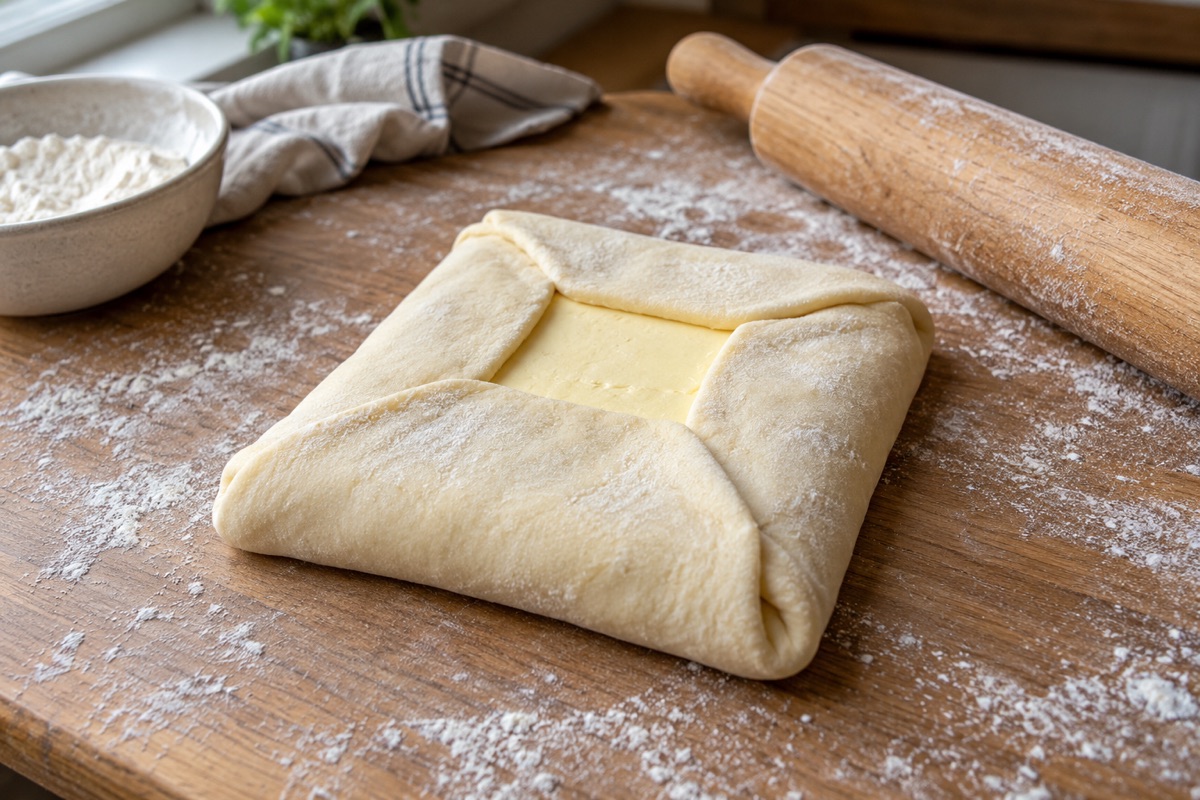
Flatten the remaining 280 g of butter between sheets of paper into a square about 15×15 cm. Roll the dough into a larger square, place the butter in the center, and close the four corners over it like an envelope. Seal the edges well, leaving no exposed butter.
-
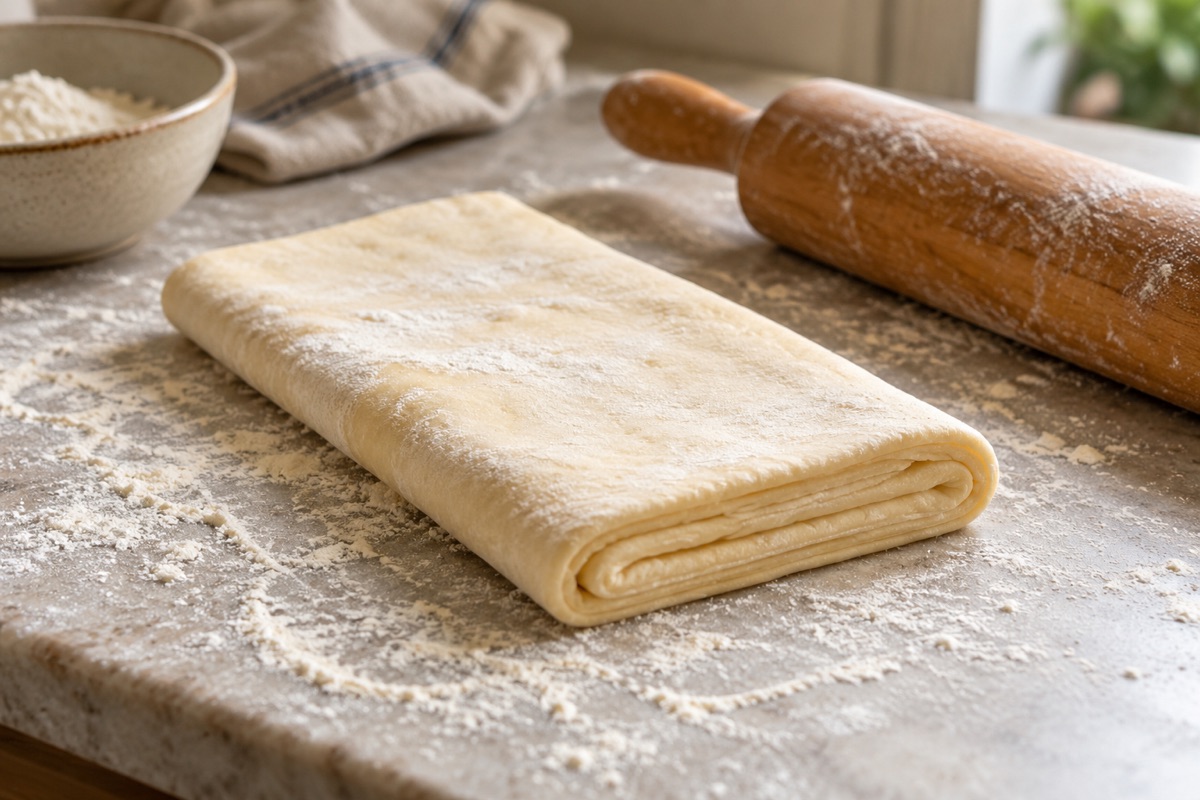
On a lightly floured surface, roll the package from the center towards the ends into a rectangle about 20×60 cm. Do not press down hard. Brush off excess flour. Fold the rectangle into thirds like a letter.
-
Turn the package a quarter turn, roll out again, and fold into thirds. Cover and chill for 40 minutes. Repeat this pair of actions two more times, always with cooling: you will perform a total of six single folds. If the butter softens, stop earlier and chill the package.
-
In the breaks between chilling the dough, heat 20 g of butter in a pot. Sauté the hare and bacon in batches, add the onion, and briefly sauté until translucent. Add the carrot, parsley root, bay leaves, and allspice. Pour in the broth, bring to a boil, and cover.
-
Simmer on low heat for about 90–120 minutes, until the hare meat is tender; an older animal may need longer. Check the liquid and replenish with hot water to prevent burning. Remove the spices and large vegetable pieces.
-
Cut the liver. Sauté it in the remaining 10 g of butter, then add 2–3 tablespoons of the braising liquid and heat until the center reaches at least 71°C. Do not assess readiness only by color. Set aside.
-
Remove the cooked meats, strain the sauce, and degrease. Spread the meat and liver into shallow containers, cool without delay, and chill in the fridge. Do not cool the entire hot pot with a thick layer of meat.
-
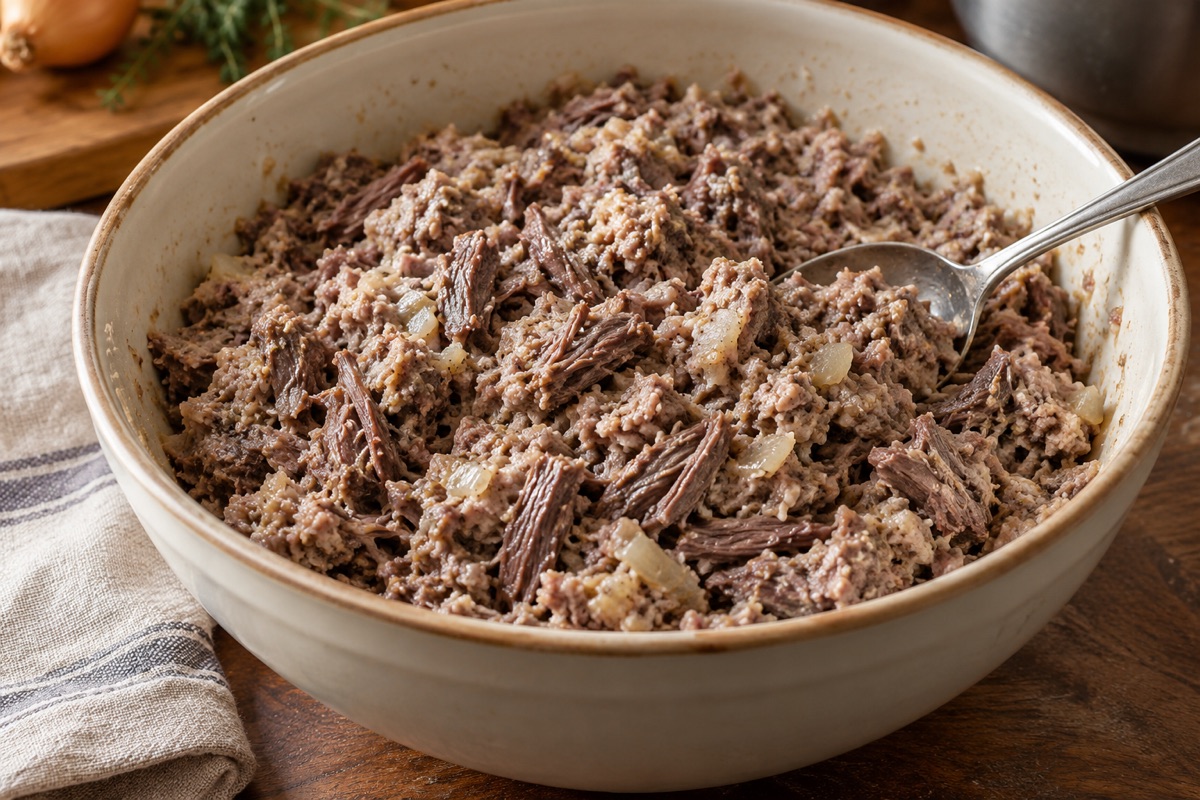
Cut half of the hare meat into small cubes with a knife. Grind the rest along with the bacon and liver. Combine everything with bread crumbs, marjoram, pepper, nutmeg, salt, and egg. Add 2–4 tablespoons of defatted sauce, just to achieve a juicy, compact consistency. Fry a small portion to 74°C and check the taste.
-
Chill the finished dough for at least 40 minutes after the last folding. Line a mold about 30×12 cm, with a height of about 8 cm with paper, leaving longer sides to facilitate removing the pâté. Preheat the oven to 210°C, top and bottom heat.
-
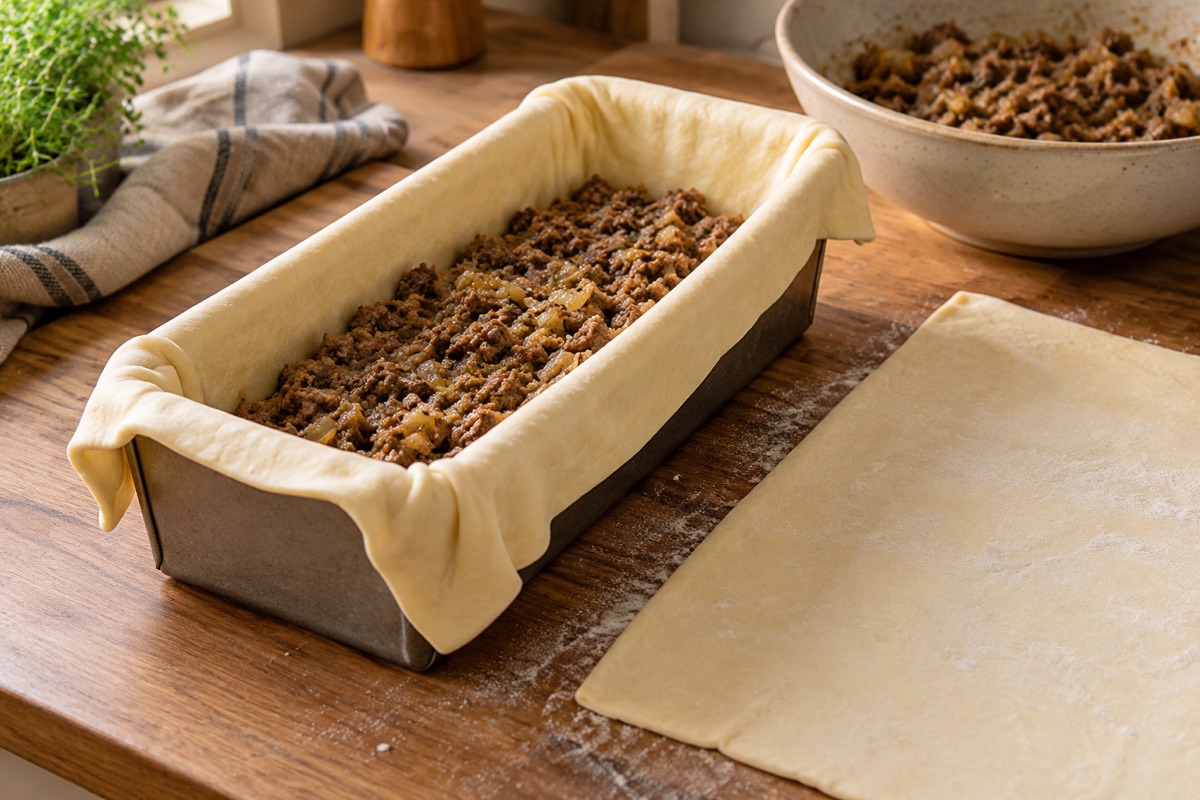
Set aside about one-third of the dough for the lid. Roll out the larger portion to a thickness of about 4 mm and line the mold, leaving 2 cm of overhang above the edge. Do not stretch the dough forcefully, as it will shrink during baking.
-
Fill the mold with cold filling, pressing gently to avoid large empty spaces. Leave about 1 cm of space under the lid. Moisten the edges of the dough with a little water.
-
Roll out the lid, cover the filling, and seal the edges. Make a hole about 1 cm in the center to let steam escape. You can cut out leaves for decoration from the trimmed scraps; do not knead the scraps back into the dough for the bottom.
-
Brush the top with beaten egg, avoiding flooding the hole and the cut edges. Chill the assembled pâté for 20 minutes. Slide the mold onto a well-heated tray in the lower part of the oven.
-
Bake for 15 minutes at 210°C, then reduce the temperature to 180°C and bake for approximately another 45–65 minutes. The center of the filling must reach 74°C, and the bottom must be baked through. If the top browns too quickly, loosely cover it with foil.
-
Remove the mold and let it cool on a rack for 30–45 minutes. Only then lift the pâté using the paper. Do not attempt to remove the hot bake by the fragile edges.
-
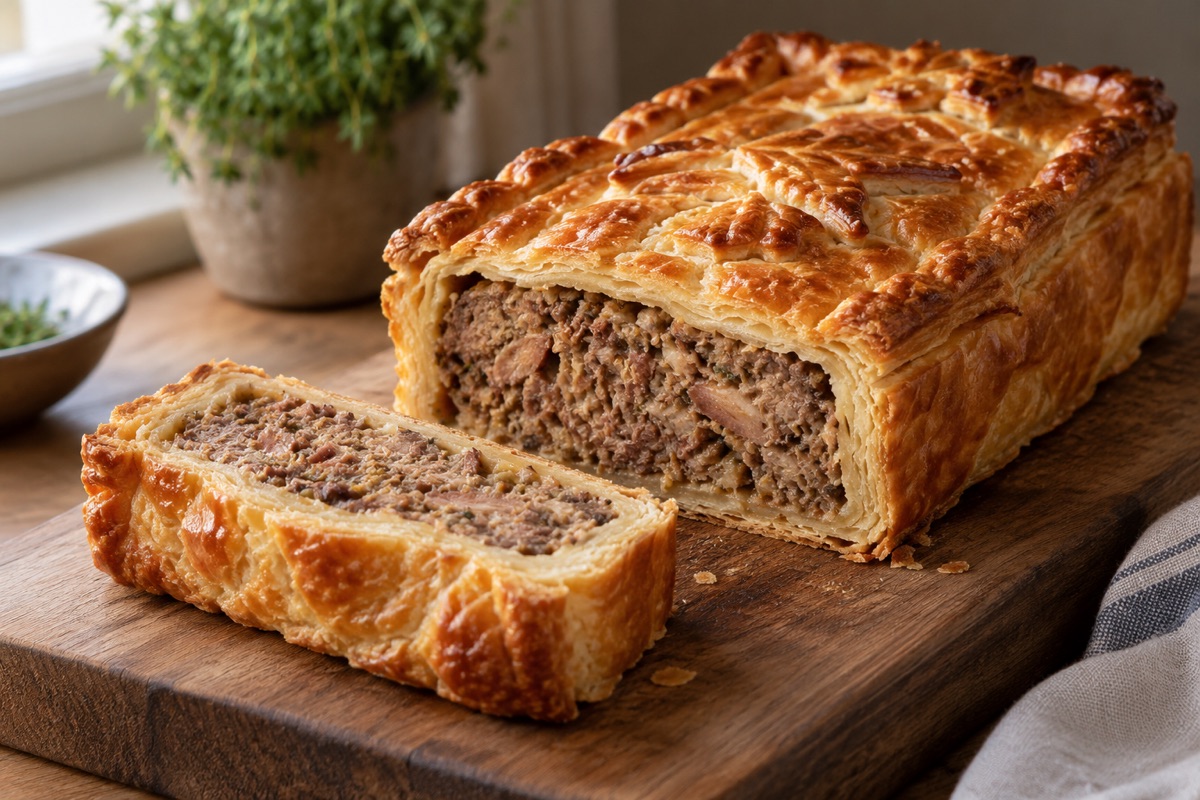
Cut with a sharp serrated knife into thick slices, gently cutting through the layers of dough. For serving cold, chill the portions in the fridge. The meat should be compact and juicy, and the crust clearly flaky.
Photos