The story behind the recipe
In Poland, goulash refers to a thick stew made from meat, usually pork, with onions and peppers, sometimes with mushrooms, carrots, or bacon. Polonist, a service about Polish cuisine from Warsaw, writes that "goulash" is a general term for a stew made from meat or vegetables. According to the same source, the first Polish recipes were close to the Hungarian original, but over time they evolved into a stew thickened with flour, and around the 1950s, the pork version became synonymous with a cheap, simple meal from bars, canteens, and roadside diners. When exactly goulash made its way into Polish cookbooks is not certain.
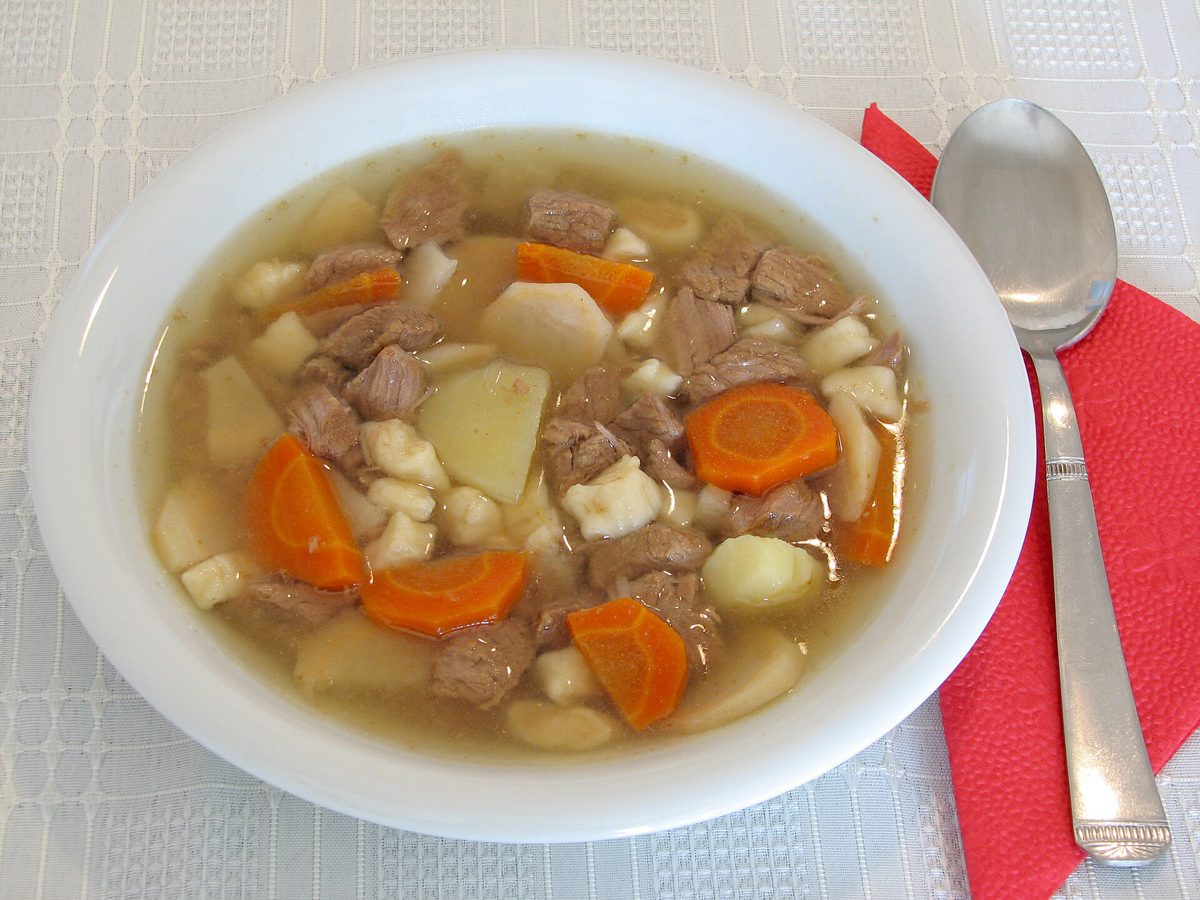
The name comes from Hungarian: "gulya" means a herd of cattle, and "gulyás" is the shepherd who drives them, and the dish also originated from shepherds. However, in Hungary, gulyás is a soup (gulyásleves): beef or lamb, onions, peppers, cumin, potatoes, carrots, and small dumplings called csipetke. Polish goulash is closer to the Hungarian pörkölt, which is a thick stew that can also be made with pork (sertéspörkölt). English Wikipedia emphasizes that Hungarian stews, apart from paprikás, are not thickened with flour or roux, and tomatoes are rarely added, as the red color comes from the paprika itself. The Polish version with tomato paste and potato flour is therefore our own variation. "Magyar gulyásleves" has been part of the Hungarian collection of hungaricums since December 2017.
Goulash also has its regional Polish varieties. Since May 7, 2020, "gulasz czorsztyński" from Pieniny has been on the List of Traditional Products: lamb or pork meat stewed with white and pickled cabbage, roux, and hot pepper, mixed with kopytka (Polish potato dumplings). The entry connects its name with Czorsztyn, a guard post on the former Polish-Hungarian border, and with the trade route from Buda to Krakow. According to the entry, it was already cooked there in the 1950s and 60s. In homes, pork goulash is served with buckwheat or barley groats, potatoes, kopytka, or Silesian dumplings, and a large potato pancake topped with goulash is called a Hungarian pancake.
Ingredients
Meat
-
800 g pork shoulder without bone (or ham, or half ham and half neck meat)
Abroad: pork shoulder or pork butt (Boston butt); Germany: Schweineschulter or Schweinebug; Austria: Schulter; neck meat: Schweinenacken, Schweinekamm, Halsgrat, in Austria Schopf - ½ tsp (about 3 g) salt (at the beginning, the rest to taste at the end)
- ½ tsp (2.5 ml) ground black pepper
-
50 g lard (about 3 tablespoons, can be replaced with oil)
Abroad: lard or canola oil; Germany: Schweineschmalz
Vegetables
- 250 g onion (2 medium, cut into feathers halved)
- 3 cloves garlic (pressed through a garlic press or chopped)
-
400 g red bell pepper (2 medium; one can be yellow or orange)
Abroad: red bell pepper; Germany: rote Paprika - 200 g carrot (1 large, in half slices)
-
200 g mushrooms (not necessary, sliced)
Abroad: white button mushrooms or chestnut mushrooms
Sauce and Spices
-
1½ tbsp (22.5 ml) sweet paprika powder
Abroad: sweet paprika -
hot paprika or chili (a pinch, more to taste)
Abroad: hot paprika or chili powder -
2 pcs bay leaves
Abroad: bay leaves -
3 pcs allspice berries (whole)
Abroad: allspice berries -
400 ml meat or vegetable broth (hot)
Abroad: chicken, beef or vegetable stock -
2 tbsp (30 ml) tomato paste
Abroad: USA and Canada: tomato paste; UK: double concentrate tomato purée; Germany: Tomatenmark -
1 tbsp (about 9.5 g) potato flour (flat, not necessarily, mixed with 3–4 tablespoons of cold water)
Abroad: potato starch; Germany: Kartoffelstärke; or cornstarch
Method, step by step
-
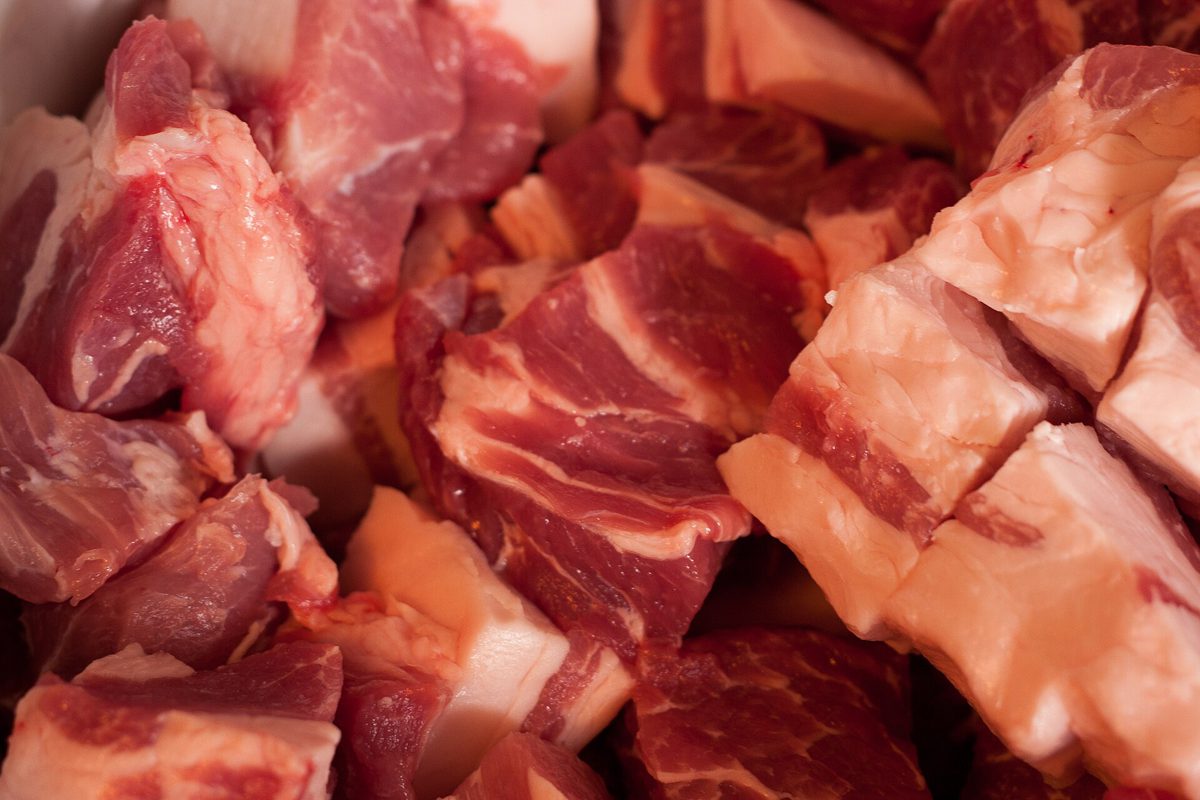
Rinse the pork shoulder, dry it, and cut it into equal bite-sized pieces, no larger than 2×2 cm (¾×¾ inch). Trim off larger pieces of fat and membrane, but not all, as a bit of fat protects the goulash from drying out.
-
Prepare the vegetables: cut the onion into feathers and halve them, press the garlic through a garlic press, slice the carrot into half-moons, clean the pepper from the seeds and cut it into strips or pieces, and slice the mushrooms.
-
In a wide, heavy pot, heat half of the lard. Add the onion, sprinkle with a pinch of salt, and sauté for about 5 minutes, stirring often, until softened. Add the garlic and sauté for a moment longer.
-
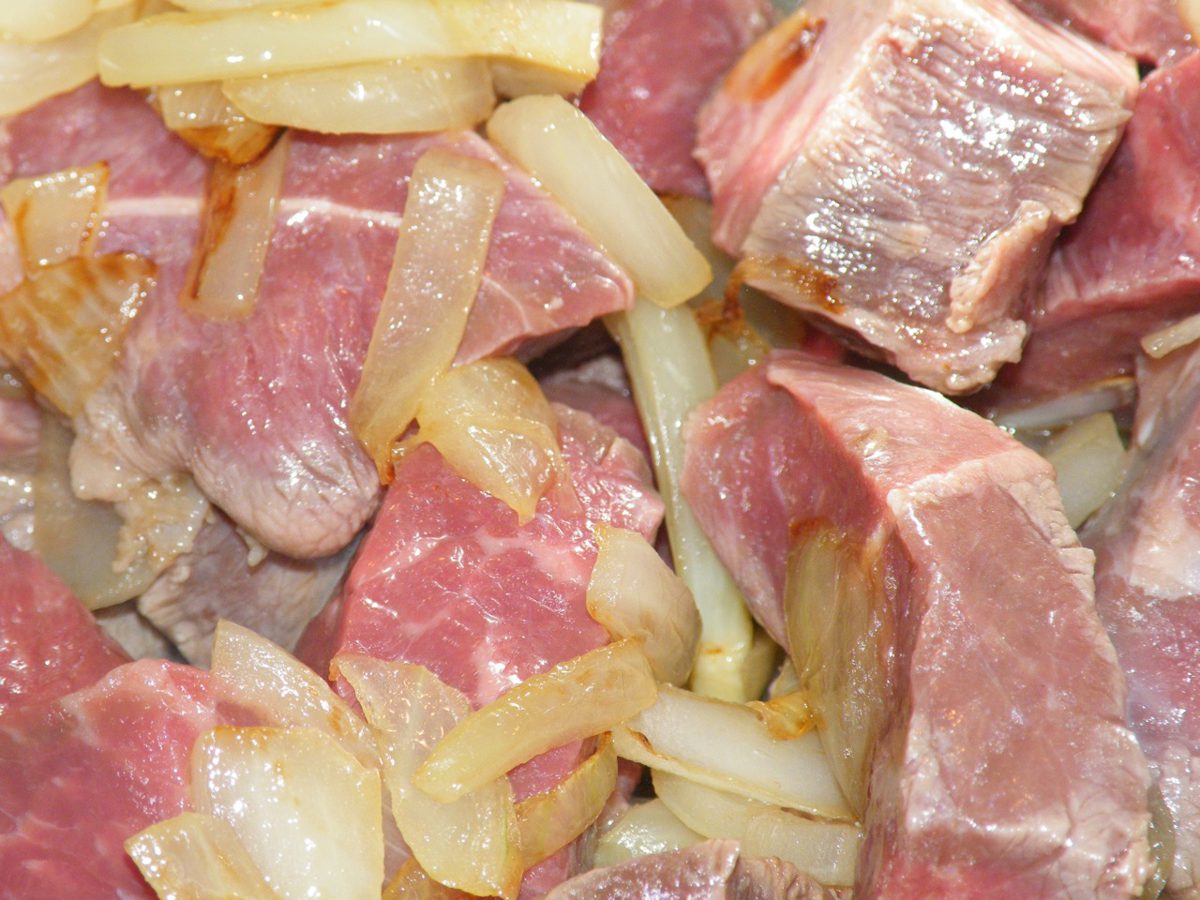
Increase the heat to high, add the meat, season with salt and pepper, and gradually brown it, stirring occasionally, until the pieces are browned on all sides. They may still be raw inside; they will cook through during stewing.
-
Stir in the sweet and hot paprika, add the bay leaves and allspice, and sauté for 1–2 minutes, stirring. Pour in the hot broth, scrape the browned bits from the bottom, and bring to a boil. Cover, reduce the heat so the goulash barely bubbles, and simmer for about an hour.
-
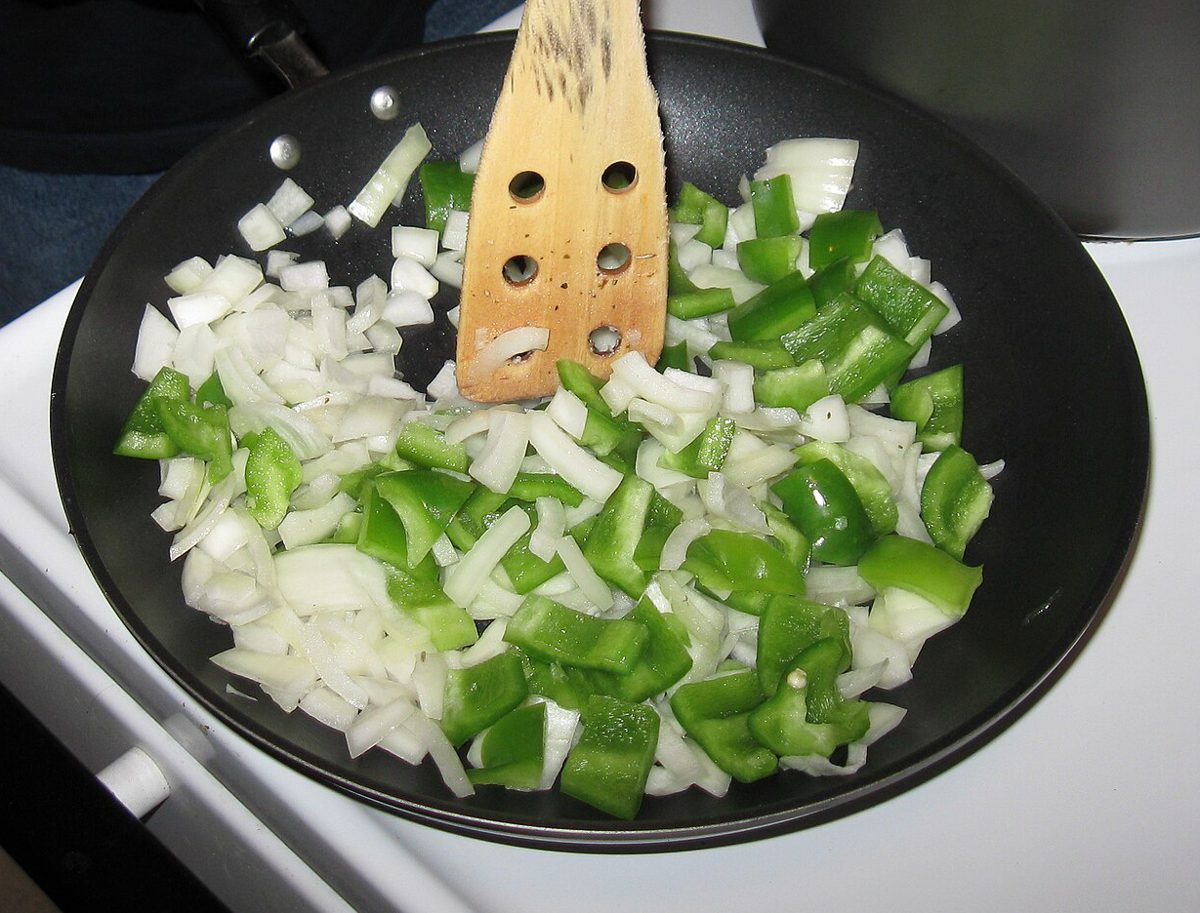
Meanwhile, in a separate pan, heat the remaining lard. Sauté the carrot for about 15 minutes over slightly lower than medium heat, uncovered, then add the pepper (and mushrooms) and sauté for another 10 minutes, stirring with a wooden spoon.
-
Transfer the vegetables to the pot with the meat, add the tomato paste, and mix. Simmer covered for another 30 minutes until the meat is tender and can be easily cut with a spoon. If the sauce evaporates too much, add a little broth or water.
-
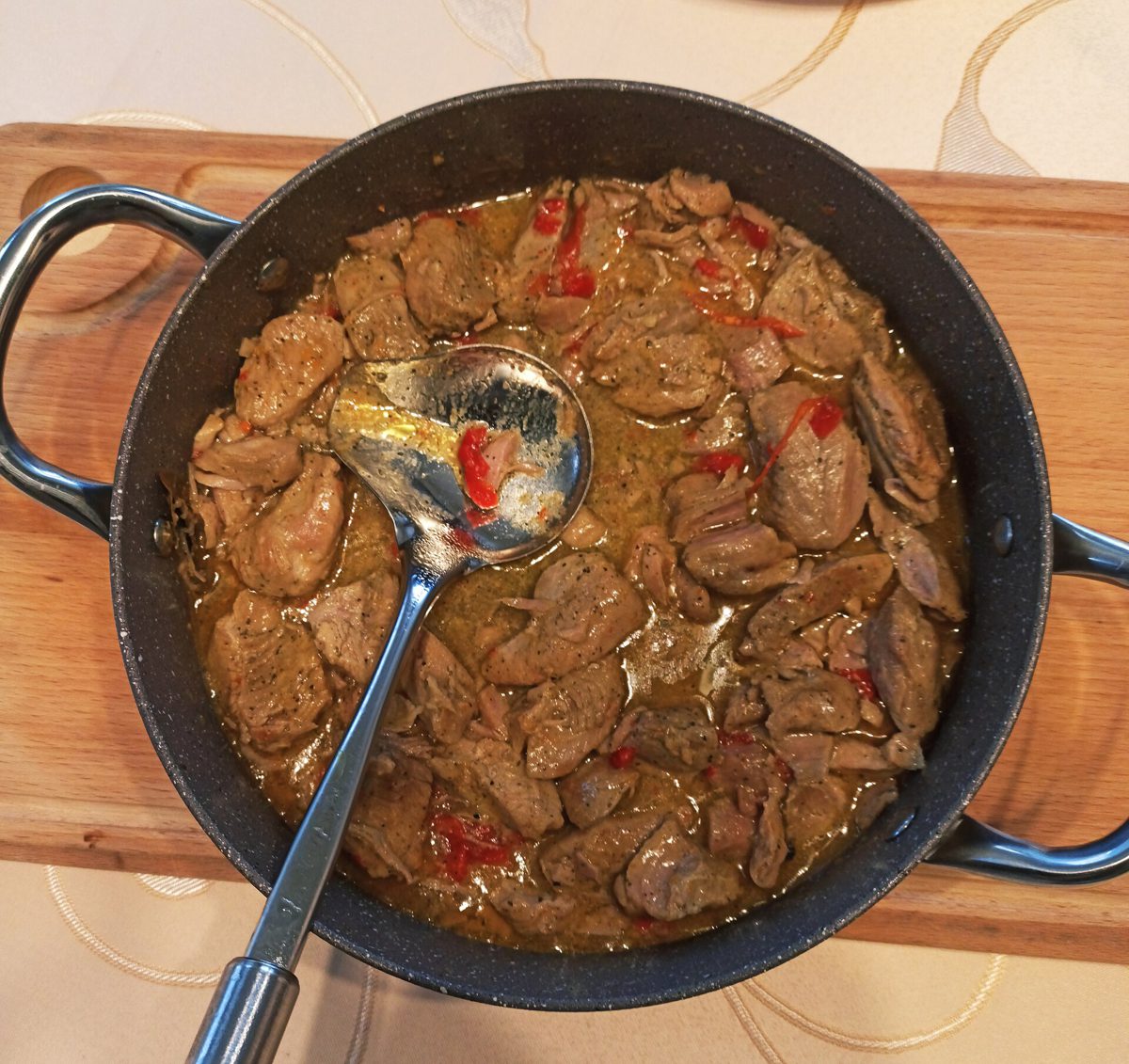
If the sauce is too thin, mix the potato flour with cold water and pour it into the gently bubbling goulash, stirring immediately. After about a minute, turn off the heat: the sauce will thicken and become glossy. Remove the bay leaves, taste, and season with salt, pepper, or chili.
-
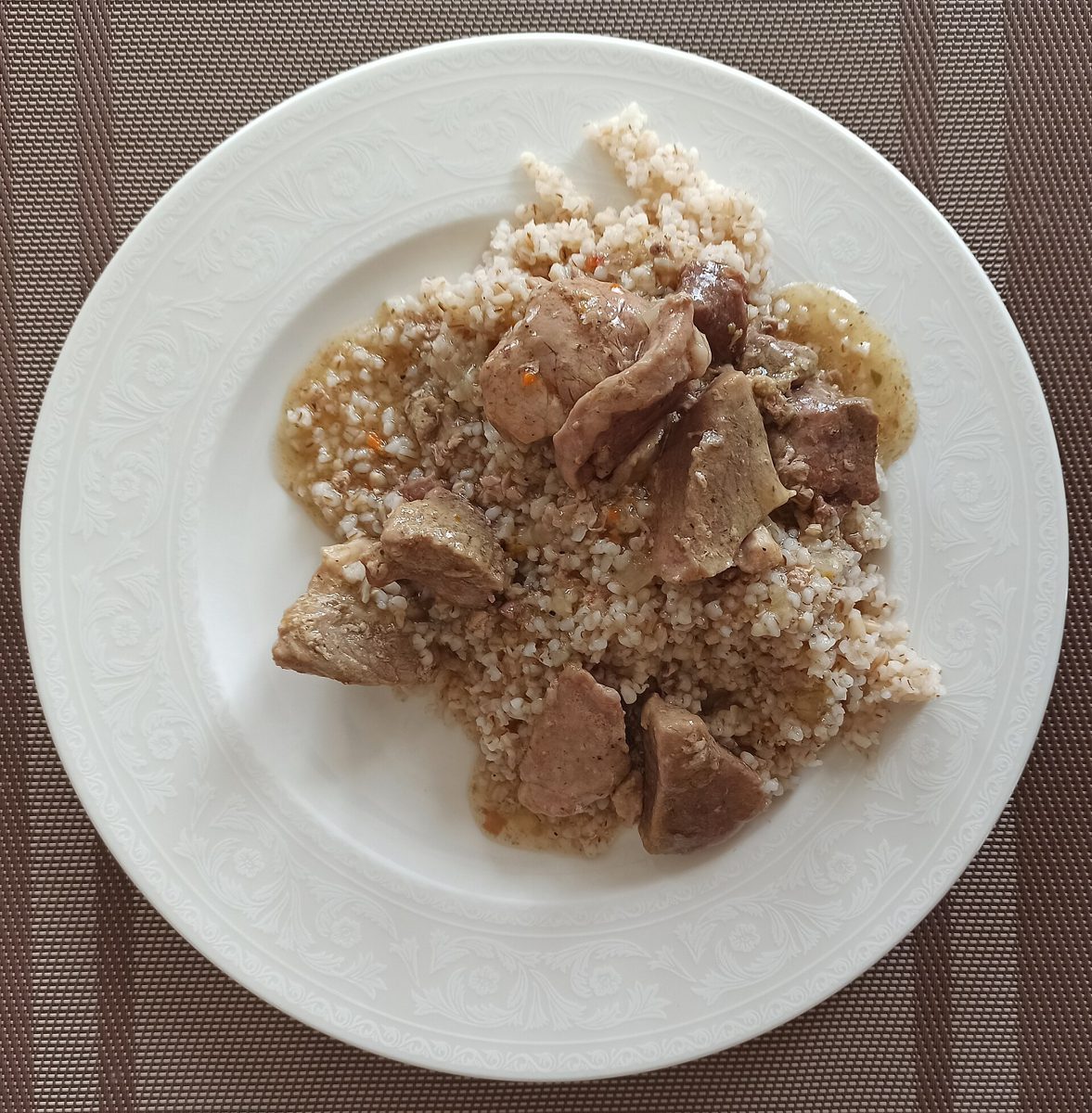
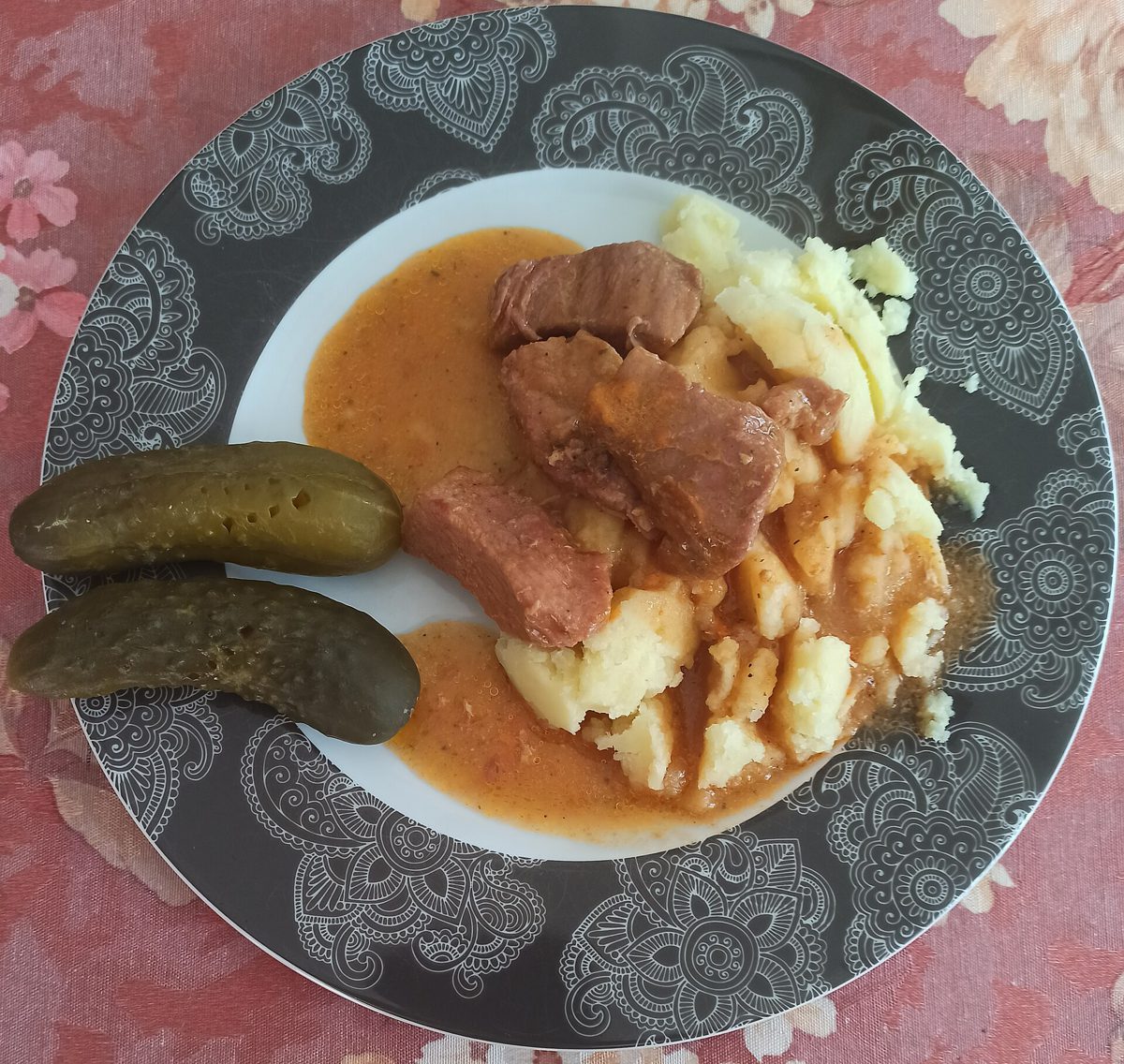
Serve hot with buckwheat or barley, with potatoes, kopytka, or Silesian dumplings, with pickled cucumber or coleslaw.
Photos