The story behind the recipe
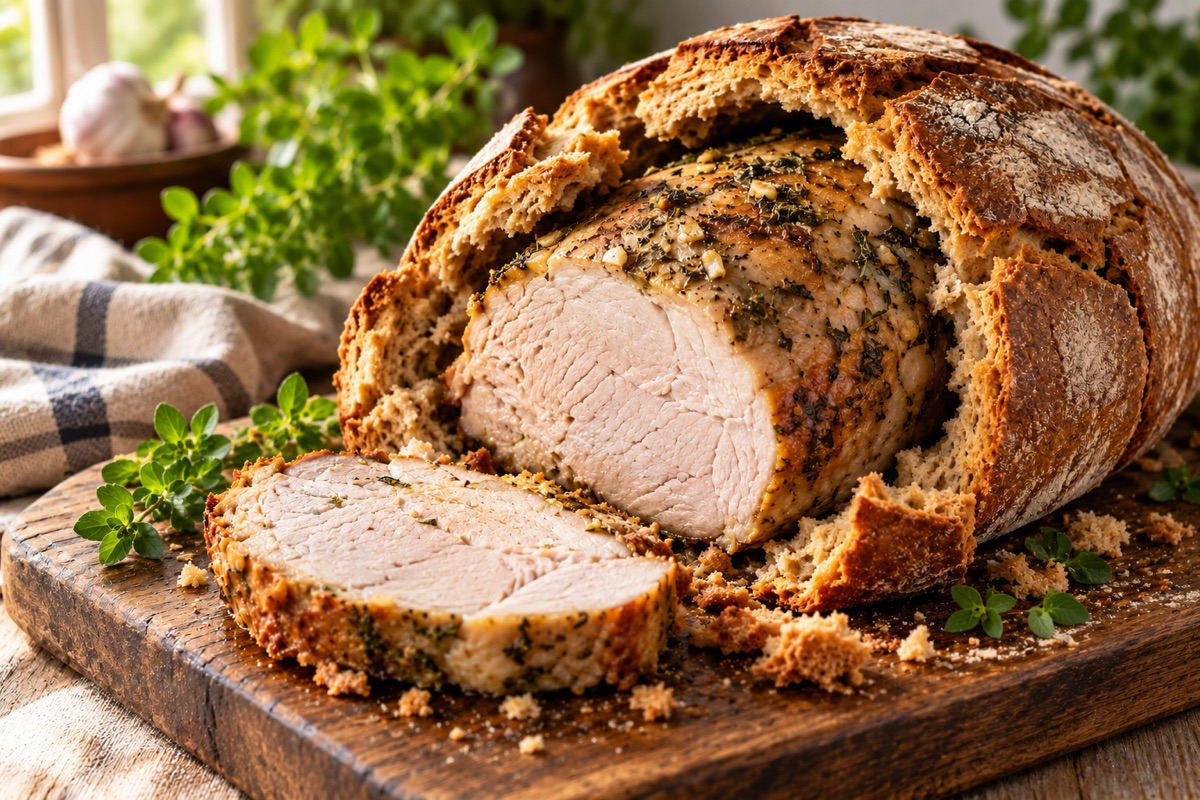
Baking ham in a bread crust is documented in the ministerial list of traditional products, including for northern Mazovia. The dough protected the meat from direct heat and drying out, and after baking, the crust was broken open. Traditionally, hams were prepared in various ways, including curing.
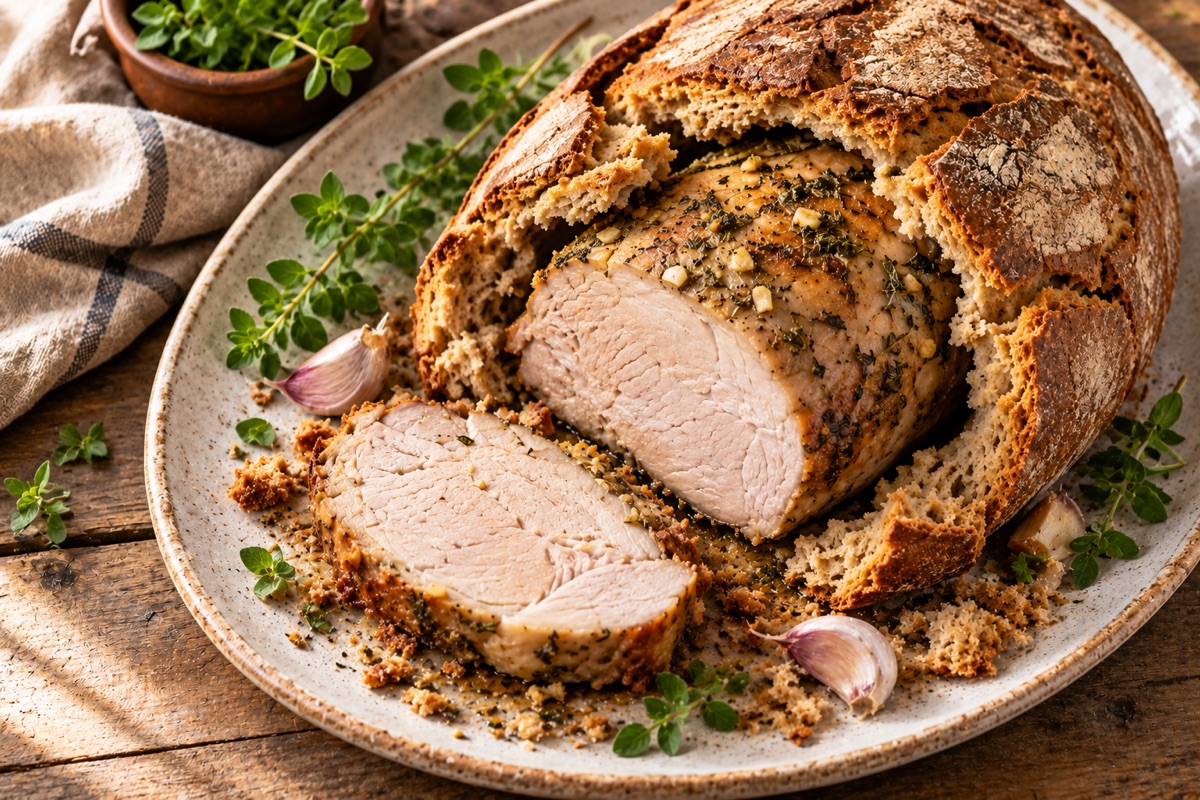
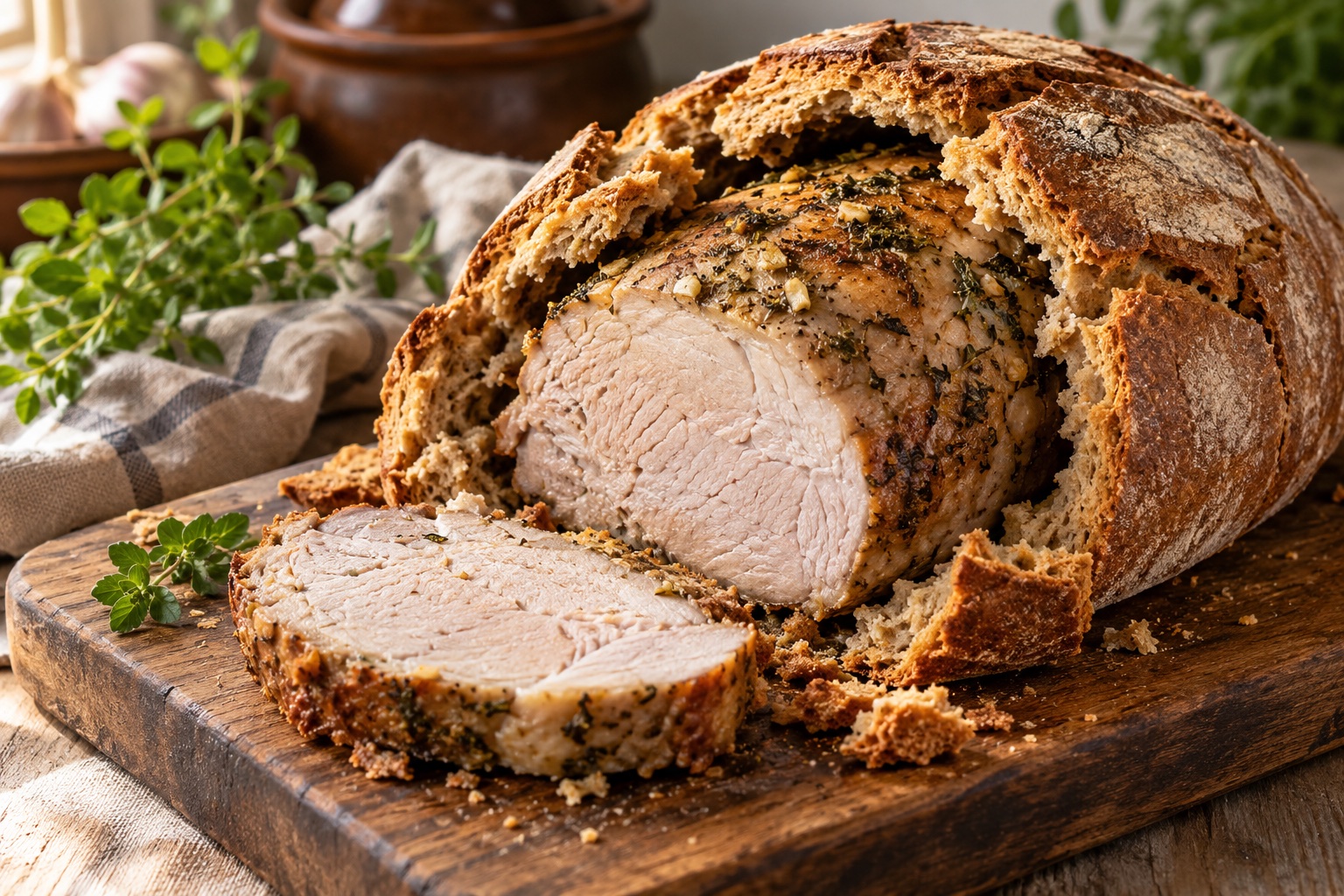
Below is a modern homemade version using fresh, uncured meat and a simple crust without yeast. The cross-section of the finished ham will be light beige, not pink like cured meats. The thick crust serves as a baking package and is discarded. The challenge is to securely seal a large piece, control the temperature, and slice without losing juices.
Ingredients
Meat
- 1.5 kg fresh boneless pork ham (uncured, uncooked)
Marinade
- 22 g salt
- 15 g garlic
- 8 g dried marjoram
- 3 g black pepper
Crust
- 500 g rye flour (type 720 or similar)
- 300 g wheat flour (plus a small amount for the work surface)
- 450 ml water (approximately; adjust for flour absorption)
- 10 g salt
Method, step by step
-
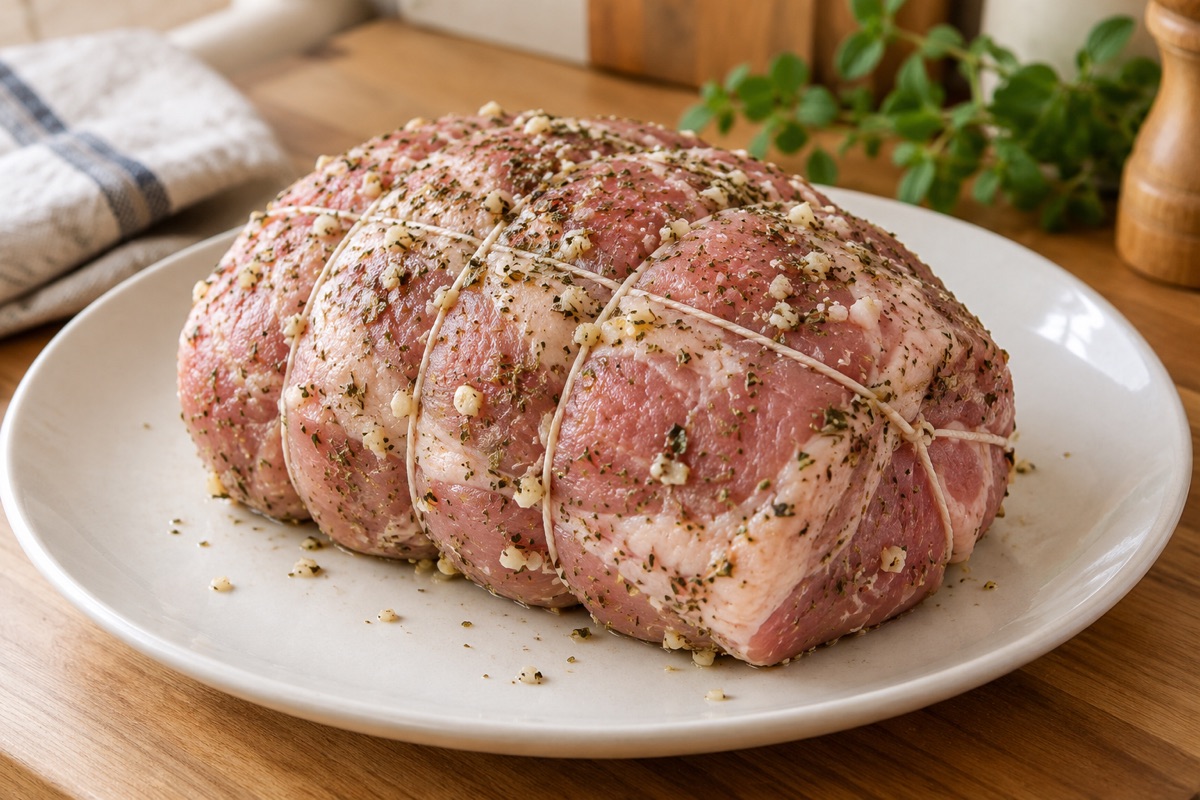
Dry the meat and remove membranes and loose strands. Remove the store netting if the producer did not mark it as suitable for baking. If necessary, tie the ham with cotton kitchen twine into a compact shape.
-
Crush the garlic with salt, marjoram, and pepper. Rub the mixture all over the meat. Place in a covered dish in the refrigerator at 4°C for about 12 hours. Do not marinate on the countertop.
-
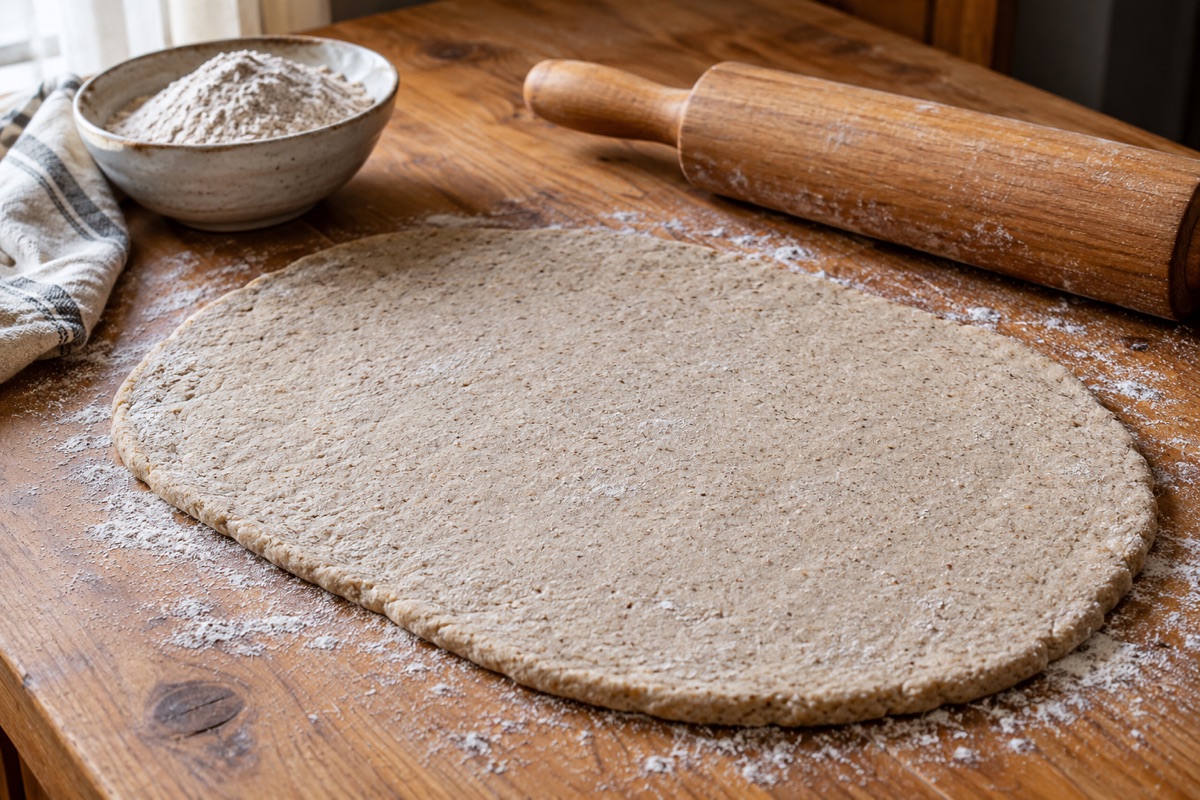
On the day of baking, mix both flours and salt for the crust. Gradually add water, kneading into a firm, pliable dough. It should be rollable and stick together without crumbling, but not spread out. Cover for 20 minutes.
-
Set aside a small ball of dough for potential patching of cracks. Roll out the rest on a lightly floured surface to about 1 cm thick, into a piece large enough to completely wrap the ham with an overlap.
-
Remove the ham from the refrigerator just before wrapping. Dry any moisture from the surface with paper, without wiping off all the marinade. Place the meat in the center of the dough piece. Preheat the oven to 220°C, top and bottom heat.
-
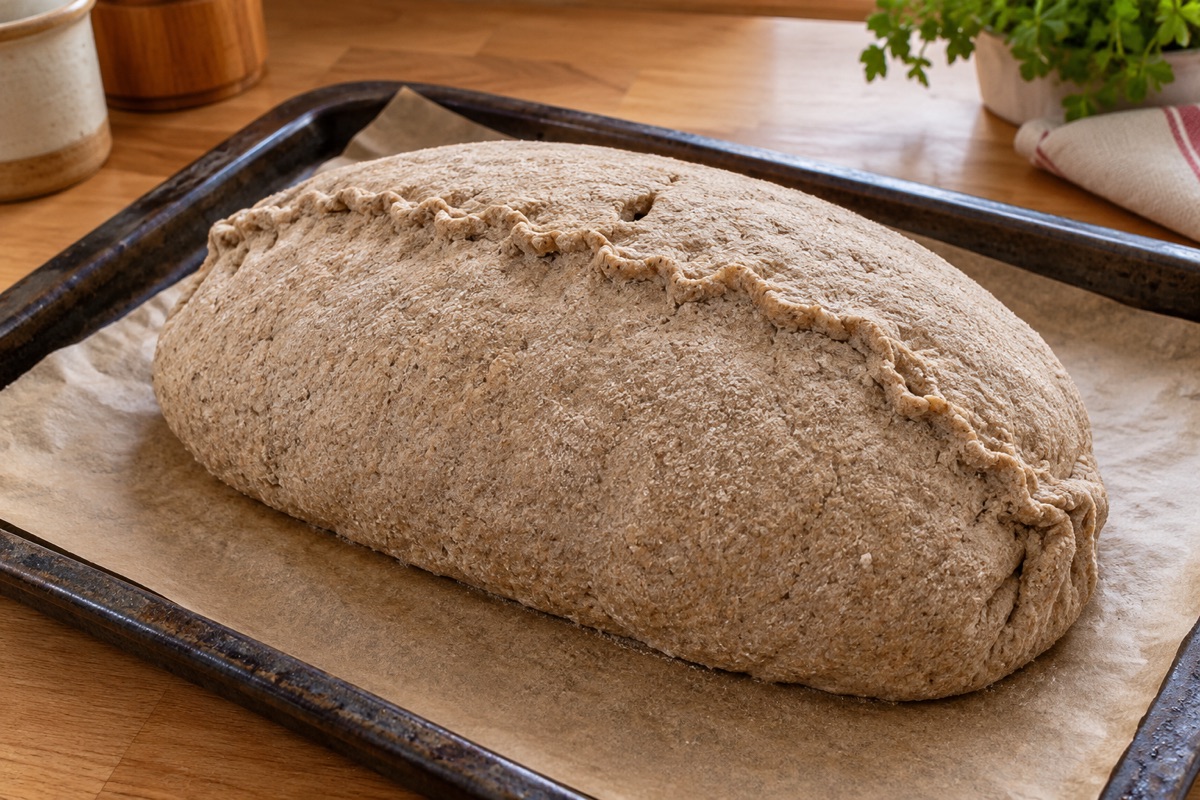
Wrap the ham on all sides. Lightly moisten the edges with water and press them firmly together, ensuring the overlaps are sealed. The meat should not protrude at the ends. Even out the thickness of the crust so that a very thick lump does not form at the seam.
-
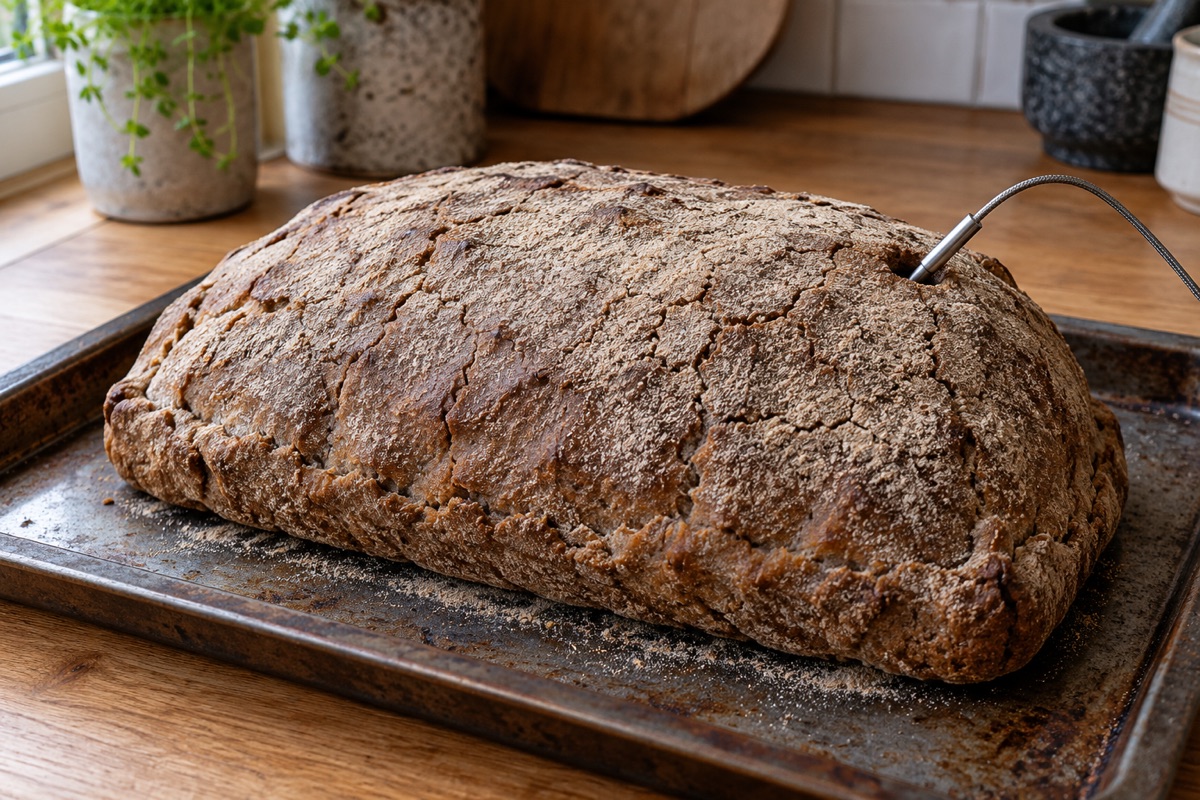
Transfer the package to a baking tray lined with paper, seam side down. Make a small steam hole on top. If using an oven probe, insert it through the crust into the thickest part of the meat, not into an air pocket.
-
Check the rack position: the large crust should not nearly touch the upper heating element. Prepare gloves and a tray to catch any juices. The oven should have reached 220°C by now.
-
Bake for 20 minutes at 220°C, then reduce to 170°C. Continue baking for approximately 100–140 minutes, depending on the shape of the meat. If there is a large crack at the beginning of baking, carefully patch it with the reserved dough; do not touch the hot crust with bare hands.
-
Check the temperature inside the meat: in this variant, we aim for 68–70°C. If it is lower, continue baking. The hard and brown crust alone does not confirm the readiness of the ham. The given time is approximate.
-
Remove the entire package to a stable board and let it rest in the crust for 20–30 minutes. Do not open immediately, as the hot steam can burn, and the meat needs to rest.
-
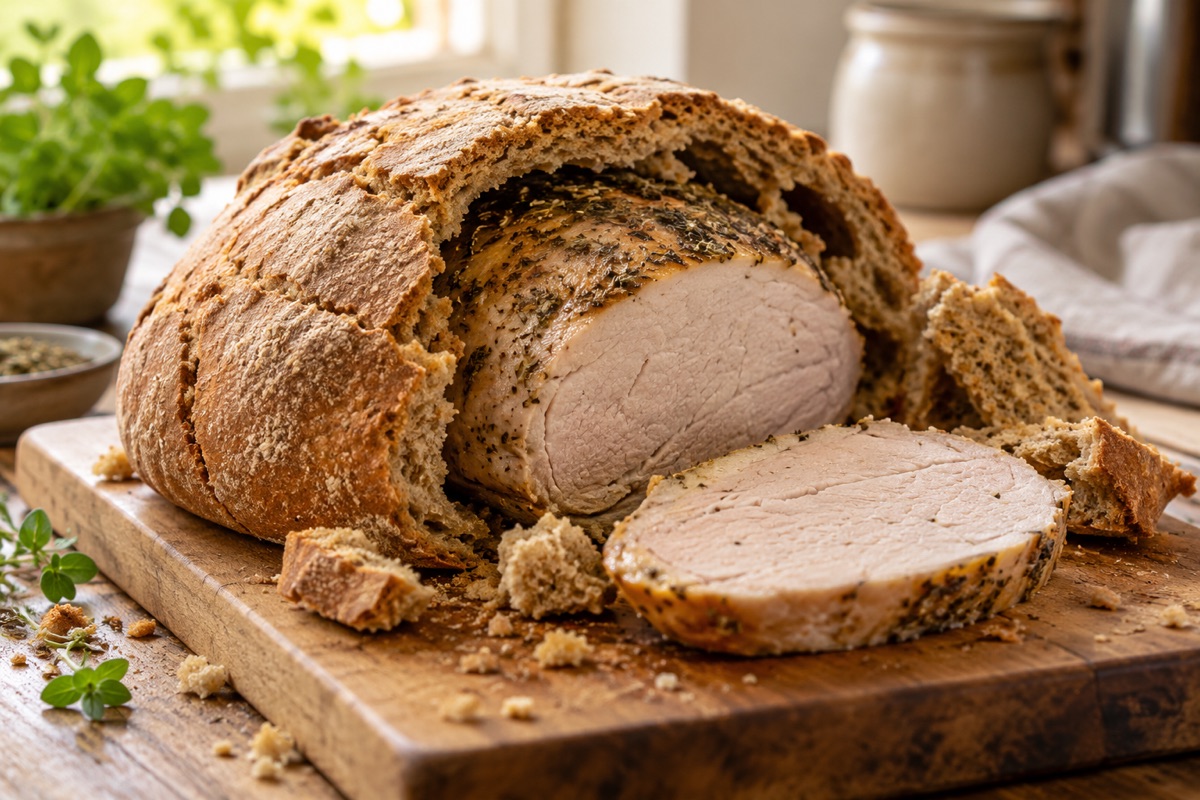
Carefully cut and break off the top of the crust over the tray, directing the steam away from your face and hands. Remove the meat, discarding all twine. Discard the crust; you can boil the juices from the tray and strain them for sauce.
-
Slice the ham against the grain into pieces about 1 cm thick. Uncured meat should have a natural light cross-section. Readiness is determined by the earlier measurement, not the shade in the photo.
-
Serve with horseradish, beetroot, and potatoes. Remove leftovers from the crust, divide into smaller portions, and cool quickly in the refrigerator. Do not leave the whole roast overnight in the closed crust.
Photos