
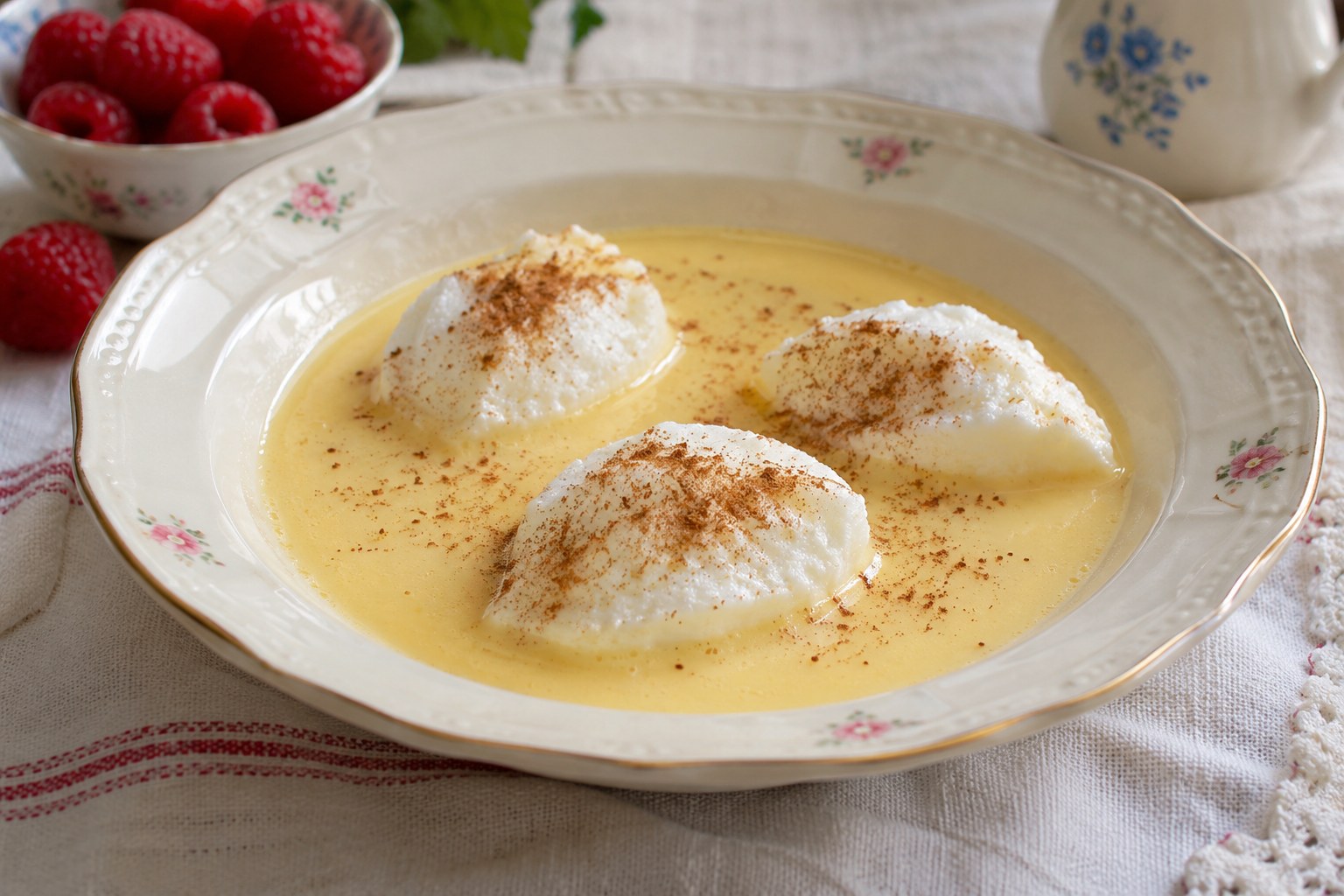
The story behind the recipe
Lucyna Ćwierczakiewiczowa in "365 Obiadów za 5 złotych" from 1871 provided a recipe for "Zupa zwaną nic na mléku": milk "not collected" with six yolks and a glass of sugar, heated so that it "thickens but does not boil, or the yolks will curdle," and then taken to the cellar to cool. She dried the egg whites with sugar and cinnamon in the oven as small meringues, and advised cooking rice separately with sugar and cinnamon for the soup. The book "Kuchnia polska" published in Inowrocław in 1912 already cooks the foam from the egg whites "like dropped dumplings" in boiling milk and adds raisins to the soup.
The origin of the name is uncertain. Jakub Kuroń suggests it comes from a joke that "there's nothing in the soup," but does not provide a source. According to available studies, Wincentyna Zawadzka in "Kucharce litewskiej" from 1913 referred to it as "nic-po-niem" soup, and Maria Disslowa in 1938 wrote about "nice" foams. There is also an anecdote recorded by Hanna Muszyńska-Hoffmannowa in the book "Panie na Wilanowie" about Countess Aleksandra Potocka, who supposedly served zupa nic at a New Year's dinner in 1890. Some sources call her the inventor of the dish, but the recipe was already printed in 1871, so we treat this story as an anecdote.
Since December 22, 2020, zupa "nic" has been on the List of Traditional Products of the Ministry of Agriculture as a dish from the West Pomeranian Voivodeship. The application describes it as a sweet milk soup with a vanilla aroma, with "clouds" of protein foam, occasionally cooked for church holidays, such as Corpus Christi. It cites a recipe from "Kurier Szczeciński" from May 20, 1955, still with rice, and a notebook of recipes from a repatriate from Folwark Terezjanowo in the Brasław district: one liter of milk, four eggs, sugar, and vanilla sugar. The French relatives of zupa nic are œufs à la neige, or "eggs in snow," with cooked pieces of foam, and île flottante, "floating island," with one larger meringue baked in a water bath.
Ingredients
Soup
-
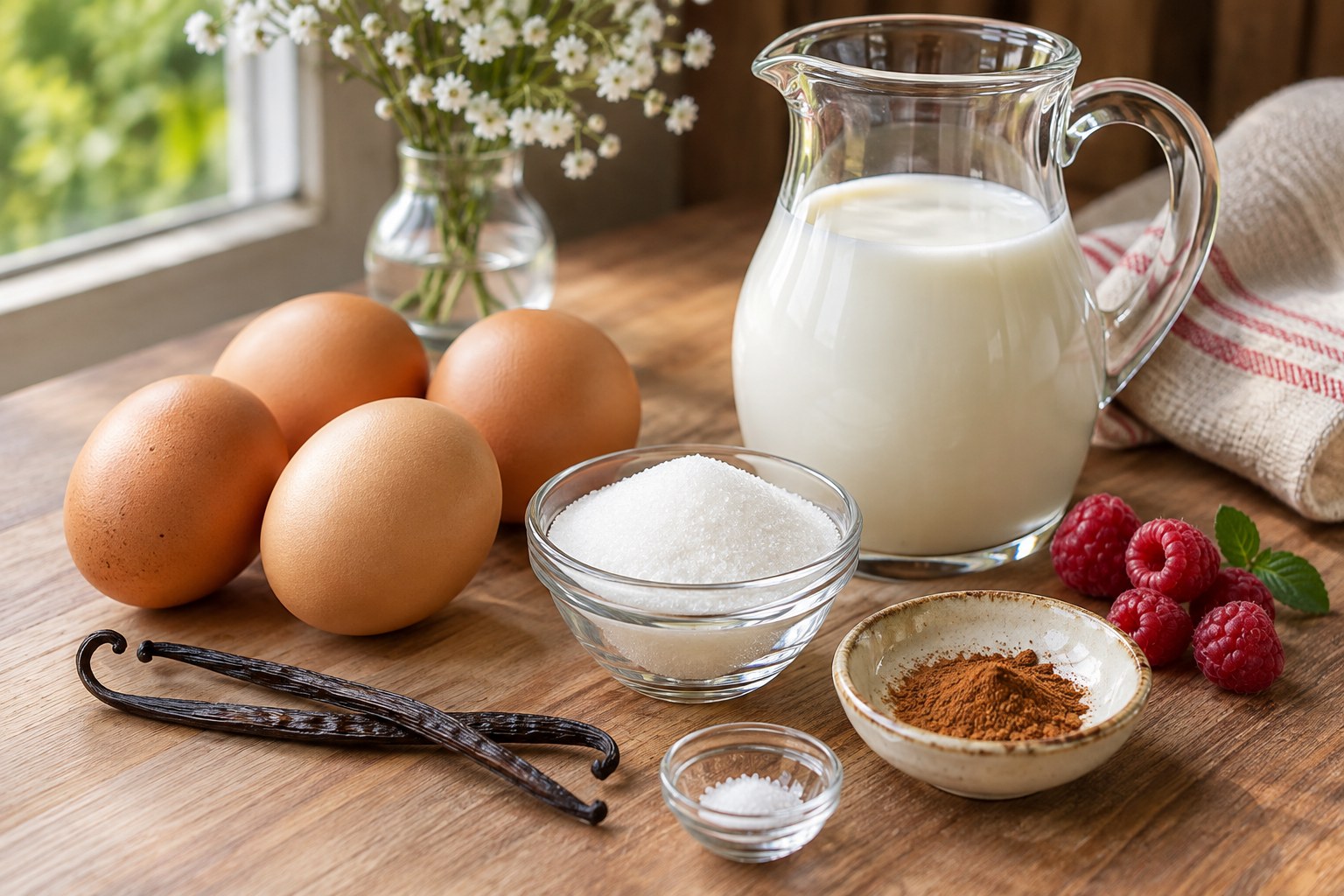
1 l whole milk (not collected, as in Ćwierczakiewiczowa's recipe)
Abroad: USA, Canada, UK: whole milk; Germany: Vollmilch -
4 pcs egg yolks (from large eggs, save the whites for the dumplings)
Abroad: for at-risk groups: pasteurized in-shell eggs -
50 g sugar
Abroad: granulated sugar; Germany: Zucker -
1 pc vanilla bean (or 2 teaspoons of vanilla sugar)
Abroad: vanilla bean, vanilla pod; Germany: Vanilleschote or Vanillezucker
Dumplings from foam
- 4 pcs egg whites (from the same eggs)
-
25 g sugar
Abroad: granulated sugar or caster sugar - pinch salt
For serving (optional)
-
cinnamon (for sprinkling)
Abroad: cinnamon; Germany: Zimt - raspberries, blueberries, or strawberries
Method, step by step
-
Break the eggs and separate the whites from the yolks into two clean bowls. There must not be even a trace of yolk in the whites, or the foam will not whip. The bowl for the whites should be dry and grease-free.
-
Cut the vanilla bean lengthwise and scrape out the seeds with a knife. Pour the milk into a wide, shallow pot, add the seeds and the bean (or vanilla sugar), and heat over medium heat until it starts to steam and gently bubble. Reduce the heat; the milk must not boil.
-
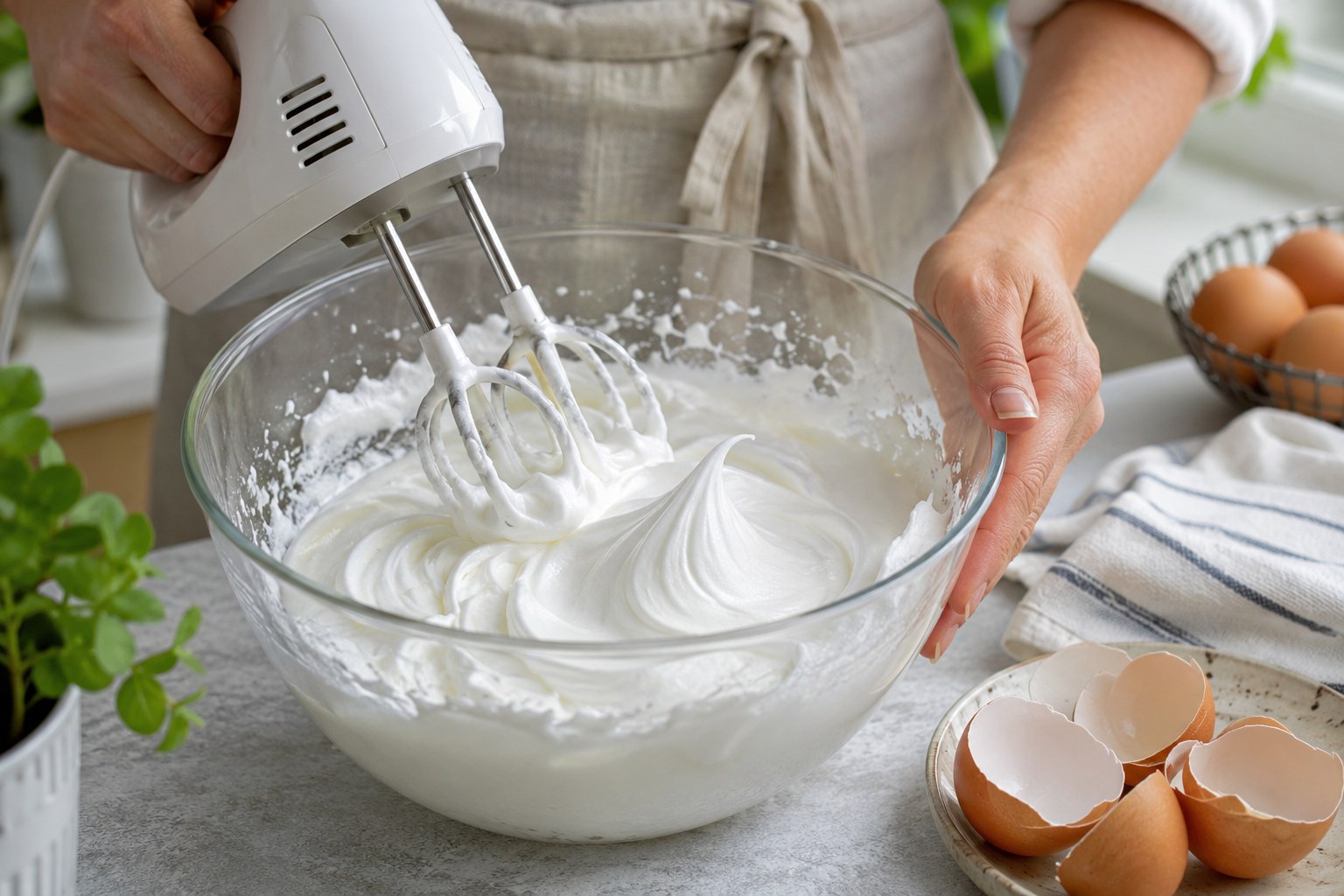
Whip the egg whites with a pinch of salt until stiff peaks form. Towards the end, add the sugar, one tablespoon at a time, and continue whipping until the foam is thick, shiny, and does not slide from an inverted bowl.
-
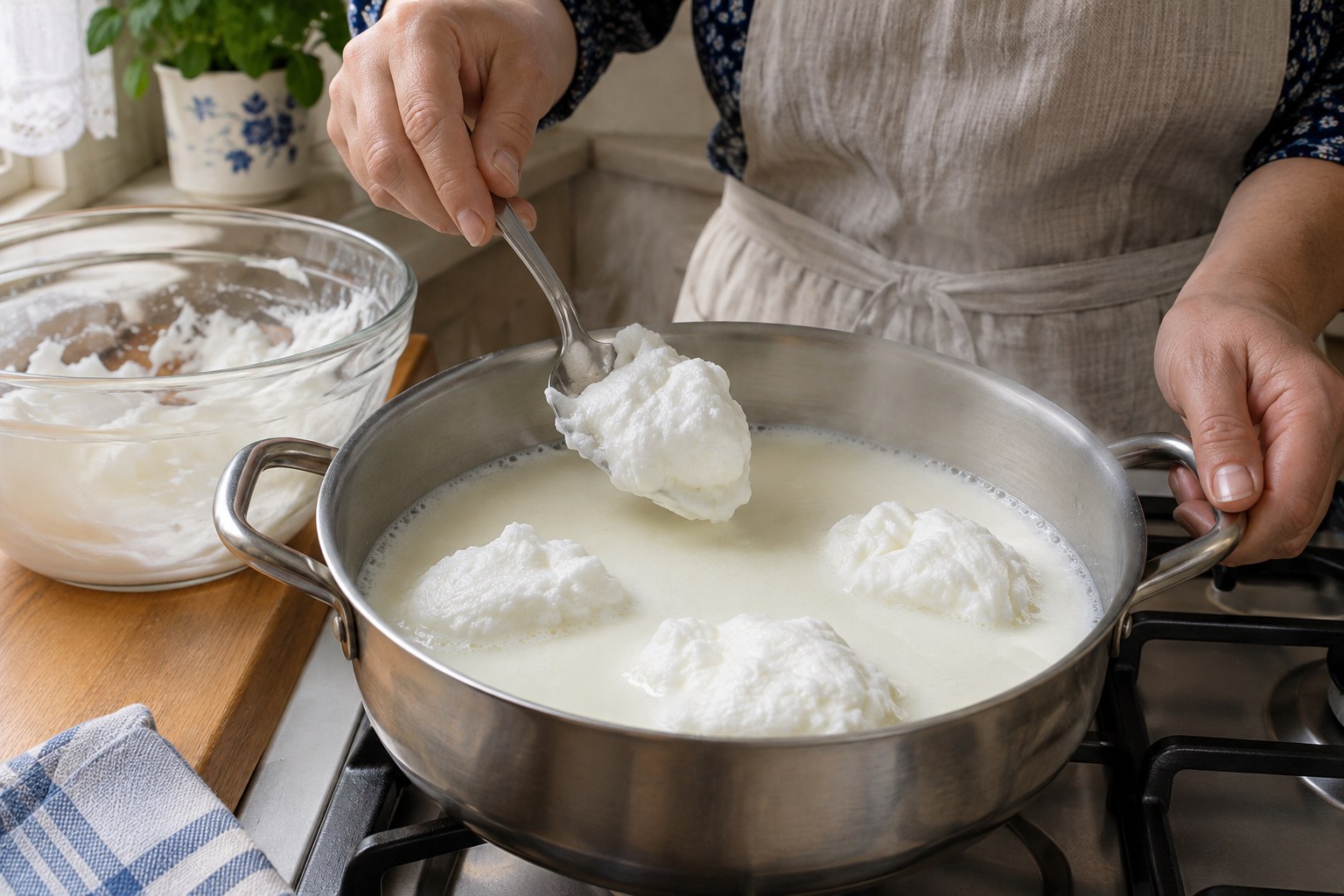
Scoop the foam with a large spoon and place dumplings on the hot, gently bubbling milk, leaving space between them as they will grow. After a moment, turn them over to the other side. Cook until they are set and firm, then remove with a slotted spoon to a plate. Cook in batches until all the foam is used.
-
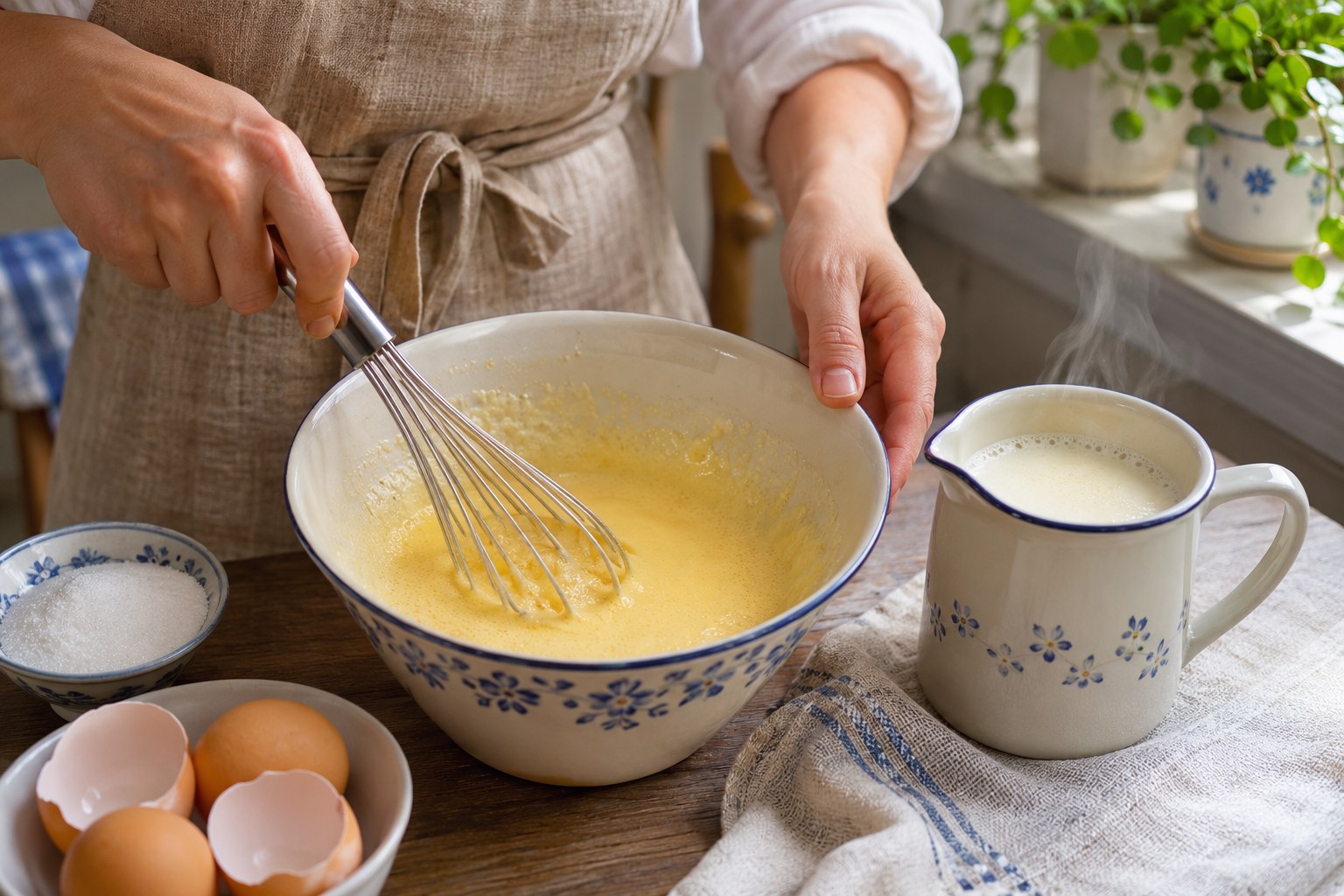
Remove the vanilla bean from the milk. In a bowl, whisk the yolks with 50 g of sugar until light and smooth.
-
Pour a few tablespoons of hot milk into the yolks and quickly mix. Then, in a thin stream, pour the yolks into the pot with the milk, stirring constantly with a whisk.
-
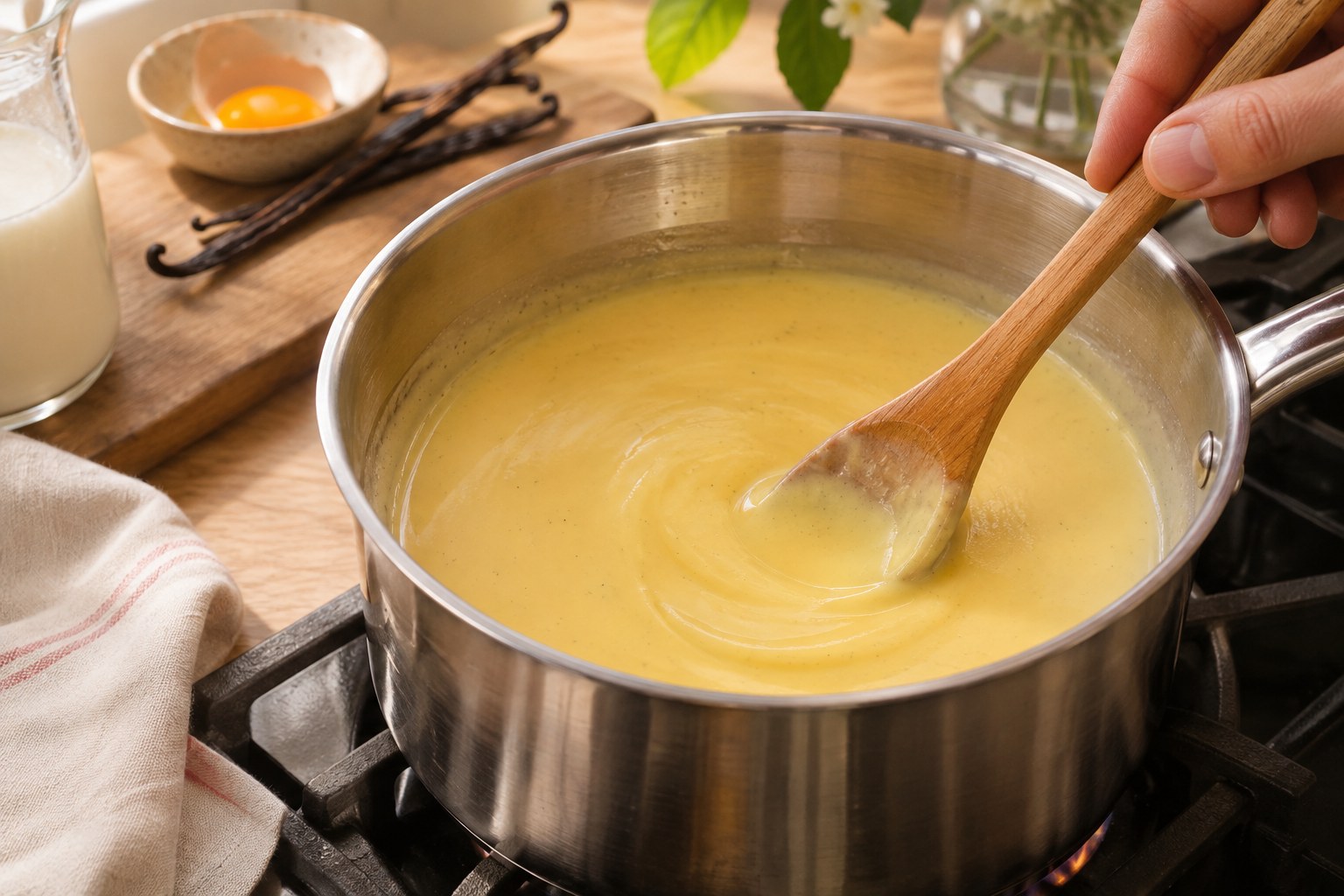
Heat the soup over low heat, stirring constantly and scraping from the bottom, until it thickens noticeably and coats the spoon. Do not let it boil, or the yolks will curdle. If you have a thermometer, the soup should reach 71°C (160°F).
-
Immediately remove the pot from the heat and strain the soup through a fine sieve into a tureen or bowl. Cool it, cover, and place in the fridge for at least an hour. Cover the dumplings and chill them as well.
-
Pour the cold soup into deep plates or bowls and place a few dumplings on top. If you like, sprinkle with cinnamon or add fresh fruit. You can also serve the soup warm.
Photos
Comments (0)
No comments yet. Be the first!