The story behind the recipe
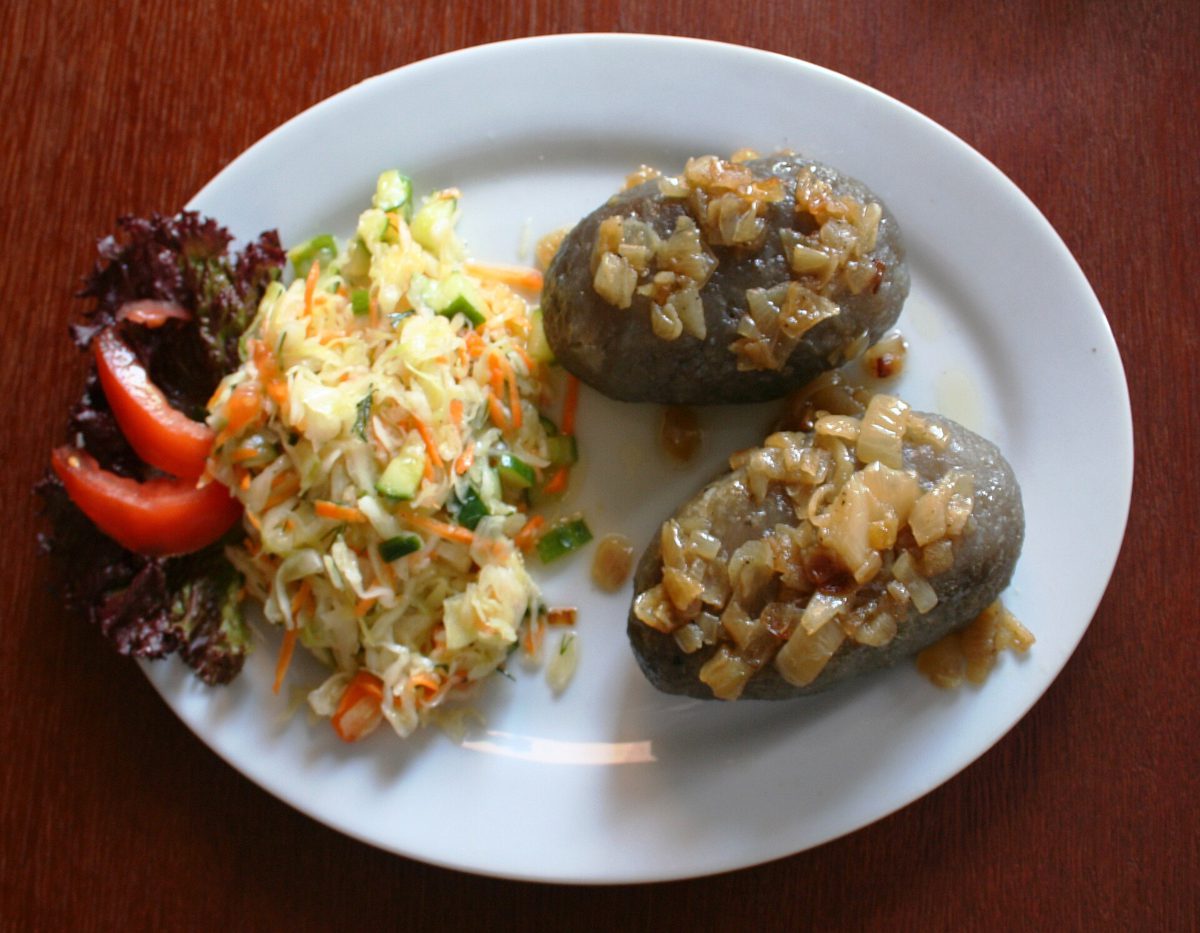
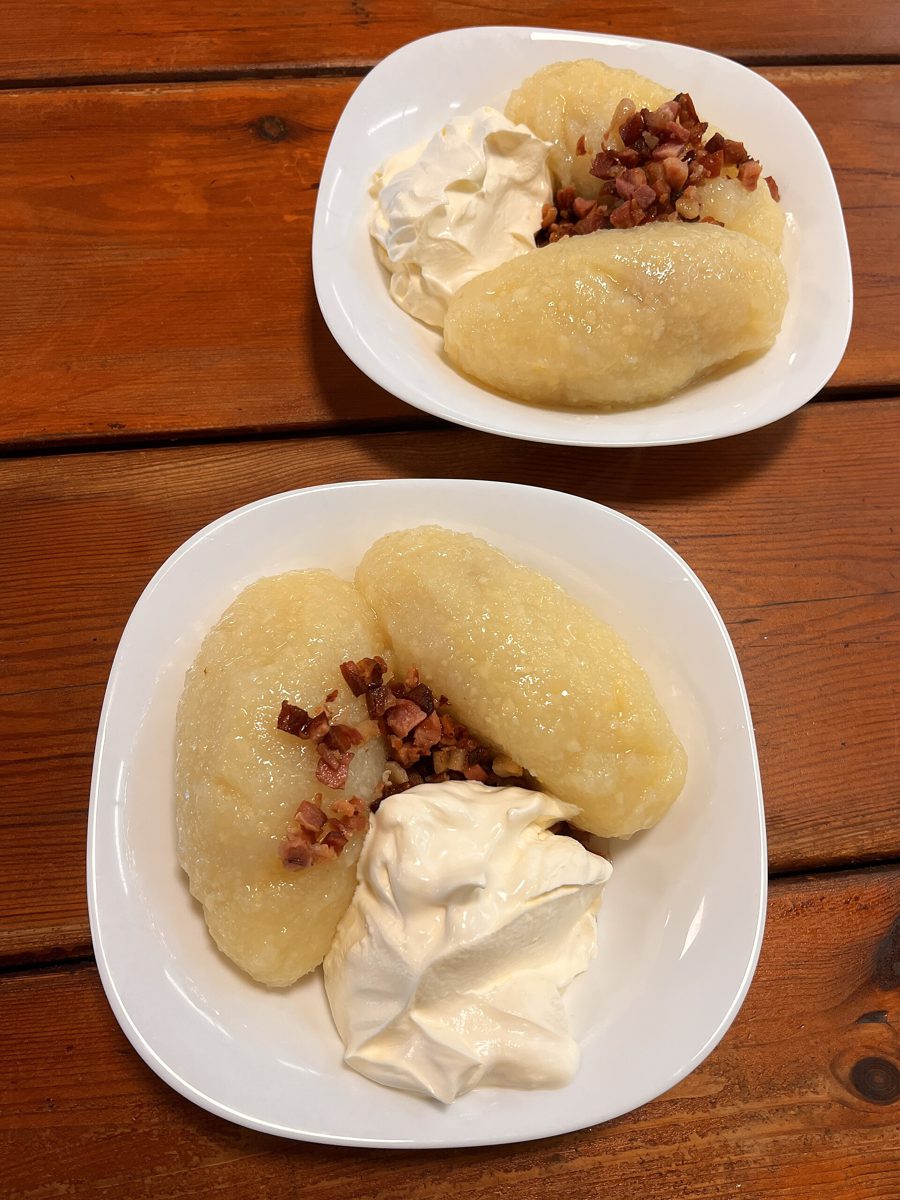
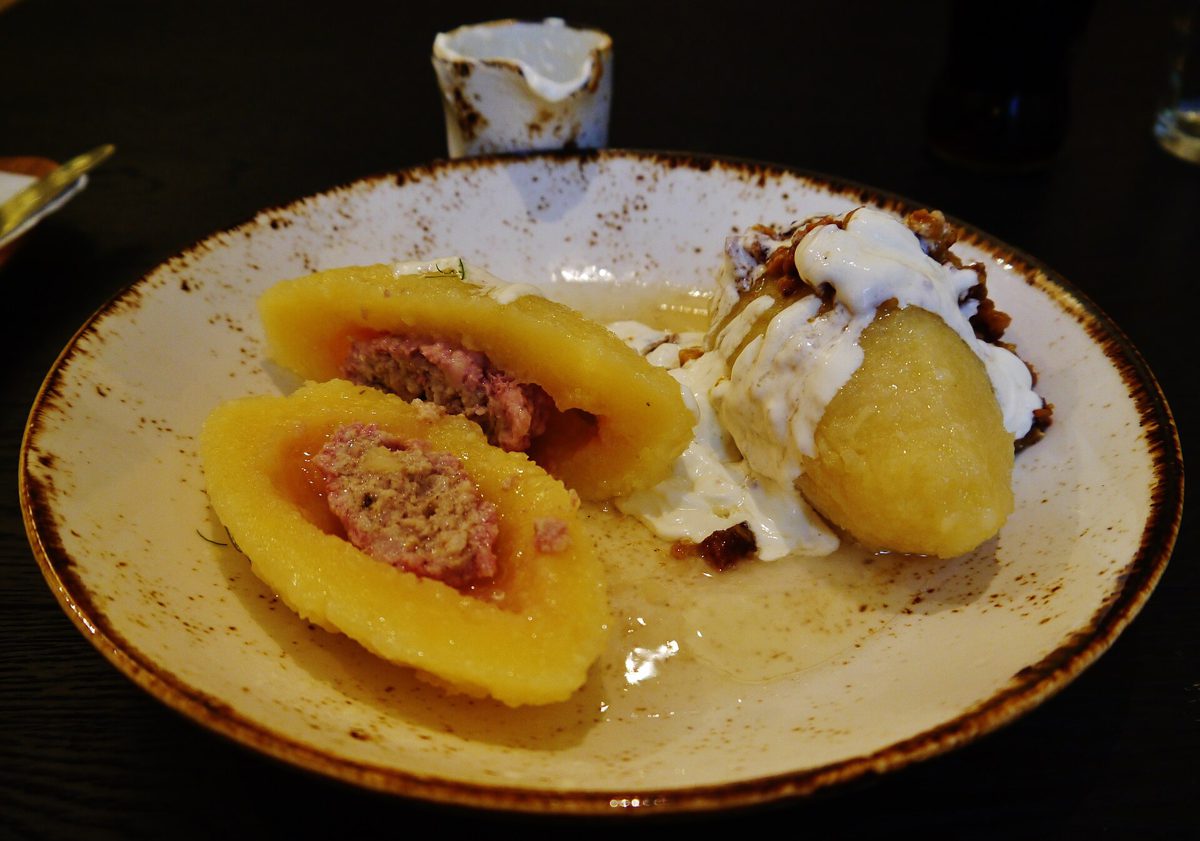
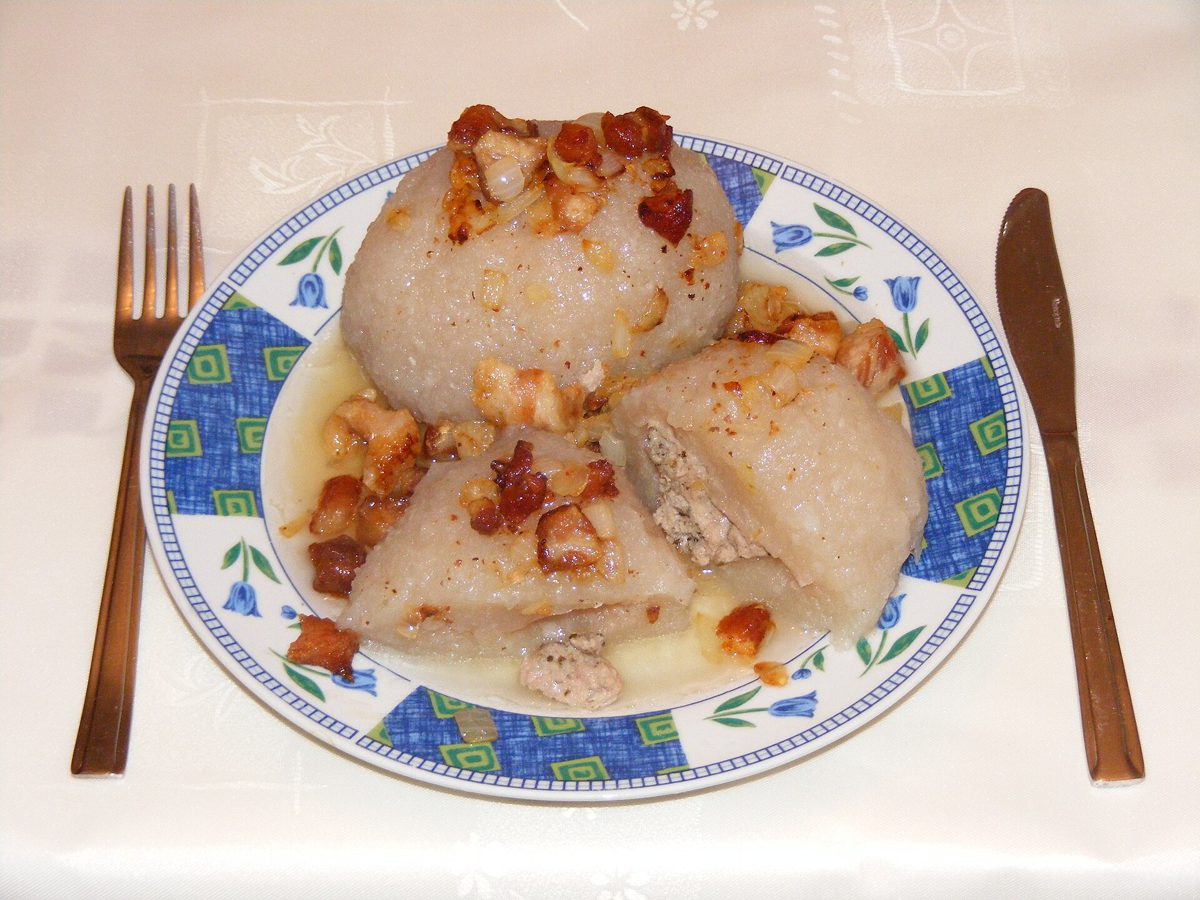
Kartacze is a dish from northeastern Poland: Podlasie, Suwałki, Warmia, and Masuria. In the Sejny area, they are also called cepeliny. In Lithuanian, they are cepelinai, formerly didžkukuliai, and in German, Keilchen. Lithuania considers them its national dish. According to the English Wikipedia, the Polish name refers to a 'kartacz,' which means artillery shell, while the Lithuanian name relates to the zeppelins of Count Ferdinand von Zeppelin, which the dumplings resemble in shape.
The exact origin is uncertain. Lithuanian culinary historian Rimvydas Laužikas wrote in 2014 that the dough made from raw potatoes is typical mainly for northern Germany and southern Scandinavia. A similar dough, called 'zacierki ziemniaczane,' appears in a Warsaw cookbook '200 potraw z ziemniaków' from 1919. The oldest printed Lithuanian recipes for cepeliny date back to 1934 and 1936, and Laužikas estimates that the dish has been in Lithuania for about 100–150 years, linking its name to the airships seen over their country during World War I. Among the relatives of kartacze are German Kartoffelklöße and Swedish kroppkaka.
On the List of Traditional Products by the Ministry of Agriculture, there are two entries from the Podlaskie Voivodeship: 'Kartacze' from 2005 and 'Kartacze sejneńskie / cepeliny' from 2006. According to the first entry, kartacze were made once a week or once every two weeks and were never a festive dish, while in noble households, chopped kindziuk was added to the filling. The second entry states that they were undoubtedly known in the Sejny region during the interwar period, and likely already at the end of the 19th century. They are made in almost every household there, most often in autumn during the harvest, as a hearty meal for hard work in the field. In 1953, Prof. Jarosław Lisakowski recorded a folk song about kartacze in the village of Krzywe near Suwałki.
Ingredients
Dough (8 kartacze)
-
2 kg starchy raw potatoes (weight after peeling)
Abroad: USA and Canada: Russet (Idaho); UK: Maris Piper; Germany: mehligkochende Kartoffeln -
400 g starchy cooked potatoes (weight after peeling, pressed through a ricer and cooled)
Abroad: as above -
2 tbsp (about 19 g) potato starch (1–2 tablespoons, only if the dough is sticky or falls apart; plus all the starch recovered from the juice)
Abroad: potato starch (not potato flour); Germany: Kartoffelstärke - 1 tsp (about 6 g) salt (flat)
Filling
-
400 g minced pork shoulder or neck (not lean)
Abroad: USA: ground pork or pork shoulder (pork butt) ground at the butcher; UK: pork mince; Germany: Schweinehackfleisch - 100 g onion (1 medium, finely chopped, raw or sautéed)
-
1 tsp (5 ml) dried marjoram (flat)
Abroad: dried marjoram; Germany: Majoran - ½ tsp (about 3 g) salt
- ¼ tsp (1.3 ml) ground black pepper (up to 1/2 teaspoon)
- 2 tbsp (30 ml) cold water (up to 3 tablespoons)
For boiling
- salt (for salting the water)
-
1 tbsp (about 9.5 g) potato starch (not necessary, dissolved in cold water and poured into the pot)
Abroad: potato starch; Germany: Kartoffelstärke
Topping
-
150 g smoked bacon or lard (cut into cubes)
Abroad: USA: smoked slab bacon; UK: smoked streaky bacon or lardons; Germany: Räucherspeck or Speckwürfel - 120 g onion (1 piece, diced)
-
200 g sour cream 18% (for the Lithuanian and Sejny versions)
Abroad: sour cream; Germany: Schmand or saure Sahne
Method, step by step
-
The day before or at least a few hours before making kartacze, boil the potatoes for the dough in salted water, peel them, press them through a ricer, and cool well. Weigh 400 g.
-
Filling: mix the meat with onion, salt, pepper, and marjoram crushed in your hands. If the mixture is dense, add 2–3 tablespoons of cold water. Do not add breadcrumbs or egg. Form 8 balls of 50–60 g each and keep them in the fridge.
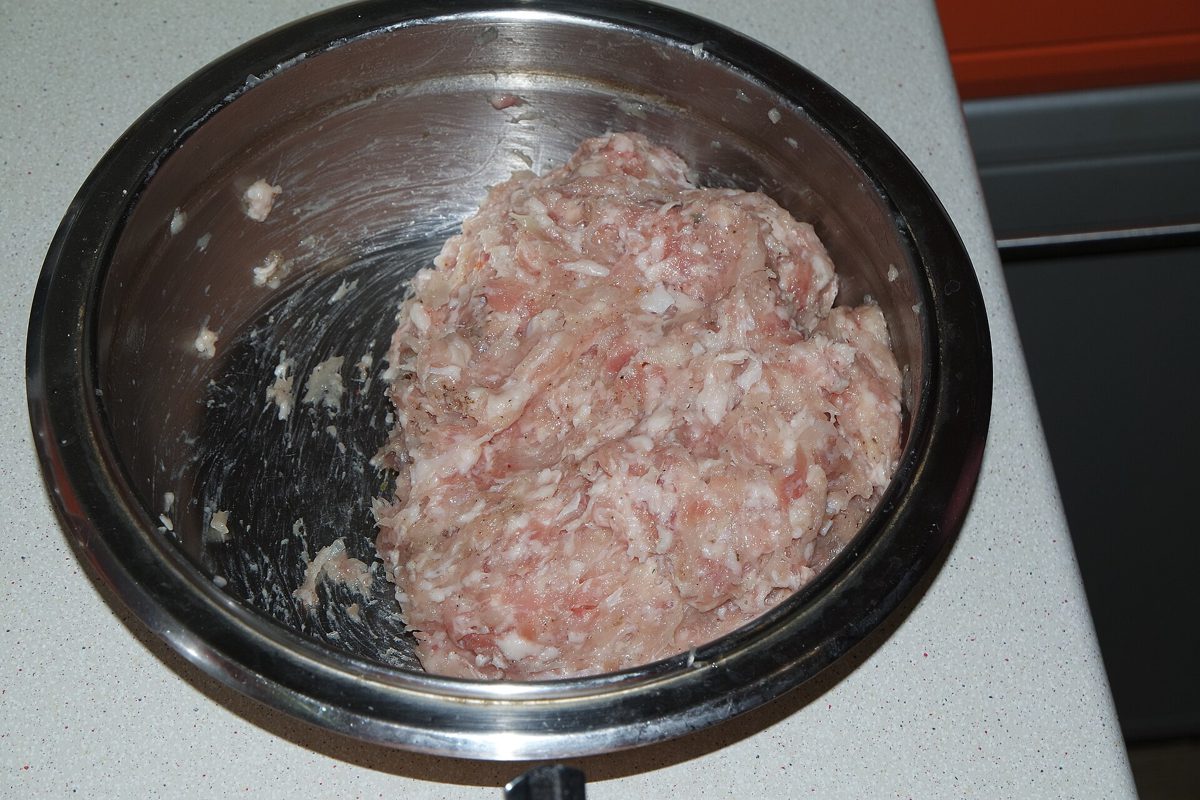
-
Peel the raw potatoes thinly and grate them on the finest grater or in a machine with a fine grater. Work quickly, as the mixture darkens; you can first grate a piece of onion into the bowl or drizzle the mixture with lemon juice.
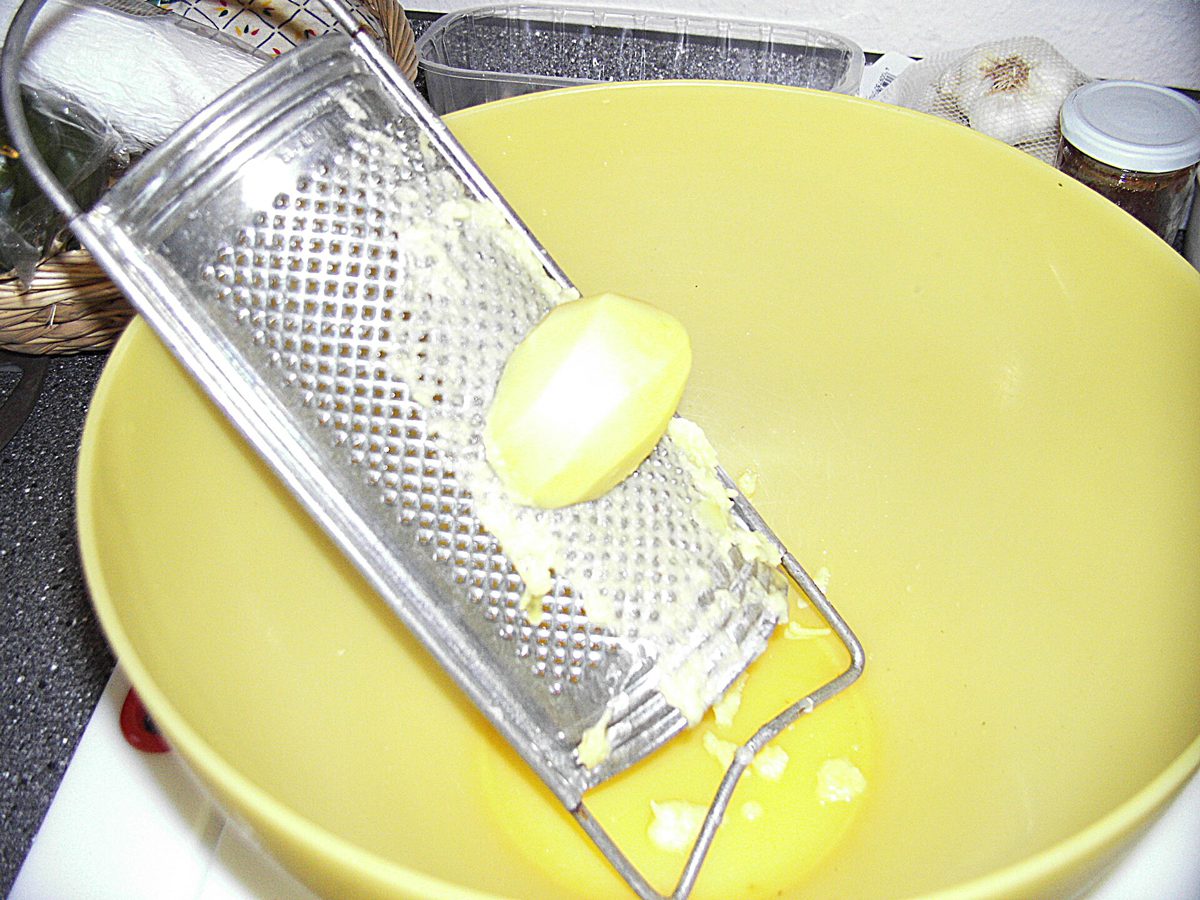
-
Squeeze the grated potatoes in batches in a linen cloth, gauze, or bag over a bowl until the mixture is almost dry, only slightly moist. Leave the juice in the bowl.
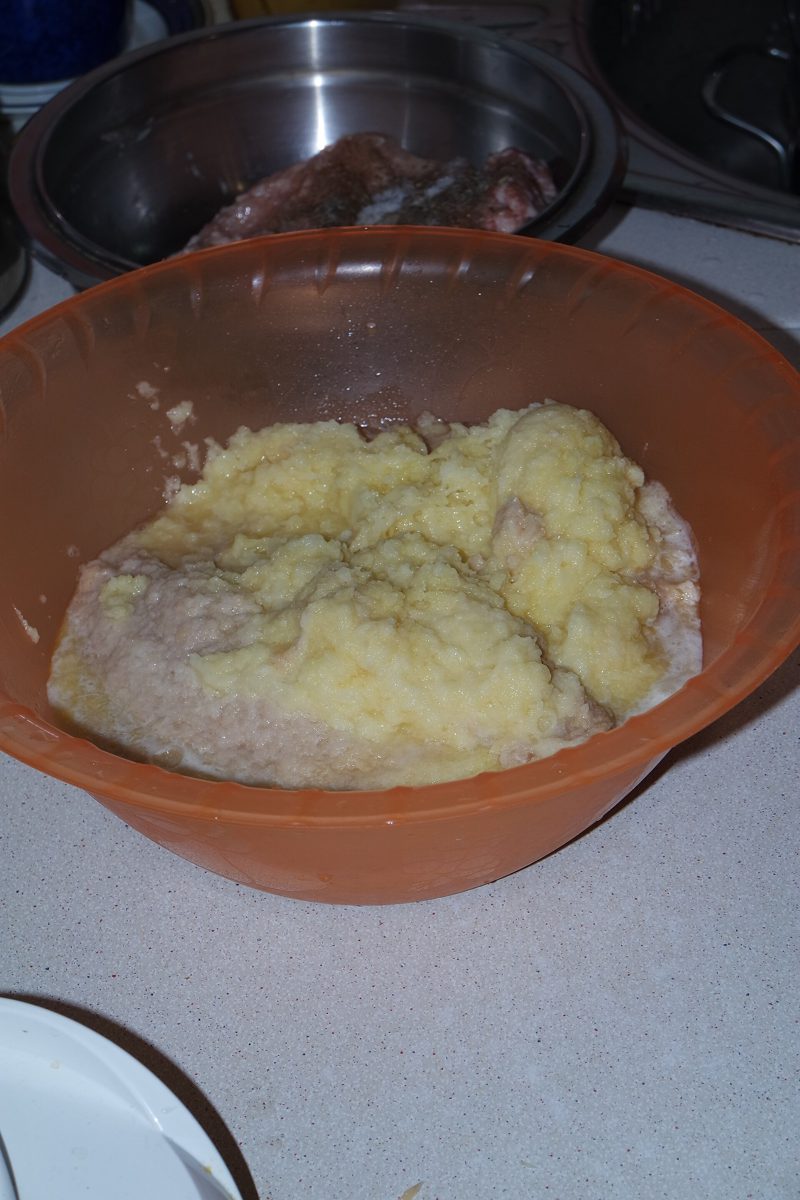
-
Set the juice aside for about 10 minutes. Carefully pour off the water, and add the white starch from the bottom of the bowl back to the squeezed potatoes.
-
Mix the raw mixture, cooked potatoes, starch, and salt into a uniform, cohesive dough that can be shaped. Set a wide pot of salted water, filled no more than halfway, to boil. Cook one kartacz as a test: if it falls apart, add potato starch to the dough by the tablespoon.
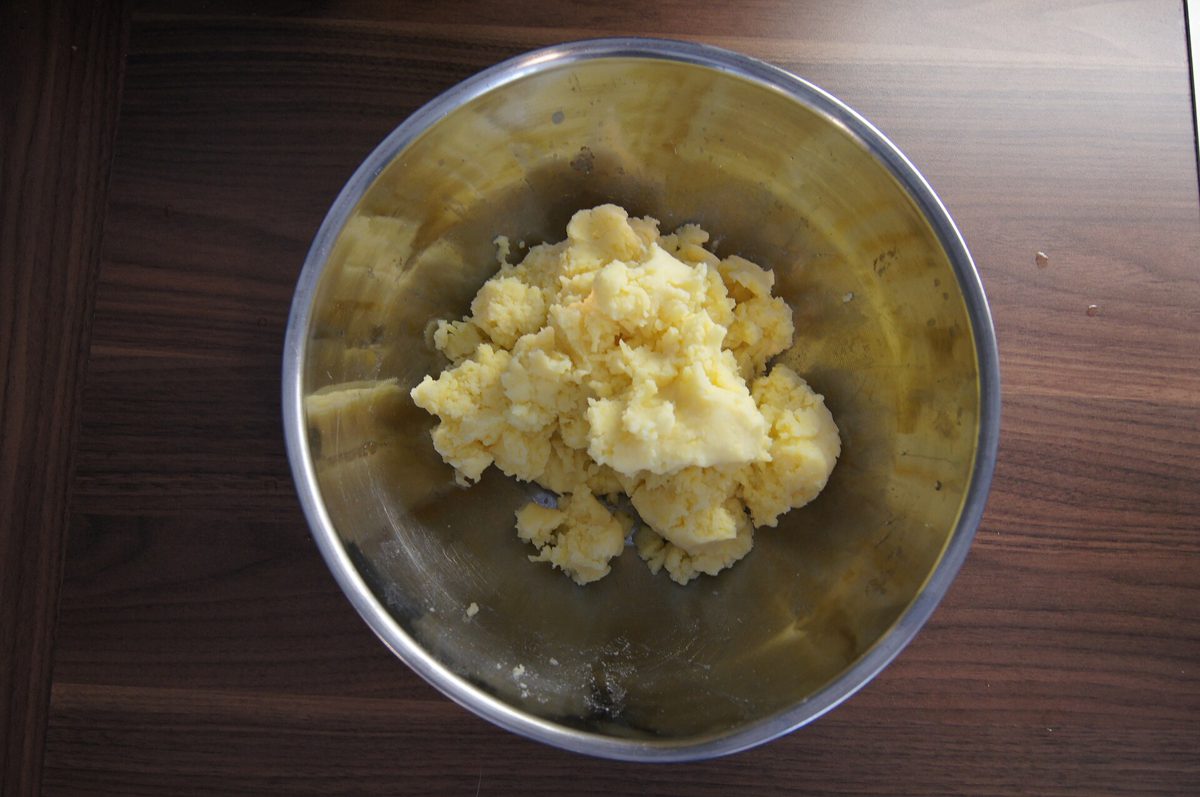
-
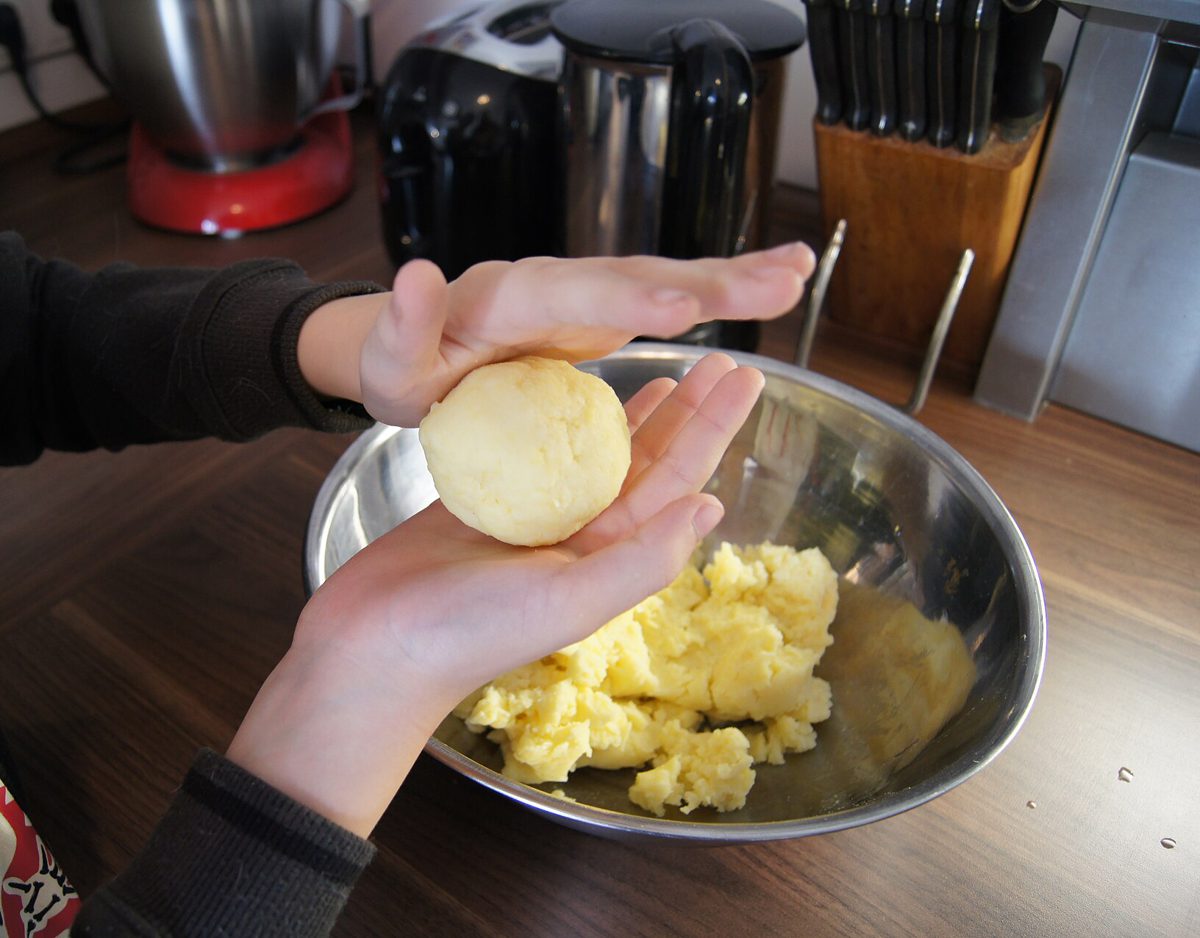
Take 150–170 g of dough and flatten it on a wet hand into a patty about 1 cm (½ inch) thick. Place a ball of filling in the center, close it with dough, and smooth it into an elongated oval about 10–12 cm (4–4¾ inches) long, pointed at both ends. The dough must not have cracks. Immediately place each kartacz into the water to prevent the dough from releasing.
-
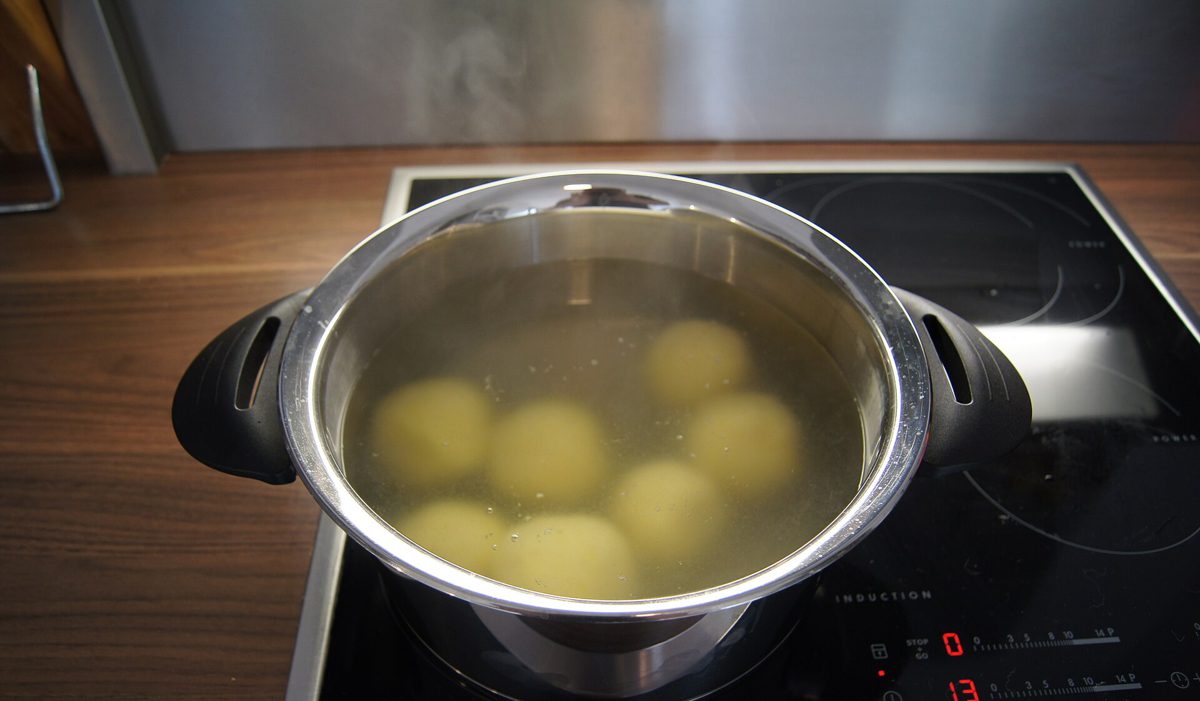
Place kartacze in batches, with space between them. They will first sink to the bottom, so gently shake the pot to prevent sticking. When they float, reduce the heat so that the water is just lightly bubbling, and cook for a total of about 20–30 minutes. Cut one open: the meat inside must not be raw or pink.
-
While cooking, prepare the topping: fry the bacon until the fat renders, add the onion, and brown it. For the Lithuanian version, remove the pan from the heat and stir in the sour cream.
-
Remove the kartacze with a slotted spoon onto a plate so they do not touch each other. Serve immediately, hot, drizzled with the topping.
Photos