The story behind the recipe
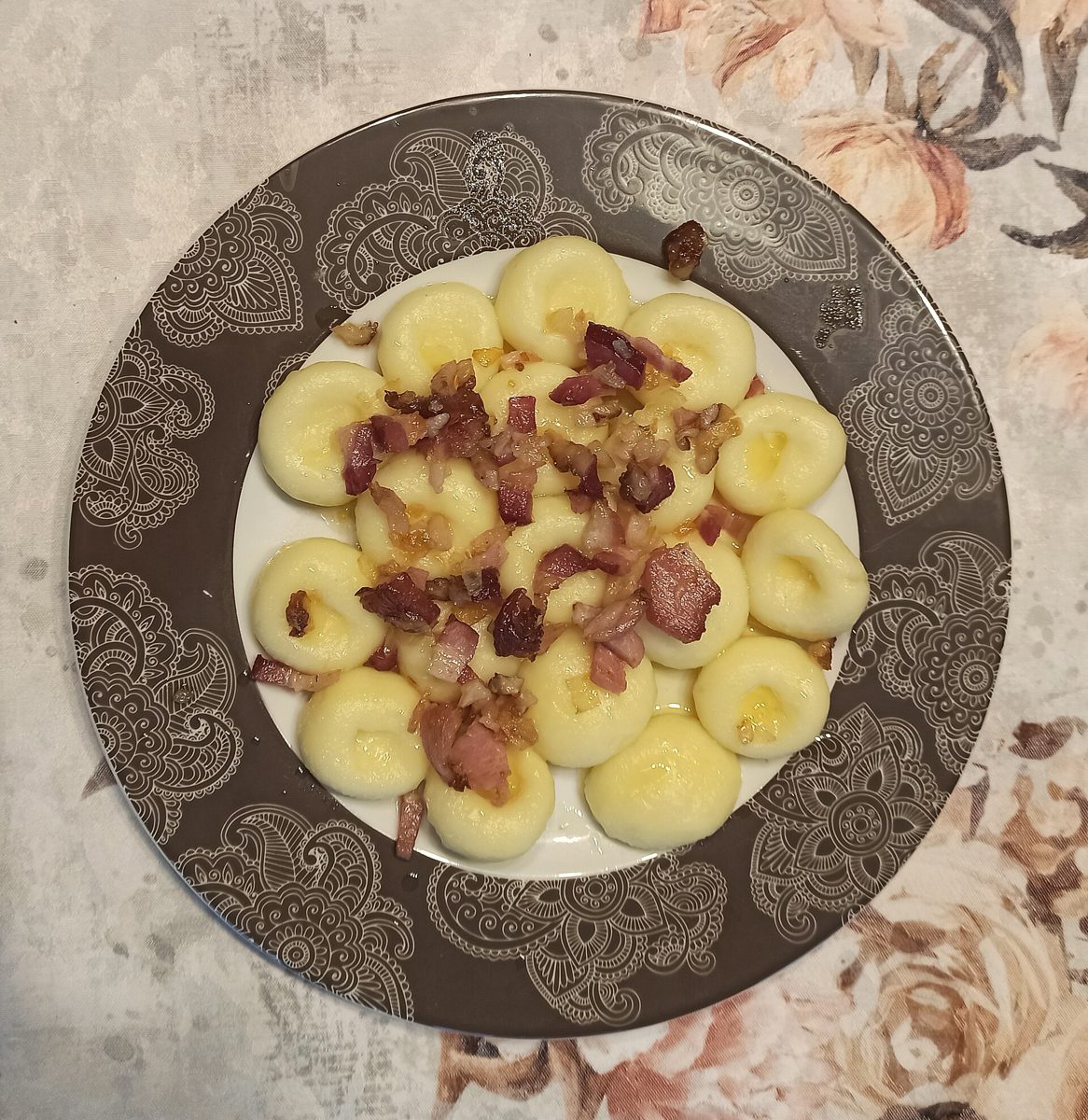
Kluski śląskie are small, white, slightly flattened balls made from boiled potatoes and potato flour, with a characteristic hole made by a finger. In Silesia, they are also called kluski białe or biołe, guminowe, gumione, and in Silesian dialect gumiklyjzy. The word 'klusek' is derived by linguists from the German 'Kloß'. In German cuisine, they are known as Schlesische Kartoffelklöße or Gummiklöße.
These dumplings are listed on the Traditional Products List of the Ministry of Agriculture twice: in the Silesian Voivodeship as 'Kluski białe śląskie' (2006) and in the Opole Voivodeship as 'Kluski śląskie (so-called biołe kluski)' (2007). According to the description on the list, they should be creamy, smooth, and shiny after cooking, with a soft, elastic, and slightly sticky interior.
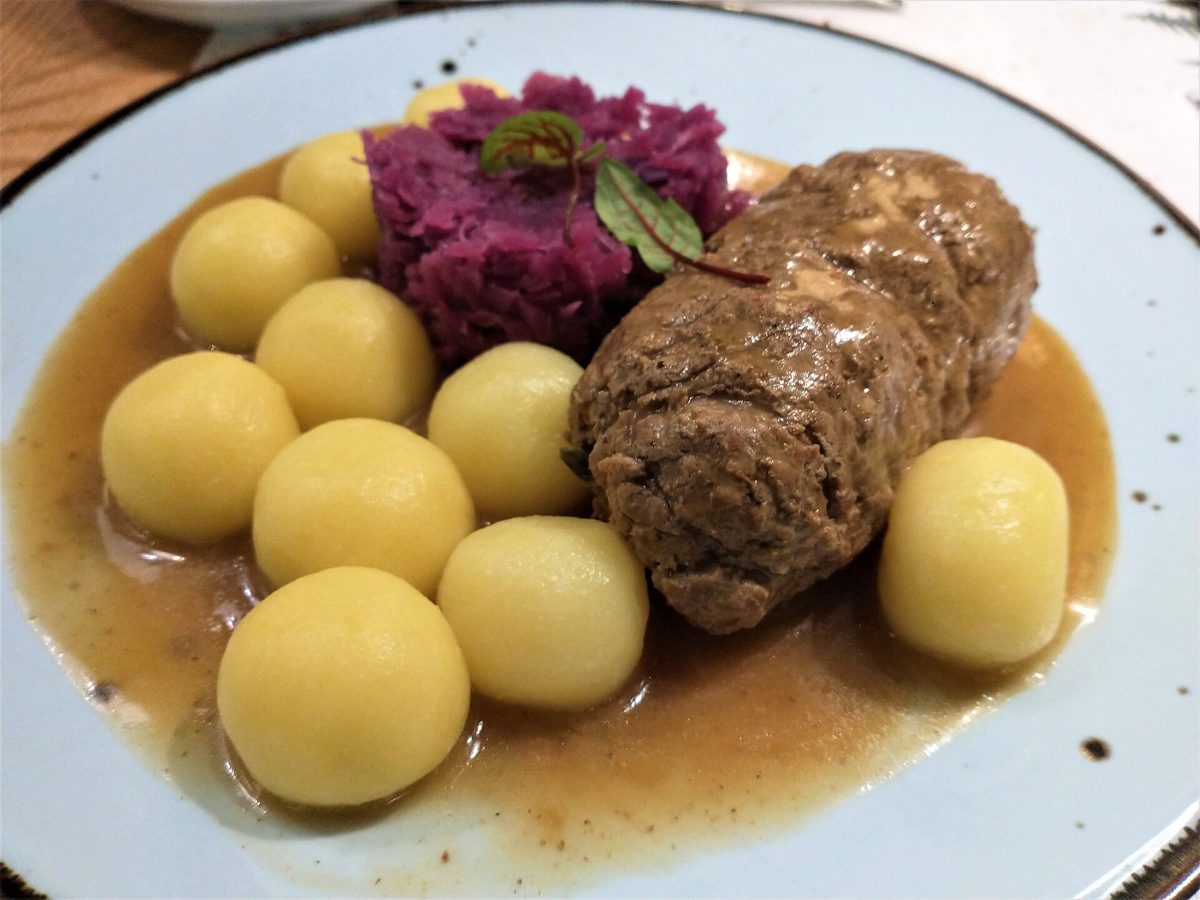
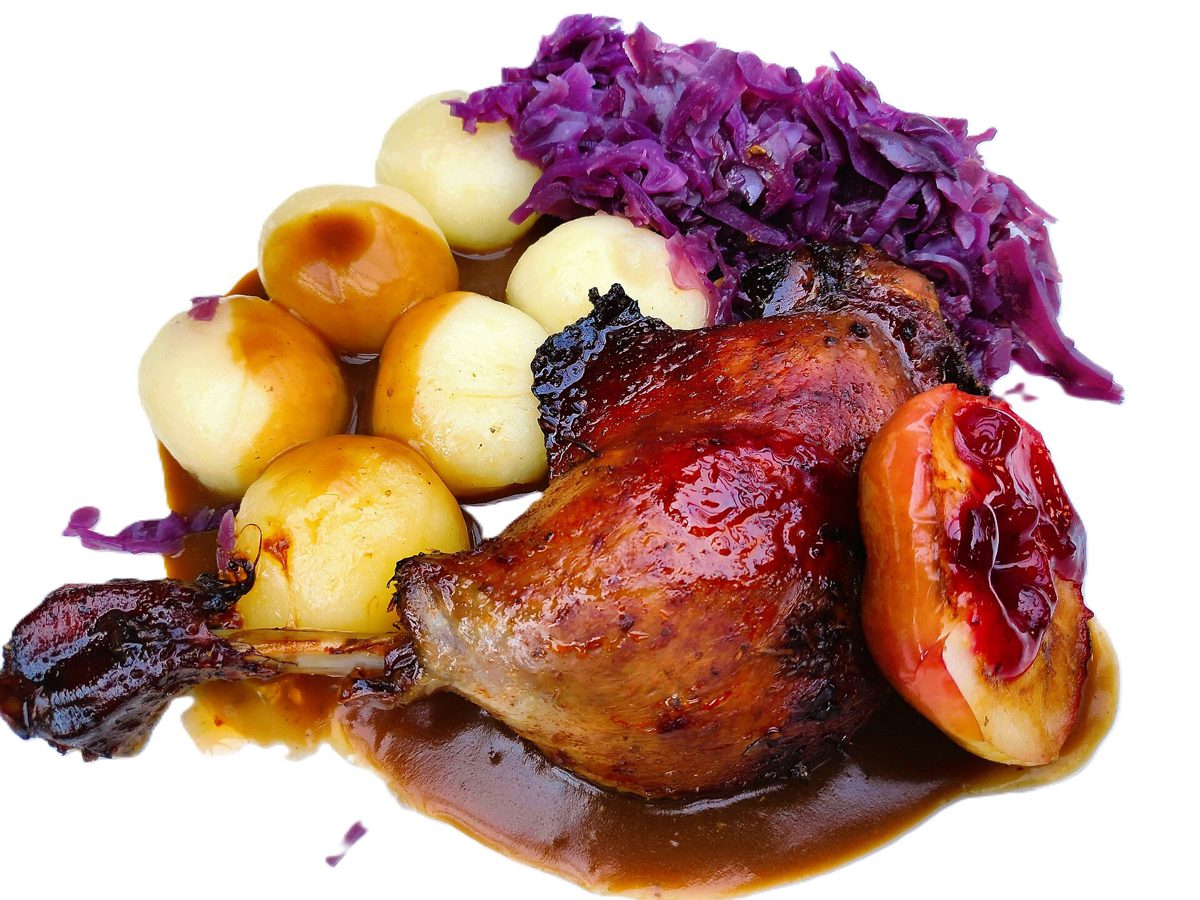
The Silesian description recalls memories from the areas around Rybnik, Racibórz, and Wodzisław: a Sunday dinner, often adjusted to mining shifts, where the whole family would sit down, sometimes three generations. The table would have broth with noodles, followed by dumplings with sauce, roulade, and red cabbage, with compote to drink. The Opole description, based on the archives of the Silesian Institute, states that the recipe is passed down from generation to generation, and a wedding without these dumplings was considered poor.
Kluski śląskie can easily be confused with other potato dumplings. Kopytka are made with wheat flour, cut into rhombuses, and do not have a hole. Black dumplings, also called gray ones, contain at least one-third grated raw potatoes in the dough. White Silesian dumplings are made only from boiled potatoes and potato flour. According to the description from the traditional products list, dumplings made with wheat flour 'do not taste the same.'
Ingredients
Dough
-
1 kg starchy potatoes (type C) (weight before peeling, about 30 pieces of dumplings)
Abroad: USA and Canada: Russet; UK: Maris Piper or King Edward; Germany: mehligkochend; Australia: King Edward or Sebago -
200 g potato flour (about, exactly as much as fits in the cut-out quarter)
Abroad: potato starch (not potato flour and not cornstarch); in Germany Kartoffelstärke, also sold as Kartoffelmehl - 1 pc egg (not necessarily, in many Silesian homes the dough is made without egg)
- 1 tsp salt (flat)
For boiling
- 3 l water
- salt (for the water, to taste)
For serving (optional)
-
80 g lard or bacon for cracklings (or 2 tablespoons of butter)
Abroad: USA: salt pork or bacon; Germany: Speck
Method, step by step
-
Peel the potatoes, cut larger ones in half, and boil in salted water until soft, but do not overcook them. They can also be boiled in their skins and peeled while hot: this way they absorb less water. Drain thoroughly and let them steam for a moment on the turned-off burner.
-
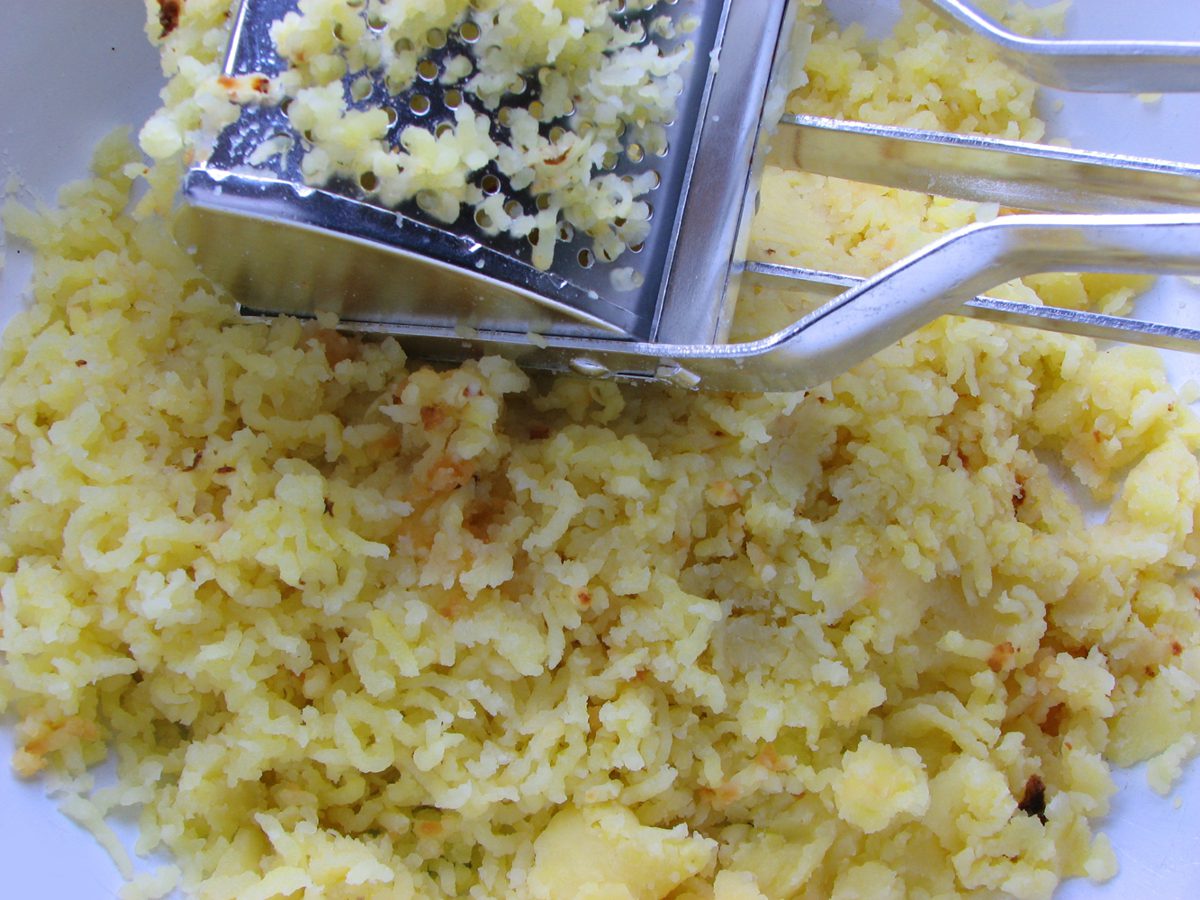
Pass the hot potatoes through a ricer, preferably twice, to avoid lumps. Do not use a blender or mixer, as the dough will become sticky. Spread the mixture in a bowl and let it sit for about 5 minutes until it stops steaming. The dough is made from warm or cooled potatoes: hot, steaming potatoes yield a sticky dough.
-
The 'quarter method': level the potatoes in the bowl and divide them with a knife into four equal parts. Take one quarter out onto a plate, and fill the empty space with potato flour to the same level as the potatoes. Then put the reserved quarter back into the bowl. This method works with any amount of potatoes and does not require a scale.
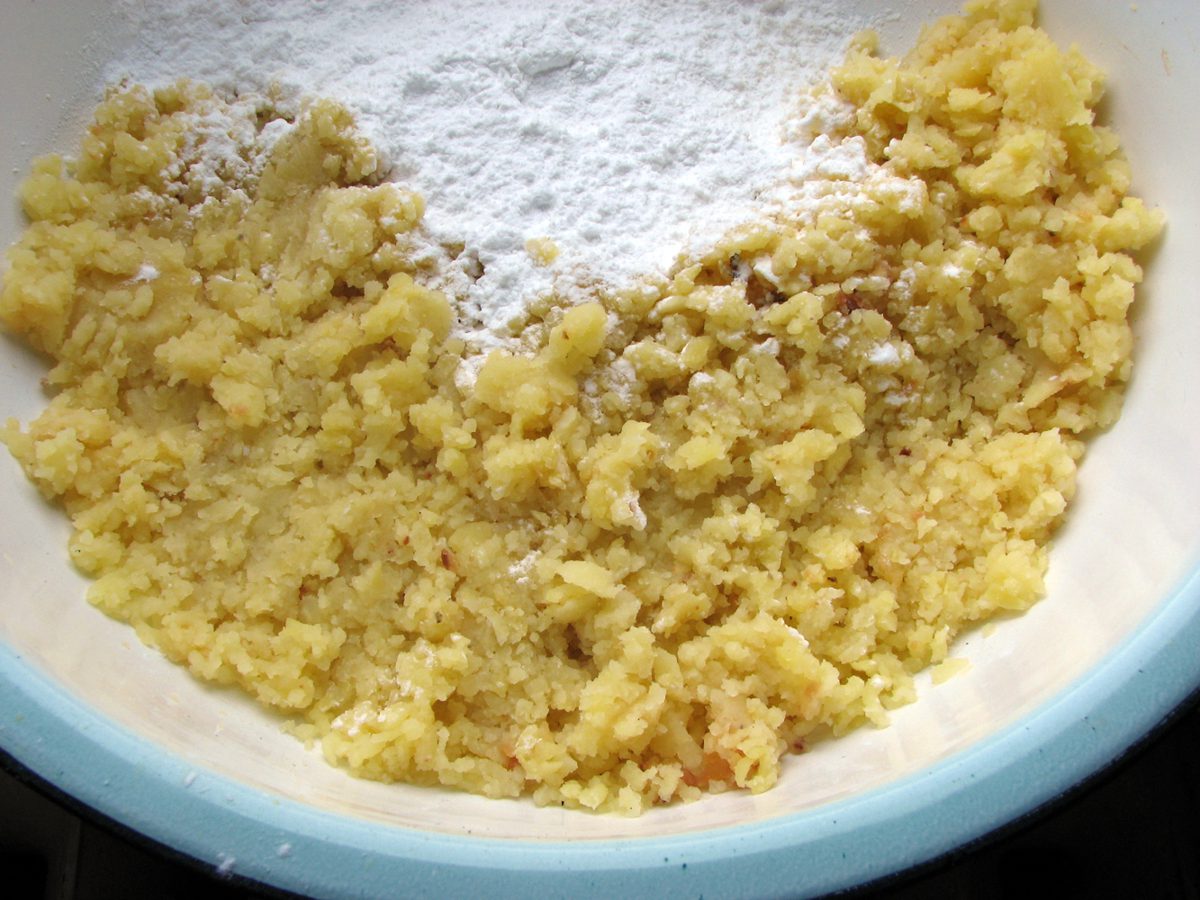
-
Add salt and the egg if you are using it. Quickly knead a smooth, elastic dough that stops sticking to your hands. If the dough is sticky, add a little potato flour, but gradually: too much flour makes the dumplings rubbery, too little causes them to fall apart.
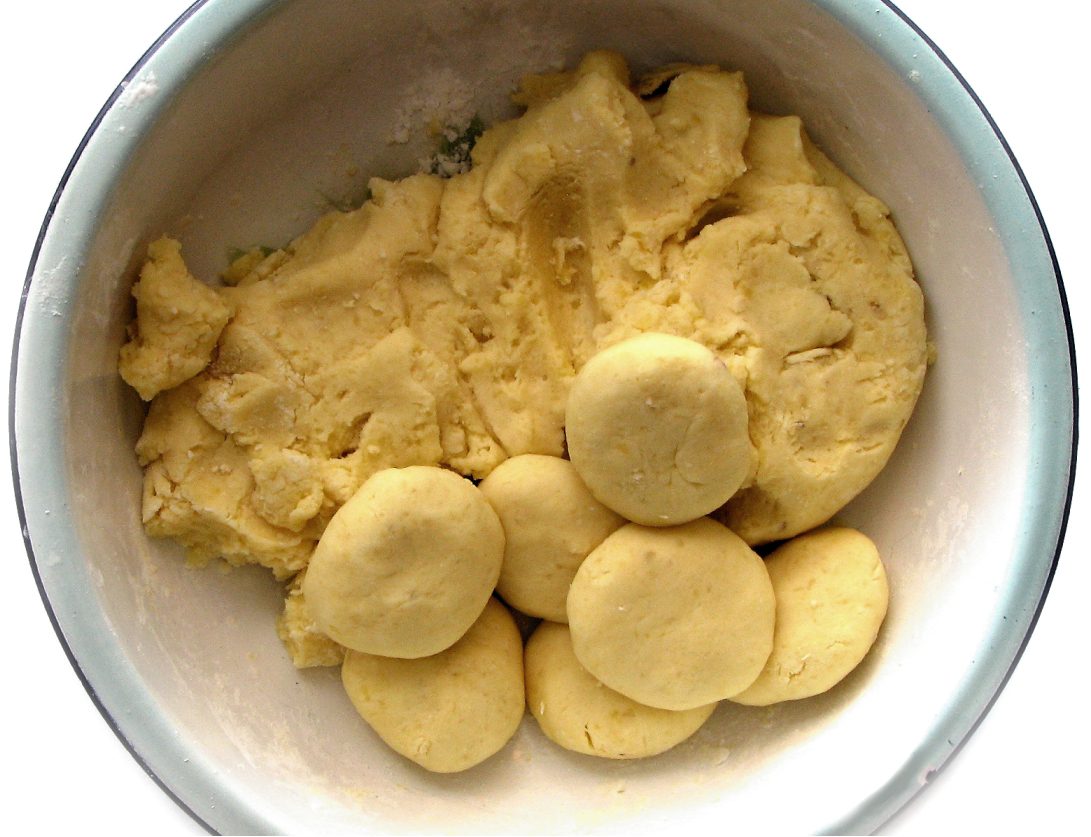
-
Set a large pot with about 3 liters of salted water and bring it to a boil.
-
Tear off pieces of dough and form balls the size of a walnut, about 4 cm, and slightly flatten them. With your thumb or the end of a wooden spoon, make a deep hole in each, about two-thirds of the thickness. The hole collects sauce and helps the dumplings cook evenly inside. A hole that is too shallow is the most common mistake. Place the formed dumplings on a board sprinkled with potato flour.
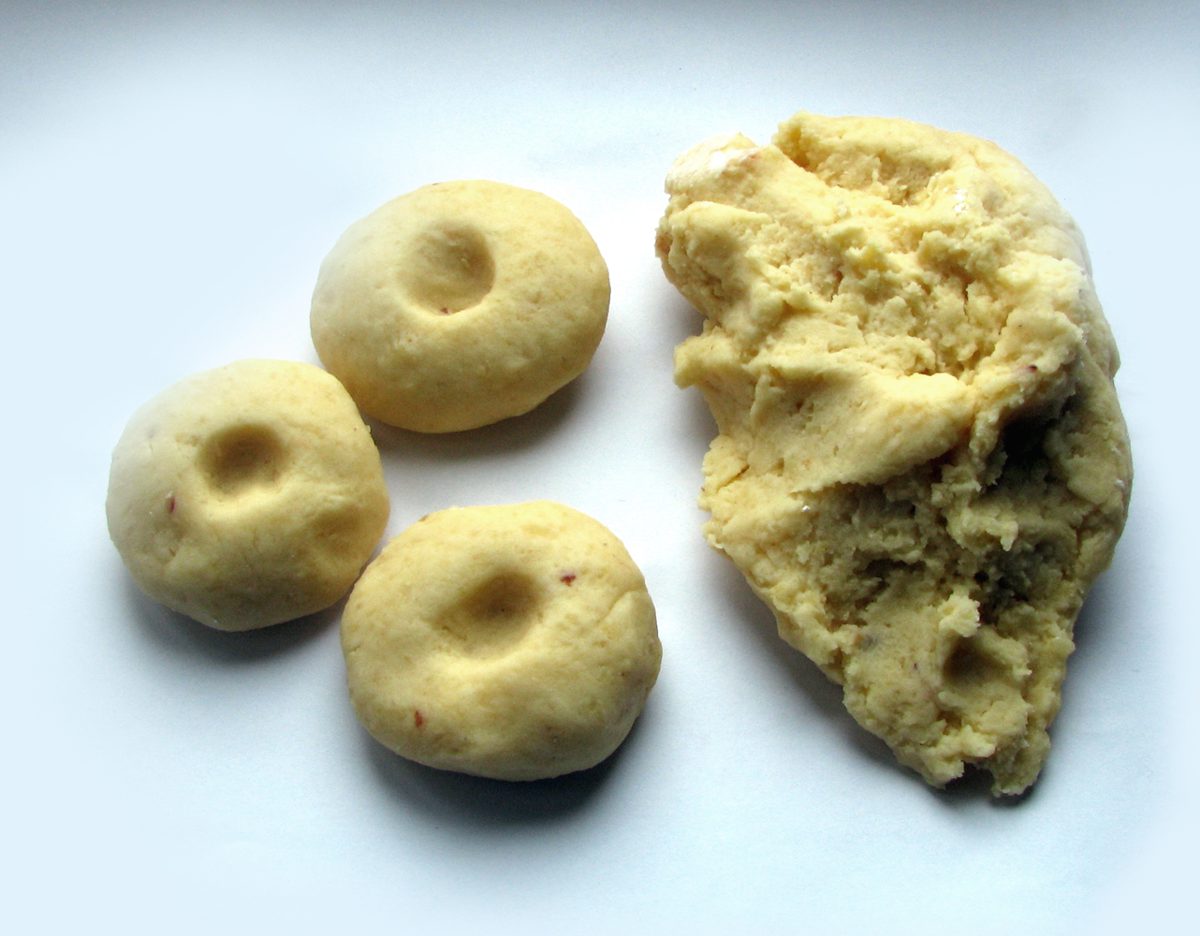
-
Drop the dumplings into the boiling water in batches, not all at once, as the water will cool down too much and the dumplings will stick together. Right after dropping them in, gently stir to prevent sticking to the bottom. When they float, cook them for another 2–3 minutes (sources suggest from 1 to 5 minutes), then cut one open: there should be no raw dough inside. Another method: after dropping in the dumplings, reduce the heat to a minimum and keep them in hot but not boiling water for 10–12 minutes, which gives them a smoother surface.
-
If serving the dumplings with cracklings, cut the lard or bacon into cubes and render in a pan until golden.
-
Remove the dumplings with a slotted spoon and serve immediately, hot: they stick together when cooled. Drizzle them with sauce, melted butter, or cracklings.
Photos