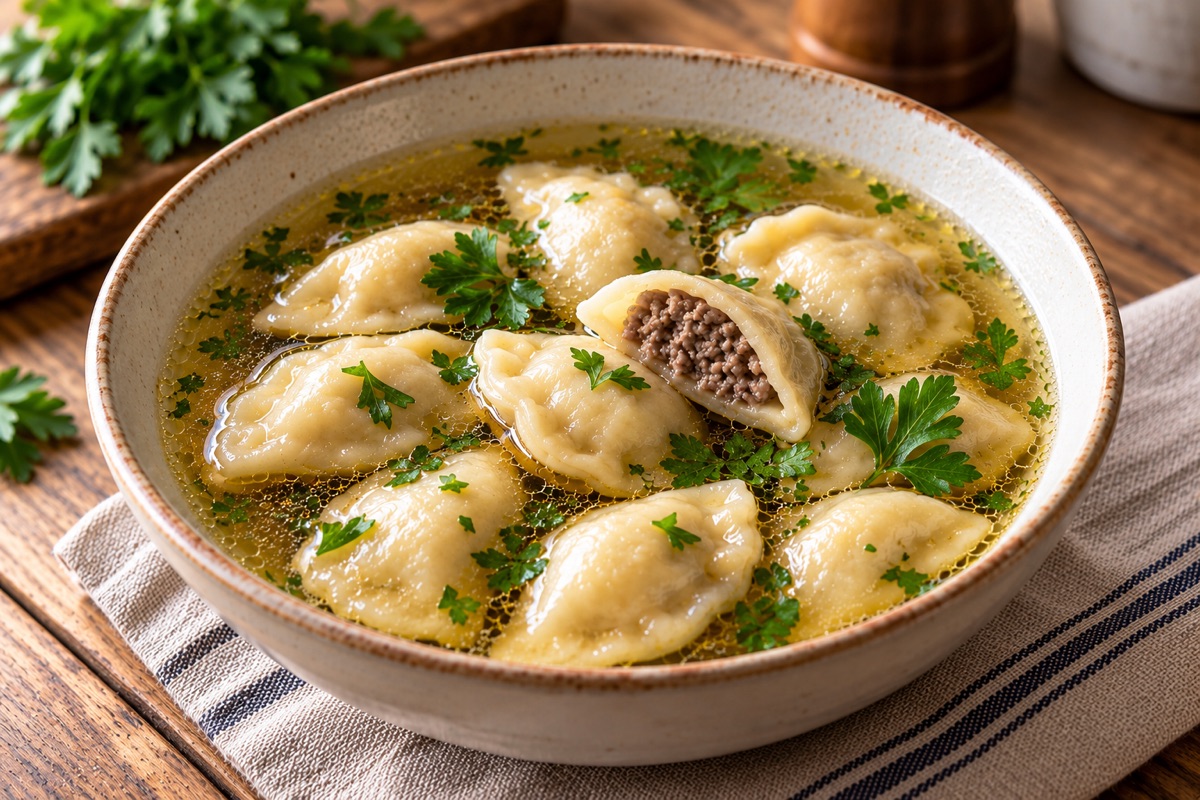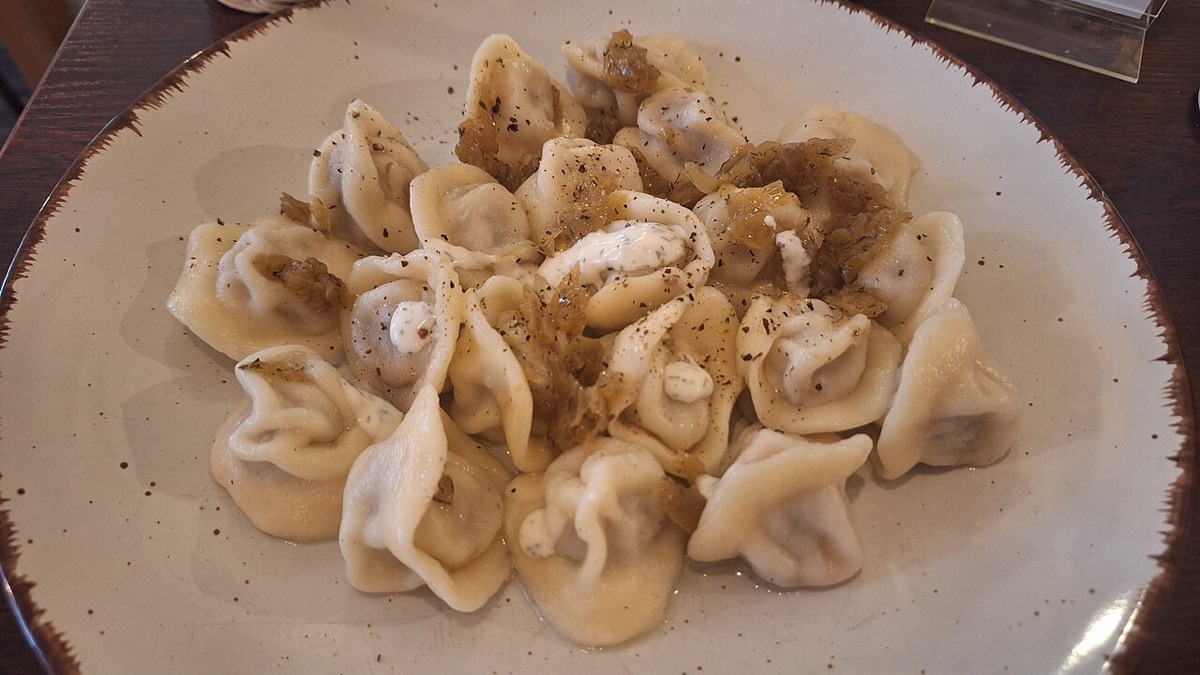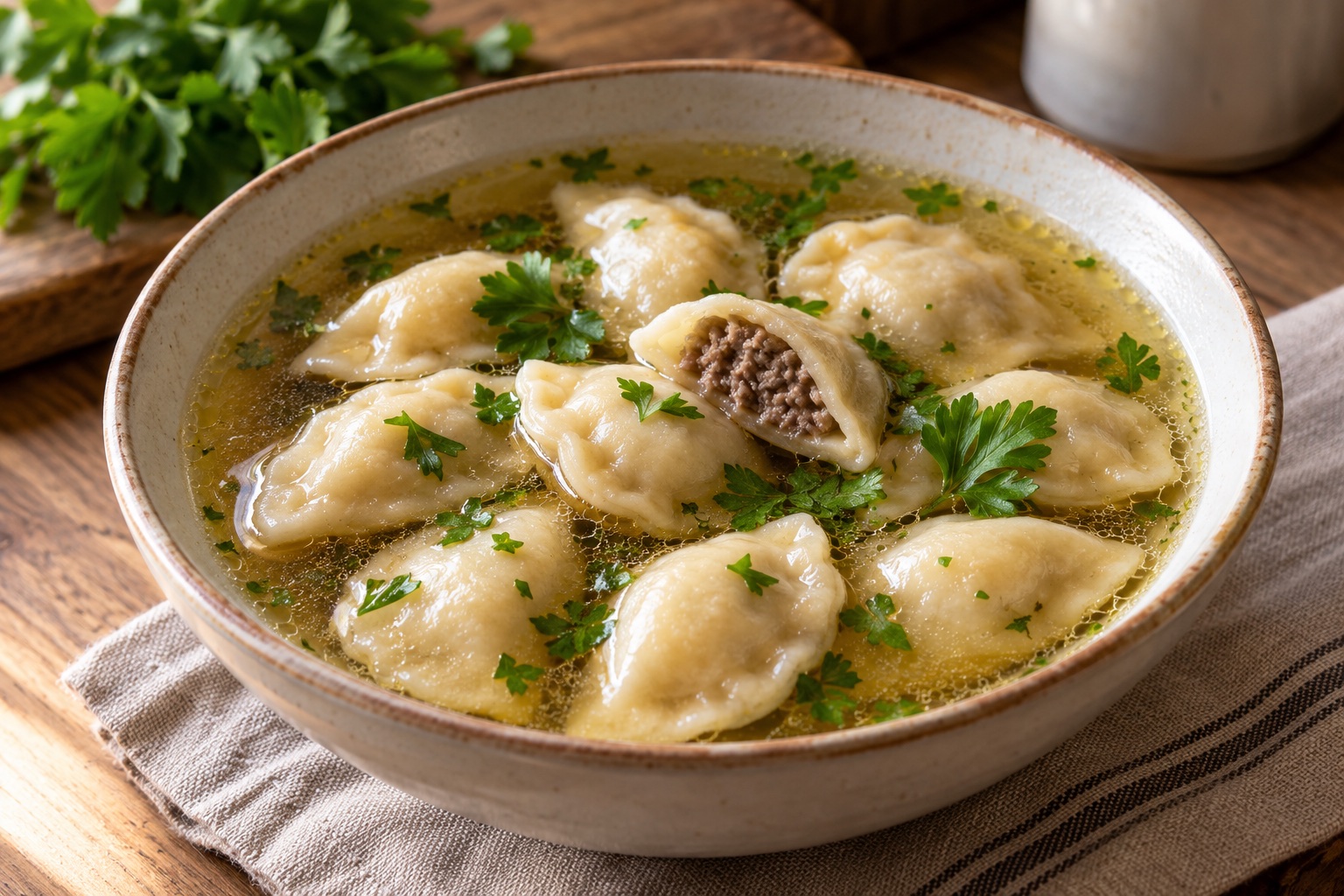
The story behind the recipe
Lithuanian kołduny are part of the shared heritage of the cuisine of the former Commonwealth, especially in the areas of present-day Lithuania and Belarus. Ministerial publications recall a version with raw beef and suet, cooked together with the dumpling. In Polish books and homes, kołduny have a long tradition, but their origins should not be presented as exclusively Polish.
Here, we prepare about 80–100 small pieces. The dough should be thin, and the sealing tight, as a meat juice forms inside. This filling is different from the published versions with buckwheat. The difficulty lies in the delicate sealing, working with raw meat, and controlling the readiness of the small dumpling.
Ingredients
Dough
- 350 g wheat flour (plus a small amount for dusting)
- 150 ml water (lukewarm; possibly a tablespoon more depending on the flour's absorption)
- 1 pc egg
- 10 ml oil
- 5 g salt
Filling
- 400 g beef (without bones, membranes, and tendons)
- 120 g food-grade beef suet (preferably kidney)
- 80 g onion
- 60 ml water (very cold)
- 9 g salt
- ½ tsp (2.5 ml) pepper
- ½ tsp (2.5 ml) marjoram
Serving
- 2 l beef broth (for serving)
- 10 g parsley
Cooking
- 3 l water (for cooking, in batches as needed)
- 15 g salt (for the water)
Method, step by step
-
Knead the dough from flour, lukewarm water, egg, oil, and 5 g of salt. Work for about 8 minutes until smooth and elastic. If it doesn't form a ball, add water by the teaspoon. Cover and let rest for 30 minutes.
-
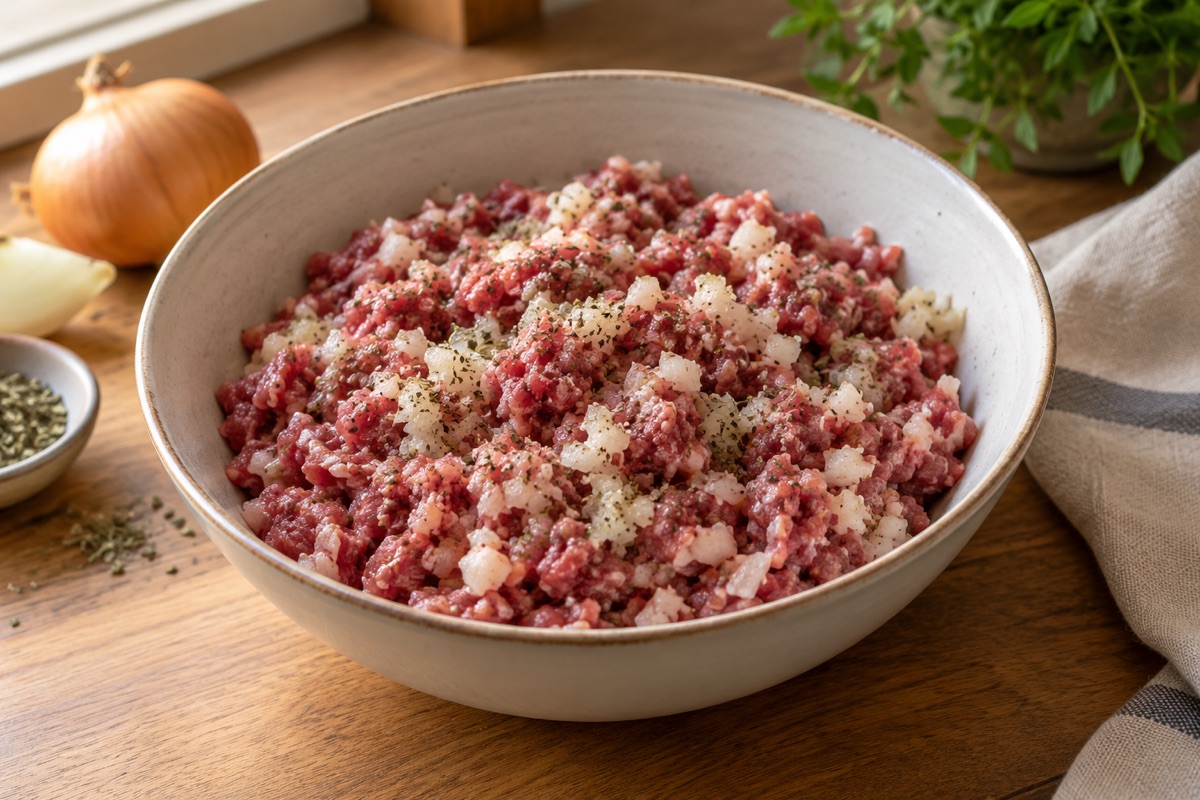
Clean the beef of membranes and tendons. Chop the suet very finely, and either chop the meat with a sharp knife or grind it on a fine setting. Grate the onion finely or chop it almost to a paste. Keep the ingredients cool.
-
Combine the beef, suet, onion, salt, pepper, and marjoram. Add cold water in small portions, kneading until absorbed. The filling should be moist and cohesive. Cook a small portion to 72°C and assess the seasoning after processing. Cover the rest and place it in the refrigerator.
-
Divide the dough into four parts. Keep three covered so they don't dry out. Prepare trays lightly dusted with flour and a small bowl of water for possibly moistening dried edges.
-
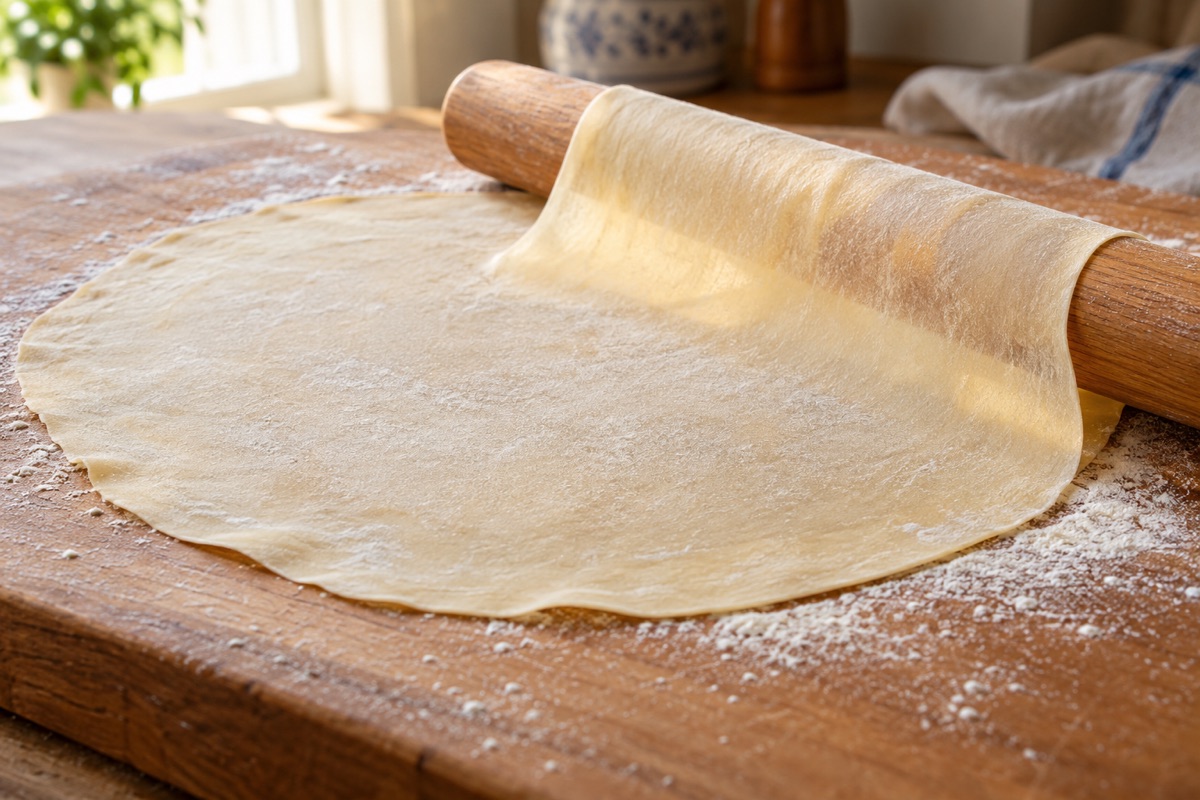
Roll out one part on a lightly floured surface to a thickness of about 1–1.5 mm. Do not dust with a thick layer of flour, as it will hinder sealing. The dough should be thin but not tear when lifted.
-
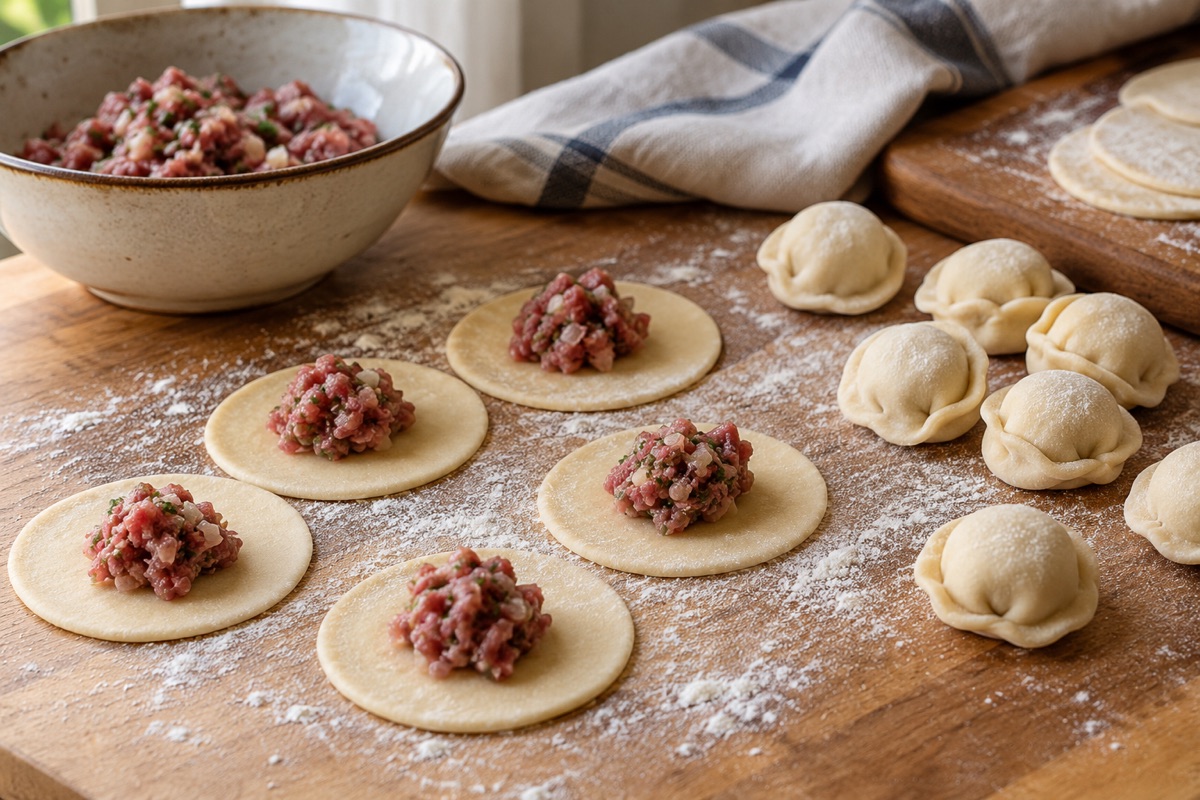
Cut out circles about 5 cm in diameter. Place a small teaspoon of filling in the center of each, leaving a clean edge. Adjust the portion size so that the dumpling can be closed without stretching.
-
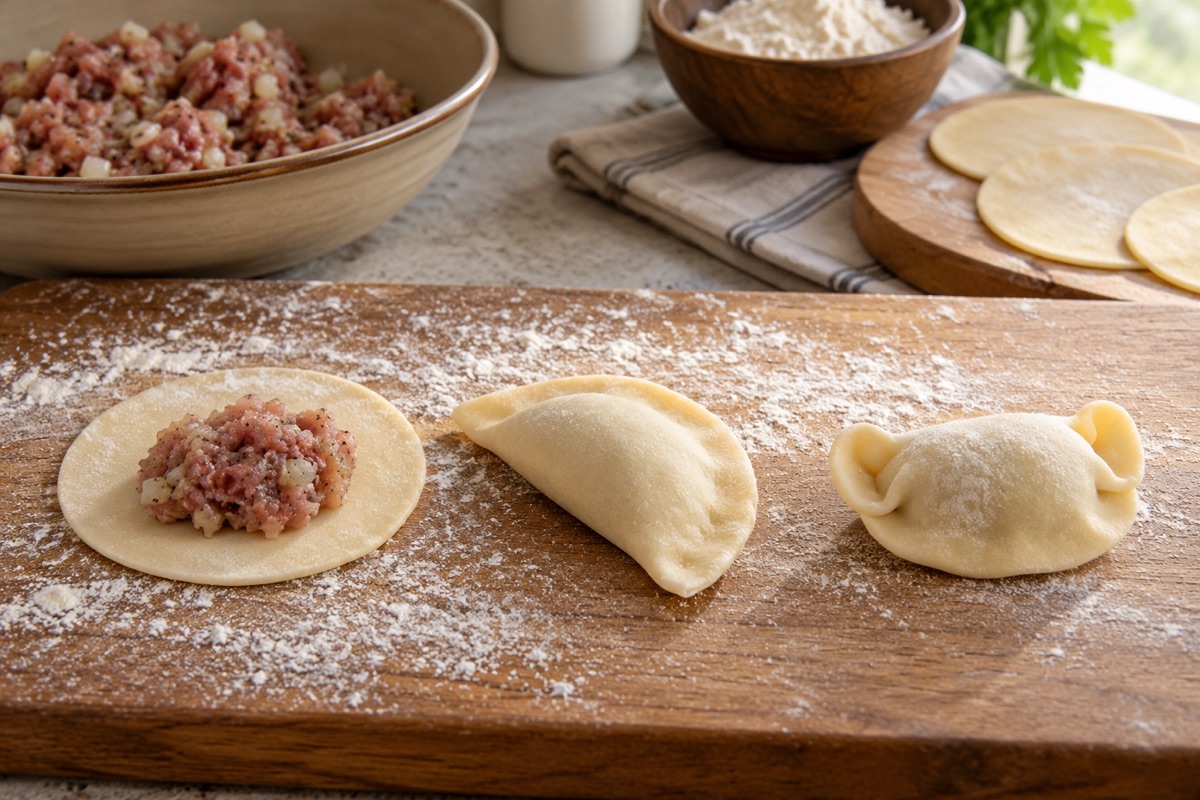
Fold the circle in half, push the air out from the filling side, and tightly seal the edges. Do not leave meat between the joined layers. If the edges have dried, moisten them very sparingly.
-
Bring the ends of the crescent together and join them, forming a small ear. Place them covered in a single layer. Do not press the kołduny against each other and do not dust them with flour.
-
Bring 3 liters of water with salt to a boil in a wide pot. Heat the broth separately for serving. Cook the kołduny in small batches, ensuring that the liquid quickly returns to a gentle boil after adding.
-
Carefully add the first batch and gently move the pot or stir at the bottom. Once it comes back to a boil, reduce the heat. Cook for approximately 5–7 minutes; the time depends on the size and thickness of the dough.
-
While the first batch is cooking, shape the next, taking out only a small amount of filling from the refrigerator. Do not cook vigorously, as the seams may tear and release juice.
-
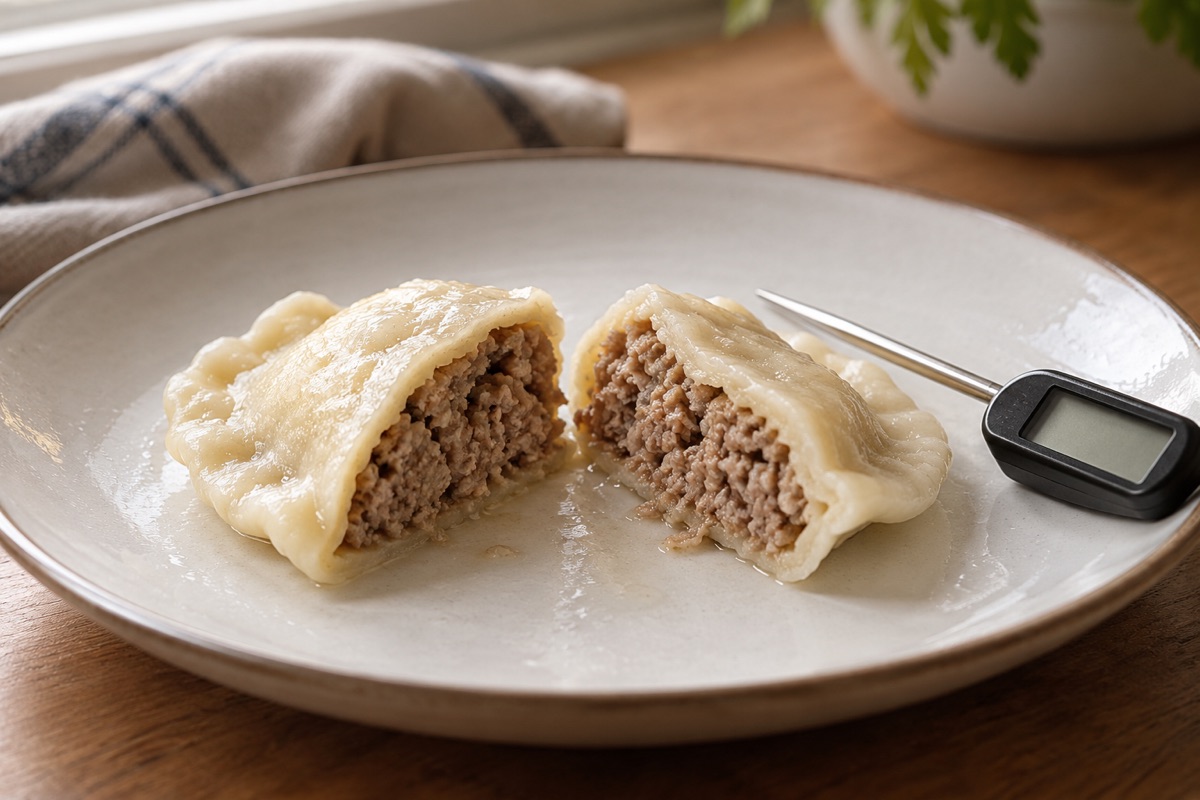
Remove one larger kołdun. Insert a thin probe from the side into the center of the filling: it should reach 72°C. Cut open a test dumpling to assess the thickness of the dough and the sealing, but do not treat the color of the meat as a temperature measurement. Cook the batch longer if necessary.
-
Remove the cooked kołduny with a slotted spoon onto warmed plates and pour hot broth over them. Sprinkle with a small amount of parsley. Cook the remaining batches using the same method, checking the larger pieces. From the given amounts, you will get about 80–100 kołduny.
-
Serve immediately, warning that there is hot juice inside. Kołduny intended for later should be quickly cooled separately from the broth; for reheating, use gently simmering water or broth.
Photos