The story behind the recipe
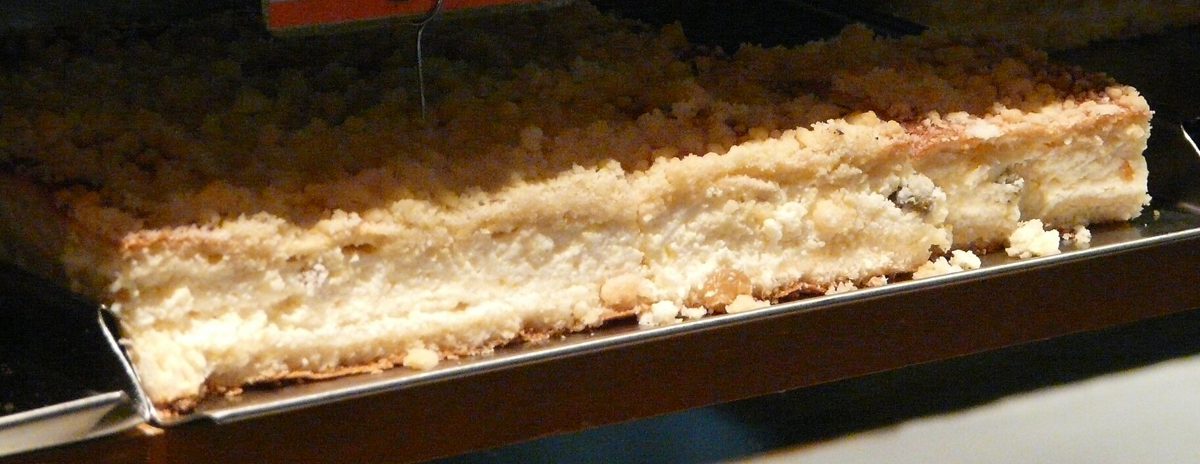
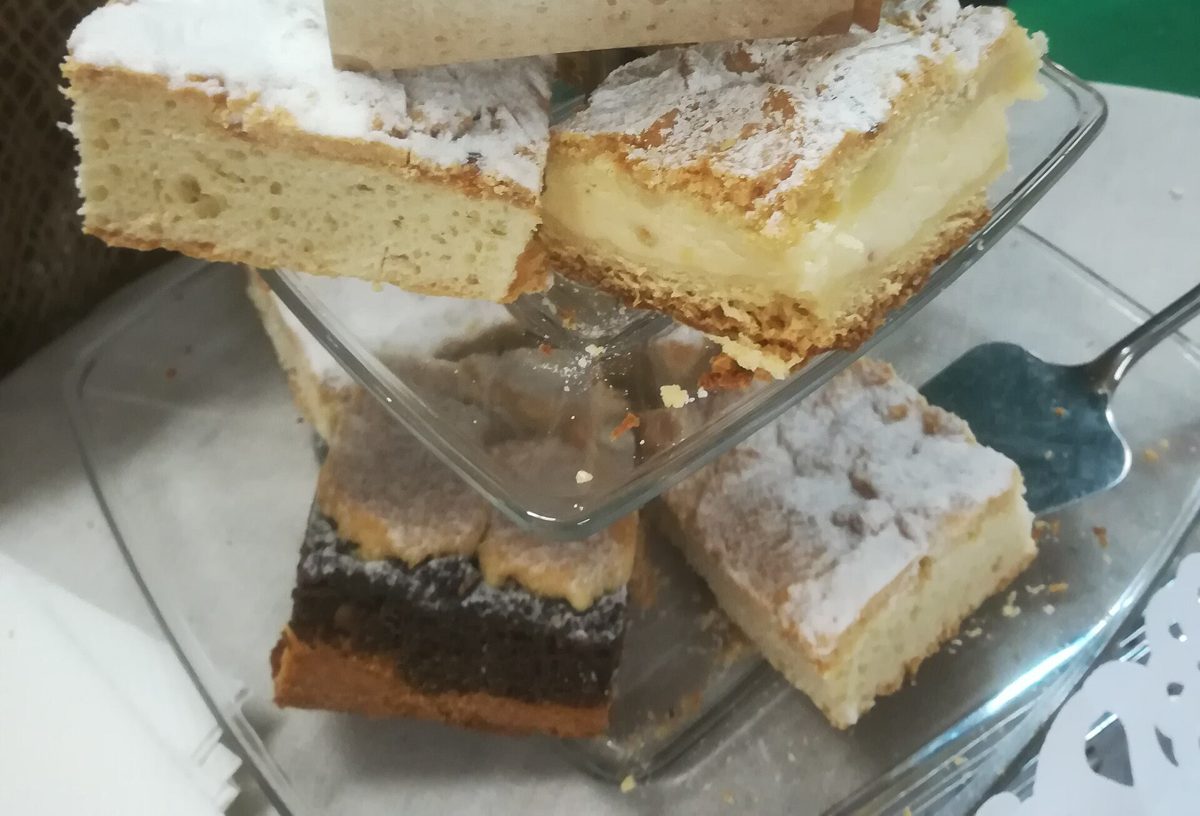
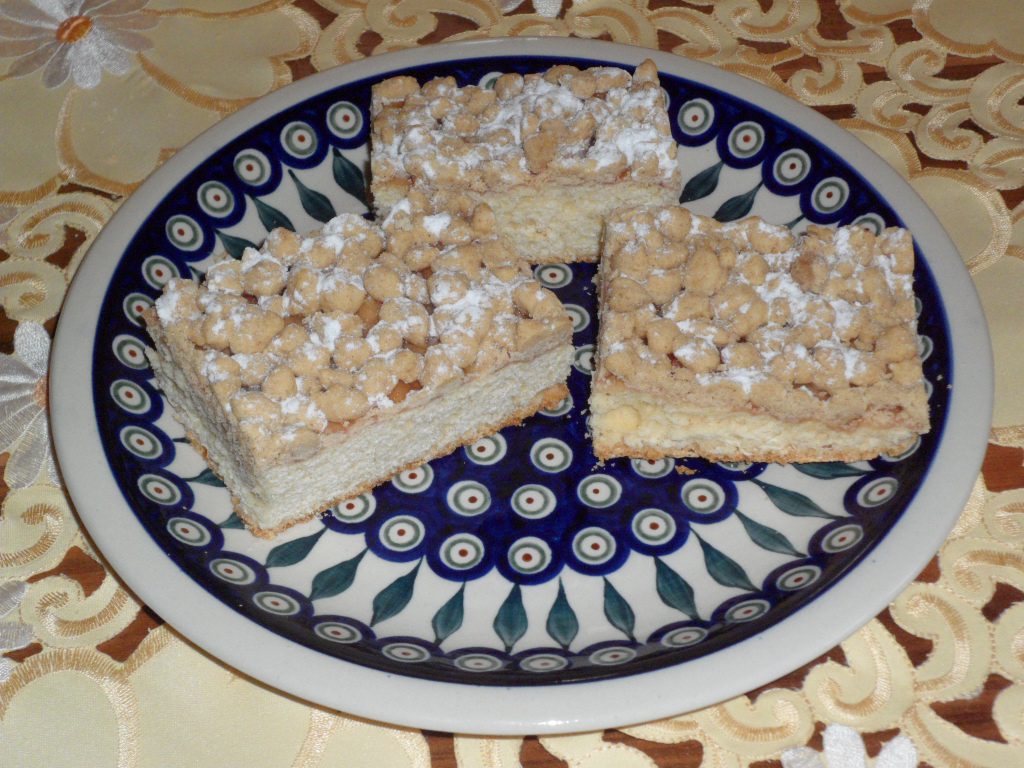
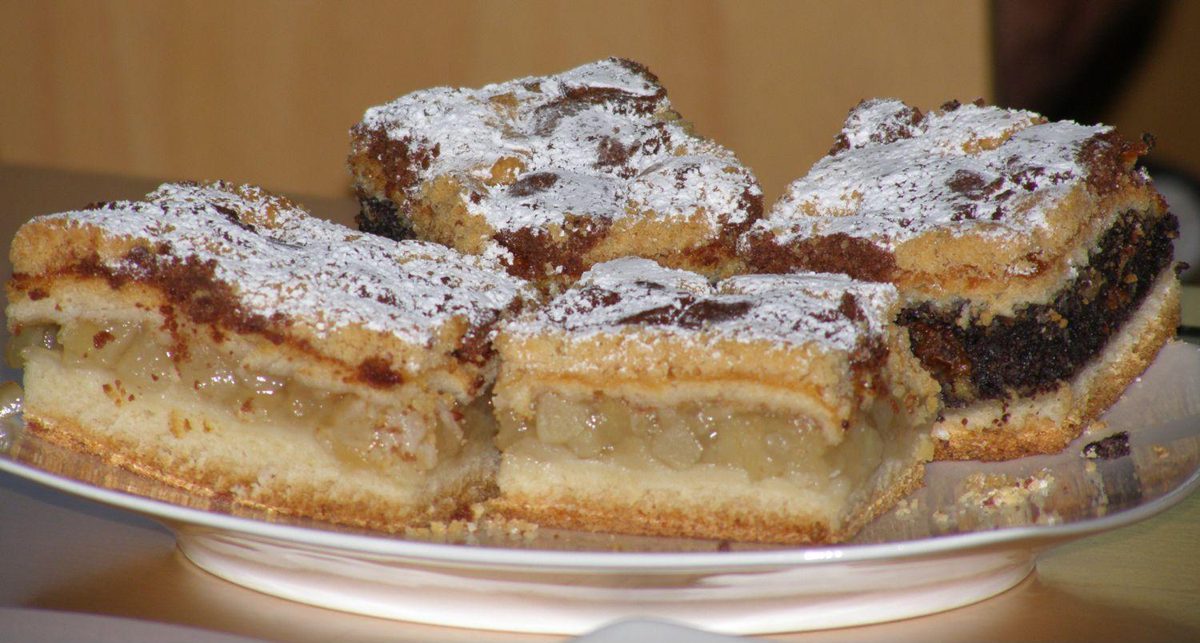
Kołocz śląski, also known as Silesian kołacz, is according to Polish Wikipedia a regional descendant of the old Polish kołacz and a ceremonial bread. The name comes from the word "koło" (circle), while kołacze in other parts of Poland are round. The Silesian version is baked on a tray and cut into rectangles; Wikipedia links this shape to the 19th century when old ovens were replaced by kitchens that accommodated rectangular trays better. There are four equally valid varieties: with just the crumble, with cheese, with poppy seeds, and with apples. In 2006, "Kołocz weselny śląski" was added to the List of Traditional Products by the Ministry of Agriculture, and in 2011, "Kołocz śląski" / "kołacz śląski" was registered in the European Union as a Protected Geographical Indication. The description from the application specifies a tray of about 40 × 60 cm, a height of about 3.5 cm, and a crumble thicker and more buttery than in other regions.
The most important is the wedding kołocz. The EU application describes the custom of "going with the kołacz": the baked kołocz is brought to invited guests 3–4 days before the wedding. The Women's Agricultural Circle from Tworków adds that the newlyweds also distributed it to neighbors and friends, and each package contained two types, with poppy seeds and with cheese, separated by a white napkin, a sprig of myrtle, and a note with a poem: "So that our guests remember us, the Young Couple shares the kołacz." The same application mentions old superstitions: it was baked by experienced housewives, there could be no drafts in the kitchen, and men were not allowed in. Kołocz is also served at church feasts and festivals.
The application cites a recipe for "good Silesian kołocz with crumble, the favorite cake of our emperor" from an illustrated cookbook published in Frankfurt am Main in 1913 and a poem "Kołocz with crumble" from a German school reader published in Wrocław in 1937. In 2007, eleven Opole bakers established the Consortium of Silesian Kołocz Producers and agreed on a common recipe, and in August 2008, a kołacz measuring 136.6 meters was baked in Opole. In 2013, the European Commission rejected Germany's request to revoke the registration. According to the German Wikipedia, the Union Court ruled in 2015 that German bakers could continue to sell "Schlesischer Streuselkuchen" because the protection only applies to the Polish name.
Ingredients
Yeast dough (tray 23×33 cm, or 9×13 inches)
-
300 g all-purpose flour (type 450 or 500, plus a little for dusting)
Abroad: USA and Canada: all-purpose flour; UK: plain flour; Germany: Type 405 or 550 -
20 g fresh yeast (or 7 g instant yeast)
Abroad: USA: fresh cake yeast can be hard to find; instead use 7 g instant yeast or 8 g active dry yeast - 150 ml milk (lukewarm)
- 60 g sugar
- 1 pc egg (at room temperature)
-
60 g butter (melted and cooled, plus a little for greasing the tray)
Abroad: unsalted butter - 1 pinch salt
Cheese filling
-
800 g cottage cheese (semi-fat, dry, ground)
Abroad: USA and Canada: farmer's cheese or drained dry curd cottage cheese; Germany: drained Quark or Schichtkäse; Austria: Topfen; UK: cottage cheese from a Polish shop - 4 pcs egg yolks
- 150 g sugar
-
60 g butter (soft)
Abroad: unsalted butter - 0.5 pc lemon (only grated zest)
-
1 package vanilla or cream pudding powder (about 40 g, not necessary)
Abroad: Germany: Vanillepuddingpulver; elsewhere 3 tablespoons cornstarch -
40 g raisins (optional)
Abroad: raisins
Crumble
-
250 g all-purpose flour
Abroad: all-purpose flour / plain flour / Type 405 -
130 g butter (cold)
Abroad: unsalted butter - 130 g sugar
-
1 package vanilla sugar (about 16 g)
Abroad: Germany: Vanillezucker; USA and UK: 1 teaspoon vanilla extract
For finishing
- 2 tbsp (30 ml) milk (for brushing the dough)
-
powdered sugar (for sprinkling)
Abroad: powdered sugar / icing sugar
Method, step by step
-
Prepare the starter: crumble the yeast in a cup, pour in half of the lukewarm milk, add a tablespoon of sugar and a tablespoon of flour from the given amount, and mix. Set aside for about 10 minutes until the mixture rises and becomes frothy.
-
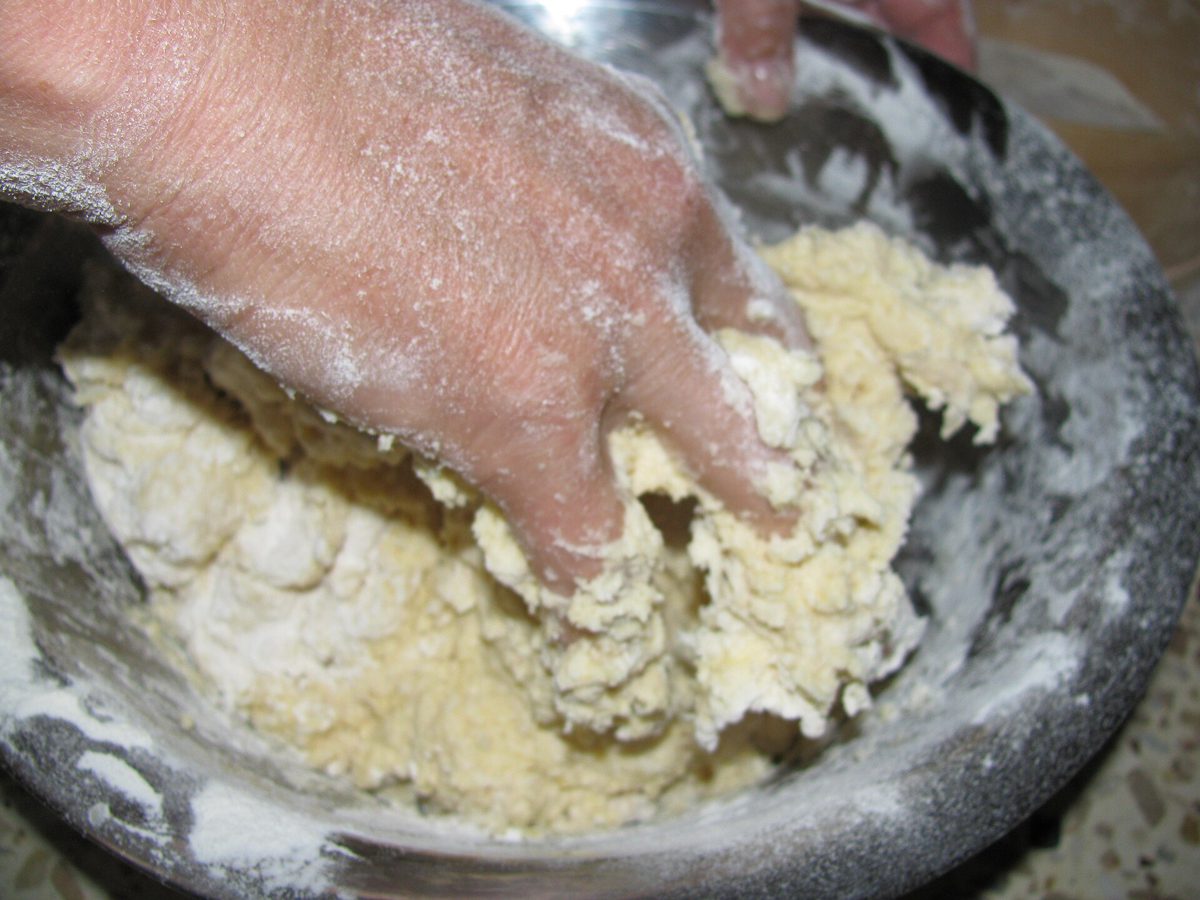
Sift the flour into a bowl. Add the remaining sugar, egg, starter, and the rest of the milk, and finally the melted, lukewarm butter and salt. Knead by hand or with a wooden spoon until the dough is smooth, elastic, starts to pull away from the bowl, and bubbles appear. If it is very sticky, sprinkle with a little flour.
-
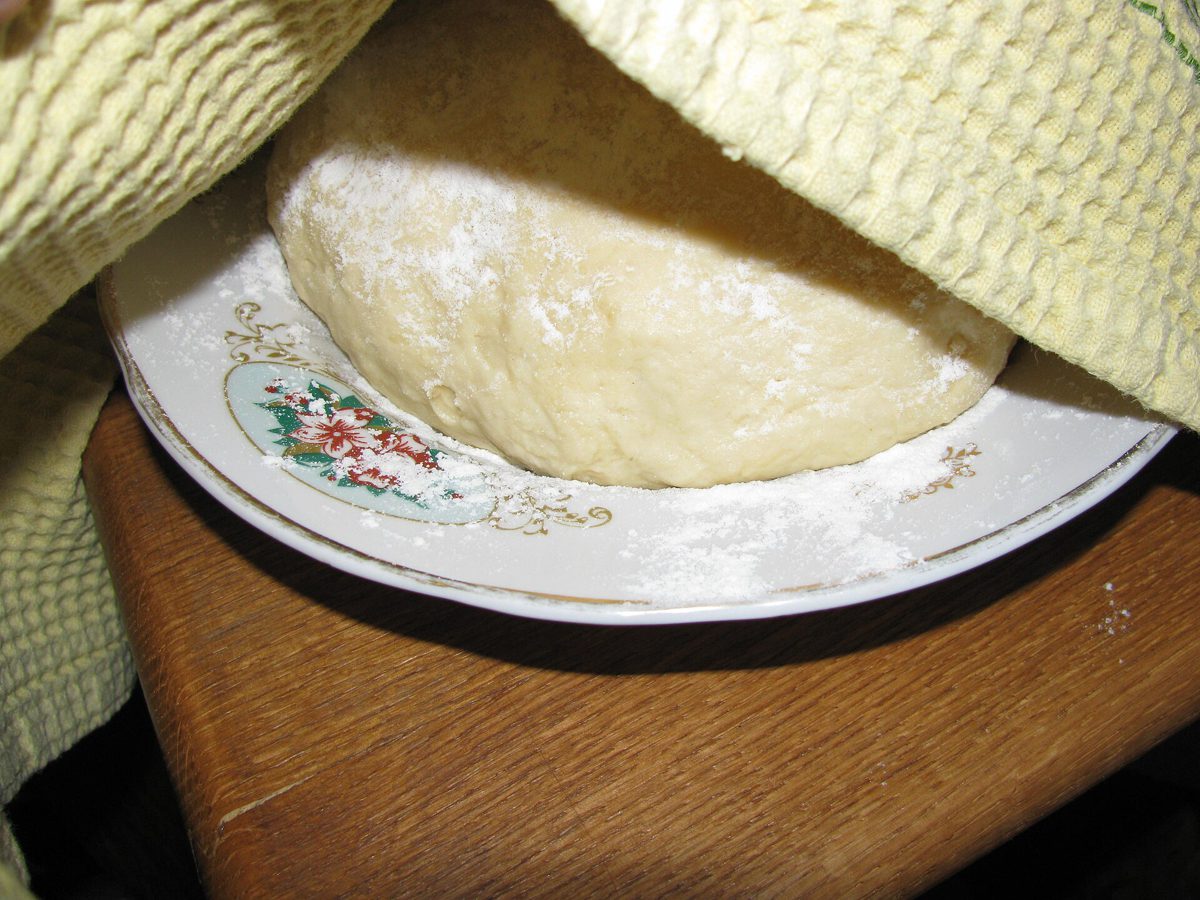
Cover the bowl with a cloth and set the dough in a warm place without drafts for about an hour, until it doubles in volume.
-
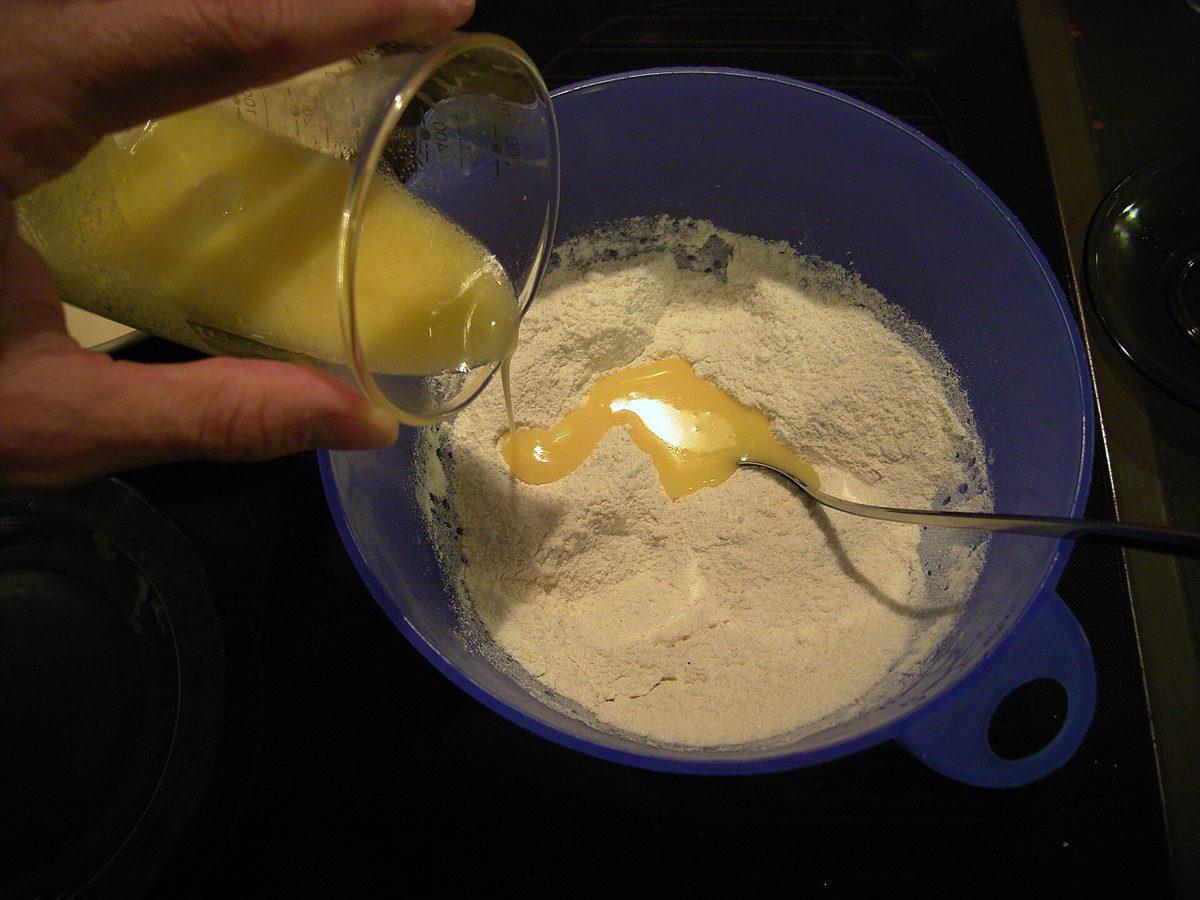
For the crumble: cut the cold butter into cubes and rub it with sugar and vanilla sugar, then add the flour and quickly rub with your fingers until coarse, moist crumbs form. Briefly knead into a ball and chill in the fridge for about 30 minutes.
-
For the cheese filling: grind the cottage cheese or press it through a sieve. Mix it with sugar, egg yolks, soft butter, and grated lemon zest until smooth, and finally stir in the pudding powder and raisins, if using.
-
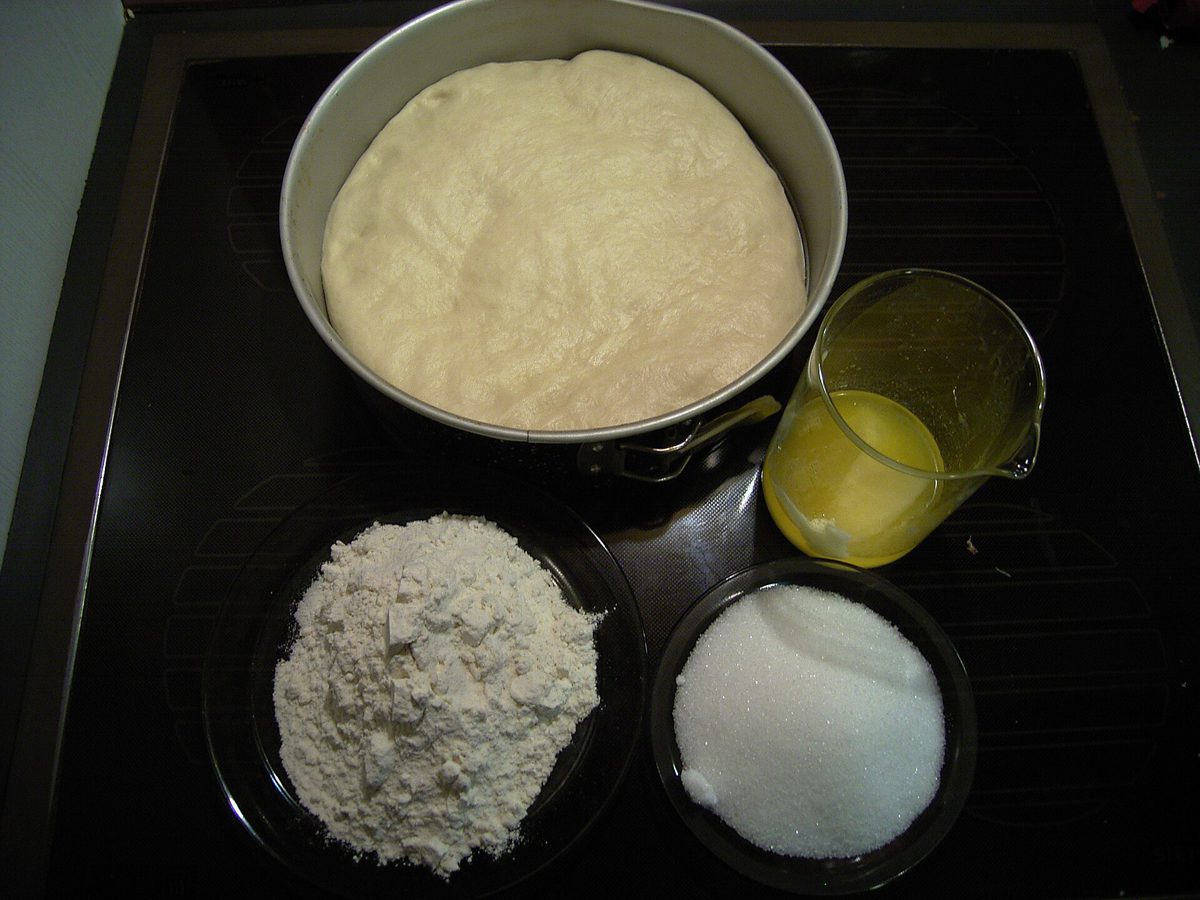
Preheat the oven to 180°C (350°F), top and bottom. Grease the 23×33 cm (9×13 inch) tray with butter or line it with baking paper. Briefly knead the risen dough and divide it into two parts: two-thirds and one-third. Roll out the larger piece on a floured surface to about 3 mm (⅛ inch) thick, transfer it to the tray, and press it to the bottom and sides. Prick the bottom densely with a fork.
-
Spread the cheese filling evenly and smooth it out. Roll out the smaller piece of dough thinly to the size of the tray, cover the cheese with it, and prick it densely with a fork again. Leave the cake for a few minutes to let the dough puff up slightly, then brush the top with milk.
-
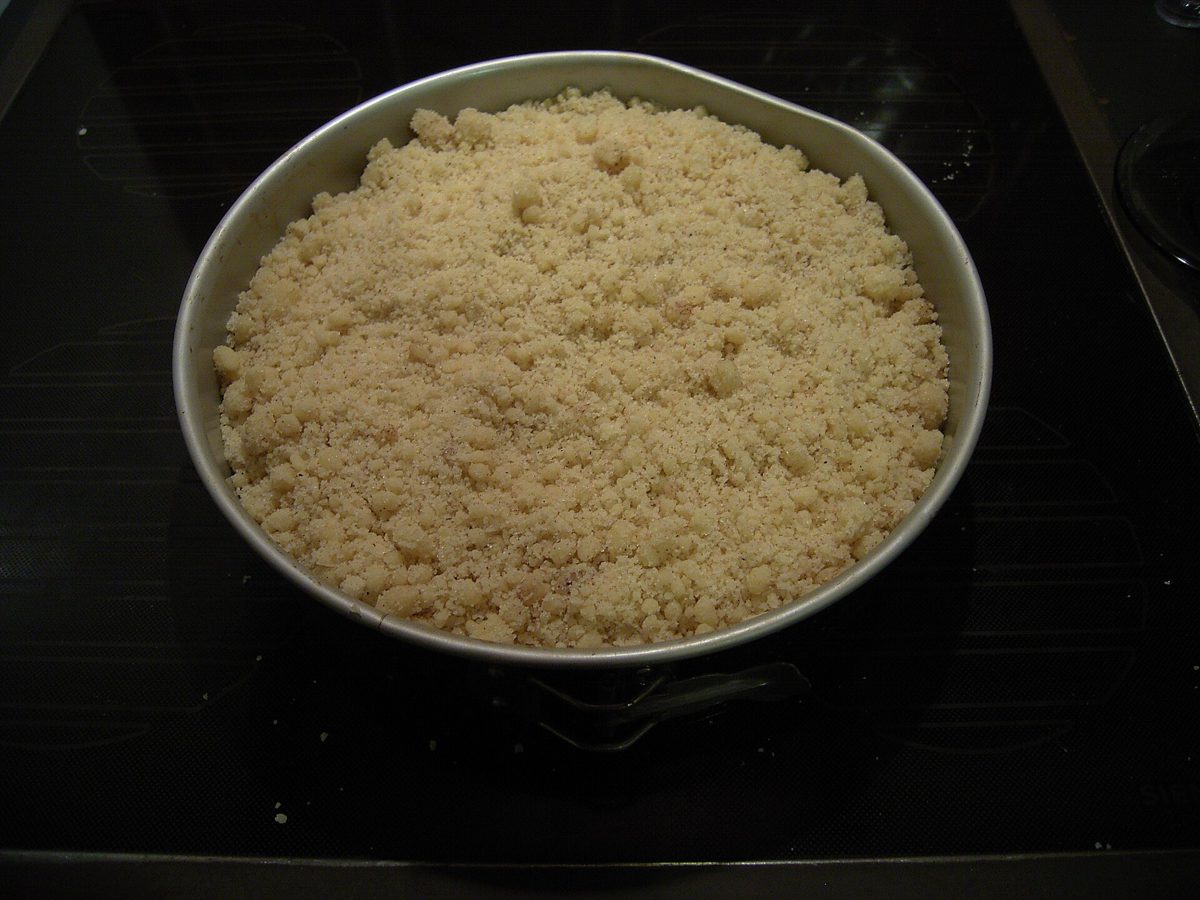
Take the crumble out of the fridge. Tear off pieces the size of a walnut, flatten each slightly with your thumb to create a concave flake, and arrange them concave side up, side by side, over the entire cake.
-
Bake at 180°C (350°F) for 40–45 minutes, until the crumble is golden and the edges of the cake are browned.
-
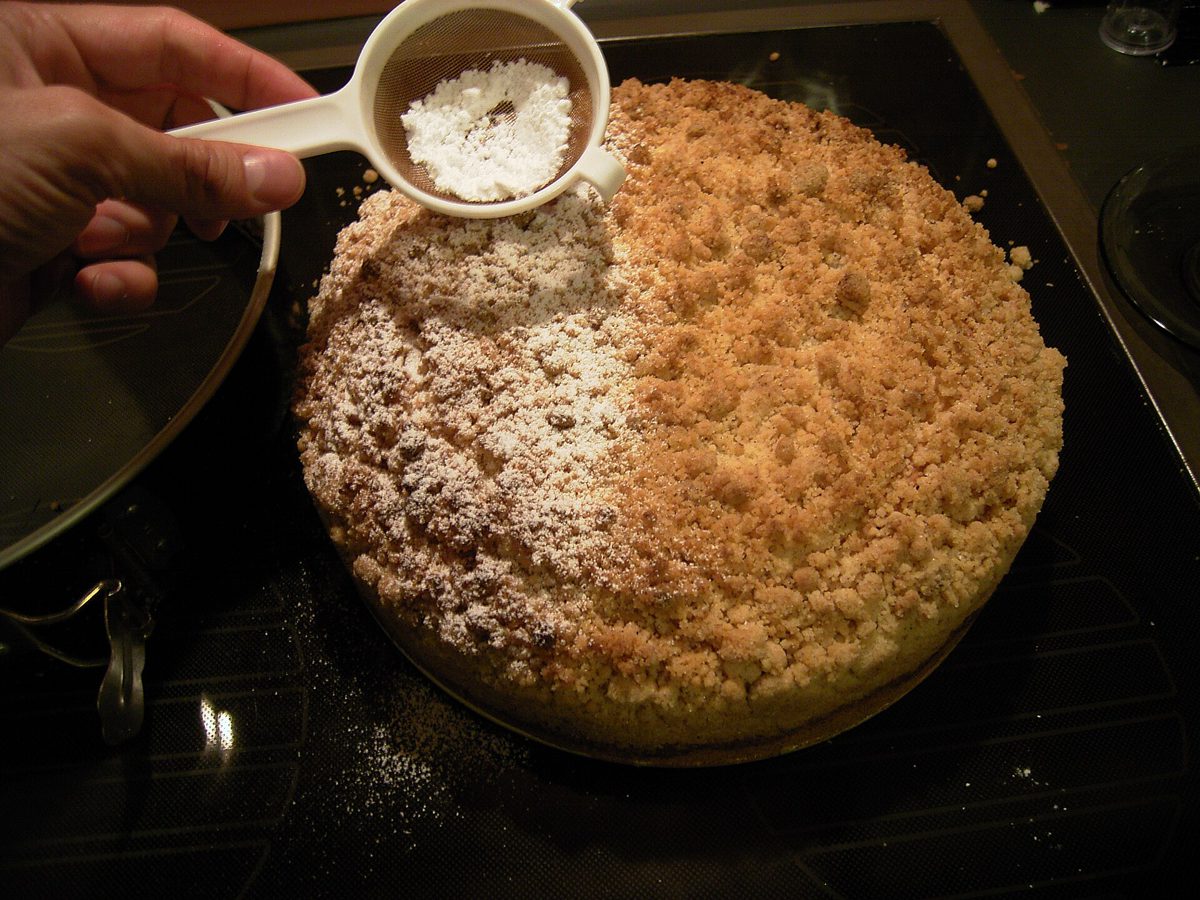
Cool the kołocz on the tray, preferably on a rack. Only when cold, sprinkle generously with powdered sugar and cut into 20 rectangles, in 4 rows of 5.
Photos