
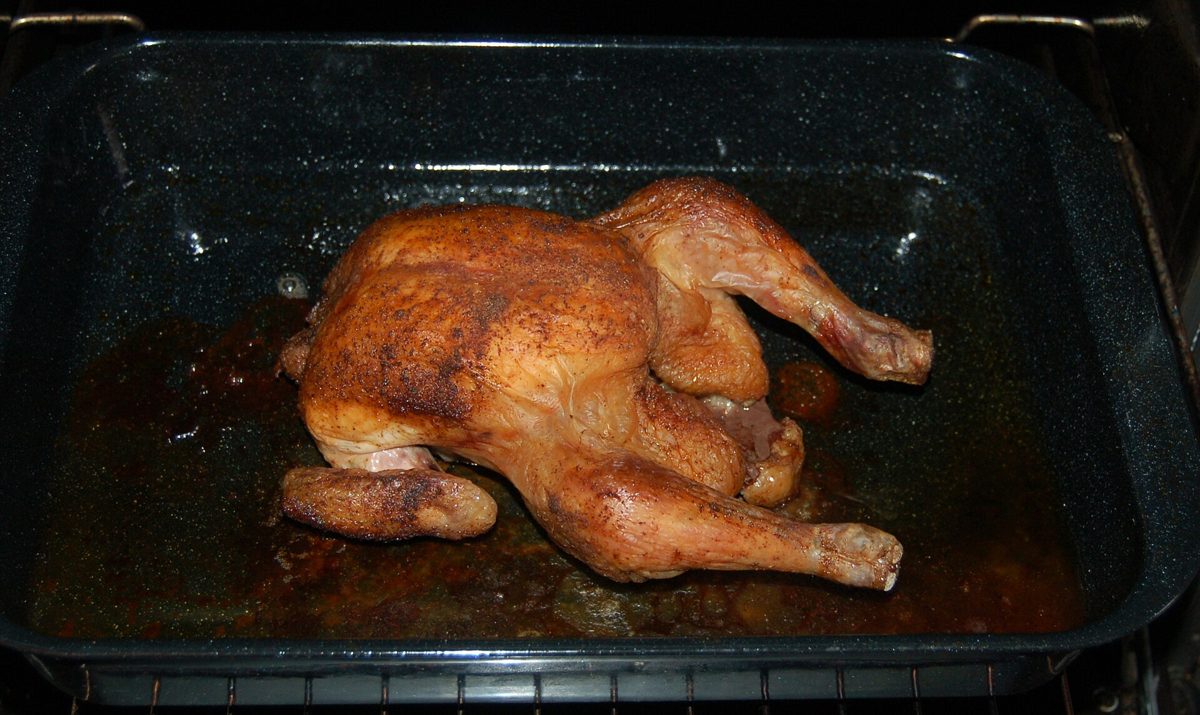
The story behind the recipe
Roasted chicken is a typical meal for a day off: the Smaker editorial team writes that a whole roasted chicken "often graces our tables, especially on days off work," and Kwestia Smaku categorizes its recipes for whole chicken as "Sunday Dinner." In the past, it was roasted differently. Lucyna Ćwierczakiewiczowa wrote in "365 Dinners for 5 Złoty" from 1871 that every poultry except for goose "should be roasted on a spit; roasted in the oven it becomes stringy and dry." She basted the chicken while roasting with young butter, and before serving, sprinkled it with breadcrumbs and stuffed it with breadcrumbs mixed with raw butter and chopped green parsley. "The Lithuanian Cook" from 1913 stuffed it with crushed rusks mixed with butter and parsley or dill and roasted it "on a spit, or in the oven," first over high heat, then on low.
Elżbieta Kiewnarska in her book "Poultry, Cooking Methods" from 1929 calls chickens the most commonly eaten poultry, "especially in villages and small towns," very cheap in summer. She complained that cooks often dried them out. She believed that in a regular oven they would roast well if first browned in a small amount of fat and then roasted slowly, basting with that fat, but not with water, as the skin would "get soggy and lose its crispness, which is its greatest advantage." Smaller chickens were usually roasted stuffed with a filling of butter, dill, parsley, egg, and breadcrumbs, also under the skin on the breast, to prevent them from drying out. She served them with green salad with sour cream, compote, or fried blueberries.
On Smaker, chicken stuffed with bread, liver, and a large amount of parsley appears as "Polish Chicken." The person who added it there states that it is an old pre-war recipe by Maria Monatowa. It has not been verified in Monatowa's book, so it is not certain where it comes from. The rub with paprika, garlic, and marjoram is a custom of modern home recipes: sweet paprika is given by Ania Gotuje, Smaker, and a local portal from Żyrardów, garlic by Smaker and the Żyrardów portal, and marjoram by the Żyrardów portal and the recipe for "Polish Chicken." In the cited old cookbooks, chicken was only rubbed with salt and smeared with butter. Since when paprika and marjoram have been added is not mentioned. We did not find an entry about roasted chicken on the List of Traditional Products, nor did we find a protected EU name.
Ingredients
Chicken
-
1 pc chicken (1.6–2 kg, the recipe is calculated for about 1.8 kg)
Abroad: USA: whole chicken, broiler-fryer, about 3½–4½ lb; UK: whole chicken; Germany: ganzes Hähnchen
Rub
- 2 tsp salt (Ania Gotuje gives 1 tablespoon for a 1.7 kg chicken)
- ½ tsp (2.5 ml) ground black pepper
-
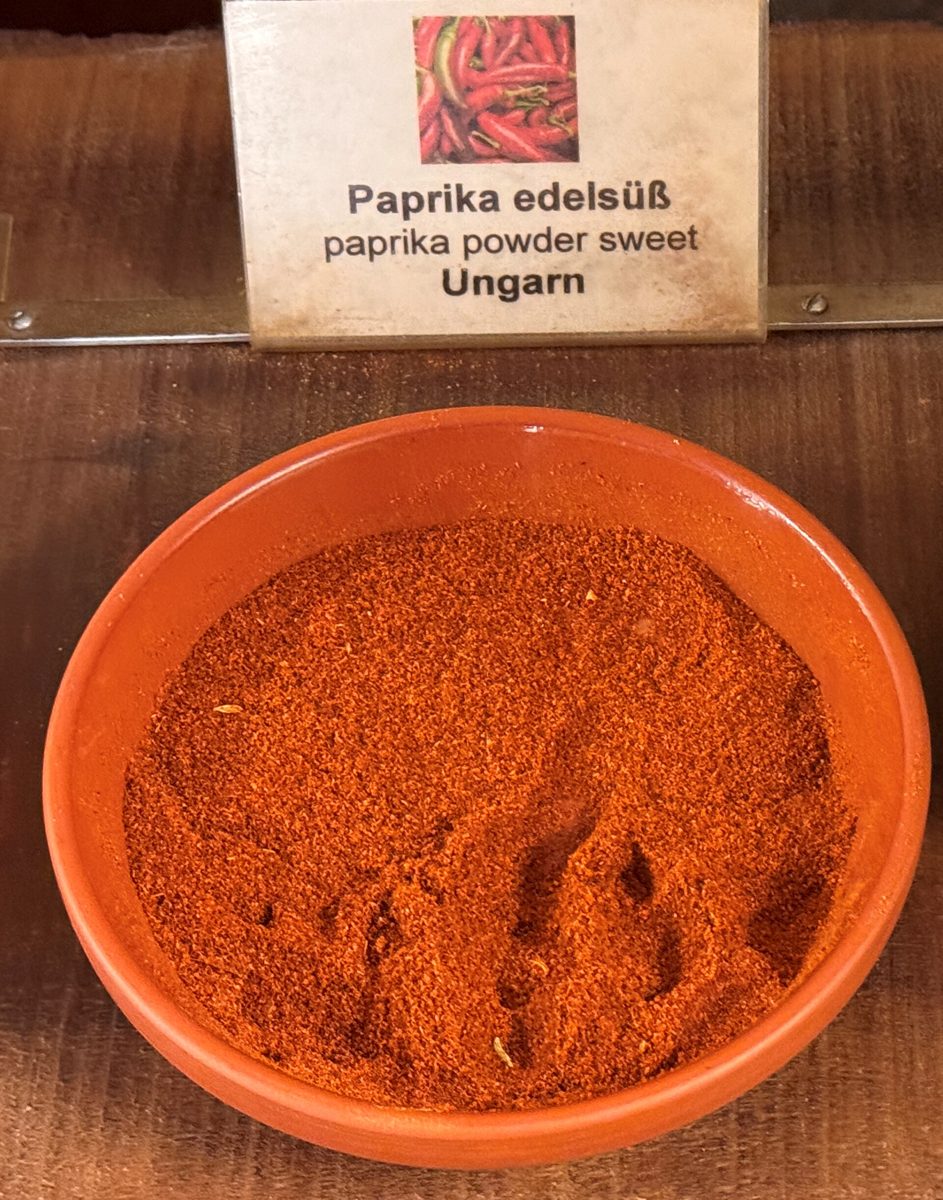
2 tsp (10 ml) sweet paprika powder (not smoked)
Abroad: USA, UK: sweet paprika, Hungarian sweet paprika; Germany: Paprika edelsüß -
2 tsp (10 ml) dried marjoram (the recipe from Żyrardów gives 1 tablespoon)
Abroad: USA, UK: dried marjoram; Germany: Majoran, getrocknet - 3 cloves garlic (pressed through a garlic press)
- 2 tbsp (30 ml) oil or melted butter
Stuffing of bread and liver (optional)
-
100 g chicken livers (2 pieces)
Abroad: USA, UK: chicken livers; Germany: Hähnchenleber - 1 tsp (5 ml) butter (for briefly sautéing the liver)
-
1 pc stale wheat roll (stale)
Abroad: USA, UK: stale white bread roll; Germany: Brötchen vom Vortag - milk (enough to soak the roll)
- 2 slices ham
- 1 pc egg (yolk and white separately)
- 1 tbsp (about 7 g) breadcrumbs
- 100 g soft butter (miękkie)
- 1 bunch parsley (finely chopped)
- salt and pepper (to taste)
For roasting and sauce
- 3 tbsp (45 ml) water (a few tablespoons at the bottom of the pan)
- broth or water (a few tablespoons for the sauce)
Method, step by step
-
In a bowl, mix salt, pepper, sweet paprika, marjoram, and pressed garlic with oil or melted butter into a thick paste.
-
Do not rinse the chicken: dry it thoroughly with paper towels inside and out. Rub the paste all over the chicken and inside. Gently insert some paste under the skin on the breast with your fingers. Cover and place in the refrigerator for 2–3 hours.
-
One hour before roasting, take the chicken out of the refrigerator. Preheat the oven to 180°C (350°F).
-
If you are making the stuffing, prepare it now, just before roasting. Sauté the livers briefly in a teaspoon of butter until no longer raw inside, and let cool. Soak the roll in cold milk and squeeze out well. Grind or finely chop the livers, ham, and roll. Add the yolk, breadcrumbs, soft butter, and chopped parsley, and season with salt and pepper. Whip the egg white with a pinch of salt until stiff and gently fold it into the mixture.
-
Stuff the chicken immediately, loosely, without packing it tightly, and sew the opening with thread or secure it with toothpicks. You can also roast the stuffing separately in a small greased dish next to the chicken. Tie the chicken's legs with string and tuck the wings underneath.
-
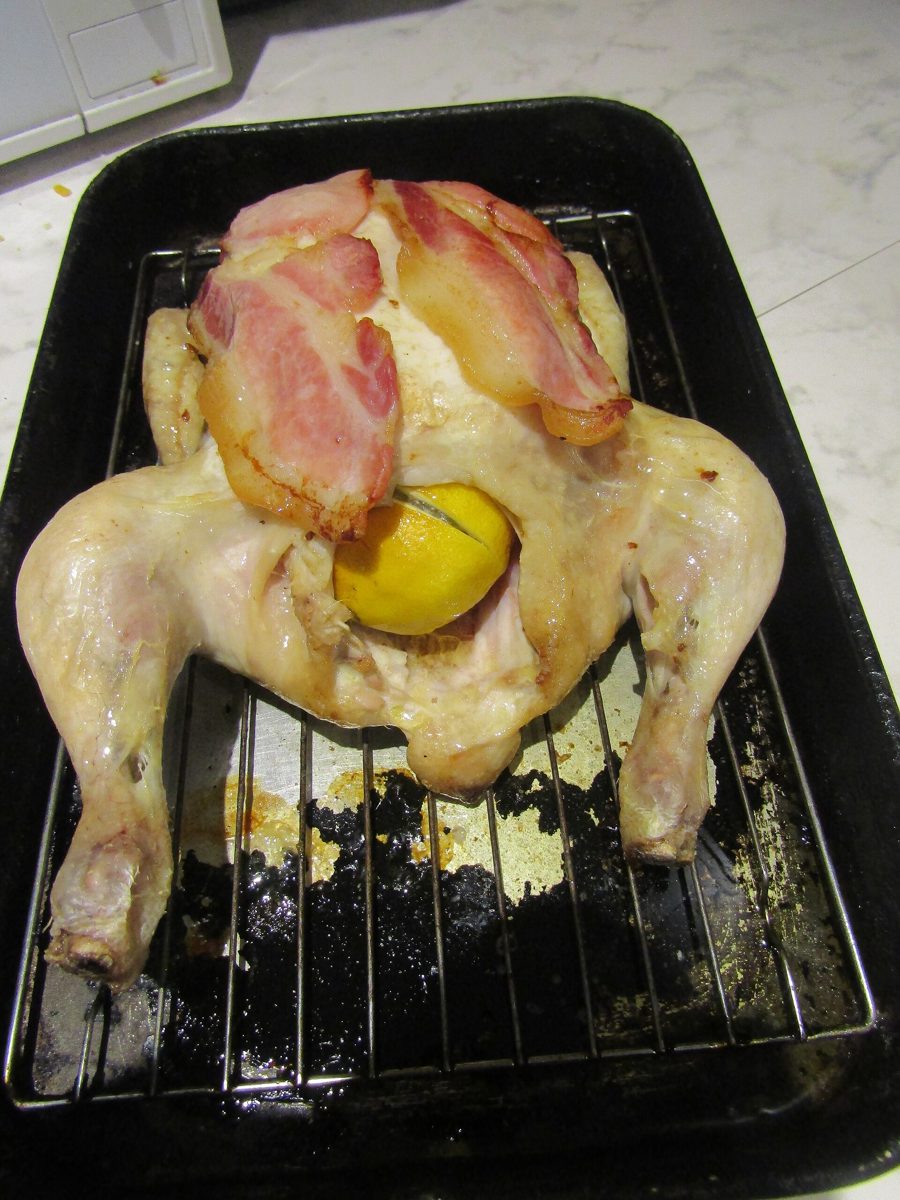
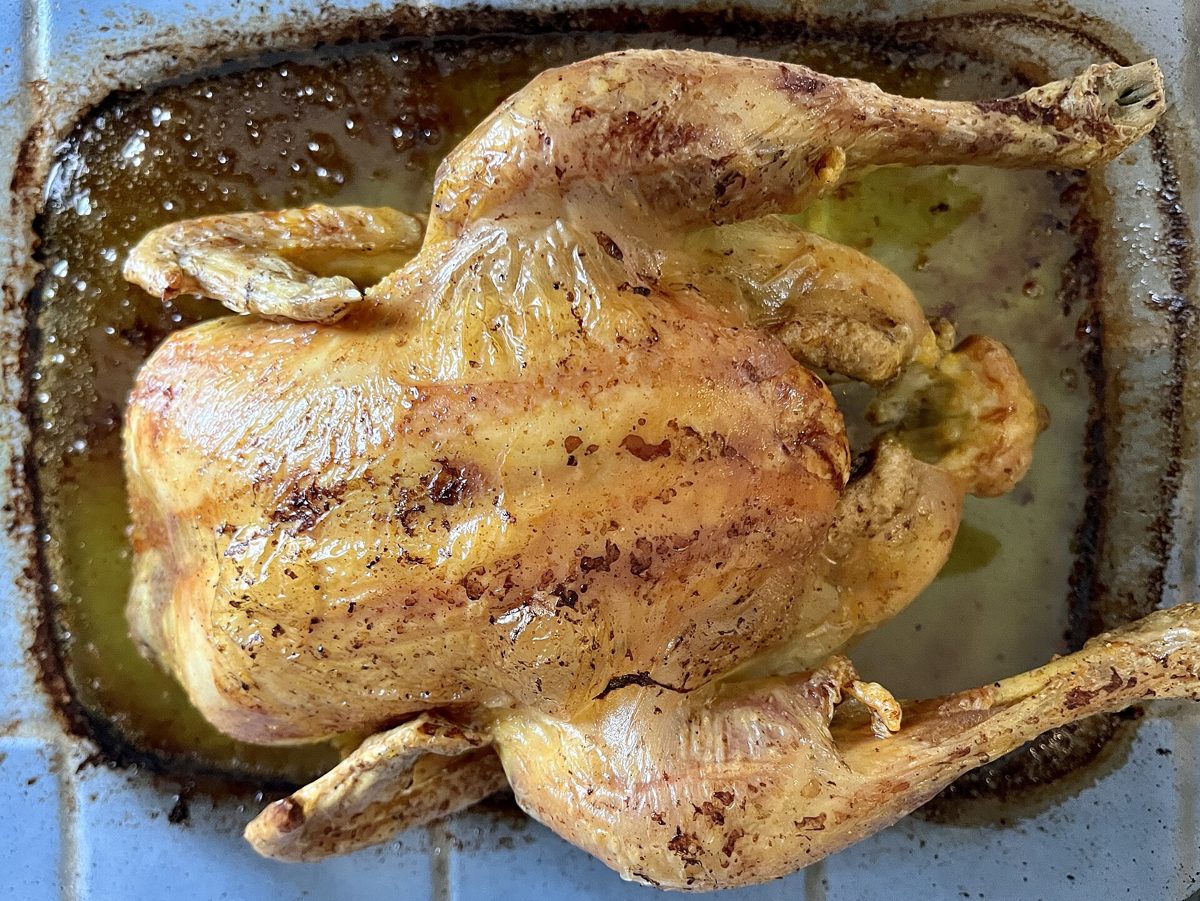
Place the chicken breast side up in a roasting pan or on a rack over the pan and pour a few tablespoons of water into the bottom. Roast at 180°C (350°F) for about 1 hour 30 minutes to 1 hour 45 minutes, and for a stuffed chicken, an additional 15–30 minutes. Baste the chicken with fat and sauce from the pan every 20 minutes, never with water.
-
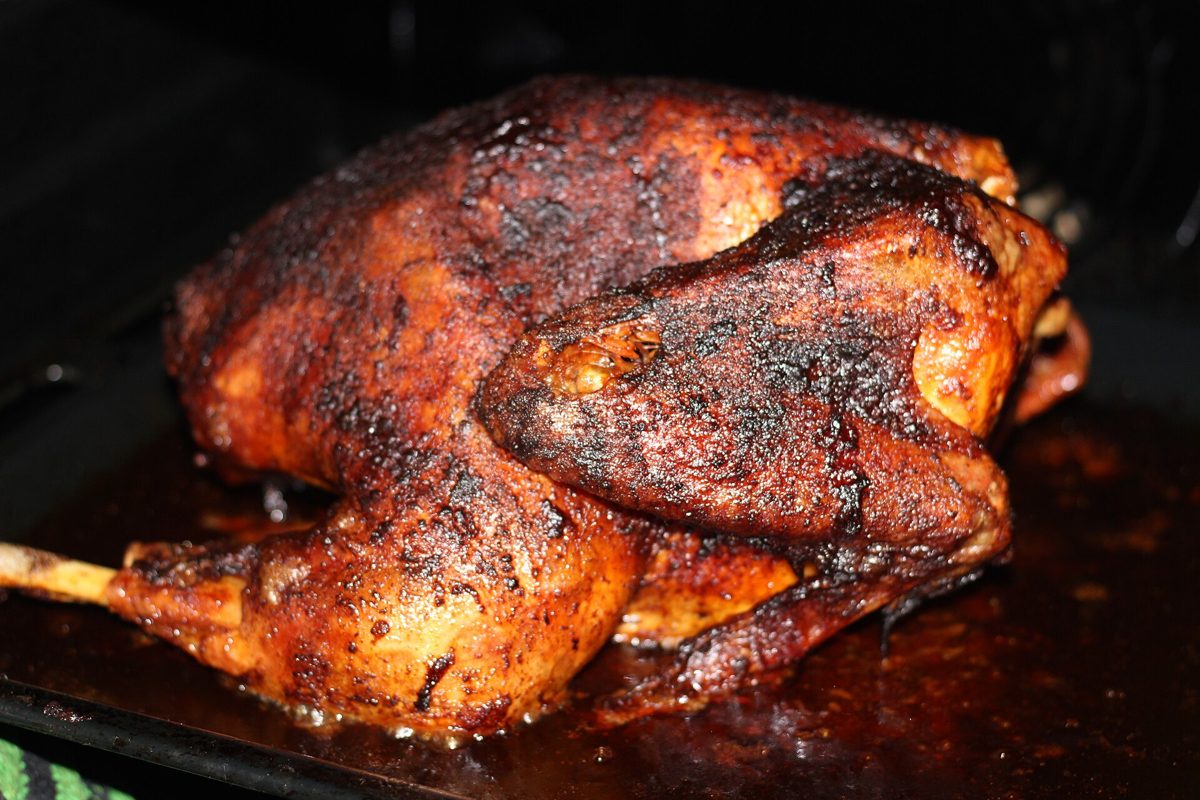
If the skin browns too quickly, loosely cover the chicken with foil and slightly reduce the temperature. If it is still pale at the end, remove the foil and continue roasting uncovered.
-
Check with a thermometer that the thickest part of the breast and inside the thigh reaches 74°C (165°F). In a stuffed chicken, also measure the center of the stuffing: it should also be 74°C (165°F). If not, continue roasting and check every 10 minutes.
-
Remove the chicken to a cutting board and let it rest for 10 minutes. Remove the stuffing, and carve the chicken into halves, quarters, or smaller portions.
-
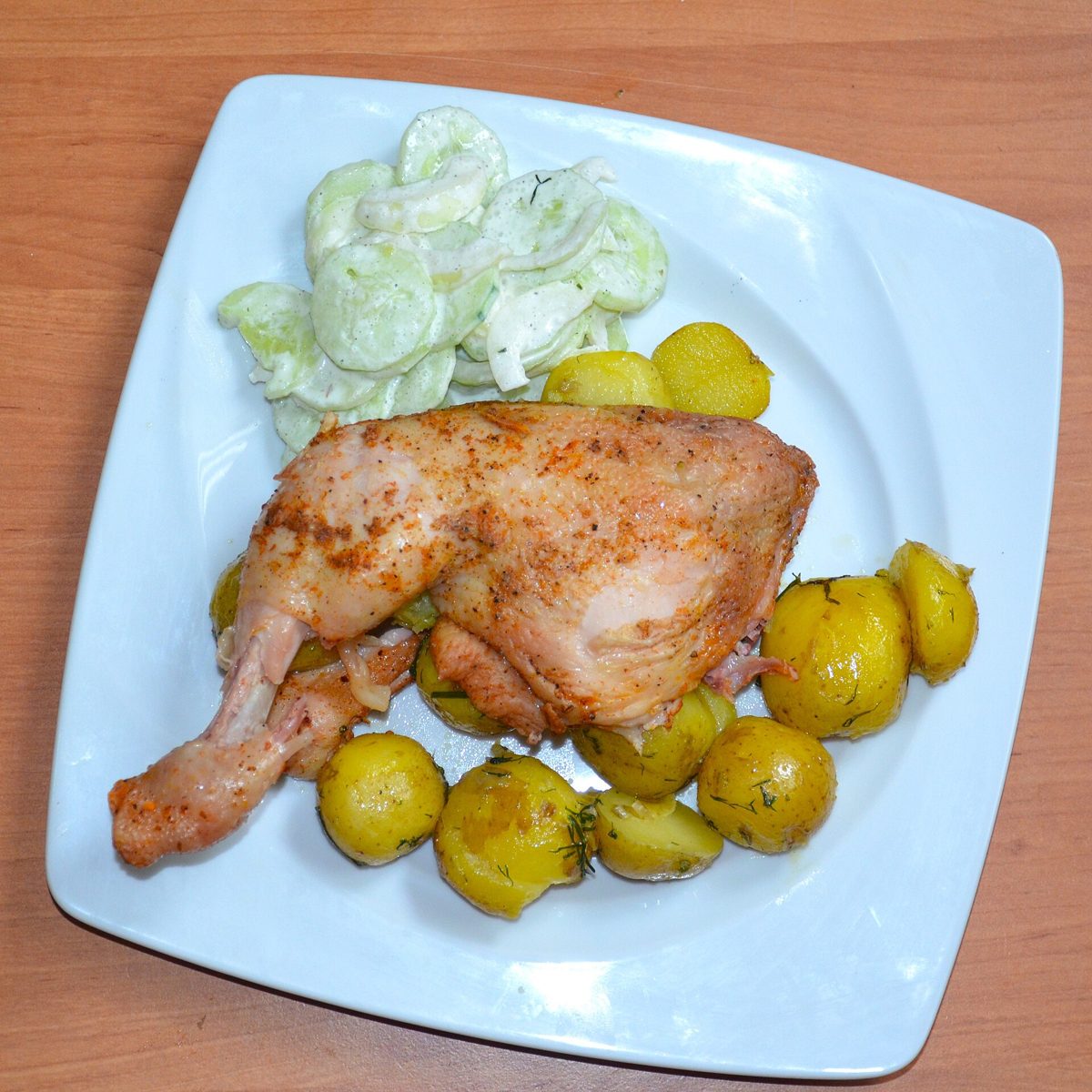
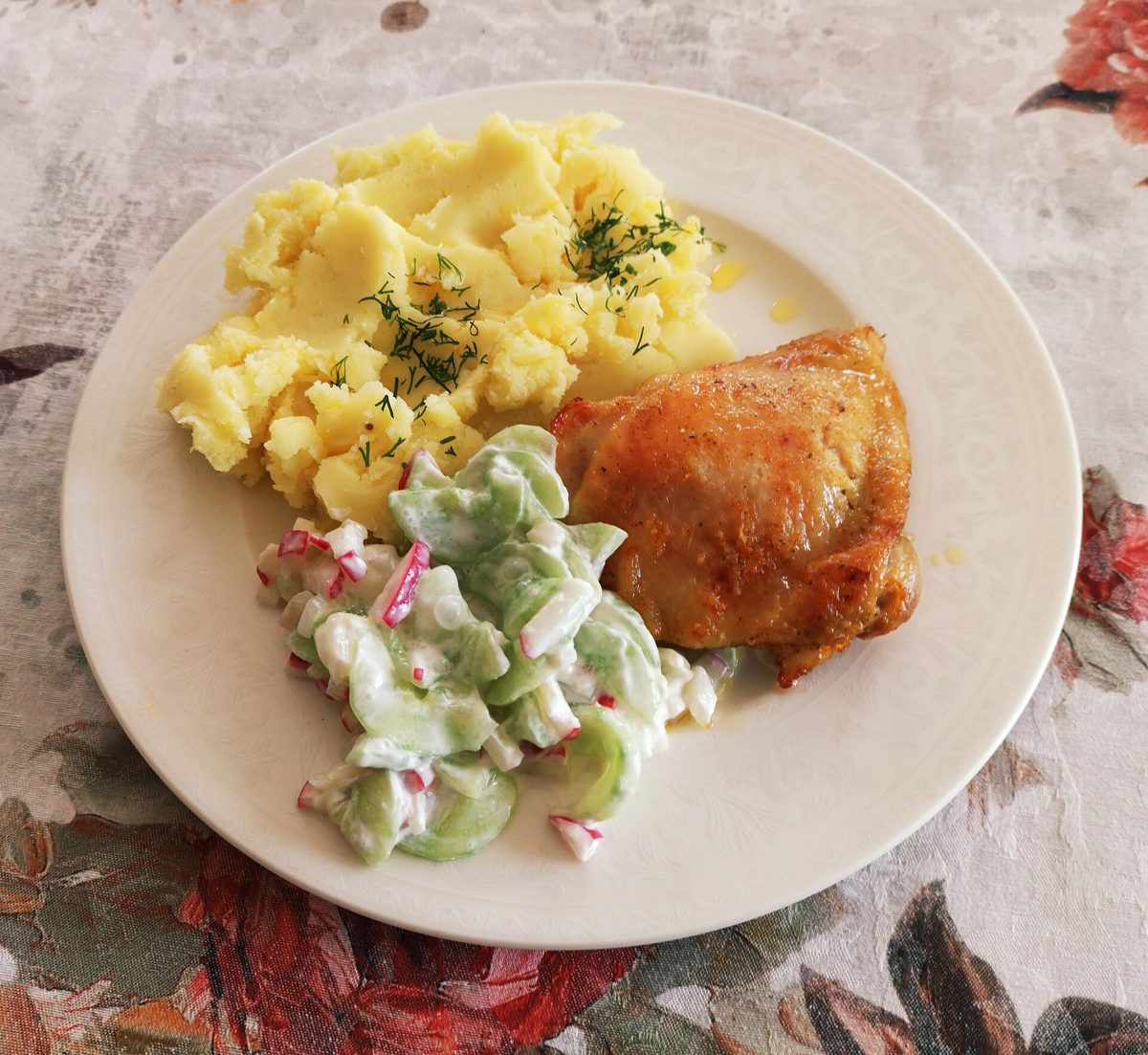
Drain excess fat from the roasting pan, add a few tablespoons of broth or water, bring to a boil, scrape up the browned bits, and strain the sauce through a sieve. Serve the chicken with the sauce, stuffing, potatoes, and salad.
Photos
Comments (0)
No comments yet. Be the first!