The story behind the recipe
Rosół is for many Poles the taste of Sunday. According to sociological studies, it is considered a traditional dish typical of Sunday dinner and celebrations. It is most often made with hen or chicken, often with the addition of beef, and less frequently with capon, lamb, and in Upper Silesia, also with pigeon.
The oldest recorded Polish recipe is "The Way of Cooking Polish Rosół" from the book "Compendium ferculorum or a Collection of Dishes" by Stanisław Czerniecki, the cook of the Lubomirski family at the castle in Wiśnicz, published in Kraków in 1682. Czerniecki begins with the words: "Take beef or veal meat, a hazel grouse or partridge, pigeons..." and adds parsley, butter, dill or celery, onion or garlic, nutmeg or rosemary, pepper, and lemon to the pot. The first Polish rosół was therefore cooked with beef or veal and game birds, not with hen.
The name is associated with the old method of cooking meat, which was salted and dried beforehand to preserve it. In Greater Poland, rosół was once mainly made with lamb, and poultry and pork were added later. From around 1910, for about half a century, it replaced czernina there. It was eaten with peas, beans, potatoes, semolina, or buckwheat, and pasta and dumplings became standard later. According to Polish Wikipedia, rosół spread throughout the country during the PRL era.
On the List of Traditional Products of the Ministry of Agriculture, there are several types of rosół, including Greater Poland rosół with hen (2010), court rosół with capon from Mazovia (2012), and Lesser Poland "Polish rosół" according to Czerniecki's recipe (2013). The Museum of the Palace of King Jan III in Wilanów is working to have the tradition of cooking and serving rosół included in the national list of intangible cultural heritage. As of July 2026, rosół was not yet on this list.
Ingredients
Meat
-
1 kg broth hen (half a large hen or 1 kg of chicken pieces with bones: thighs, wings, carcass, neck)
Abroad: USA: stewing hen / fowl; UK: boiling fowl; Germany: Suppenhuhn -
400 g bone-in beef (shank, brisket or chuck)
Abroad: beef shank, brisket or short ribs; Germany: Beinscheibe, Rinderbrust or Querrippe -
3 pcs chicken hearts and gizzards (not necessary, 3 pieces)
Abroad: chicken hearts and gizzards
Water
- 2.5 l cold water
Vegetables
- 200 g carrot (2 pieces)
-
100 g parsley (root) (1 piece)
Abroad: parsley root / Hamburg parsley; Germany: Petersilienwurzel; as a last resort, parsnip (parsnip), less -
120 g celery root (a piece)
Abroad: celeriac / celery root; Germany: Knollensellerie -
100 g leek (half a leek, white part)
Abroad: leek; Germany: Lauch - 1 pc onion (about 130 g, for charring)
-
1 pc leaf of savoy cabbage (not necessary)
Abroad: savoy cabbage; Germany: Wirsing
Spices
-
3 pcs allspice
Abroad: allspice; Germany: Piment -
2 pcs bay leaves
Abroad: bay leaves - 6 pcs black peppercorns
- 2 tsp salt (about 10 g, season at the end to taste)
-
lovage (a sprig of fresh or a pinch of dried)
Abroad: lovage; Germany: Liebstöckel; substitute: celery leaves - 1 bunch parsley leaves (a small amount, part for cooking, part for serving)
To serve
-
200 g fine noodles (or homemade pasta)
Abroad: fine egg noodles; Germany: Fadennudeln
Method, step by step
-
Prepare the meat. Rinse the hen, remove the vent and excess fat. Rinse the beef. If using, add the hearts and gizzards.
-
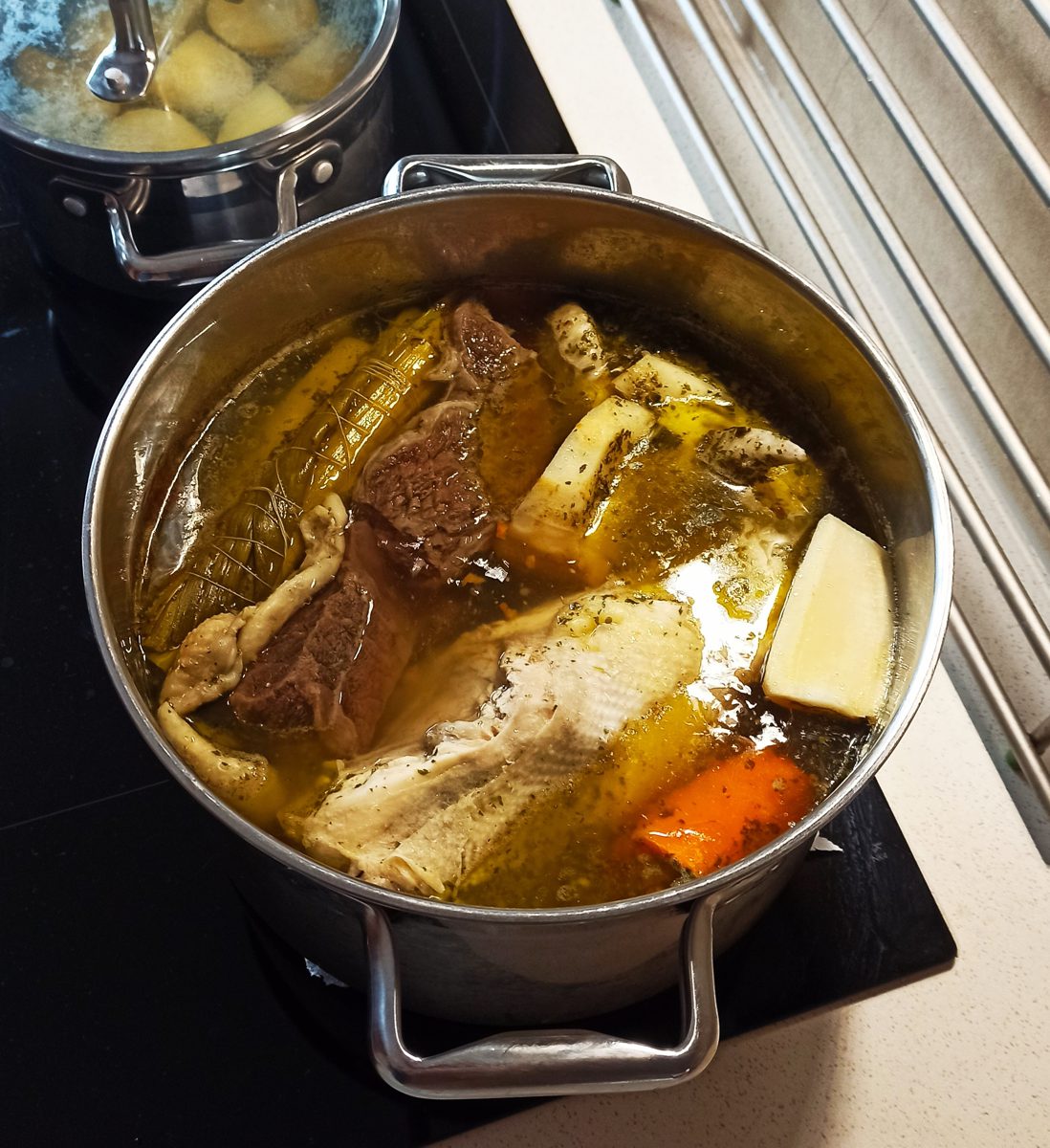
Place the meat in a large pot (about 5 l) and cover with 2.5 liters of cold water. Set over medium heat and slowly bring to a boil. When foam (scum) collects on the surface, skim it off with a slotted spoon. Another method: bring the hen to a boil, after 2 minutes pour out all the water, rinse the meat, and start again in fresh, cold water, then there will be almost no scum.
-
Reduce the heat so that the broth only "simmers": single bubbles appear on the surface. Do not boil it hard and do not stir, as it will become cloudy. Cook covered for about an hour.
-
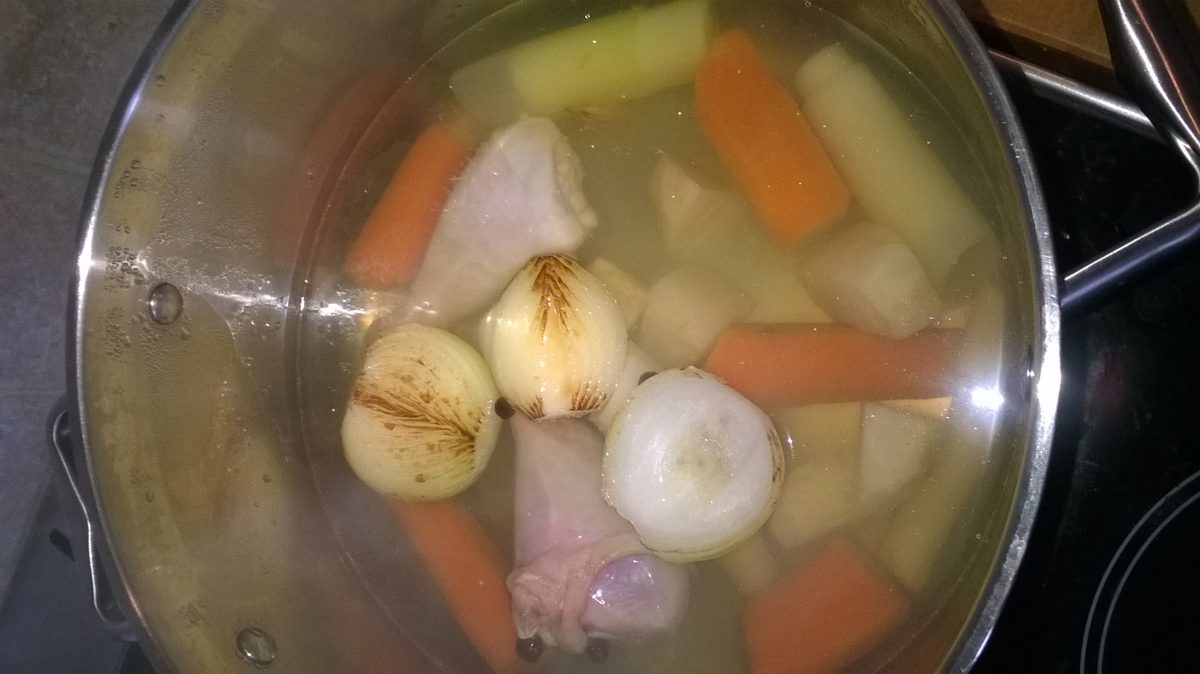
In the meantime, char the onion: cut it in half and brown it cut side down in a dry pan or over a gas flame until it is well charred. Charred onion gives the broth a golden color and aroma.
-
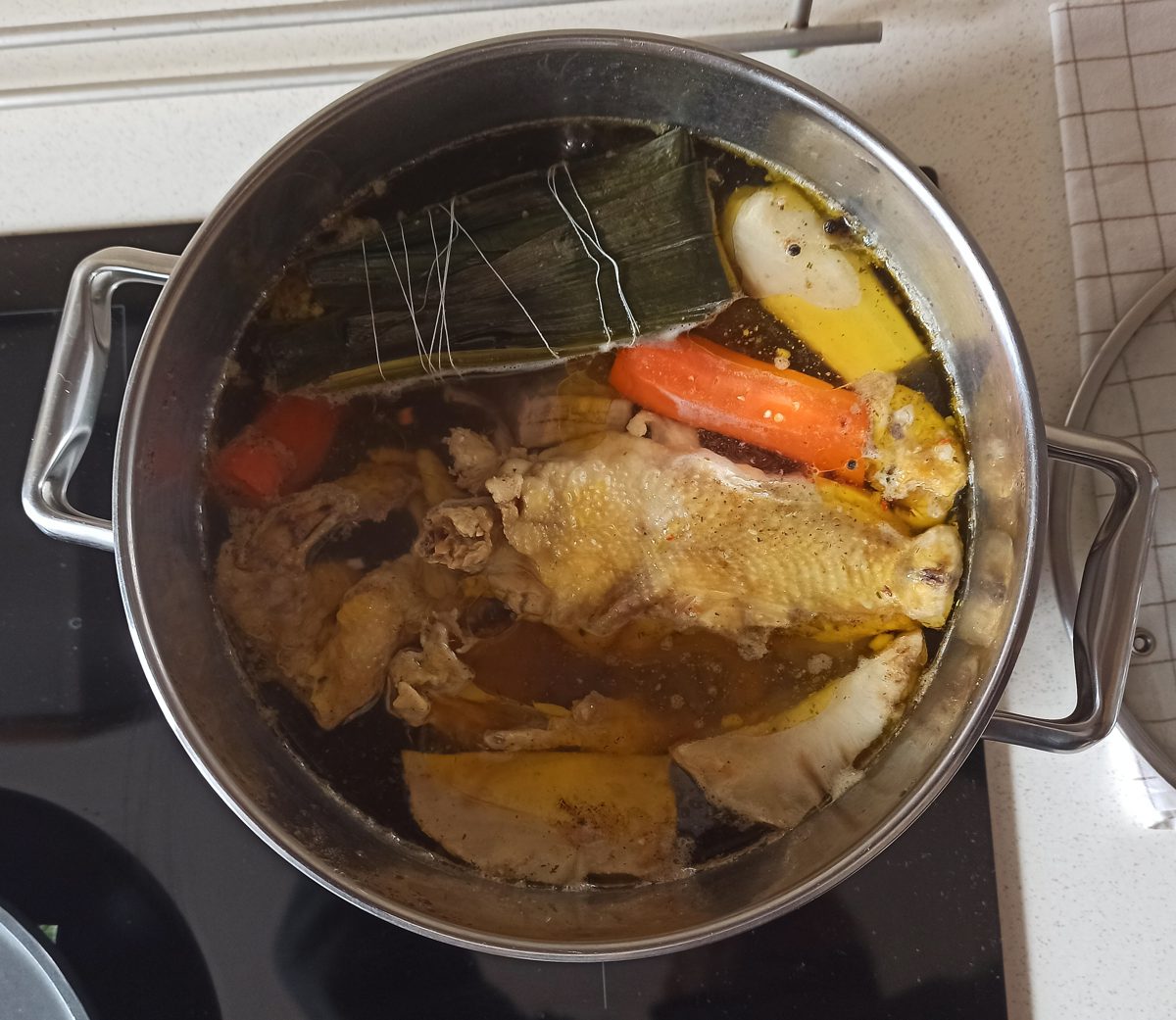
Peel the carrot, parsley, and celery, and wash the leek (you can tie the green leaves with string). After about an hour of cooking the meat, add the vegetables, charred onion, leaf of savoy cabbage, allspice, bay leaves, and pepper to the pot.
-
Continue cooking on very low heat until the meat is tender: broth from the broth hen for about 3 hours, from chicken for about 1.5–2 hours.
-
In the last 30 minutes, add lovage and part of the parsley leaves, and gradually add salt to taste. The broth reduces, so it’s easy to oversalt if you salt too early.
-
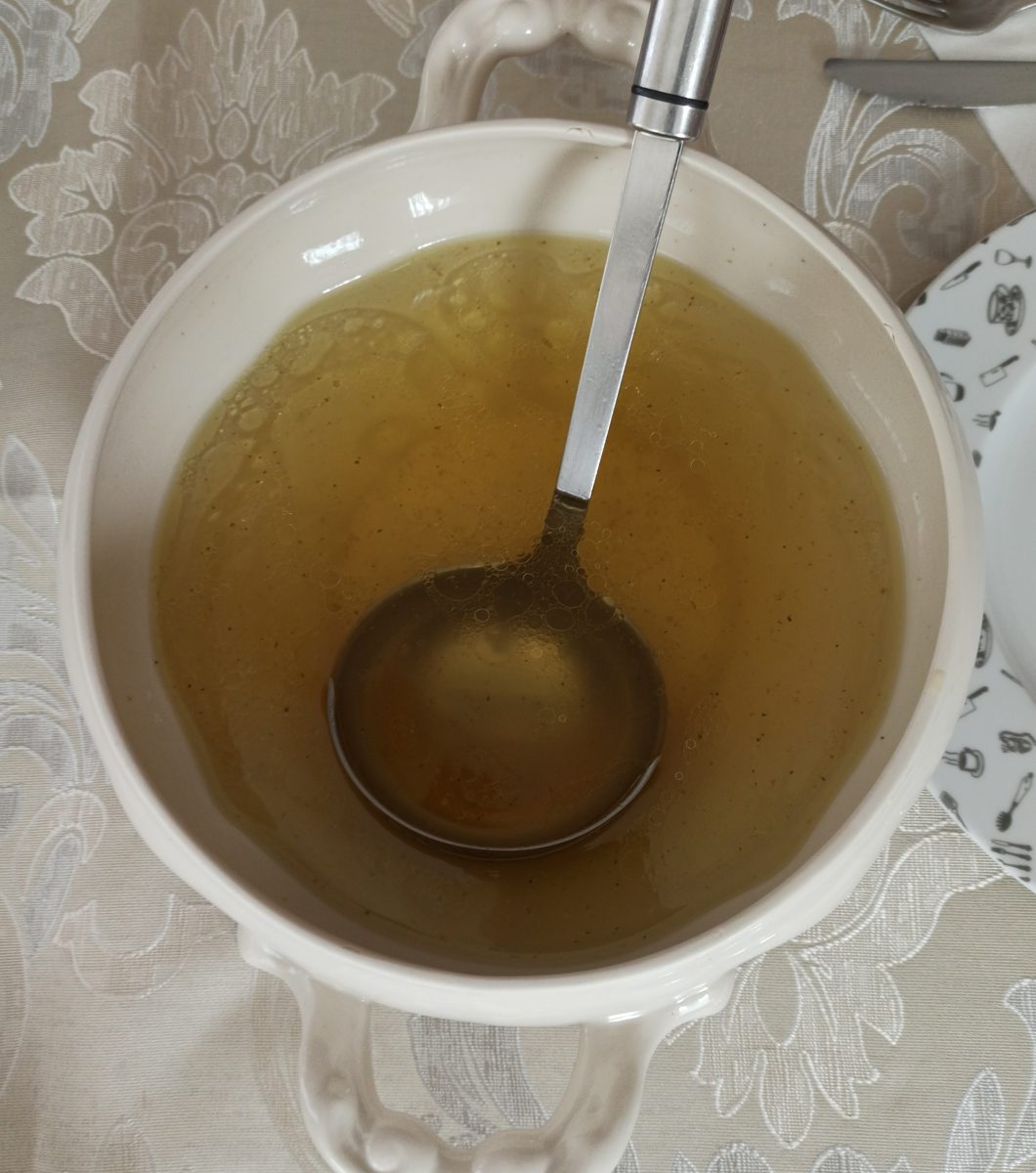
Remove the meat and vegetables. Strain the broth through a fine metal sieve into another pot. Taste and adjust seasoning. If there is too much fat, skim some off the surface with a spoon.
-
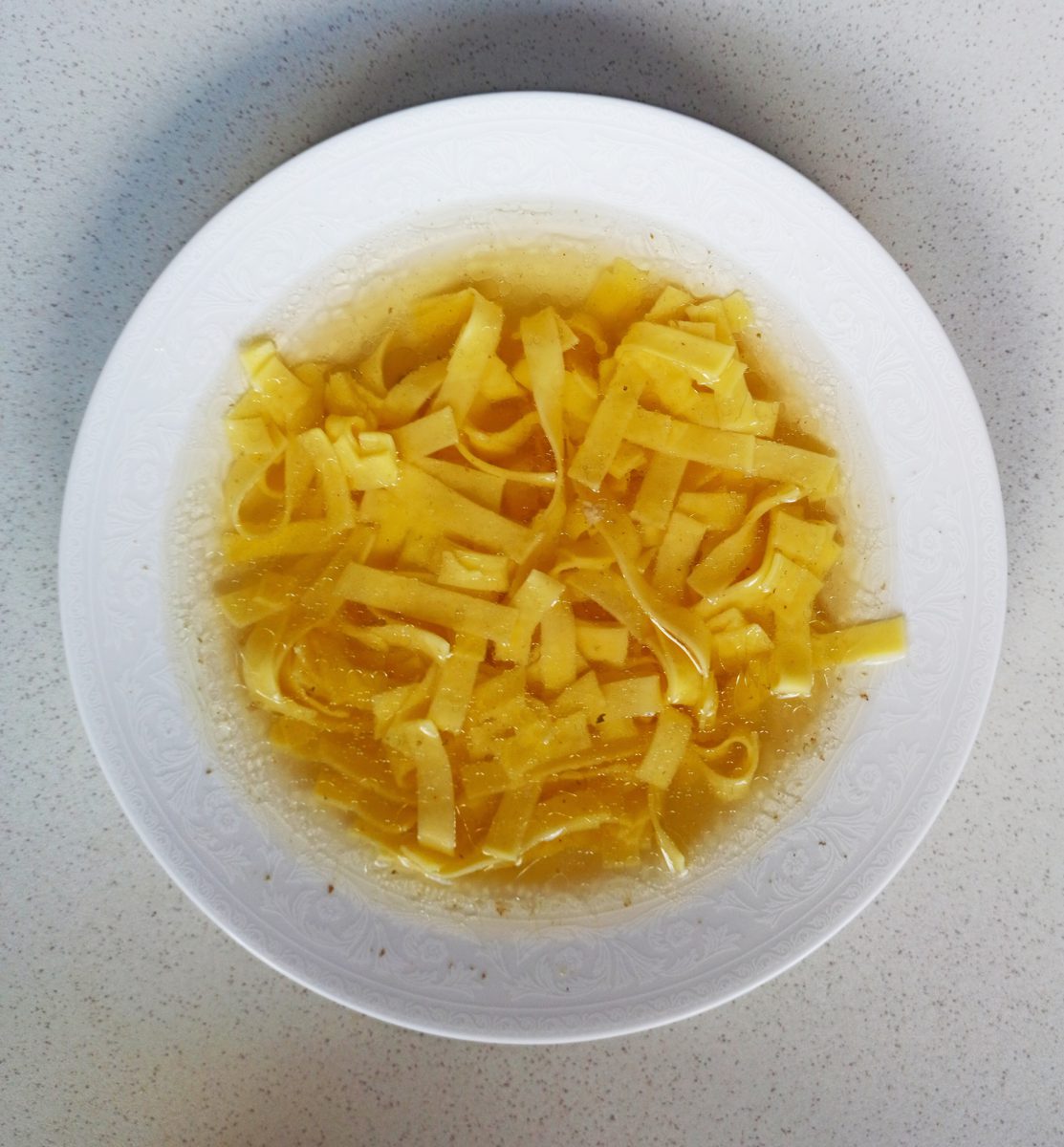
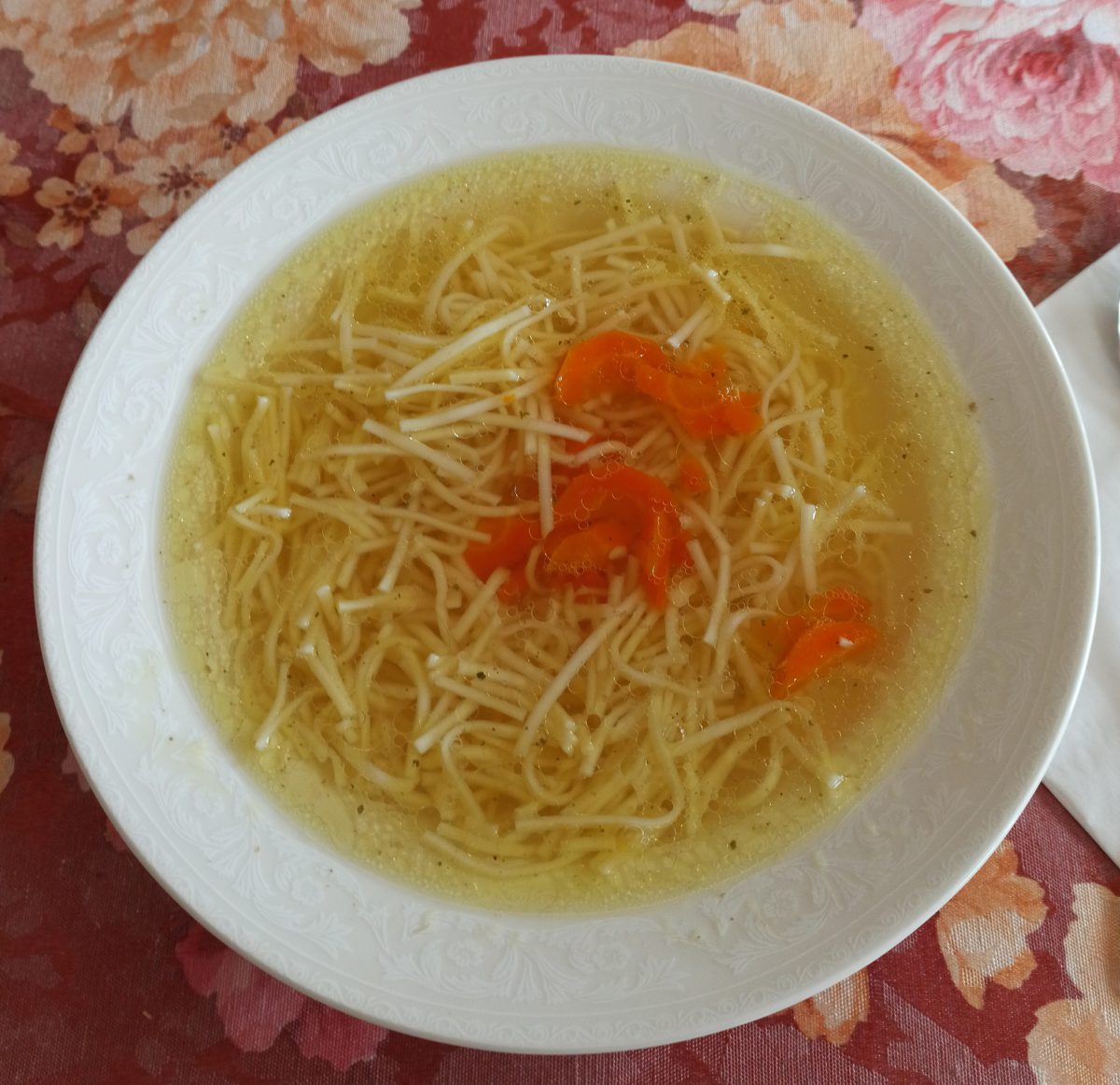
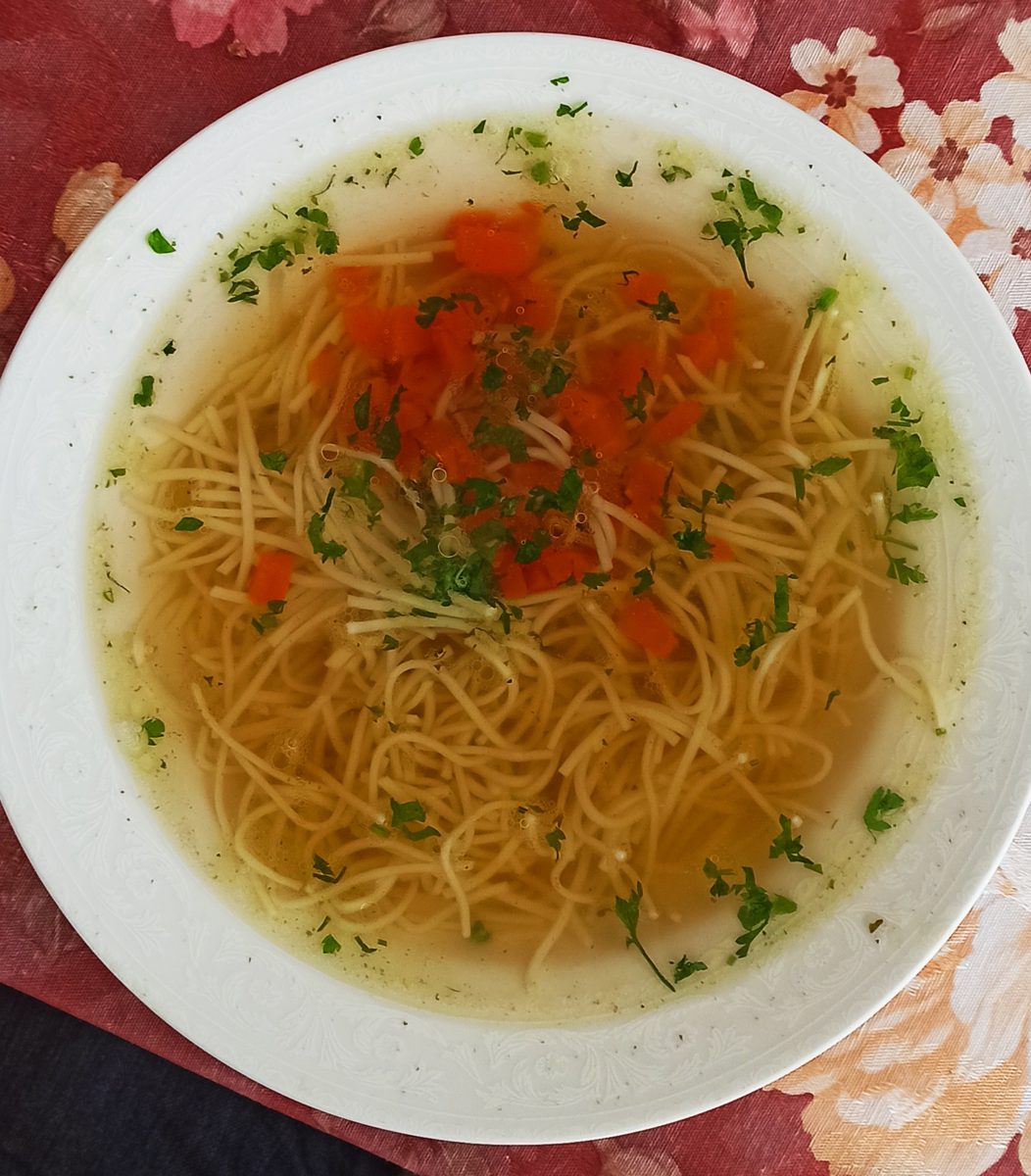
Cook the noodles separately in salted water according to the package instructions. Place noodles in bowls, pour hot broth over, add slices of cooked carrot, pieces of meat, and chopped parsley leaves.
Photos