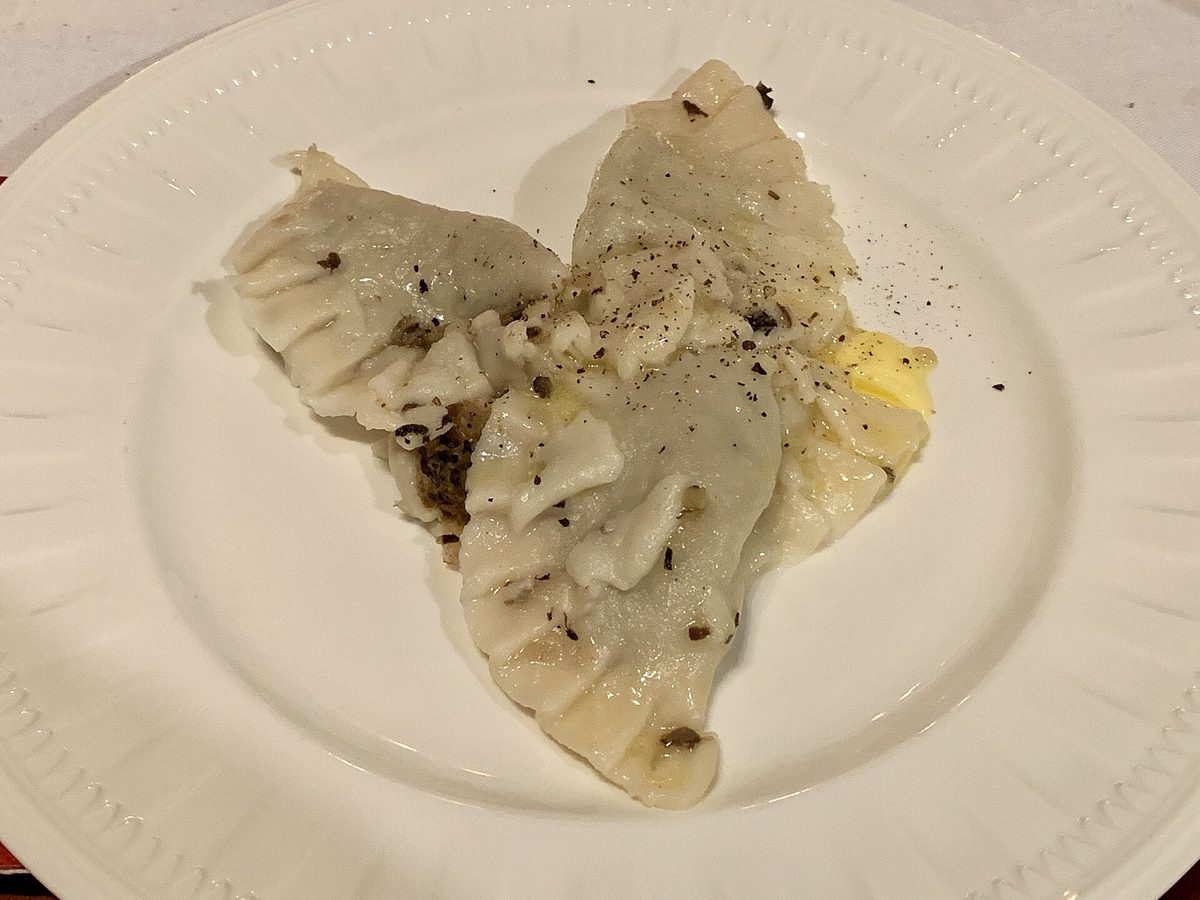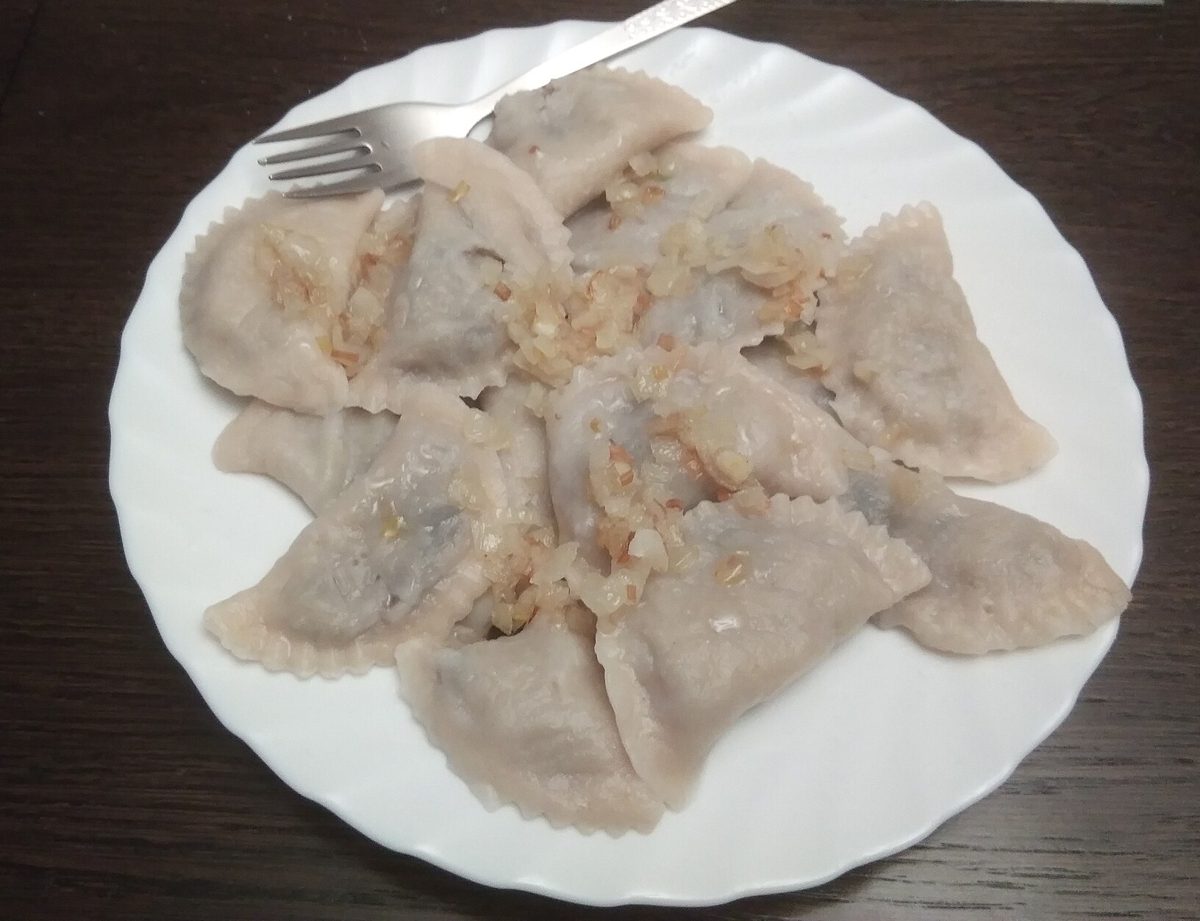
The story behind the recipe
Pierogi with cabbage are one of the most typical Christmas dishes, alongside borscht with uszka, carp, and cabbage with peas, as stated by Polish Wikipedia. Ania Gotuje calls the version with cabbage and mushrooms the most traditional dish for Christmas Eve, while Kwestia Smaku refers to the meatless pierogi as 'from grandma, who makes huge quantities of these pierogi every year.' However, this is not the case everywhere: according to Ania Gotuje, in Podlasie, lentil pierogi are more commonly made for Christmas Eve. Cabbage as a filling has a long history. Historian Maria Bogucka wrote about the cuisine of the 16th and 17th centuries that people ate 'a lot of cabbage,' including fermented cabbage, which was combined with sweet 'as a filling for pierogi.'
Lucyna Ćwierczakiewiczowa in '365 dinners for 5 zlotys' from 1871 provided 'Boiled Pierogi with Cabbage': fermented cabbage was boiled, chopped, and mixed with chopped dried mushrooms, onions sautéed in butter, and herring 'not very soaked,' and the boiled pierogi were drizzled with 'young lard.' One herring was enough for a large platter. In a later edition, quoted by the Ministry of Agriculture, the cabbage is fresh, and the author adds that 'it can also be made without herring.' Which cabbage was originally used depends on the edition.
Since 2007, 'Pierogi with Cabbage and Mushrooms from Pilzno' from Podkarpacie have been on the List of Traditional Products of the Ministry of Agriculture. According to the card, they were eaten during Lent and on Christmas Eve, made with fresh mushrooms, without herring, and crimped with a frill. Pilzno housewives derive the name of the pierogi from 'horns,' as they were once folded from squares diagonally. On Christmas Eve, a coin was placed inside one pieróg: whoever found it was to have luck and money for the whole year. Since 2014, 'Niwiskie pierogi with sauerkraut' from the Kolbuszowa district, made with just cabbage, onion, and sometimes garlic, have also been on the list.
Ingredients
Filling
-
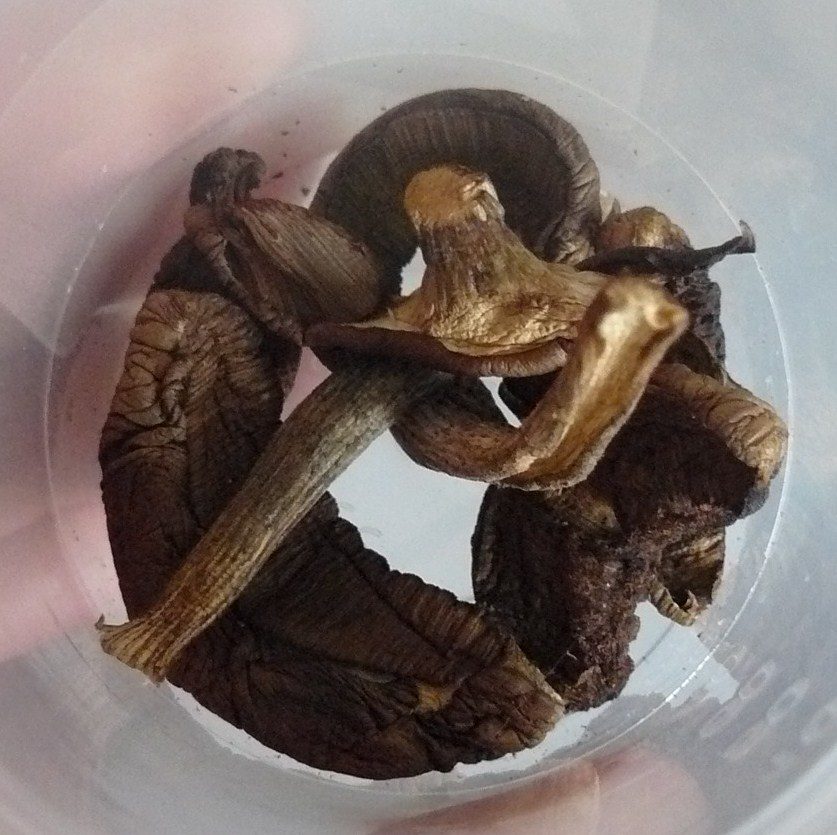
40 g dried forest mushrooms (porcini or porcini with bay boletes)
Abroad: USA, UK, Canada: dried porcini (bay boletes); Germany: getrocknete Steinpilze -
500 g sauerkraut (naturally fermented, without vinegar)
Abroad: lacto-fermented sauerkraut, not canned and without vinegar - 180 g onion (1 large, finely chopped)
- 2 tbsp rapeseed oil (or 30 g butter, outside of Lent)
- 1 pc bay leaf
- 2 pcs allspice
- salt and pepper (to taste, salt only after tasting)
- 1 pinch sugar (only if the cabbage is very sour)
Dough (about 40–45 pierogi)
-
400 g wheat flour (type 450 or Wrocław type 500)
Abroad: USA and Canada: all-purpose flour; UK: plain flour; Germany: Type 405 or 550 - 220 ml hot water (just after boiling)
- 40 ml oil (or 40 g melted butter)
- ½ tsp (about 3 g) salt
- 1 pc egg (not necessary, then reduce water by about 50 ml; without egg, the dough is vegan)
To serve
- 150 g onion (finely diced)
- 3 tbsp oil (or 30 g butter, outside of Lent)
Method, step by step
-
Rinse the dried mushrooms in cold water, cover with 2 cups of cold water in a saucepan, and soak for at least a few hours, preferably overnight in a cool place.
-
Cook the mushrooms in the soaking water, covered, over low heat for about 20–30 minutes, until softened. Drain, and strain the broth through cheesecloth. Taste it: if it is bitter, do not add it to the cabbage, but use it for soup. Rinse the mushrooms to remove sand and chop them very finely.
-
If the sauerkraut is very sour, rinse it once with cold water. Squeeze it well and chop it. Place it in a pot, pour in the strained mushroom broth and a cup of water, add the bay leaf and allspice. Cook covered over low heat for 45–60 minutes, stirring occasionally, until the cabbage is soft.
-
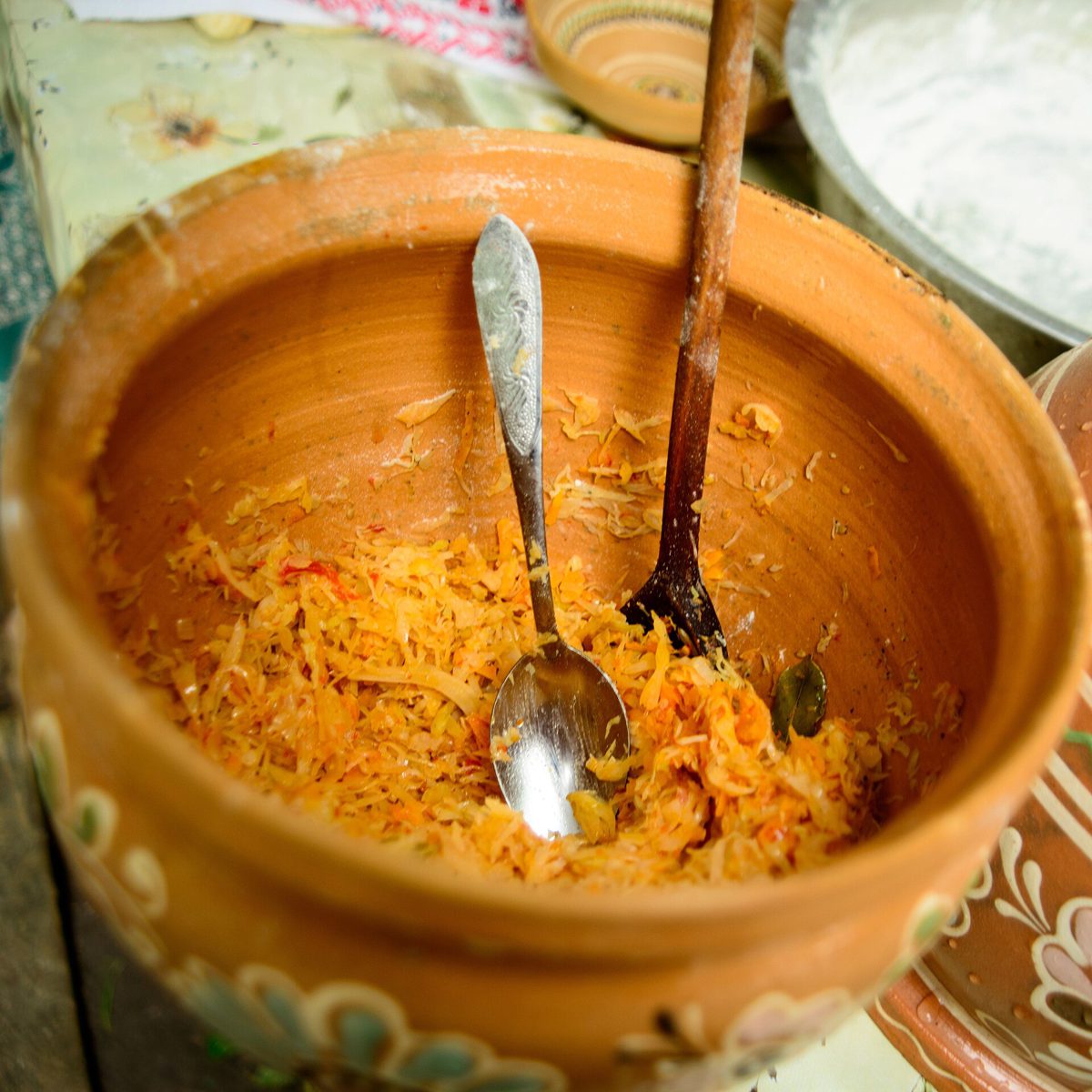
Sauté the onion in oil over medium heat for about 10 minutes until translucent. Add the mushrooms, then the cabbage without the bay leaf and allspice. Fry uncovered, stirring, until all the liquid evaporates and the filling is dry. Season with pepper, taste, and only then add salt if needed, and if the cabbage is very sour, add a pinch of sugar. Transfer the filling to a bowl and let it cool completely.
-
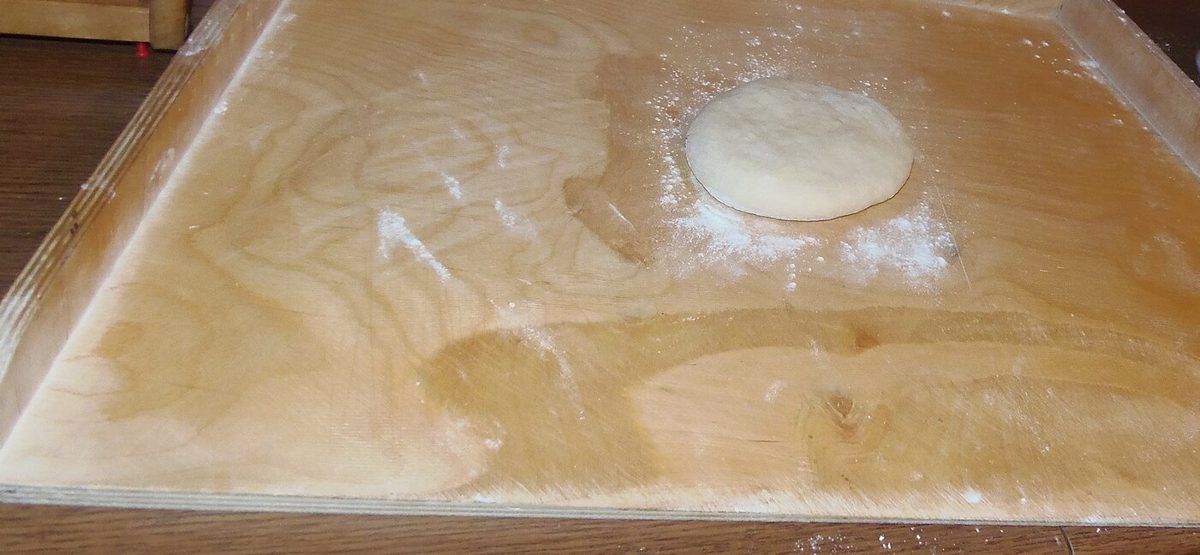
Dough: sift the flour into a bowl, add salt, oil (or butter), and the egg if using. Pour in the hot water, mix with a spoon, and when the dough cools, knead it by hand for 5–10 minutes until smooth and elastic. Wrap in plastic wrap and let rest for 30 minutes.
-
Roll out the dough in batches on a floured surface to thin, about 2 mm (1/16 inch), keeping the rest covered with a damp cloth to prevent drying out. Cut out circles with a diameter of 7–9 cm (2¾–3½ inches). Knead and roll out the scraps again.
-
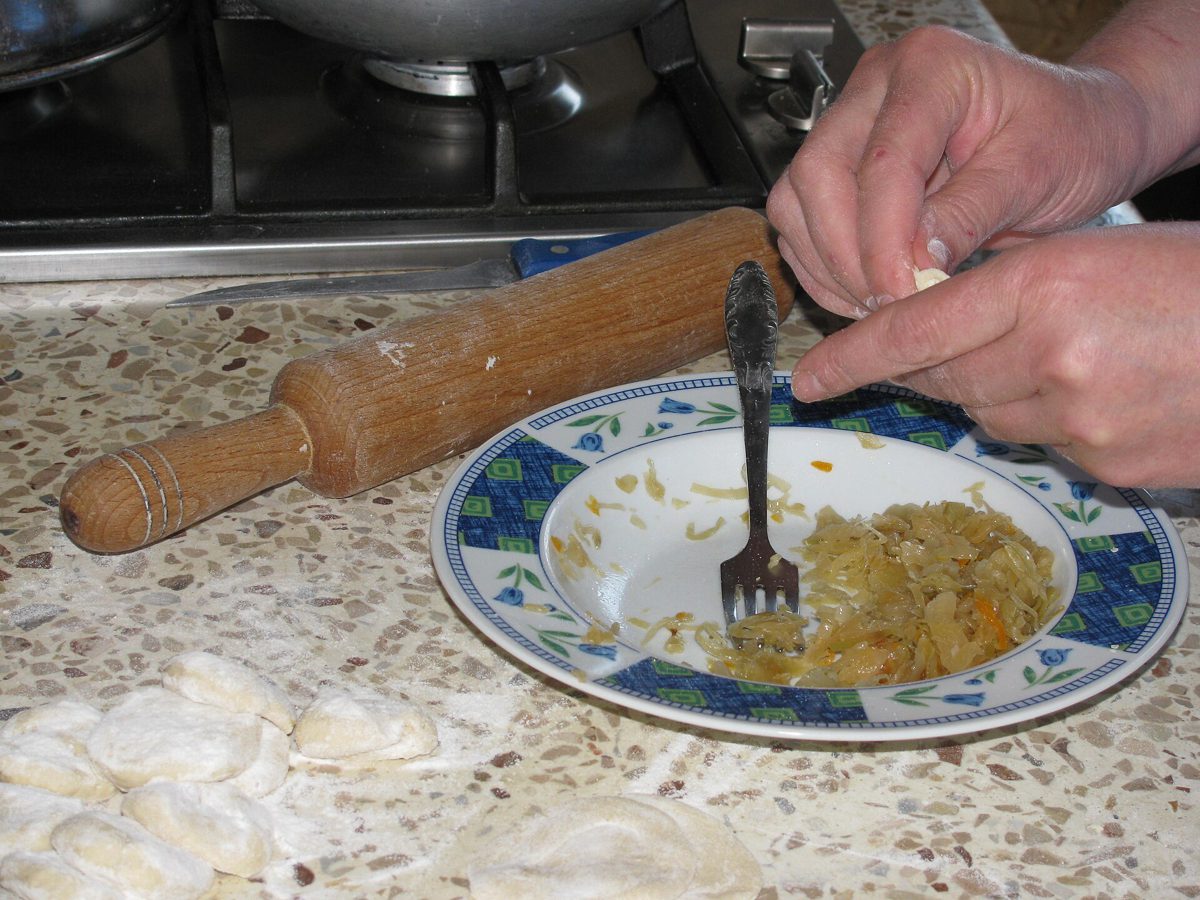
Place a heaping teaspoon of cold filling in the center of each circle. Lay the circle on the work surface with the side that is not dusted with flour facing up, and do not smear the edges with filling.
-
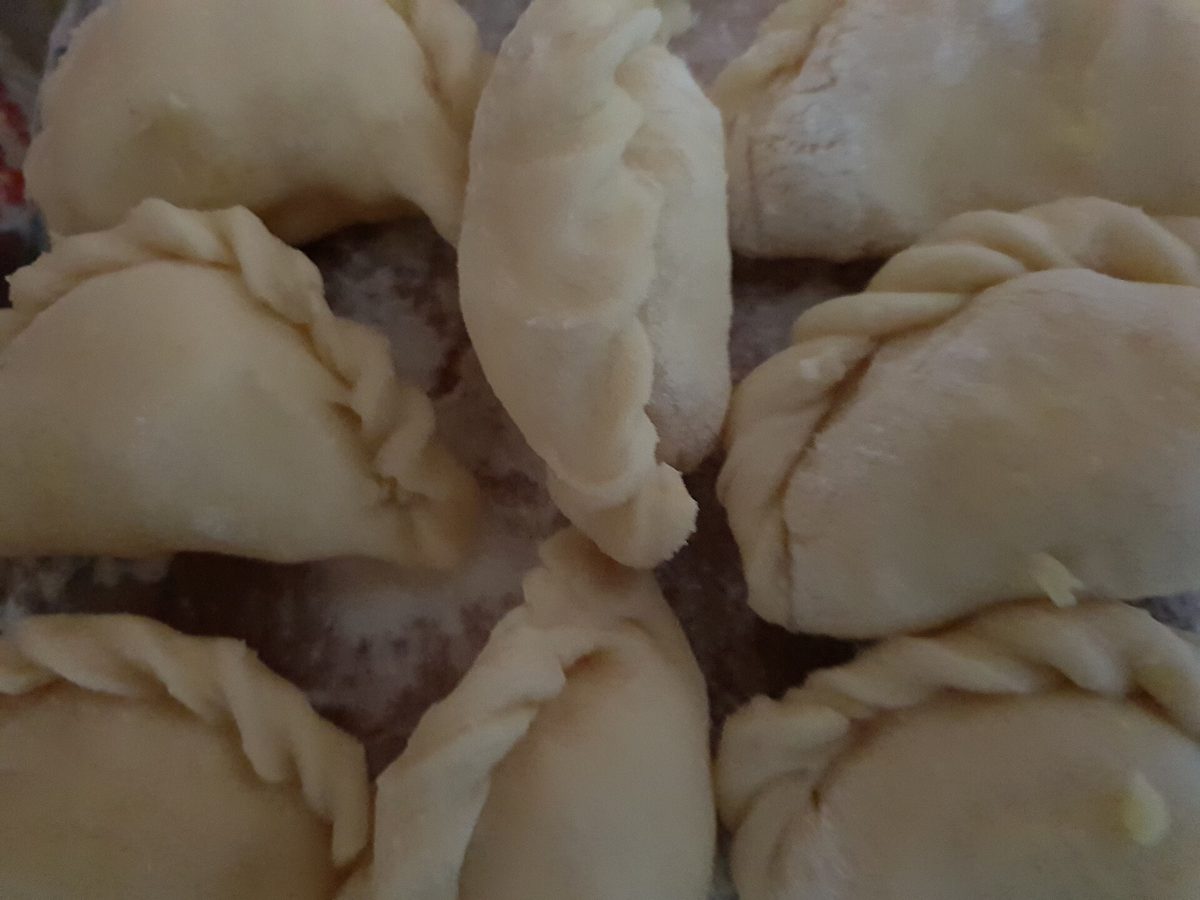
Fold the circle in half and carefully seal the edges by pressing them with your fingers. If you like, make a frill that additionally seals the pieróg. Place the finished pierogi next to each other on a cloth dusted with flour and cover lightly with a damp cloth.
-
Bring a large pot of salted water to a boil and reduce the heat so it does not boil vigorously. Drop the pierogi in batches of 12–15 and gently stir with a wooden spoon at first to prevent sticking to the bottom. When they float, cook for another 2–4 minutes, fish one out, and check if the dough is soft.
-
In a pan, sauté the diced onion in oil until translucent. Remove the pierogi with a slotted spoon, drain, drizzle with the onion and fat, and serve immediately, either alone or with red borscht.
Photos